Apple iPhone 17 Pro vs Google Pixel 10 Pro
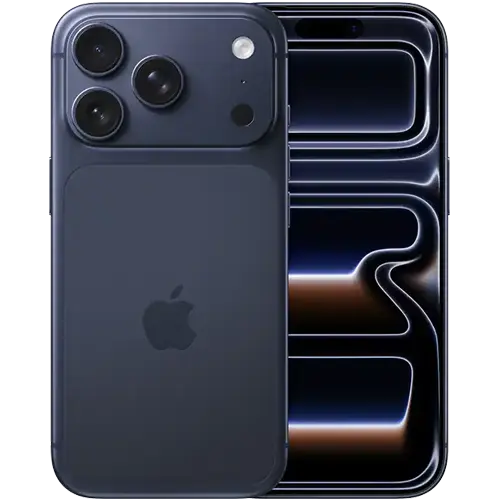
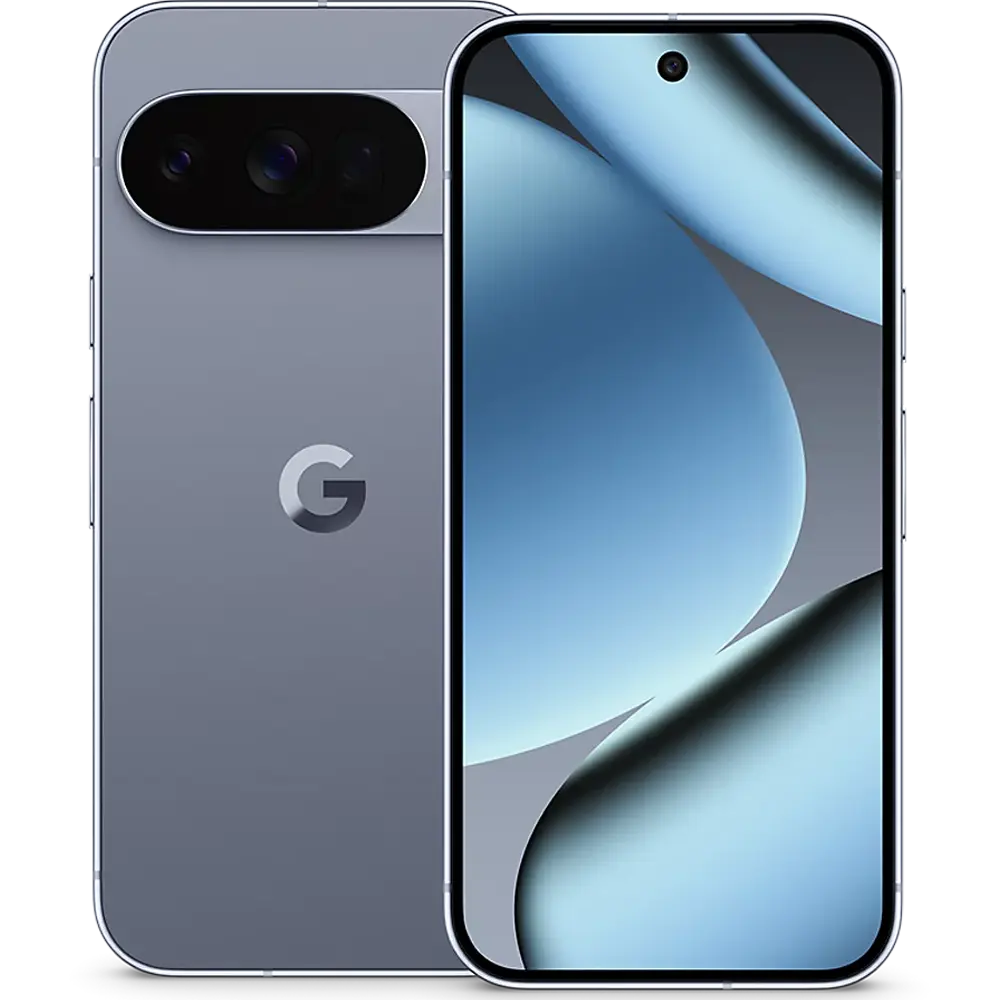
Apple
iPhone 17 Pro
Pixel 10 Pro
Ranked #3 of 52
Ranked #34 of 52
Overall
Overall

The iPhone 17 Pro and Pixel 10 Pro are as good as their more expensive siblings in most ways, really only offering a smaller battery. They also represent different approaches than each other. Apple's $1,099 phone emphasizes raw processing power, camera versatility, and tight ecosystem integration. Google's $999 device leans into computational photography, display quality, and AI-driven software features. They're separated by $100, and both target buyers who want a compact flagship that doesn't compromise on capability.
The iPhone 17 Pro is stronger in camera performance overall, battery life, charging speed, and raw processing muscle. The Pixel 10 Pro wins on display brightness and stability, delivers sharper results from its telephoto and main cameras, and offers faster biometric unlocking. Speaker quality is close but favors the iPhone slightly. The Pixel also holds a meaningful display advantage that's visible in everyday use, particularly outdoors.
Here’s how the two phones compare in our testing.
Design
| Apple iPhone 17 Pro | Google Pixel 10 Pro | |
|---|---|---|
| Specifications | ||
| Dimensions | 150 x 71.9 x 8.8 mm | 152.8 x 72 x 8.5 mm |
| Weight | 206g | 207g |
| IP Rating | IP68 | IP68 |
| Frame | Aluminum | Aluminum |
| Front | Ceramic Shield 2 | Gorilla Glass Victus 2 |
| Back | Ceramic Shield | Glass |
| Screen-to-body ratio | 90.3% | 87.1% |
Both phones share a 6.3-inch display size and nearly identical weight — the iPhone 17 Pro comes in at 206g, and the Pixel 10 Pro at 207g. Both carry IP68 water and dust resistance, meaning they're rated for submersion in fresh water (typically 1.5 meters for 30 minutes, though exact depth varies by manufacturer claim). Both use USB-C.
The iPhone 17 Pro uses an aluminum frame with Apple’s Ceramic Shield 2 glass on the front and Ceramic Shield on the back. The Pixel 10 Pro uses an aluminum frame with Gorilla Glass Victus 2 on the front and back.
Bandicoot Lab does not formally test design or durability. The observations above are based on published specs.
Display
| Apple iPhone 17 Pro | Google Pixel 10 Pro | |
|---|---|---|
679/ 845 | 723/ 845 | |
Both phones have 6.3-inch LTPO OLEDs running at 120Hz, but they diverge meaningfully in brightness, color accuracy, and thermal behavior.
The Pixel 10 Pro reaches 1,450 nits of manual brightness versus 885 nits on the iPhone 17 Pro. That's a large gap in everyday outdoor visibility, where manual brightness is what you actually get when reading in sunlight. For HDR content, the Pixel peaks at 3,428 nits versus 3,043 nits on the iPhone. Both are bright in small HDR highlight windows, and the difference there is unlikely to be noticeable in normal viewing.
Where the Pixel pulls further ahead is sustained brightness. Its display holds 96% of peak luminance over a 30-minute HDR session. The iPhone 17 Pro drops to 39% of its peak over the same period. The Pixel will maintain its brightness through a full movie or extended HDR gaming, while the iPhone throttles considerably as the panel heats up.
Color accuracy favors the iPhone. In its default mode, the display tracks sRGB almost perfectly, with neutral tones that stay neutral and no visible drift across the grayscale. The Pixel 10 Pro in Natural mode shows slightly more deviation from reference. Colors are still good but not as tightly calibrated. Both cover essentially the full sRGB gamut.
The Pixel 10 Pro has a resolution advantage too, with a pixel density of 495 pixels per inch, versus the iPhone's 460 PPI. Both are sharp enough that you won't see individual pixels at normal viewing distances, so this is a spec-sheet win rather than a practical one. Touch latency is 11.6ms on the Pixel versus 52.7ms on the iPhone. That's a substantial gap. The Pixel should feel more immediately responsive to taps and swipes, particularly in fast-paced interactions like gaming or rapid scrolling.
Performance
| Apple iPhone 17 Pro | Google Pixel 10 Pro | |
|---|---|---|
902/ 1012 | 399/ 1012 | |
The iPhone 17 Pro runs Apple's A19 Pro with 12GB of RAM. The Pixel 10 Pro uses Google's Tensor G5 with 16GB of RAM.
The gap in CPU performance is wide. The iPhone scores 3,918 single-core and 10,158 multi-core in GeekBench 6. The Pixel manages 2,330 single-core and 6,364 multi-core. That's roughly 68% higher single-core and 60% higher multi-core from the Apple chip. In practice, this translates to faster app launches, snappier multitasking, and more headroom for demanding computational tasks.
GPU performance shows a large delta too. In the Wild Life Extreme stress test, the iPhone peaks at 5,865 (best loop) with 69.8% stability. The Pixel peaks at 3,286 with 67.2% stability. Neither phone holds its peak performance especially well under sustained load, but the iPhone starts from a much higher ceiling. For graphically intensive games, the iPhone will sustain higher frame rates and handle more complex scenes.
Browser performance reflects the CPU advantage. The iPhone scores 43.1 in Speedometer versus 15.2 for the Pixel. That's nearly three times the throughput in web workloads. Complex web apps, heavy JavaScript sites, and browser-based tools will feel noticeably smoother on the iPhone.
Camera
| Apple iPhone 17 Pro (Overall) | Google Pixel 10 Pro (Overall) | |
|---|---|---|
| Specifications | ||
| Main | 48MP, f/1.78, 24mm, 1/1.28" | 50MP, f/1.7, 25mm, 1/1.31" |
| Ultrawide | 48MP, f/2.8, 13mm, 1/2.55" | 48MP, f/1.7, 13mm, 1/2.55" |
| Telephoto | 48MP, f/2.8, 100mm, 1/2.55" | 48MP, f/2.8, 113mm, 1/2.55" |
| Front | 18MP, f/1.9, 20mm | 42MP, f/2.2, 17mm |
The iPhone 17 Pro earns a higher overall camera score, driven by stronger dynamic range processing and better video stabilization across all lenses. The Pixel 10 Pro counters with consistently higher sharpness from its main and telephoto sensors, and competitive color accuracy. Both are capable camera systems, but they excel in different ways.
At deep zoom levels (30x and beyond), the Pixel holds a clear advantage. It maintains usable detail past 30x, producing recognizable results even at 100x. The iPhone's detail falls off more steeply past 20x. At 30x, the Pixel delivers noticeably more resolved detail than the iPhone. At 40x, the gap widens further. If you regularly crop or zoom deep, the Pixel handles it better.
Both phones push saturation in their processed outputs. The Pixel tends toward a vivid, slightly warm rendering in good light. The iPhone also saturates heavily in bright conditions but leans slightly cool in its neutral tone rendering. Both are tuning choices rather than errors. They'll look punchy on social media but drift from what you'd call accurate.
Main
| Apple iPhone 17 Pro (Main) | Google Pixel 10 Pro (Main) | |
|---|---|---|
579/ 722 | 517/ 722 | |
The Pixel 10 Pro delivers slightly higher sharpness from its main sensor in bright and mid-light conditions. Both phones are close in low light, where the iPhone's processing cleans up noise effectively while maintaining good resolved detail.
Color character differs between the two. The iPhone's main camera pushes saturation heavily in bright light and shifts warm. In mid light, the warm shift increases significantly as the processing overcorrects for the cooler ambient temperature. This is primarily a white balance calibration issue: the yellow bias climbs as lighting gets warmer, indicating the software is overcompensating. The Pixel also oversaturates in bright light but maintains a more neutral color balance in mid light. In dark conditions, the iPhone desaturates noticeably while pushing warm; the Pixel increases saturation in dark conditions while staying closer to neutral on hue.
Skin tones drift on both phones. The iPhone pushes faces warm and orange in processed images across all lighting. The Pixel shows similar skin tone error in bright light but handles mid-light skin tones with a slightly lighter touch.
The iPhone's main camera applies more aggressive dynamic range processing. It compresses highlights and shadows more heavily, which recovers highlight detail but can flatten the image. The Pixel applies less compression, preserving more natural tonal separation in high-contrast scenes while occasionally losing extreme highlights.
Ultrawide
| Apple iPhone 17 Pro (Ultrawide) | Google Pixel 10 Pro (Ultrawide) | |
|---|---|---|
505/ 722 | 479/ 722 | |
Both ultrawide lenses deliver strong sharpness in good light, and the scores are close. The Pixel edges slightly ahead in raw resolving power, while the iPhone's processing produces slightly more natural-looking detail with less aggressive sharpening.
Color rendering on the ultrawide follows each phone's general character. The iPhone stays slightly cool in bright light but shifts warm in mid and dark conditions. The Pixel pushes saturation higher across conditions and maintains a warm lean throughout. In dark scenes, both phones show increased hue errors. The iPhone's ultrawide develops a strong warm shift in low light, while the Pixel's hue errors manifest more as a pink-magenta push from its white balance overcorrection.
Dynamic range is comparable between the two ultrawides. Both clip highlights and both show some compression artifacts in processed images. The iPhone retains slightly more shadow detail in high-contrast scenes.
Telephoto
| Apple iPhone 17 Pro (Telephoto) | Google Pixel 10 Pro (Telephoto) | |
|---|---|---|
628/ 722 | 471/ 722 | |
The Pixel 10 Pro's telephoto is sharper across all lighting conditions, and the gap is meaningful. It resolves more detail at its native focal length and maintains that advantage as you zoom in digitally. The iPhone's 4x telephoto is sharp in good light but drops off more in mid and dark conditions.
Color accuracy on the iPhone's telephoto is its weakest lens. It oversaturates and shifts warm considerably, especially in mid-light conditions where the yellow bias spikes. Skin tones on the telephoto drift noticeably orange. The Pixel's telephoto also saturates heavily in bright light but keeps hue errors lower. In mid-light, the Pixel telephoto maintains relatively good skin tone accuracy.
The iPhone's telephoto wins on dynamic range, preserving significantly more usable range in high-contrast scenes, with highlights and shadows both remaining readable where the Pixel clips. It also excels in stabilization. Video from the iPhone's telephoto is extremely steady compared to the Pixel, which shows considerably more movement artifacts. If you shoot telephoto video handheld, the iPhone is substantially better.
Front
| Apple iPhone 17 Pro (Front) | Google Pixel 10 Pro (Front) | |
|---|---|---|
703/ 722 | 347/ 722 | |
The iPhone 17 Pro's front camera is sharper across all lighting conditions, with a particularly strong showing in bright and mid-light. The Pixel's front camera is respectable but doesn't match the iPhone's resolved detail.
Both front cameras oversaturate and push warm in processed images. The iPhone's front camera shows increasing hue errors in mid and dark lighting, with a warm-yellow shift that grows as ambient light temperature drops. This is white balance overcorrection. The Pixel's front camera shows a similar pattern in mid light but develops a strong pink-magenta shift in dark conditions from its processing aggressively pushing the red-pink channel.
Dynamic range from the front camera heavily favors the iPhone. Its front camera retains detail across a wider brightness range, keeping both highlights and shadows readable in challenging backlit scenarios. The Pixel's front camera clips more aggressively and preserves less usable range.
Video stabilization from the front camera favors the iPhone as well.
Battery
| Apple iPhone 17 Pro | Google Pixel 10 Pro | |
|---|---|---|
670/ 799 | 490/ 799 | |
The Pixel 10 Pro has a larger 4,870mAh battery compared to the iPhone 17 Pro's 4,252mAh cell. Despite that capacity advantage, the iPhone outperforms in most battery tests.
In video playback at 200 nits, the iPhone lasts 23 hours and 58 minutes versus 21 hours and 50 minutes for the Pixel. Neither is particularly impressive. The iPhone's video playback endurance means you could watch a full day of content on a single charge with room to spare. In web browsing over a 5-hour test, the iPhone drains 17% versus 23% for the Pixel. Extrapolated out, that's the difference between comfortably getting through a heavy day of browsing versus needing to top up by evening.
Gaming drain is close: 24% for the iPhone versus 25% for the Pixel during the stress test. Both will lose roughly a quarter of their battery in an extended gaming session. Standby drain is identical at 2% over eight hours overnight. Neither phone is bleeding battery while idle.
The iPhone squeezes more life from a smaller battery through superior power efficiency. The A19 Pro's efficiency advantage shows up most clearly in active-use scenarios like web browsing, where the Tensor G5 draws noticeably more power for less performance.
Charging
| Apple iPhone 17 Pro | Google Pixel 10 Pro | |
|---|---|---|
376/ 837 | 310/ 837 | |
The iPhone 17 Pro supports 40W wired charging and 25W MagSafe wireless charging. The Pixel 10 Pro supports 30W wired and 15W Qi2-compatible magnetic wireless charging.
Wired charging is faster on the iPhone at every checkpoint. It reaches 31% in 10 minutes versus 19% for the Pixel. At 30 minutes, the iPhone hits 72% versus 55% for the Pixel. If you're grabbing a quick charge before heading out, the iPhone gives you meaningfully more capacity in the same time.
Wireless charging shows a similar gap. The iPhone reaches 24% in 10 minutes and 49% in 30 minutes. The Pixel manages 12% and 34% over the same intervals. Both use magnetic alignment for their respective wireless standards, which means consistent coil positioning without fiddling. The iPhone's higher wireless wattage translates to nearly double the charge in the first 10 minutes.
Speaker
| Apple iPhone 17 Pro | Google Pixel 10 Pro | |
|---|---|---|
823/ 857 | 774/ 857 | |
Both phones get reasonably loud. The Pixel 10 Pro reaches 75.6 dBA max volume, nearly identical to the iPhone 17 Pro at 75.2 dBA. You won't hear a difference in raw output between them.
The iPhone 17 Pro produces cleaner audio with less distortion: 4.7% average THD versus 6.5% for the Pixel. At high volumes, the iPhone stays more controlled. The iPhone also delivers fuller bass, which gives music and video audio more body. The Pixel counters with slightly better clarity in the high frequencies, making voices and detail come through crisply.
Overall speaker quality favors the iPhone. It's a richer, cleaner sound, though the Pixel isn't far behind and its high-end clarity is a touch better in isolation.
Microphone
| Apple iPhone 17 Pro | Google Pixel 10 Pro | |
|---|---|---|
578/ 949 | 667/ 949 |
The Pixel 10 Pro's microphone produces more even frequency response with less variation across the audible range. It's above average for voice recording and video capture. The iPhone 17 Pro's microphone shows more unevenness in its frequency response, placing it below average. For voice calls and casual video, both are adequate, but the Pixel will capture more natural-sounding audio in recordings.
Other
| Apple iPhone 17 Pro | Google Pixel 10 Pro | |
|---|---|---|
| Biometrics | 172/ 1036 | 422/ 1036 |
| Data Transfer | 572/ 877 | 270/ 877 |
| Specifications | ||
| Biometric type | Face Recognition | Fingerprint |
| Ports | USB-C 3.2 Gen 2 | USB-C 3.2 |
| Storage | 256GB, 512GB, 1TB | 256GB, 512GB, 1TB |
Biometric unlocking shows a dramatic difference between the two phones. The Pixel 10 Pro uses an ultrasonic fingerprint sensor that unlocks in an average of 249ms. The iPhone 17 Pro relies on hardware-based face unlock (Face ID) that averages 610ms. That's more than twice as slow. You'll feel this every time you pick up the phone. The iPhone has no fingerprint sensor at all, so Face ID is your only option.
Data transfer speeds are much higher on the iPhone 17 Pro, thanks to its USB 3.2 Gen 2 port. It reads large files at 286 MB/s and writes at 244 MB/s. The Pixel's USB 3.2 Gen 1 connection manages 105 MB/s read and 142 MB/s write. If you regularly transfer large files, photos, or video to a computer, the iPhone moves data roughly twice as fast. Both phones are available in multiple storage configurations.
Conclusion
The iPhone 17 Pro is the better choice if you prioritize camera versatility, battery efficiency, charging speed, and raw performance. Its A19 Pro chip is substantially faster in every measurable dimension, its battery lasts longer despite being physically smaller, and its camera system delivers superior dynamic range, stabilization, and front-camera quality.
The Pixel 10 Pro is the better choice if you prioritize display quality, biometric speed, and telephoto sharpness. Its screen is brighter in daily use, holds that brightness under sustained load, responds faster to touch input, and the ultrasonic fingerprint sensor is meaningfully quicker than Face ID. Its telephoto and main camera sensors resolve more detail, and its deep zoom capability extends well beyond what the iPhone can manage. It also costs $100 less.
The iPhone wins more categories by our measurements, but the Pixel's display and biometric advantages affect how the phone feels moment-to-moment in ways that benchmarks and camera scores don't fully capture. Your priorities should decide this one.
Related
Apple
iPhone 17 Pro
Pixel 10 Pro
Apple
iPhone 17 Pro Max
Apple
iPhone 17
Apple
iPhone 17e
Apple
iPhone Air
Pixel 10 Pro Fold
Pixel 10a
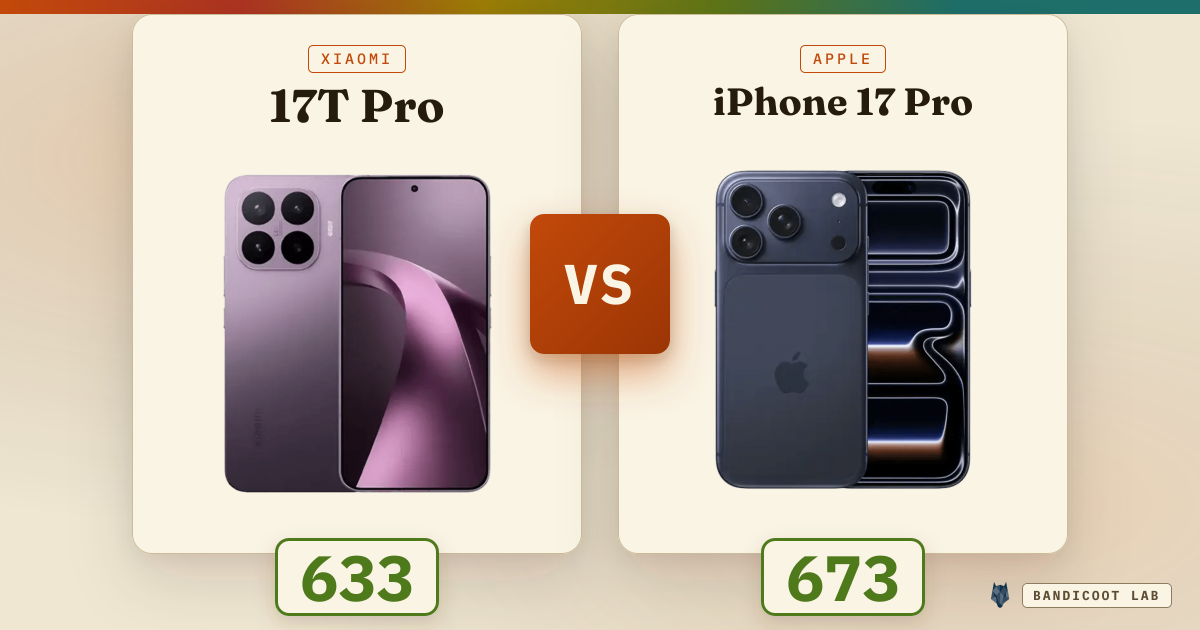
Xiaomi 17T Pro vs Apple iPhone 17 Pro
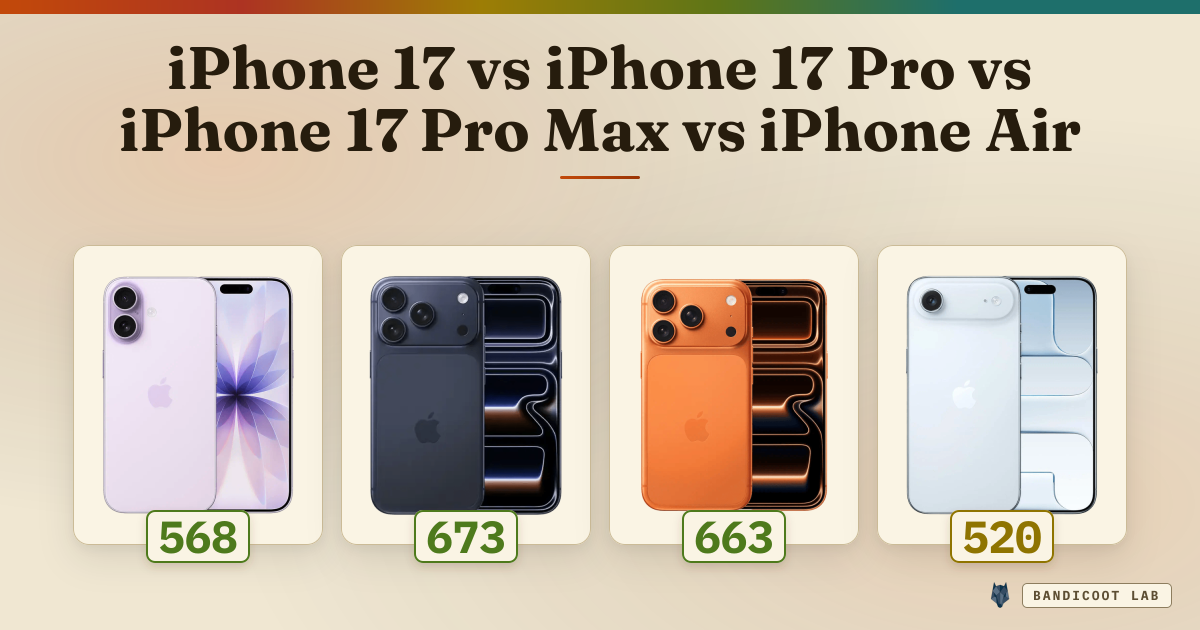
iPhone 17 vs iPhone 17 Pro vs iPhone 17 Pro Max vs iPhone Air
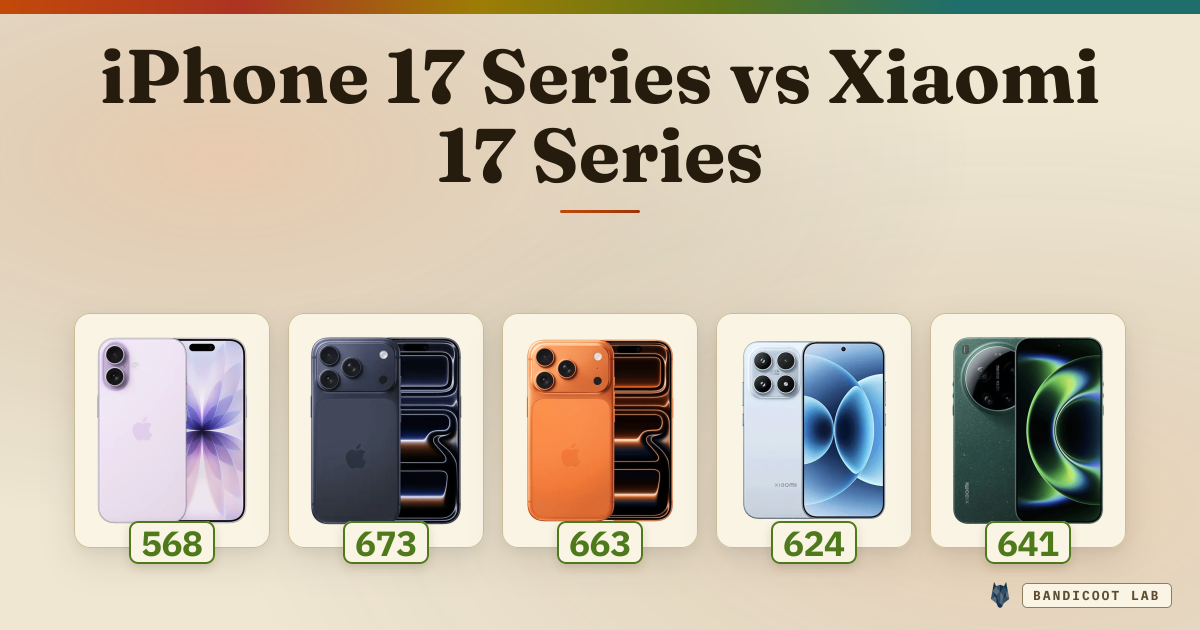
iPhone 17 Series vs Xiaomi 17 Series
The house look: How phone brands tune camera color