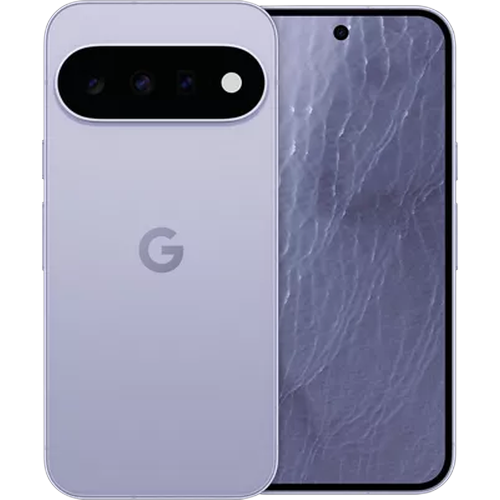
Google Pixel 10 Pro
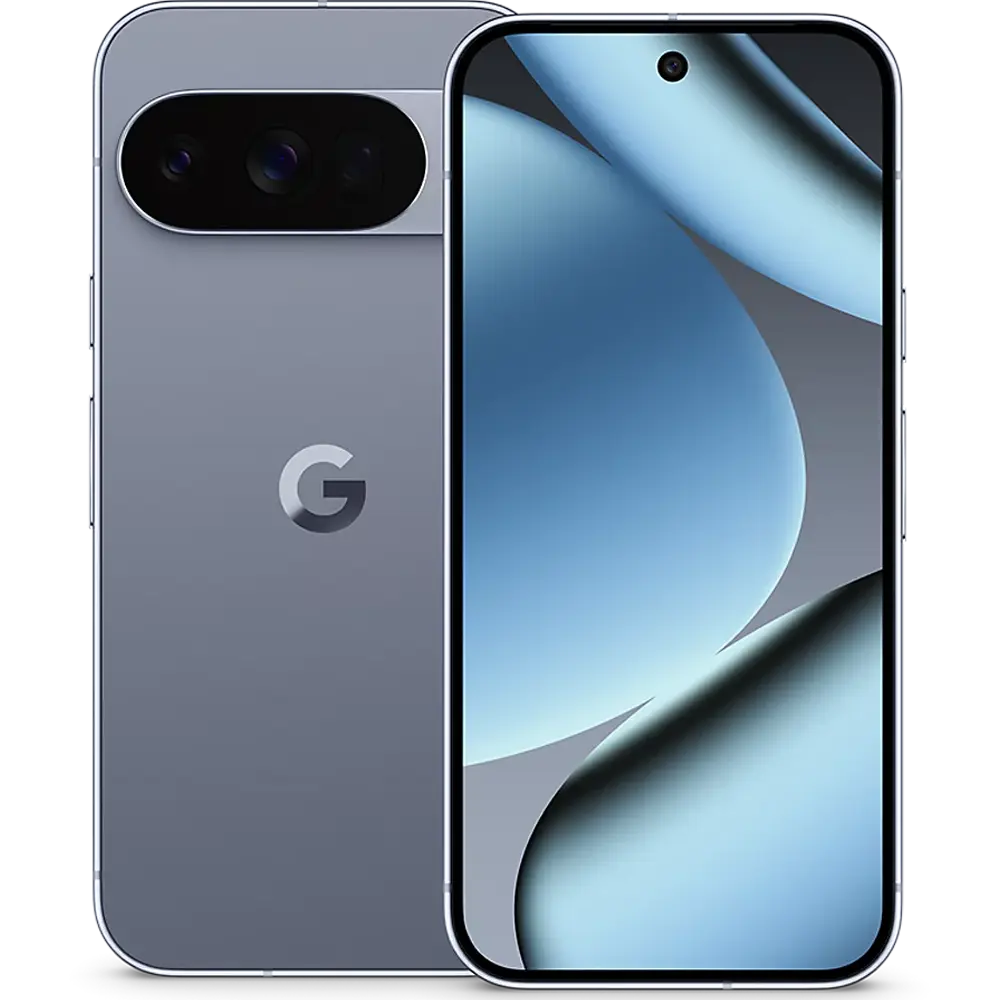
Pixel 10 Pro
Ranked #41 of 61 devices tested
Score Overview
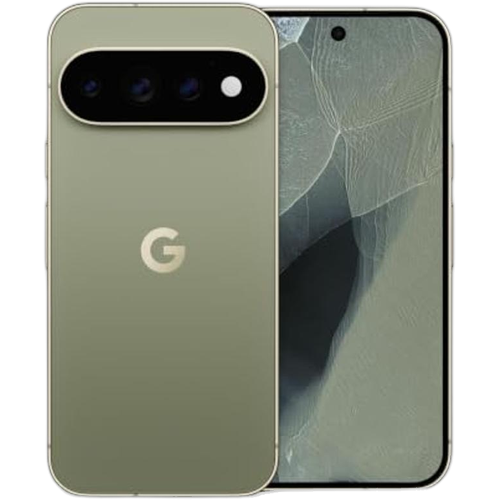
The Google Pixel 10 Pro is Google's $999 compact flagship, sitting between the $799 Pixel 10 and the $1,199 Pixel 10 Pro XL. It runs on the Google Tensor G5 chip with 16GB of RAM, packs a 6.3-inch LTPO OLED display, and carries a triple rear camera system.
The Pixel 10 Pro's strongest showing is its display, which tested well above the database average. The speaker system also performs well, and the camera produces strong sharpness results across most lenses. The weaknesses are concentrated in performance, battery life, and charging — all below average. The Tensor G5 trails Snapdragon and Apple silicon by a wide margin in raw compute and GPU output, and the 4,870mAh battery doesn't stretch as far as competitors at or near this price.
Here’s how the Google Pixel 10 Pro performed in our tests.
Design
Specifications
The Pixel 10 Pro measures 152.8 x 72 x 8.5mm and weighs 207 grams. It uses an aluminum frame with Gorilla Glass Victus 2 on the front and a glass back. The 6.3-inch display has a 20:9 aspect ratio and an 87.1% screen-to-body ratio. An IP68 rating covers full dust ingress and fresh-water submersion beyond 1 meter, with depth and duration set by Google. Bandicoot Lab does not formally test design or durability, so this section is descriptive rather than scored.
The Pixel 10 Pro is nearly identical in footprint to the standard Pixel 10 (152.8 x 72 x 8.6mm, 204 grams). The three grams of extra weight and slightly higher screen-to-body ratio come from the Pro's different internal layout and slimmer bezels. Against the iPhone 17 Pro at $1,099 the Pixel 10 Pro is 152.8 x 72 x 8.5mm versus the iPhone's 150 x 71.9 x 8.8mm, so it's a touch taller but thinner, and both sit close to 207 grams. The Galaxy S25 Ultra at $1,299.99 moves into a clearly larger size class at 162.8 x 77.6 x 8.2mm with a 6.8-inch display.
Display
The Pixel 10 Pro has a 6.3-inch LTPO OLED panel running at 1280 x 2856 (495 PPI), with a 1–120Hz adaptive refresh rate. Manual brightness reaches 1,450 nits, and HDR peak brightness hits 3,428 nits — both strong figures. Brightness stability is 96.3%, meaning the panel holds nearly its full output under sustained load rather than throttling back.
Color accuracy in Natural mode is good. The lowest average Delta E we measured was 1.35 against an sRGB target, meaning colors land very close to their reference values — most deviations would be invisible in normal use. The sRGB gamut coverage is 98.7%, with Display P3 coverage at 73.4%. Touch latency averaged 11.6ms, which is exceptionally low. For context, the iPhone 17 Pro measured 52.7ms and the Samsung Galaxy S26+ came in at 15.9ms. Whether this difference translates to a perceptible advantage in everyday scrolling is debatable.
Compared to the iPhone 17 Pro's display, the Pixel 10 Pro is noticeably brighter in both manual and HDR modes — the iPhone peaks at 885 nits manual and 3,043 nits HDR. The iPhone does hold a slight edge in color accuracy (average Delta E of 0.85), but the Pixel's 1.35 is still very good. Where the iPhone falls short is brightness stability. The Pixel 10 Pro XL has a nearly identical panel to the Pixel 10 Pro in terms of accuracy and brightness.
Performance
The Tensor G5 is Google's custom silicon, Geekbench 6 scores land at 2,330 single-core and 6,364 multi-core. For comparison, the iPhone 17 Pro's A19 Pro posts 3,918 and 10,158, and the Samsung Galaxy S26 with Snapdragon 8 Elite Gen 5 reaches 3,709 and 11,232. The gap is substantial — the Tensor G5 delivers roughly 60% of the single-core performance and 55–60% of the multi-core performance of its direct competitors.
GPU performance follows the same pattern. The Pixel 10 Pro's best loop in 3DMark Wild Life Extreme reached 3,286 with stability at 67.2%, dropping to 2,208 at its worst. The iPhone 17 Pro's best loop hit 5,865 and the OnePlus 15 reached 7,160. In practice, this means graphically demanding games will run at lower frame rates or quality settings on the Pixel compared to Snapdragon or Apple silicon phones in the same price range.
Browser performance (Speedometer 3.1) scored 15.2, which is well behind the iPhone 17 Pro's 43.1 and the Samsung Galaxy S26's 36.7. Web-heavy workflows will feel noticeably slower.
Camera
The Pixel 10 Pro carries a 50-megapixel f/1.7 main camera (1/1.31" sensor), a 48-megapixel f/1.7 ultrawide, a 48-megapixel f/2.8 5x telephoto, and a 42-megapixel f/2.2 front camera. The system supports up to 100x digital zoom.
Sharpness is a standout across the main, ultrawide, and telephoto lenses, all scoring well above the database average. The main lens resolves fine detail cleanly in bright and mid-light conditions, and the telephoto holds strong sharpness at its native 5x. The ultrawide also delivers solid detail, a step up from the Pixel 10's 13-megapixel ultrawide.
At deeper zoom levels, the Pixel 10 Pro holds up reasonably well. At 20x, it retains usable detail — notably better than the iPhone 17 Pro at the same zoom level. The gap narrows beyond 30x as digital processing takes over, and by 100x the results are heavily processed and soft, as expected. The deep zoom score reflects solid performance at extended digital zoom levels, meaningfully better than what the iPhone 17 Pro can manage at its 40x maximum.
Color accuracy and dynamic range are more middle-of-the-road. The processing applies a distinctly vivid, saturated look — saturation regularly exceeds 120–130% of reference values across all lenses. Dynamic range is adequate but not exceptional, and video stabilization across all lenses is below average compared to the competition.
Main
The 50-megapixel main sensor (1/1.31", f/1.7, 25mm equivalent) is the strongest performer in the system. Sharpness in bright light is excellent, and it holds up well in mid and low light, with only modest softening as conditions get darker.
Color processing is punchy. Google applies heavy saturation boosting, with output regularly running 120–133% of reference saturation. Hue accuracy is decent in bright light, with hues staying reasonably close to their true values. In mid-light conditions (simulating indoor lighting at warmer color temperatures), there's a warm shift in the processed images that isn't fully corrected by white balance — skin tones in particular drift noticeably from their true values. In low light, the camera pushes skin tones further off target, with hue errors increasing as the sensor works harder.
Dynamic range in auto mode is adequate but not exceptional. The processing compresses tones moderately and clips highlights somewhat aggressively. The Samsung Galaxy S26 and iPhone 17 Pro both extract more usable dynamic range from their main sensors.
Ultrawide
The 48-megapixel ultrawide (1/2.55", f/1.7, 13mm equivalent) delivers strong sharpness results — notably better than the Pixel 10's 13-megapixel ultrawide.
Color processing follows the same vivid tuning as the main lens, with saturation boosted to 126–131% of reference values. Hue accuracy is reasonable in bright light but degrades in mid and low light, with a warm color cast becoming more apparent — consistent with incomplete white balance correction under the warmer test illuminants. In dark conditions, hue errors increase more substantially, suggesting the sensor struggles more at higher ISO. Dynamic range in auto mode matches the main lens. Stabilization for video is average.
Telephoto
The 48-megapixel 5x telephoto (1/2.55", f/2.8, 113mm equivalent) produces sharp results at its native zoom level — among the stronger telephoto scores amongst its competitors. In bright light, the lens resolves detail very well with clean edges. Performance holds up in mid light. Low-light sharpness drops more noticeably, as expected with the smaller sensor and narrower aperture.
Color behavior is similar to the other lenses — saturated processing with saturation levels around 133% in bright conditions. The processed output pushes skin tones away from accuracy, particularly in mid and low light. In low light, the telephoto's hue accuracy degrades more than the main lens, which is typical for a smaller sensor working at higher gain.
Dynamic range in auto mode reaches its usable, but the compression ratio is very low — meaning the processing is aggressively flattening the tonal curve. Video stabilization on the telephoto is below average.
Front
The 42-megapixel front camera (f/2.2, 17mm equivalent) delivers solid sharpness in bright and mid light, though it falls behind the iPhone 17 Pro's selfie camera which posted higher resolved detail across all conditions. Low-light sharpness drops off noticeably.
Color accuracy follows the same pattern as the rear cameras — heavily saturated processed output, with skin tones pushed well above reference values. In bright light, the warm shift is pronounced. In low light, hue accuracy deteriorates significantly, with large hue errors suggesting the sensor is struggling with color separation. The raw files are substantially more accurate across all conditions. Dynamic range is limited, and video stabilization is below average.
Battery
The Pixel 10 Pro has a 4,870mAh battery. In our video playback test at 200 nits, it lasted 21 hours and 50 minutes. At maximum brightness, that drops to just under 13 hours. For context, the iPhone 17 Pro lasted nearly 24 hours at 200 nits, the Pixel 10 with its slightly larger 4,970mAh battery managed 23 hours, and the OnePlus 15 with its 7,300mAh battery ran for over 46 hours.
Web browsing drain over five hours was 23% — identical to the Pixel 10 and a point better than the Samsung Galaxy S26. Gaming drain was 25% during the stress test, which is moderate but behind the iPhone 17 Pro's 24% and the OnePlus 15's 23% — both of which are running considerably more powerful GPUs. Standby drain was a respectable 2% over eight hours.
In practical terms, the Pixel 10 Pro's battery life is below average for its price class. The roughly 22-hour video playback runtime translates to a phone that will get through a typical day but may need a top-up by evening for heavier users. The OnePlus 15 at $100 less offers dramatically longer endurance, and even the standard Pixel 10 at $200 less lasted longer in video playback despite sharing the same processor.
Charging
The Pixel 10 Pro supports 30W wired charging, 15W wireless charging, and magnetic wireless charging (Qi2-compatible). With wired charging, it reaches 19% in 10 minutes and 55% in 30 minutes. These are modest speeds for a $999 phone — the iPhone 17 Pro with 40W charging gets to 31% in 10 minutes and 72% in 30 minutes, and the OnePlus 15 with 120W charging hits 37% and 88% in the same intervals.
Wireless charging at 15W brings 12% in 10 minutes and 34% in 30 minutes. The iPhone 17 Pro's 25W wireless charging is substantially faster at 24% and 49%. The Pixel 10 Pro XL, which shares the same wireless charging speed but has 45W wired charging, reaches 70% in 30 minutes wired — a meaningful advantage.
The magnetic charging compatibility is a practical convenience for alignment and accessory compatibility, but the underlying wireless charging speed is slow. If charging speed matters to you, the Pixel 10 Pro is at a clear disadvantage against most competitors near its price.
Speaker
The Pixel 10 Pro's speakers reach a maximum of 75.6 dB, which is loud and in line with competitors — the iPhone 17 Pro measures 75.2 dB and the Pixel 10 Pro XL hits 75.8 dB. Average total harmonic distortion is 6.5%, which is moderate. The iPhone 17 Pro is cleaner at 4.7% THD, and the Samsung Galaxy S26 is particularly clean at 3.4%.
The sound profile leans toward the upper frequencies, with strong clarity and crisp high-end reproduction. Bass response is present but not as full-bodied as some competitors — the Samsung Galaxy S26+ and iPhone 17 Pro both deliver more low-end weight. Overall, the speakers sound bright and detailed, which works well for spoken content and casual listening but lacks the warmth and bass punch you'd get from the Samsung flagships. Compared to the Pixel 10 Pro XL, the smaller Pro has noticeably better clarity and cleanliness — the XL measured substantially higher distortion and a less balanced output.
Microphone
The Pixel 10 Pro's microphone scores above average, with a frequency response standard deviation of 4.5 dB — indicating a reasonably flat and consistent capture across the frequency range. It's similar to the Pixel 10 (4.3 dB) and the OnePlus 15 (4.3 dB), and slightly better than the iPhone 17 Pro (5.2 dB). For calls and voice recordings, the microphone performs well.
Other
Measurements
Specifications
The Pixel 10 Pro uses an ultrasonic fingerprint sensor with an average unlock speed of 248.6ms. That's slower than the Pixel 10's 194.4ms and the OnePlus 15's 204.2ms, but still reasonable — most users won't perceive a major difference in daily use.
Data transfer over USB-C 3.2 measured 104.5 MB/s read and 141.9 MB/s write for large files. These are substantially slower than the Samsung Galaxy S26's 335 MB/s read and 271 MB/s write, and also behind the iPhone 17 Pro's speeds.
Conclusion
The Pixel 10 Pro is a phone with a few genuine strengths and some gaps. Its display is excellent — it’s bright, accurate, responsive. The camera system produces sharp images across all lenses, with particularly strong telephoto performance at 5x and respectable results at extended digital zoom. The speakers are loud and clear, and the microphone is above average.
The tradeoffs are that the Tensor G5 lags well behind the Snapdragon 8 Elite Gen 5 and Apple A19 Pro in CPU, GPU, and browser performance — a gap that's noticeable in demanding apps and games. Battery life falls below average for this price, and 30W charging is slow compared to what the iPhone 17 Pro and OnePlus 15 offer. Camera color processing applies aggressive saturation that won't appeal to users who prefer natural-looking photos, and dynamic range trails the competition.
At $999, the Pixel 10 Pro competes against phones that outperform it in most measurable categories outside of display quality and photo sharpness. Buyers who prioritize Google's software experience and camera processing style will find a capable phone here, but the hardware benchmarks don't match the price.
Related
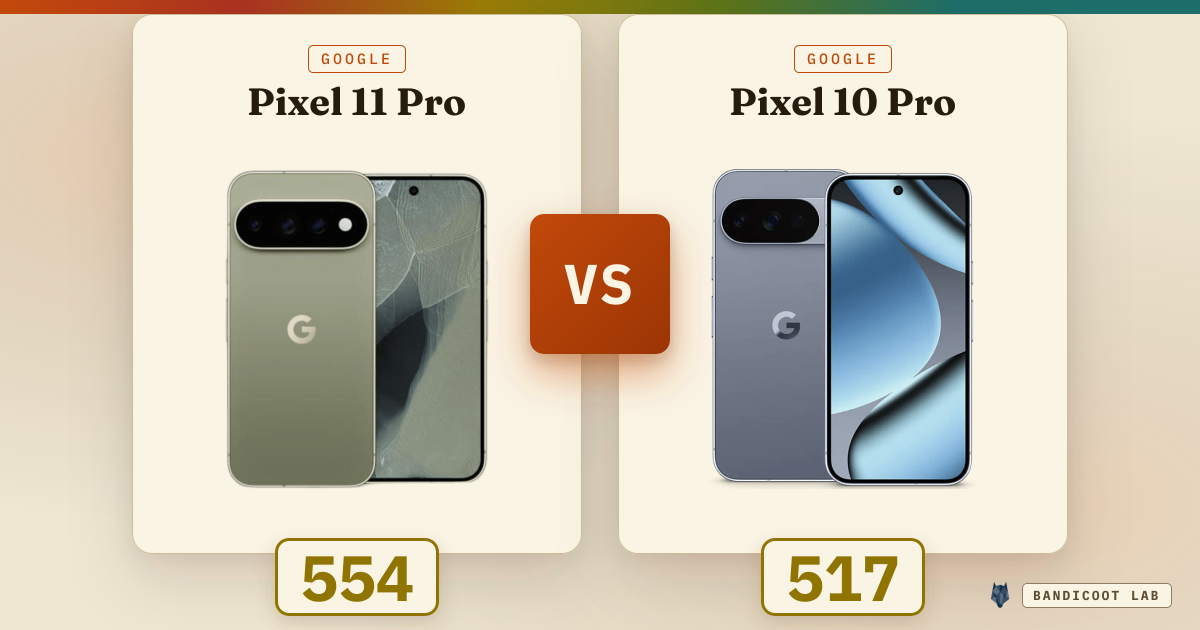
Google Pixel 11 Pro vs Google Pixel 10 Pro
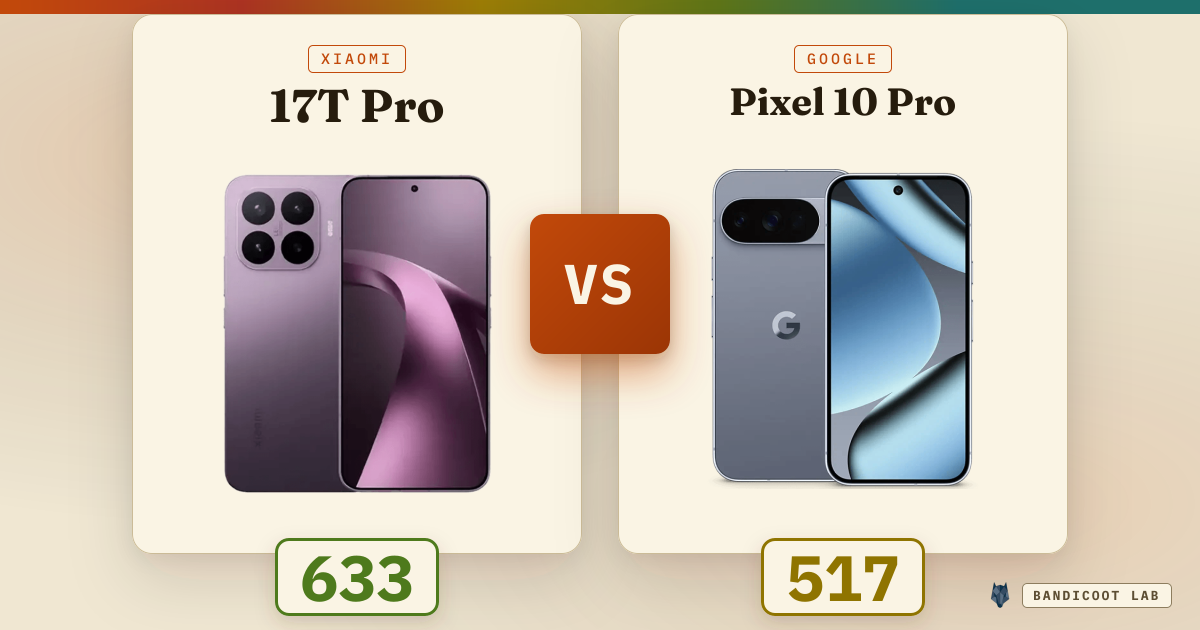
Xiaomi 17T Pro vs Google Pixel 10 Pro
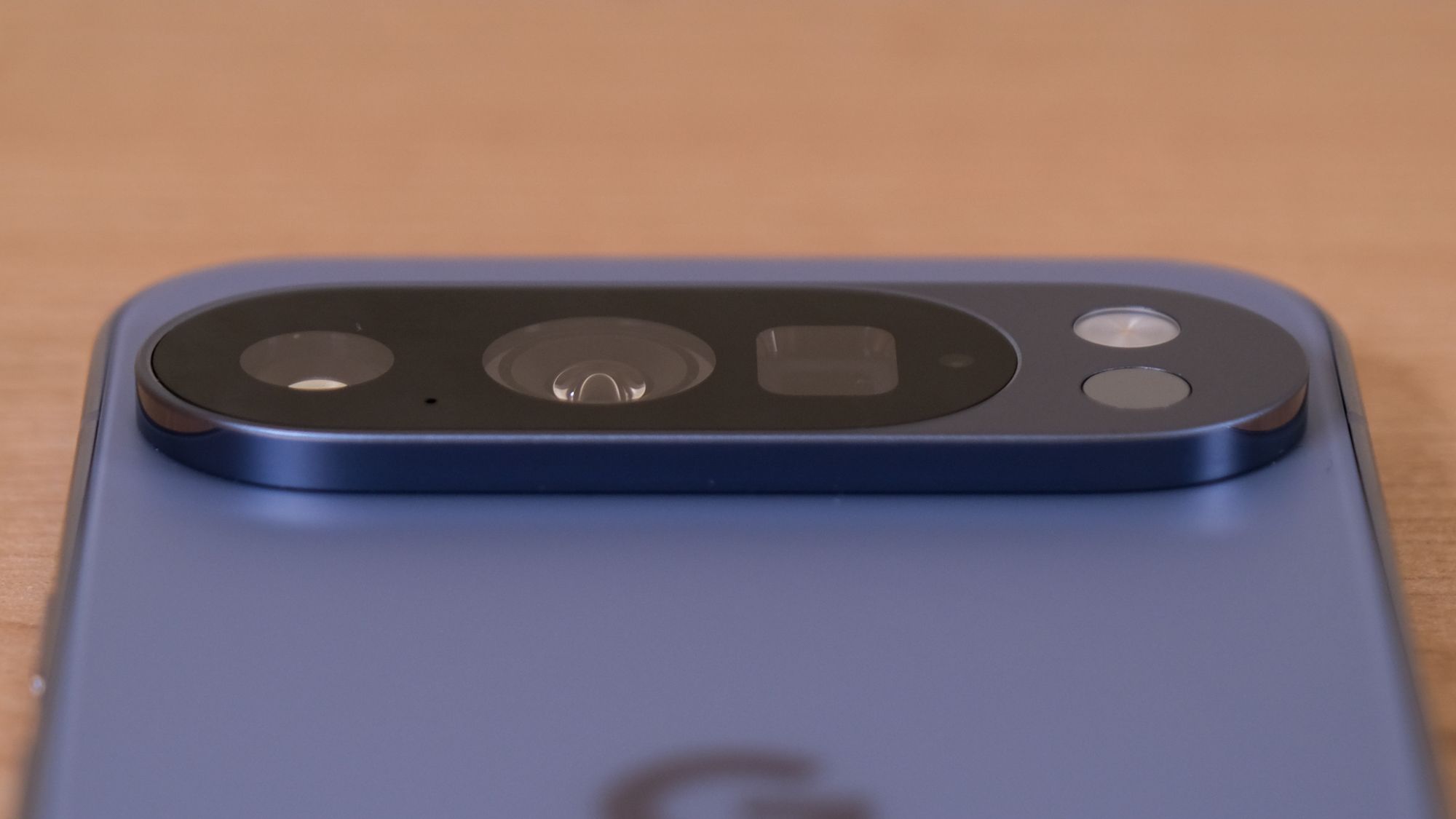
Is a weak telephoto worse than having no telephoto at all?
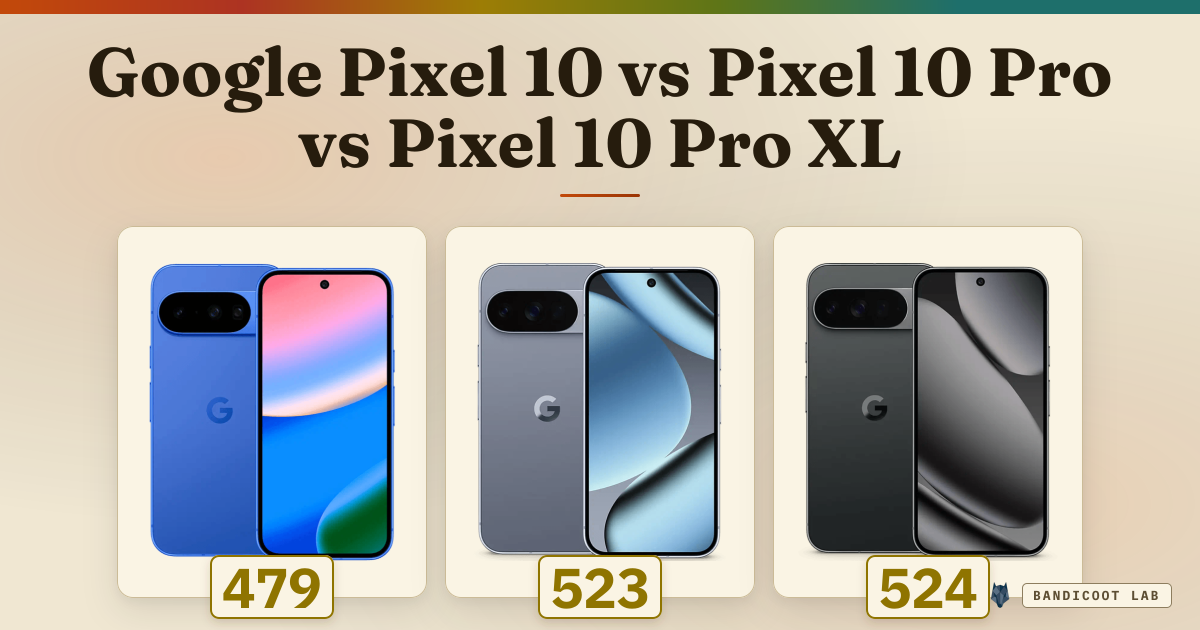
Google Pixel 10 vs Pixel 10 Pro vs Pixel 10 Pro XL
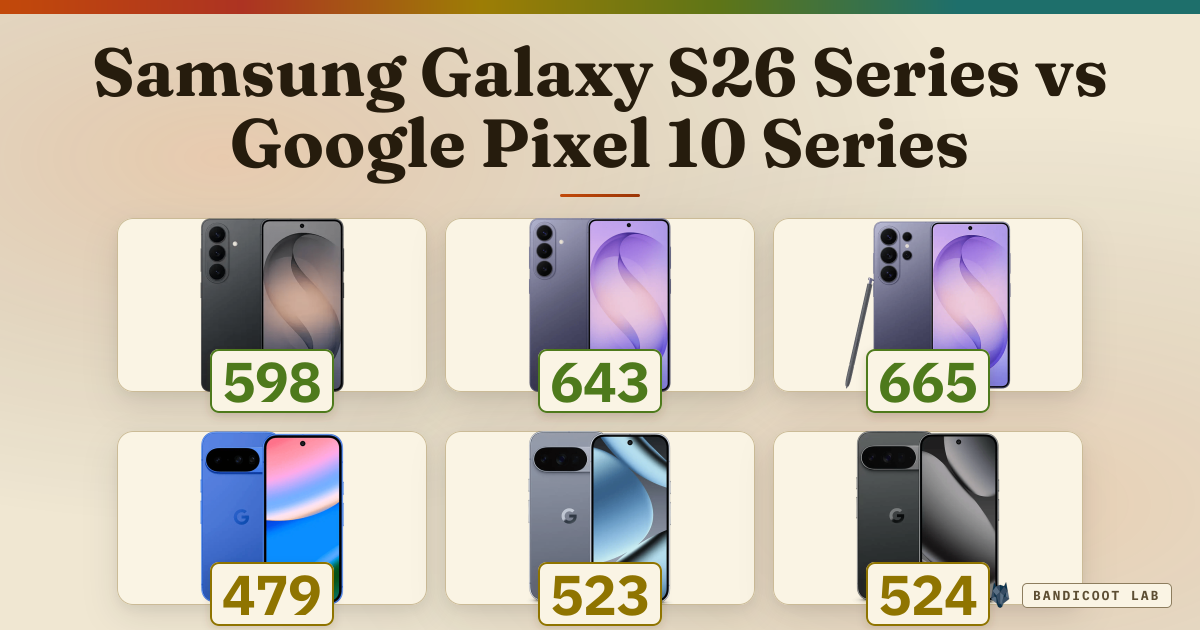
Samsung Galaxy S26 Series vs Google Pixel 10 Series
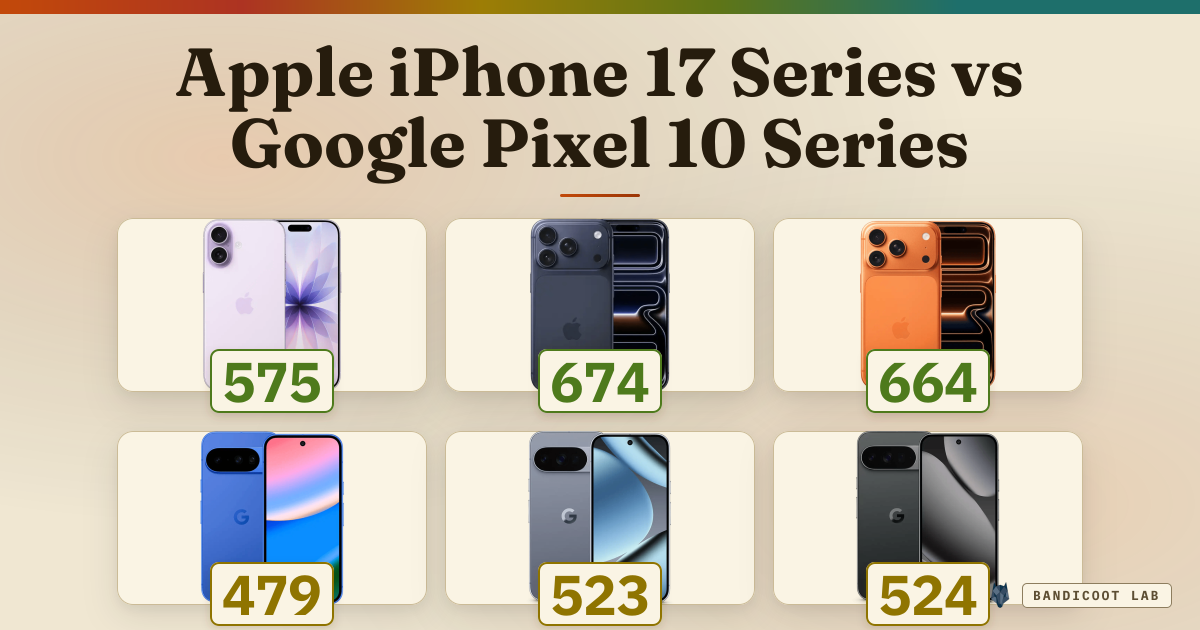
Apple iPhone 17 Series vs Google Pixel 10 Series
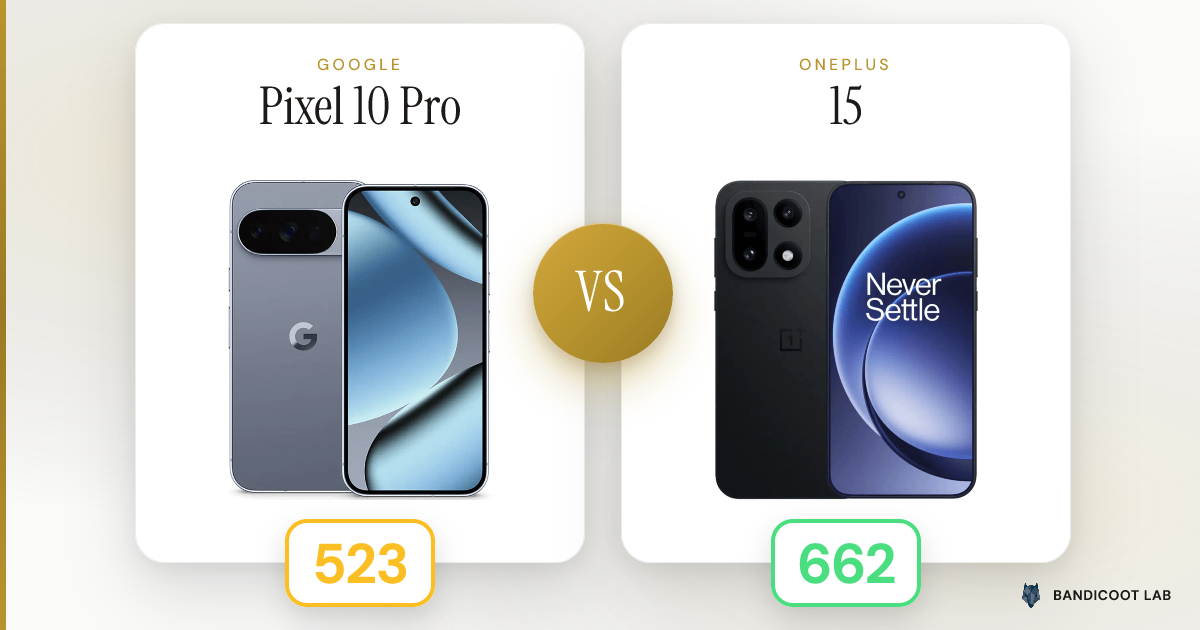
Google Pixel 10 Pro vs OnePlus 15
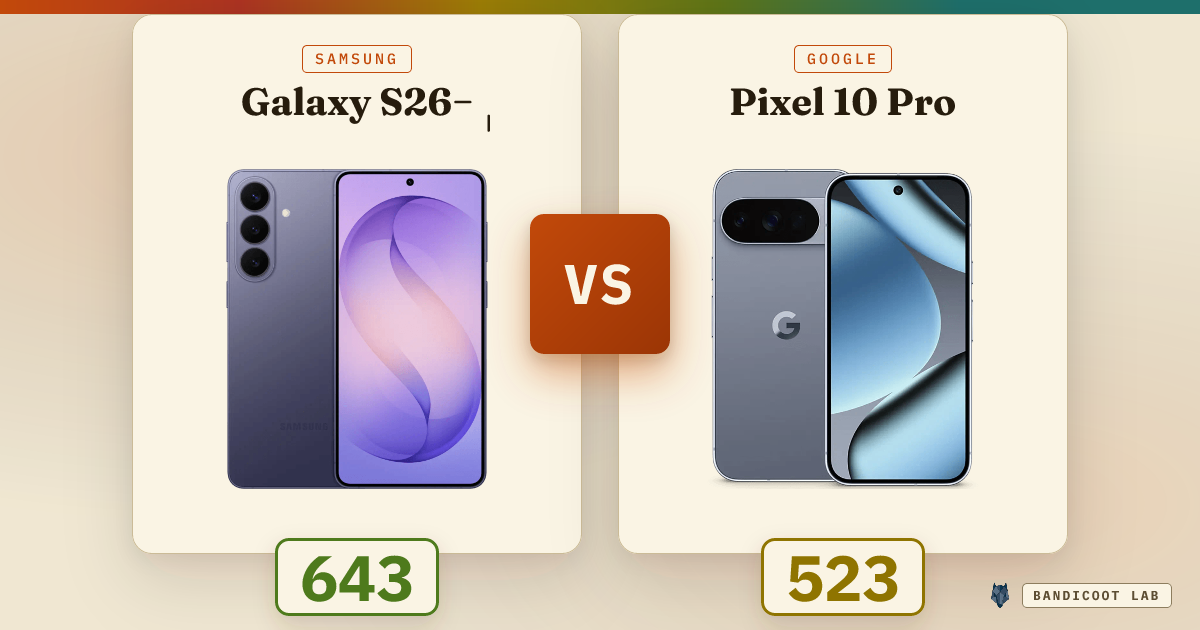
Samsung Galaxy S26+ vs Google Pixel 10 Pro
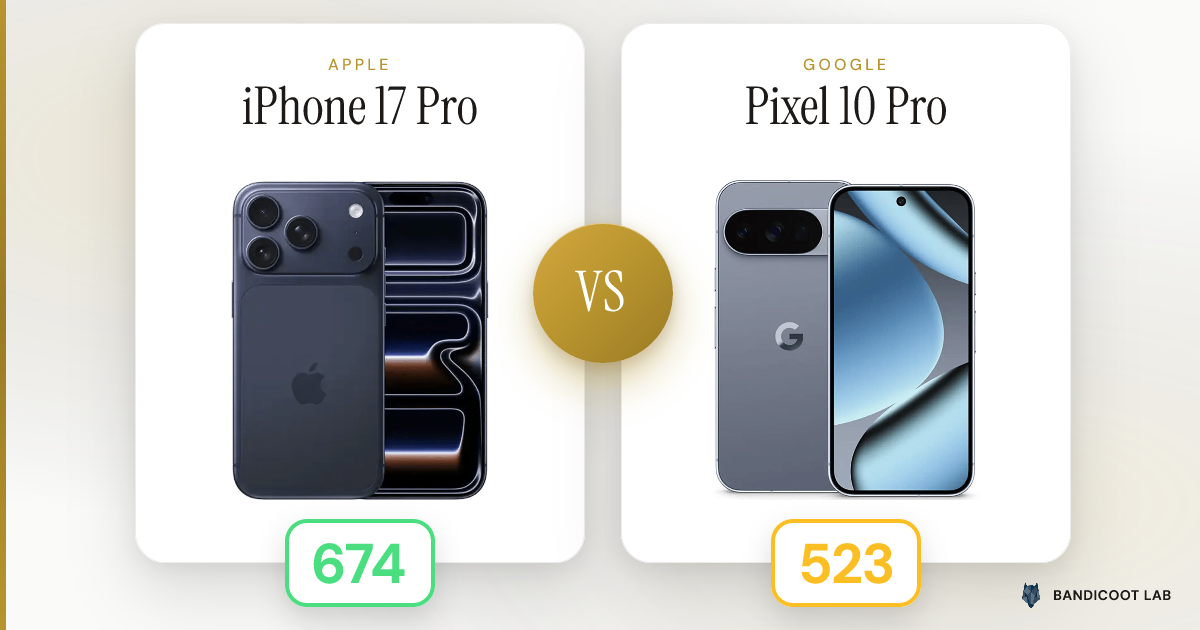
Apple iPhone 17 Pro vs Google Pixel 10 Pro
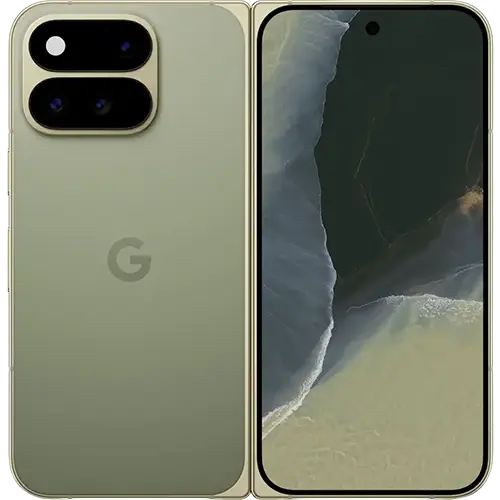
Pixel 11 Pro Fold
Pixel 11 Pro