Apple iPhone 17e
Score Overview
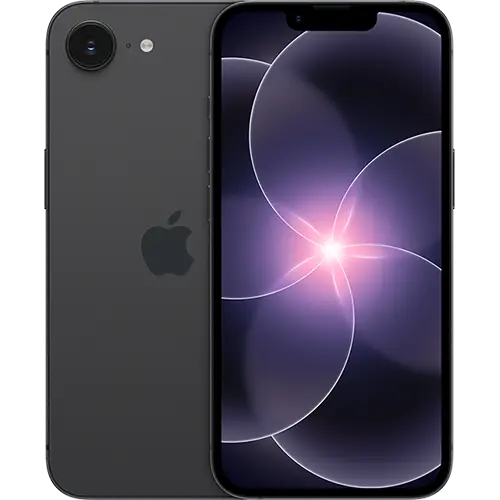
The iPhone 17e is Apple's budget-oriented iPhone, priced at $599. It shares the same A19 chip found in the standard iPhone 17 but pairs it with a smaller 6.1-inch display, a single rear camera, and more modest charging speeds. The physical design is nearly identical to its predecessor, the iPhone 16e with the main upgrades happening inside, including a newer processor, faster wireless charging with MagSafe support, and improved image processing.
The iPhone 17e's strengths are concentrated in a few areas. The speaker system is good, performance is well above average for a $599 phone, and the display — while limited to 60Hz — is color-accurate. The weaknesses include a battery life that’s below average, while charging is slow, and the single-camera system limits versatility.
Here’s how the iPhone 17e performed in our testing.
Design
Specifications
The iPhone 17e measures 146.7 x 71.5 x 7.8mm and weighs 169 grams. It uses an aluminum frame with Ceramic Shield 2 on the front and a glass back. The 6.1-inch display has a 19.5:9 aspect ratio and an 87.1% screen-to-body ratio. An IP68 rating covers full dust ingress and fresh-water submersion beyond 1 meter, with depth and duration set by Apple. Bandicoot Lab does not formally test design or durability, so this section is descriptive rather than scored.
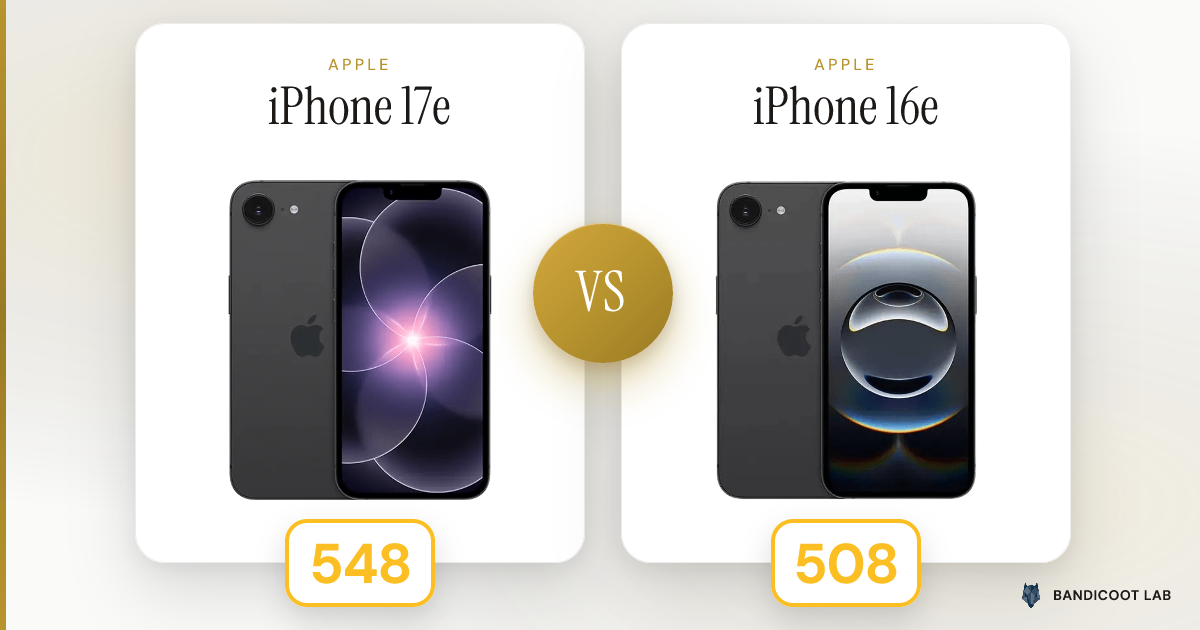
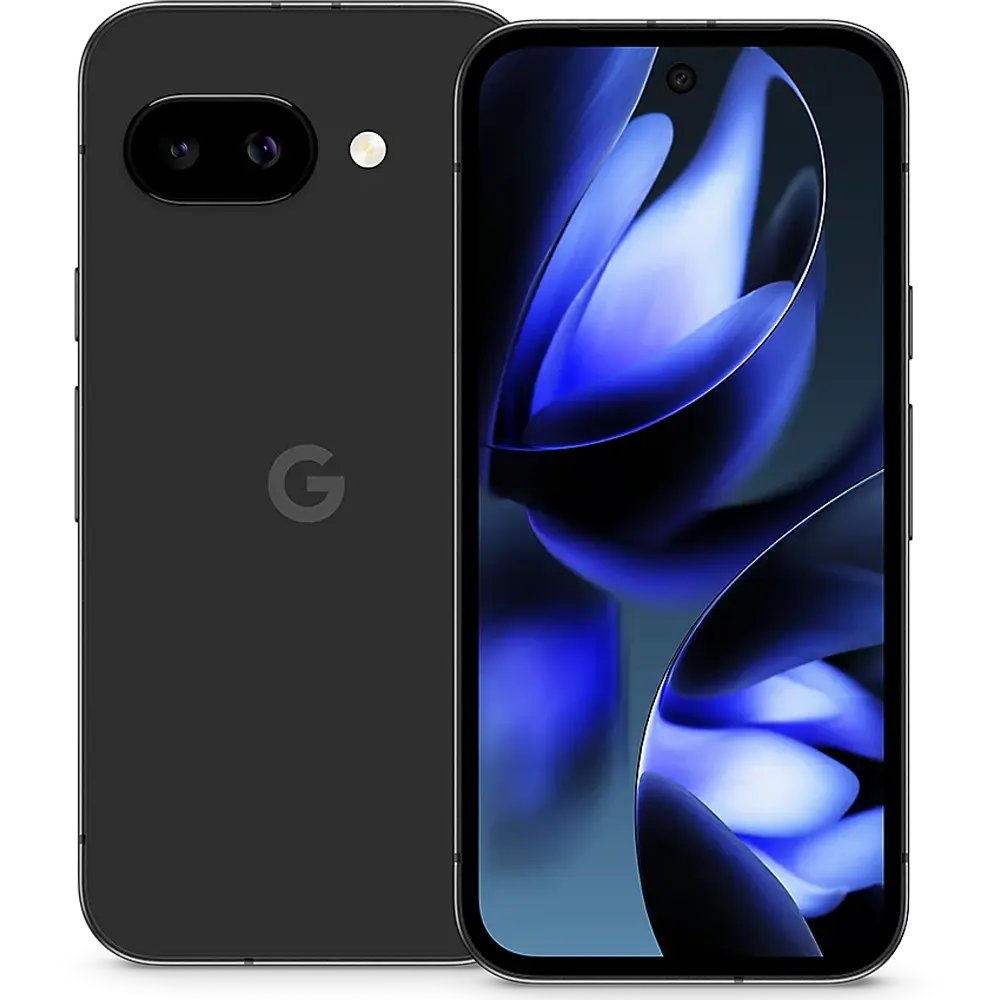
The iPhone 17e shares its physical dimensions with the iPhone 16e (167 grams, 146.7 x 71.5 x 7.8mm) and gains 2 grams along with the newer Ceramic Shield 2 front glass. Within the current Apple lineup it's the smallest and lightest option, well below the iPhone 17 (177 grams, 6.3-inch display) and the iPhone Air (165 grams but a much larger 6.5-inch display at 5.6mm thick). The Pixel 9a at the same $499 price is larger at 154.7 x 73.3 x 8.9mm and heavier at 186 grams, with a plastic back.
Display
The iPhone 17e uses a 6.1-inch Super Retina XDR OLED panel at 1170 x 2532, yielding 460 pixels per inch. The refresh rate caps at 60Hz — no ProMotion or LTPO here.
Color accuracy is a strength though. In its default mode, the display targets sRGB and achieves an average Delta E of 0.94, meaning colors are nearly indistinguishable from their reference values to the naked eye. That's tighter than the iPhone 16e's 1.13 and noticeably better than the standard iPhone 17's 1.77. sRGB gamut coverage is 99.68%, with Display P3 coverage at 75.42%.
Brightness is more modest. Manual brightness tops out at 850 nits, and HDR peak brightness reaches 1,163 nits with perfect 100% stability — meaning it holds that peak without dropping off when displaying larger window sizes. Those figures are virtually identical to the iPhone 16e's and adequate for most indoor use, but fall well short of the Pixel 9a's 2,652-nit HDR peak or the OnePlus 15R's 3,158 nits. In direct sunlight, the difference is tangible — the iPhone 17e will be harder to read outdoors than those brighter competitors. The minimum brightness of 1.78 nits is low enough for comfortable use in a dark room.
Touch latency averages 62.3ms, which is an improvement over the iPhone 16e's 74.7ms but still high compared to the Pixel 9a (21.9ms) or the OnePlus 15R (24.1ms). Combined with the 60Hz refresh rate, the display feels noticeably less responsive than similarly priced Android phones. Scrolling and general interaction lack the fluidity of a 120Hz panel.
Performance
The iPhone 17e runs Apple's A19 chip with 8GB of RAM. It's the same silicon used in the $799 iPhone 17.
In Geekbench 6, the iPhone 17e scores 3,669 single-core and 9,152 multi-core — a roughly 10% jump over the iPhone 16e, and it places the phone comfortably ahead of Android competitors at this price. The Pixel 9a doesn’t come close, and even the more expensive OnePlus 15R with its Snapdragon 8 Gen 5 posts scores that competitive in multi-core but significantly behind in single-threaded tasks.
GPU performance tells a similar story. In 3DMark Wild Life Extreme, the iPhone 17e peaks at 3,884 and settles to 2,968 under sustained load, for 76.4% stability. That's a meaningful step up from the iPhone 16e's 3,739 peak and 66.2% stability — the newer phone throttles less and maintains more consistent frame rates during extended gaming. The Solar Bay benchmark, which tests ray tracing GPU features, shows a peak of 8,123 with 77.5% stability.
Browser performance (Speedometer) comes in at 35.8, slightly ahead of the iPhone 16e's 34.3 and far ahead of the Pixel 9a's 18.6. Everyday tasks, like app launches, web browsing, multitasking — will feel snappy.
Camera
The iPhone 17e has a single 48-megapixel rear camera (f/1.6, 26mm equivalent, 1/2.55" sensor) and a 12-megapixel front camera (f/1.9, 23mm equivalent). There's no ultrawide, and no telephoto — all zoom is digital, up to 10x. This is unchanged from the iPhone 16e's hardware configuration.
The main camera produces good results at 1x in bright light but drops off meaningfully at extended zoom levels and in low light. Sharpness is the main camera's clearest strength. The 1x shots are among the sharper results measured from this sensor size. Zoom performance is better than the iPhone 16e across the board — the 4x through 10x range shows noticeably cleaner detail with less aggressive sharpening artifacts. That said, if you regularly crop or zoom past 5x, the results will look soft and processed.
The front camera scores well for sharpness, actually outpacing several phones with higher-resolution selfie sensors. Overall, though, camera versatility is limited — with no ultrawide or telephoto, you're relying on one lens for everything, which puts the iPhone 17e behind multi-camera phones like the Pixel 9a or OnePlus 15R in total system capability.
Main
At 1x in bright light, the main camera resolves strong detail with moderate sharpening — enough to enhance perceived clarity without introducing heavy halos around edges. Sharpness holds up well in mid-light conditions and drops only slightly in low light, which is a solid result for a sensor this size. The iPhone 16e shows similar 1x sharpness in bright light but falls behind at mid and extended zoom levels, where the iPhone 17e's updated processing extracts more usable detail.
Color accuracy in bright light is good. The processed images show a slight saturation boost — Apple's tuning leans toward vivid but not dramatically so. Hue accuracy is reasonable, and skin tones in bright conditions stay close to their true values. In mid-light (tested at 4000K to simulate warm indoor lighting), the processing pushes saturation more aggressively and introduces a visible warm shift that the white balance doesn't fully correct. Skin tones drift noticeably from their actual appearance — this is partly the camera struggling with the warmer lighting and partly Apple's processing leaning into warmth. Low-light results show further hue rotation as the sensor works harder, and there's a strong warm bias in the processed output that makes colors look shifted toward yellow-orange.
Dynamic range is a strength. The processed images capture a wide tonal range with smooth gradation between highlights and shadows. Highlight clipping is managed well, and there are no tonal reversals. This matches or slightly exceeds the iPhone 16e's dynamic range performance.
Front
The 12-megapixel front camera resolves good detail in bright and mid-light conditions, with sharpness that holds up better than several competing selfie cameras. In low light, detail drops but remains usable. Sharpening is moderately aggressive in bright conditions, which adds perceived crispness but can introduce slight haloing around high-contrast edges.
Color is more problematic. In bright light, the front camera oversaturates and shifts skin tones away from their reference values — a meaningful deviation that makes selfies look warmer and more vivid than reality. In mid-light, the warm processing bias compounds with the warmer test lighting, and hue shifts become more pronounced. Low-light selfies show significant color drift, with heavy warm bias and substantial desaturation — skin tones can look noticeably off. The iPhone 16e's front camera behaves similarly.
Dynamic range from the front camera is solid, with good highlight and shadow retention. Video stabilization shows moderate improvement over the iPhone 16e but doesn't match the iPhone 17's front-camera stabilization.
Battery
The iPhone 17e packs a 4,005mAh battery — identical to the iPhone 16e. At a normalized 200-nit brightness, it lasts 18 hours and 27 minutes of continuous video playback. At maximum brightness, that drops to about 15 hours. Those numbers are nearly identical to the iPhone 16e's 18 hours 39 minutes (200 nits) and 15 hours 42 minutes (max brightness).
In context, this is below average. The Pixel 9a, with its larger 5,100mAh battery, stretches to over 26.5 hours at 200 nits. The OnePlus 15R, with its enormous 7,400mAh cell, manages over 44 hours. Even the smaller-battery iPhone 17 (3,692mAh) outlasts the 17e at over 22 hours.
Web browsing drain is on the high side, at 33% over the five-hour test. The iPhone 16e managed 29%, and the iPhone 17 drops just 22% over the same period. The 60Hz display can't reduce its refresh rate during static content the way LTPO panels can, and that costs battery life during mixed-use scenarios.
Gaming drain is actually a bright spot though. The phone drained 17% during the stress test, which is better than the iPhone 16e (19%), the iPhone 17 (27%), and the Pixel 9a (22%). The A19's power efficiency under GPU load is evident. Standby drain is 3% over eight hours.
For typical daily use — some browsing, messaging, streaming, light gaming — most users will get through a day, but some may need to top up by evening.
Charging
The iPhone 17e charges at up to 20W wired and 15W wirelessly, with MagSafe magnetic charging support. The MagSafe addition is new compared to the iPhone 16e, which was limited to 7.5W wireless and lacked magnetic alignment.
Wired charging reaches 25% in 10 minutes and 61% in 30 minutes. Those figures are identical to the iPhone 16e — the same charging speed with the same battery size produces the same results. The iPhone 17 (40W) reaches 73% in 30 minutes, and the OnePlus 15R (80W) hits 63% in the same timeframe despite a battery nearly twice the size. At 20W, the iPhone 17e is slow by modern standards.
Wireless charging is where the upgrade matters. At 15W with MagSafe, the iPhone 17e reaches 17% in 10 minutes and 38% in 30 minutes — a major jump from the iPhone 16e's 7.5W wireless charging. Magnetic alignment also means the phone snaps to chargers and accessories reliably. Still, 15W wireless is modest — the iPhone 17 manages 25% in 10 minutes and 49% in 30 minutes at 25W.
If you're migrating from the iPhone 16e, MagSafe compatibility is a practical upgrade for nightstand charging and car mounts. For anyone hoping for fast charging, 20W wired remains a limitation.
Speaker
The iPhone 17e's speaker system is one of its standout components. It scores well above average, and the measurements back it up.
Maximum volume reaches 69.1 dB — slightly quieter than the iPhone 16e's 70.5 dB and well behind the iPhone 17's 75 dB, but still adequate for most situations. Where the iPhone 17e separates itself is in cleanliness. It has an average total harmonic distortion is just 4.45%, which is relatively low. The speaker produces clean, undistorted audio even at higher volume levels. The iPhone 16e is similarly clean, but many competitors — including the iPhone 17 at 9.69% and the OnePlus 15R at nearly 16% — introduce substantially more distortion.
Frequency response is balanced with a standard deviation of 5.47 dB across the midrange and highs. Bass extension is limited, as expected from a phone speaker, but the highs are notably consistent with just 1.73 dB of deviation. The overall result is a speaker that sounds clear and even-tempered, if not especially loud or bass-heavy.
Microphone
The iPhone 17e's microphone performs slightly above average, with a frequency response standard deviation of 4.51 dB. That's a small improvement over the iPhone 16e's 4.75 dB and comparable to the iPhone 17's 4.52 dB. Voice calls, video recordings, and voice memos will sound clear with reasonably natural tonality. Nothing exceptional, but reliably competent.
Other
Measurements
Specifications
Average unlock speed using Face ID is 458ms, slightly faster than the iPhone 16e's 476ms but still slow compared to fingerprint-equipped phones. The Pixel 9a's ultrasonic fingerprint unlocks in about 210ms, and the OnePlus 15R manages 158ms.
Data transfer uses USB-C 2.0, capping read speeds at about 39 MB/s and write speeds at roughly 38 MB/s. This is functionally identical to the iPhone 16e and iPhone 17 — Apple continues to use USB 2.0 across its non-Pro lineup. The Pixel 9a's USB-C 3.2 delivers read speeds over 177 MB/s. Transferring large files or backing up locally will be noticeably slow on the iPhone 17e.
Conclusion
The iPhone 17e delivers strong performance for its price, courtesy of the A19 chip, and pairs it with an exceptionally accurate display and clean speaker output. Those are advantages that most users will appreciate day-to-day. The processor alone puts it well ahead of similarly priced Android phones in raw speed, and the speaker quality is better than phones costing hundreds more.
The compromises are significant, though. A 60Hz display with above-average touch latency makes the phone feel less responsive than $499–$699 Android alternatives. Battery life is below average and hasn't improved over the iPhone 16e. Charging is slow. The single-camera system produces good 1x photos but can't match the versatility of multi-lens setups found on the Pixel 9a or OnePlus 15R. And USB 2.0 data transfer is a persistent limitation across Apple's non-Pro phones. The iPhone 17e is best suited for buyers who prioritize processing power and ecosystem integration over display smoothness, battery endurance, and camera flexibility.
Related
Nothing Phone (4b) vs Apple iPhone 17e
Apple iPhone 17e vs iPhone 16e
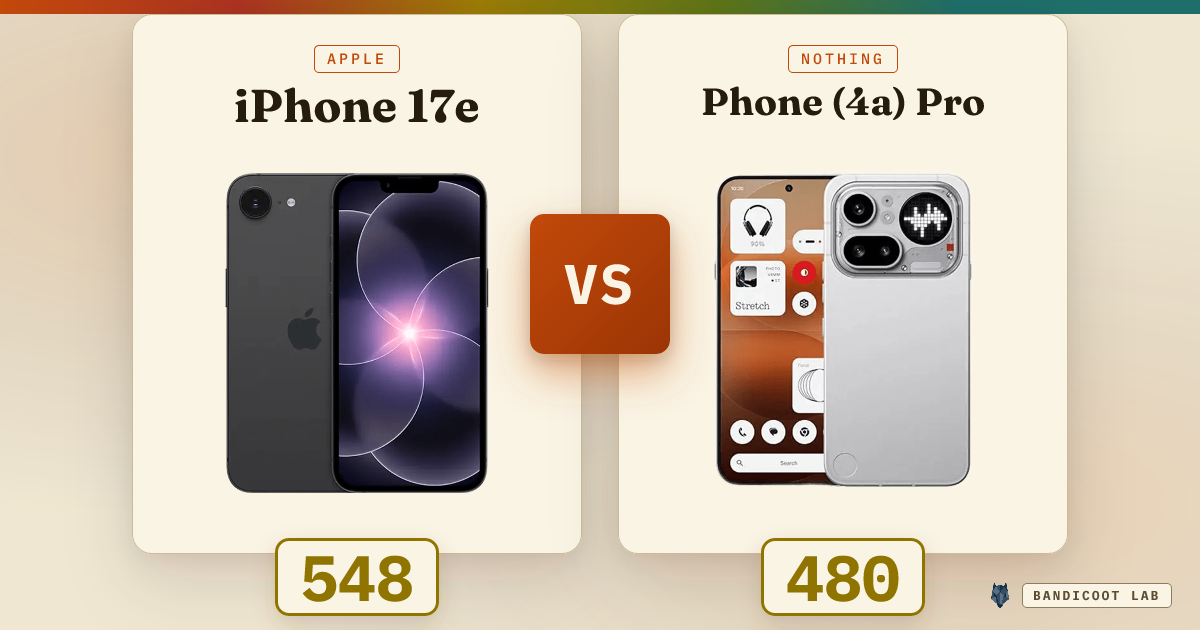
Apple iPhone 17e vs Nothing Phone (4a) Pro
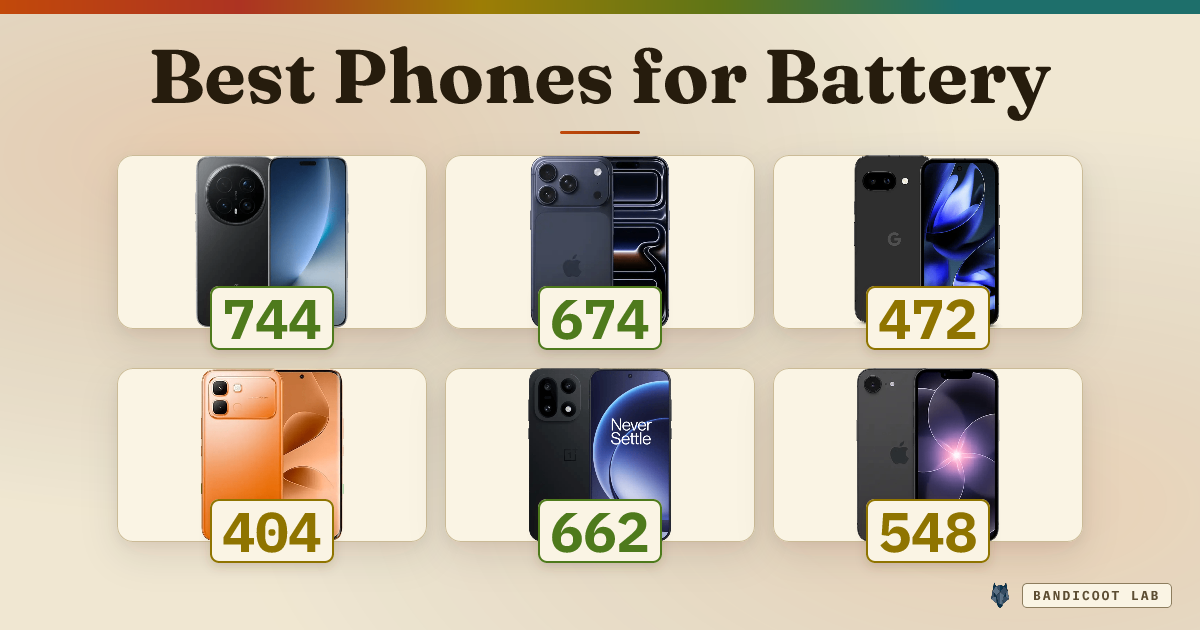
Best Phones for Battery
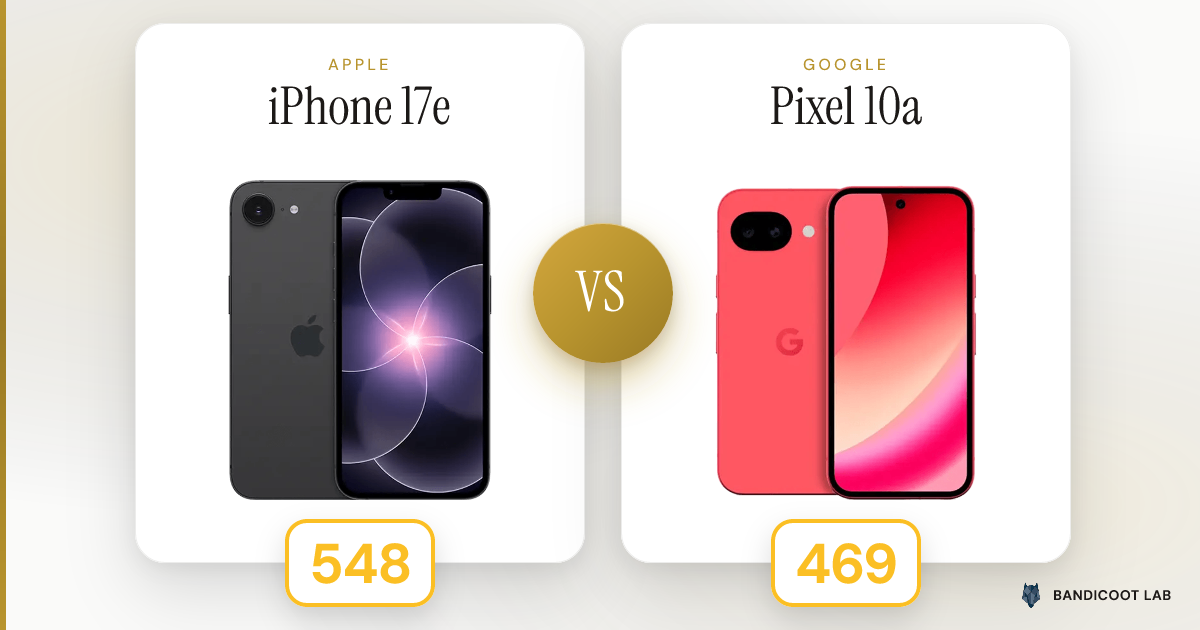
Apple iPhone 17e vs Google Pixel 10a
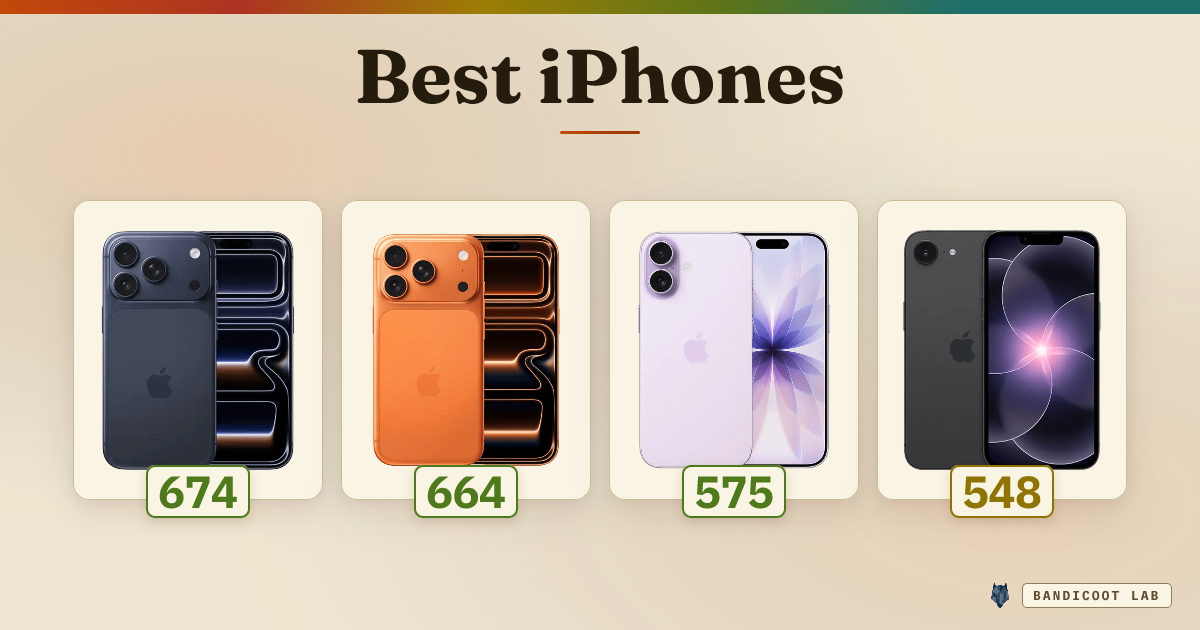
Best iPhones
Poco
F9 Pro
RedMagic
11 Air
Honor
600
Nothing
Phone (4a) Pro
Pixel 9a