Apple iPhone 17 Pro
Apple
iPhone 17 Pro
Ranked #5 of 61 devices tested
Score Overview
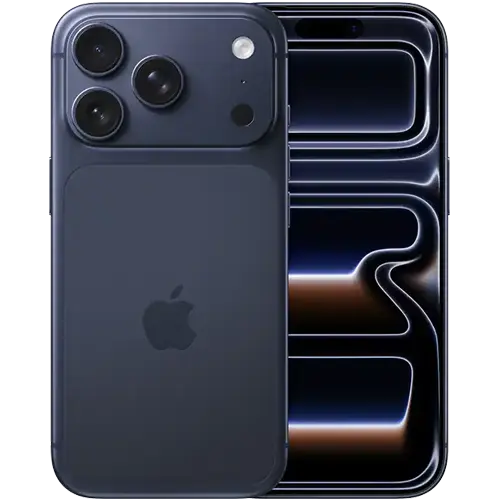
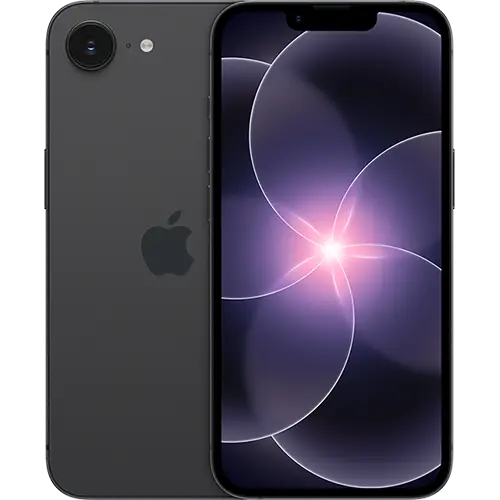
The iPhone 17 Pro is Apple's $1,099 flagship, built around the A19 Pro chip and a 6.3-inch LTPO OLED display at 460 PPI. It carries a triple rear camera system. It sits $100 below the iPhone 17 Pro Max and $300 above the standard iPhone 17.
The iPhone 17 Pro performs well across most categories. Battery life, camera quality, speaker output, and display accuracy are all genuine strengths. Processing power is high, as expected from Apple's silicon. Overall, it's a well-rounded device with few gaps, though some competitors at or below its price offer stronger performance in specific areas like charging speed and display brightness.
Design
Specifications
The iPhone 17 Pro measures 150 x 71.9 x 8.8mm and weighs 206 grams. It uses an aluminum frame with Ceramic Shield 2 on the front and a Ceramic Shield back. The 6.3-inch display has a 19.5:9 aspect ratio and a 90.3% screen-to-body ratio, which translates to thin bezels around the panel. An IP68 rating covers full dust ingress and fresh-water submersion beyond 1 meter, with depth and duration set by Apple. Bandicoot Lab does not formally test design or durability, so this section is descriptive rather than scored.
Within Apple's lineup the iPhone 17 Pro sits between the iPhone 17 (177 grams, 8mm thick, glass back) and the iPhone 17 Pro Max (233 grams, 6.9-inch display). The extra 29 grams over the standard iPhone 17 at the same display size reflects the Ceramic Shield back and larger 4252mAh battery. Compared to same-price rivals, the Pixel 10 Pro at $999 is nearly identical in footprint (152.8 x 72 x 8.5mm, 207 grams), while the Galaxy S25 Ultra at $1,299.99 is taller and heavier at 162.8 x 77.6 x 8.2mm and 218 grams but uses a titanium frame and a larger 6.8-inch display.
Display
The iPhone 17 Pro's 6.3-inch LTPO OLED panel runs at 1206 x 2622 resolution (460 PPI) with a 1–120Hz adaptive refresh rate. Manual brightness tops out at about 885 nits, which is adequate for outdoor use but noticeably lower than the Pixel 10 Pro's roughly 1,450-nit maximum. HDR peak brightness reaches 3,043 nits — a strong figure that outpaces the Pixel 10 Pro and the Samsung Galaxy S26+ — though brightness stability during sustained HDR content drops to about 39%, meaning it can't hold those peaks for long. The Galaxy S26+ and Pixel 10 Pro both sustain their brightness far more effectively over time.
Color accuracy is where this display excels. In its default mode, it achieves an average Delta E of 0.85 with sRGB gamut coverage at 99.88%. That Delta E figure means colors are essentially indistinguishable from their reference targets to the human eye — very few phone displays hit this level of accuracy. The iPhone 17 Pro Max, using what appears to be the same panel technology at a larger size, measured a alighy higher average Delta E of 1.23, and the standard iPhone 17 came in at 1.77.
Touch latency averages 52.7ms. That's substantially higher than the Pixel 10 Pro (11.6ms), Honor Magic8 Pro (17.2ms), and Samsung Galaxy S26+ (15.9ms). In practice, most users won't perceive this during normal interactions like scrolling or typing.
Performance
The iPhone 17 Pro runs the Apple A19 Pro chipset with 12GB of RAM. In Geekbench 6, it scores 3,918 single-core and 10,158 multi-core. Single-core performance is excellent — the Galaxy S26+ (3,791) and OnePlus 15 (3,606) both trail meaningfully. Multi-core results are still very good, but the Snapdragon 8 Elite Gen 5 devices pull ahead, with the Galaxy S26+ reaching 11,523 and the OnePlus 15 hitting 11,442.
GPU performance measured via the 3DMark Wild Life Extreme stress test shows a peak score of 5,865 and a lowest loop of 4,095, yielding 69.8% stability. The peak GPU output lags behind the Snapdragon 8 Elite Gen 5 devices — the Galaxy S26+ peaked at 7,867 and the OnePlus 15 at 7,160 — though the iPhone 17 Pro throttles less aggressively than both of those phones. In the Solar Bay ray-tracing test, it peaks at 12,031 with 63.5% stability, again trailing the Snapdragon competitors but managing thermals well.
Browser performance is strong, with a Speedometer score of 43.1. This closely matches the Galaxy S26+ (44.3) and Honor Magic8 Pro (44.7), and represents a meaningful step up from the standard iPhone 17 (33.5).
Compared to the standard iPhone 17 (A19, 8GB RAM), the Pro variant delivers modestly higher single-core and multi-core CPU scores, meaningfully better GPU output, and a clear advantage in browser performance. In everyday use, both phones will feel fast; the Pro's advantages surface in sustained workloads and GPU-heavy applications.
Camera
The iPhone 17 Pro's camera system pairs a 48-megapixel main sensor (1/1.28-inch, f/1.78, 24mm) with a 48-megapixel ultrawide (1/2.55-inch, f/2.8, 13mm), a 48-megapixel 4x telephoto (1/2.55-inch, f/2.8, 100mm), and an 18-megapixel front camera (f/1.9, 20mm). The overall camera score is very strong, driven primarily by strong sharpness across most focal lengths, effective stabilization on the telephoto and front cameras, and solid dynamic range from the telephoto.
Sharpness at 1x is strong across all lighting conditions, and the camera holds up well through the 2x and 4x crop and optical zoom ranges. The 4x telephoto delivers notably high sharpness — substantially better than what the standard iPhone 17 achieves at equivalent zoom levels through digital cropping. At deeper zoom levels, however, sharpness drops off significantly. By 20x, the iPhone 17 Pro falls behind the Pixel 10 Pro and Honor Magic8 Pro, both of which maintain more detail at extended zoom ranges. At 30x and beyond, the iPhone's output becomes quite soft, and by 40x — its maximum — the image is heavily degraded. The Pixel 10 Pro, with its 5x optical telephoto, holds sharpness better through these ranges, and the Honor Magic8 Pro's 200-megapixel telephoto sensor provides a meaningful advantage in the 20–40x range.
Color processing across all lenses favors a punchy, saturated look in auto mode — saturation is boosted well above reference targets, particularly for skin tones in bright light. This is a processing style choice rather than an accuracy failure. Hue accuracy is generally reasonable in bright conditions but deteriorates in mid and low light, where a combination of sensor-level hue confusion from higher ISO and incomplete white balance correction for the warmer test lighting introduces noticeable warm shifts and pink-magenta tinting in skin tones.
Main
The 48-megapixel main sensor captures strong detail across lighting conditions. Sharpness is high in bright light and holds up well as conditions dim, with only a modest reduction in low light. Apple's processing applies moderate sharpening that stays well-controlled without obvious haloing.
Color in auto mode is vivid. In bright light, saturation is pushed, and skin tones deviate substantially from accurate values. Hue accuracy is reasonable in good light, with relatively small hue shifts. In mid-light conditions under warmer illumination, there's a noticeable warm shift — colors push toward yellow-orange — which is partly due to the warmer test lighting and partly from incomplete white balance correction. In low light, hue accuracy degrades further, with skin tones shifting noticeably and overall saturation actually dropping below target levels as the processing struggles to balance noise reduction with color fidelity.
Dynamic range in auto mode is moderate. The processing applies heavy tone compression — more than any other lens on the phone — which preserves highlight detail but with some tonal monotonicity issues.
Ultrawide
The 48-megapixel ultrawide (f/2.8, 13mm) delivers high sharpness in bright conditions and maintains good detail in mid-light, though there's a drop in low light as expected from the smaller sensor and narrower aperture. Among the devices tested, its sharpness output is competitive with the Pixel 10 Pro's ultrawide and ahead of the Honor Magic8 Pro's.
Color handling follows the same general pattern as the main camera — punchy saturation in auto mode with good hue accuracy in bright light. In low-light auto mode, the warm bias intensifies notably. The ultrawide's auto-mode hue accuracy in low light is the weakest of any lens on the phone, with significant hue rotation.
Dynamic range in auto mode is decent, though it shows more tonal ordering issues than the telephoto or front cameras. The ultrawide doesn't match the main or telephoto for dynamic range performance, which is expected given the smaller sensor.
Telephoto
The 48-megapixel telephoto (f/2.8, 100mm, 4x optical) is one of the stronger lenses on this phone. At its native 4x focal length in bright light, sharpness is very high. It holds up reasonably well in mid-light and drops in low light, where the narrower aperture and smaller sensor limit what's possible.
Dynamic range from the telephoto is the standout metric. In auto mode, it captures a wide tonal range with controlled compression and minimal ordering violations — a notably stronger result than the main camera's auto-mode dynamic range. This is likely due to different HDR stacking behavior at longer focal lengths.
Color accuracy follows the same pattern as the other lenses, with saturated processing in auto mode and a warm bias that grows in dimmer conditions. The telephoto shows slightly larger hue shifts in bright light than the main lens, with a noticeable cool-green bias in certain color regions that shifts toward warm pink-magenta in lower light.
Video stabilization on the telephoto is very strong.
Front
The 18-megapixel front camera (f/1.9, 20mm) performs well overall. Sharpness is high across all lighting conditions.
Dynamic range in auto mode is strong, with wide tonal range and controlled processing. Color accuracy in auto mode follows the familiar pattern of boosted saturation, and the front camera shows similar warm-bias behavior in mid and low light. In low light specifically, hue accuracy degrades with both pink-magenta tinting from sensor noise and incomplete correction for the warm ambient lighting.
Video stabilization is effective, too.
Battery
The iPhone 17 Pro has a 4,252mAh battery — smaller than the 5,088mAh in the Pro Max and substantially smaller than the 7,100–7,300mAh cells found in the Honor Magic8 Pro and OnePlus 15. Despite this, it delivers strong battery life relative to its capacity.
Video playback at 200 nits lasts just under 24 hours, and at maximum brightness the phone manages about 20 hours. That's roughly two hours longer than the standard iPhone 17 at max brightness. The Pro Max, with its larger battery, matches the Pro almost exactly at 200 nits — suggesting the larger display offsets the capacity advantage. The OnePlus 15, with its much larger battery, stretches video playback to over 46 hours at 200 nits, a different class entirely.
Web browsing drain is 17% over five hours, translating to roughly 29 hours of continuous browsing — a solid result. The standard iPhone 17 drains 22% over the same period, and the Galaxy S26+ loses 26%. Only the OnePlus 15 (16%) and Honor Magic8 Pro (11%) do better in this test.
Gaming drain is where the iPhone 17 Pro performs effectively, draining 24%. The efficient A19 Pro and relatively small display contribute to this. Standby drain is minimal at 2% over eight hours.
In practical terms, most users should get through a full day comfortably with moderate to heavy use, and lighter users could stretch to two days.
Charging
The iPhone 17 Pro supports 40W wired charging and 25W wireless charging with MagSafe magnetic alignment. Wired charging reaches 31% in 10 minutes and 72% in 30 minutes. Wireless hits 24% at 10 minutes and 49% at 30 minutes.
These wired numbers are a slight improvement over the standard iPhone 17 (28% at 10 minutes, 73% at 30 minutes) and the Pro Max (29% at 10 minutes, 67% at 30 minutes). The Pro Max's larger battery naturally takes longer to fill despite having the same charging speed.
Compared to competitors, the iPhone 17 Pro's charging is conservative. The OnePlus 15 with 120W wired charging reaches 37% in 10 minutes and 88% in 30 minutes — getting to near-full in the time it takes the iPhone to reach 72%. The Honor Magic8 Pro similarly reaches 81% in 30 minutes with its 120W charger. Even the Galaxy S26+ with 45W charging hits 67% in 30 minutes, which is comparable to the iPhone.
Wireless charging is more competitive. The 25W wireless with 49% in 30 minutes beats most Android competitors — the Galaxy S26+ only manages 19% and the OnePlus 15 reaches 28% in the same timeframe. The Pro Max is slightly behind at 47% in 30 minutes despite having the same wireless charging spec.
Speaker
The iPhone 17 Pro's stereo speakers reach a maximum output of 75.2 dBA with an average total harmonic distortion of 4.696%. That distortion figure is lower than most of the competition right now. The result is clean output that avoids the harshness or buzzing that becomes evident on many phones at higher volumes.
The frequency response leans toward a balanced profile with strong high-end clarity and solid bass presence. The bass isn't as full as the Galaxy S26+ or Pro Max, but it's more present than many phones manage, and the treble range is well-extended. The overall character is crisp and articulate rather than warm and boomy — a profile that works well for podcasts, voice calls, and most music genres, though bass-heavy content won't have the body that some competitors provide.
The standard iPhone 17 is noticeably less clean at higher volumes, with roughly double the distortion level, though it manages slightly more bass presence. The Pro Max is close to the Pro in overall character, with somewhat more bass weight.
Microphone
The microphone is a weak point relative to the rest of the phone's performance. It scores below the database average, and the frequency response shows more unevenness than most competitors — the standard deviation of the frequency response is higher than the iPhone 17, iPhone Air, and several Android competitors. For calls, voice memos, and video recording, it's adequate but won't match the more consistent microphone output from the Galaxy S26+ or the iPhone Air, which tested notably better.
Other
Measurements
Specifications
Face ID averages 609.7ms to unlock, which is slow. For context, fingerprint-equipped phones like the Honor Magic8 Pro (171ms) and OnePlus 15 (204ms) are dramatically faster.
Data transfer via USB-C 3.2 Gen 2 yields read speeds of about 286 MB/s and write speeds around 244 MB/s. This is a significant upgrade over the standard iPhone 17 and iPhone Air, both of which are limited to USB-C 2.0 and measured under 40 MB/s. Among USB 3.2 devices, the iPhone 17 Pro's transfer speeds are competitive with the Pro Max and in the same range as the Honor Magic8 Pro and OnePlus 15.
Conclusion
The iPhone 17 Pro delivers a strong overall package with particular strengths in display color accuracy, gaming battery efficiency, speaker quality, and camera performance. The A19 Pro provides excellent single-core CPU speed and competitive GPU performance, though Snapdragon 8 Elite Gen 5 devices like the Galaxy S26+ and OnePlus 15 take the lead in multi-core and raw GPU output.
Its weaknesses are specific: charging speed lags well behind the Android competition, Face ID is slower than fingerprint alternatives, and the microphone underperforms relative to its price class. Deep zoom beyond 10x falls behind competitors with higher-resolution telephoto sensors. For buyers who prioritize display accuracy, efficient battery use, and a polished camera system within a compact 6.3-inch form factor, it competes well at $1,099. Those who value fast charging, raw processing power, or extended zoom range will find better options among Android flagships at similar or lower prices.
Related
Google Pixel 11 Pro vs Apple iPhone 17 Pro
Best Phone Displays
Best Phones
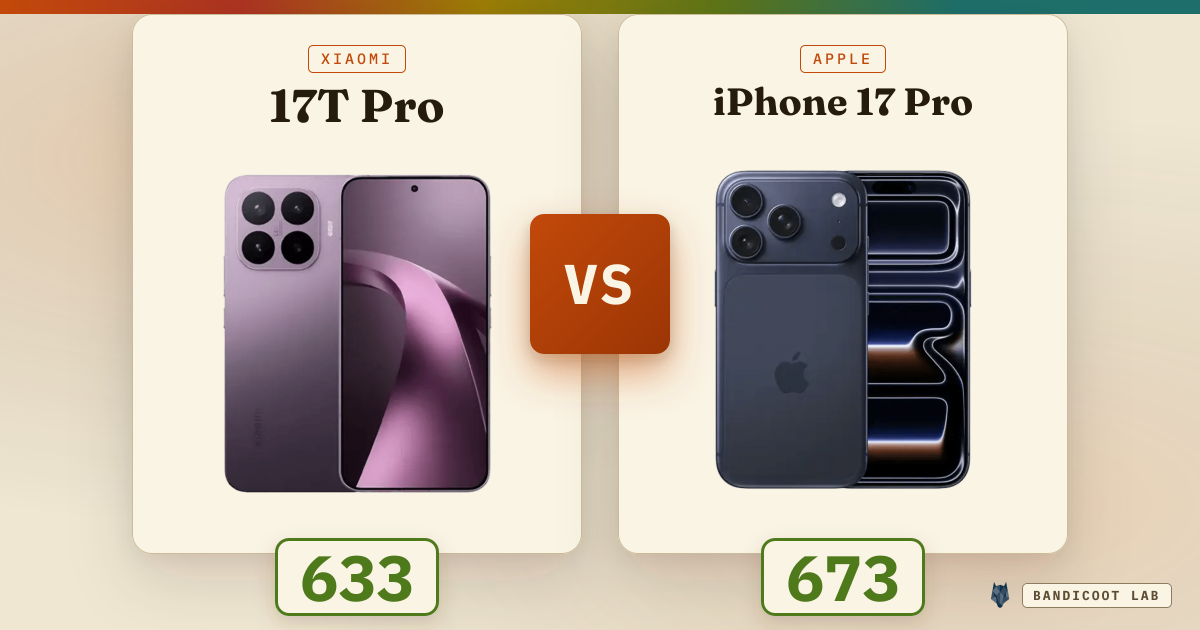
Xiaomi 17T Pro vs Apple iPhone 17 Pro
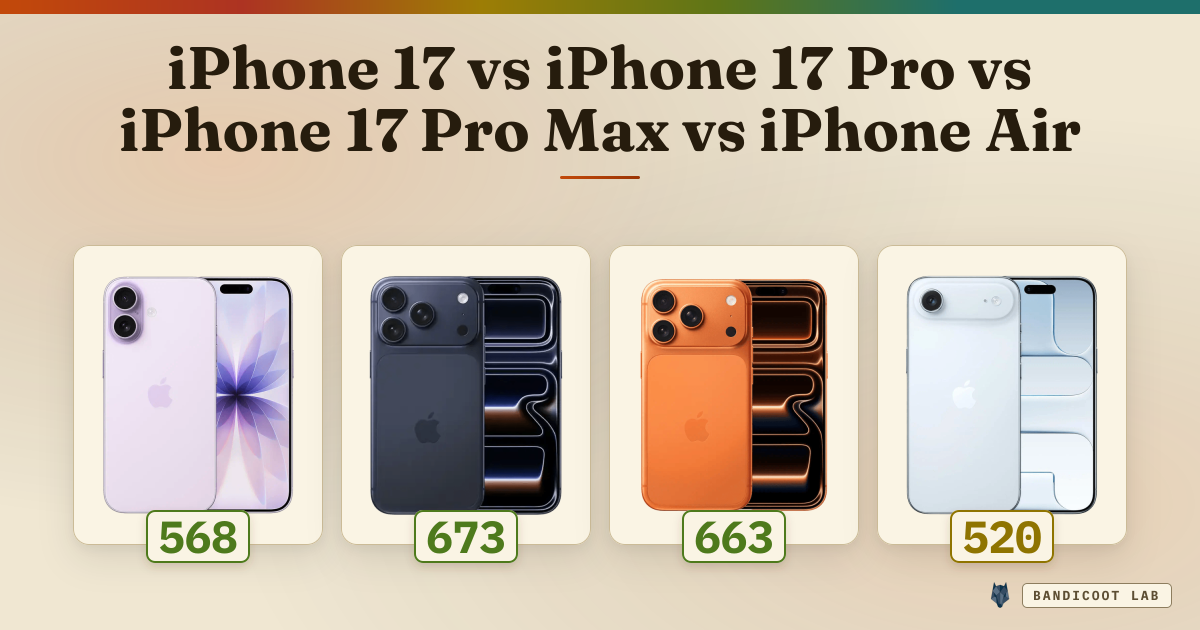
iPhone 17 vs iPhone 17 Pro vs iPhone 17 Pro Max vs iPhone Air
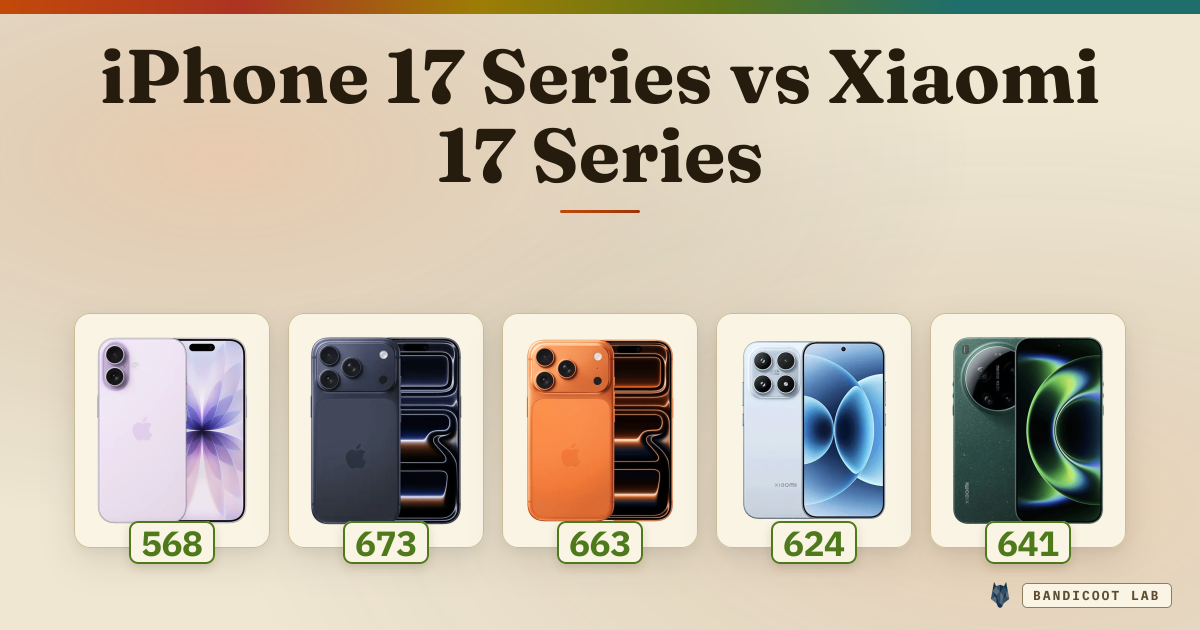
iPhone 17 Series vs Xiaomi 17 Series
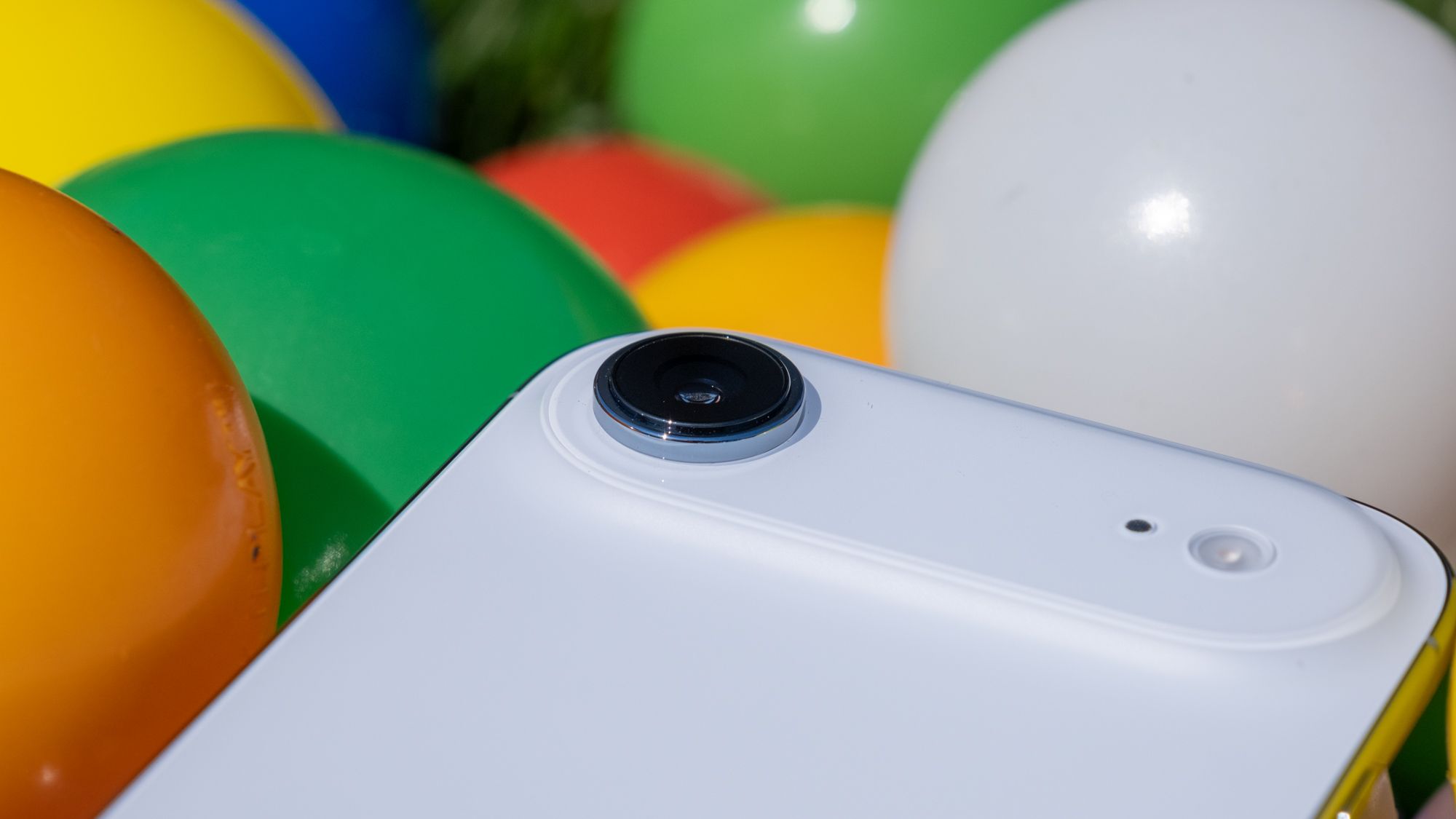
The house look: How phone brands tune camera color
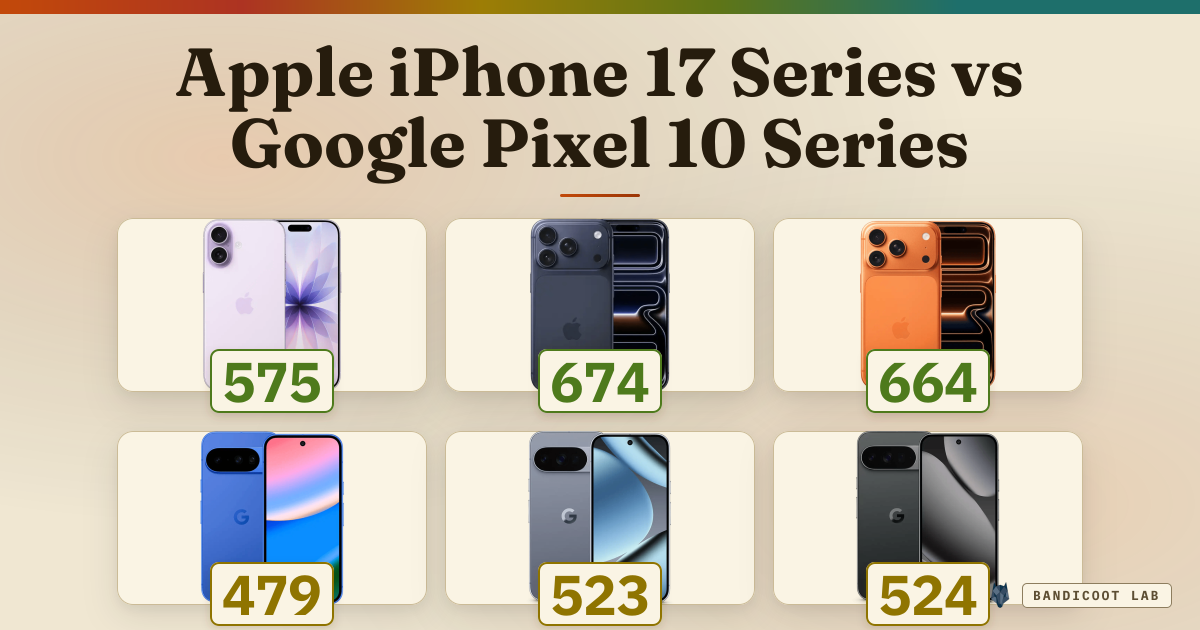
Apple iPhone 17 Series vs Google Pixel 10 Series

Apple iPhone 17 Series vs Samsung Galaxy S26 Series
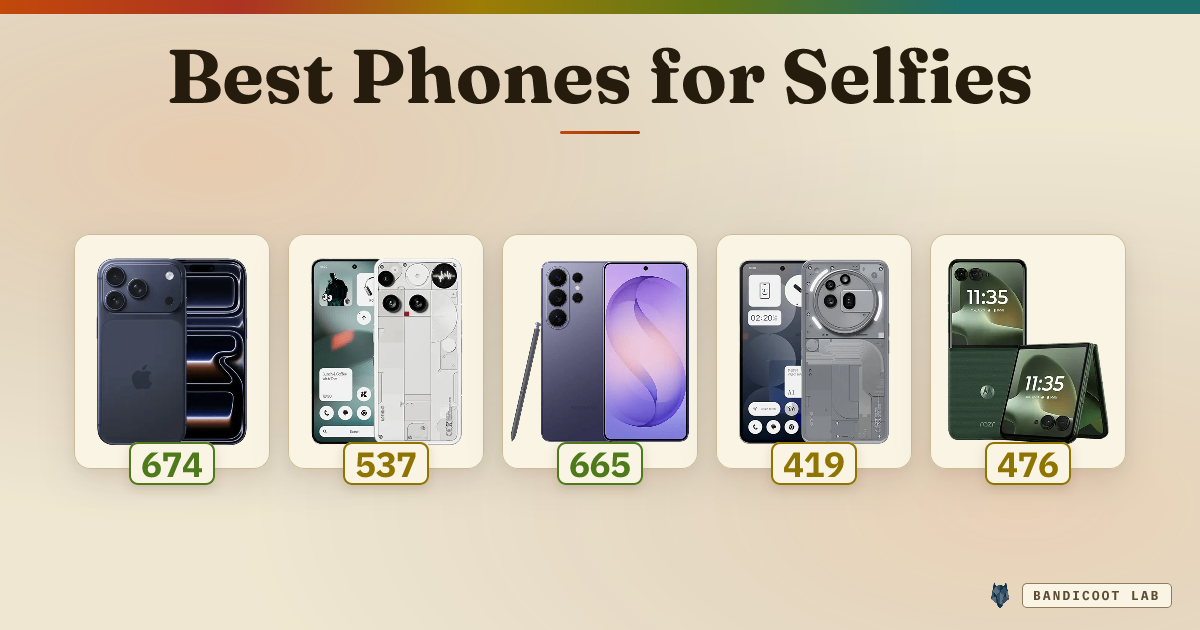
Best Phones for Selfies
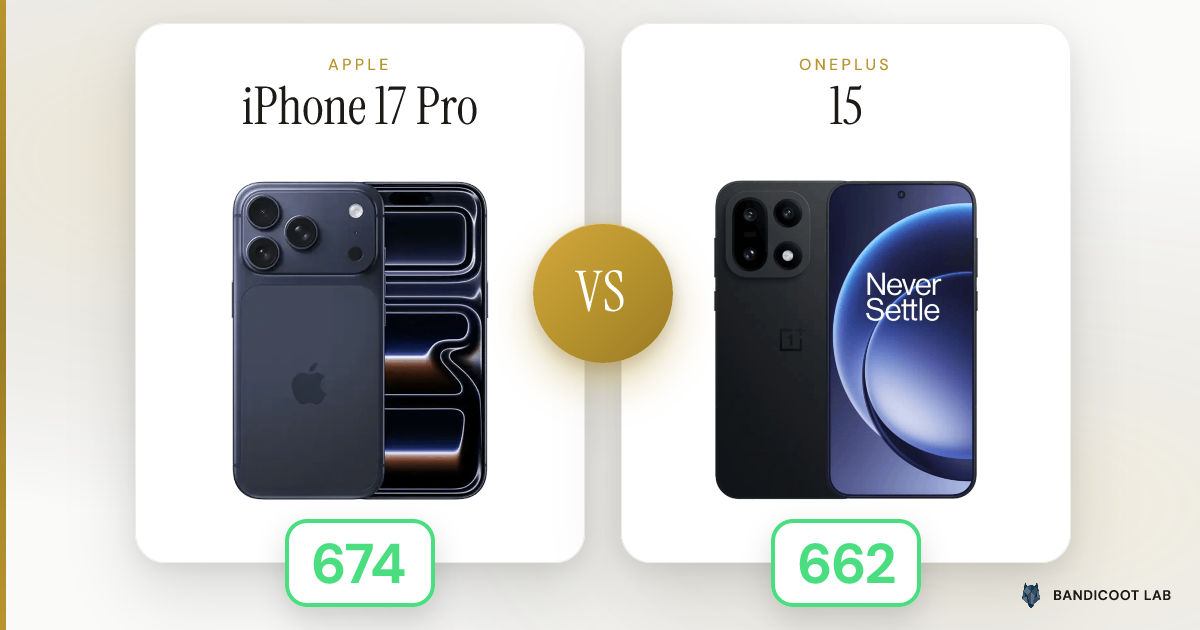
Apple iPhone 17 Pro vs OnePlus 15
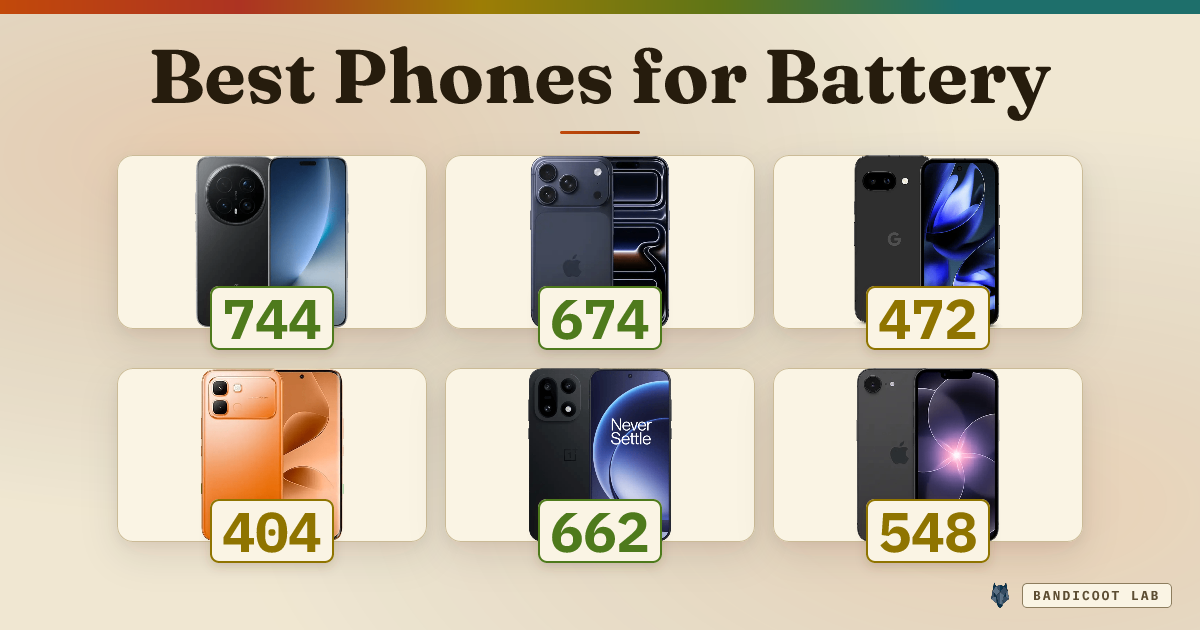
Best Phones for Battery
Megapixels vs sharpness: Does resolution buy sharper photos?
Apple iPhone 17 Pro vs Xiaomi 17
Apple iPhone 17 Pro vs Google Pixel 10 Pro
Best iPhones
Best Camera Phones
Apple