Apple iPhone 17e vs Google Pixel 10a
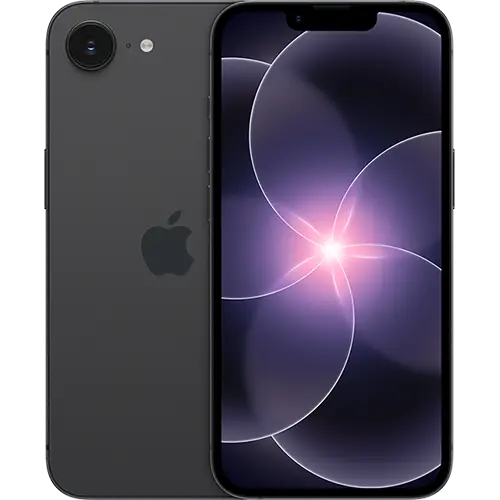
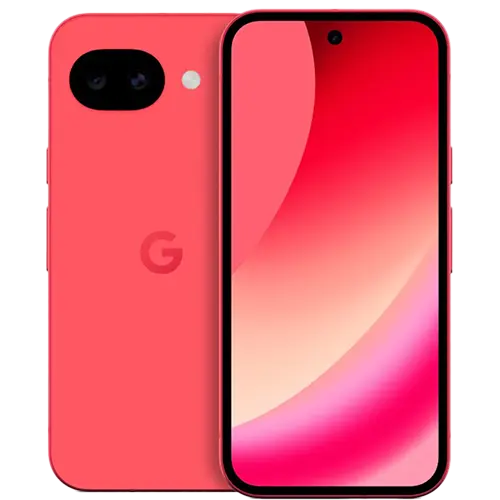
Apple
iPhone 17e
Pixel 10a
Ranked #32 of 59
Ranked #49 of 59
Overall
Overall
The iPhone 17e and Pixel 10a may not be the flagship phones from their respective brands, but they’re still designed to offer a lot. Apple's $599 device is essentially a stripped-back iPhone, designed for people who want the Apple ecosystem without paying flagship prices. Google's $499 Pixel 10a prioritizes software smarts and camera quality over raw hardware excess.
The iPhone 17e is stronger in speaker quality, raw processing power, and video stabilization. The Pixel 10a counters with a brighter, smoother display, an extra ultrawide camera, faster data transfer, and longer battery life. Both phones handle everyday tasks without issue, but they diverge sharply in where each manufacturer decided to spend its budget.
Here’s how the two phones compared in our thorough testing.
Design
| Apple iPhone 17e | Google Pixel 10a | |
|---|---|---|
| Specifications | ||
| Dimensions | 146.7 x 71.5 x 7.8 mm | 153.9 x 73 x 9 mm |
| Weight | 169g | 183g |
| IP Rating | IP68 | IP68 |
| Frame | Aluminum | Aluminum |
| Front | Ceramic Shield 2 | Gorilla Glass 7i |
| Back | Glass | Plastic |
| Screen-to-body ratio | 87.1% | 84.7% |
The iPhone 17e weighs in at 169g with a 6.1-inch display. The Pixel 10a is slightly larger at 6.3 inches and heavier at 183g. Both carry IP68 ratings, meaning submersion in fresh water to at least one meter for 30 minutes. Both use USB-C ports, though the Pixel 10a uses USB-C 3.2 while the iPhone 17e is limited to USB-C 2.0.
The iPhone 17e has a 19.5:9 aspect ratio display at 460 PPI. The Pixel 10a runs a slightly different aspect ratio at 422 PPI. Both phones use OLED panels with glass fronts. The Pixel 10a's larger screen in a proportionally larger body means bezels are comparable between the two.
Bandicoot Lab does not formally test design or durability.
Display
| Apple iPhone 17e | Google Pixel 10a | |
|---|---|---|
541/ 881 | 584/ 881 | |
The Pixel 10a has a clear brightness advantage. Its maximum manual brightness reaches 1,403 nits versus 850 nits on the iPhone 17e. For HDR content, the gap widens further — the Pixel 10a peaks at 3,182 nits while the iPhone 17e reaches a much lower 1,163 nits. The Pixel 10a's HDR brightness is nearly triple the iPhone's.
In sustained brightness, both the iPhone 17e and Pixel 10a are able to hold their HDR peak over a 30-minute stress test. That said, while the iPhone 17e retains its brightness over window sizes, the Pixel 10a drops to around 62% of its peak when displaying a 100% window. Still, it's worth noting that the Pixel 10a’s throttled brightness is still higher than the iPhone 17e's peak brightness.
Color accuracy favors the iPhone 17e. In its default display mode, colors stay very close to reference across the gamut with minimal drift. The Pixel 10a in Natural Mode shows slightly more deviation, particularly at the extremes of its gamut. Both panels cover sRGB almost completely. The iPhone's colors look slightly more neutral and accurate; the Pixel runs a touch warmer and more saturated in its default Adaptive mode.
The Pixel 10a runs at 120Hz, while the the iPhone 17e is locked to 60Hz. You'll feel this difference in scrolling and animations. The Pixel feels more responsive in everyday use. Touch latency reinforces this too. The Pixel 10a averages 15ms while the iPhone 17e averages 62.3ms. The iPhone feels noticeably less immediate under the finger.
Resolution is close enough to be irrelevant in daily use. The iPhone's 460 PPI versus the Pixel's 422 PPI won't be distinguishable at normal viewing distances.
Performance
| Apple iPhone 17e | Google Pixel 10a | |
|---|---|---|
764/ 1012 | 342/ 1012 | |
The iPhone 17e runs Apple's A19 chip with 8GB of RAM. The Pixel 10a uses Google's Tensor G4, also with 8GB. The performance gap between these two is large.
In GeekBench 6, the iPhone 17e scores 3,669 single-core and 9,152 multi-core. The Pixel 10a manages 1,716 single-core and 4,385 multi-core. The iPhone is more than twice as fast in single-threaded work and roughly double in multi-threaded tasks. In GPU benchmarks, the iPhone's Wild Life Extreme peak of 3,884 outpaces the Pixel's 2,685 by about 45%. The iPhone runs hotter under sustained load (45.4°C vs 41°C) and throttles more aggressively (76.4% stability vs 82.6%), but its worst-case score still exceeds the Pixel's best-case score.
Browser performance shows a similar spread. The iPhone scores 35.8 in Speedometer versus 17.7 for the Pixel.
For basic tasks like messaging, web browsing, and social media, both phones are perfectly adequate. The gap matters most for gaming, video editing, and heavy multitasking.
Camera
| Apple iPhone 17e (Overall) | Google Pixel 10a (Overall) | |
|---|---|---|
| Specifications | ||
| Main | 48MP, f/1.6, 26mm, 1/2.55" | 48MP, f/1.7, 25mm, 1/2.0" |
| Ultrawide | — | 13MP, f/2.2, 14mm, 1/3.1" |
| Front | 12MP, f/1.9, 23mm, 1/3.6" | 13MP, f/2.2, 20mm, 1/3.1" |
Both phones shoot from a single rear camera plus a front camera, though the Pixel 10a adds an ultrawide lens the iPhone 17e lacks. The iPhone's main lens produces high sharpness in bright and mid-light and maintains detail well into dark conditions. The Pixel 10a is slightly less sharp at 1x in bright light but holds up respectably.
At deeper zoom levels, the iPhone 17e pulls ahead. At 4x, the iPhone retains strong detail while the Pixel shows more softening. By 8x and 10x, both phones are working with digital crops, but the iPhone holds more usable detail throughout. If you regularly crop or zoom past 3x, the iPhone is the stronger choice.
The Pixel 10a applies heavier sharpening overall. In dark conditions at 1x, its sharpening creates visible haloing around edges. The iPhone keeps its processing lighter and more natural across all conditions.
Main
| Apple iPhone 17e (Main) | Google Pixel 10a (Main) | |
|---|---|---|
571/ 722 | 497/ 722 | |
In bright light at 1x, both phones deliver strong center sharpness. The iPhone 17e holds a moderate edge. As light drops to mid and dark levels, the iPhone maintains sharpness better while keeping processing artifacts minimal.
Color character differs meaningfully. The Pixel 10a pushes saturation aggressively, running well above reference in bright and mid light, with a noticeable cool lean. Greens, blues, and reds all look more vivid than life. This gives photos a punchy, eye-catching look but is a deliberate tuning choice rather than accuracy. Skin tones on the Pixel drift noticeably from reference even in bright light, with faces looking warmer and more saturated than they should.
The iPhone 17e is more restrained in bright light, staying closer to accurate saturation. Skin tones are slightly off but much closer to reality than the Pixel's. In mid-light conditions under warmer illumination, the iPhone's processing overcompensates significantly. Colors become heavily oversaturated and warm-shifted, with skin tones drifting well away from reference. The warm shift increases dramatically as light gets warmer, pointing to a white balance correction issue rather than a sensor limitation. The Pixel also warms in mid-light but keeps the shift more controlled.
In low light, the iPhone produces a strong warm cast with elevated saturation. The Pixel maintains its vivid, cool-leaning character more consistently across lighting conditions. Neither phone is highly accurate in the dark, but the Pixel's errors are more stable and predictable.
Dynamic range on both phones is solid. The Pixel 10a retains slightly more shadow detail in high-contrast scenes, while the iPhone clips highlights a touch later. Both produce images with good depth and tonal separation in challenging lighting.
Ultrawide
| Apple iPhone 17e (Ultrawide) | Google Pixel 10a (Ultrawide) | |
|---|---|---|
| — | 493/ 722 | |
The iPhone 17e doesn't have an ultrawide lens. The Pixel 10a's ultrawide is strong for a mid-range phone though. Sharpness is high across the frame in bright and mid conditions, exceeding its own main lens in some scenarios.
Color from the Pixel's ultrawide runs even more saturated than its main lens, with more aggressive warm-shifting of skin tones as light drops. In mid and dark conditions, skin tones drift substantially. Dynamic range is narrower than the main lens, with more highlight clipping in contrasty scenes. Video stabilization from the ultrawide is decent but looser than the main camera.
If ultrawide shooting matters to you, the Pixel 10a is the only option here.
Front
| Apple iPhone 17e (Front) | Google Pixel 10a (Front) | |
|---|---|---|
549/ 722 | 549/ 722 | |
The Pixel 10a's front camera produces higher sharpness across all three lighting conditions. It holds strong detail even in dark environments. The iPhone 17e's front camera is sharp in bright and mid light but drops off more noticeably in low light.
Both phones push skin tones away from reference on the front camera. The iPhone's processing in mid and dark conditions shifts faces warm and saturated. The Pixel does similar but with a slight pink-magenta lean rather than pure warmth. In bright light, both are comparably inaccurate on skin, pushing faces to look more vivid than natural.
Video stabilization is notably better on the iPhone's front camera. The Pixel 10a shows substantial shake in front-facing video, making it less suited for walking-and-talking content. The iPhone is meaningfully more controlled.
Dynamic range is close between the two front cameras. Both retain good shadow detail and clip highlights at similar points.
Battery
| Apple iPhone 17e | Google Pixel 10a | |
|---|---|---|
498/ 799 | 531/ 799 | |
The Pixel 10a has a significantly larger battery at 5,100mAh versus the iPhone 17e's 4,005mAh. That capacity advantage translates directly into longer screen-on time.
In our video playback test at 200 nits, the Pixel 10a ran for 25 hours and 57 minutes. The iPhone 17e lasted 18 hours and 27 minutes. That's a seven-and-a-half-hour difference.
Web browsing drain reinforces this. Over a 5-hour browsing session, the Pixel 10a drained 19% while the iPhone 17e lost 33%. The iPhone's web efficiency is roughly half the Pixel's.
Gaming drain tells the opposite story though. During 60 loops of Wild Life Extreme stress testing, the iPhone drained only 17% while the Pixel lost 23%. The iPhone's more aggressive thermal throttling keeps power consumption in check during sustained GPU load.
Standby drain is identical. Both phones lose 3% overnight over 8 hours.
Charging
| Apple iPhone 17e | Google Pixel 10a | |
|---|---|---|
281/ 837 | 259/ 837 | |
The Pixel 10a supports 30W wired charging while the iPhone 17e tops out at 20W. For wireless, the roles reverse: the iPhone supports 15W magnetic charging via MagSafe/Qi2, while the Pixel manages only 10W wireless.
Wired charging speed is close. The iPhone reaches 25% in 10 minutes and 61% in 30 minutes. The Pixel hits 21% at 10 minutes and 59% at 30 minutes. Despite the Pixel's higher wattage rating, real-world charging speeds are nearly identical for wired. The iPhone is marginally faster in the first 10 minutes.
Wireless is where the iPhone clearly wins. It reaches 17% in 10 minutes and 38% in 30 minutes wirelessly. The Pixel manages only 6% in 10 minutes and 14% in 30 minutes. For quick wireless top-ups, the iPhone's MagSafe-compatible magnetic charging is substantially faster.
Speaker
| Apple iPhone 17e | Google Pixel 10a | |
|---|---|---|
821/ 897 | 575/ 897 | |
The iPhone 17e's speakers are considerably better than the Pixel 10a's. Maximum volume is lower on the iPhone at 69.1 dBA versus the Pixel's 75.4 dBA, but volume isn't everything.
The iPhone produces fuller bass, clearer highs, and significantly less distortion. Its average THD of 4.45% is nearly half the Pixel's 7.72%. At higher volumes, the Pixel sounds harsher and more strained. The iPhone's speakers have a more balanced, less fatiguing character. You can comfortably listen at near-max volume without the sound becoming unpleasant.
The Pixel 10a gets louder, which matters in noisy environments, but its sound is thinner and more treble-dominant. Bass is notably weaker, and distortion climbs quickly as you push volume. For music, podcasts, or video calls, the iPhone provides a meaningfully better listening experience.
Microphone
| Apple iPhone 17e | Google Pixel 10a | |
|---|---|---|
665/ 1220 | 346/ 1220 |
The iPhone 17e's microphone produces more consistent frequency response with less variation across the spectrum. The Pixel 10a's microphone shows more unevenness, which can affect voice clarity in calls and recordings. The iPhone is above average here, while the Pixel is below average. You'll notice the difference most in voice recordings and video capture, where the iPhone sounds more natural and less colored.
Other
| Apple iPhone 17e | Google Pixel 10a | |
|---|---|---|
| Biometrics | 229/ 1181 | 396/ 1181 |
| Data Transfer | 90/ 877 | 419/ 877 |
| Specifications | ||
| Biometric type | Face Recognition | Fingerprint |
| Ports | USB-C 2.0 | USB-C 3.2 |
| Storage | 256GB, 512GB | 128GB, 256GB |
The Pixel 10a uses an optical fingerprint sensor with an average unlock time of 265ms. The iPhone 17e relies on hardware face unlock averaging 458ms. The Pixel unlocks faster by a noticeable margin. The iPhone doesn't have a fingerprint sensor at all, and the Pixel 10a has no hardware-based face unlock.
Data transfer speeds heavily favor the Pixel 10a, thanks to its USB-C 3.2 port. Large file reads hit 178 MB/s and writes reach 197 MB/s. The iPhone 17e's USB-C 2.0 connection limits it to 39 MB/s reads and 38 MB/s writes. That's roughly a 5x speed difference. If you regularly transfer large files to a computer, this is a significant practical gap. Both phones are available with 128GB and 256GB storage configurations.
Conclusion
The iPhone 17e's strengths are processing power, speaker quality, camera consistency in zoom and low-light sharpness, wireless charging speed, and video stabilization. It's the better phone for someone who values a polished multimedia experience, plays demanding games, or regularly zooms past 3x on the camera.
The Pixel 10a wins on display brightness and smoothness, battery life, data transfer speed, biometric unlock speed, and offers an ultrawide camera the iPhone doesn't have. Its 120Hz refresh rate and low touch latency make everyday interactions feel snappier. If you want the phone that lasts longer between charges and feels more responsive in daily use, the Pixel is the better fit.
The $100 price difference favors the Pixel. It's the less expensive phone and the more capable one in categories that affect daily experience most: battery, display fluidity, and camera versatility. The iPhone justifies its premium for users who prioritize raw performance, speaker quality, or need tighter integration with Apple's ecosystem.
Related
Apple
iPhone 17e
Pixel 10a
Pixel 11 Pro XL
Pixel 11 Pro
Pixel 11
Pixel 11 Pro Fold
Pixel 10 Pro Fold
Best Phones for Gaming
Best Phones Under $500
Apple iPhone 17e vs iPhone 16e
Google Pixel 10a vs Nothing Phone (4a) Pro
Apple iPhone 17e vs Nothing Phone (4a) Pro