Best Phones for Gaming


RedMagic
Poco
Motorola
11S Pro
F9 Ultra
Pixel 10a
Razr Ultra (2026)
Ranked #13 of 61
Ranked #1 of 61
Ranked #51 of 61
Ranked #23 of 61
Overall
Overall
Overall
Overall
A good gaming phone needs more than a fast processor. Sustained performance under load, a high-refresh display that stays smooth during demanding scenes, responsive touch input, and a battery that holds up through extended sessions all factor into the experience. In this list, we evaluate phones across these criteria and more, weighing benchmark throughput, thermal management, screen quality, and battery life to find the devices that deliver the best overall gaming performance.
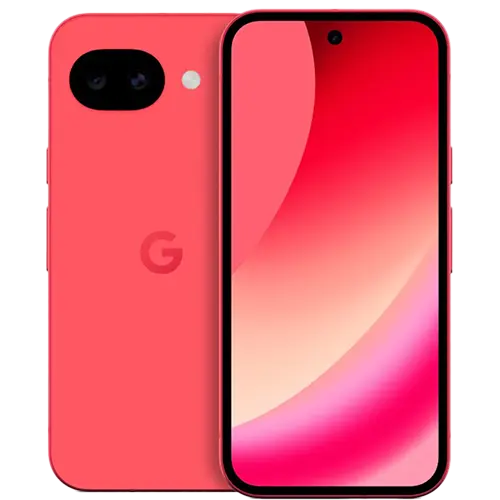
The RedMagic 11S Pro takes the top spot as the best gaming phone overall, pairing flagship-tier processing power with effective active cooling and a 7,050 mAh battery in a body that weighs just 191 grams. For those who prioritize long play sessions above all else, the Poco F9 Ultra stands out with exceptional battery endurance and efficient thermal regulation that keeps frame rates stable over time. Budget-conscious gamers will find the Google Pixel 10a a compelling option under $500, offering solid performance and a clean software experience without unnecessary bloat.
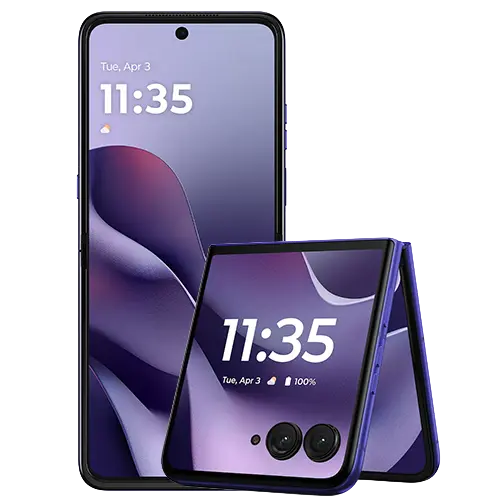
We also include a pick for foldable enthusiasts. The Motorola Razr Ultra (2026) brings capable hardware to a flexible form factor, making it a viable option for gamers who want versatility in how they use their phone. Scroll through for full rankings and detailed comparisons.
Best Gaming Phone Overall

Raw GPU output is where the RedMagic 11S Pro separates itself. Its graphics performance sits roughly 15% ahead of the Xiaomi 17T Pro at a similar price — and that gap widens when sessions run long. The Xiaomi's sustained graphics stability drops to around 62%, while the RedMagic holds at 81%, meaning frame rates stay consistent through extended play rather than throttling back after the first few minutes. Touch latency is the lowest we've measured across this guide, at under 12 milliseconds — the iPhone 17 registers closer to 57 milliseconds, which is a perceptible difference in fast-paced games. The 6.85" 144Hz panel supports that responsiveness, and 80W wired charging gets you back to full without a long wait.
You're trading real things for those gains. Battery drain during gaming sessions is steep — more than double the Xiaomi 17T Pro's — and video playback endurance sits below average for this price range. The camera is middling at best. If you want a phone that performs well across photography, battery life, and gaming simultaneously, the Honor Magic8 Pro handles that better, for $450 more.
The RedMagic 11S Pro is a deliberate choice. It makes gaming the priority and doesn't pretend otherwise.
Best Phone for Gaming Endurance


An hour of gaming takes 22% off the Poco F9 Ultra's battery. The cheaper Poco F9 Pro, running the same Snapdragon 8 Elite Gen 5, loses 35% in the same test — the difference is mostly the Ultra's 8,050mAh cell. That capacity shows up everywhere: nearly 43 hours of video playback, about 12 hours more than the Xiaomi 17T Pro, which is itself one of the stronger battery phones we've tested.
The 6.9-inch 185Hz AMOLED helps the case. It holds its brightness almost perfectly during long sessions, so HDR games don't dim out twenty minutes in.
Two caveats. Sustained performance is the weak spot for a gaming phone: Wild Life Extreme stability of 70.9% means the chip throttles in long sessions, and the $529 RedMagic 11 Air holds its frame rates more consistently even though its peak scores are lower. And while 100W wired charging sounds fast, real-world top-up speeds land mid-pack — the endurance story here is about how rarely you plug in, not how quickly you refill.
The microphone is also genuinely poor. If you stream or rely on voice chat, plan on a headset.
Best Gaming Phone Under $500
Sustained performance under load is where the Pixel 10a makes its case. Its Wild Life Extreme stability sits at 82.6 percent — meaning GPU output holds reasonably consistent across repeated benchmark runs rather than dropping sharply as the phone heats up. That matters more in a long gaming session than a single peak score does. Multi-core CPU performance is competitive at this price, landing close to the Nothing Phone (4a) Pro despite the (4a) Pro carrying more RAM.
The tradeoffs are real though. Raw GPU horsepower is modest — the RedMagic 11 Air, at $529, puts up roughly 2.6 times the GPU score and carries a larger battery that drains considerably less during gaming sessions. The iPhone 17e at $599 is meaningfully more efficient under gaming load, though it costs more and runs a 60Hz display.
What the Pixel 10a offers is consistent, stable performance under $500, backed by Google's software experience — a reasonable trade if raw GPU output isn't the priority.
Best Foldable Phone for Gaming
The 7-inch display folds down to something pocketable, then opens to a screen that feels like a normal phone size when you need it. The Razr Ultra (2026) outperforms the majority of even non-foldable phones when it comes to GPU performance. Its graphics benchmark score is meaningfully ahead of last year's model, and stability during sustained gaming sessions is roughly comparable — both hover around 68–69% of peak. The Razr+ (2026), which costs $400 less, scores less than half the GPU result, so the Ultra tier isn't a minor bump. The RedMagic 11S Pro pulls higher raw GPU numbers and holds closer to 81% stability under load, at $650 less — if you want maximum sustained graphics performance and don't care about the form factor, that's the honest alternative.
Battery holds up reasonably well: 39% drain over a gaming session, and 31 hours of video playback on the inner screen. Speaker output is a real weakness. Use headphones.
FAQ
What makes the RedMagic 11S Pro better for gaming than something like the Xiaomi 17T Pro?
The RedMagic 11S Pro holds graphics output at 81% stability under sustained load, while the Xiaomi 17T Pro drops to around 62% — meaning the RedMagic keeps frame rates consistent through long sessions rather than throttling early. Raw GPU output is also roughly 15% higher at a comparable price. Touch latency on the RedMagic comes in under 12 milliseconds, which is meaningfully faster than most competitors.
Which phone here is best if I want long gaming sessions without worrying about the battery dying?
The Poco F9 Ultra is the stronger pick for gaming endurance. Its thermal management under sustained load keeps the chip from throttling hard, and video playback endurance hits almost 43 hours.
Is the Google Pixel 10a actually good enough for gaming, or is it just a budget compromise?
The Pixel 10a holds up well for sustained play — its Wild Life Extreme stability sits at 82.6%, meaning GPU output stays fairly consistent as the phone heats up rather than dropping sharply. Multi-core CPU performance is competitive under $500. The real limitation is raw GPU horsepower, which is modest compared to gaming-focused devices like the RedMagic 11 Air.
How important is thermal management when choosing a gaming phone?
Thermal management determines whether a phone performs at its peak for five minutes or for an entire session. A phone with poor sustained stability — like the Xiaomi 17T Pro dropping to around 62% graphics stability — will throttle frame rates as it heats up. A phone that holds stability, like the Pixel 10a at 82.6% or the RedMagic 11S Pro at 81%, delivers a more consistent experience over time.
Does touch latency actually matter for mobile gaming, and which pick here has the fastest response?
Touch latency affects how quickly the game registers your inputs, which is noticeable in fast-paced titles. The RedMagic 11S Pro comes in under 12 milliseconds, while the iPhone 17 registers closer to 57 milliseconds — a gap that is perceptible during gameplay.
Related
Motorola
Razr Ultra (2026)
Poco
F9 Ultra
RedMagic
11S Pro
Pixel 10a

Poco
F9 Pro
Pixel 11 Pro XL

RedMagic
11 Air

Motorola
Razr Fold
Pixel 11 Pro

Pixel 11

Pixel 11 Pro Fold

Motorola