Apple iPhone Air vs Samsung Galaxy S25 Edge
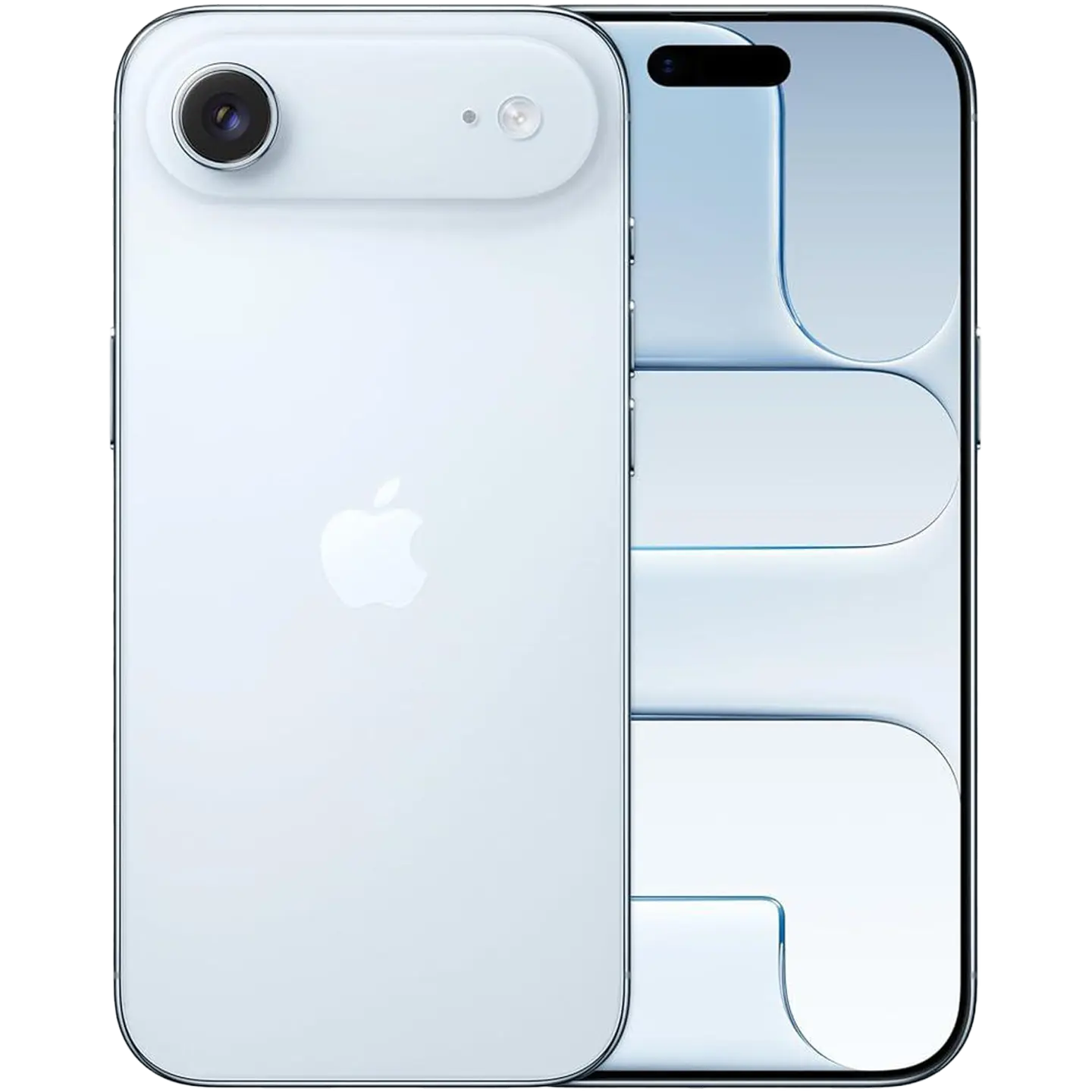
Apple
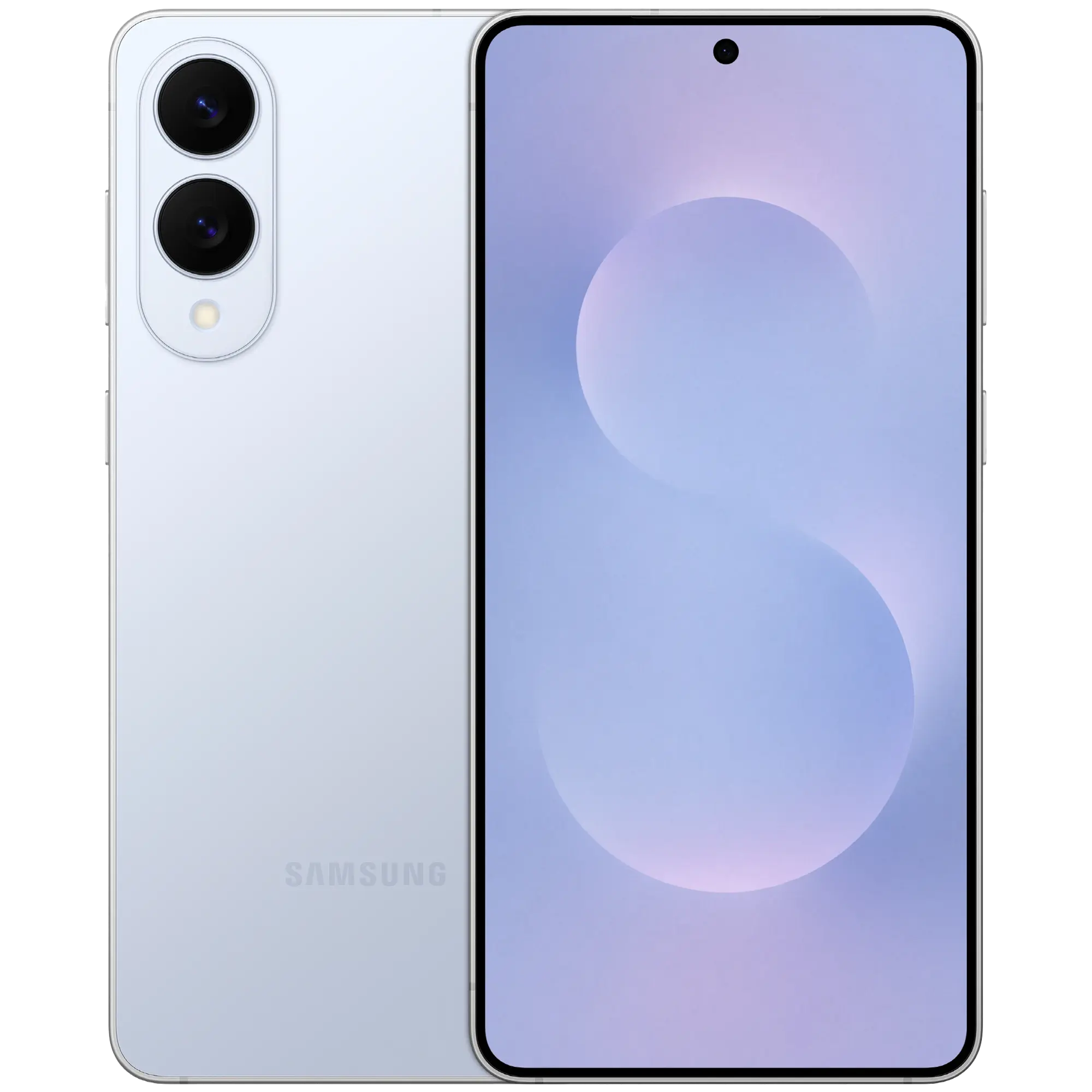
Samsung
iPhone Air
Galaxy S25 Edge
Ranked #32 of 52
Ranked #26 of 52
Overall
Overall

The iPhone Air and Galaxy S25 Edge are both attempts to answer the same question: how thin and light can a flagship phone get before it stops being a flagship? Apple prices the iPhone Air at $999, positioning it as a premium device that sits between the standard iPhone and Pro lineup. Samsung's Galaxy S25 Edge arrives at $1,099.99, occupying a similar slot as a design-forward alternative to the bulkier S25 Ultra. Both phones sacrifice some hardware to hit their slim profiles, and the trade-offs each company chose to make are different.
The Samsung pulls ahead on display quality, camera sharpness, and battery life. It also offers meaningfully faster data transfer and a sharper panel. The iPhone Air counters with a superior microphone, faster wireless charging, stronger main camera dynamic range, and better front camera sharpness. Both phones land close on raw CPU and GPU performance, and both struggle with thermal throttling under sustained load.
Here’s how the two phones compare.
Design
| Apple iPhone Air | Samsung Galaxy S25 Edge | |
|---|---|---|
| Specifications | ||
| Dimensions | 156.2 x 74.7 x 5.6 mm | 158.2 x 75.6 x 5.8 mm |
| Weight | 165g | 163g |
| IP Rating | IP68 | IP68 |
| Frame | Titanium | Titanium |
| Front | Ceramic Shield 2 | Gorilla Glass Ceramic 2 |
| Back | Ceramic Shield | Gorilla Glass Victus 2 |
| Screen-to-body ratio | 88.9% | 92.1% |
The iPhone Air weighs 165g and the Galaxy S25 Edge comes in at 163g. Both carry IP68 water and dust resistance, meaning submersion in fresh water to rated depth. Both use USB-C ports, though the iPhone Air runs USB 2.0 while the S25 Edge uses the faster USB 3.2 standard.
The iPhone Air has a 6.5-inch display while the S25 Edge stretches to 6.7 inches. The S25 Edge runs a taller, narrower 1440 x 3120 resolution at a 19.5:9 aspect ratio, while the iPhone Air uses 1260 x 2736. Both phones use LTPO OLED panels with 120Hz refresh rates.
Bandicoot Lab does not formally test design or durability.
Display
| Apple iPhone Air | Samsung Galaxy S25 Edge | |
|---|---|---|
581/ 845 | 619/ 845 | |
The Galaxy S25 Edge has the sharper panel at 513 pixels per inch versus 460 PPI on the iPhone Air. Both run 120Hz LTPO OLED with adaptive refresh rates. The resolution difference is barely visible if you're looking for it.
For brightness, the iPhone Air hits 851 nits max manual brightness, but the S25 Edge reaches 742 nits. In HDR content, both phones peak similarly high — 2,678 nits for the iPhone Air and 2,817 nits for the S25 Edge. The separation comes in sustained brightness. Sustained brightness measures how well a display holds its peak output over a 30-minute HDR session. The S25 Edge holds 98.7% of its brightness over that period. The iPhone Air drops to 43%. If you're watching HDR video for more than a few minutes, the iPhone Air will dim considerably while the S25 Edge stays locked at its peak.
Color accuracy splits by use case. The iPhone Air in its default mode produces an average color error low enough that most colors look faithful to sRGB targets, with 99.52% sRGB gamut coverage. The S25 Edge in Natural mode shows slightly higher average error and covers 97.34% of sRGB. In Vivid mode, the S25 Edge reaches 83.94% Display P3 coverage but color accuracy loosens further. Colors on the S25 Edge in Vivid mode drift enough that you'd notice warm tones pushing slightly off-target. The iPhone Air stays tighter to reference across its gamut.
Touch latency is 57.7ms on the iPhone Air and 21.2ms on the S25 Edge. The S25 Edge will feel more responsive to direct touch input, particularly in fast-scrolling or gaming scenarios. You'll likely notice this difference in everyday use.
Performance
| Apple iPhone Air | Samsung Galaxy S25 Edge | |
|---|---|---|
771/ 1012 | 727/ 1012 | |
The iPhone Air runs Apple's A19 Pro with 12GB RAM. The Galaxy S25 Edge uses a Qualcomm Snapdragon 8 Elite, also with 12GB RAM.
In CPU benchmarks, the iPhone Air scores 3,853 single-core and 9,681 multi-core in GeekBench 6. The S25 Edge posts 3,007 single-core and 9,707 multi-core. The iPhone Air has a clear single-core advantage of about 28%, which translates to snappier response in tasks that rely on one fast core, like app launches, UI animations, and quick photo processing. Multi-core performance is essentially tied.
GPU results are closer in peak output but diverge in behavior. The iPhone Air peaks at 5,105 in Wild Life Extreme with 60.7% stability, dropping to 3,100 at its lowest loop. The S25 Edge peaks higher at 6,734 but throttles harder to 46.8% stability, bottoming out at 3,149. Both phones land at nearly the same sustained floor. For extended gaming sessions, neither phone holds its peak performance well, and both end up delivering similar real-world GPU output after thermal limits kick in.
In Solar Bay, the S25 Edge peaks at 10,327 versus 8,611 for the iPhone Air, but throttles more aggressively (54.6% stability versus 71.5%). Browser performance via Speedometer favors the S25 Edge slightly at 35.6 versus 32.1.
In daily use, most of these differences won't be perceptible outside of specific workloads. The iPhone Air's single-core lead means marginally faster app opens.
Camera
| Apple iPhone Air (Overall) | Samsung Galaxy S25 Edge (Overall) | |
|---|---|---|
| Specifications | ||
| Main | 48MP, f/1.6, 26mm, 1/1.56" | 200MP, f/1.7, 24mm, 1/1.3" |
| Ultrawide | — | 12MP, f/2.2, 13mm, 1/2.55" |
| Front | 18MP, f/1.9, 20mm | 12MP, f/2.2, 26mm, 1/3.2" |
The Galaxy S25 Edge produces notably sharper images across nearly every focal length and lighting condition. The iPhone Air's main camera is softer, and the gap widens at longer zoom levels. The S25 Edge also carries an ultrawide lens that the iPhone Air lacks entirely. The iPhone Air's strengths are narrower — it has better dynamic range on its main camera and a sharper front camera.
At 10x zoom, the S25 Edge resolves substantially more detail than the iPhone Air across all lighting conditions. The S25 Edge maintains high sharpness even at 8x, where the iPhone Air's output has already dropped significantly. If you zoom frequently, the S25 Edge is considerably more capable.
Main
| Apple iPhone Air (Main) | Samsung Galaxy S25 Edge (Main) | |
|---|---|---|
507/ 722 | 538/ 722 | |
At 1x in bright light, the S25 Edge resolves more detail than the iPhone Air. The gap narrows somewhat in dark conditions, where the iPhone Air's processing pulls ahead slightly. At mid-range zoom levels (3x–5x), the S25 Edge holds a commanding sharpness advantage. By 5x, the S25 Edge captures roughly twice the resolved detail of the iPhone Air.
Color character differs between the two. Both phones push saturation above neutral in their processed output. The iPhone Air leans heavily warm, with a strong yellow-orange cast that intensifies as lighting gets warmer. In mid lighting (4000K), skin tones shift noticeably warm. In dark conditions (3000K), that warm push gets even stronger. This pattern suggests a white balance correction issue rather than a sensor limitation — as ambient light gets warmer, the processing over-corrects by adding warmth instead of neutralizing it. The S25 Edge also warms in low light but shows a different pattern. Its dark-condition color errors manifest more as hue rotation, with colors shifting in unexpected directions rather than warming uniformly. This points more toward sensor-level hue confusion than a white balance algorithm issue.
Dynamic range favors the iPhone Air's main camera. It captures broader tonal range in its processed images, preserving more detail in both shadows and highlights in high-contrast scenes. The S25 Edge clips highlights earlier and shows less separation between tonal steps.
Ultrawide
| Apple iPhone Air (Ultrawide) | Samsung Galaxy S25 Edge (Ultrawide) | |
|---|---|---|
| — | 503/ 722 | |
The iPhone Air has no ultrawide lens. The S25 Edge's ultrawide captures strong sharpness across lighting conditions. Its ultrawide is actually sharper than the iPhone Air's main lens at 1x in most scenarios, which is an unusual result.
The S25 Edge ultrawide's color character is vivid with moderate saturation push in bright light. In darker conditions, hue accuracy degrades, with colors rotating in ways that aren't tied to a warming bias. This suggests a sensor limitation at low light rather than a processing issue. Dynamic range on the ultrawide is moderate. Highlights clip in processed shots, and tonal transitions aren't as smooth as the main lens.
Front
| Apple iPhone Air (Front) | Samsung Galaxy S25 Edge (Front) | |
|---|---|---|
456/ 722 | 368/ 722 | |
The iPhone Air's front camera is sharper than the S25 Edge's across bright and mid lighting. In dark conditions, the iPhone Air still resolves more detail. The S25 Edge's front camera applies heavier sharpening in low light but doesn't recover as much real detail.
Both front cameras push skin tones warm and saturated in their processed output. The iPhone Air's front camera shows a strong warm and saturated look in bright light, with skin tones pushed well above neutral. The S25 Edge is similar but pushes saturation slightly less overall. In dark conditions, the S25 Edge's front camera shows large hue shifts alongside warming, producing skin tones that drift noticeably from accurate.
Dynamic range is close between the two front cameras. Both clip highlights in processed shots. The iPhone Air shows slightly more compression in its tone curve.
Video stabilization is better on the iPhone Air's front camera. The S25 Edge's front camera shows more residual shake in handheld video. The iPhone Air's main camera stabilization is also stronger than the S25 Edge's.
Battery
| Apple iPhone Air | Samsung Galaxy S25 Edge | |
|---|---|---|
462/ 799 | 509/ 799 | |
The iPhone Air has a 3,149mAh battery. The Galaxy S25 Edge carries 3,900mAh, about 24% more capacity.
In video playback at 200 nits, the S25 Edge lasts 25 hours and 49 minutes. The iPhone Air manages 17 hours and 13 minutes. That's a full workday of difference. In web browsing over five hours, both phones drain similarly — 24% on the S25 Edge and 25% on the iPhone Air. Gaming drain is identical at 27% during the stress test. Standby drain overnight (8 hours) is also identical at 3% for both phones.
For video-heavy use, the S25 Edge lasts substantially longer. For mixed daily use involving browsing, messaging, and occasional gaming, the two phones perform similarly despite the battery size difference. The iPhone Air's smaller battery is more efficient per milliamp-hour in active use, but it can't fully close the capacity gap during sustained screen-on tasks like video.
Charging
| Apple iPhone Air | Samsung Galaxy S25 Edge | |
|---|---|---|
240/ 837 | 215/ 837 | |
The iPhone Air supports 20W wired and 20W wireless charging via MagSafe (Qi2-compatible magnetic alignment). The Galaxy S25 Edge charges at 25W wired and 15W wireless, with no magnetic alignment.
Wired, the iPhone Air hits 25% in 10 minutes and 58% at 30 minutes. The S25 Edge reaches 20% at 10 minutes and 55% at 30 minutes. The iPhone Air charges faster over USB despite its lower wattage rating. The gap is modest but consistent.
Wireless charging is where the iPhone Air separates itself. It reaches 23% in 10 minutes and 49% in 30 minutes wirelessly. The S25 Edge manages just 8% at 10 minutes and 23% at 30 minutes. The iPhone Air's MagSafe wireless charging is roughly twice as fast as the S25 Edge's wireless implementation. If you rely on a wireless charger at your desk or nightstand, the iPhone Air will reach usable charge levels much sooner.
Speaker
| Apple iPhone Air | Samsung Galaxy S25 Edge | |
|---|---|---|
614/ 857 | 662/ 857 | |
The Galaxy S25 Edge is louder at 76.3 dBA versus the iPhone Air's 72.9 dBA. That's a noticeable difference in a quiet room.
The S25 Edge also produces cleaner audio with lower distortion (5.2% average THD versus 8.3% on the iPhone Air). At higher volumes, the iPhone Air introduces more harmonic distortion. The S25 Edge sounds cleaner when pushed near its maximum output.
Tonal character is similar between the two. Both phones have comparable bass presence and similar high-frequency clarity. Neither sounds particularly full in the low end, which is expected for phones this thin and light. The S25 Edge's advantage is primarily volume headroom and cleanliness rather than a fundamentally different sound signature.
Microphone
| Apple iPhone Air | Samsung Galaxy S25 Edge | |
|---|---|---|
949/ 949 | 716/ 949 |
The iPhone Air's microphone scores at the top of tested devices, with a tighter frequency response that captures voice more evenly across the range. The S25 Edge's microphone is above average but shows more unevenness across frequencies, with a standard deviation of 4.19 dB compared to 3.16 dB on the iPhone Air. For calls, voice memos, and video recording, the iPhone Air will capture clearer, more natural-sounding audio.
Other
| Apple iPhone Air | Samsung Galaxy S25 Edge | |
|---|---|---|
| Biometrics | 199/ 1036 | 360/ 1036 |
| Data Transfer | 103/ 877 | 674/ 877 |
| Specifications | ||
| Biometric type | Face Recognition | Fingerprint |
| Ports | USB-C 2.0 | USB-C 3.2 |
| Storage | 256GB, 512GB, 1TB | 256GB, 512GB |
The iPhone Air uses hardware face unlock, averaging 527.7ms. The S25 Edge uses an ultrasonic fingerprint sensor averaging 291.7ms. The S25 Edge unlocks faster. The iPhone Air has no fingerprint sensor, and the S25 Edge has no hardware-based face unlock. Your preference between face and fingerprint will largely determine which you find more convenient.
Data transfer speeds differ substantially. The S25 Edge's USB 3.2 port delivers read speeds of 311.85 MB/s and write speeds of 256.47 MB/s. The iPhone Air's USB 2.0 port maxes out at 38.75 MB/s read and 38.03 MB/s write. That's roughly 8x faster on the S25 Edge for large file transfers. If you move video files or large photo libraries to a computer regularly, the S25 Edge saves significant time. Both phones offer 12GB RAM. Storage configurations vary by model.
Conclusion
The Galaxy S25 Edge is the stronger choice for photography, display quality, and battery life. Its camera resolves more detail at every zoom level, its display holds brightness through long viewing sessions, and its larger battery extends video playback by hours. The faster USB 3.2 port and snappier touch response add practical daily advantages.
The iPhone Air wins on wireless charging speed, microphone quality, main camera dynamic range, front camera sharpness, and video stabilization. Its display is more color-accurate out of the box, and its single-core CPU performance gives it an edge in responsiveness for single-threaded tasks. If you take a lot of video calls or voice recordings, the microphone difference is genuinely useful.
The $100 price difference favors the iPhone Air. If you prioritize camera versatility, screen sharpness, and longer video playback, the S25 Edge justifies its premium. If you value wireless charging convenience, accurate color, and don't need an ultrawide lens, the iPhone Air delivers a competitive experience at a lower price. Neither phone is a clear overall winner. They've made different sacrifices to achieve similar physical goals.
Related
Apple
iPhone Air
Samsung
Galaxy S25 Edge
Apple
iPhone 17 Pro
Apple
iPhone 17 Pro Max

Samsung
Galaxy S26 Ultra
Samsung
Galaxy S26+
Samsung
Galaxy Z Fold 8
Samsung
Galaxy S26
Apple
iPhone 17
Apple
iPhone 17e
iPhone 17 vs iPhone 17 Pro vs iPhone 17 Pro Max vs iPhone Air