How we test speakers and microphones
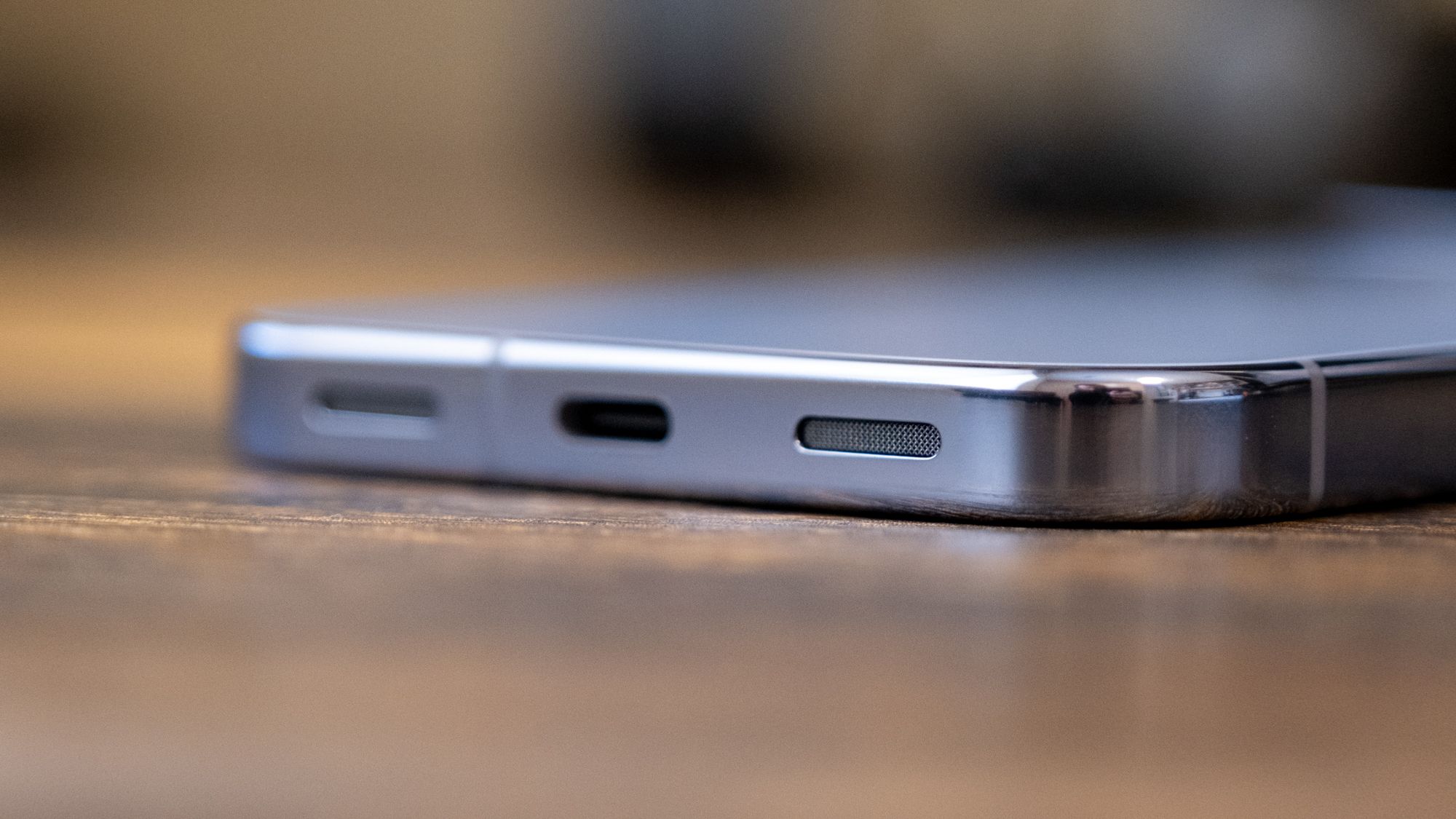
A phone speaker is a tiny driver in a sealed box, and there's only so much air it can move. That one physical limit is behind almost everything you notice about how a phone sounds — including how loud it gets, whether there's any real low end, and how quickly it falls apart when you turn it all the way up. Those three things pull against each other, so a phone that's impressively loud might sound thin and harsh, while a quieter one might be far more pleasant to actually listen to.
The microphone has the opposite job. Instead of pushing sound out into a room, it has to capture sound coming in and reproduce it faithfully. It's a smaller part of the overall experience, but it's the difference between a voice memo or a video that sounds like you and one that sounds thin and boxy.
We score these as two separate things — the speaker is worth 7.5% of the overall score, while the microphone is worth 2%. We measure both with a calibrated reference microphone rather than by ear. Here's exactly what goes into each.
What we measure
On the speaker side, there are three measurements, and they feed four parts of the score.
The first is loudness — simply how much volume the phone can put out. The second is frequency response, a sweep across the entire audible range that tells us the shape of the sound, including how much low-end the speaker produces, how even it is across the middle, and how it handles the highs. We pull two separate scores out of that one sweep — one for bass, one for clarity (the treble end) — because a speaker can be good at one and poor at the other. The third is distortion, or how clean the sound stays when the speaker is pushed hard.
Those four scores combine into the overall speaker score, weighted by how much each one actually shapes the way a phone sounds day to day. Bass carries the most weight, because real low-end is the hardest thing for a small speaker to produce and the thing most phones get wrong. Loudness and clarity sit in the middle, and cleanliness rounds it out.
The microphone is a single measurement: we play pink noise sound and record it through the phone, then look at how faithfully the recording matches what went in.
The principle across all of it is the same one we use everywhere — measure what the hardware actually does under controlled conditions, rather than trusting a spec or a quick listen.
Method
Every speaker test uses the same setup — a miniDSP UMIK-1 calibrated measurement microphone, loaded with its individual calibration file, with the phone at 100% volume in a consistent, quiet room. We analyze the recordings in REW (Room EQ Wizard), the same software used for tuning real audio systems.
For loudness, we play pink noise — a standardized test signal with equal energy across the audible range — and measure sound pressure in dBA at 40 centimeters. For frequency response and distortion, we run a 20Hz–20kHz sine sweep at 50 centimeters. That single sweep gives us both the tonal shape and the harmonic distortion across the range. The distances are fixed so that one phone's numbers mean the same thing as another's.
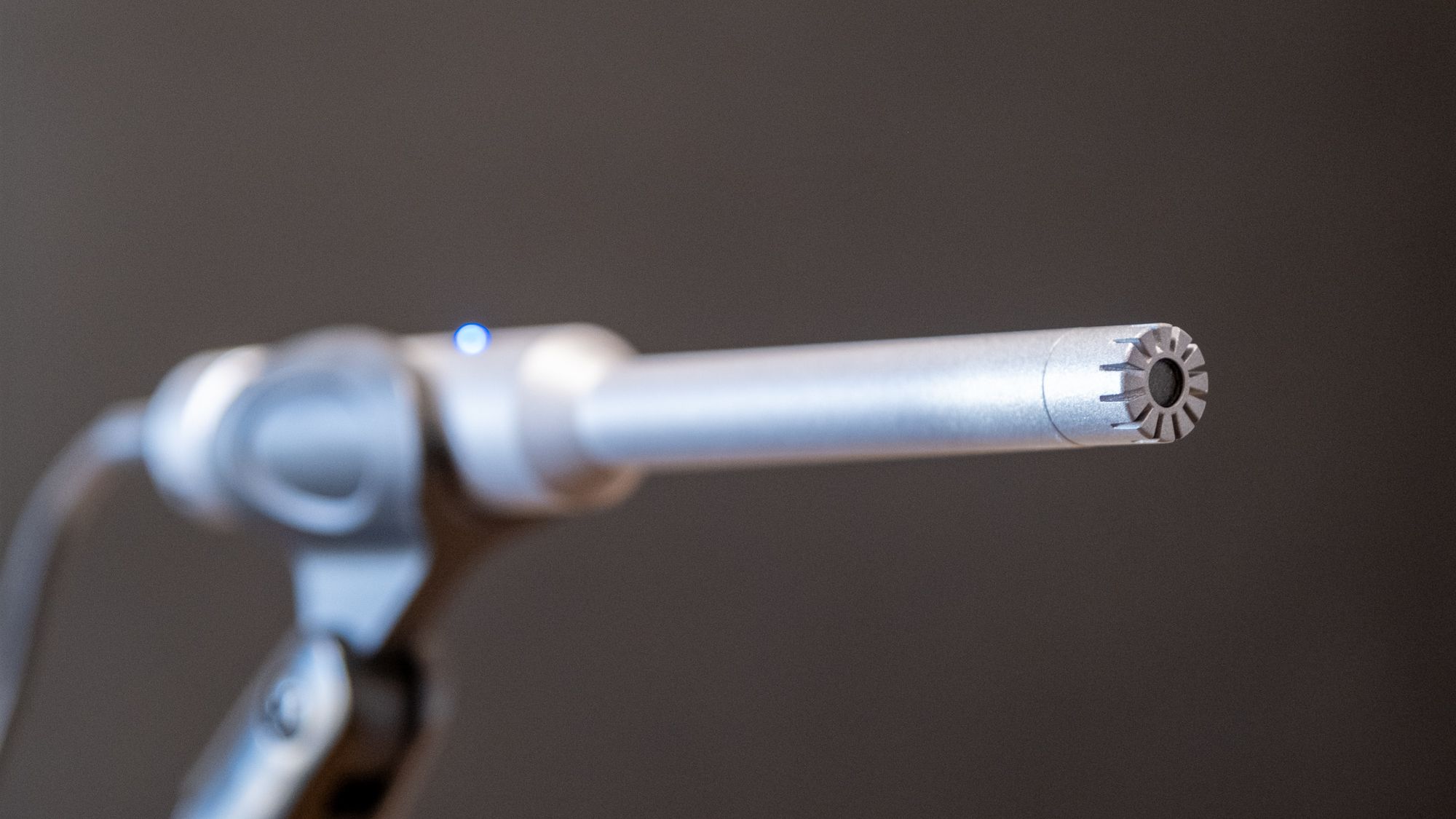
The microphone test works the other direction. We play a reference tone sweep from a studio monitor calibrated to 80 dBA and record it at 50 centimeters using the phone's own stock voice recorder, set to its highest-quality lossless option.
How we score sound
The overall speaker score is built from the four measurements above, and a couple of ideas are worth unpacking.
Bass and clarity both come from the frequency sweep, but they describe the shape of the sound, not the volume. We look at where the bass sits relative to the midrange — a speaker where the low end isn't buried under the mids gets credit for actually having body — and at how even the response is, rather than spiking and dipping. Clarity does the same thing at the top end: how the treble sits against the mids and how smooth it is, without harsh, fatiguing peaks. Because these are about balance rather than level, a quiet phone can still score well on tone, and a very loud phone can still sound lopsided.
Loudness is the straightforward part — more measured volume scores higher. It's worth remembering that decibels are logarithmic, so a fraction of a dB between two phones is something you'd never hear, while a few dB is a clear, obvious step up.
Cleanliness comes from the distortion measurement. We use REW to analyze the total harmonic distortion, and a cleaner sound scores higher. This is what separates a phone that stays composed at full volume from one that turns buzzy and crackly when you push it.
The microphone score is simpler. We measure how flat the recorded response is across the frequency range — how little it deviates from a faithful reproduction of the original sound. A flatter response scores higher, because it means the mic is adding less coloration of its own. There's no separate loudness or distortion component; for a phone microphone, faithful capture is the thing that matters.
What the scores reflect
The speaker score answers a practical question: is this a phone you'd actually want to listen to without headphones? A high score means the speaker gets loud, has some genuine low-end weight, keeps the highs clear without getting harsh, and stays clean when you turn it up. A low score usually means one of those broke down — it's thin, or it's harsh, or it distorts under pressure — even if the phone is loud on paper.
What the score deliberately doesn't do is reward loudness on its own. A phone can be the loudest in a comparison and still land mid-pack if everything it plays sounds thin and distorted. Volume is one of four factors, and not the heaviest one.
The microphone score reflects how true to life the phone records. A high score means voice memos, calls, and video audio come back sounding full and natural; a low score means they pick up an audible character of their own — thin, muffled, or boxy. It's a small slice of the overall score, but it captures something people notice the moment they play a recording back.
FAQ
Why doesn't the loudest phone always score highest on speakers?
Because loudness is only one of four things we measure. A phone that's very loud but thin, harsh, or distorted at high volume can easily score below a more modest phone that sounds balanced and clean. Tonal balance — especially bass — carries more weight than raw volume, since it's what makes a speaker pleasant to actually listen to.
Do you test Bluetooth speakers or headphones?
No. These scores are only for the phone's built-in loudspeakers and microphone — the hardware you get with no accessories attached. How a phone sounds over Bluetooth depends mostly on the speaker or headphones you pair it with, not the phone itself.
Why record the microphone through the phone's own app instead of a lab tool?
Because that's what you'd actually use. Recording through the stock voice recorder captures the real chain — the mic hardware plus whatever processing the manufacturer applies — so the score reflects the recordings a person would really get, not an idealized signal that bypasses the phone's own tuning.
Isn't a "flat" microphone boring? Don't some recordings sound better with character?
Flat means faithful — the recording matches what the mic actually heard. That's the right target for a phone, because coloration can always be added afterward in editing, but it can't be cleanly removed. A mic that bakes in its own thin or boomy character gives you less to work with, not more.
Why is the speaker score worth more than the microphone score?
Most people use a phone's speaker constantly — videos, music, speakerphone, notifications — and use the microphone in narrower situations like calls and the occasional voice note. The weighting (7.5% speaker, 2% microphone) reflects how much each one shapes everyday use.
Related
How we test charging
How we test performance
How we test batteries
How we test cameras
Apple
iPhone 17 Pro Max

Samsung
Galaxy S26 Ultra
Samsung
Galaxy S26+
Samsung
Galaxy Z Fold 8 Ultra
Samsung
Galaxy Z Fold 8
Samsung
Galaxy S26
Apple
iPhone 17e
Best Android Phones