How we test charging
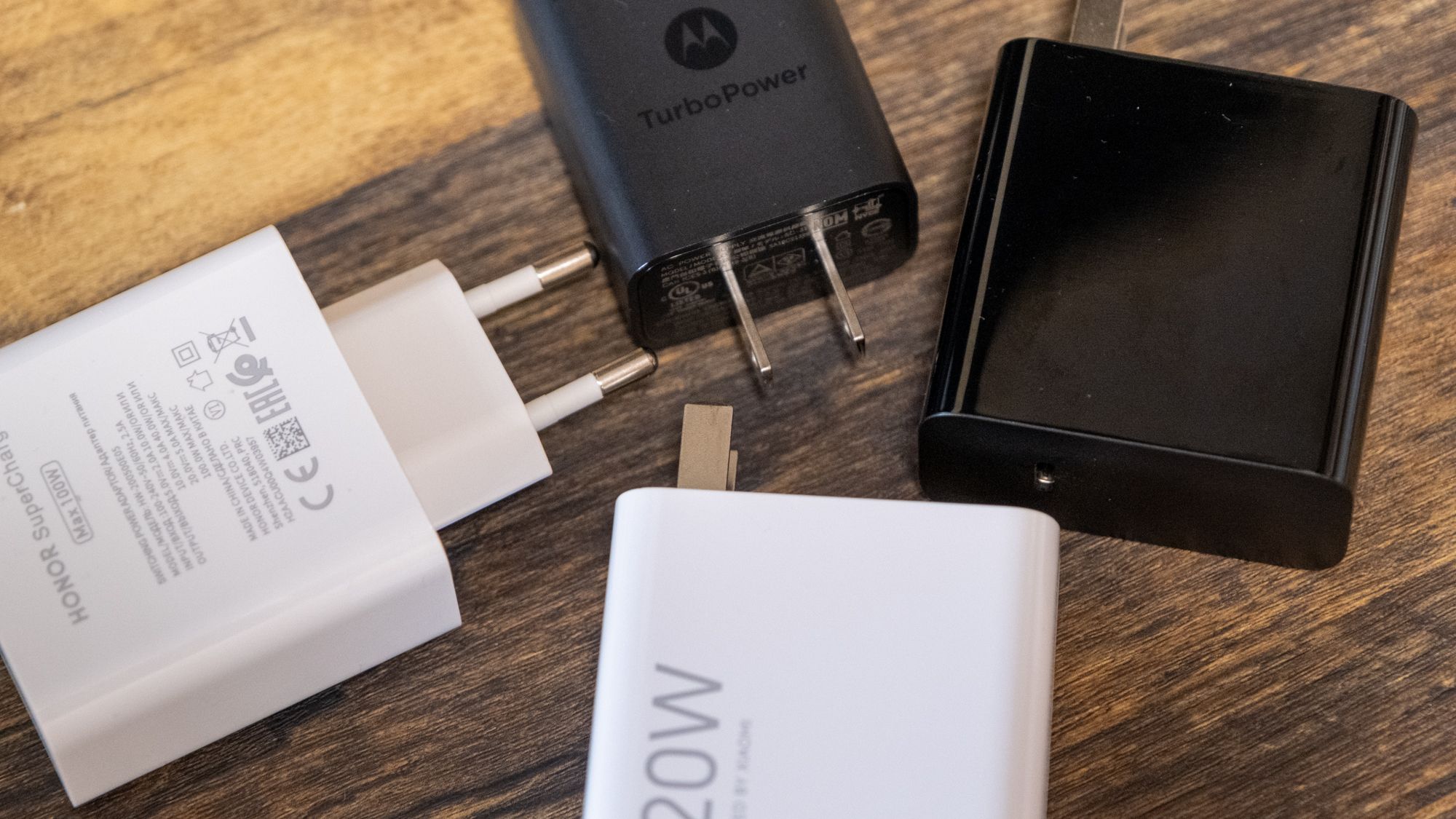
Charging speeds aren’t quite as cut and dry as they might seem. Sure, a general rule is that higher is better, but that doesn't really take into account how phones increase and decrease charging speeds over a full charge, and the fact that most fast-charging tech relies on proprietary chargers.
Not only that, but smartphones rarely actually hit those peak charging speeds, at least not for any sustained amount of time. As the battery fills, charging slows down deliberately, to limit heat and protect the cells. The peak figure tells you the absolute fastest speed a device might charge, but it’s likely to only sustain those speeds for a few minutes at most. The end result? A phone with a 60W charging speed could actually charge faster than a 100W one, depending on how the two devices handle thermals and their charging curves.
So rather than trust the rated number, we measure the entire charge. We log the whole 0–100% curve, track how hot it gets along the way, and read the result against the size of the battery being filled. Here's how that works, and how we arrive to our charging scores.
What we measure
There are two main tests that we do when it comes to charging — a wired charging test, and a wireless charging test.
Wired is how most people charge most of the time, so it carries around 60% of the weight in the score, with the extra 40% coming from the wireless charging test. Devices that have magnetic alignment for tech like Qi2 or MagSafe get a little bonus, as those magnetic systems not only add to convenience, but also help a device charge its fastest.
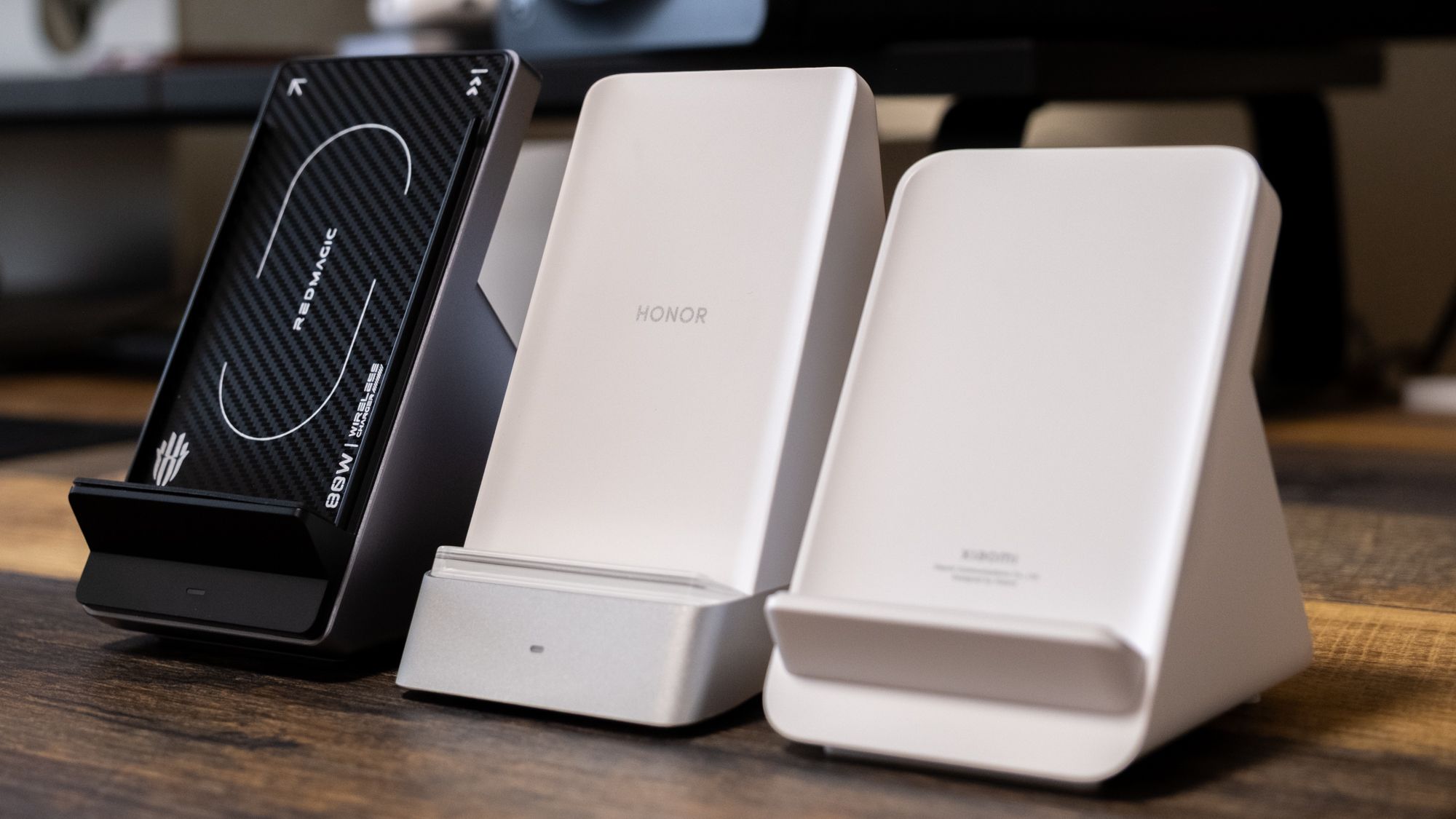
The principle behind all of it is to measure the real curve rather than a rated spec, and to judge the speed relative to how much battery there is to fill — a fast charge means something different on a small battery than on a large one.
Method
We charge each phone from empty to full, using a charger that supports the absolute peak charging speeds for each specific phone. Much of the time, that means using a proprietary charger and cable from the manufacturer of the phone.
Throughout the test, we use apps to log battery level, the phone’s temperature, and the power that the phone is receiving. With that information, we’re able to get the full charging curve, and find out the actual peak charging speeds that the phone hit over the test.
So why log temperature? It doesn’t factor into the end score — but it can help give us information around when and how a phone decides to throttle charging speeds. It’s really just interesting information.
How we score charging
There are a few things that go into our final charging score, and the scoring can get complicated depending on the phone, the charging curve, and the battery capacity being charged.
The end charging scores are based on an "area under the curve" principle, which rewards aggressive charging curves. A phone that fast-charges to 99% in 30 minutes then takes another 30 minutes to reach 100% will score better than a phone with a linear curve that takes the full 60 minutes — even though both took an hour. That's because you won't always charge to full. Sometimes you only have 20 minutes, so it's more helpful to have a device that can take advantage of that time.
The scoring method is the same for wired and wireless charging, though we use different constants in the wireless formula to keep scores comparable. We also report metrics like "time to 30 minutes," but these don't factor into the actual scores — they're already built into the scoring method.
The other piece is the size of the battery. We don't score on battery percentage alone, because fully charging a 7,000mAh battery in an hour is more impressive than fully charging a 4,000mAh battery in the same time — the bigger battery is actually charging faster, since more energy was delivered. So, we use actual energy delivered to the battery instead. This keeps comparisons fair — phones aren't penalized for having larger batteries or rewarded for having smaller ones. It does mean scores can occasionally look strange, where a slower-charging phone outscores a faster one. That's the battery size at work.
Finally, phones with magnetic alignment get a small bonus in their wireless charging scores. It won't tip the scales — a phone that charges wirelessly to full in 30 minutes will still score far better than one that takes an hour, magnets or not. But when two phones land close before the bonus, it can act as a tiebreaker.
What the charging score reflects
At the end of the day, our charging score is meant to answer a simple question — how quickly can this phone get usable battery back into your day? A high score means the phone delivers a lot of energy fast, holds those speeds for a meaningful stretch, and doesn't lean on a rated number it can't actually sustain. A lower score means you'll be waiting longer, whether that's down to conservative thermals, a shallow charging curve, or a battery that's just slow to fill relative to its size.
What the score deliberately doesn't reward is marketing. A phone can advertise 120W and still land mid-pack if it only touches that speed for a couple of minutes — and a more modest 65W device can outscore it by holding a steadier curve. That's the whole point of measuring the real charge instead of trusting the spec sheet. When you compare two phones on charging, you're comparing how they actually behave plugged in, not the biggest number each company could fit on a box.
FAQ
Why does a phone with a higher rated charging speed sometimes score lower?
Because the rated number is a peak, not an average. A phone might advertise 120W but only hit it for a minute or two before throttling back to protect the battery. A 65W phone that holds a steadier curve can deliver more total energy over the charge and score better as a result. We measure the whole curve, so what you're seeing is real-world behavior, not the spec sheet.
Does temperature affect the charging score?
No. We log temperature throughout the test, but it doesn't factor into the score. It's useful for understanding when and why a phone decides to throttle, and it's interesting context — but it stays out of the math.
Why can a slower-charging phone outscore a faster one?
Usually it comes down to battery size. We score on the actual energy delivered to the battery, not the percentage filled, so a phone that takes longer to charge a large battery can still be moving more energy per minute than a phone that quickly tops off a small one. It keeps the comparison fair — bigger batteries aren't penalized just for having more to fill.
How much does the magnetic alignment bonus matter?
Not much, by design. Phones with Qi2 or MagSafe-style magnetic alignment get a small bump in their wireless score, since those systems help a device hit its fastest speeds. But it won't move a phone from average to great — it's really only a factor when two phones land close together before the bonus.
Related
How we test speakers and microphones
How we test performance
How we test batteries
How we test cameras
Apple
iPhone 17 Pro Max

RedMagic
11S Pro

Samsung
Galaxy S26 Ultra

OnePlus
15
Samsung
Galaxy S26+
Samsung
Galaxy S26

RedMagic
11 Air

OnePlus