How we test cameras
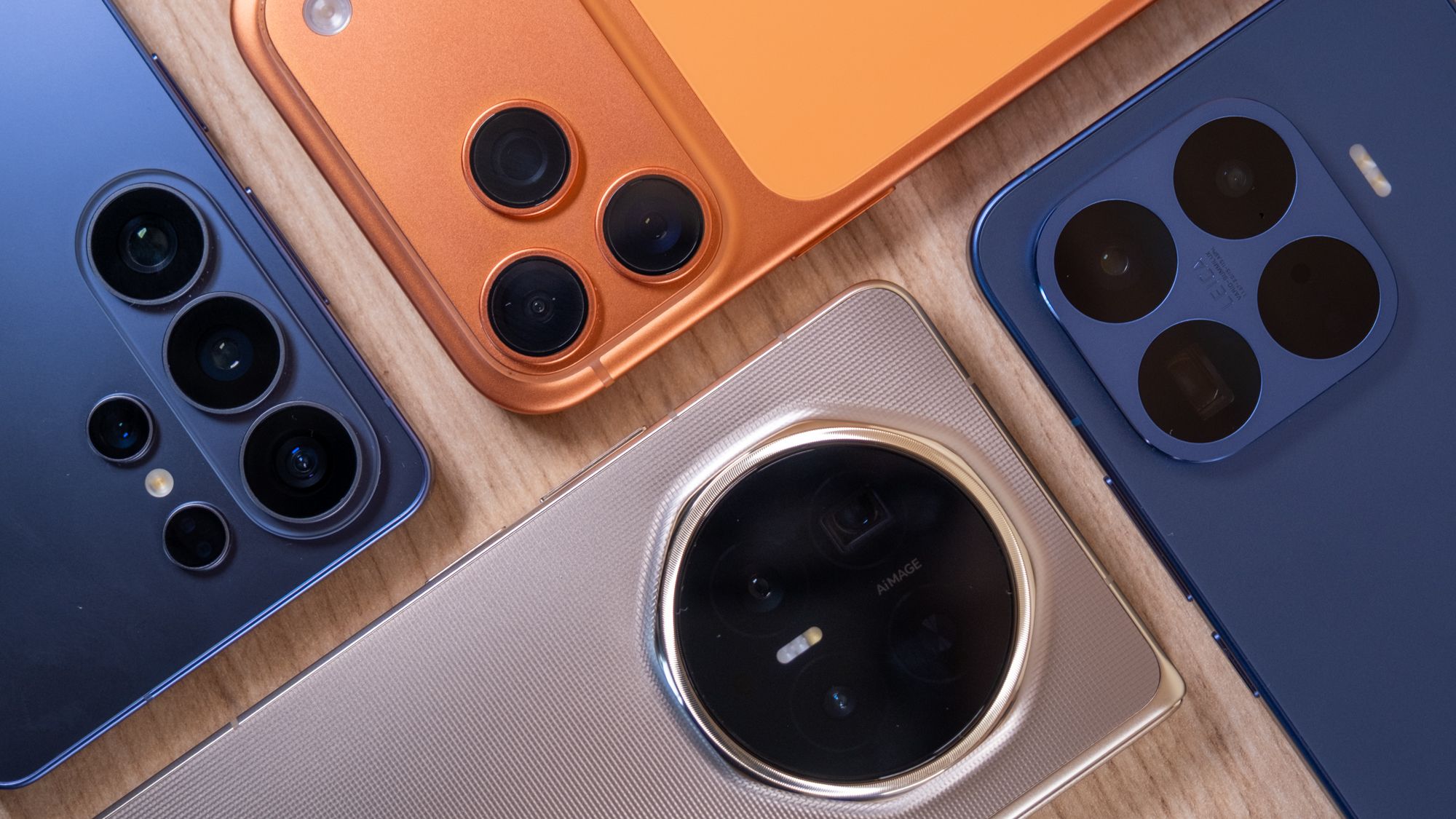
Phone cameras are the hardest part of a phone to judge from a spec sheet. A megapixel count tells you how many pixels the sensor has, not how sharp the photos are, while a large aperture or sensor size hints at potential but doesn't guarantee a good result. And more than any other component, the photo you end up with isn't just the hardware — it's the hardware plus a heavy layer of processing that varies from one phone to the next.
That's the problem our camera testing is built to solve. We shoot controlled lab charts under fixed lighting, across every lens a phone has, and we measure the results the same way every time so two cameras can be compared directly. Just as importantly, we test each camera two ways — once with the phone's full processing doing its thing, and once with that processing stripped back. That means we can see how much of the image quality comes from the sensor and optics, and how much comes from software. Here's how that works.
What we measure
We break a camera down into five things: sharpness (how much fine detail it resolves), color accuracy (whether colors come out right), dynamic range (how much shadow and highlight detail it holds onto), stabilization (how steady its video is), and depth (how much natural background blur the lens can produce). Every one of these is measured on a physical test chart under controlled lighting rather than from sample photos, because sample shots depend on the scene, the moment, and luck. A controlled chart doesn't change between phones, so the numbers mean the same thing every time.
The other principle running through all of it is separating the sensor from the processing. Modern phone photos lean heavily on computational steps — HDR merging, sharpening, color tuning, noise reduction. Those steps are part of what you get, so we measure them, but we also measure the camera with them pulled back, so a phone can't simply process its way to a good score while hiding weak underlying hardware.
The test matrix
We run a series of tests across every lens that a phone offers, including the main camera, ultra-wide camera, any telephoto cameras, and front cameras. Apart from the video stabilization test, each camera test is shot in two ways: auto mode and RAW. Auto is essentially the default way that your phone will capture photos, using the standard camera app that the phone comes with. We set manual settings for RAW captures and attempt to get as close to the sensor data as possible, using a variety of third-party apps.
The dynamic range test and the stabilization test are run once for each camera. The dynamic range test is run in auto and RAW modes.
The color accuracy test is run for each camera, in auto and RAW modes, at three different levels of brightness — 1,000 lux at 5,500K color temperature, 100 lux at 4,000K color temperature, and 10 lux at 3,000K color temperature. This is designed to simulate a variety of lighting conditions, like outdoor daytime capture, indoor capture, and low-light capture.
The sharpness test is run in auto and RAW modes at three different brightness levels on the front camera, ultra-wide camera, and then at a series of different zoom levels. These include 1x, 2x, 3x, 4x, 5x, 6x, 8x, 10x, and then every 10x zoom. The goal here is to track how a phone retains detail when digital zoom is in the mix. Note that the RAW captures for the sharpness test are only taken at native levels of zoom.
Sharpness
Sharpness is measured from a resolution chart — specifically the ISO 12233:2017 target, an industry-standard pattern. We analyze how cleanly the camera reproduces those lines using MTF (modulation transfer function), a standard measure of how well detail survives from the scene to the final image. The result is expressed in line widths per picture height: essentially how many distinct fine lines the camera can resolve from the top of the frame to the bottom before they smear together. More is sharper.
We measure sharpness separately in the center, the mid-frame, and the corners, because lenses rarely perform evenly across the frame — many are crisp in the middle and soften toward the edges. Capturing all three shows whether a camera is sharp everywhere or only where it's easiest.
We also track edge enhancement. Phones often apply artificial sharpening that makes edges look crisp at a glance but adds halos and grit that aren't real detail. We detect that oversharpening and include it in our scoring.
When it comes to scoring sharpness, we handle the scores a little differently than some of the other camera tests. The front and ultra-wide cameras are scored based on their native captures. From there, main and telephoto cameras could be scored depending on the setup a phone has to offer. If a phone has no telephoto camera, then scores from images captured between 1x and 10x are included in the final score. If the phone, for example, has a 3x telephoto camera, then only the measurements at 1x and 2x are included in the main camera's score, and the measurements between 3x and 10x are included in the telephoto score.
The reason for this is basically that without a telephoto camera, the main camera has to do more work to cover the zoom levels that people use regularly. When there's a telephoto camera in the mix, the main camera only has to do the work for 1x and 2x zoom. We calculate a separate deep zoom score for anything past 10x.
Color accuracy
Color is measured from a 24-patch ColorChecker Classic, a standard chart of known reference colors that includes several skin tones. We compare what the camera captures against what those patches actually are.
The core accuracy signal is hue — whether a color comes out as the right color. A red that reproduces as a slightly different red is a genuine error; that's what hue accuracy (often written as Delta H) captures, and it's the number we lean on most. We deliberately don't reduce color to a single overall difference score, because that would lump two very different things together: real mistakes, and a manufacturer's intentional styling.
That styling is mostly saturation. Plenty of phones boost saturation to make images look punchy and vivid, and that's a taste decision, not an error — a vivid photo isn't an inaccurate one. So we treat saturation as the styling choice it is and keep it separate from true color mistakes, rather than penalizing a phone for a look some people prefer.
Skin tones are the exception. They're the colors people are most sensitive to and least forgiving about — a face that comes out sallow or sunburned is obvious in a way a slightly-off blue sky isn't — so we isolate the skin patches and judge how accurately they're reproduced on their own, separately from the rest of the chart.
Dynamic range
Dynamic range is how much of a scene a camera can capture from the deepest shadows to the brightest highlights without losing detail at either end. We measure it with a Stouffer step wedge, a precision film target of 41 graduated steps running from clear to nearly black, spanning a known range from bright to dark.
What we count is how many of those steps the camera can actually tell apart — where each step reads as clearly distinct from the next rather than getting lost in image noise. The more steps it cleanly separates, the more tonal range it's holding onto, which in real photos means keeping detail in a bright sky and a shadowed foreground at the same time. We also calculate how well the camera retains the separation between these steps. A camera that squashes dynamic range might still detect every step, but with less of a difference between the darkest shadows and the brightest highlights.
As with the other tests, we shoot this in auto and RAW. The auto result includes the phone's HDR processing, which merges exposures to stretch dynamic range; the RAW result shows the sensor's native latitude before any of that. The gap between the two is a good measure of how much of a phone's dynamic range is computational versus built into the hardware.
Stabilization
Video stabilization is tested on a motorized gimbal that applies the same controlled shake pattern to every phone while it records. We then analyze the footage and measure how much of that motion still shows up in the video — the less residual movement that makes it through, the more effective the stabilization. Using a fixed, repeatable shake instead of handheld walking means every phone faces exactly the same challenge.
Depth
Depth here means a lens's ability to throw the background out of focus optically — the soft blur behind a subject that comes from the lens itself, not from a software portrait mode.
We don’t measure depth, because it’s physics and can be calculated without actual measurements. It's set by hardware: longer focal lengths, larger sensors, and wider apertures all produce more background separation. Rather than a shooting test, we calculate this from those three specifications, which gives a consistent measure of each lens's inherent blur potential. It's worth separating from the artificial blur a phone adds in portrait mode — this is about what the optics can do on their own.
What the camera score reflects
Each lens earns its own score, built from the five measurements above. Sharpness and dynamic range carry the most weight, followed by color, with depth and stabilization counting for less — they matter, but they swing the result less than whether a camera is sharp, holds its tonal range, and gets color right.
Those per-lens scores then combine into a single camera number, weighted toward the cameras people actually use. The main camera counts for the most, followed by the front camera, with the ultrawide, telephoto, and extreme zoom contributing progressively less. Phones with extra hardware — a second telephoto, or the multiple front cameras on a foldable — are scored to account for what they have, so a more versatile system gets credit for its range without being penalized where a comparison doesn't apply. A high camera score means a phone that performs across all of its lenses and lighting conditions, not one that's strong only in a single favorable setup.
FAQ
Why test lab charts instead of real-world photos?
Sample shots depend on the scene, the lighting, and luck, so they can't be compared fairly between phones. A controlled chart doesn't change from one device to the next, which means a sharpness or color number measures the camera itself rather than how nice the moment happened to be.
Why shoot every camera in both auto and RAW?
Auto mode is the photo you actually get, processing and all. RAW strips that processing back to show what the sensor and lens can do on their own. The gap between the two reveals how much of a phone's image quality is hardware versus software — and stops a phone from processing its way to a good score while hiding weak underlying optics.
If a phone boosts saturation, why isn't that marked as inaccurate?
Saturation is a styling choice, not an error. A vivid photo isn't a wrong one — plenty of people prefer that look. We judge accuracy on hue (whether a color comes out as the right color) and on skin-tone reproduction, and keep a manufacturer's saturation tuning separate from genuine color mistakes.
Why does the main camera's sharpness score change depending on whether the phone has a telephoto?
It reflects the work each lens actually does. Without a telephoto, the main camera has to cover the full range people zoom through, so measurements from 1x to 10x feed its score. With a telephoto present, the main camera only handles 1x and 2x, and the longer zoom levels go to the telephoto's score instead.
Why is depth calculated rather than measured?
Optical background blur is set by physics — focal length, sensor size, and aperture — so it can be derived directly from those specs without a shooting test. This is about what the lens can do optically, separate from the artificial blur a phone adds in portrait mode.
Related
How we test speakers and microphones
How we test charging
How we test performance
How we test batteries
Apple
iPhone 17 Pro Max

Samsung
Galaxy S26 Ultra
Apple
iPhone 17 Pro
Samsung
Galaxy S26+
Samsung
Galaxy S26
Apple
iPhone 17
Apple
iPhone 17e
Apple