Apple iPhone 17 vs Samsung Galaxy S26
Apple
Samsung
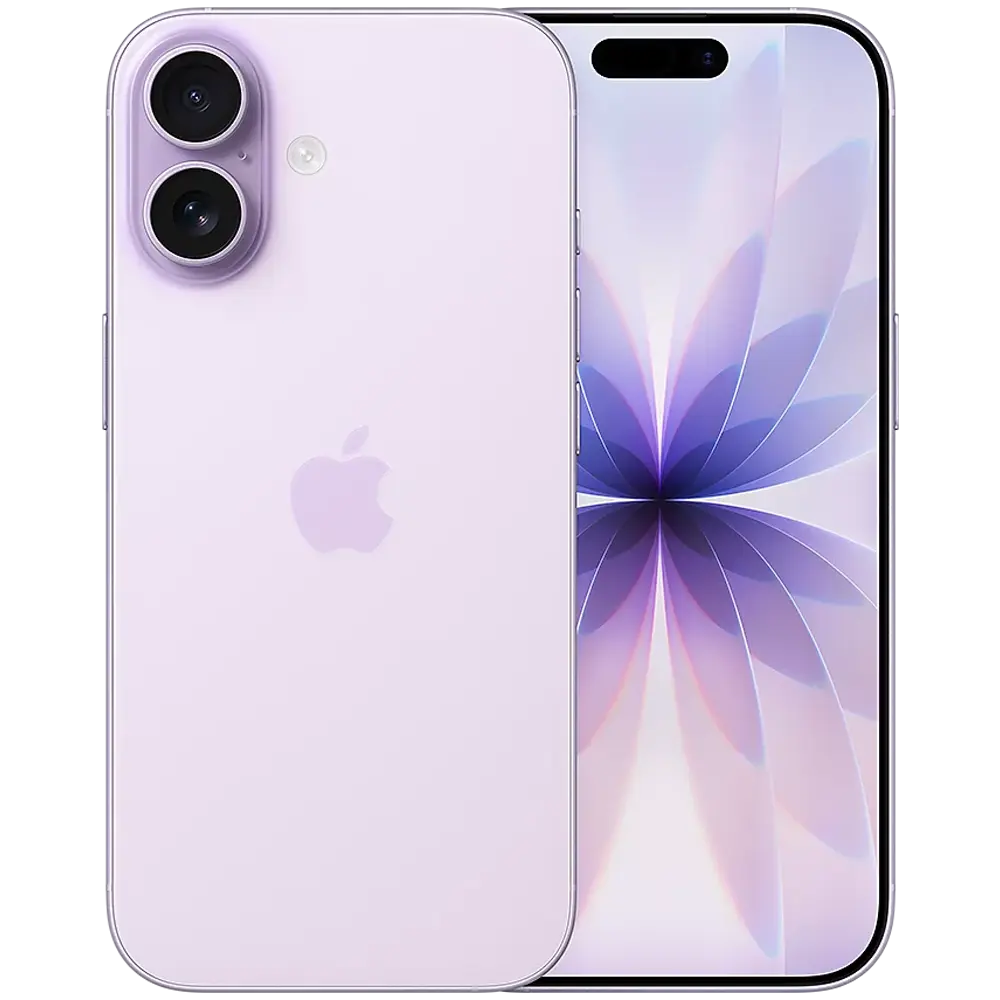
iPhone 17
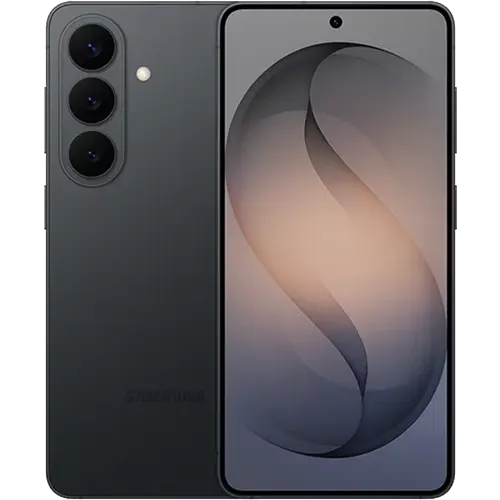
Galaxy S26
Ranked #23 of 52
Ranked #18 of 52
Overall
Overall
The iPhone 17 and Galaxy S26 are the base models in their respective flagship lineups, priced at around $800 and $900. The $100 price gap is modest enough that most buyers will choose based on ecosystem preference or specific strengths rather than cost alone.
The Galaxy S26 is the stronger camera phone, with better sharpness across all lenses, a dedicated telephoto, and more accurate color processing. It also leads in raw performance benchmarks, data transfer speeds, and speaker quality. The iPhone 17 counters with faster charging, a higher manual brightness ceiling, and better display color accuracy out of the box. Its GPU performance is more consistent under sustained load. Neither phone runs away with the overall picture — each has clear advantages depending on what you prioritize.
Here’s how the two phones compare.
Design
| Apple iPhone 17 | Samsung Galaxy S26 | |
|---|---|---|
| Specifications | ||
| Dimensions | 149.6 x 71.5 x 8 mm | 149.6 x 71.7 x 7.2 mm |
| Weight | 177g | 167g |
| IP Rating | IP68 | IP68 |
| Frame | Aluminum | Aluminum |
| Front | Ceramic Shield 2 | Gorilla Glass Victus 2 |
| Back | Glass | Gorilla Glass Victus 2 |
| Screen-to-body ratio | 91.1% | 90.8% |
The iPhone 17 and Galaxy S26 phones share a 6.3-inch display diagonal and IP68 dust and water resistance, but they differ in weight and proportions. The iPhone 17 weighs 177g while the Galaxy S26 comes in at 167g. Ten grams isn’t really noticeable, though. Both use aluminum frames. The iPhone 17 pairs its frame with a glass back and Ceramic Shield front, while the Galaxy S26 uses Gorilla Glass Victus on both front and back.
The iPhone 17's screen-to-body ratio and 1206 x 2622 resolution give it a taller, narrower aspect ratio compared to the Galaxy S26's more conventional 1080 x 2340 panel. Both phones use USB-C, though they differ in generation: the iPhone 17 uses USB-C 2.0, while the Galaxy S26 uses USB-C 3.2.
Bandicoot Lab doesn't formally test design or durability.
Display
| Apple iPhone 17 | Samsung Galaxy S26 | |
|---|---|---|
582/ 845 | 512/ 845 | |
Both phones run 120Hz LTPO OLED panels at 6.3 inches. The iPhone 17 has the higher resolution at 1206 x 2622 (460 pixels per inch) versus the Galaxy S26's 1080 x 2340 (411 PPI). The difference is subtle at this screen size — you'd need to look closely at fine text or detailed images to see it.
The iPhone 17 reaches a higher manual brightness ceiling at 854 nits compared to the Galaxy S26's 641 nits. That gap is meaningful outdoors in direct sunlight. For HDR content, they're closer — the iPhone 17 peaks at 3,022 nits and the Galaxy S26 at 2,791 nits. Both are bright enough for HDR to look punchy. Sustained brightness behavior differs significantly though. The Galaxy S26 holds 98.7% of its brightness over extended HDR playback. The iPhone 17 drops to 38.6%. The iPhone 17 starts brighter but doesn’t maintain it during extended usage.
The iPhone 17 is more color-accurate. In its default mode targeting sRGB, colors stay close to reference with minimal drift. The Galaxy S26's Natural mode shows more deviation from target, so colors wander further from where they should be, and you'll notice it most in neutral tones and skin in photos. The Vivid mode on the S26 is wider-gamut but even less accurate. If color fidelity matters to you, the iPhone 17's display is the better-calibrated panel.
Touch latency is 57ms on the iPhone 17 and 21.8ms on the Galaxy S26. That's a large gap. The Galaxy S26 will feel noticeably more responsive to quick swipes and taps, particularly in fast-paced games where input lag compounds.
Performance
| Apple iPhone 17 | Samsung Galaxy S26 | |
|---|---|---|
814/ 1012 | 833/ 1012 | |
The iPhone 17 runs Apple's A19 with 8GB RAM. The Galaxy S26 uses Qualcomm's Snapdragon 8 Elite Gen 5 with 12GB RAM. Both are fast enough that typical daily tasks won't reveal meaningful differences.
In CPU benchmarks, the two are close on single-core work: the iPhone 17 scores 3,772 in GeekBench 6 single-core versus 3,709 for the Galaxy S26. Multi-core is where they diverge: the Galaxy S26 pulls ahead at 11,232 compared to 9,645 for the iPhone 17. That 16% multi-core advantage shows up in heavily threaded workloads like video export or complex multitasking.
GPU performance is more nuanced. The Galaxy S26's peak GPU score in Wild Life Extreme is higher at 7,740 versus 5,164 for the iPhone 17. Stability under sustained load differs: the iPhone 17 holds 70.8% of its peak over the stress test, while the Galaxy S26 drops to 45.8%. The Galaxy S26 starts much faster but throttles harder. For short bursts of demanding graphics, the S26 is clearly faster. For sustained gaming sessions, the iPhone 17's more consistent output may deliver a smoother experience despite lower peak numbers. The Solar Bay GPU test is similar too. The Galaxy S26 peaks higher (13,860 vs 10,142) but its stability is worse at 47.4% versus 68.8%.
Browser performance slightly favors the Galaxy S26, with a Speedometer score of 36.7 versus 33.5.
Camera
| Apple iPhone 17 (Overall) | Samsung Galaxy S26 (Overall) | |
|---|---|---|
| Specifications | ||
| Main | 48MP, f/1.6, 26mm, 1/1.56" | 50MP, f/1.8, 24mm, 1/1.56" |
| Ultrawide | 48MP, f/2.2, 13mm, 1/2.55" | 12MP, f/2.2, 13mm, 1/2.55" |
| Telephoto | — | 10MP, f/2.4, 67mm, 1/3.94" |
| Front | 18MP, f/1.9, 20mm | 12MP, f/2.2, 23mm, 1/3.2" |
The Galaxy S26 has the more complete camera system with main, ultrawide, telephoto, and front lenses. The iPhone 17 lacks a telephoto entirely, relying on digital crop from its main sensor for anything beyond 2x. The Galaxy S26 is sharper, more color-accurate, and delivers stronger dynamic range across most lenses.
At extended zoom levels, the gap widens considerably. The iPhone 17's digital crop falls off quickly. By 10x, detail is heavily degraded in all lighting conditions. The Galaxy S26 maintains usable sharpness at 10x and even 20x thanks to its dedicated telephoto optic. At 30x, even the Samsung struggles, but it still resolves more detail than the iPhone manages at 10x.
Color character differs between the two. The iPhone 17 produces vivid, saturated images in bright light with a noticeable warm push. The Galaxy S26 is also saturated in bright light but less aggressively so, and its overall tone sits closer to neutral. As lighting gets dimmer, the iPhone 17's processing pulls increasingly warm, with a growing yellow-amber cast. This is primarily a white balance correction issue — the warmer the ambient light, the more the processing overcompensates. The Galaxy S26 handles this transition more gracefully. Its mid and low-light images stay closer to accurate with less warmth creep.
Main
| Apple iPhone 17 (Main) | Samsung Galaxy S26 (Main) | |
|---|---|---|
463/ 722 | 594/ 722 | |
The Galaxy S26's main lens is sharper in bright light and maintains that lead as light drops. In low light, both phones hold up well, but the Samsung retains more fine detail with less softening. The iPhone 17 boosts saturation more aggressively in all conditions. Skin tones on the iPhone 17 drift noticeably warm and oversaturated in bright light. The Galaxy S26's skin rendering is closer to reference, though still slightly warm.
Dynamic range on both main cameras is strong. The Galaxy S26 handles high-contrast scenes with slightly more highlight headroom. The iPhone 17 clips highlights sooner but pulls more shadow detail in its processed output. Both produce usable images in harsh backlit situations.
As lighting drops to indoor levels, the iPhone 17's images pick up a strong warm cast that pushes yellows and oranges. Hue accuracy degrades alongside this — it's a white balance correction problem rather than a sensor limitation. The Galaxy S26 shows minor hue shifts in mid-light but nothing as pronounced.
Ultrawide
| Apple iPhone 17 (Ultrawide) | Samsung Galaxy S26 (Ultrawide) | |
|---|---|---|
452/ 722 | 604/ 722 | |
The Galaxy S26's ultrawide is substantially sharper than the iPhone 17's across all lighting conditions. The iPhone 17's ultrawide is competent but softens more in the corners and loses detail faster as light drops.
Color on the iPhone 17's ultrawide mirrors its main lens behavior: vivid and saturated in bright light, progressively warmer as ambient light drops. The Galaxy S26's ultrawide matches its main camera color profile more closely, which makes switching between lenses in a scene less jarring.
Dynamic range is comparable between the two ultrawides. Both retain good shadow detail in high-contrast scenes, with the Galaxy S26 showing slightly less highlight clipping.
Telephoto
| Apple iPhone 17 (Telephoto) | Samsung Galaxy S26 (Telephoto) | |
|---|---|---|
| — | 568/ 722 | |
The iPhone 17 doesn't have a telephoto lens. Any zoom beyond 1x is a digital crop from the main sensor, and quality drops off rapidly.
The Galaxy S26's dedicated telephoto delivers strong results. Sharpness at its native focal length is high in bright and mid-light, and it holds detail well even in low light. Color accuracy is strong across all lighting, too. Skin tones are the most accurate of any lens in either phone system. Dynamic range is solid, with well-preserved highlights and clean shadow transitions.
Video stabilization on the Galaxy S26's telephoto is adequate but not exceptional. Handheld footage stays watchable but shows more residual motion than you'd get from the main cameras on either phone.
Front
| Apple iPhone 17 (Front) | Samsung Galaxy S26 (Front) | |
|---|---|---|
362/ 722 | 398/ 722 | |
The iPhone 17's front camera is sharper in bright and mid-light conditions. The Galaxy S26's front camera is slightly softer but handles low light better, with less degradation as conditions worsen. Both produce good selfies in daylight.
Color accuracy on the front camera is better on the Galaxy S26. The iPhone 17's front camera oversaturates significantly in bright light, pushing skin tones noticeably warm and vivid. In mid and low light, hue accuracy degrades on both, though the Galaxy S26's errors are smaller.
Dynamic range is similar on both front cameras. Neither does particularly well with bright backgrounds behind a face, clipping highlights at similar thresholds. The Galaxy S26's front camera stabilization is noticeably better for video, and footage is smoother and more controlled than the iPhone 17's front-facing video.
Battery
| Apple iPhone 17 | Samsung Galaxy S26 | |
|---|---|---|
555/ 799 | 579/ 799 | |
The Galaxy S26 offers a larger 4,300mAh cell versus the iPhone 17's 3,692mAh. That 16% capacity advantage shows up in testing.
In video playback at 200 nits, the Galaxy S26 lasts 30 hours and 15 minutes versus the iPhone 17's 22 hours and 10 minutes. In web browsing over a 5-hour test, the Galaxy S26 drains 24% while the iPhone 17 drains 22%. That's close enough to call it even for typical browsing use.
Gaming drain is identical — both phones lose 27% during the 3DMark stress test. Standby drain is also tied at 2% over 8 hours of idle. The Galaxy S26's larger battery and efficient display sustain give it a clear advantage for long flights or binge-watching sessions.
Charging
| Apple iPhone 17 | Samsung Galaxy S26 | |
|---|---|---|
332/ 837 | 263/ 837 | |
The iPhone 17 supports 40W wired and 25W MagSafe-compatible wireless charging. The Galaxy S26 offers 25W wired and 15W wireless (Qi2), but doesn’t have the magnets for alignment. The iPhone 17's faster charging spec translates directly to real-world speed advantages.
At 10 minutes on the wire, the iPhone 17 reaches 28% versus the Galaxy S26's 21%. At 30 minutes, it's 73% versus 58%. The iPhone 17's advantage holds through the full charge cycle. That 15-percentage-point gap at the half-hour mark is meaningful if you regularly grab a quick charge before heading out.
Wireless charging shows an even larger gap. The iPhone 17 hits 25% at 10 minutes and 49% at 30 minutes; the Galaxy S26 manages just 11% and 29% at those same marks. Apple's MagSafe magnetic alignment and higher wireless wattage make a real difference here.
Speaker
| Apple iPhone 17 | Samsung Galaxy S26 | |
|---|---|---|
762/ 857 | 817/ 857 | |
The iPhone 17 is louder at 75 dBA maximum versus 72.5 dBA on the Galaxy S26.
The Galaxy S26 has significantly lower distortion at 3.44% average THD compared to the iPhone 17's 9.69%. At higher volumes, the iPhone 17 introduces more harshness and breakup, while the Galaxy S26 stays cleaner. Both phones produce full-sounding audio with balanced bass and clear highs. The Galaxy S26 leans slightly toward cleanliness and refinement; the iPhone 17 trades some of that for raw output.
If you primarily listen at moderate volumes, the Galaxy S26 sounds better. If you need to fill a room or hear audio in a loud environment, the iPhone 17's volume advantage matters more.
Microphone
| Apple iPhone 17 | Samsung Galaxy S26 | |
|---|---|---|
664/ 949 | 739/ 949 |
Both phones produce above-average microphone recordings. The Galaxy S26 is slightly more consistent across frequencies, with less variance between lows and highs. The iPhone 17 is still good but shows a touch more unevenness in its frequency response. For voice calls, video recording, and voice memos, both are perfectly adequate. The Galaxy S26 has a slight edge for anyone recording content or taking calls in challenging acoustic environments.
Other
| Apple iPhone 17 | Samsung Galaxy S26 | |
|---|---|---|
| Biometrics | 207/ 1036 | 464/ 1036 |
| Data Transfer | 103/ 877 | 736/ 877 |
| Specifications | ||
| Biometric type | Face Recognition | Fingerprint |
| Ports | USB-C 2.0 | USB-C 3.2 |
| Storage | 256GB, 512GB | 256GB, 512GB |
Biometrics differ significantly between these phones. The Galaxy S26 uses an ultrasonic fingerprint sensor with an average unlock speed of 226ms. The iPhone 17 relies on hardware-based face unlock, averaging 508ms. The Galaxy S26 is more than twice as fast to unlock.
Data transfer speeds are dramatically different due to the USB standard mismatch. The Galaxy S26 over USB-C 3.2 achieves read speeds of 335 MB/s and write speeds of 271 MB/s. The iPhone 17 over USB-C 2.0 manages just 39 MB/s read and 38 MB/s write. If you regularly transfer large files, photos, or video to a computer, the Galaxy S26 is roughly nine times faster. Both phones are available in multiple storage configurations, but this USB generation gap means the iPhone 17's storage, however large, is slower to access externally.
Conclusion
The Galaxy S26 is the stronger pick for photography, performance-intensive tasks, and data transfer. Its camera system is more versatile and sharper across the board, its multi-core CPU performance leads by a meaningful margin, and USB 3.2 makes file management dramatically faster. The display stays bright during HDR content, and the lower touch latency makes it feel snappier under the finger. Its speaker is cleaner at volume and its biometric unlock is faster.
The iPhone 17 fights back with faster charging (both wired and wireless), a higher manual display brightness ceiling for outdoor readability, significantly better display color accuracy, and stronger GPU stability under sustained load. If you game for extended sessions, its more consistent frame output matters. Its louder speaker is useful when you need to be heard. The tight integration with other Apple devices remains a genuine practical advantage that no spec sheet captures.
Your decision likely comes down to priorities. If camera quality, raw performance, and fast file transfers matter most, the Galaxy S26 justifies its $100 premium. If you value fast charging, display accuracy, and sustained GPU performance, and you're already invested in Apple's ecosystem, the iPhone 17 delivers where it counts for $100 less.
Related
Apple
iPhone 17
Samsung
Galaxy S26
Apple
iPhone 17 Pro
Apple
iPhone 17 Pro Max

Samsung
Galaxy S26 Ultra
Samsung
Galaxy S26+
Samsung
Galaxy Z Fold 8
Apple
iPhone 17e
Apple
iPhone Air

Samsung Galaxy S26 Series vs Galaxy S25 Series
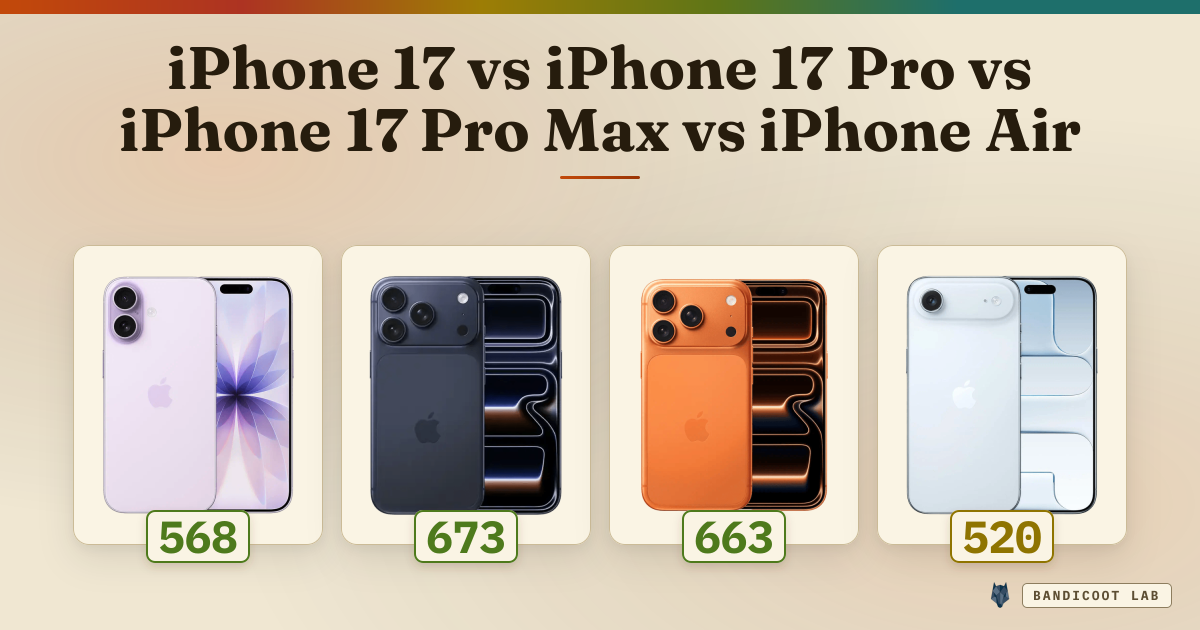
iPhone 17 vs iPhone 17 Pro vs iPhone 17 Pro Max vs iPhone Air
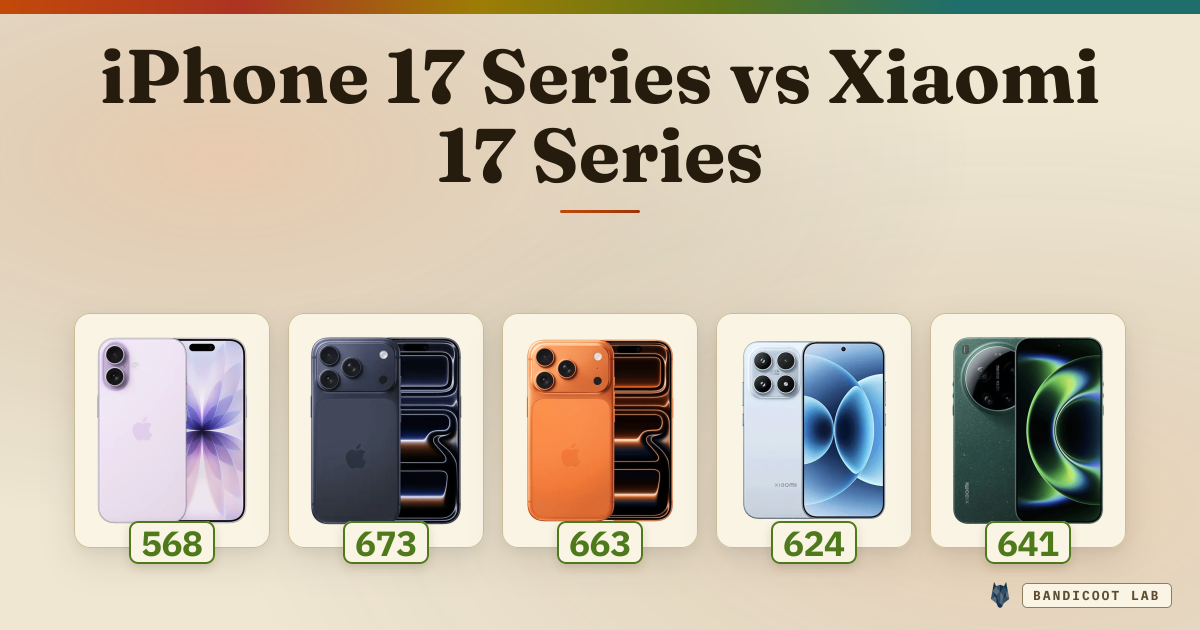
iPhone 17 Series vs Xiaomi 17 Series