Samsung Galaxy S26 vs Nothing Phone (3)
Samsung
Nothing
Galaxy S26
Phone (3)
Ranked #20 of 59
Ranked #36 of 59
Overall
Overall
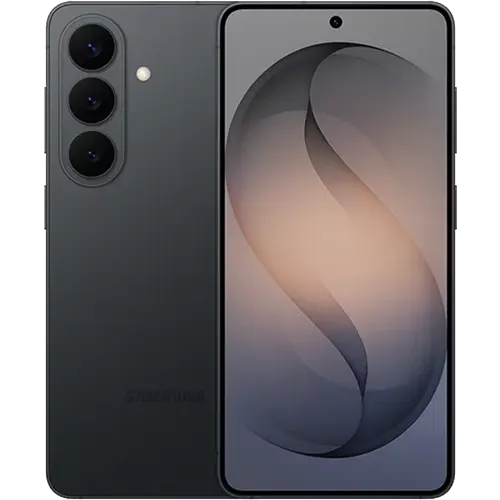
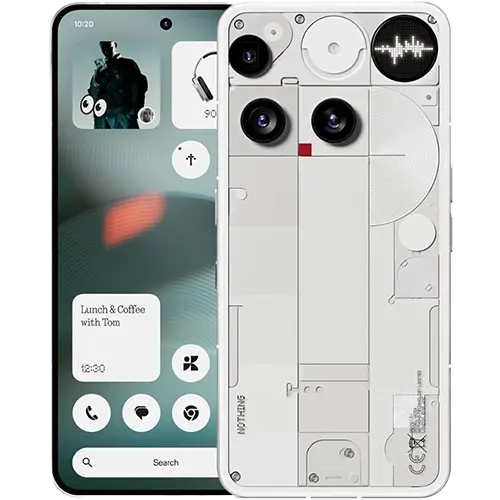
The Samsung Galaxy S26 is a $900 flagship that fits Samsung's familiar formula: compact size, refined specs, and a broad feature set aimed at buyers who want a well-rounded phone without much compromise. The Nothing Phone (3) comes in $100 less at $799 and takes a different approach. It's a larger device with a bigger battery, more RAM in its top configuration, and a camera system built around high-resolution sensors across every lens. These two phones overlap in audience more than their branding suggests. Both target people willing to spend in the upper tier without jumping to ultra-premium pricing.
The S26 is the stronger performer by a wide margin, with a newer chipset that pulls ahead in CPU and GPU tasks. Its speaker system is noticeably better, and data transfer speeds are in a different league thanks to USB-C 3.2. The Nothing Phone (3) fights back with a genuinely superior camera system, particularly in sharpness and color accuracy, along with better touch responsiveness and much faster wired charging.
Here’s how the Nothing Phone (3) and the Samsung Galaxy S26 compare in our thorough testing.
Design
| Samsung Galaxy S26 | Nothing Phone (3) | |
|---|---|---|
| Specifications | ||
| Dimensions | 149.6 x 71.7 x 7.2 mm | 160.6 x 75.6 x 9 mm |
| Weight | 167g | 218g |
| IP Rating | IP68 | IP68 |
| Frame | Aluminum | Aluminum |
| Front | Gorilla Glass Victus 2 | Gorilla Glass 7i |
| Back | Gorilla Glass Victus 2 | Gorilla Glass Victus |
| Screen-to-body ratio | 90.8% | 89.0% |
The Galaxy S26 is the more compact phone. It measures 149.6 x 71.7 x 7.2mm and weighs 167g, making it noticeably smaller and about 50g lighter than the Nothing Phone (3) at 160.6 x 75.6 x 9mm and 218g. That weight difference is noticeable.
Both phones use aluminum frames and carry an IP68 rating. The S26 uses Gorilla Glass Victus 2 on both front and back. The Nothing Phone (3) uses Gorilla Glass 7i on the front and Gorilla Glass Victus on the back, a step down in glass generation on the front panel.
The S26 has a slightly higher screen-to-body ratio at 90.8% versus 89%, which means marginally thinner bezels relative to its display size. The S26's display is a 6.3-inch panel at 19.5:9, while the Nothing Phone (3) is a 6.7-inch panel at 20.1:9, making it taller and wider. Bandicoot Lab doesn't formally test design or durability, so these are paper specs only.
Display
| Samsung Galaxy S26 | Nothing Phone (3) | |
|---|---|---|
512/ 881 | 525/ 881 | |
The S26 carries a 6.3-inch Dynamic LTPO AMOLED 2X at 1080 x 2340, yielding 411 pixels per inch. The Nothing Phone (3) has a 6.7-inch OLED at 1080 x 2412, which works out to 460 PPI thanks to the resolution being spread across a taller but similarly wide panel. Both support 120Hz refresh rates, though the S26 can drop as low as 1Hz via LTPO for power savings while the Nothing Phone (3) bottoms out at 30Hz.
Peak HDR brightness is where the S26 pulls far ahead, hitting 2,791 nits versus 1,602 nits on the Nothing Phone (3). In very bright outdoor conditions with small HDR highlights, the S26 will look noticeably more vivid. The S26's brightness does throttle at larger window sizes though, with a stability of 51.7%. The Nothing Phone (3) achieves 98.7% stability across window sizes, so it won’t lower brightness much regardless of what’s on the screen. Both phones hold sustained brightness well over 30 minutes, at 98.7% and 97.9% respectively. Those are essentially identical.
Manual brightness is different though. The Nothing Phone (3) reaches 790 nits at maximum manual brightness versus 641 nits for the S26, so for non-HDR content in direct sunlight, the Nothing Phone (3) is actually brighter. The Galaxy S26 dims lower at minimum, hitting 0.86 nits compared to 2.11 nits, a small advantage for dark-room viewing.
Color accuracy is similar between the two. Both show moderate drift from reference in their best-calibrated modes. Neutral tones stay reasonably close, but neither phone leads here. The Nothing Phone (3) covers 95.6% of sRGB and 71.3% of Display P3 in its standard mode. The Galaxy S26 covers 98.3% sRGB and 73.2% of Display P3 in natural mode. Both are close enough that real-world color differences are subtle.
Performance
| Samsung Galaxy S26 | Nothing Phone (3) | |
|---|---|---|
833/ 1012 | 553/ 1012 | |
The Galaxy S26 runs the Qualcomm Snapdragon 8 Elite Gen 5 with 12GB of RAM. The Nothing Phone (3) uses the older Snapdragon 8 Gen 3 with up to 16GB of RAM. The generational gap between these chipsets shows up across every benchmark.
In GeekBench 6, the Galaxy S26 scores 3,709 single-core and 11,232 multi-core. The Nothing Phone (3) scores 2,209 single-core and 6,992 multi-core. That's roughly 68% higher single-core and 61% higher multi-core for the Galaxy S26. You'll feel this in app launch times, heavy multitasking, and anything that leans on sustained CPU throughput.
GPU performance follows the same pattern. The Galaxy S26's peak Wild Life Extreme score is 7,740 versus 4,459 for the Nothing Phone (3). The S26 also posts a higher Solar Bay peak at 13,860 versus 8,126. The Nothing Phone (3) manages better thermal stability under GPU stress — 64.4% in Wild Life Extreme and 61.7% in Solar Bay, compared to 45.8% and 47.4% for the S26. The S26 starts much higher but throttles harder. For short bursts of gaming, the S26 will feel significantly faster. For longer sessions, the gap narrows as the S26 drops performance to manage heat, though to be clear, its throttled performance is still better than the Nothing Phone (3)’s.
Browser performance reflects the CPU advantage. The Galaxy S26 scores 36.7 in Speedometer versus 20.6 for the Nothing Phone (3). Complex web apps and heavy pages will load and respond faster on the Galaxy S26.
Camera
| Samsung Galaxy S26 (Overall) | Nothing Phone (3) (Overall) | |
|---|---|---|
| Specifications | ||
| Main | 50MP, f/1.8, 24mm, 1/1.56" | 50MP, f/1.7, 24mm, 1/1.3" |
| Ultrawide | 12MP, f/2.2, 13mm, 1/2.55" | 50MP, f/2.2, 15mm, 1/2.76" |
| Telephoto | 10MP, f/2.4, 67mm, 1/3.94" | 50MP, f/2.7, 72mm, 1/2.75" |
| Front | 12MP, f/2.2, 23mm, 1/3.2" | 50MP, f/2.2, 25mm, 1/2.76" |
The Nothing Phone (3) has the stronger camera system overall. It uses 50 megapixel sensors across all four lenses, including a large 1/1.3-inch main sensor, and earns a camera score of 571.8 versus 512.6 for the S26. The S26's system is more conventional: a 50 megapixel main, 12 megapixel ultrawide, 10 megapixel telephoto, and 12 megapixel front camera. The Nothing Phone (3) produces sharper images across most lenses and lighting conditions, with better color accuracy on the telephoto and front camera.
At deep zoom levels, the Nothing Phone (3) holds a meaningful advantage. Its 50 megapixel telephoto and higher maximum digital zoom of 60x allow it to retain more detail at extreme distances. At 30x in good light, the Nothing Phone (3) produces visibly more resolved detail than the S26. It also extends to 40x, 50x, and 60x where the S26 stops at 30x. If you regularly crop or zoom beyond 10x, the Nothing Phone (3) is the better tool.
Main
| Samsung Galaxy S26 (Main) | Nothing Phone (3) (Main) | |
|---|---|---|
594/ 722 | 572/ 722 | |
The Nothing Phone (3)'s main camera is sharper across all lighting conditions. In bright and mid light, it produces substantially more resolved detail than the S26, and it holds an edge in low light as well, though the gap narrows. The S26's main sensor is solid but the smaller 1/1.56-inch sensor can’t match the resolving power of the Nothing Phone (3)'s 1/1.3-inch sensor.
Color rendering diverges between the two. The Galaxy S26's main camera pushes saturation up considerably in bright light, producing a vivid, slightly oversaturated look. Hue accuracy is good in bright conditions but drifts as lighting gets warmer and dimmer. In mid light, there is a noticeable shift toward pink-magenta tones, suggesting the white balance system is overcompensating. Skin tones are pulled noticeably off-target in bright light but improve in dimmer conditions. The Nothing Phone (3) takes a more restrained approach. Saturation stays close to neutral across all lighting, with virtually no consistent warm or cool lean. Skin tones carry some error in bright light but hold steadier across lighting transitions. The Nothing Phone (3) is the more accurate camera — the Galaxy S26 produces a more processed look that some may prefer for social media sharing.
The S26 holds an advantage in dynamic range on the main camera. It preserves more separation between highlights and shadows in high-contrast scenes, keeping detail in bright skies while retaining shadow texture. The Nothing Phone (3) also pulls strong dynamic range from scenes, but its processing introduces more tonal compression, producing images that look slightly flatter in exchange for fewer blown highlights. Both cameras clip highlights in auto mode, but the Nothing Phone (3) clips them earlier.
Ultrawide
| Samsung Galaxy S26 (Ultrawide) | Nothing Phone (3) (Ultrawide) | |
|---|---|---|
604/ 722 | 549/ 722 | |
Both ultrawide cameras produce high sharpness in bright light. The S26's 12 megapixel ultrawide holds up well as light dims, and the Nothing Phone (3)'s 50 megapixel ultrawide also resolves well. Both ultrawide lenses track close to their respective main cameras in sharpness.
Color behavior on the Galaxy S26's ultrawide camera is heavily saturated in bright light, even more so than its main camera. Skin tones drift significantly in bright conditions. In mid light, the ultrawide shifts toward pink-magenta, the same white balance overcorrection pattern as the main lens. The Nothing Phone (3)'s ultrawide keeps saturation closer to neutral, with a slight warm-pink push that stays mild. Skin tones drift less across conditions. In low light, the Nothing Phone (3) does show a yellow-warm shift in its ultrawide, which the S26 avoids.
Dynamic range is closer here. The Nothing Phone (3) pulls ahead, retaining more shadow and highlight information in high-contrast scenes. The Galaxy S26's ultrawide holds good range but clips highlights a bit earlier.
Telephoto
| Samsung Galaxy S26 (Telephoto) | Nothing Phone (3) (Telephoto) | |
|---|---|---|
568/ 722 | 584/ 722 | |
Both phones offer a 3x optical telephoto camera. The Galaxy S26 uses a 10 megapixel f/2.4 sensor at 67mm; the Nothing Phone (3) uses a 50 megapixel f/2.7 sensor at 72mm. The higher resolution of the Nothing Phone (3)'s sensor pays off in sharpness. It resolves more detail in bright light and maintains that advantage through mid and low light, though both cameras lose ground once lighting drops.
Color is where the difference is most pronounced. The Nothing Phone (3)'s telephoto produces close-to-reference hues across all three tested lighting conditions, with skin tones that stay tight throughout. Saturation runs slightly warm in bright light but settles in dimmer conditions. The Galaxy S26's telephoto carries a consistent cool-blue lean across all conditions. Hue errors are elevated regardless of lighting, pointing to a sensor-level limitation rather than a white balance issue. Skin tones are moderate in error but inconsistent. The Nothing Phone (3) is the more accurate telephoto for color.
Dynamic range is strong on both. The Nothing Phone (3) holds a slight edge, retaining more usable range with better highlight rolloff. Both cameras avoid hard highlight clipping at the telephoto focal length.
Front
| Samsung Galaxy S26 (Front) | Nothing Phone (3) (Front) | |
|---|---|---|
398/ 722 | 673/ 722 | |
The front camera is the Nothing Phone (3)'s biggest win. Its 50 megapixel sensor produces significantly more detail than the S26's 12 megapixel front camera, and the gap is wide in every lighting condition. In bright light, the Nothing Phone (3) resolves far more facial detail and texture. In low light, it holds up better as well.
Color on the Galaxy S26's front camera is neutral in bright light, with natural saturation and minimal bias. As lighting gets warmer, it shifts heavily toward pink-magenta, a strong white balance overcorrection that worsens further in low light. Skin tones drift noticeably. The Nothing Phone (3)'s front camera shows a slight cool-blue cast in bright light but stays much more stable across mid and low light. Skin tones carry some error but are more consistent than the S26's. Overall front camera color accuracy is meaningfully better on the Nothing Phone (3).
The Nothing Phone (3)'s front camera retains substantially more range between highlights and shadows, which helps in backlit selfie situations. The Galaxy S26's front camera clips highlights earlier and retains less shadow detail.
Battery
| Samsung Galaxy S26 | Nothing Phone (3) | |
|---|---|---|
579/ 799 | 593/ 799 | |
The Nothing Phone (3) has a larger 5,000mAh battery versus the Galaxy S26's 4,300mAh. Despite that 700mAh advantage, the S26 lasts longer in video playback, hitting 30.25 hours compared to 27.5 hours for the Nothing Phone (3). The S26's more efficient chipset and LTPO display likely account for the gap.
Web browsing drain over a five-hour test tells a different story. The S26 loses 24% while the Nothing Phone (3) loses 30%. That's a meaningful difference. If web browsing is your primary activity, the S26 will stretch further through the day. Gaming drain is nearly identical: 27% for the S26 and 28% for the Nothing Phone (3) during a one-hour test. The larger battery on the Nothing Phone (3) roughly compensates for its less efficient chipset here.
Standby is where the Nothing Phone (3) shines. It loses just 1% over an eight-hour idle compared to 2% for the Galaxy S26. Both are good, to be clear.
Charging
| Samsung Galaxy S26 | Nothing Phone (3) | |
|---|---|---|
263/ 837 | 268/ 837 | |
Wired charging specs heavily favor the Nothing Phone (3) — 65W versus 25W for the S26. Both support 15W wireless charging.
In practice, the gap is there but not as dramatic as the wattage numbers suggest. At 10 minutes, the Nothing Phone (3) reaches 22% versus 21% for the S26. At 30 minutes, the Nothing Phone (3) pulls ahead with 63% compared to 58% for the S26. The Nothing Phone (3) fills a larger battery faster, which is genuinely useful when you're grabbing a quick charge before heading out. Given its 5,000mAh capacity, reaching 63% in half an hour means over 3,000mAh delivered.
Wireless charging is a different picture. The S26 reaches 11% in 10 minutes and 29% in 30 minutes wirelessly. The Nothing Phone (3) manages just 4% in 10 minutes and 10% in 30 minutes. Despite identical 15W ratings, the Nothing Phone (3)'s wireless charging implementation is far slower. If you rely on wireless charging at your desk or nightstand, the Galaxy S26 is meaningfully better.
Speaker
| Samsung Galaxy S26 | Nothing Phone (3) | |
|---|---|---|
817/ 897 | 652/ 897 | |
The two phones are close in volume. The Nothing Phone (3) reaches 73.1 dBA and the S26 hits 72.5 dBA. That's a negligible difference in daily use.
Distortion is similarly close — 3.44% THD for the S26 and 3.46% for the Nothing Phone (3). Both stay clean at high volume without noticeable breakup.
Character is where they diverge. The S26 has a fuller, richer sound with better bass presence and clearer high-end detail. It's a more balanced speaker that works well for music, podcasts, and video. The Nothing Phone (3) is thinner in the low end and narrower in its useful frequency range. Bass rolls off earlier, and high frequencies don't extend as far. For calls and notification sounds, both are fine. For anything you'd actually want to listen to, the S26 sounds better.
Microphone
| Samsung Galaxy S26 | Nothing Phone (3) | |
|---|---|---|
739/ 1220 | 437/ 1220 |
The S26's microphone is above average, with a consistent frequency response that captures voice clearly without pronounced peaks or dips. The Nothing Phone (3)'s microphone is below average, with more uneven frequency reproduction. For video recording and voice calls, the S26 will deliver cleaner, more natural-sounding audio.
Other
| Samsung Galaxy S26 | Nothing Phone (3) | |
|---|---|---|
| Biometrics | 464/ 1181 | 504/ 1181 |
| Data Transfer | 736/ 877 | 102/ 877 |
| Specifications | ||
| Biometric type | Fingerprint | Fingerprint |
| Ports | USB-C 3.2 | USB-C 2.0 |
| Storage | 256GB, 512GB | 256GB, 512GB |
Both phones use in-display fingerprint sensors. The Nothing Phone (3)'s optical sensor averages 208ms, slightly faster than the S26's ultrasonic sensor at 226ms. Both are fast enough that the difference isn't perceptible in daily use. Neither phone has hardware-based face unlock.
Data transfer speeds are dramatically different. The Galaxy S26's USB-C 3.2 port delivers read speeds of 335 MB/s and write speeds of 271 MB/s. The Nothing Phone (3)'s USB-C 2.0 port maxes out at 38 MB/s read and 38 MB/s write. If you transfer files to or from a computer regularly, the S26 is roughly nine times faster. Both phones are available in 256GB and 512GB storage configurations.
Conclusion
The Galaxy S26 is the faster, more polished phone. It leads in raw performance, speaker quality, microphone quality, and data transfer speeds. Its display reaches far higher HDR peaks, and its battery stretches longer in video playback and web browsing despite a smaller cell. If your priorities are speed, media consumption, and a compact, lightweight build, the S26 is the better fit. The $900 price is justified by the Snapdragon 8 Elite Gen 5 chipset and the overall refinement of the package.
The Nothing Phone (3) is the better camera phone at a lower price. It produces sharper, more color-accurate photos across nearly every lens, with a front camera that's in a different class from the S26's. Its larger battery and 65W wired charging make it more practical for heavy users who need quick top-ups, and its lower touch latency gives it a slight edge in responsiveness. The larger, heavier body won't suit everyone, and the slower USB-C 2.0 port and weaker speaker are drawbacks.
Neither phone dominates the other. The Galaxy S26 is the better all-rounder for people who value performance and media features. The Nothing Phone (3) is the better choice for photography-first buyers who also want strong battery life and fast charging at a $100 savings.
Related
Nothing
Phone (3)
Samsung
Galaxy S26

Samsung
Galaxy S26 Ultra
Samsung
Galaxy S26+
Samsung
Galaxy Z Fold 8 Ultra
Samsung
Galaxy Z Fold 8
Nothing
Phone (4a) Pro
Nothing
Phone (4a)
Nothing
Phone (4b)
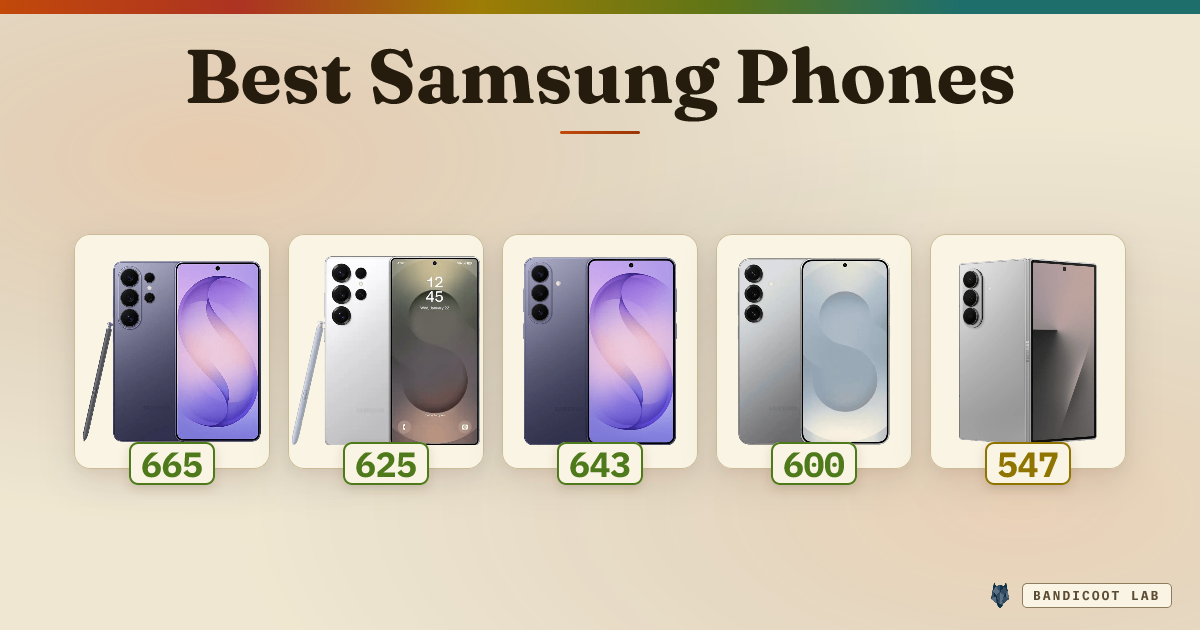
Best Samsung Phones

Samsung Galaxy S26 Series vs Galaxy S25 Series

Samsung Galaxy S26 Series vs Xiaomi 17 Series