Apple iPhone 16e
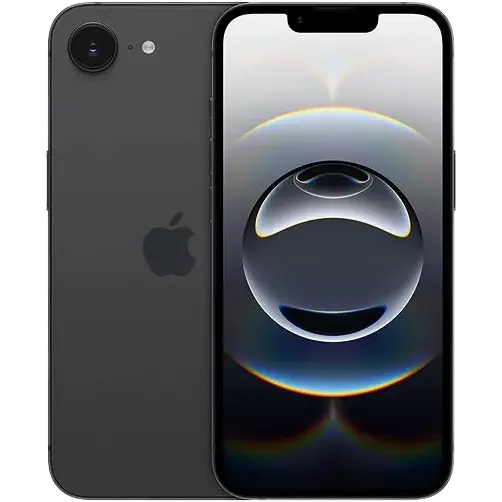
The iPhone 16e launched at $599 as Apple's budget iPhone, built around the A18 chip and a single 48-megapixel rear camera. It dropped the ultrawide lens found on the standard iPhone 16, used the same 60Hz display as the rest of the non-Pro lineup, and offered a 4,005 mAh battery. The idea was essentially to get flagship processing and iOS at a lower price.
The iPhone 17e has since replaced it at the same $599 price point, bringing a newer A19 chip, improved camera processing, and MagSafe. For buyers considering the 16e at a discount, the question is whether the price gap justifies the tradeoffs — or whether spending more for the $799 iPhone 17 (which adds an ultrawide, 120Hz, and faster charging) makes more sense.
Design
Specifications
The iPhone 16e measures 146.7 x 71.5 x 7.8mm and weighs 167 grams. It uses an aluminum frame with Ceramic Shield glass on the front and a glass back. The 6.1-inch display has a 19.5:9 aspect ratio and an 87.1% screen-to-body ratio. An IP68 rating covers full dust ingress and fresh-water submersion beyond 1 meter, with depth and duration set by Apple. Bandicoot Lab does not formally test design or durability, so this section is descriptive rather than scored.
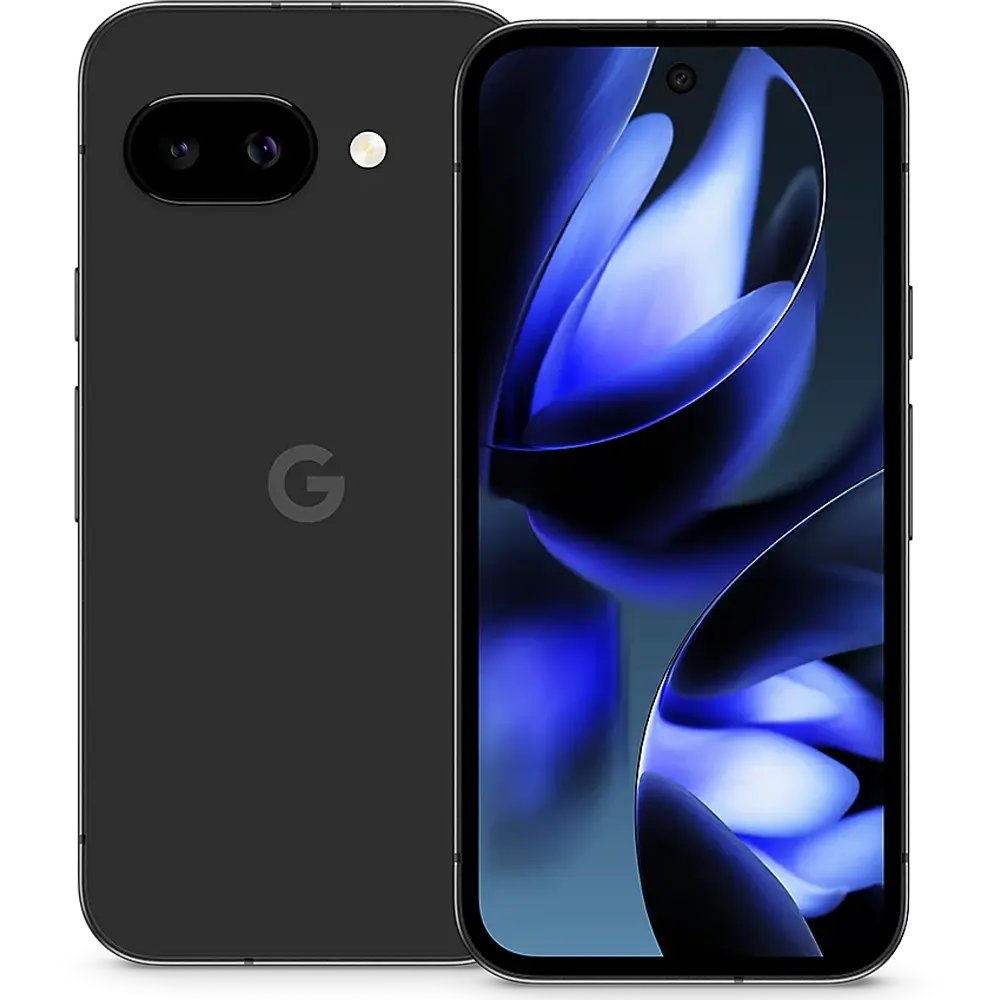
The iPhone 16e is compact by current standards. Within Apple's lineup it sits slightly below the iPhone 17e (169 grams, same dimensions but with newer Ceramic Shield 2 glass) and well under the iPhone 17 (177 grams, 6.3-inch display). The Pixel 9a, a same-price rival at $499, is taller and thicker at 154.7 x 73.3 x 8.9mm and weighs 186 grams with a plastic back and older Gorilla Glass 3 on the front, so the iPhone 16e feels noticeably more premium in hand.
Display
The 6.1-inch OLED panel has a pixel-density of 460 PPI with a maximum manual brightness of 848 nits. Color accuracy is strong — an average Delta E of 1.13, meaning measured colors are nearly indistinguishable from their reference values to the human eye. sRGB gamut coverage is 99.8%.
The 60Hz refresh rate is the main limitation. Scrolling and animations feel noticeably less fluid than on any 120Hz phone, which includes both the Pixel 9a and the iPhone 17. The iPhone 17e carries the same 60Hz panel with slightly better color accuracy (average Delta E of 0.94), so this limitation persists even if you step up to the successor.
Brightness is adequate for most conditions but falls well short of the Pixel 9a's 1,201 nits — a gap that matters outdoors in direct sunlight.
Performance
The A18 (the same chip in the standard iPhone 16) handles demanding apps, multitasking, and gaming without issues. GeekBench 6 single-core hit 3,068 and multi-core reached 7,613.
The gap over the Pixel 9a's Tensor G4 is large enough to notice in sustained tasks and heavy games. The iPhone 17e's A19 extends the lead further, particularly in GPU-intensive workloads where it nearly doubles the Pixel 9a's output. The iPhone 17 with the A19 scores slightly higher still, though the difference between the two A19 devices is small in daily use.
For the price, the 16e's processing power is not a weakness — it outperforms phones costing significantly more from other manufacturers. The A18 will remain capable for years of iOS updates.
Camera
With only a main and front camera (no ultrawide, no telephoto) the iPhone 16e has the most limited camera configuration of Apple’s lineup. The Pixel 9a adds an ultrawide for $100 less, and the iPhone 17 has both an ultrawide and a higher-resolution front camera for $200 more. Sharpness on the main camera is moderate, falling behind the iPhone 17's larger-sensored main shooter, though the 16e holds its own in well-lit conditions.
Main Camera
The 48-megapixel main camera (f/1.6, 26mm, 1/2.55-inch sensor) produces sharp, well-exposed images in bright and mid-light conditions. Sharpness drops in low light but remains usable. Dynamic range in auto mode was pretty strong, keeping blown highlights and crushed shadows to a minimum.
Color rendition in bright light is characteristic Apple. Saturation is boosted well above reference values, which makes images look punchy and vivid. That's a stylistic choice, not necessarily an accuracy problem. Actual hue accuracy is reasonable in bright light but degrades in mid and low-light conditions, where hue errors roughly double. The camera also doesn't fully correct for the warmer color temperatures of indoor and low lighting (4000K and 3000K respectively), leaving a visible yellow cast in those conditions. The smaller 1/2.55-inch sensor limits natural background blur compared to the iPhone 17's larger 1/1.56-inch sensor.
The iPhone 17e uses identical camera hardware but benefits from the A19's improved image signal processing. The practical result is better color accuracy across all lighting conditions and notably smoother video stabilization — one of the clearest reasons to choose the successor over a discounted 16e.
Front Camera
The produces strong dynamic range. Detail holds well in both bright backgrounds and shaded faces. Sharpness is good too. Color accuracy is average, with a tendency to oversaturate in mid-light conditions. Video stabilization is functional but not a major strength. The iPhone 17e shares the same front camera hardware and produces similar results, with modest improvements from processing.
Battery
The 4,005 mAh battery delivered 18 hours and 39 minutes of video playback at a standardized 200 nits of brightness, and 15 hours and 42 minutes at maximum brightness. In a five-hour web browsing loop, the battery drained 29%. Our gaming test consumed 19% in the hour — a good result that reflects the A18's power efficiency. Standby drain was just 2% overnight.
That translates to a reliable full day for moderate users, but heavy use will require a top-up by evening. The successor iPhone 17e has an identical 4,005 mAh battery and nearly identical endurance (18 hours and 27 minutes of video playback) — battery life is not a differentiator between the two.
The Pixel 9a's larger 5,100 mAh battery pushes well ahead at 26 hours and 38 minutes of video playback, with only 19% drain over the same five-hour web browsing test. The iPhone 17 managed 22 hours and 10 minutes despite a smaller 3,692 mAh battery.
Charging
Wired charging maxes out at 20W, reaching 25% in 10 minutes and 61% in 30 minutes. A full charge takes about 86 minutes. Wireless charging is slow at 7.5W — only 23% in 30 minutes, with a full charge taking over 3.5 hours.
The iPhone 17e doubles the wireless speed to 15W (38% in 30 minutes, full charge in under 2 hours) but keeps the same 20W wired speed. The jump from 7.5W to 15W wireless is perhaps the single biggest quality-of-life upgrade in moving from the 16e to the 17e. The iPhone 17 goes further with 40W wired (73% in 30 minutes) and 25W wireless (49% in 30 minutes). The Pixel 9a charges slightly slower on wired (17% at 10 minutes with a 23W charger) and much slower wirelessly (12% in 30 minutes at 7.5W).
Speaker
The iPhone 16e's speaker performed better than expected. It produced reasonably deep bass, with good clarity in the high end. It was also able to get louder than many other phones at its price point, and had lower distortion. Its speaker actually performed about as well as Apple's best phones, so it's clear that the speaker was not an area where Apple cut costs for this cheaper device. It also achieved very similar results as the newer iPhone 17e, and far exceeded the Google Pixel 9a.
Microphone
Microphone quality is adequate for calls and voice memos. Frequency response is reasonably flat with minor deviations. The Pixel 9a has a slightly flatter response, but the differences are marginal in practice.
Other
Measurements
Specifications
Face ID averages 476ms for unlock — functional but not instant. There is no fingerprint sensor. The Pixel 9a's optical fingerprint averages 210ms, more than twice as fast. Face ID on the iPhone 17e is slightly quicker at 458ms.
Data transfer is limited by USB 2.0, a constraint shared with the iPhone 17e and iPhone 17. The Pixel 9a's USB-C 3.2 enables substantially faster file transfers to a computer.
Conclusion
The iPhone 16e delivered strong processing power, excellent display color accuracy, and good dynamic range from its main camera, all in a compact, lightweight package. The A18 chip punches well above its price class, and the speaker is clean and loud.
The weaknesses are the single rear camera with no ultrawide or telephoto, a 60Hz display, slow charging (especially the 7.5W wireless), and limited data transfer over USB-C 2.0. Battery life is adequate but not a strength against the Pixel 9a's substantially longer endurance from a bigger battery.
The iPhone 17e addresses some of these gaps, with better camera processing, faster wireless charging, a newer chip, while keeping the same $599 price. It doesn't fix the 60Hz display or add an ultrawide. The Pixel 9a offered more camera versatility and a 120Hz display for $100 less, though with weaker processing. The iPhone 17 at $200 more added an ultrawide, 120Hz, and faster charging across the board. For buyers who prioritized iOS and processing power over camera flexibility and display smoothness, the 16e delivered on that specific tradeoff.
Related
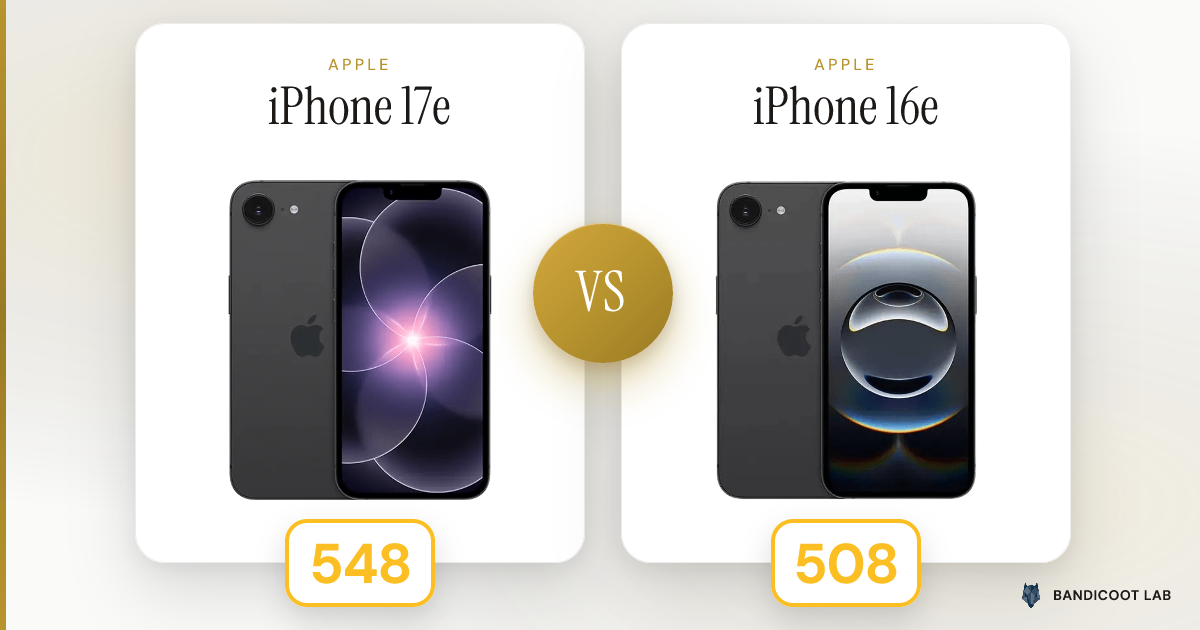
Apple iPhone 17e vs iPhone 16e
Apple
iPhone 17 Pro
Apple
iPhone 17 Pro Max
Apple
iPhone 17e
Apple
iPhone Air
Apple
iPhone 17
RedMagic
11 Air
Honor
600
Nothing
Phone (4a) Pro
Pixel 9a
Pixel 10a
Motorola