Google Pixel 9a
Score Overview
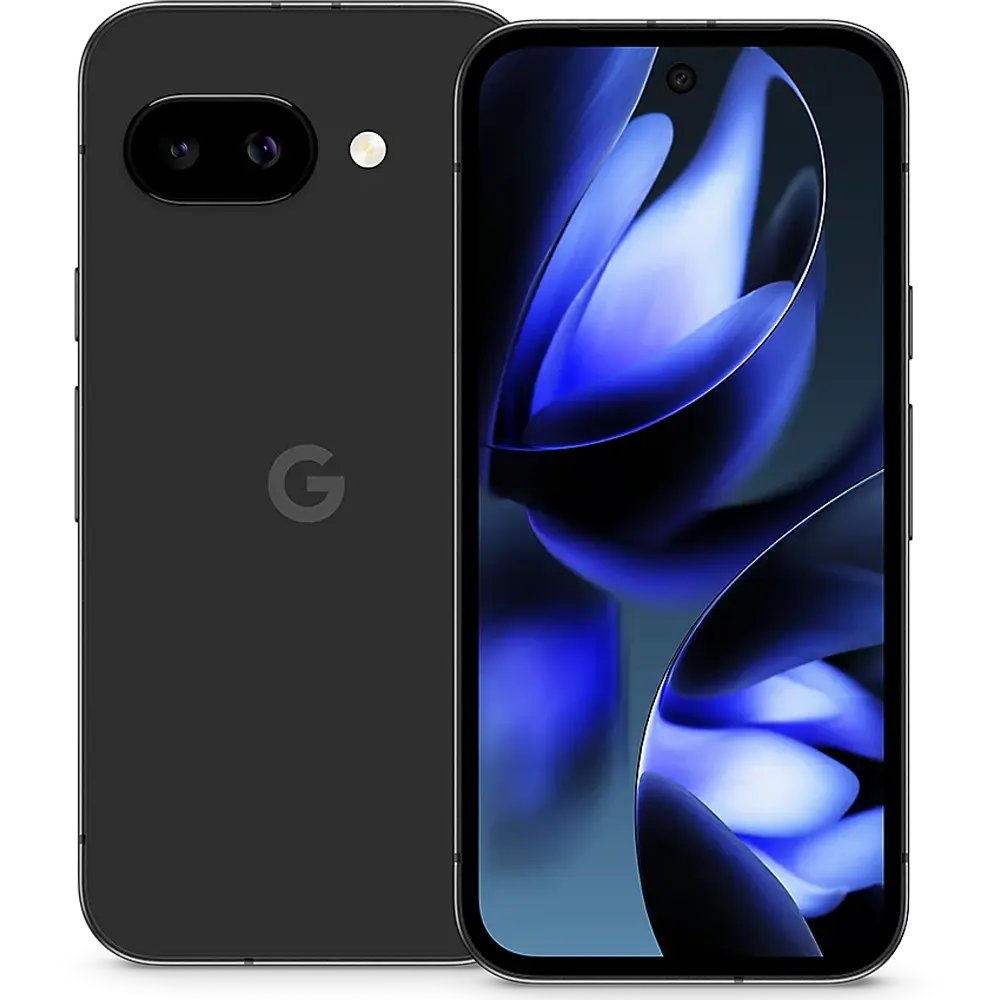
The Google Pixel 9a is Google's budget-oriented smartphone, priced at $499 with a 6.3-inch P-OLED display, the Tensor G4 processor, 8GB of RAM, and a dual rear camera system. It carries over much of the Pixel 9's design language into a more affordable package, with IP68 water resistance, USB-C 3.2, and wireless charging. It lacks a telephoto lens, topping out at 8x digital zoom, and ships with a modest 23W wired charging speed. It has been replaced by the Pixel 10a.
The Pixel 9a's strengths are its display, battery life, and microphone quality. Color accuracy on the screen is strong, and the 5,100mAh battery delivers solid endurance. The weaknesses are its raw processing power, which is well below average for the price. Also, camera system underperforms relative to competitors, and charging — both wired and wireless — is slow.
Here’s how the Google Pixel 9a performed in our testing.
Design
Specifications
The Pixel 9a measures 154.7 x 73.3 x 8.9mm and weighs 186 grams. It uses an aluminum frame with Gorilla Glass 3 on the front and a plastic back. The 6.3-inch display has a 20.2:9 aspect ratio and an 83.9% screen-to-body ratio. An IP68 rating covers full dust ingress and fresh-water submersion beyond 1 meter, which is unusual at the $499 price point — with depth and duration set by Google. Bandicoot Lab does not formally test design or durability, so this section is descriptive rather than scored.
The Pixel 9a's materials tell its price story. Gorilla Glass 3 on the front is an older specification than the Victus 2 glass on the more expensive Pixel 10 series, and the plastic back is a clear cost-saving choice over the glass used on nearly every flagship in this roundup. The 83.9% screen-to-body ratio is the lowest in the Pixel 10-generation lineup, meaning thicker bezels. Against same-price rivals the iPhone 16e at $599 is smaller and lighter at 146.7 x 71.5 x 7.8mm and 167 grams, with a glass back, but it moves to a different price tier. At $499 the Pixel 9a's IP68 rating and aluminum frame are unusual, since many phones at this price drop to lower ingress protection.
Display
The Pixel 9a has a 6.3-inch P-OLED panel running at 1080 x 2424 resolution (422 PPI) with a 120Hz adaptive refresh rate that drops to 60Hz. Manual brightness tops out at 1,201 nits, which is strong for this price range and comfortably above what the iPhone 17e manages. HDR peak brightness reaches 2,652 nits, though brightness dims for larger window sizes. The Pixel 10, for comparison, gets brighter in HDR at 3,089 nits with similar stability behavior.
Color accuracy is where this display excels. In Natural mode, it targets sRGB and achieves an average Delta E of 0.91 — meaning colors are nearly indistinguishable from their reference values to the naked eye. That's slightly better than even the iPhone 17e's Standard mode and noticeably ahead of the Pixel 10's Natural mode. sRGB gamut coverage is 98.2%, with Display P3 at 73.2%. If you need wide-gamut P3 content to look its best, the coverage is partial, but for the vast majority of everyday content, the accuracy is excellent.
Minimum brightness dips to 1.84 nits, which is low enough for comfortable nighttime reading. Brightness stability during sustained use is 97.6%, so the display holds its brightness level reliably over time.
Touch latency averages 21.9ms, which is responsive and in line with the Pixel 10's 22.6ms. Both are dramatically faster than the iPhone 17e's 62.3ms.
Performance
The Pixel 9a runs on the Google Tensor G4, the same chip found in the Pixel 9 Pro series, paired with 8GB of RAM. On paper that sounds competitive, but the benchmarks tell a different story. Geekbench 6 returns 1,717 single-core and 4,482 multi-core — roughly half what the iPhone 17e's A19 chip produces.
GPU performance follows the same pattern. The 3DMark Wild Life Extreme stress test peaked at 2,716 with a stability of 80% and a worst-loop score of 2,173. That 80% stability is decent — the GPU doesn't throttle aggressively — but the absolute performance ceiling is low. The iPhone 17e's peak score is roughly 43% higher.
Browser performance via Speedometer scored 18.6, compared to 20.3 on the Pixel 10 and 35.8 on the iPhone 17e. Everyday web browsing feels adequate, but complex web apps and heavy pages will load more slowly than on faster competitors.
Camera
The Pixel 9a has a two-camera rear system — a 48-megapixel f/1.7 main lens on a 1/2.0-inch sensor, and a 13-megapixel f/2.2 ultrawide. It also has a 13-megapixel f/2.2 front camera. There's no telephoto lens and digital zoom maxes out at 8x.
The overall camera score is below average. Sharpness is the main differentiator between lenses. At 1x in bright light, the main camera produces solid detail, but it applies heavy sharpening. In low light, the overshoot jumps to nearly 30%, giving images an over-processed look. The ultrawide produces better sharpness scores overall thanks to more restrained processing.
Zoom performance degrades quickly. At 5x, sharpness in bright light drops substantially, and by 8x, detail is modest at best. The iPhone 17e, which also lacks a telephoto, holds up better at equivalent zoom levels — at 8x bright, it retains roughly twice the resolved detail. The Pixel 10, with its dedicated 5x telephoto lens, holds up noticeably better at extended zoom ranges, which is expected given the hardware difference.
Dynamic range from the main camera is a genuine strength, with the computational HDR pipeline expanding usable range well beyond what the sensor captures natively. The ultrawide matches this capability. Color and stabilization are weaker areas across the board.
Main
In bright light, the 48-megapixel main sensor resolves good detail at 1x, though the heavy sharpening overshoot is visible on close inspection — edges look artificially enhanced. In mid and low light, the processing leans even harder on sharpening to compensate for noise, which makes low-light shots look notably over-sharpened.
Color accuracy shows Google's characteristic processing style: saturation is boosted significantly, with bright-light images pushing colors well above their true values. This gives photos a vivid, punchy look — a deliberate processing choice rather than an accuracy failure. The more meaningful concern is hue accuracy. In bright light, hue shifts are moderate, but in low light they become pronounced. The low-light hue errors are partly from the sensor struggling with color differentiation at high ISO, and partly from the warm 3000K test illuminant not being fully corrected by white balance. Skin tones in particular drift noticeably from their true values across all lighting conditions — the skin Delta E values are consistently high.
Dynamic range is strong. Highlights do clip, as the processing chooses to sacrifice some highlight detail to avoid overly flat-looking images — but the overall tonal range is wide and competitive. The iPhone 17e takes a different approach with a more conservative compression ratio, preserving more tonal separation, but the Pixel 9a captures a wider absolute range.
Ultrawide
The 13-megapixel f/2.2 ultrawide on a 1/3.1-inch sensor outperforms the main lens in our overall lens scoring, driven primarily by better sharpness results. The processing applies much less aggressive sharpening which produces more natural-looking detail despite the lower-resolution sensor.
Color behavior mirrors the main camera. Saturation is boosted across all conditions, with a vivid processing style. Hue accuracy is reasonable in bright light but deteriorates substantially in low light, with large hue rotations appearing as the sensor and processing struggle with the warm, dim test conditions. Skin tones shift by a similar magnitude to the main lens.
Dynamic range is slightly better than the main camera in auto mode. The ultrawide’s tonal ramp isn't perfectly smooth, but the overall capture range is wide.
Front
The 13-megapixel f/2.2 front camera on a 1/3.1-inch sensor delivers good sharpness in bright and mid light, with moderate sharpening overshoot. It holds up reasonably well in low light, though detail drops noticeably. The front camera's sharpness results are competitive with the iPhone 17e's 12-megapixel front camera in bright conditions.
Color accuracy follows the same pattern as the rear cameras, with vivid saturation boost with warm-toned hue shifts that worsen in lower light. In bright conditions, hues drift moderately, but in low light, the front camera shows the largest hue errors of any lens on the device. Skin tones are pushed well away from accurate values, particularly in dim environments.
Dynamic range is limited. Highlights clip easily, so selfies with a bright background will often blow out the sky or light source while properly exposing the face. The iPhone 17e's front camera captures significantly more dynamic range.
Video stabilization from the front camera is mediocre — there's visible residual shake in our stabilization test, comparable to the ultrawide but behind dedicated stabilization systems like Apple's.
Battery
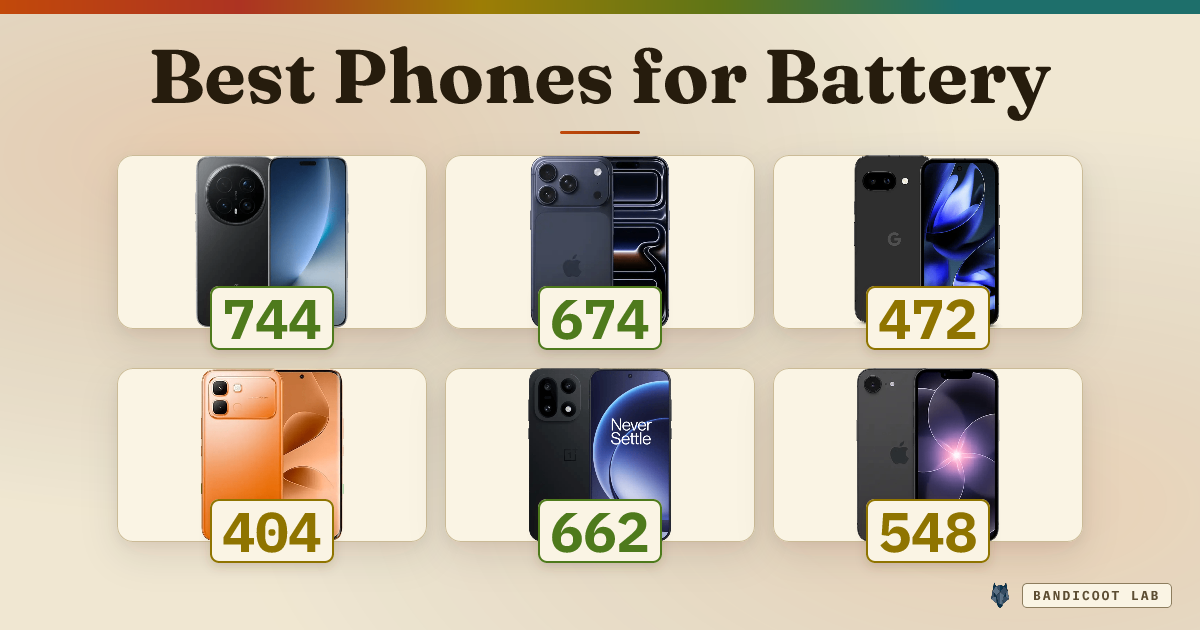
The Pixel 9a carries a 5,100mAh battery. At a calibrated 200 nits, video playback lasted 26 hours and 38 minutes — a strong result that translates to comfortable two-day use for light users or a full day with heavy screen time. At max brightness, that drops to 19 hours and 30 minutes, which is still solid. The Pixel 10, with its slightly smaller 4,970mAh cell, managed about 23 hours at 200 nits. The iPhone 17e, constrained by its 4,005mAh battery, lasted about 18 hours and 27 minutes.
Web browsing drain over five hours was 19%, meaning the phone would theoretically last over 26 hours of continuous web use — excellent efficiency. The iPhone 17e drained 33% over the same period, and the Pixel 10 lost 23%.
Gaming drain was 22% during the stress test, identical to the Pixel 10. The lower GPU output of the Tensor G4 likely helps here — less power drawn for less performance. The iPhone 17e drained only 17%, and that’s with improved performance too.
Standby drain overnight (8 hours) was just 2%, which is minimal and slightly better than both the iPhone 17e and Pixel 10 at 3% each. In practice, all three limit standby drain effectively.
Charging
Wired charging is rated at 23W. In practice, the phone reached 17% after 10 minutes and 47% after 30 minutes. A full charge takes well over an hour. This is slow by current standards — the Pixel 10 hits 57% in 30 minutes with its 30W charger, and even the iPhone 17e reaches 61% in the same window despite a 20W rating.
Wireless charging at 7.5W is even slower, hitting 4% after 10 minutes and 12% after 30 minutes. The Pixel 10 manages 30% wirelessly in 30 minutes with its 15W Qi2 support. If you rely on wireless charging overnight, this is adequate. For topping up during the day, it's impractical.
The battery's strong endurance partly compensates, meaning you'll need to charge less often. But when you do need to charge, expect to wait.
Speaker
The speaker on the Pixel 9a produces a maximum volume of 71.6 dB, which is moderate. The Pixel 10 reaches 76 dB, a noticeable step up in loudness for filling a room or listening in noisy environments.
Average total harmonic distortion is 7.9%, which is high — audible crackle and harshness creep in at higher volumes, particularly on vocals and high-frequency content. The iPhone 17e measures 4.5% THD, and the Pixel 10 sits at 6.3%, both cleaner at volume.
The frequency character leans toward the bass end relative to the treble. Low-end response is decent for a phone speaker — kicks and bass notes have some presence — but high-frequency clarity and detail are lacking. Vocals and cymbals sound somewhat muffled compared to phones with stronger treble extension. The iPhone 17e delivers a more balanced sound with better clarity across the frequency range, while the Pixel 10 also produces notably better high-end detail.
Overall, the speaker works for casual podcast listening and speakerphone calls but falls short for music or media playback compared to similarly priced competition.
Microphone
The Pixel 9a's microphone performs above average, with a frequency response standard deviation of 4.34 — meaning it captures a relatively even range of frequencies without dramatic peaks or dropouts. Voice calls and video recordings should sound clear and natural, with good reproduction of speech. It's comparable to the Pixel 10 and slightly better than the iPhone 17e in evenness of frequency capture.
Other
Measurements
Specifications
The under-display optical fingerprint sensor averages 209.7ms unlock speed, which is functional but not instant. The Pixel 10's ultrasonic sensor is slightly faster at 194.4ms.
Data transfer via the USB-C 3.2 port is a strong point. Large file read speeds hit 177.4 MB/s and write speeds reached 165.2 MB/s — significantly faster than the Pixel 10 and vastly ahead of the iPhone 17e's USB-C 2.0 connection at under 40 MB/s. For transferring photos, videos, or backups to a computer, the Pixel 9a is meaningfully quicker than either competitor.
Conclusion
The Pixel 9a delivers an excellent display with strong color accuracy, solid battery life that outlasts most competitors at this price, and fast wired data transfer. The microphone is above average, and the fingerprint sensor works reliably. These are the areas where the $499 asking price buys genuinely good hardware, though again, keep in mind the phone has been replaced by the Pixel 10a.
The trade-offs are significant. Processing power is well below what the iPhone 17e and even the pricier Pixel 10 offer, which affects everything from app launch times to browser responsiveness. The camera system, despite Google's computational photography reputation, underperforms — heavy sharpening artifacts on the main lens, poor hue accuracy in low light, and limited dynamic range on the front camera hold it back. Charging speeds are among the slowest tested, and the speaker lacks the clarity and volume of the competition. It's a phone built for people who prioritize screen quality and battery endurance over raw performance and multimedia, and it serves that niche well.
Related
Best-Performing Phones
Best Phones Under $500
Google Pixel 10a vs Pixel 9a
Best Phones for Battery
Pixel 10 Pro Fold
Pixel 10
Pixel 10 Pro
Pixel 10 Pro XL
Pixel 10a
RedMagic
11 Air
Apple
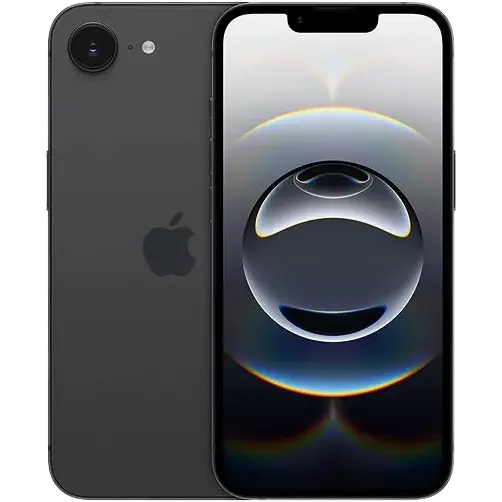
iPhone 17e
Apple