OnePlus 15
Score Overview
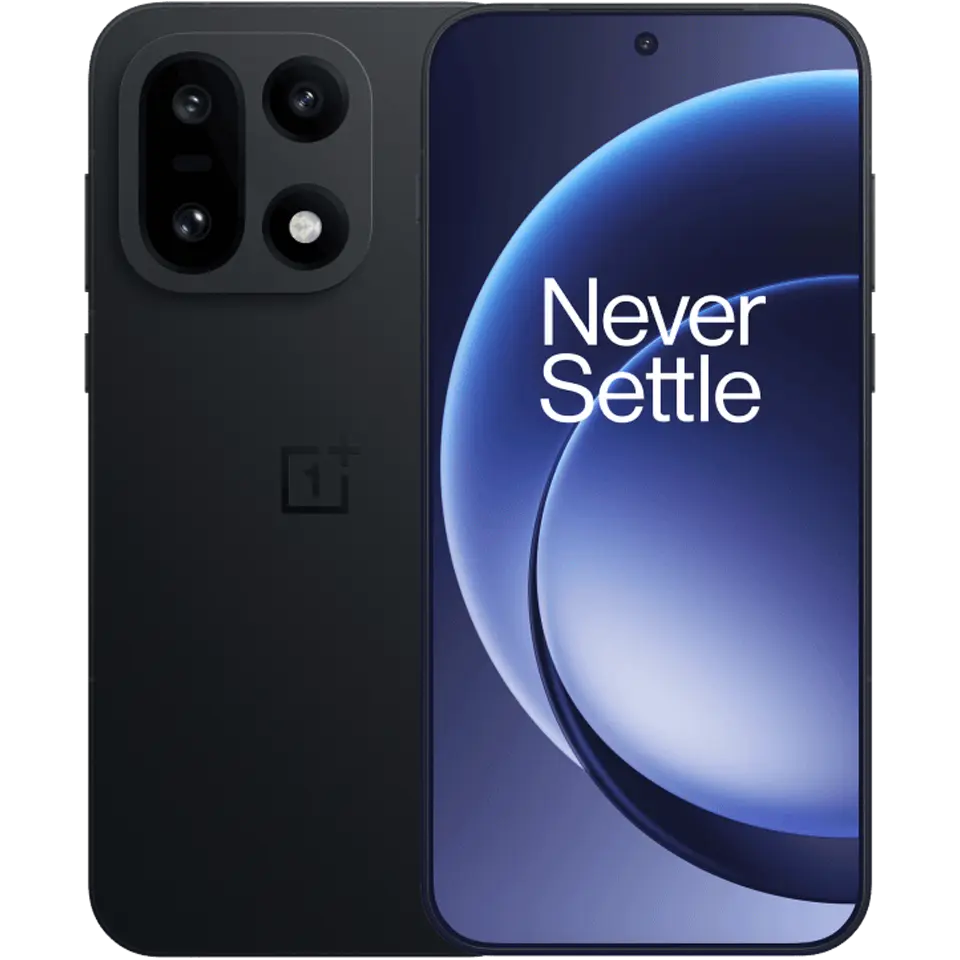
The OnePlus 15 is a flagship smartphone aimed at buyers who want top-tier performance and battery life without crossing the $1,000 threshold. It competes directly with the Samsung Galaxy S26 at the same $899.99 price and positions itself as an alternative to pricier options like the iPhone 17 Pro.
The phone's strongest attributes are its battery endurance, charging speed, and raw processing power. It delivered long battery life and charges fast by wired connection. Its camera system falls short, particularly in color accuracy and dynamic range. The display is capable but has weaker color accuracy than similarly priced phones.
Design
Specifications
The OnePlus 15 measures 161.4 x 76.7 x 8.1mm and weighs 211g. It uses an aluminum frame with Gorilla Glass Victus 2 on the front. Back panel options vary by model, including Gorilla Glass 7i, Crystal Shield Glass, and glass fiber. It carries an IP68/IP69K rating, meaning it's submersible to the standard IP68 depth and also rated to withstand high-pressure, high-temperature water jets. The 6.78-inch display has a 90.8% screen-to-body ratio, which translates to relatively thin bezels.
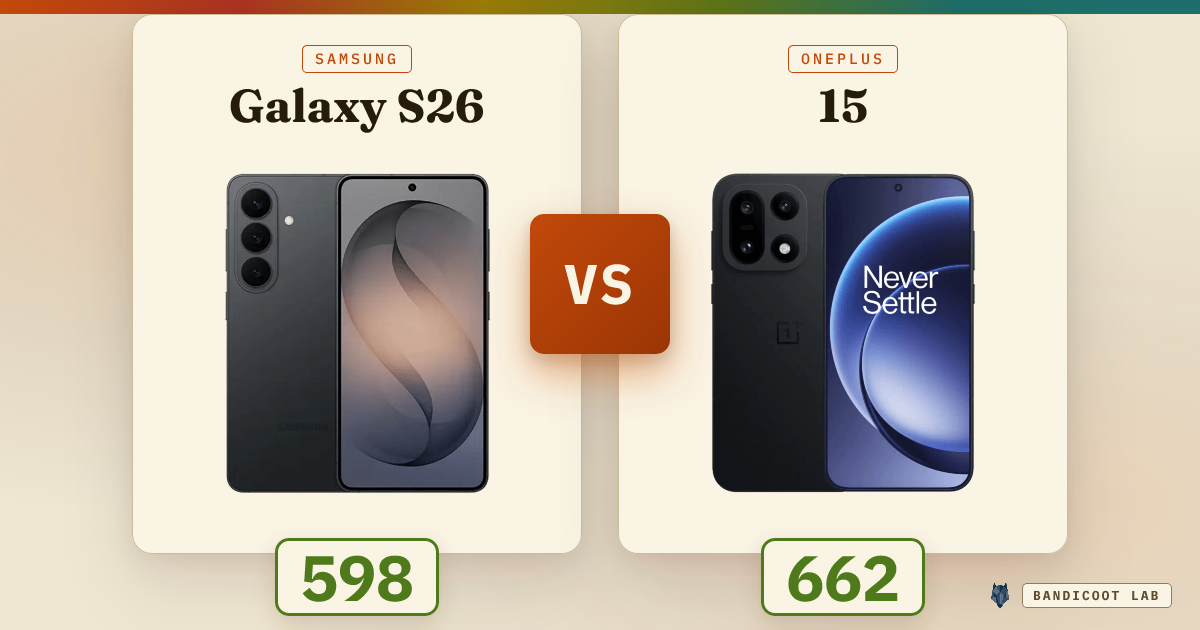
Compared to the Samsung Galaxy S26 at the same price, the OnePlus 15 is substantially larger and heavier. That's the tradeoff for the much larger 7,300mAh battery. It's close in size and weight to its sibling, the OnePlus 15R (163.4 x 77 x 8.1mm, 213g), though the 15R is marginally taller and heavier.
Display
The OnePlus 15 has a 6.78-inch LTPO AMOLED display running at 1272 x 2772 resolution (450 PPI) with a variable refresh rate from 1Hz to 165Hz. The 165Hz ceiling is higher than the standard 120Hz found on most competing phones. For fast-paced gaming or scrolling, the higher refresh rate can deliver smoother motion, though the difference between 120Hz and 165Hz is subtle for most content.
Manual brightness tops out at 798 nits, which is modest. The Samsung Galaxy S26 manages only 641 nits manually, but the Google Pixel 10 Pro reaches 1,450 nits and the Google Pixel 10 hits 1,496 nits. In practical terms, 798 nits is adequate for most indoor and overcast outdoor use but may feel dim in harsh direct sunlight. The minimum brightness of 0.93 nits is low enough for comfortable nighttime reading.
HDR peak brightness reaches 1,958 nits, which is lower than the Samsung Galaxy S26's 2,791 nits or the Google Pixel 10 Pro's 3,428 nits. The OnePlus 15 is able to hold its brightness over longer periods of time, though. By contrast, the iPhone 17 Pro falls to about 39% of its peak during our 30-minute sustained brightness test.
Color accuracy is a weakness. The best-performing mode is Standard Mode, which targets sRGB and achieves an average Delta E (a measure of how far displayed colors deviate from their reference values) of 2.77. That's perceptible but not dramatic — most people won't notice individual color errors at this level, though side-by-side comparisons with a more accurate display will show differences. The iPhone 17 Pro's default mode reaches an average Delta E of 0.85, which is essentially invisible deviation. The Vivid Mode covers 97.79% of the Display P3 wide color gamut but has an average Delta E of 3.11 against that target. The Natural Mode covers 99.9% of sRGB with an average Delta E of 3.44.
Touch latency averages 15.5 milliseconds. That's fast — essentially tied with the Samsung Galaxy S26+ at 15.9ms.
Performance
The OnePlus 15 runs the Qualcomm Snapdragon 8 Elite Gen 5 with 12GB or 16GB of RAM.
Geekbench 6 results came in at 3,606 single-core and 11,442 multi-core. The single-core score trails the iPhone 17 Pro's 3,918 and the Samsung Galaxy S26+'s 3,791, but the multi-core score is competitive, sitting between the Galaxy S26+'s 11,523 and the iPhone 17 Pro's 10,158. Both Pixel 10 models fall well behind.
GPU performance is strong. In the 3DMark Wild Life Extreme stress test, the OnePlus 15 peaked at 7,160 and dropped to 4,563 at its lowest, yielding 63.7% stability. The peak score is close to the Samsung Galaxy S26's 7,740, but the OnePlus 15 holds performance more consistently. The Samsung Galaxy S26+, sharing the same chipset, manages a similar peak of 7,867 but only 59.5% stability. Throttling affects all these phones, but the OnePlus 15 manages heat better than the Samsung flagships with the same chip.
In the Solar Bay ray-tracing stress test, the OnePlus 15 peaked at 13,230 with 60.6% stability. The Samsung Galaxy S26 peaked slightly higher at 13,860 but with worse stability at 47.4%.
Browser performance via Speedometer yielded a score of 18.1, which is low. The Samsung Galaxy S26+ scored 44.3, the iPhone 17 Pro scored 43.1, and even the Google Pixel 10 managed 20.3. This gap is noticeable when loading complex web pages or running web applications.
Camera
The OnePlus 15 carries a triple rear camera system, including a 50-megapixel f/1.8 main (1/1.56" sensor, 24mm equivalent), a 50-megapixel f/2.0 ultrawide (1/2.88" sensor, 16mm), and a 50-megapixel f/2.8 telephoto (1/2.76" sensor, 80mm, 3.5x optical zoom) with up to 100x digital zoom. The front camera is 32 megapixels, f/2.4.
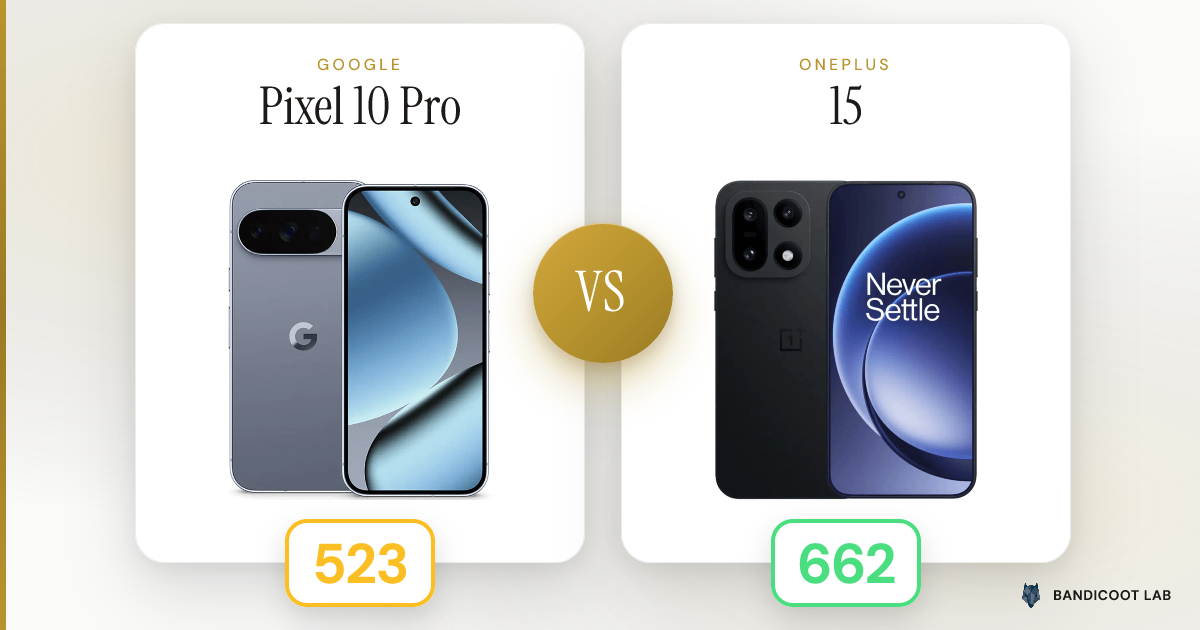
Overall camera performance is below average for an $899 phone. The OnePlus 15 scored below the Samsung Galaxy S26 and the Google Pixel 10 Pro in our testing. The main weakness is color accuracy across all lenses.
Sharpness is mixed. At the native focal lengths, the OnePlus 15 performs well. The main camera in bright light produces very high detail, and the ultrawide actually outperforms the main lens in our sharpness scoring. At 8x through about 30x zoom, the OnePlus 15 resolves considerably more detail than phones without a dedicated telephoto — the iPhone 17, for instance, falls off sharply past 6x. By 100x, of course, the images are quite soft. The Pixel 10 Pro maintains more consistent sharpness across its zoom range from 50x through 100x, though it starts from a lower baseline at medium zoom levels. At 60x in mid-light, the OnePlus 15 shows noticeable sharpening artifacts, which can create haloing around edges.
Main
The 50-megapixel main camera delivers strong sharpness in bright conditions and holds up reasonably well in mid and dark environments. In low light, the processed output still resolves good detail, though noise reduction smooths fine textures.
Color accuracy isn’t great. In bright auto mode, colors are pushed to full saturation with a noticeable warm yellow-orange shift — skin tones and warm objects will look warmer and more vivid than they appeared in person. In mid-light (simulating indoor 4000K conditions), the warm shift increases further. This is largely a white balance issue — the processing doesn't fully compensate for the warmer test light, pushing yellows and oranges further from their reference values. In dark conditions, hue accuracy degrades significantly, with both a warm and pink-magenta shift appearing. The Samsung Galaxy S26, by comparison, shows much lower color error in mid and dark conditions, with Delta E values roughly half those of the OnePlus 15 in indoor light.
Dynamic range is average. The main camera retains highlight detail reasonably well, clipping later than phones like the Pixel 10, but it applies moderate tone compression — shadows and highlights are pulled closer together, which can flatten the sense of depth in high-contrast scenes. The Samsung Galaxy S26 and iPhone 17 Pro both preserve a wider tonal range in their processed output.
Ultrawide
The 50-megapixel ultrawide produces strong sharpness, actually scoring higher than the main lens.
Color behavior mirrors the main lens, with a warm shift in processed output that increases as lighting gets dimmer. In dark conditions, the warm pink-magenta bias is more pronounced than the main camera, with hue accuracy degrading substantially. Noise in raw files also climbs quickly in low light given the smaller 1/2.88" sensor.
Dynamic range is slightly better than the main camera, with the ultrawide capturing a usable range that's competitive with the iPhone 17's ultrawide output. Highlights clip at a similar point, but tonal compression is moderate.
Telephoto
The 3.5x telephoto uses a 50-megapixel, 1/2.76" sensor at f/2.8. Sharpness in bright light is solid at the native 3.5x focal length, though it doesn't reach the levels of the Pixel 10 Pro's 5x telephoto or the iPhone 17 Pro's 4x telephoto in our scoring.
Color accuracy follows the same pattern as the other lenses but is slightly more pronounced. In bright auto mode, skin tones are pushed noticeably warm with a strong yellow shift. In mid-light, the warm bias remains high.
Dynamic range is the telephoto's biggest weakness. In our bright-light auto test, the telephoto failed to produce usable dynamic range data, meaning extreme highlights and shadows were both clipped or compressed to the point of lost detail. The iPhone 17 Pro's telephoto captures strong dynamic range in processed mode.
Video stabilization on the telephoto shows more residual shake than the main or ultrawide lenses, which is typical for longer focal lengths.
Front
The 32-megapixel front camera at f/2.4 produces good sharpness in bright and mid conditions, competitive with the iPhone 17 Pro's front camera. In low light, it holds up reasonably.
Color accuracy is actually the best of any lens on this phone. In bright light, there's moderate saturation boost and a mild warm tint, but hue accuracy is tighter than the rear cameras. In mid-light, it maintains decent accuracy. In dark conditions, hue errors increase with a warm pink shift, driven primarily by incomplete white balance correction for the warmer test illuminant.
Dynamic range from the front camera is average, with highlights clipping somewhat early. Stabilization in video is moderate.
Battery
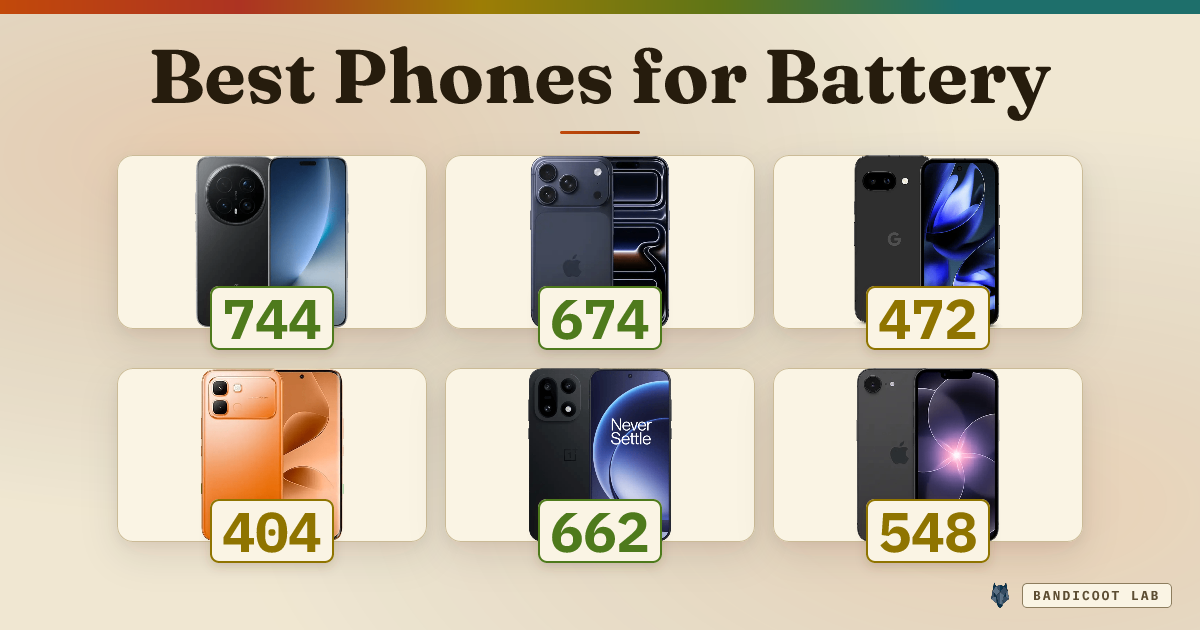
The OnePlus 15 has a 7,300mAh battery, one of the largest in any non-gaming smartphone.
Video playback at 200 nits (our standardized brightness level) ran for 46 hours and 6 minutes. At maximum display brightness, it lasted 34 hours and 38 minutes. For context, the iPhone 17 Pro manages 24 hours at 200 nits, the Samsung Galaxy S26+ reaches 31 hours, and the OnePlus 15R (with a 7,400mAh cell) gets 44 hours. In real-world terms, 46 hours of video playback at moderate brightness means most users could go two full days of mixed use — including web browsing, social media, messaging, and streaming — without needing a charger.
Web browsing drain over our 5-hour test was 16%, projecting roughly 31 hours of continuous web use. The Samsung Galaxy S26 drained 24% in the same test, and the iPhone 17 Pro drained 17%.
Gaming drain during the 3DMark stress test (20 loops of Wild Life Extreme) was 23%, which is efficient given the high GPU output. The Samsung Galaxy S26+ drained 30% in the same test. The iPhone 17 Pro drained 24% with lower GPU output.
Standby drain overnight (8 hours) was 4%, which is slightly higher than the 2% measured on the Samsung Galaxy S26, iPhone 17 Pro, and Pixel 10 Pro.
Charging
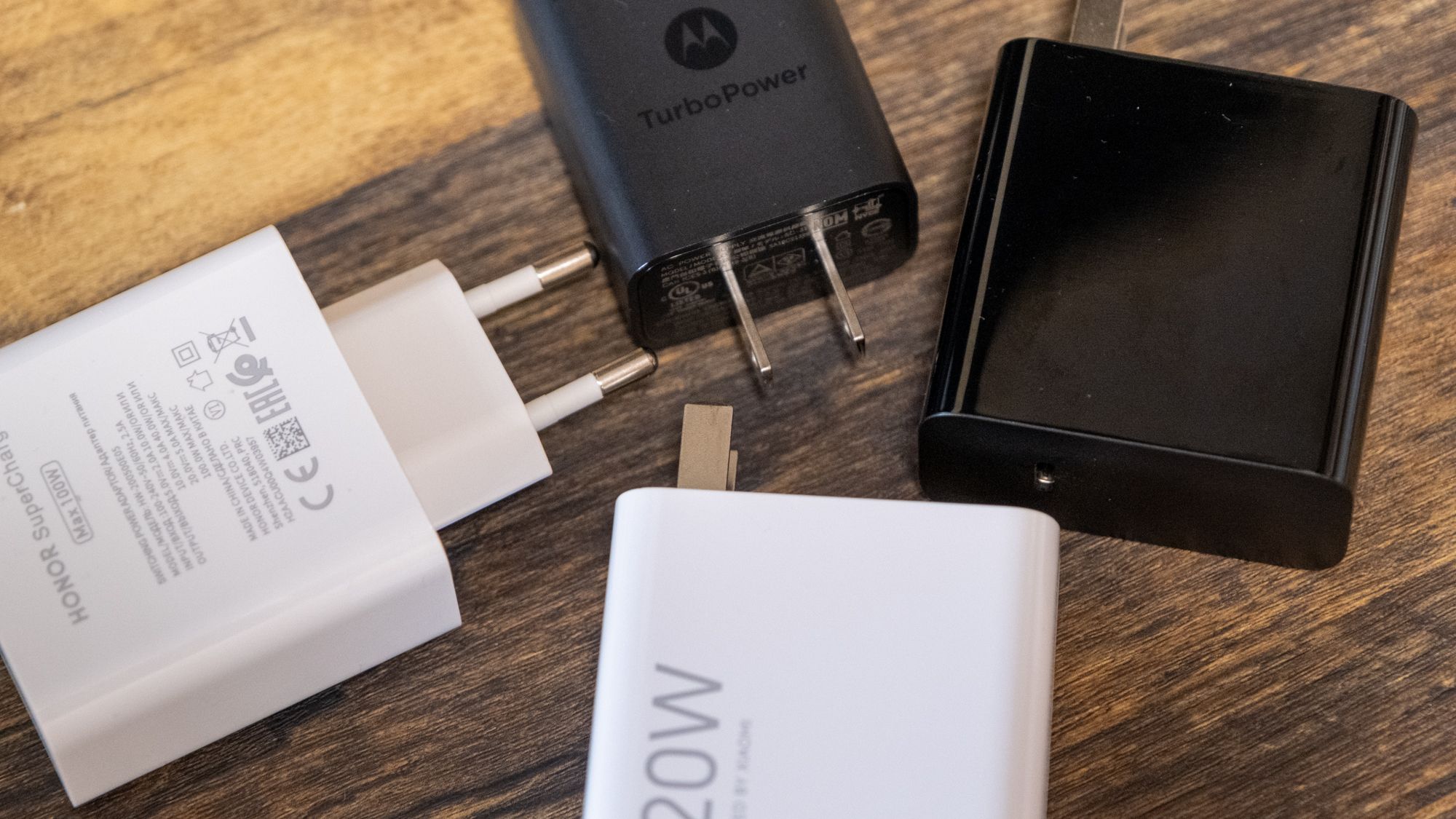
The OnePlus 15 supports 120W wired charging and 50W wireless charging.
Wired charging is exceptionally fast. After 10 minutes, the battery reached 37%. After 30 minutes, it hit 88%. The Samsung Galaxy S26 reached only 21% and 58% in those same intervals with its 25W charger. The iPhone 17 Pro managed 31% and 72% with 40W charging. Even the OnePlus 15R, with its 80W wired charging, only reached 26% and 63%. Getting to nearly 90% in half an hour makes opportunistic top-ups very practical.
Wireless charging at 50W is moderate. After 10 minutes it reached 10%, and after 30 minutes, 28%. The iPhone 17 Pro with 25W MagSafe reached 24% and 49% in those intervals, which is actually faster despite the lower rated wattage. Wireless charging on the OnePlus 15 appears throttled relative to its rated speed.
Speaker
The OnePlus 15 has stereo speakers that reach 75 dB at maximum volume. That's a competitive loudness level, matching the iPhone 17 and sitting close to the Google Pixel 10 Pro's 75.6 dB and the Pixel 10's 76 dB.
The frequency character leans toward the higher end. Treble and upper midrange come through with reasonable clarity, but bass response is limited. The Samsung Galaxy S26 and iPhone 17 Pro both deliver a noticeably fuller low end. Music and video content that relies on bass presence will sound thinner on the OnePlus 15.
Distortion is high though. Average total harmonic distortion measured 7.87%, which is higher than the Samsung Galaxy S26's 3.44%, the iPhone 17 Pro's 4.70%, and the Pixel 10 Pro's 6.50%. At moderate volumes the distortion isn't distracting, but pushing to near maximum will reveal audible harshness, particularly in the midrange.
Microphone
The OnePlus 15's microphone performs above average, with a frequency response standard deviation of 4.31 dB. That's a relatively flat, even capture across frequencies. The Samsung Galaxy S26 is slightly flatter at 4.06 dB, and the Pixel 10 is similar at 4.30 dB. Voice calls and video recordings should sound natural and balanced.
Other
Measurements
Specifications
The OnePlus 15 uses an ultrasonic fingerprint sensor with an average unlock speed of 204.2 milliseconds. That's functional, but slightly slower than the Pixel 10's 194.4ms and the OnePlus 15R's 158.3ms.
Data transfer via USB-C 3.2 is fast. Maximum read speed reached 298 MB/s and write speed hit 230 MB/s. That's competitive with the Samsung Galaxy S26 and far ahead of the iPhone 17 over USB-C 2.0. Large file transfers to a computer will be quick.
Storage configurations are 256GB, 512GB, and 1TB.
Conclusion
The OnePlus 15 is a battery and charging champion that also delivers strong processing performance, particularly for GPU-heavy tasks. Its 46-hour video playback time and near-full charge in 30 minutes via wire are genuinely useful advantages for heavy users. The Snapdragon 8 Elite Gen 5 performs well in sustained GPU loads, managing heat better than the Samsung Galaxy S26 and S26+ with the same chip.
The camera system is where the phone falls short of its price class. Color accuracy in processed photos is weak across all lenses and lighting conditions, trailing the Samsung Galaxy S26 and Pixel 10 Pro by a meaningful margin. Dynamic range on the telephoto is limited. The display, while responsive and equipped with a high 165Hz refresh rate and excellent sustained brightness, has lower peak brightness and weaker color calibration than competitors like the Pixel 10 Pro and iPhone 17 Pro. Buyers who prioritize camera quality or display accuracy over battery life and charging speed will find better options at this price. Those who value endurance and fast top-ups above all else will find the OnePlus 15 compelling.
Related
How we test charging
Best Phones Under $1,000
Best Phones
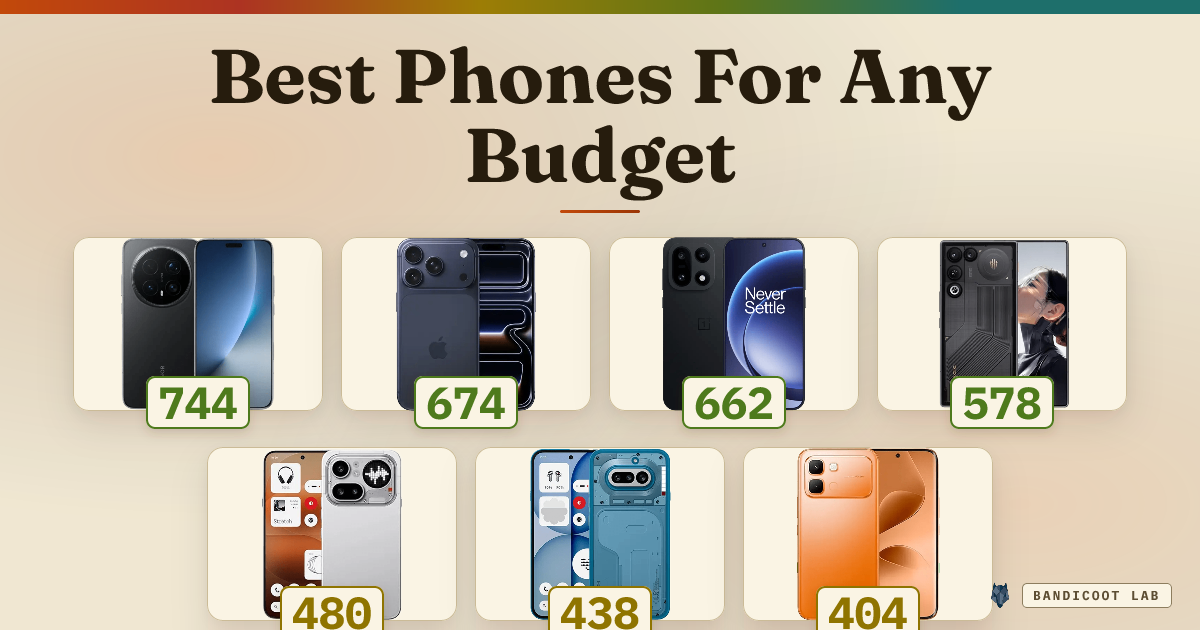
Best Phones For Any Budget
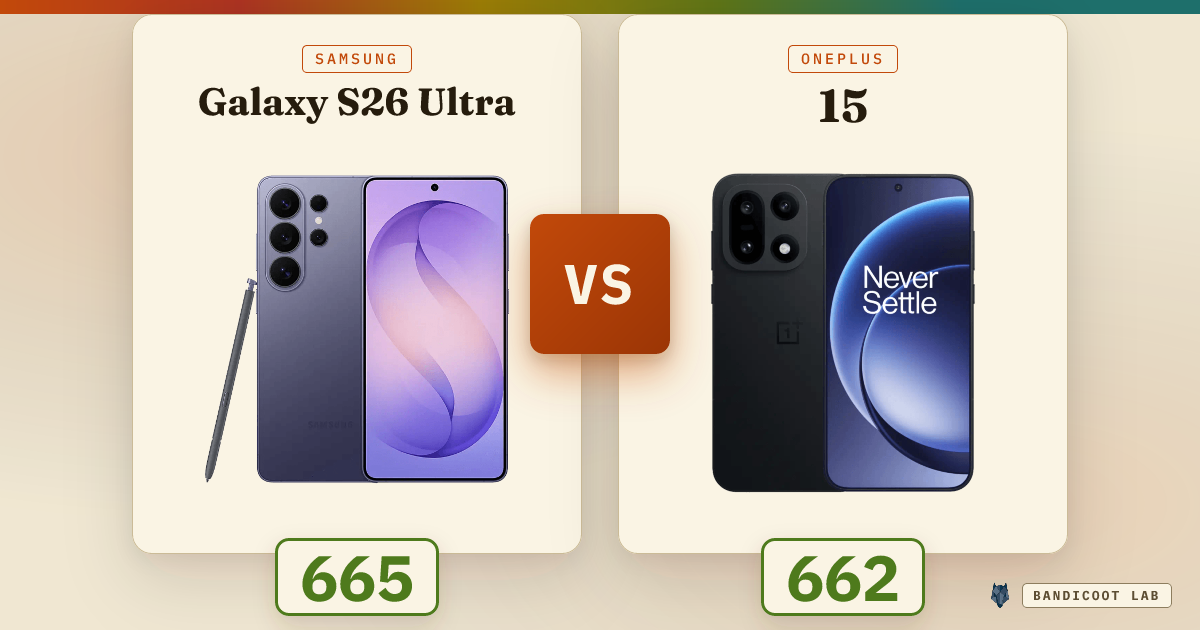
Samsung Galaxy S26 Ultra vs OnePlus 15
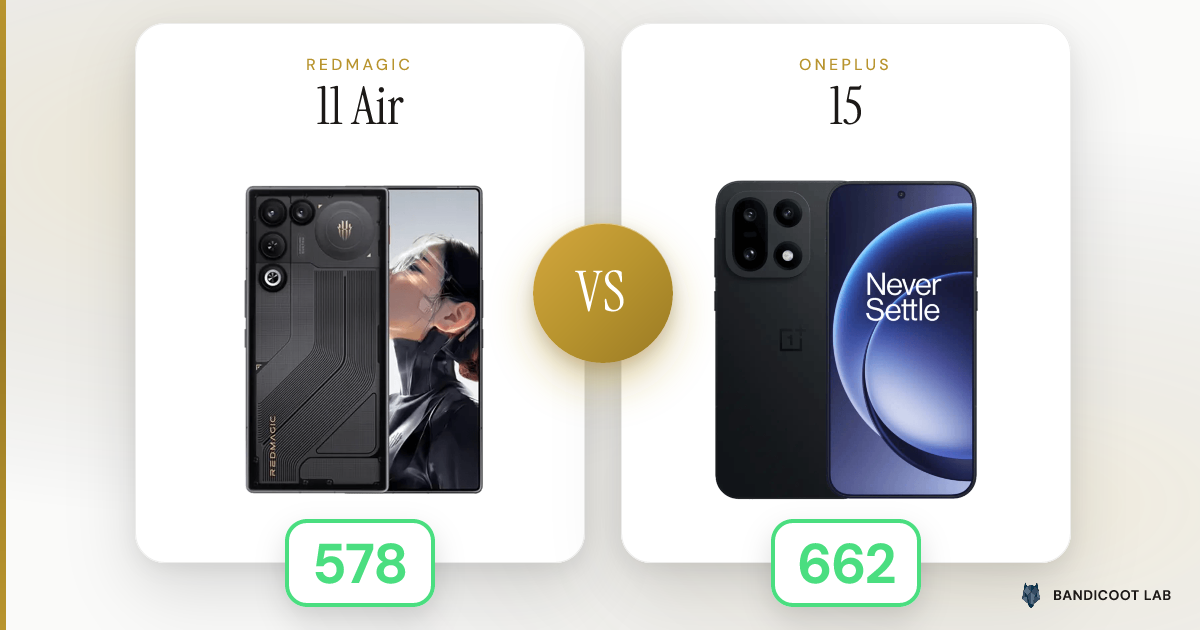
RedMagic 11 Air vs OnePlus 15
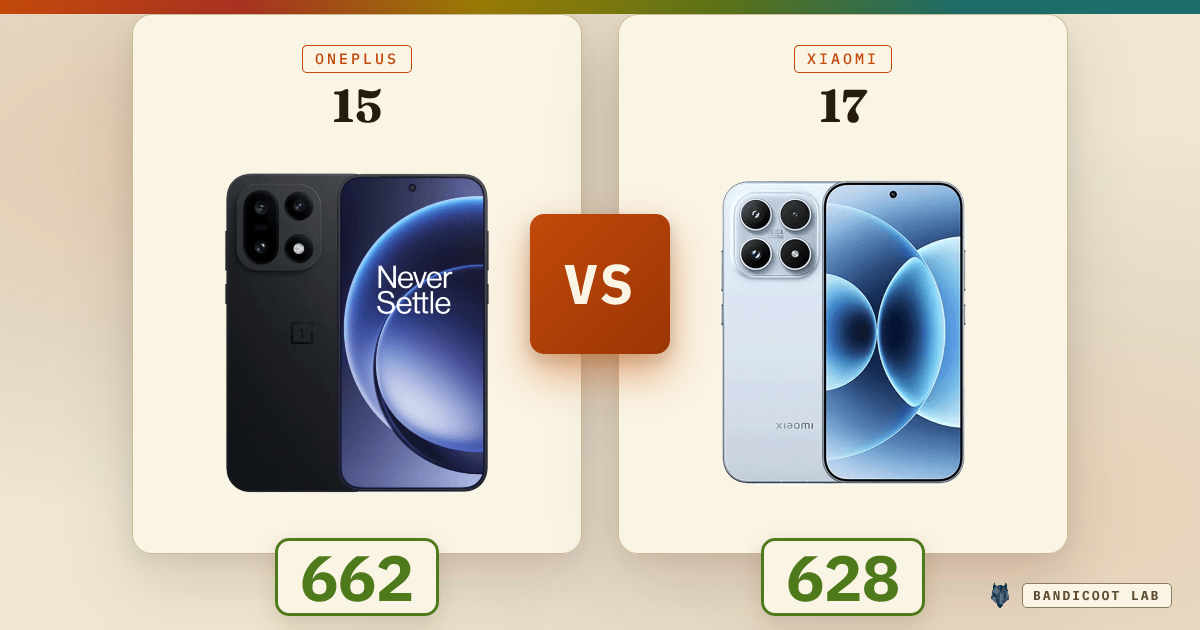
OnePlus 15 vs Xiaomi 17
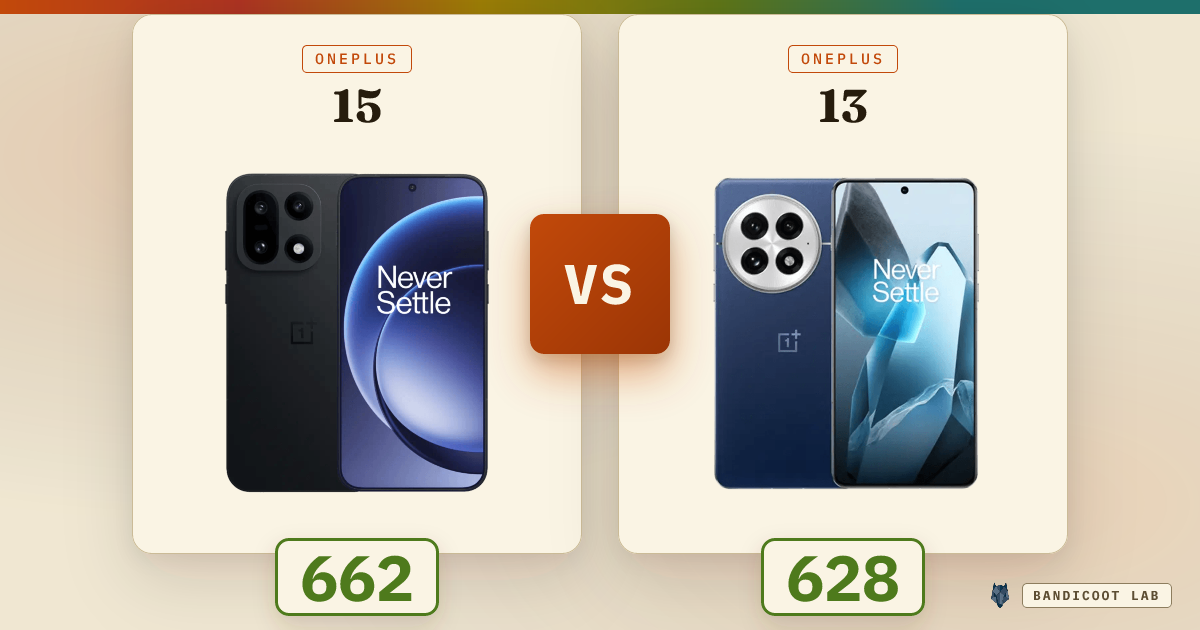
OnePlus 15 vs OnePlus 13
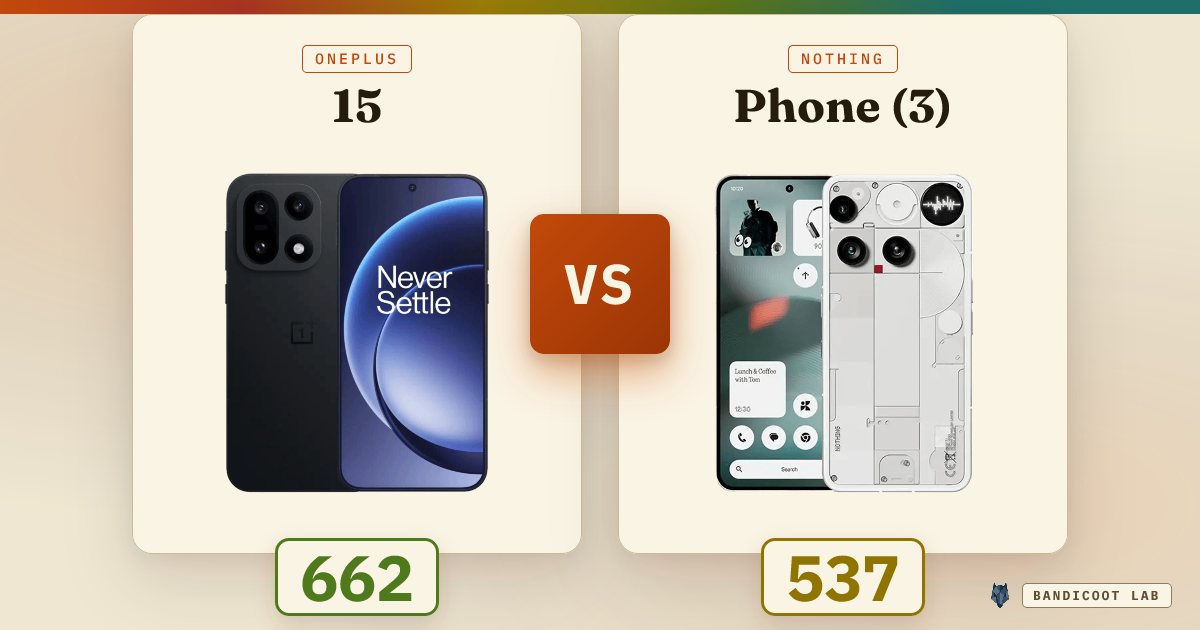
OnePlus 15 vs Nothing Phone (3)
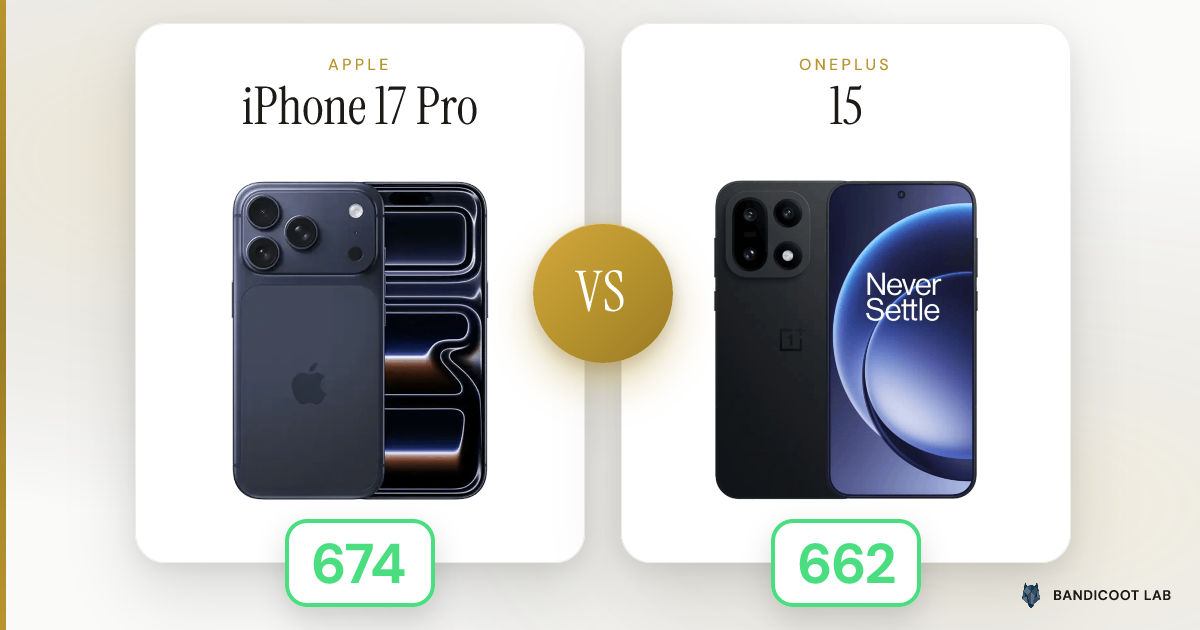
Apple iPhone 17 Pro vs OnePlus 15
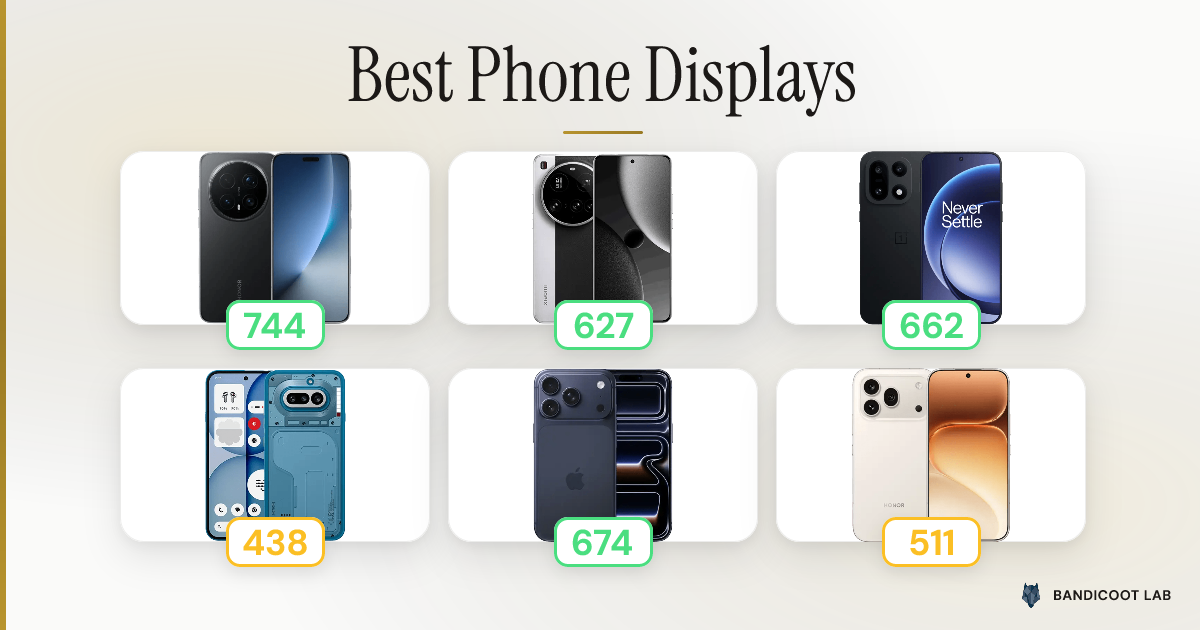
Best Phone Displays
Best Phones for Battery
Google Pixel 10 Pro vs OnePlus 15
Samsung Galaxy S26 vs OnePlus 15
OnePlus