Apple iPhone 17 Pro Max vs Samsung Galaxy S26 Ultra

Apple
Samsung
iPhone 17 Pro Max
Galaxy S26 Ultra
Ranked #4 of 52
Ranked #5 of 52
Overall
Overall

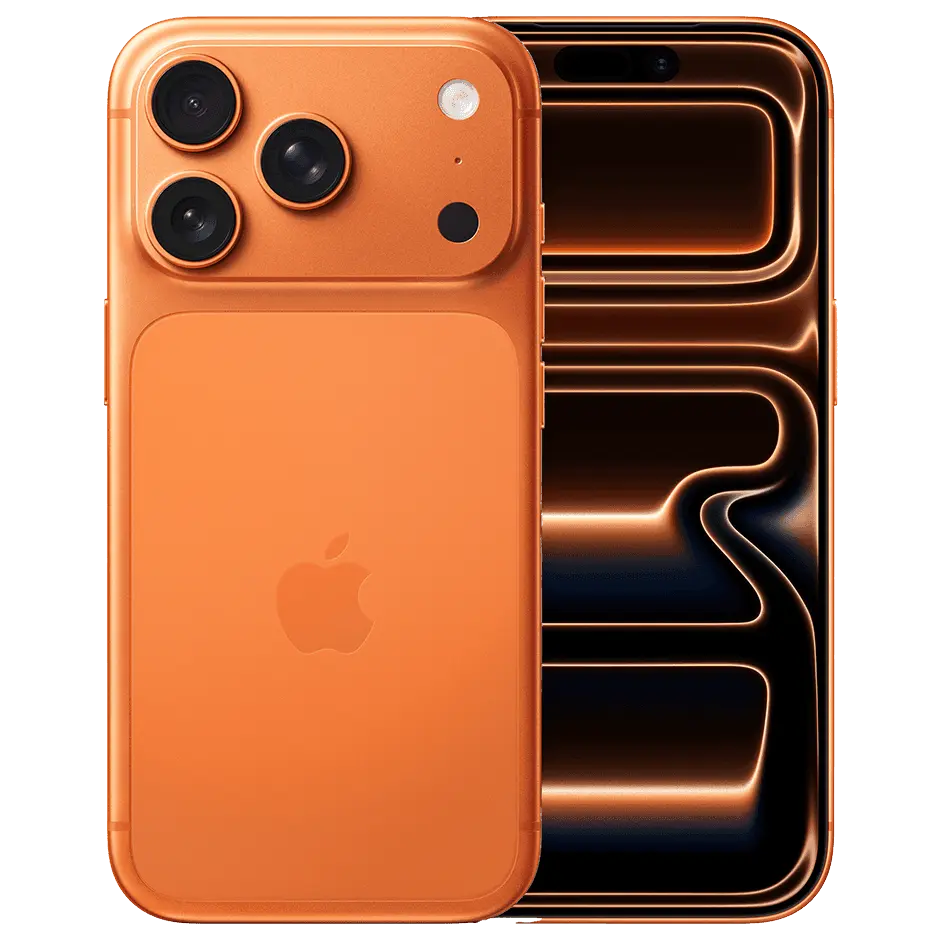
The iPhone 17 Pro Max and Galaxy S26 Ultra represent Apple's and Samsung's respective answers to the same question: what does the best possible large-format smartphone look like? Both are IP68-rated flagships with 6.9-inch displays, aimed at buyers who want top-tier cameras, processing power, and battery life in a single device. The iPhone starts at $1,199 while the Samsung phone at $1,299.99.
The Samsung pulls ahead in raw performance, charging speed, speakers, biometrics, and main camera sharpness. The iPhone is stronger in microphone quality, overall camera scoring (particularly the front camera and telephoto stabilization), battery efficiency during gaming and standby, and video stabilization. Display performance is close, with each phone holding advantages in different measurements. Neither phone sweeps every category.
Here’s how the two phones compare.
Design
| Apple iPhone 17 Pro Max | Samsung Galaxy S26 Ultra | |
|---|---|---|
| Specifications | ||
| Dimensions | 163.4 x 78 x 8.8 mm | 163.6 x 78.1 x 7.9 mm |
| Weight | 233g | 214g |
| IP Rating | IP68 | IP68 |
| Frame | Aluminum | Aluminum |
| Front | Ceramic Shield 2 | Gorilla Armor 2 |
| Back | Ceramic Shield | Gorilla Glass Victus 2 |
| Screen-to-body ratio | 91.7% | 91.5% |
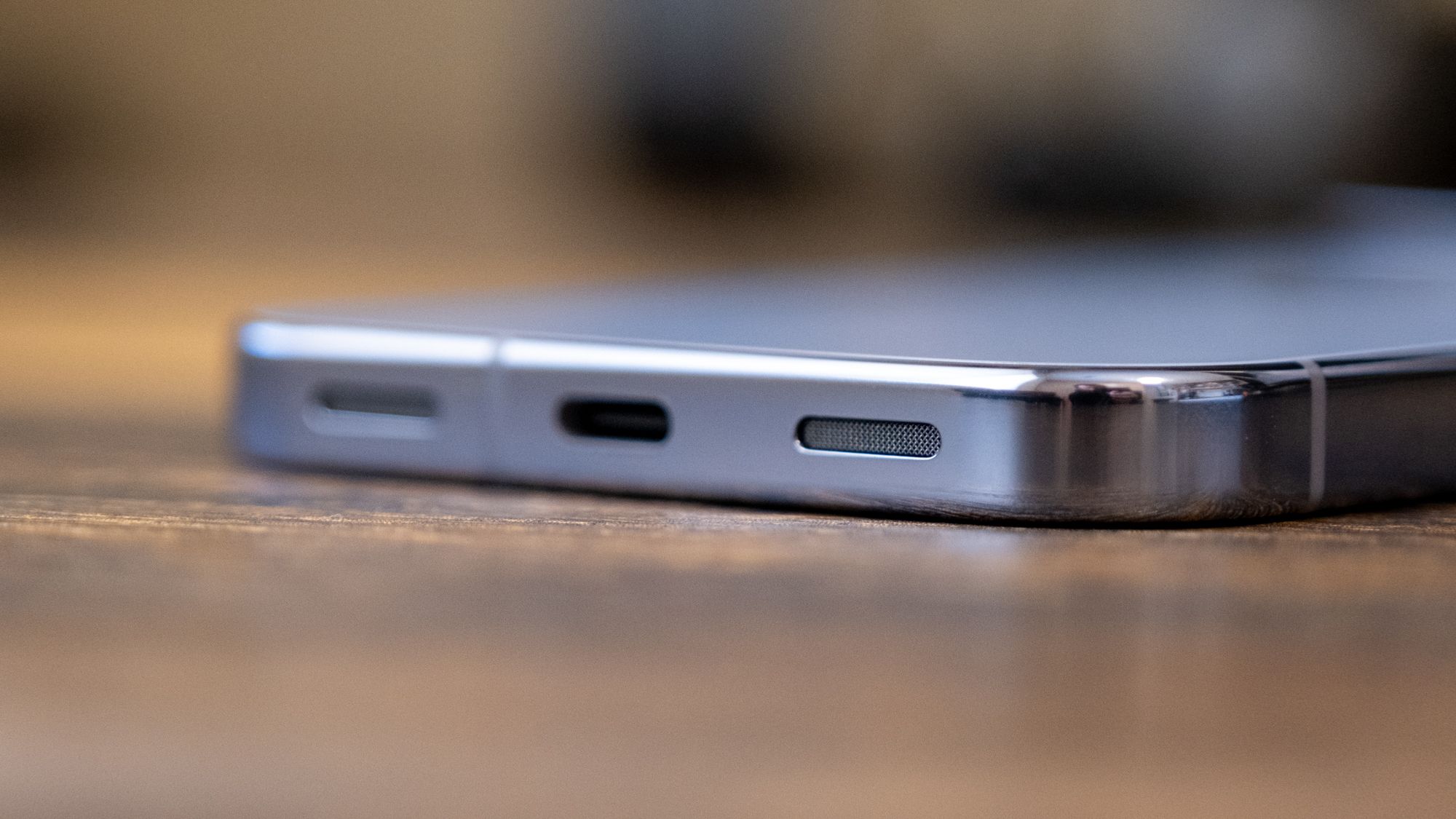
The iPhone 17 Pro Max and Galaxy S26 Ultra share the same screen size at 6.9 inches, the same IP68 water and dust resistance rating (submersible to 1.5 meters for 30 minutes under the IP68 standard), and USB-C ports. Both use aluminum frames. The iPhone weighs 233g while the Samsung is lighter at 214g. That's a 19g difference, which isn’t much.
The Galaxy S26 Ultra has an S Pen housed inside of it, which you may or may not find useful.
Bandicoot Lab does not formally test design or durability.
Display
| Apple iPhone 17 Pro Max | Samsung Galaxy S26 Ultra | |
|---|---|---|
627/ 845 | 634/ 845 | |
Both panels run at up to 120Hz with LTPO technology, meaning they can drop to lower refresh rates to save power. The Samsung's higher resolution (1440 x 3120 vs 1320 x 2868) gives it a meaningful pixel density advantage: 500 pixels per inch vs 460 pixels per inch. You'd need to look closely to see the difference in daily use, though.
Manual brightness peaks at 976 nits on the Galaxy S26 Ultra and 857 nits on the iPhone 17 Pro Max. The gap isn’t very noticeable. For HDR content, peak brightness is closer — the Samsung at 3,023 nits and the iPhone at 2,976 nits. Sustained brightness tells a different story. The Samsung holds 98.6% of its peak brightness over a 30-minute HDR session. The iPhone drops to 37.7%. The iPhone can hit bright peaks in short bursts, but during extended HDR video or gaming, it dims considerably to manage heat. The Galaxy S26 Ultra barely dims at all.
Color accuracy is more clearly in the iPhone's favor. In its standard mode, the iPhone delivers tight color fidelity with minimal visible drift from reference targets. Neutral grays stay neutral; skin tones don't shift. The Samsung's natural mode shows moderate color deviation across the board, with greens and skin tones drifting noticeably from accurate. Its vivid mode pushes wider gamut but amplifies those inaccuracies further.
Touch latency is 21ms on the Samsung and 52ms on the iPhone. At 52ms, the iPhone's touch response is a little sluggish by flagship standards. The Samsung's 21ms will feel more immediate during scrolling and gaming.
Performance
| Apple iPhone 17 Pro Max | Samsung Galaxy S26 Ultra | |
|---|---|---|
906/ 1012 | 908/ 1012 | |
The iPhone 17 Pro Max runs Apple's A19 Pro with 12GB of RAM. The Galaxy S26 Ultra uses Qualcomm's Snapdragon 8 Elite Gen 5, also with 12GB. Both are built on leading-edge process nodes.
In CPU benchmarks, the iPhone scores 3,852 single-core and 9,872 multi-core in GeekBench 6. The Samsung posts 3,685 single-core and 11,198 multi-core. The iPhone has a slight edge in single-threaded work but the Samsung wins multi-threaded tasks by a wider margin. In practice, the single-core gap is too small to feel. The multi-core difference might show up in heavy multitasking or sustained export workloads.
GPU performance is more nuanced. In 3DMark Wild Life Extreme, the iPhone peaks at 5,828 and sustains 73.1% stability, bottoming at 4,259. The Samsung peaks higher at 7,802 but drops to just 49.8% stability, hitting a low of 3,882. The Samsung's worst-case score is actually lower than the iPhone's worst-case, despite starting much higher. The Samsung also runs hotter (45.2°C vs 39.6°C). In extended gaming sessions, the iPhone delivers more consistent frame rates, while the Samsung starts stronger but throttles more aggressively.
Camera
| Apple iPhone 17 Pro Max (Overall) | Samsung Galaxy S26 Ultra (Overall) | |
|---|---|---|
| Specifications | ||
| Main | 48MP, f/1.78, 24mm, 1/1.28" | 200MP, f/1.4, 23mm, 1/1.3" |
| Ultrawide | 48MP, f/2.8, 13mm, 1/2.55" | 50MP, f/1.9, 14mm, 1/2.5" |
| Telephoto | 48MP, f/2.8, 100mm, 1/2.55" | 10MP, f/2.4, 67mm, 1/3.94" |
| Telephoto (Long) | — | 50MP, f/2.9, 111mm, 1/2.52" |
| Front | 18MP, f/1.9, 20mm | 12MP, f/2.2, 23mm, 1/3.2" |
Both phones score closely in overall camera performance, with the iPhone slightly ahead in aggregate. The iPhone's strengths are front camera quality and video stabilization across all lenses. The Samsung excels in main camera sharpness, color accuracy across most lenses, and dynamic range consistency.
At deep zoom levels, the Samsung has a clear advantage. It reaches 100x zoom and maintains usable detail further out. At 30x in bright light, the Samsung resolves much better detail than the iPhone. At 40x, the gap widens. The Samsung applies heavy sharpening at these zoom levels (19% overshoot at 30x), which creates visible halos around edges. The iPhone applies less sharpening at zoom but also resolves less actual detail. Beyond 40x, only the Samsung offers zoom levels, extending to 100x with progressively degrading detail.
Main
| Apple iPhone 17 Pro Max (Main) | Samsung Galaxy S26 Ultra (Main) | |
|---|---|---|
579/ 722 | 711/ 722 | |
The Samsung's main camera is sharper in bright and mid light. At 1x in bright conditions, scores are close, but at 2x crop the Samsung pulls ahead. In dark conditions, the iPhone edges ahead at 1x, suggesting better low-light processing on the main sensor.
Color character differs significantly. The iPhone's main camera pushes saturation hard in bright light, roughly 128% of neutral, with skin tones rendered notably warmer and more vivid than reality. In mid-light conditions (100 lux, 4000K), the iPhone shifts toward warm tones with a yellow-amber push that increases as lighting gets warmer, pointing to a white balance undercorrection pattern. The Samsung's main camera is more restrained in bright light at 121% saturation, with a slight warm lean. In mid and dark conditions, the Samsung stays much closer to neutral saturation (107% and 96% respectively). Skin tones on the Samsung are more accurate across all lighting conditions.
Dynamic range is a Samsung strength. Its main camera produces wider range with smooth transitions, retaining detail in shadows while controlling highlights. The iPhone manages less dynamic range, with noticeable compression that flattens midtones and clips highlights sooner in high-contrast scenes.
Ultrawide
| Apple iPhone 17 Pro Max (Ultrawide) | Samsung Galaxy S26 Ultra (Ultrawide) | |
|---|---|---|
505/ 722 | 542/ 722 | |
The iPhone's ultrawide resolves slightly more detail than the Samsung's when processed, though the Samsung's raw capture is sharper. Both ultrawides are meaningfully softer than their respective main cameras.
Color on the ultrawide follows a similar pattern to the main. The iPhone pushes higher saturation (122% bright, 113% mid) while the Samsung stays slightly more restrained (115% bright, 108% mid). In dark conditions, the Samsung's ultrawide maintains better color accuracy with only 105% saturation and minimal hue drift. The iPhone's ultrawide shifts warm and picks up noticeable yellow bias in mid and dark conditions, again pointing to white balance behavior rather than sensor limitations.
Dynamic range favors the Samsung. Its ultrawide produces slightly less actual dynamic range, but the Galaxy S26 Ultra maintains more natural tonal transitions. The iPhone's ultrawide shows compression artifacts that flatten the image in high-contrast scenes.
Telephoto
| Apple iPhone 17 Pro Max (Telephoto) | Samsung Galaxy S26 Ultra (Telephoto Short) | Samsung Galaxy S26 Ultra (Telephoto Long) | |
|---|---|---|---|
628/ 722 | 589/ 722 | 676/ 722 | |
The Samsung has dual telephoto lenses — a 3x telephoto and a 5x telephoto. The iPhone has a single telephoto. At native telephoto focal lengths, the Samsung's long telephoto is considerably sharper in bright light. At 5x, the Samsung phone resolves more detail than the iPhone, and at 10x, the Samsung leads even more dramatically.
Color accuracy on the telephoto is where the Samsung separates itself. The Galaxy S26 Ultra’s 5x telephoto in bright light shows only 113% saturation with minimal hue error. The iPhone's telephoto pushes 128% saturation with significant skin tone error and a visible warm-yellow cast. In mid-light, the Samsung's longer telephoto holds at 105% saturation with small hue shifts, while the iPhone's telephoto shows 121% saturation with large hue errors and a strong warm push from white balance drift. In dark conditions, both phones' telephoto colors degrade, but the Samsung's stays more controlled.
The iPhone wins in telephoto video stabilization by a wide margin though. For video shooters who use the telephoto frequently, this is a significant practical difference.
Dynamic range from both telephoto systems is competitive. All three telephoto cameras capture a similar amount of tonal range in processed shots.
Front
| Apple iPhone 17 Pro Max (Front) | Samsung Galaxy S26 Ultra (Front) | |
|---|---|---|
703/ 722 | 415/ 722 | |
The iPhone's front camera is stronger overall. It resolves more detail, and the gap persists across all lighting conditions.
Dynamic range is a major iPhone advantage on the front camera. The iPhone's front camera delivers much more range than the Galaxy S26 Ultra’s front camera. In practice, the iPhone will handle backlit selfies far better, retaining both face detail and sky/background information.
Color on the front camera is more nuanced. The iPhone pushes 122% saturation in bright light with skin tones rendered warmer than accurate. The Samsung is at 105%, closer to neutral. In mid-light, both shift slightly warm, but the iPhone's shift is larger (114% vs 105%). The Samsung's front camera skin tones are more true-to-life across lighting conditions, though neither phone is perfectly accurate.
Battery
| Apple iPhone 17 Pro Max | Samsung Galaxy S26 Ultra | |
|---|---|---|
617/ 799 | 539/ 799 | |
The iPhone packs a 5,088mAh battery; the Samsung has 5,000mAh. Capacity is nearly identical, so differences come down to efficiency.
In video playback at 200 nits, the Samsung lasts 31 hours 34 minutes vs the iPhone's 23 hours 58 minutes. That's a substantial gap. In web browsing over a 5-hour test, the iPhone drains 21% vs the Samsung's 24%. The iPhone is slightly more efficient for screen-on tasks that don't involve media decoding. Gaming drain is close though, hitting 25% drain on the iPhone vs 24% on the Samsung during the stress test. We did experience an unusual standby drain on the Galaxy S26 Ultra — 10% over eight hours, compared to the iPhone’s 2%.
The Samsung excels at sustained media playback, likely due to display efficiency gains at lower brightness. The iPhone preserves charge better when idle, and is marginally more efficient for web browsing. For mixed-use days, the standby advantage gives the iPhone an edge in total time between charges for light users, while heavy video consumers would benefit from the Samsung.
Charging
| Apple iPhone 17 Pro Max | Samsung Galaxy S26 Ultra | |
|---|---|---|
420/ 837 | 486/ 837 | |
The Samsung charges at 60W wired vs the iPhone's 40W. Both support 25W wireless charging with magnetic alignment (MagSafe for iPhone, Qi2-compatible for Samsung).
The speed difference is clear in practice. After 10 minutes on the wire, the Samsung reaches 34% vs the iPhone's 29%. After 30 minutes, it's 79% vs 67%. That 12-percentage-point gap at 30 minutes translates to meaningful extra runtime when you're grabbing a quick charge before heading out.
Wireless charging is closer though. the iPhone reaches 20% in 10 minutes and 47% in 30 minutes, while the Samsung hits 18% and 44%.
Speaker
| Apple iPhone 17 Pro Max | Samsung Galaxy S26 Ultra | |
|---|---|---|
816/ 857 | 857/ 857 | |
The Samsung's speakers are slightly louder and substantially cleaner. Peak volume reaches 75.3 dB vs the iPhone's 74.6 dB. The real separation is distortion though — the Samsung averages 3.3% total harmonic distortion vs the iPhone's 8.9%. At higher volumes, the iPhone introduces more harshness that the Samsung avoids entirely.
Both phones produce full, bass-present sound with clear highs. The iPhone leans slightly more toward bass weight, while the Samsung has a bit more high-frequency clarity. Both are above average for smartphone speakers, but the Samsung can be pushed louder without breaking up.
Microphone
| Apple iPhone 17 Pro Max | Samsung Galaxy S26 Ultra | |
|---|---|---|
885/ 949 | 566/ 949 |
The iPhone's microphone delivers consistent frequency response with only minor deviation across the spectrum. Voices sound more natural and balanced in recordings. The Samsung's microphone shows more uneven frequency response. Speech recordings may sound slightly more colored or less flat compared to the iPhone. For voice memos, video recording audio, or calls in noisy environments, the iPhone has a clear advantage.
Other
| Apple iPhone 17 Pro Max | Samsung Galaxy S26 Ultra | |
|---|---|---|
| Biometrics | 215/ 1036 | 764/ 1036 |
| Data Transfer | 582/ 877 | 737/ 877 |
| Specifications | ||
| Biometric type | Face Recognition | Fingerprint |
| Ports | USB-C 3.2 Gen 2 | USB-C 3.2 |
| Storage | 256GB, 512GB, 1TB, 2TB | 256GB, 512GB, 1TB |
Biometrics represent a dramatic difference in approach. The Samsung uses an ultrasonic fingerprint sensor that unlocks in 138ms — fast enough that you barely register the wait. The iPhone relies on hardware face unlock at 488ms. It works well, and many find it convenient, but it's roughly 3.5 times slower.
Data transfer speeds favor the Samsung across the board. Large file reads hit 332 MB/s vs 304 MB/s on the iPhone. Small file operations show a bigger gap — 78 MB/s read on Samsung vs 14 MB/s on iPhone. The iPhone's USB-C 3.2 Gen 2 port should theoretically be faster than the Samsung's USB-C 3.2 (Gen 1), but internal storage controller speed matters more than the port spec here. Both phones are available in multiple storage configurations.
Conclusion
The Samsung Galaxy S26 Ultra is the better choice for people who prioritize raw performance headroom, fast charging, main camera color accuracy, deep zoom reach, speaker quality, and quick biometric unlocking. Its display sustains brightness far more reliably during HDR content, and its touch response is meaningfully faster. The camera system delivers more natural colors across most lenses and better dynamic range from the main and ultrawide.
The iPhone 17 Pro Max suits buyers who care most about front camera quality, video stabilization (especially on telephoto and front cameras), microphone quality, standby battery efficiency, and display color accuracy. Its GPU sustains performance more consistently during long gaming sessions despite lower peak output. The camera pushes a more vivid, saturated look that some users will prefer as a creative choice, even if it's less technically accurate.
At $1,199 vs $1,299.99, the iPhone costs $100 less. Neither phone is universally superior. Your priority list determines which investment makes more sense. If you shoot a lot of video and value audio capture, the iPhone earns its keep. If you want the most responsive display, and fastest unlocking, the Samsung justifies the premium.
Related
Apple
iPhone 17 Pro Max
Samsung
Galaxy S26 Ultra
Samsung
Galaxy S26+
Samsung
Galaxy Z Fold 8
Samsung
Galaxy S26
Apple
iPhone 17e

Samsung Galaxy S26 Series vs Galaxy S25 Series
iPhone 17 vs iPhone 17 Pro vs iPhone 17 Pro Max vs iPhone Air
iPhone 17 Series vs Xiaomi 17 Series
The house look: How phone brands tune camera color
How we test speakers and microphones

Samsung Galaxy S26 Series vs Xiaomi 17 Series