Display efficiency: Which phone displays do the most with the least?
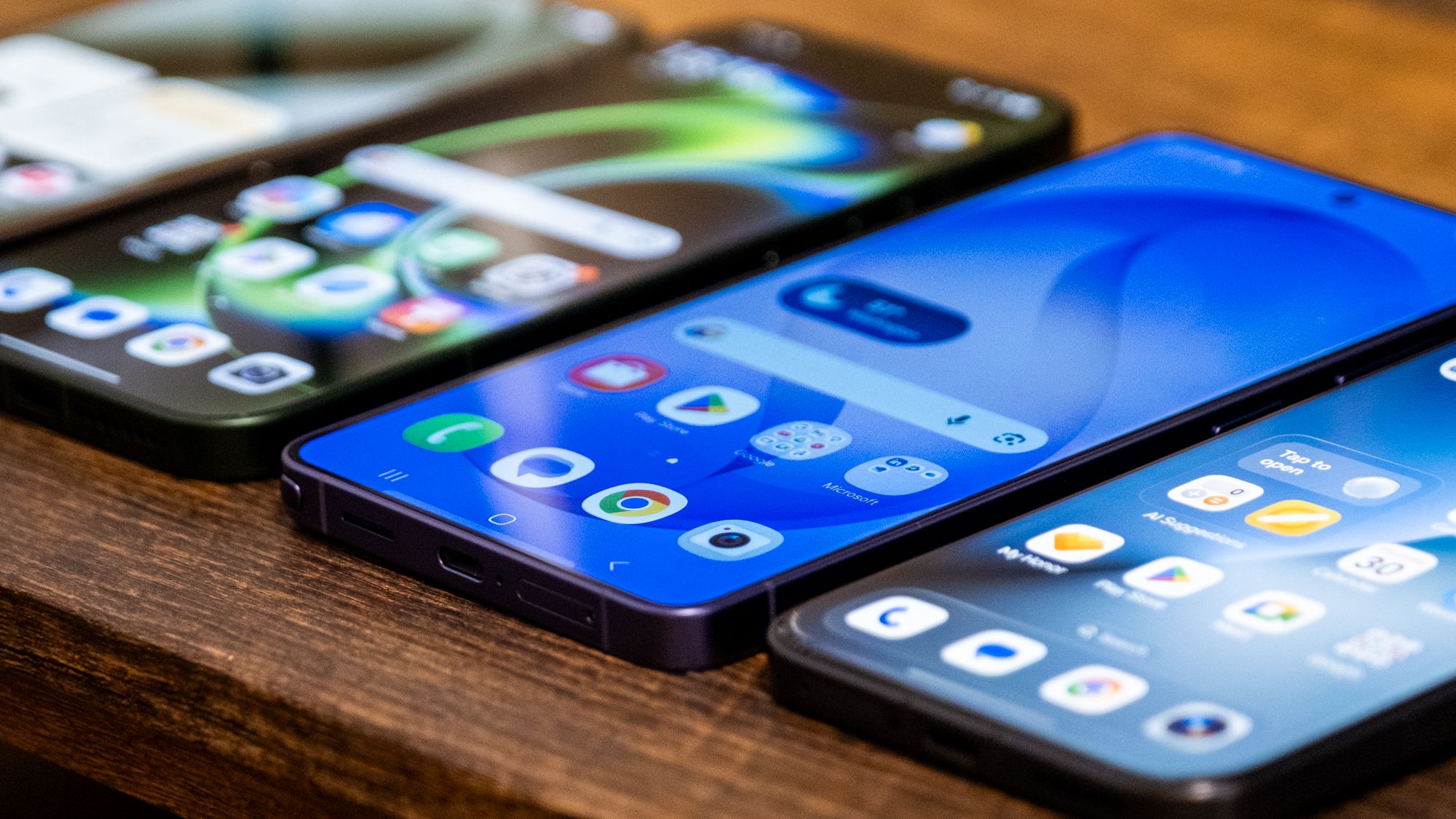
Brightness specs are part of what sells phones. A panel rated for 3,000 peak nits sounds objectively better than one rated for 2,000. But spec sheets don't tell you everything about a display. They don't tell you how long a phone can sustain its peak brightness. And, they don't tell you how much energy that brightness actually costs to deliver.
Bandicoot Lab measures battery drain at two different brightness levels -- something that allows us to compute a metric we call "Display Efficiency." Essentially, Display Efficiency is a measure of how many nits you gain for each additional milliwatt of power, above a 200-nit baseline.
The full rankings of our Display Efficiency metric are interesting -- though perhaps not totally surprising. Here's a look.
How the metric works
Display Efficiency is computed from two battery video playback tests -- one at 200 nits, and one at the panel's maximum typical brightness (that's the maximum brightness you'll get with auto brightness off). The difference in playback time, normalized by battery capacity, gives the difference in power draw between the two operating points. The difference in delivered brightness is the max manual brightness measured in our display tests, minus 200. Dividing one by the other yields "nits per milliwatt" above the 200-nit baseline -- which is what Display Efficiency measures.
We convert battery capacity to energy assuming a 3.8V nominal cell voltage. Actual nominal voltage varies slightly by manufacturer and chemistry, but this affects the absolute nits/mW number, not the relative rankings. We use 200 nits as the baseline because it approximates what most people use indoors.
Top 10 Devices by Display Efficiency
The metric is designed to isolate display behavior from system overhead. Both video playback tests run with the same chip, same software, same Wi-Fi state, and same baseline power draw from background processes. Our video playback tests are run in airplane mode, with the same firmware, background sync turned off, and so on. When we subtract one from the other, any other background processes cancel out. What's left is the display panel. No measurement is perfect — maybe one scheduled background task ran on one test, but not another. But our test, at least, minimizes variables as much as possible.
Of course, it's worth noting that our Display Efficiency metric is mostly a display brightness efficiency metric. When a phone plays video, the screen's refresh rate is locked to a static rate — while in actual use, modern phones vary their refresh rates. In other words, our display efficiency metric doesn't take into account the fact that in general day-to-day use, LTPO panels are likely to be much more efficient given the fact that they can scale all the way down to 1Hz when the user isn't scrolling, to save on battery.
Samsung's double advantage
Samsung phones have the most efficient displays in this dataset. The Galaxy S25+ delivers 22.99 nits per milliwatt, beating the second-place phone, the Honor 600, which delivers 20.2 nits/mW. Seven of the top 10 displays in the dataset belong to Samsung phones, and Samsung's brand-level average rank is the best of any major manufacturer in the database.
Average Display Efficiency by Brand
Of course, it’s not just about the phones themselves — most phone manufacturers don’t make their own display panels. But, according to our data, as long as the word Samsung is in the name of the phone company or the display company, the device is likely to have a more efficient panel. That’s to say, phones with Samsung Display panels were, as a whole, more efficient than those with panels from other suppliers. Samsung phones with panels from Samsung Display were even more efficient.
Some of that is down to the adoption of new display technology. Recent Samsung phones use new CoE (Color filter on Encapsulation) technology, which builds the color filter directly into the panel’s encapsulation layer — replacing separate polarizer film that previous-generation panels used to cut down on reflections. The elimination of that layer means that more light is able to pass through the display panel as a whole. That makes a difference. Within the Samsung phones tested, those with CoE had a roughly 33% higher Display Efficiency score than those without.
Samsung's double advantage
Samsung Display makes the most efficient panels in the industry. Samsung also gets more out of those panels in their own phones than any other brand does.
non-Samsung panel
Samsung Display panel
Samsung Display panel
Samsung phones with Samsung Display panels are more than three times as efficient as non-Samsung phones with non-Samsung panels.
Averages across phones in our database priced $700 and above.
But, even when you remove phones that use CoE technology from the data set, Samsung phones with Samsung Display panels were far more efficient — suggesting Samsung simply tunes Samsung Display panels better, at least regarding efficiency. Samsung’s non-CoE phones had an average Display Efficiency of 9.86 nits/mW, while non-Samsung phones that use panels from Samsung Display averaged 5.33 nits/mW.
Everyone else lagged in our Display Efficiency score. Non-Samsung phones with non-Samsung Display panels averaged far lower in efficiency than both non-Samsung phones with Samsung Display panels, and Samsung phones themselves.
Resolution adjustment changes the picture
Raw nits-per-milliwatt understates the work that high-resolution panels are doing. A panel driving 4.5 megapixels worth of pixels to 1,000 nits is doing more total work than one pushing 2.5 megapixels to the same brightness, even though both produce the same per-square-meter luminance.
Adjusting for total pixel count multiplies efficiency by megapixels driven. The ranking shifts most for foldable inner displays and QHD+ flagships.
Display Efficiency Rank: Raw vs. Resolution-Adjusted
The OnePlus Open's inner display, which has one of the higher screen resolutions we’ve tested at 5.53 megapixels, climbs roughly ten ranking positions despite its unremarkable raw efficiency. Samsung's QHD+ S-series phones all benefit because they're driving 4.49 megapixels each, more than most flagships.
The 1080p phones in Samsung's lineup (the Galaxy S25 and S26) drop in the ranking after adjustment, even though their raw scores are decent — they don’t have to do as much work to be efficient as the higher-resolution panels. The same applies to the iPhone 17 and iPhone 17 Pro, which use 1206 × 2622 panels.
One thing doesn’t change much though. Even when adjusted for resolution, Samsung phones have the best display efficiency. We don’t adjust for resolution in our Display Efficiency score — the resolution is part of how efficient a display panel is, after all, and our goal is to measure how the hardware impacts the end user.
What this means for buyers
For most flagships in this dataset, the difference in display power draw between the most efficient panel and the median is around 100 milliwatts at full brightness. On a typical day with a phone spending most of its time at moderate brightness indoors, the difference is hard to perceive.
On average, phones lasted 22% longer in our 200-nit video playback test, compared to the max brightness test. That’s actually a relatively big difference in battery life — however most people vary brightness over a day, whether automatically or manually.
Average Display Efficiency by Series
Where it matters is sustained max-brightness use cases, like outdoor video playback, navigation in direct sunlight, long HDR sessions, or camera viewfinders in bright environments. In those scenarios, an efficient panel buys more screen-on time.
Display efficiency as a whole, of course, is more than just brightness efficiency. LTPO panels pick up some of the slack left by increasing brightness levels, plus technologies like CoE on Samsung’s newer panels allow those displays to output more brightness from the same amount of power. That doesn’t automatically mean more battery though — in some cases manufacturers give their phones a higher brightness instead, while in others, battery lives are similar due to more power-hungry silicon.
As a whole, however, the trend is clear — if you want to get the most out of a phone’s display from a charge, then it may be worth looking at a Samsung phone for your next upgrade.
Sources
9to5Google. "Samsung is adding M14 displays to Galaxy S26 with foldable tech." September 2025. https://9to5google.com/2025/09/22/samsung-galaxy-s26-display-upgrade-m14/
Android Authority. "Galaxy S26 Ultra's display could outshine the iPhone 17, but there's bad news for S26 Pro, Edge."September 2025. https://www.androidauthority.com/samsung-galaxy-s26-ultra-m14-oled-coe-leak-3599760/
Android Headlines. "What is the Motorola Razr Ultra 2025 Screen Size?" April 2025. https://www.androidheadlines.com/2025/04/what-is-the-motorola-razr-ultra-2025-screen-size.html
Android Police. "Google Pixel 9 display review: Non-artificial brilliance." November 2024. https://www.androidpolice.com/google-pixel-9-display-review/
Android Police. "Samsung Galaxy S25 Ultra's display may not be as good as the iPhone 16 Pro." October 2024. https://www.androidpolice.com/galaxy-s25-ultra-m13/
Digitimes. "BOE reportedly fails to meet iPhone 17 OLED supply plans as Samsung Display steps in." November 2025. https://www.digitimes.com/news/a20251120VL206/boe-iphone-17-oled-panel-shipments-apple.html
Digitimes. "Samsung Galaxy 25 to adopt M13 material combination for OLED." October 2024. https://www.digitimes.com/news/a20241030PD216/samsung-galaxy-materials-launch-flagship.html
Gizmochina. "BOE is the exclusive screen supplier for the Honor Magic3 series smartphones." August 2021. https://www.gizmochina.com/2021/08/13/boe-exclusive-honor-magic3-series-display-supplier/
NotebookCheck. "OnePlus 15 lands first phone display with native 165 Hz refresh rate at 1.5K resolution." October 2025. https://www.notebookcheck.net/OnePlus-15-lands-first-phone-display-with-native-165-Hz-refresh-rate-at-1-5K-resolution.1139055.0.html
NotebookCheck. "Review: Nothing Phone (1) – transparent designer piece at mid-range price." July 2022. https://www.notebookcheck.net/Review-Nothing-Phone-1-transparent-designer-piece-at-mid-range-price.635734.0.html
OLED-Info / ETNews. "Samsung Display to supply its latest M14 AMOLED panels to Apple and Google." July 2024. https://www.oled-info.com/etnews-samsung-display-supply-its-latest-m14-amoled-panels-apple-and-google
OLED-Info. "The Google Pixel smartphone series will be the first to adopt Samsung's latest M16 OLED device stack."2026. https://www.oled-info.com/google-pixel-smartphone-series-will-be-first-adopt-samsungs-latest-m16-oled
Omdia. "Display Dynamics – November 2024: BOE supplies 510 PPI LTPO OLED displays for the OnePlus 13 smartphones." November 2024. https://omdia.tech.informa.com/om124852/display-dynamics--november-2024-boe-supplies-510-ppi-ltpo-oled-displays-for-the-oneplus-13-smartphones
OnePlus. "OnePlus Open Specs." https://www.oneplus.com/us/open/specs
PhoneArena. "Galaxy S26 Ultra may set a new benchmark for smartphones." September 2025. https://www.phonearena.com/news/galaxy-s26-ultra-display-m14-coe_id174229
SamMobile. "Galaxy S25 Ultra to skip display upgrades the latest iPhone enjoys." October 2024. https://www.sammobile.com/news/galaxy-s25-ultra-skip-display-upgrades-latest-iphone-enjoys/
SamMobile. "Samsung Galaxy Z Flip 8, Z Fold 8 could lack display upgrades." 2026. https://www.sammobile.com/news/galaxy-z-flip-fold-8-not-get-display-upgrade/
SamMobile. "Samsung to supply even more OLED panels for iPhone 17." November 2025. https://www.sammobile.com/news/samsung-supply-even-more-oled-panels-iphone-17/
SammyFans / ETNews. "New report details M14 OLED, COE display for Galaxy S26 Ultra." September 2025. https://www.sammyfans.com/2025/09/21/samsung-galaxy-s26-ultra-m14-oled-coe-display/
SammyFans. "Samsung Galaxy S26 Ultra to Feature New M14 and COE Technologies: 'Brighter and Thinner.'"September 2025. https://r2.community.samsung.com/t5/Galaxy-S/Samsung-Galaxy-S26-Ultra-to-Feature-New-M14-and-COE-Technologies/td-p/20628206
SammyFans. "Samsung sticking with M13 OLED for Galaxy Z Fold 8, Flip 8 and Wide Fold despite having newer M14 screens." April 2026. https://www.sammyfans.com/2026/04/02/samsung-galaxy-z-fold-flip-8-wide-fold-m13-oled-screens/
TCL CSOT. "TCL CSOT Showcases World-First Mobile Display Innovations at MWC 2025." March 2025. https://en.tclcsot.com/News/759.html
UBI Research / OLED-Info. "UBI: Samsung and LG Display shipped almost 99% of Apple's iPhone 17 AMOLED panels." October 2025. https://www.oled-info.com/ubi-samsung-and-lg-display-shipped-almost-99-apples-iphone-17-amoled-panles
UBIResearchNet. "Xiaomi unveils flagship 17 Pro Max — TCL CSOT supplies Real RGB OLED panels and changes Red Host supplier." September 2025. https://en.ubiresearchnet.com/xiaomi-unveils-flagship-17-pro-max-tcl-csot-supplies-real-rgb-oled-panels-and-changes-red-host-supplier/
Visionox. "Visionox Empowers Honor Magic 6 Series with Four Key Display Innovations."https://www.visionox.com/en/contents/190/622.html
Xiaomi. "Xiaomi 15T Pro FAQ (KA-608137)." https://www.mi.com/global/support/faq/details/KA-608137/
Related
The house look: How phone brands tune camera color
Is a weak telephoto worse than having no telephoto at all?
Sensor size vs dynamic range: Does a bigger sensor capture more?
Megapixels vs sharpness: Does resolution buy sharper photos?
SoC Efficiency: What chips are the most efficient?
How we test speakers and microphones

Samsung Galaxy S26 Series vs Galaxy S25 Series
iPhone 17 Series vs Xiaomi 17 Series

Samsung Galaxy S26 Series vs Xiaomi 17 Series

Motorola Razr+ (2026) vs Samsung Galaxy Z Flip 7
How we test charging
How we test performance