Apple iPhone 17e vs Nothing Phone (4a) Pro
Apple
Nothing
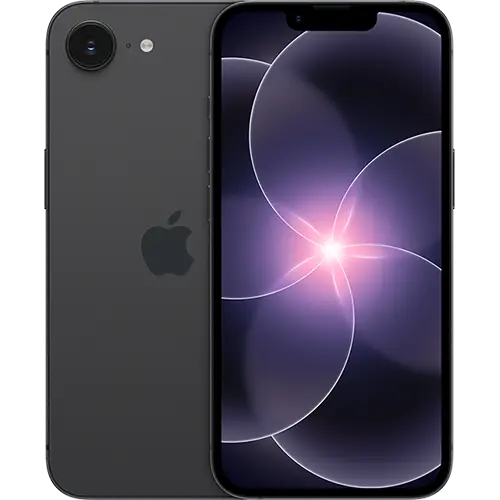
iPhone 17e
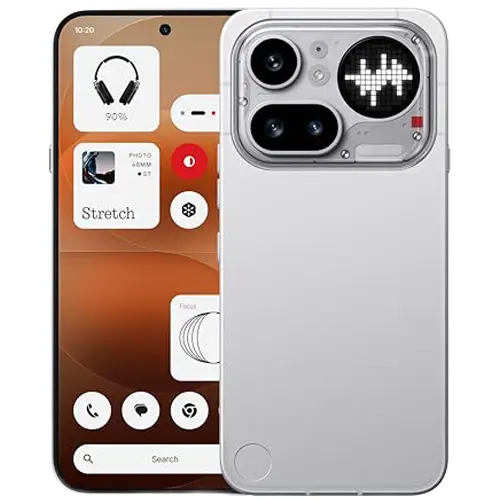
Phone (4a) Pro
Ranked #32 of 59
Ranked #44 of 59
Overall
Overall
The iPhone 17e is Apple's mid-tier entry point: a compact, relatively lightweight phone that trades lens count and screen size for the Apple ecosystem and a flagship-class processor. At $599, it sits in the upper reaches of the midrange. The Nothing Phone (4a) Pro comes in $100 cheaper at $499 and takes a different approach entirely. It's a larger device with a full camera system including ultrawide and telephoto lenses, a high-refresh display, and a substantially bigger battery.
The iPhone 17e is stronger in raw processing power, speaker quality, and display color accuracy. Its single rear camera delivers good dynamic range, and its processor handles demanding tasks and web browsing with ease. The Nothing Phone (4a) Pro wins on camera versatility, battery life, display brightness and refresh rate, and deep zoom reach. It's the better choice if you want a phone that covers more photographic situations and lasts longer between charges. Color science favors different phones depending on the lens and lighting.
Here’s how the phones compare based on our thorough testing.
Design
| Apple iPhone 17e | Nothing Phone (4a) Pro | |
|---|---|---|
| Specifications | ||
| Dimensions | 146.7 x 71.5 x 7.8 mm | 163.7 x 76.6 x 8 mm |
| Weight | 169g | 210g |
| IP Rating | IP68 | IP65 |
| Frame | Aluminum | Aluminum |
| Front | Ceramic Shield 2 | Gorilla Glass 7i |
| Back | Glass | Aluminum |
| Screen-to-body ratio | 87.1% | 89.8% |
The iPhone 17e measures in at 169g with an IP68 rating, meaning it's rated for submersion in water beyond a quick splash. It uses a 6.1-inch display in a body with USB-C 2.0. The Nothing Phone (4a) Pro is a substantially larger phone at 6.83 inches and 210g, with an IP65 rating. IP65 protects against water jets but not submersion, so it's less tolerant of accidental drops into water.
The 41g weight difference is noticeable during extended one-handed use. The iPhone's smaller footprint and higher water resistance rating make it the more pocketable and worry-free option around water. The Nothing's larger frame accommodates its bigger battery and wider display, which has its own benefits covered below.
Bandicoot Lab does not formally test design or durability. These observations follow from published specs only.
Display
| Apple iPhone 17e | Nothing Phone (4a) Pro | |
|---|---|---|
541/ 881 | 579/ 881 | |
The iPhone 17e has a 6.1-inch OLED at 1170 x 2532 resolution and 460 PPI, locked to 60Hz. The Nothing Phone (4a) Pro runs a 6.83-inch AMOLED at 1260 x 2800 and 440 PPI, with a 144Hz refresh rate. The pixel density is close enough between them that you won't spot a sharpness difference at normal viewing distances. The refresh rate gap is the more consequential spec. 144Hz makes scrolling, animations, and general navigation feel noticeably smoother than 60Hz.
Manual brightness is nearly identical. We measured 850 nits for the iPhone 17e, and 876 nits for the Nothing. HDR peak brightness differs more. The Nothing Phone (4a) Pro reaches 1,755 nits versus the iPhone's 1,163 nits. In practice, this means HDR content on the Nothing will show brighter specular highlights and punchier contrast in bright viewing conditions. Both phones hold their HDR brightness essentially without drop-off: the iPhone sustains 97.4% over 30 minutes, the Nothing 98.8%. Thermal management isn't an issue for either.
Color accuracy is better on the iPhone 17e. In its default mode, colors stay very close to reference across the sRGB gamut. Neutral tones are genuinely neutral, and no particular hue range drifts visibly. The Nothing's Standard mode is good but slightly less precise — you'd notice a touch more deviation in certain tones during side-by-side comparison. In its Alive mode, the Nothing targets Display P3 with 94.3% coverage, which is useful for wide-color content but introduces a bit more overall color error.
Touch latency is worth flagging here. The iPhone 17e averages 62.3ms, while the Nothing Phone (4a) Pro averages 15.9ms. That's a large gap. At 62ms, the iPhone's touch response is sluggish by modern standards. You'll feel this during fast scrolling, drawing, and gaming. The Nothing's 15.9ms is excellent and matches what you'd expect from a high-refresh panel.
Performance
| Apple iPhone 17e | Nothing Phone (4a) Pro | |
|---|---|---|
764/ 1012 | 301/ 1012 | |
The iPhone 17e runs the Apple A19 with 8GB of RAM. The Nothing Phone (4a) Pro uses Qualcomm's Snapdragon 7 Gen 4 with 12GB of RAM. Despite the RAM disadvantage, the iPhone leads in raw compute.
In the GeekBench 6 single-core score, the iPhone hit 3,669 versus 1,377 for the Nothing. In multi-core, 9,152 versus 4,313. These aren't marginal differences. The A19 is roughly 2.7 times faster in single-threaded work and more than double in multi-threaded tasks. You'll feel this in app launches, export times, and anything that briefly taxes the processor hard.
GPU performance tells a similar story. In Wild Life Extreme, the iPhone's best loop hits 3,884 against the Nothing's 2,100. The iPhone runs hotter and throttles more (76.4% stability versus 99.2%), so the Nothing delivers more consistent frame rates during sustained gaming even though its peak is lower. If you play graphically demanding games for extended sessions, the Nothing's thermal consistency partially offsets its lower ceiling, but to be clear, the iPhone’s throttled framerate is still better than the Nothing Phone (4a) Pro’s peak.
Browser performance (Speedometer) shows the iPhone at 35.8 versus 14.2 for the Nothing. Web-heavy workflows feel snappier on the iPhone.
Camera
| Apple iPhone 17e (Overall) | Nothing Phone (4a) Pro (Overall) | |
|---|---|---|
| Specifications | ||
| Main | 48MP, f/1.6, 26mm, 1/2.55" | 50MP, f/1.9, 24mm, 1/1.56" |
| Ultrawide | — | 8MP, f/2.2, 15mm, 1/4.0" |
| Telephoto | — | 50MP, f/2.9, 80mm, 1/2.75" |
| Front | 12MP, f/1.9, 23mm, 1/3.6" | 32MP, f/2.2, 22mm, 1/3.42" |
The iPhone 17e has a single rear camera and a front camera. The Nothing Phone (4a) Pro has a main, ultrawide, telephoto, and front camera. This is the fundamental divide: the iPhone's single lens is capable, but it can't match the versatility of four lenses covering wide-angle through deep telephoto.
Main camera sharpness is close in bright light. The Nothing resolves slightly more fine detail at 1x. Both hold up well in mid and dark lighting at the native focal length. Where they diverge is zoom. The iPhone maxes out at 10x digital crop from a single sensor, and sharpness degrades steadily beyond 4x. The Nothing's telephoto lens and processing pipeline keep detail high through 10x and maintain usable results well beyond that. At 30x, the Nothing still delivers recognizable detail; the iPhone simply can't reach those focal lengths.
The Nothing's main camera color rendering aims for a neutral, close-to-life look. Saturation sits near reference in bright light, meaning colors aren't pushed or pulled much. In mid lighting, colors stay well-controlled with only a slight warm lean. In dark conditions, a mild warm-pink shift appears in processing but skin tones hold reasonably well. The iPhone 17e's main camera is slightly undersaturated in bright light and accurate in hue. In mid lighting, its processing oversaturates significantly and skin tones shift warm. That warm bias grows as it corrects for the warmer color temperature of the test lighting. This is primarily a white balance overcorrection: the processing overcompensates for warm ambient light. In low light, a similar pattern holds with reduced severity.
Dynamic range on the main camera favors the iPhone in processed output. Shadows retain more detail and highlights clip later, preserving depth in high-contrast scenes. The Nothing's main lens shows some compression artifacts in its tone mapping at high contrast, though it still handles typical scenes competently.
Main
| Apple iPhone 17e (Main) | Nothing Phone (4a) Pro (Main) | |
|---|---|---|
571/ 722 | 576/ 722 | |
The iPhone 17e's main lens is sharp across all lighting conditions. In bright light it resolves fine detail well, and that holds into darker environments with only modest softening. The Nothing Phone (4a) Pro is slightly sharper at 1x in bright light, and similarly holds quality in mid and dark conditions.
Color accuracy splits by lighting. In bright, even light, both phones produce good color with the iPhone slightly more accurate overall but the Nothing better on skin tones. The iPhone's bright-light output is mildly undersaturated; the Nothing hits near-reference saturation. In mid lighting (warmer, dimmer), the iPhone's processing overcorrects strongly. Skin tones shift noticeably warm-orange, and overall saturation jumps well above reference. The Nothing handles this transition better, maintaining close-to-neutral output with only a mild warm bias creeping in. In dark conditions, the iPhone dials back its overcorrection somewhat but still leans warm; the Nothing shows a modest warm-pink shift but keeps skin tones closer to reality.
Dynamic range gives the iPhone the edge. High-contrast scenes retain more separation between shadow and highlight detail. The Nothing compresses its tonal range more aggressively, which keeps things looking clean but loses some of that scene depth.
Ultrawide
| Apple iPhone 17e (Ultrawide) | Nothing Phone (4a) Pro (Ultrawide) | |
|---|---|---|
| — | 555/ 722 | |
The iPhone 17e does not have an ultrawide lens.
The Nothing Phone (4a) Pro's ultrawide delivers strong sharpness. In bright light it resolves detail at a high level, and it holds up respectably in darker conditions. Compared to its own main lens, the ultrawide is slightly less sharp at the center but covers a much wider field of view.
Color from the ultrawide is somewhat oversaturated in bright light with noticeable skin tone inaccuracy. Faces look warmer and more vivid than reality. In mid lighting this improves, with the warm bias increasing slightly but overall accuracy getting better. In low light, skin tones actually clean up further. The ultrawide's color tuning matches the main lens in character but shows more variation across lighting conditions.
Dynamic range from the ultrawide is good. It captures wide tonal range and retains both shadow detail and highlight information in high-contrast scenes. Some processing inconsistencies appear in its tone mapping at the extremes, but for practical shooting it handles contrast well.
Telephoto
| Apple iPhone 17e (Telephoto) | Nothing Phone (4a) Pro (Telephoto) | |
|---|---|---|
| — | 495/ 722 | |
The iPhone 17e does not have a telephoto lens.
The Nothing Phone (4a) Pro's telephoto covers optical zoom with strong sharpness in bright and mid lighting. Detail holds well through moderate zoom levels and only softens gradually beyond 10x. At 30x, output remains usable. At 50x and beyond, sharpness degrades as expected from extreme digital crop, but the phone maintains recognizable detail further than most competitors at this price.
Telephoto color rendering is slightly vivid in bright light. Saturation runs above reference, with skin tones shifting warm. In mid and dark lighting, a warm-yellow bias appears as the white balance correction deals with lower color temperatures. Skin tones drift accordingly. This is a processing-level issue rather than a sensor limitation; the raw data shows much better accuracy.
Dynamic range from the telephoto is more limited than the main or ultrawide. High-contrast scenes clip highlights earlier, and shadow detail compresses more. For typical telephoto subjects like portraits or distant objects, this is usually fine, but scenes with extreme backlight will lose highlight detail.
Front
| Apple iPhone 17e (Front) | Nothing Phone (4a) Pro (Front) | |
|---|---|---|
549/ 722 | 621/ 722 | |
The iPhone 17e's front camera is sharp in bright and mid lighting, with solid performance even in dark conditions. The Nothing Phone (4a) Pro's front camera delivers comparable or slightly better sharpness across all lighting levels.
Front camera color is where the Nothing takes a clear lead. Its processing keeps saturation close to reference, skin tones stay accurate in bright and mid lighting, and even in dark conditions the drift is modest. The iPhone's front camera oversaturates in bright light, and skin tones push warm. In mid lighting, this worsens considerably with a strong warm-magenta shift. In dark conditions, skin tones drift further still. The processing leans heavily on warm correction as lighting gets dimmer and warmer, and the results show it.
Dynamic range from both front cameras is strong. The Nothing's front camera pulls wider tonal range in processed output, with better shadow lift and later highlight clipping. Both handle typical selfie scenarios well, but the Nothing retains more detail in backlit situations.
Video stabilization from the front camera is mediocre on both phones. Neither delivers smooth, cinematic handheld footage from the selfie camera. The iPhone's front stabilization is somewhat better than the Nothing's, though neither is a strength.
Battery
| Apple iPhone 17e | Nothing Phone (4a) Pro | |
|---|---|---|
498/ 799 | 572/ 799 | |
The iPhone 17e has a 4,005mAh battery. The Nothing Phone (4a) Pro has a 5,080mAh cell, about 27% larger.
In video playback at 200 nits, the iPhone 17e lasts 18 hours 27 minutes. The Nothing Phone (4a) Pro lasts 26 hours 19 minutes. That's nearly 8 hours more. For a long-haul flight or an all-day video binge, the Nothing will outlast the iPhone by a wide margin. In a typical mixed-use day, the Nothing comfortably stretches to two full days between charges for most users. The iPhone will get through a day but leave less margin.
In a web browsing drain test over five hours the iPhone drops 33%, while the Nothing drops 28%. Projected over a full workday of screen-on web use, the Nothing retains more capacity. Standby drain overnight (8 hours) shows a clear gap: the iPhone loses 3% versus just 1% for the Nothing. If you're someone who charges at night, this doesn't matter much. If you occasionally skip a night, the Nothing holds up much better.
Gaming drain during the one-hour 3DMark stress test tells a different story. The iPhone loses only 17% versus 27% for the Nothing. The A19's efficiency under GPU load is much better despite pushing higher frame rates. Heavy gamers would actually find the iPhone more battery-efficient per hour of play.
Charging
| Apple iPhone 17e | Nothing Phone (4a) Pro | |
|---|---|---|
281/ 837 | 246/ 837 | |
The iPhone 17e charges at 20W wired and 15W wireless with MagSafe/Qi2 magnetic alignment. The Nothing Phone (4a) Pro charges at 50W wired with no wireless option.
At 10 minutes, the iPhone reaches 25% and the Nothing reaches 27%. At 30 minutes, charges are 61% for the iPhone, and 63% for the Nothing. These are surprisingly close given the Nothing's higher wattage and larger battery. The Nothing is pushing more power into more capacity and arriving at nearly the same percentage.
The iPhone's MagSafe-compatible wireless charging adds flexibility. Drop it on a magnetic charger at your desk and it'll hit 38% in 30 minutes wirelessly. The Nothing doesn't offer wireless charging at all. If cable-free charging matters to your workflow, it's only available on the iPhone.
Speaker
| Apple iPhone 17e | Nothing Phone (4a) Pro | |
|---|---|---|
821/ 897 | 612/ 897 | |
The iPhone 17e reaches 69.1 dBA maximum volume. The Nothing Phone (4a) Pro is slightly louder at 71.8 dBA. Both get loud enough for casual listening without a speaker, but the 2.7 dB gap is audible in a quiet room.
The iPhone pulls ahead in overall quality. It has noticeably fuller bass response and delivers clearer high-end detail with less distortion. Average THD across the audible range is 4.5% for the iPhone versus 8.4% for the Nothing. At higher volumes, the iPhone stays cleaner. The Nothing tends toward thinner, more treble-forward output with less low-end body.
If you watch a lot of video or listen to music without headphones, the iPhone 17e is the better experience despite being slightly quieter.
Microphone
| Apple iPhone 17e | Nothing Phone (4a) Pro | |
|---|---|---|
665/ 1220 | 455/ 1220 |
The iPhone 17e's microphone response is more consistent across the frequency range, with less variation between lows and highs. The Nothing Phone (4a) Pro's microphone shows more unevenness, meaning voice recordings and calls may sound less natural. The iPhone sits above average here, while the Nothing is below average. For voice notes, video calls, or any recording where you're relying on the built-in mic, the iPhone produces more balanced audio.
Other
| Apple iPhone 17e | Nothing Phone (4a) Pro | |
|---|---|---|
| Biometrics | 229/ 1181 | 367/ 1181 |
| Data Transfer | 90/ 877 | 92/ 877 |
| Specifications | ||
| Biometric type | Face Recognition | Fingerprint |
| Ports | USB-C 2.0 | USB-C 2.0 |
| Storage | 256GB, 512GB | 128GB, 256GB |
The iPhone 17e uses hardware-based face unlock, averaging 458ms. That's slow for face unlock. The Nothing Phone (4a) Pro uses an optical fingerprint sensor averaging 286ms. It has no hardware-based face unlock. The Nothing's fingerprint is faster and more convenient in most orientations, but face unlock works better when your hands are wet or gloved.
Data transfer speeds over USB-C 2.0 are similar. The iPhone reads large files at about 39 MB/s and writes at 38 MB/s. The Nothing reads at 37 MB/s and writes at 37 MB/s. Both use USB-C 2.0, so neither is fast for large file transfers to a computer. Small file read speeds favor the Nothing slightly at 18 MB/s versus 11 MB/s for the iPhone.
Conclusion
The iPhone 17e is the better phone for raw processing power, speaker quality, and color-accurate display output. Its compact size and IP68 rating make it easier to carry and more resilient around water. If you prioritize speed, audio quality, and a smaller form factor, it justifies the extra $100.
The Nothing Phone (4a) Pro is the better phone for camera versatility, battery life, display brightness and refresh rate, and zoom reach. Its four-lens system covers scenarios the iPhone simply can't, and it'll last noticeably longer between charges. Touch responsiveness is also dramatically better. At $499, it offers more hardware for less money.
The iPhone 17e gives you a faster, smaller, better-sounding phone with a single capable camera. The Nothing Phone (4a) Pro gives you a larger, longer-lasting, more photographically flexible phone with a smoother display.
Related
Apple
iPhone 17e
Nothing
Phone (4a) Pro
Nothing
Phone (4a)
Nothing
Phone (4b)
Best Phones
Best Android Phones
Nothing Phone (4a) Pro vs Nothing Phone (3a) Pro
Best Phones For Any Budget
Best Phones Under $500
Nothing Phone (3) vs Nothing Phone (4a) Pro
Apple iPhone 17e vs iPhone 16e
Google Pixel 10a vs Nothing Phone (4a) Pro