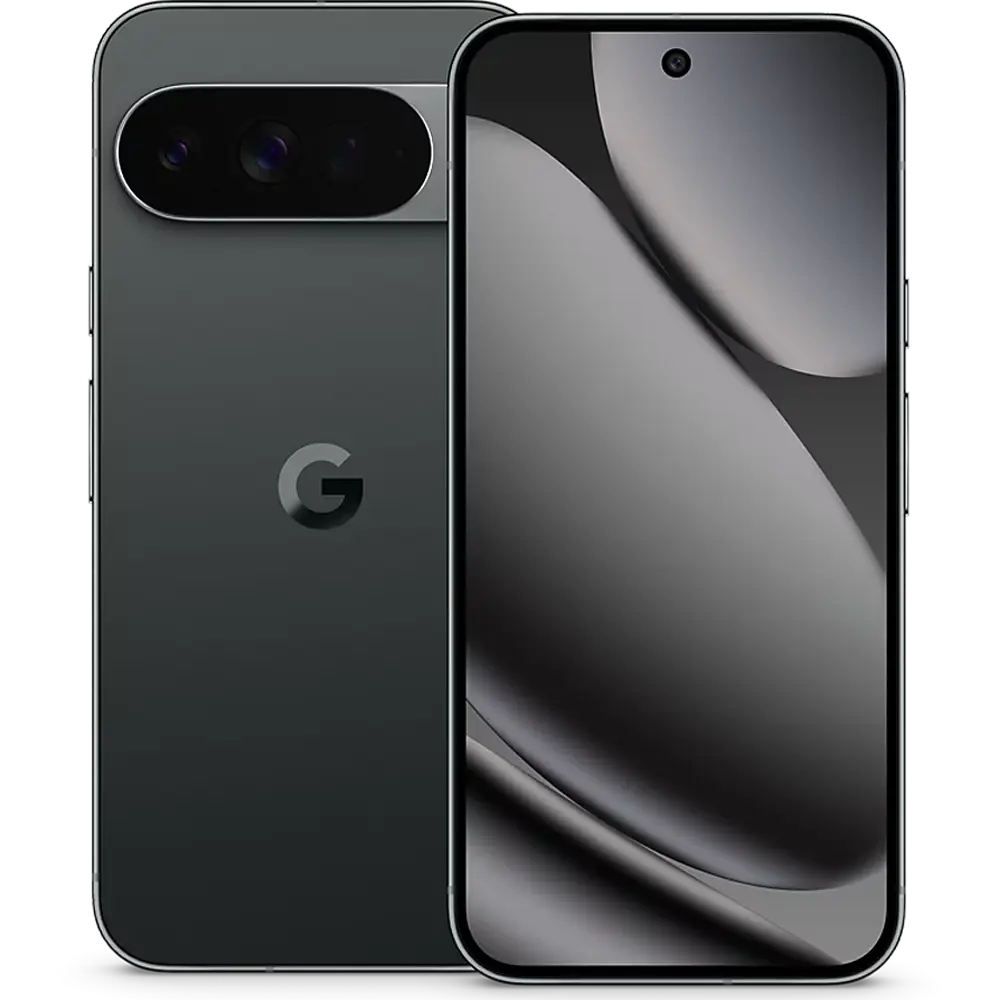
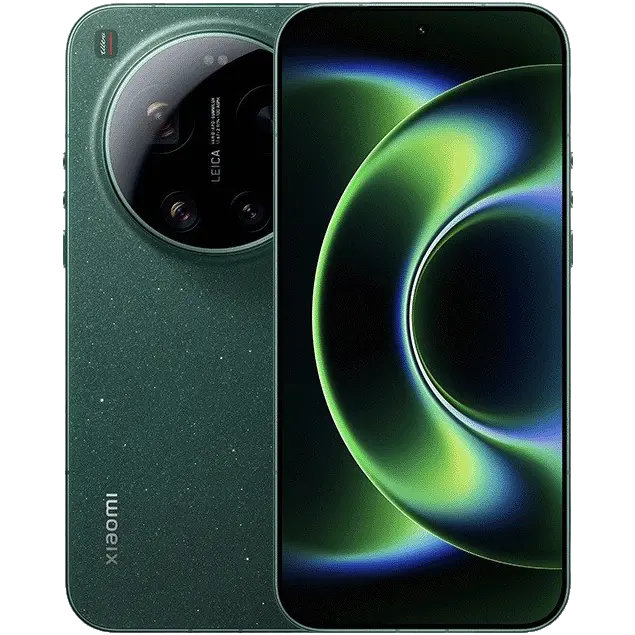
Google Pixel 10 Pro XL vs Xiaomi 17 Ultra
Xiaomi
Pixel 10 Pro XL
17 Ultra
Ranked #38 of 59
Ranked #9 of 59
Overall
Overall

The Xiaomi 17 Ultra is designed to be the ultimate camera phone — but the Pixel series, currently headlined by the Google Pixel 10 Pro XL, has also long been loved for camera quality. The Pixel 10 Pro XL is Google's flagship, built around computational photography and deep software integration. The Xiaomi 17 Ultra is Xiaomi's most ambitious phone, pairing high-end hardware across the board with a camera system designed to compete with the best.
The Xiaomi 17 Ultra is the stronger phone in raw performance, camera quality, and charging speed. The Pixel 10 Pro XL fights back with a superior display, better standby battery efficiency, and a microphone that records cleaner audio. The camera gap is nuanced. The Xiaomi device leads across most lenses, especially the telephoto and ultrawide, while the Pixel holds its own with main camera sharpness and keeps pace in some conditions.
Here’s how the Google Pixel 10 Pro XL and the Xiaomi 17 Ultra compare in our testing.
Design
The Pixel 10 Pro XL has a 6.8-inch display in a body weighing 232g. The Xiaomi 17 Ultra uses a slightly larger 6.9-inch panel but comes in lighter at 218.4g. Both phones carry IP68 water and dust resistance, meaning submersion in fresh water to rated depths. The Xiaomi adds IP69 certification though, which covers high-pressure, high-temperature water jets.
The Pixel's display runs at a 1344 x 2992 resolution with a screen-to-body ratio and aspect ratio that produce a tall, narrow form factor. The Xiaomi's 1200 x 2608 resolution sits lower in pixel density at 416 PPI compared to the Pixel's 486 PPI. That difference is visible if you look closely at fine text, though at normal viewing distances it's subtle.
Bandicoot Lab doesn't formally test design or durability. Everything in this section is based on published specifications.
Display
| Google Pixel 10 Pro XL | Xiaomi 17 Ultra | |
|---|---|---|
714/ 881 | 580/ 881 | |
The Pixel 10 Pro XL has the better display by a clear margin. Its manual brightness peaks at 1,435 nits, more than double the Xiaomi 17 Ultra's 621 nits. That's a significant gap for outdoor readability in direct sunlight. HDR peak brightness is close though — the Pixel reaches 3,405 nits and the Xiaomi hits 3,409 nits. Both are excellent for HDR video content.
Sustained brightness is good on both — both devices sustained their brightness over the 30-minute test, and the Xiaomi 17 Ultra, unusually, produced noticeably higher brightness at the end of the test than at the beginning.
Color accuracy is better on the Pixel. In its Natural mode, the Pixel's colors hold tight to the sRGB target with minimal drift. Neutral tones stay neutral, and there's very little visible color shift across the spectrum. The Xiaomi's best mode (Original Color Pro) shows more deviation from reference. You'll notice slightly less faithful color reproduction, particularly in skin tones and saturated hues, though it's still acceptable for a flagship.
Both phones run 120Hz LTPO panels that dynamically adjust refresh rate. Resolution favors the Pixel at 486 PPI versus 416 PPI for the Xiaomi. Touch latency is 15.7ms on the Pixel and 18.2ms on the Xiaomi. That 2.5ms gap is small enough that you won't perceive a difference.
Performance
| Google Pixel 10 Pro XL | Xiaomi 17 Ultra | |
|---|---|---|
416/ 1012 | 884/ 1012 | |
The Pixel 10 Pro XL runs Google's Tensor G5 with 16GB of RAM. The Xiaomi 17 Ultra uses Qualcomm's Snapdragon 8 Elite Gen 5, also with 16GB. The performance gap between these two chipsets is substantial.
In CPU benchmarks, the Xiaomi scores 3,689 single-core and 11,173 multi-core in GeekBench 6. The Pixel manages 2,305 single-core and 6,192 multi-core. That's a 60% single-core advantage and an 80% multi-core advantage for the Snapdragon. In practice, this translates to snappier app launches, faster multitasking, and quicker processing of heavy workloads on the Xiaomi. For typical phone tasks like scrolling, messaging, and light browsing, both phones feel fast enough.
GPU performance is even more lopsided. The Xiaomi's best loop score of 7,217 in Wild Life Extreme nearly doubles the Pixel's 3,314. GPU stability is lower on the Xiaomi at 65.0% versus the Pixel's 79.4%, but even the Xiaomi 17 Ultra’s throttled performance is way higher than the Pixel’s peak performance.
Browser performance, measured by Speedometer, gives the Xiaomi a 24.2 score versus the Pixel's 15.6. Web pages with heavy JavaScript will load faster on the Xiaomi.
Camera
The Xiaomi 17 Ultra is the stronger overall camera system. It scores higher across most lenses, with particular advantages in telephoto, ultrawide, and stabilization. The Pixel 10 Pro XL holds its ground in main camera sharpness and delivers competitive results in good light, but falls behind when the light drops or when you're working with the secondary lenses.
At up to about 50x, the Xiaomi resolves more detail. At 50x in good light, the Xiaomi maintains strong sharpness while the Pixel drops off more steeply. Beyond 60x, the situation reverses. The Pixel's computational zoom processing keeps detail more consistent from 60x through 100x, while the Xiaomi's output degrades rapidly at those extreme magnifications. The Pixel can reach 100x with usable results; the Xiaomi pushes to 120x but produces soft images past 70x or so.
Both phones apply noticeable sharpening to their processed images, though the Xiaomi generally applies less aggressive edge enhancement. The Pixel's sharpening is moderate and rarely objectionable at normal zoom levels.
Main
| Google Pixel 10 Pro XL (Main) | Xiaomi 17 Ultra (Main) | |
|---|---|---|
517/ 722 | 612/ 722 | |
Main camera sharpness is close. Both phones produce high detail in bright and mid lighting, and both hold up well in low light. The Xiaomi edges ahead slightly in low light sharpness, maintaining fine detail where the Pixel softens a touch.
Color character differs though. The Pixel's main camera in auto mode pushes saturation noticeably, producing vivid, punchy images with warm skin tones. Faces tend to look overly warm, and that effect intensifies in mid and low light, where skin tones shift further from accurate. The underlying sensor captures color faithfully in raw, so this is a processing choice. In low light specifically, the Pixel's auto processing introduces a noticeable warm-magenta cast to skin tones, which looks like a white balance correction issue layered on top of the saturation boost.
The Xiaomi's main camera in auto mode is more restrained. Colors are closer to neutral with less saturation push. Skin tones are more accurate across all lighting conditions. In bright light, the Xiaomi shows noticeable skin tone error, but it's still about half the skin tone drift the Pixel shows. In mid and low light, the Xiaomi pulls slightly warm but stays more controlled.
Dynamic range favors the Xiaomi in processed photos. High-contrast scenes retain more shadow detail and highlight information, giving images a greater sense of depth. The Pixel clips highlights more readily, and its tone mapping compresses the range more aggressively. Both phones handle raw capture with comparable dynamic range.
Ultrawide
| Google Pixel 10 Pro XL (Ultrawide) | Xiaomi 17 Ultra (Ultrawide) | |
|---|---|---|
479/ 722 | 666/ 722 | |
The Xiaomi 17 Ultra's ultrawide is one of its standout lenses. Sharpness is high across all lighting conditions, and it holds detail well even in low light. The Pixel's ultrawide is also sharp, but the Xiaomi's advantage here is more pronounced than with the main cameras.
Color on the Xiaomi's ultrawide stays relatively neutral, with near-reference saturation levels across lighting conditions. The Pixel's ultrawide pushes saturation harder in auto mode and introduces significant hue shifts in low light. In dark conditions, the Pixel's ultrawide shows substantial color drift with both warm and magenta shifts, suggesting the white balance correction is struggling with the warmer test illuminant. The Xiaomi handles the same low-light conditions with much less color drift.
Dynamic range on the Xiaomi's ultrawide is excellent. It pulls in considerably more shadow and highlight detail than the Pixel's ultrawide in processed shots. The gap here is meaningful for landscape or architectural shooting where you're dealing with bright skies and dark foregrounds.
Telephoto
| Google Pixel 10 Pro XL (Telephoto) | Xiaomi 17 Ultra (Telephoto) | |
|---|---|---|
471/ 722 | 722/ 722 | |
The Xiaomi 17 Ultra's telephoto is the bigger differentiator between these two phones. Sharpness is high through 30x, and it maintains usable detail at 40x and 50x. The Pixel's telephoto is sharp at native zoom and at 10x, but resolution drops faster as you push beyond that.
At 20x, the Xiaomi resolves roughly twice the detail of the Pixel. At 30x, the Xiaomi still produces clean, detailed images while the Pixel starts to rely heavily on computational upscaling. The Pixel's deep zoom processing keeps output more consistent at extreme magnifications past 60x, but by that point both phones are producing soft images.
Color accuracy on the Xiaomi's telephoto is significantly better. Skin tones stay closer to reference across all lighting conditions, with roughly half the skin tone error of the Pixel in bright and mid light. The Pixel's telephoto pushes saturation hard and drifts warm on skin tones in good light; in low light, it introduces strong warm-magenta hue errors that look like a combination of white balance overcorrection and sensor-level hue confusion.
The Xiaomi also captures a wider dynamic range in telephoto shots. Video stabilization is noticeably better controlled on the Xiaomi's telephoto, which matters for handheld video at longer focal lengths.
Front
| Google Pixel 10 Pro XL (Front) | Xiaomi 17 Ultra (Front) | |
|---|---|---|
347/ 722 | 470/ 722 | |
The Xiaomi 17 Ultra has a better front camera overall, though the Pixel 10 Pro XL has its own advantages here.
The Pixel's front camera is sharper in both bright and mid lighting. In low light, the gap narrows, but the Pixel still resolves more detail. The Xiaomi's front camera delivers lower sharpness across the board.
Color accuracy on the front camera favors the Xiaomi. Skin tones are more accurate, and the overall color drift is lower across lighting conditions. The Pixel's front camera pushes saturation and introduces a strong warm-yellow cast, particularly in mid light, where the processing aggressively warms the image. In low light, the Pixel's front camera shows dramatic hue errors with a heavy magenta-warm shift. The Xiaomi's front camera stays more controlled, with modest skin tone errors and less white balance drift as lighting gets warmer.
Dynamic range is substantially better on the Xiaomi's front camera in processed photos. Self-portraits in challenging backlit situations will retain more detail in both the face and background. Video stabilization from the front camera is also better controlled on the Xiaomi.
Battery
| Google Pixel 10 Pro XL | Xiaomi 17 Ultra | |
|---|---|---|
492/ 799 | 520/ 799 | |
The Xiaomi 17 Ultra packs a 6,000mAh battery to the Pixel 10 Pro XL's 5,200mAh. That 800mAh difference shows up clearly in some tests but not all.
Video playback is where the Xiaomi's larger battery pays off. It lasts 30 hours and 59 minutes at 200 nits brightness, compared to 23 hours and 19 minutes for the Pixel. That's a roughly 33% advantage.
Web browsing drain over a 5-hour test is nearly identical though — 25% on the Pixel, 26% on the Xiaomi. For typical mixed use with browsing, messaging, and social media, battery life will feel very similar between these two phones.
Gaming drain diverges. The Pixel loses 27% during the one-hour gaming stress test, while the Xiaomi drops 31%. The Xiaomi's more powerful GPU draws more power under heavy graphical load, which offsets some of the battery capacity advantage. Extended gaming sessions will drain both phones at a similar rate relative to their total capacity.
Standby drain is where the Pixel has a clear win. It loses just 2% overnight across 8 hours, compared to 9% on the Xiaomi. If you leave your phone unplugged overnight, you'll wake up with meaningfully more charge on the Pixel. Over a weekend away from a charger, that difference compounds.
Charging
| Google Pixel 10 Pro XL | Xiaomi 17 Ultra | |
|---|---|---|
403/ 837 | 568/ 837 | |
The Xiaomi 17 Ultra charges at 90W wired and 50W wireless. The Pixel 10 Pro XL charges at 45W wired and 15W wireless with magnetic alignment, which supports Qi2-compatible chargers for easy dock-and-go alignment.
Wired charging speed favors the Xiaomi across the board. At 10 minutes, the Xiaomi reaches 32% versus 25% on the Pixel. At 30 minutes, it's 77% versus 70%. The Xiaomi's lead is consistent but not enormous. Both phones get to a usable charge level quickly enough that a quick top-up before leaving the house covers most situations.
Wireless charging shows a wider gap. The Xiaomi reaches 19% in 10 minutes and 45% in 30 minutes. The Pixel manages 12% in 10 minutes and 39% in 30 minutes. The Xiaomi's 50W wireless is more than three times the Pixel's rated wireless speed, and the real-world results reflect that advantage. The Pixel's magnetic alignment makes wireless charging more convenient to set up, but it's a slower charge once connected.
Speaker
| Google Pixel 10 Pro XL | Xiaomi 17 Ultra | |
|---|---|---|
645/ 897 | 701/ 897 | |
The Pixel 10 Pro XL is louder, reaching 75.8 dBA max volume compared to the Xiaomi 17 Ultra's 71 dBA. That's a noticeable difference. If you regularly watch videos or take calls on speaker in noisy environments, the Pixel has the edge.
The Xiaomi produces cleaner audio with lower distortion. Its average total harmonic distortion (a measure of how much the audio signal is corrupted at volume) is 5.3%, roughly half the Pixel's 10.1%. At high volumes, the Pixel's audio is more likely to sound strained or harsh.
The two phones have different tonal characters. The Xiaomi has fuller bass response and a cleaner overall sound, but its high-end clarity is less pronounced. The Pixel trades off cleanliness for stronger high-frequency detail, which makes dialogue and vocals more present. If you prefer a warmer, smoother sound, the Xiaomi is the better speaker. If you want louder output with more vocal presence, the Pixel does that.
Microphone
| Google Pixel 10 Pro XL | Xiaomi 17 Ultra | |
|---|---|---|
713/ 1220 | 605/ 1220 |
The Pixel 10 Pro XL records cleaner audio with less variation across the frequency range. Its microphone output is more balanced, making it a better choice for voice memos, video recording, and calls in varied environments. The Xiaomi 17 Ultra's microphone is above average but shows slightly more uneven frequency response. Both phones are competent, but the Pixel is the stronger choice if audio recording quality matters to you.
Other
| Google Pixel 10 Pro XL | Xiaomi 17 Ultra | |
|---|---|---|
| Biometrics | 491/ 1181 | 552/ 1181 |
| Data Transfer | 263/ 877 | 877/ 877 |
Both phones use ultrasonic fingerprint sensors. The Xiaomi unlocks at an average of 190.3ms, and the Pixel at 213.9ms. That 24ms gap is fast enough on both phones that you won't feel a meaningful difference in daily use. Neither phone has hardware-based face unlock.
Data transfer speeds heavily favor the Xiaomi 17 Ultra, thanks to its USB-C 3.2 Gen 2 port. Large file reads hit 440 MB/s on the Xiaomi versus 105 MB/s on the Pixel. Writes are 342 MB/s versus 131 MB/s. Small file performance follows the same pattern. If you regularly move large files to and from your phone, the Xiaomi is roughly four times faster for reads. Both phones come with 16GB of RAM. Storage configurations vary by market.
Conclusion
The Xiaomi 17 Ultra is the more capable phone in the areas that typically define flagships, like performance, camera system, charging speed, and data transfer. Its Snapdragon 8 Elite Gen 5 delivers significantly more processing power, its telephoto and ultrawide cameras are clearly superior, and its 90W wired charging gets you back to full faster. The camera advantage is most pronounced in telephoto shooting and low-light color accuracy, where the Pixel's aggressive processing works against it.
The Pixel 10 Pro XL wins on display quality and standby efficiency. Its screen is brighter for manual use, holds HDR brightness far more consistently, and reproduces color more accurately. The 2% overnight standby drain versus the Xiaomi's 9% is a real quality-of-life difference. The Pixel also records better audio through its microphone and gets louder from its speakers, though with more distortion. Main camera sharpness is competitive, and the Pixel's deep zoom processing holds up better at extreme magnifications past 60x.
If you prioritize camera versatility, raw power, and fast charging, the Xiaomi 17 Ultra justifies its higher price. If you value a better display, efficient battery management, and tight integration with Google's software ecosystem, the Pixel 10 Pro XL delivers those strengths at $300 less. Neither phone is a clear overall winner. It depends on what you use a phone for.
Related
Pixel 10 Pro XL
Xiaomi
17 Ultra
Xiaomi
17T Pro
Xiaomi
17
Pixel 11 Pro XL
Xiaomi
15T Pro
Pixel 11 Pro
Pixel 11
Pixel 11 Pro Fold
Pixel 10 Pro Fold
Pixel 10a
Best Phones