Apple iPhone 17 Pro Max vs Xiaomi 17 Ultra
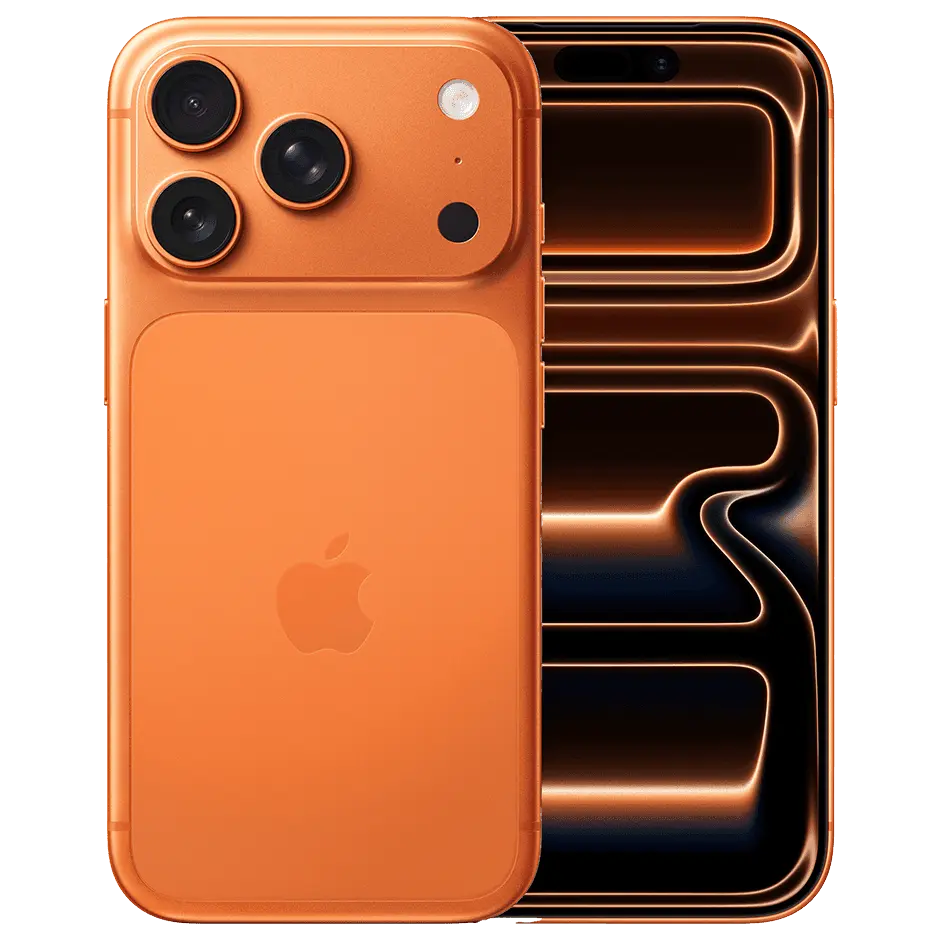
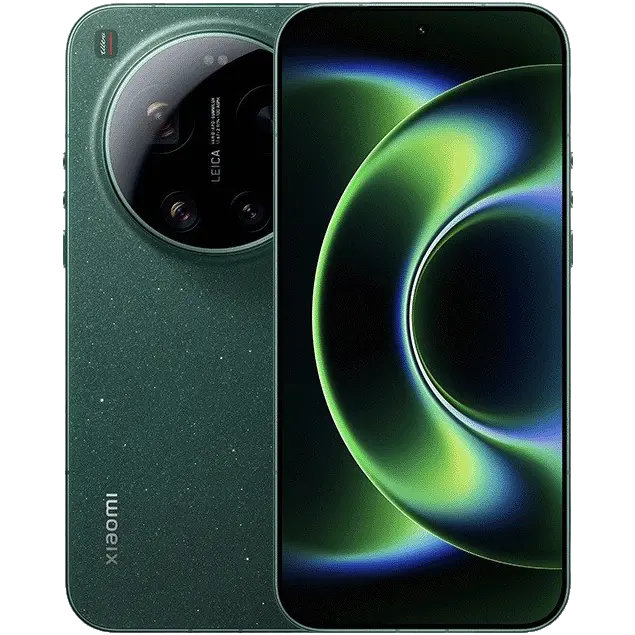
Apple’s iPhone 17 Pro Max offers a new design, new camera system, and more. But, it’s not the only phone that focuses on the camera. The Xiaomi 17 Ultra is also built around camera tech — and it even has mechanical zoom on the telephoto lens. At $1,199 versus €1,499, the iPhone is the more affordable option by a meaningful margin, though both sit firmly in premium territory.
The Xiaomi 17 Ultra is the stronger camera phone. It resolves more detail across all rear lenses, handles zoom far better, and produces more accurate colors. It also charges much faster and offers more raw GPU power. The iPhone 17 Pro Max has a better front camera, longer battery life in most scenarios, louder and clearer speakers, a more color-accurate display, stronger video stabilization, and a superior microphone.
So, is one of these phones actually better than the other? We put the iPhone 17 Pro Max and the Xiaomi 17 Ultra head to head to find out.
Design
| Apple iPhone 17 Pro Max | Xiaomi 17 Ultra | |
|---|---|---|
| Specifications | ||
| Dimensions | 163.4 x 78 x 8.8 mm | 162.9 x 77.6 x 8.3 mm |
| Weight | 233g | 218.4g |
| IP Rating | IP68 | IP68/IP69 |
| Frame | Aluminum | Aluminum |
| Front | Ceramic Shield 2 | Xiaomi Shield Glass 3.0 |
| Back | Ceramic Shield | Fiber-reinforced plastic / Vegan leather |
| Screen-to-body ratio | 91.7% | 92.1% |
The iPhone 17 Pro Max and Xiaomi 17 Ultra are both 6.9-inch phones with IP68 water resistance, USB-C 3.2 Gen 2 ports, and 120Hz LTPO OLED panels. The Xiaomi adds an IP69 rating, meaning it's tested against high-pressure, high-temperature water jets in addition to the standard submersion depth of IP68.
The iPhone weighs 233g, while the Xiaomi is lighter at 218.4g. That's a small difference when holding a phone this size for extended periods. The iPhone uses an aluminum frame with Apple’s Ceramic Shield front glass. The Xiaomi uses an aluminum frame.
Bandicoot Lab does not formally test design or durability. Everything described here is based on published specifications.
Display
| Apple iPhone 17 Pro Max | Xiaomi 17 Ultra | |
|---|---|---|
627/ 845 | 580/ 845 | |
Both phones have 6.9-inch LTPO OLED panels running at 120Hz, but the similarities mostly end there.
The iPhone 17 Pro Max reaches 857 nits of manual brightness. The Xiaomi 17 Ultra tops out at 621 nits manually. For outdoor use without HDR content, the iPhone is brighter under direct control. At the dim end, the iPhone goes as low as 1.02 nits versus 1.23 nits for the Xiaomi. Both are good for dark-room use.
HDR brightness is where the Xiaomi pulls ahead. It peaks at 3,409 nits compared to the iPhone's 2,976 nits. The more meaningful gap is in sustained brightness: the Xiaomi holds 98.2% of its peak luminance over 30 minutes of HDR playback. The iPhone drops dramatically to 37.7%. In practice, the iPhone's HDR highlights will dim significantly during sustained use, while the Xiaomi maintains its peak for our full 30-minute test.
Color accuracy favors the iPhone. In its default mode, it averages a very low color error with 99.97% sRGB coverage. Colors are essentially reference-grade. Neutral tones stay neutral — there's no visible warm or cool cast. The Xiaomi's best mode (Original Color Pro) shows moderate color drift, with errors roughly double the iPhone's. In its Vivid mode, errors are higher still.
Touch latency is dramatically different though. The iPhone averages 52.4ms, while the Xiaomi comes in at 18.2ms. That gap is large enough to be perceptible during fast-paced gaming or rapid scrolling.
Performance
| Apple iPhone 17 Pro Max | Xiaomi 17 Ultra | |
|---|---|---|
906/ 1012 | 884/ 1012 | |
The iPhone 17 Pro Max runs Apple's A19 Pro with 12GB of RAM. The Xiaomi 17 Ultra uses Qualcomm's Snapdragon 8 Elite Gen 5 with 16GB of RAM.
In CPU benchmarks, the iPhone scores 3,852 single-core and 9,872 multi-core on GeekBench 6. The Xiaomi scores 3,689 single-core and 11,173 multi-core. The iPhone has a slight single-core advantage. The Xiaomi's higher multi-core score means it handles heavily threaded tasks — video export, background processing — somewhat faster. In daily use, you won't feel this difference.
GPU performance favors the Xiaomi. In Wild Life Extreme, the Xiaomi's best loop hits 7,217 versus the iPhone's 5,828. Stability is close — 65% for the Xiaomi, 73.1% for the iPhone. The iPhone throttles less over time but starts from a lower peak. In Solar Bay, the Xiaomi again peaks higher (12,680 vs 11,777) with similar stability (70.9% vs 69.1%), but drains twice as much battery doing it: 12% versus 6%.
Browser performance is a clear iPhone win. Its Speedometer score of 41.8 nearly doubles the Xiaomi's 24.2. Web pages with complex JavaScript will render and respond faster on the iPhone.
Camera
| Apple iPhone 17 Pro Max (Overall) | Xiaomi 17 Ultra (Overall) | |
|---|---|---|
| Specifications | ||
| Main | 48MP, f/1.78, 24mm, 1/1.28" | 50MP, f/1.7, 23mm, 1" |
| Ultrawide | 48MP, f/2.8, 13mm, 1/2.55" | 50MP, f/2.2, 14mm, 1/2.76" |
| Telephoto | 48MP, f/2.8, 100mm, 1/2.55" | 200MP, f/2.4, 100mm, 1/1.4" |
| Front | 18MP, f/1.9, 20mm | 50MP, f/2.2, 21mm, 1/2.7" |
The Xiaomi 17 Ultra is the stronger camera system overall. It resolves more detail from its main, ultrawide, and telephoto lenses across all lighting conditions, produces more accurate color, and handles deep zoom better. The iPhone 17 Pro Max has the better front camera by a wide margin and stronger video stabilization on every lens, though. Both phones produce good images, but the Xiaomi's rear cameras are a tier above.
At deep zoom levels, the gap is substantial. At 30x, the Xiaomi resolves roughly 2.5 times the detail of the iPhone in bright light. At 40x, it's still producing usable detail where the iPhone's output is soft. The Xiaomi extends to 120x with diminishing but still recognizable results. The iPhone tops out around 40x before detail falls off sharply.
Main
| Apple iPhone 17 Pro Max (Main) | Xiaomi 17 Ultra (Main) | |
|---|---|---|
579/ 722 | 612/ 722 | |
In bright light, both phones produce sharp 1x images, with the Xiaomi resolving slightly more detail. The gap widens in mid and dark lighting, where the Xiaomi maintains high sharpness while the iPhone relies more heavily on processing to compensate for its sensor's lower output.
Color is where the phones diverge most. The iPhone's main camera pushes saturation significantly in processed shots. In bright light, colors are vivid and oversaturated, with skin tones drifting noticeably warm and yellow. As lighting gets warmer, a strong yellow-warm bias emerges in the processing pipeline, suggesting a white balance correction issue rather than a sensor limitation. Faces in indoor lighting look too warm. The Xiaomi's main camera renders colors closer to life. In bright light it slightly oversaturates, but skin tones stay much closer to accurate. In mid and dark light, it shows a mild warm shift, but roughly half the magnitude of the iPhone's.
Dynamic range is close between the two in processed images, with the Xiaomi pulling slightly more shadow detail without clipping highlights as aggressively. The iPhone's processing compresses tones more, which can flatten high-contrast scenes. Both retain good highlight and shadow information, but the Xiaomi's rendering looks more natural in contrasty situations.
Ultrawide
| Apple iPhone 17 Pro Max (Ultrawide) | Xiaomi 17 Ultra (Ultrawide) | |
|---|---|---|
505/ 722 | 666/ 722 | |
The Xiaomi's ultrawide resolves high detail across all lighting conditions, staying close to its own main lens in sharpness. The iPhone's ultrawide is good but drops off more from its main lens performance, particularly in mid and dark lighting.
Color accuracy is better on the Xiaomi 17 Ultra’s ultrawide camera. The iPhone's ultrawide processing produces a vivid, slightly oversaturated look in bright light but develops a noticeable warm-yellow cast in mid and dark conditions. The Xiaomi keeps its ultrawide colors consistent across lighting, with only mild oversaturation in dark conditions and no significant hue shifts.
The Xiaomi's ultrawide captures a broad range from shadows to highlights with minimal clipping. The iPhone's ultrawide clips highlights more readily and captures less total scene depth.
Telephoto
| Apple iPhone 17 Pro Max (Telephoto) | Xiaomi 17 Ultra (Telephoto) | |
|---|---|---|
628/ 722 | 722/ 722 | |
The Xiaomi 17 Ultra's telephoto is a standout, thanks to its variable zoom. At 4x magnification, it resolves extremely high detail, close to its main lens performance. Through 10x, it maintains strong sharpness where the iPhone's telephoto has already dropped considerably. At 20x, the Xiaomi still resolves roughly three times the detail of the iPhone.
Color from the Xiaomi's telephoto is well-controlled. It slightly oversaturates in bright light but keeps skin tones close to accurate across all conditions. The iPhone's telephoto pushes saturation harder and introduces significant skin tone errors, with faces appearing too warm and yellow. In mid light, the iPhone's telephoto develops a pink-warm cast alongside the warm bias, which looks unnatural.
Dynamic range from the iPhone's telephoto is broader in processed images, capturing more total highlight-to-shadow information. The Xiaomi clips highlights earlier but compresses less aggressively, producing a more natural tonal distribution.
Video stabilization is better on the iPhone. Its telephoto video is very well-stabilized, while the Xiaomi's telephoto shoots with noticeably more residual motion.
Front
| Apple iPhone 17 Pro Max (Front) | Xiaomi 17 Ultra (Front) | |
|---|---|---|
703/ 722 | 470/ 722 | |
The iPhone 17 Pro Max has the better front camera. It resolves substantially more detail in all lighting conditions. The Xiaomi's front camera produces adequate selfies but lacks the sharpness the iPhone achieves.
Color from the iPhone's front camera is vivid and oversaturated in bright light, with skin tones pushed warm. As light gets dimmer and warmer, the processing adds a warm-pink cast, similar to the rear cameras. The Xiaomi's front camera is slightly desaturated in most conditions, rendering skin tones that look a bit flat but closer to neutral. Neither is perfect, but the Xiaomi's errors are smaller in magnitude.
Dynamic range from the iPhone's front camera is strong, pulling good detail from both shadows and highlights in high-contrast selfie scenarios. The Xiaomi's front camera compresses more aggressively.
Video stabilization from the front camera is better on the iPhone.
Battery
| Apple iPhone 17 Pro Max | Xiaomi 17 Ultra | |
|---|---|---|
617/ 799 | 520/ 799 | |
The Xiaomi 17 Ultra has a 6,000mAh battery. The iPhone 17 Pro Max has a 5,088mAh cell. Battery life results are mixed despite the capacity difference.
In video playback at 200 nits, the Xiaomi lasts 30 hours and 59 minutes. The iPhone lasts 23 hours and 58 minutes. For video-heavy users, the Xiaomi has a clear advantage.
The iPhone drains less battery when browsing the web though. Over a 5-hour standardized web test, the iPhone drained 21% versus the Xiaomi's 26%. Gaming drain also favors the iPhone — 25% drain during the GPU stress test versus 31% for the Xiaomi. The iPhone's more efficient thermal management during gaming means longer gaming sessions.
Standby is dramatically different. The iPhone loses just 2% in an 8-hour idle test. The Xiaomi loses 9%. The Xiaomi is better for passive media consumption. The iPhone is better for active use and standby, where its drain is lower across both.
Charging
| Apple iPhone 17 Pro Max | Xiaomi 17 Ultra | |
|---|---|---|
420/ 837 | 568/ 837 | |
The Xiaomi 17 Ultra charges at 90W wired and 50W wireless. The iPhone 17 Pro Max charges at 40W wired and 25W wireless, with MagSafe magnetic alignment.
At 10 minutes on the wire, the Xiaomi reaches 32% versus the iPhone's 29%. It’s a small gap, but the Xiaomi has already banked more energy given its larger battery. At 30 minutes, the difference is more pronounced — 77% for the Xiaomi and 67% for the iPhone. For a quick charge before heading out, the Xiaomi gets meaningfully further in the same time.
Wireless charging speeds are close between the two, with the iPhone slightly ahead, sitting at 20% at 10 minutes and 47% at 30 minutes versus the Xiaomi's 19% and 45%.
Speaker
| Apple iPhone 17 Pro Max | Xiaomi 17 Ultra | |
|---|---|---|
| — | 701/ 857 | |
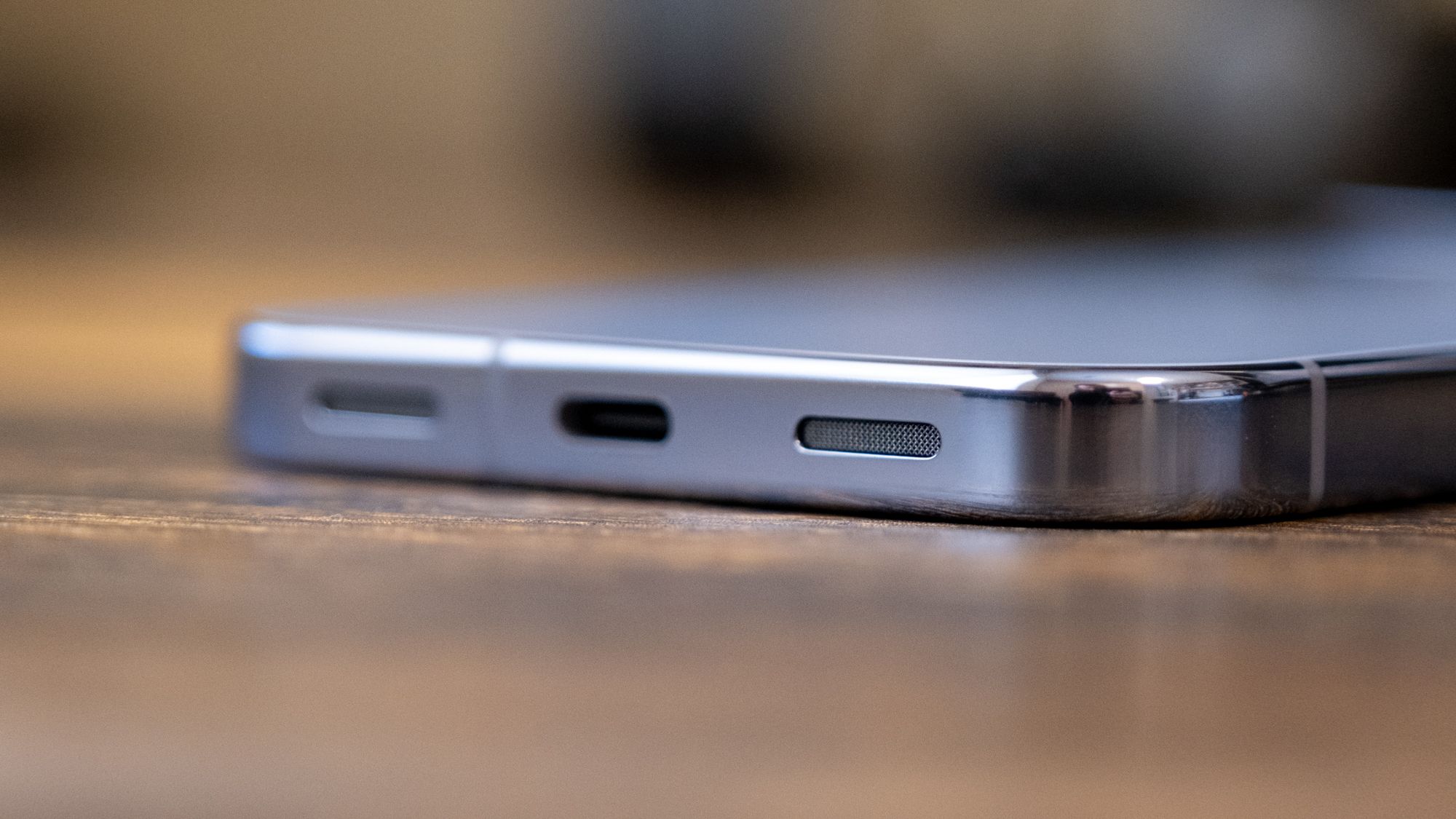
The iPhone 17 Pro Max is the louder speaker at 74.6 dBA maximum versus the Xiaomi's 71 dBA. That's an audible difference, particularly when trying to fill a room or use the phone as a speaker in a noisy environment.
The Xiaomi has lower distortion at 5.3% average THD compared to the iPhone's 8.9%. At high volumes, the Xiaomi sounds cleaner where the iPhone starts to sound slightly strained.
The iPhone emphasizes clarity and upper frequencies. Its high-end reproduction is crisp and well-defined, which makes dialogue and vocals stand out. It also has fuller bass than the Xiaomi. The Xiaomi is smoother and cleaner in its midrange but lacks the same high-frequency detail and low-end punch. For music and podcasts, the iPhone is the more engaging speaker. The Xiaomi is less fatiguing for longer listening but sounds thinner overall.
Microphone
| Apple iPhone 17 Pro Max | Xiaomi 17 Ultra | |
|---|---|---|
885/ 1220 | 605/ 1220 |
The iPhone 17 Pro Max has a notably better microphone. Its frequency response is more even, with less variation across the audible range. Voice recordings and video audio will sound more natural and consistent. The Xiaomi's microphone is adequate for calls and voice memos, but its less even frequency response can make recordings sound slightly colored.
Other
| Apple iPhone 17 Pro Max | Xiaomi 17 Ultra | |
|---|---|---|
| Biometrics | 215/ 1181 | 552/ 1181 |
| Data Transfer | 582/ 877 | 877/ 877 |
| Specifications | ||
| Biometric type | Face Recognition | Fingerprint |
| Ports | USB-C 3.2 Gen 2 | USB-C 3.2 Gen 2 |
| Storage | 256GB, 512GB, 1TB, 2TB | 512GB, 1TB |
Biometrics differ significantly between these phones. The Xiaomi 17 Ultra uses an ultrasonic fingerprint sensor that unlocks in an average of 190ms. The iPhone 17 Pro Max has no fingerprint sensor — it relies on Face ID, which averages 488ms. The iPhone's face unlock is secure and hands-free, but it's measurably slower than the Xiaomi's fingerprint. The Xiaomi has no hardware-based face unlock.
Data transfer speeds are higher on the Xiaomi 17 Ultra. Both use USB-C 3.2 Gen 2, but the Xiaomi reads large files at 440 MB/s and writes at 342 MB/s. The iPhone reads at 304 MB/s and writes at 239 MB/s. For moving large video files to a computer, the Xiaomi is roughly 40% faster. Small file performance is mixed though. The Xiaomi reads small files much faster (70 MB/s vs 14 MB/s) but writes at a similar speed to the iPhone.
The iPhone is available in 256GB, 512GB, and 1TB configurations. The Xiaomi is available in 256GB and 512GB options. Neither has expandable storage.
Conclusion
The Xiaomi 17 Ultra is the better phone for photography. Its rear cameras resolve more detail, produce more accurate colors, and handle zoom scenarios the iPhone can't match. It charges faster, has more raw GPU power for gaming, responds to touch input faster, and maintains its HDR brightness without thermal throttling. Its larger battery also lasts longer for video playback.
The iPhone 17 Pro Max delivers a stronger front camera, video stabilization that's a generation ahead, better battery efficiency during active use and standby, a louder and more full-bodied speaker, a better microphone, and a more color-accurate display. Browser performance is nearly double the Xiaomi's. It also costs less.
If rear camera quality and charging speed are the priority, the Xiaomi justifies its higher price. If a more balanced device with better efficiency, stronger front-facing capabilities, a more accurate display, and tighter ecosystem integration matters more, the iPhone is the more complete package for less money.
Related
Apple
iPhone 17 Pro Max
Xiaomi
17 Ultra
Xiaomi
17T Pro
Xiaomi
17
Xiaomi
15T Pro
Apple
iPhone 17e
Best Phones
Best Android Phones
iPhone 17 vs iPhone 17 Pro vs iPhone 17 Pro Max vs iPhone Air
iPhone 17 Series vs Xiaomi 17 Series
How we test speakers and microphones

Samsung Galaxy S26 Series vs Xiaomi 17 Series