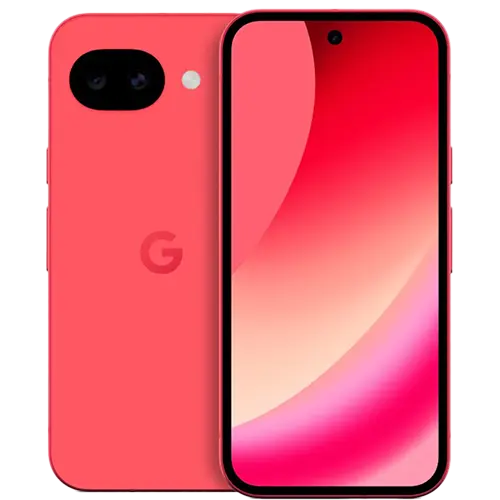
Samsung Galaxy S26 vs Google Pixel 10
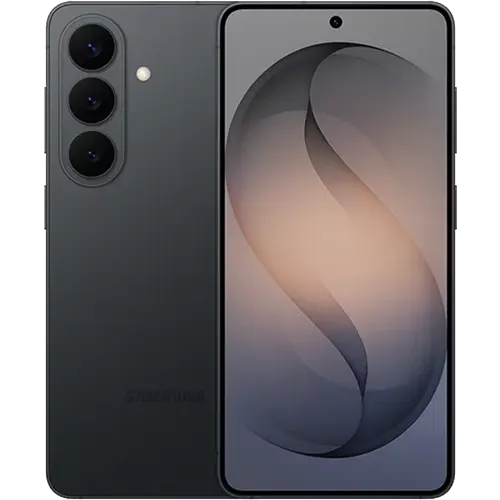
Samsung
Galaxy S26
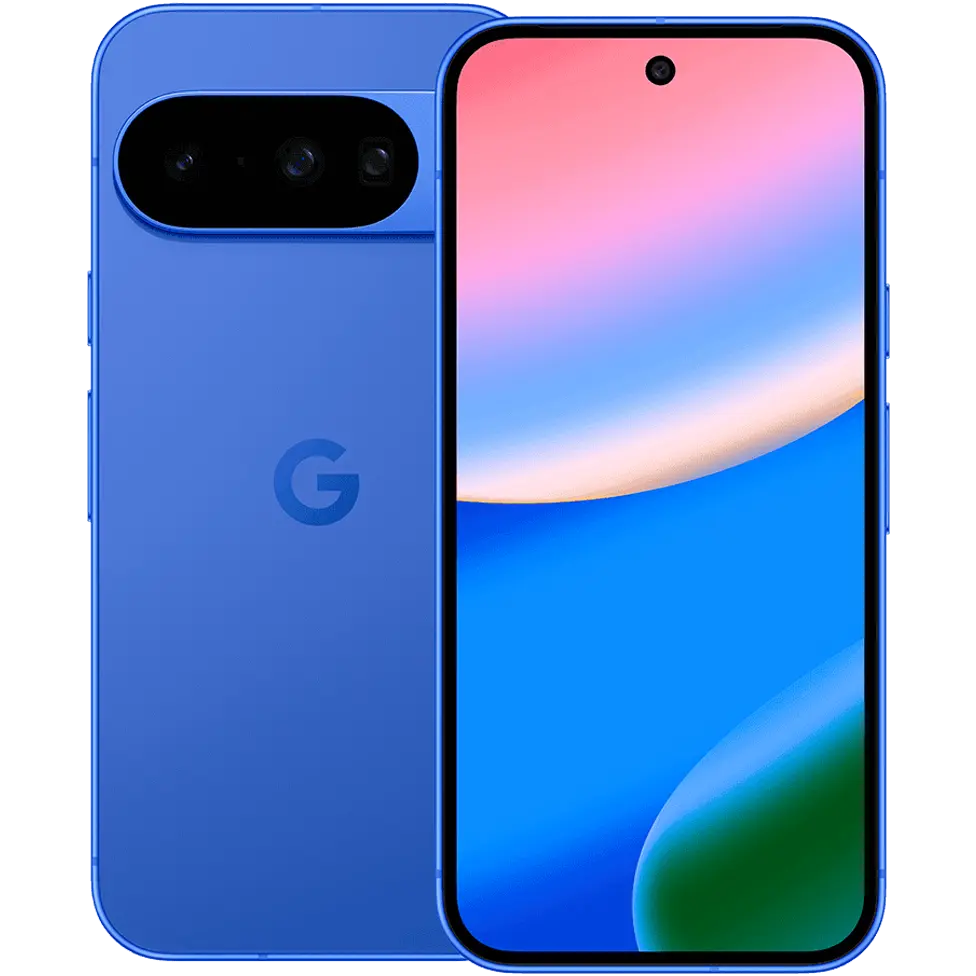
Pixel 10
Ranked #20 of 59
Ranked #46 of 59
Overall
Overall
The Samsung Galaxy series is almost synonymous with Android for many people, which is somewhat ironic given the fact that Android is developed by Google, which has its own phones. The Galaxy S26 is Samsung's latest base model flagship, and it goes head to head with Google's own Pixel 10. At $899.99, the Galaxy S26 is a little more expensive than previous models and $100 more than the Pixel 10, which comes in at $799.99.
The S26 pulls ahead in processing power, speaker quality, and camera versatility. Its telephoto and ultrawide lenses produce more consistent results across lighting conditions, and its Snapdragon chipset delivers substantially more compute headroom. The Pixel 10 counters with a brighter, more color-accurate display, better battery life relative to its charging speed, stronger main camera sharpness in some conditions, and magnetic wireless charging. Neither phone dominates across the board. Here’s how the two devices compare.
Design
| Samsung Galaxy S26 | Google Pixel 10 | |
|---|---|---|
| Specifications | ||
| Dimensions | 149.6 x 71.7 x 7.2 mm | 152.8 x 72 x 8.6 mm |
| Weight | 167g | 204g |
| IP Rating | IP68 | IP68 |
| Frame | Aluminum | Aluminum |
| Front | Gorilla Glass Victus 2 | Gorilla Glass Victus 2 |
| Back | Gorilla Glass Victus 2 | Glass |
| Screen-to-body ratio | 90.8% | 86.5% |
The Galaxy S26 and Pixel 10 both have a 6.3-inch screen size, IP68 water resistance rating (submersible to 1.5 meters for 30 minutes), and USB-C 3.2 port. Their physical differences are more pronounced than you'd expect from two phones with the same display diagonal.
The S26 weighs 167 grams. The Pixel 10 comes in at 204 grams, a 37-gram difference that's easy to feel in hand. That's roughly the weight of seven coins in your pocket. Both use aluminum frames, but their aspect ratios differ — the S26's 1080 x 2340 resolution gives it a slightly shorter, wider profile than the Pixel 10's 1080 x 2424 panel. The Pixel's taller aspect ratio means a narrower body for the same screen width, which can matter for one-handed use.
Bandicoot Lab doesn't formally test design or durability, so observations about build quality or in-hand feel would be speculative.
Display
| Samsung Galaxy S26 | Google Pixel 10 | |
|---|---|---|
512/ 881 | 598/ 881 | |
Both phones use 120Hz OLED panels at a 1080p resolution, and actual pixel density is almost identical, with the Galaxy S26 at 411 pixels per inch and the Pixel 10 at 422 PPI. The two devices diverge meaningfully on brightness and color accuracy.
The Pixel 10 reaches 1,496 nits of typical brightness, more than double the S26's 641 nits. This is the brightness you can set yourself using the slider. In direct sunlight, that gap is visible. For HDR content (where brightness is measured in short, narrow bright windows rather than held over time), the S26 peaks at 2,791 nits versus the Pixel 10's 3,089 nits. The Pixel 10 holds its HDR brightness better over window sizes, offering 65.4% stability compared to the S26's 51.7%. Both phones sustain their brightness over time well, with the S26 at 98.7% stability and the Pixel 10 at 97.7%. In other words, while they can't offer their peak brightness at full-screen window sizes, they can maintain their peak brightness for long periods of time in smaller sizes.
Color accuracy favors the Pixel 10 by a wide margin. In its Natural mode, colors stay very close to reference with minimal drift across the spectrum. The S26's Natural mode shows moderate color inaccuracy, with neutral tones and saturated patches drifting noticeably from their targets. Its Vivid mode pushes wider gamut coverage (83.5% of Display P3 versus the Pixel's 72.3% of Display P3 in Natural mode) but accuracy suffers further. If color fidelity matters for photo editing or content creation, the Pixel 10 is substantially closer to reference.
Touch latency is effectively the same at 21.8ms for the Galaxy S26 and 22.6ms for the Pixel 10. You won't perceive that 0.8ms difference.
Performance
| Samsung Galaxy S26 | Google Pixel 10 | |
|---|---|---|
833/ 1012 | 403/ 1012 | |
The S26 runs Qualcomm's Snapdragon 8 Elite Gen 5 with 12GB of RAM. The Pixel 10 uses Google's Tensor G5, also with 12GB. The performance gap between these two chipsets is large though.
In GeekBench 6, the Galaxy S26 scores 3,709 single-core and 11,232 multi-core. The Pixel 10 manages 2,271 single-core and 6,137 multi-core. That's a 63% single-core advantage and an 83% multi-core advantage for the S26. You'll feel this in app launch times, multitasking, and any sustained compute task. The browser benchmark is similar — the S26's Speedometer score of 36.7 versus the Pixel 10's 20.3 means noticeably snappier web rendering and JavaScript execution.
GPU performance is similarly lopsided. In the Wild Life Extreme stress test, the Galaxy S26 peaks at 7,740 while the Pixel 10 peaks at 2,955. The S26 runs hotter and throttles more aggressively (45.8% stability versus 68.6%), but even at its throttled floor the S26 still outperforms the Pixel 10's peak. For gaming, the S26 delivers higher frame rates even when thermally constrained.
Camera
| Samsung Galaxy S26 (Overall) | Google Pixel 10 (Overall) | |
|---|---|---|
| Specifications | ||
| Main | 50MP, f/1.8, 24mm, 1/1.56" | 48MP, f/1.7, 25mm, 1/2.0" |
| Ultrawide | 12MP, f/2.2, 13mm, 1/2.55" | 13MP, f/2.2, 14mm, 1/3.1" |
| Telephoto | 10MP, f/2.4, 67mm, 1/3.94" | 10.8MP, f/3.1, 112mm, 1/3.2" |
| Front | 12MP, f/2.2, 23mm, 1/3.2" | 10.5MP, f/2.2, 20mm, 1/3.1" |
The Galaxy S26 has a more complete camera system overall, with stronger telephoto and ultrawide performance. The Pixel 10 holds its own with the main sensor and front camera, producing competitive sharpness and better video stabilization from the primary lens. Both phones struggle with color accuracy in their processed output, in different ways and to different degrees.
At deep zoom levels, the Galaxy S26 maintains usable detail at 20x and 30x, though quality drops substantially beyond 20x. The Google Pixel 10 resolves more detail at 20x in bright and mid lighting but fails to produce usable output at 20x in dark conditions. Neither phone produces sharp results at 30x, though the S26 at least returns a recognizable image.
Main
| Samsung Galaxy S26 (Main) | Google Pixel 10 (Main) | |
|---|---|---|
594/ 722 | 421/ 722 | |
In bright light, the Pixel 10's main camera resolves slightly more detail at 1x than the Galaxy S26. The gap narrows in mid lighting and reverses slightly in dark conditions, where the S26 holds up better. Both phones produce sharp 1x images across all lighting. At 2x crop zoom, the S26 edges ahead in bright light while the Pixel 10 is stronger in dark conditions.
Color character differs noticeably. The S26's main camera produces a vivid, saturated look in bright light with skin tones pushed warm and oversaturated. In mid lighting, saturation is more restrained and skin tones remain slightly warm. In dark conditions, colors become somewhat muted with a slight cool shift. The Pixel 10 pushes saturation much harder across all conditions, producing a punchy, vivid look in bright light with a warm yellow-tinted cast. In mid lighting, the Pixel becomes extremely saturated with noticeable hue errors in skin tones. In dark conditions, it pushes warm and magenta with heavy saturation.
For hue accuracy, the S26's main camera performs better in mid and dark lighting, keeping skin tones closer to natural. The Pixel 10's aggressive processing introduces substantial skin tone errors, particularly in mid lighting where faces drift warm and oversaturated. The Pixel 10's hue problems in darker conditions come with a strong warm bias that increases as color temperature drops, pointing to a white balance correction issue rather than a sensor limitation.
Both hold highlight and shadow detail in high-contrast scenes, with the S26 retaining slightly more gradation in bright highlights.
Ultrawide
| Samsung Galaxy S26 (Ultrawide) | Google Pixel 10 (Ultrawide) | |
|---|---|---|
604/ 722 | 342/ 722 | |
The S26's ultrawide is the stronger performer. It resolves substantially more detail than the Pixel 10's ultrawide across all lighting conditions. The S26's ultrawide is also sharper than most phones' ultrawide lenses relative to their main cameras.
Color on the S26's ultrawide follows a similar pattern to its main lens: vivid and oversaturated in bright light, more restrained in mid and dark conditions. Skin tones in mid lighting drift warm with a noticeable pink push. The Pixel 10's ultrawide produces heavy saturation in bright and mid lighting with a distinct warm yellow cast that intensifies as lighting drops. In dark conditions, the Pixel 10's ultrawide introduces a strong pink/magenta shift with significant hue confusion. This appears driven by a white balance overcorrection that worsens under warmer light sources.
Both retain usable shadow and highlight detail in high-contrast scenes.
Telephoto
| Samsung Galaxy S26 (Telephoto) | Google Pixel 10 (Telephoto) | |
|---|---|---|
568/ 722 | 384/ 722 | |
The S26's telephoto produces more consistent results. At its native zoom, it resolves strong detail in bright and mid lighting, dropping gracefully in dark conditions. The Pixel 10's telephoto also performs well in bright light but loses sharpness faster as light drops. At 5x, the S26 produces cleaner output in bright light, while at 8x both phones deliver similar mid-light sharpness.
The S26's telephoto has the best color accuracy of any lens on either phone. It runs slightly vivid in bright conditions with a mild cool shift, and maintains reasonable accuracy in mid and dark lighting with modest saturation. The Pixel 10's telephoto pushes very saturated and warm in bright light, with skin tones drifting heavily warm. In mid lighting, saturation spikes dramatically with a strong warm yellow cast. In dark conditions, the Pixel 10's telephoto introduces extreme pink/magenta shifts with very high saturation. The warm bias that increases as color temperature drops indicates a white balance correction problem that compounds with the lens's sensor limitations.
Both phones keep highlight detail intact in telephoto shots. The S26 retains slightly more shadow information in high-contrast scenes.
Front
| Samsung Galaxy S26 (Front) | Google Pixel 10 (Front) | |
|---|---|---|
398/ 722 | 380/ 722 | |
The Pixel 10's front camera resolves more detail across all lighting conditions than the S26's. In bright light, both produce sharp selfies, but the Pixel 10 maintains notably higher sharpness in mid and dark conditions where the S26 drops off.
The Pixel 10's front camera applies heavy sharpening in bright light, which adds perceived crispness but creates visible halos around edges. In dark conditions, the Pixel 10's front camera retains unusual amounts of detail.
Color from the S26's front camera leans neutral in bright light with a slight warm cast, shifting to a noticeable pink/magenta push in mid and dark lighting as white balance correction overcompensates. The Pixel 10's front camera runs saturated and warm across all conditions, with a heavy yellow cast in bright and mid lighting. In dark conditions, it introduces an extreme pink/magenta shift with very high saturation. The Pixel 10's front camera color problems are severe in low light.
Both front cameras retain reasonable highlight and shadow detail for selfies. Video stabilization from the front cameras is comparable.
Battery
| Samsung Galaxy S26 | Google Pixel 10 | |
|---|---|---|
579/ 799 | 467/ 799 | |
The Pixel 10 has a larger 4,970mAh battery than the S26's 4,300mAh battery, representing a 16% capacity advantage. The S26's more power-hungry Snapdragon chipset means that capacity gap translates differently depending on the task.
In video playback, the S26 lasts 30 hours and 15 minutes at 200 nits (26 hours 50 minutes at max brightness). The Pixel 10 manages 23 hours and 6 minutes at 200 nits (17 hours 13 minutes at max brightness). The S26's video playback advantage is substantial.
Web browsing drain over five hours is nearly identical though — 24% on the Galaxy S26 versus 23% on the Pixel 10. For typical phone use heavy on scrolling and reading, both phones will get you through a full day with ease.
Gaming is a little different. The S26 drains 27% during the stress test (60 loops of Wild Life Extreme) while the Pixel 10 drains 22%. The S26's more powerful GPU draws more power under load, as you'd expect. Standby drain is close: 2% overnight for the S26 versus 3% for the Pixel 10 over eight hours. Both are efficient enough that overnight drain isn't a concern.
Charging
| Samsung Galaxy S26 | Google Pixel 10 | |
|---|---|---|
263/ 837 | 322/ 837 | |
The S26 charges at 25W wired and 15W wireless. The Pixel 10 charges at 30W wired and 15W wireless with Qi2 magnetic alignment. That magnetic compatibility means the Pixel 10 snaps precisely onto compatible chargers without fumbling for the sweet spot.
Wired charging speeds are similar despite the wattage difference. The S26 reaches 21% in 10 minutes and 58% in 30 minutes. The Pixel 10 hits 20% in 10 minutes and 57% in 30 minutes. The Pixel 10 has a larger battery, so matching these percentages on a bigger cell with only 5W more charging power is more or less a wash in absolute terms. For a quick top-up before heading out, both phones deliver essentially the same experience.
Wireless charging is also close. The Galaxy S26 hits 11% at 10 minutes and 29% at 30 minutes, versus 11% at 10 minutes and 30% at 30 minutes for the Pixel 10. The practical difference is the Pixel 10's magnetic alignment, which makes wireless charging more reliable without looking at the phone. Neither phone charges quickly by flagship standards.
Speaker
| Samsung Galaxy S26 | Google Pixel 10 | |
|---|---|---|
817/ 897 | 781/ 897 | |
The Google Pixel 10 gets louder, hitting 76 dBA maximum volume versus the Galaxy S26's 72.5 dBA. That's a noticeable difference in a noisy room or when you're playing a video across the kitchen.
The S26 produces cleaner audio at high volume with substantially less distortion (3.4% average THD versus 6.3% on the Pixel 10). If you push either phone to maximum, the S26 stays more composed while the Pixel 10 introduces audible harshness. The S26 also delivers fuller bass, giving music and video playback more body. The Pixel 10 counters with better high-end clarity, making vocals and dialogue crisper and easier to pick out.
Both are above average for phone speakers. The S26 is better for music listening but the Pixel 10 is better for spoken content and situations where raw volume matters more than fidelity.
Microphone
| Samsung Galaxy S26 | Google Pixel 10 | |
|---|---|---|
739/ 1220 | 698/ 1220 |
Both phones perform above average for voice recording and calls. The S26 scores slightly higher with marginally more even frequency response across the range. The Pixel 10 is close behind. In practice, both will sound clear on video calls and voice recordings. Neither has obvious weaknesses in frequency coverage.
Other
| Samsung Galaxy S26 | Google Pixel 10 | |
|---|---|---|
| Biometrics | 464/ 1181 | 540/ 1181 |
| Data Transfer | 736/ 877 | 205/ 877 |
| Specifications | ||
| Biometric type | Fingerprint | Fingerprint |
| Ports | USB-C 3.2 | USB-C 3.2 |
| Storage | 256GB, 512GB | 128GB, 256GB |
The Pixel 10's fingerprint sensor unlocks in an average of 194ms, compared to the S26's ultrasonic sensor at 226ms. Both are fast enough that you won't wait, but the Pixel 10 is a little quicker if you're paying attention.
Neither phone has hardware-based face unlock. Both rely on standard camera-based face recognition, which isn't scored in our biometrics testing.
Data transfer speeds are dramatically different. The S26 reads large files at 335 MB/s and writes at 271 MB/s. The Pixel 10 reads at 106 MB/s and writes at 77 MB/s. For transferring photos, videos, or backups to a computer, the S26 is roughly three times faster. Both phones are available in 128GB and 256GB configurations.
Conclusion
The Samsung Galaxy S26 is the more powerful phone by a wide margin. Its Snapdragon 8 Elite Gen 5 delivers nearly double the CPU performance and more than double the GPU output. It pairs that with a more versatile camera system, where the telephoto and ultrawide lenses produce sharper, more color-accurate results than the Pixel 10's equivalents. Speaker quality and data transfer speeds also favor the S26. If you need sustained compute performance, deep zoom photography, or fast file transfers, the S26 justifies its $100 premium.
The Pixel 10 wins on display quality, with more than double the manual brightness and meaningfully better color accuracy. Its front camera is sharper, its fingerprint sensor is faster, and its magnetic wireless charging is a genuine convenience improvement. Battery life is mixed — the S26 lasts longer for video playback while the Pixel 10 is more efficient under gaming load. The Pixel 10's main camera is competitive at 1x, and video stabilization from its primary lens is notably better.
For $799, the Pixel 10 delivers a bright, accurate screen and capable main camera. For $899.99, the S26 adds raw performance, a better telephoto, and a more complete package.
Related
Pixel 10
Samsung
Galaxy S26

Samsung
Galaxy S26 Ultra
Samsung
Galaxy S26+
Samsung
Galaxy Z Fold 8 Ultra
Samsung
Galaxy Z Fold 8
Pixel 11 Pro XL
Pixel 11 Pro
Pixel 11
Pixel 11 Pro Fold
Pixel 10 Pro Fold