Samsung Galaxy S26 vs S26+ vs S26 Ultra

Samsung
Samsung
Samsung
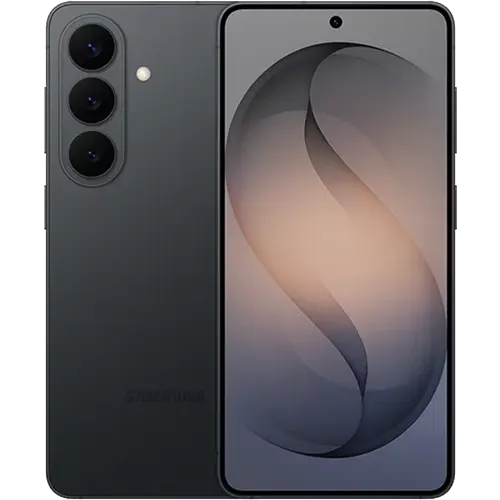
Galaxy S26
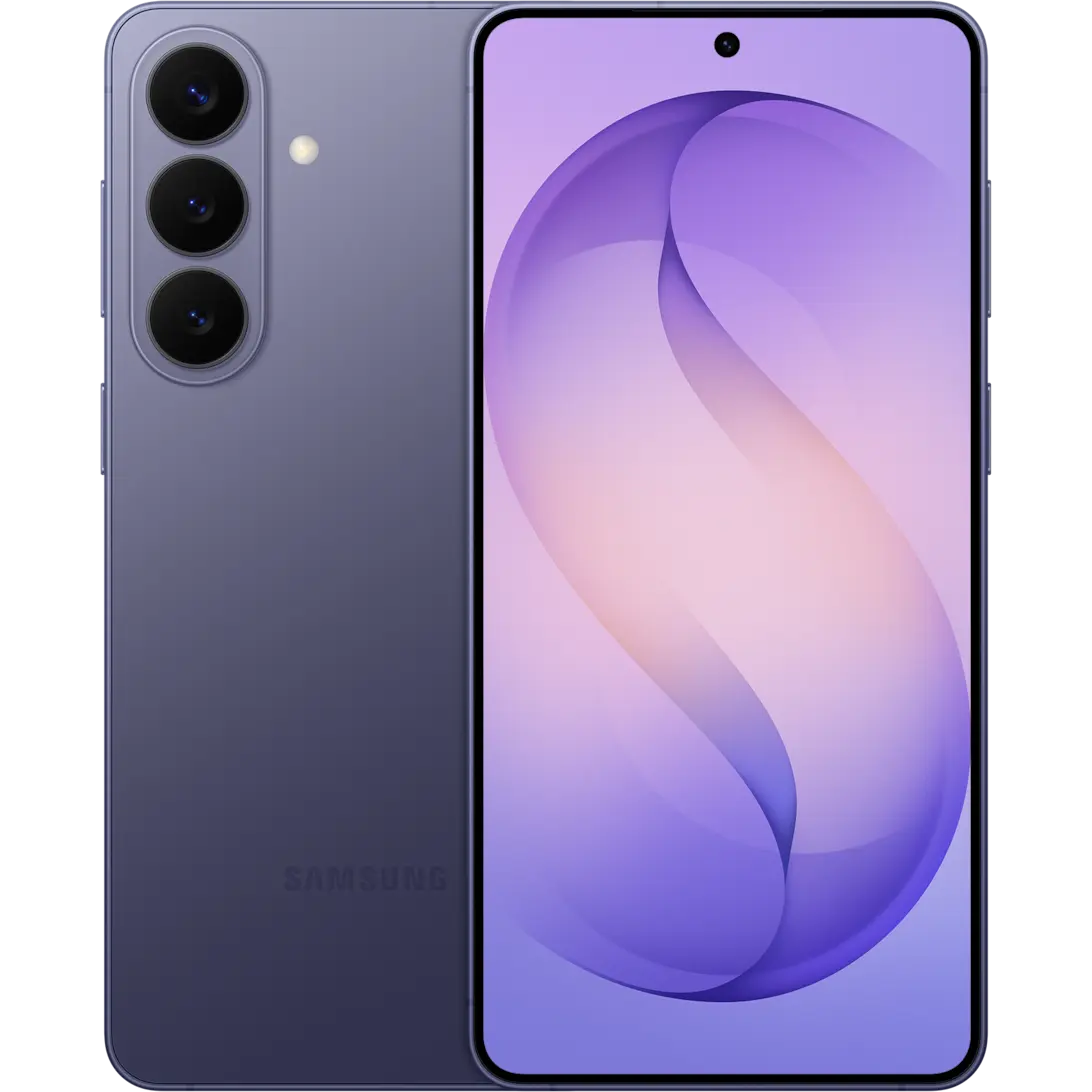
Galaxy S26+
Galaxy S26 Ultra
Ranked #20 of 59
Ranked #10 of 59
Ranked #6 of 59
Overall
Overall
Overall
The Samsung Galaxy S26, S26+, and S26 Ultra share a platform but target different buyers. The S26 at $899.99 is the compact option, built for people who want flagship performance without a large footprint or a four-figure price. The S26+ at $1,099.99 adds screen size, resolution, and faster charging. The S26 Ultra at $1,299.99 is the full kitchen sink — the largest display, the most camera hardware, the fastest charging, and the best speaker system.
All three run the same Snapdragon 8 Elite Gen 5 chipset with 12GB of RAM, and the S26 and S26+ share identical camera systems. The Ultra diverges with a larger main sensor, a dual telephoto setup, and substantially better video stabilization. In daily use, the biggest separators are display quality (the Ultra's screen is brightest and sharpest), charging speed (the Ultra fills up twice as fast as the base S26), and biometric speed (the Ultra's fingerprint sensor is nearly three times faster than the S26+'s). Battery life differences are smaller than the capacity spread might suggest.
Here’s how the three phones differ.
Design
| Samsung Galaxy S26 | Samsung Galaxy S26+ | Samsung Galaxy S26 Ultra | |
|---|---|---|---|
| Specifications | |||
| Dimensions | 149.6 x 71.7 x 7.2 mm | 158.4 x 75.8 x 7.3 mm | 163.6 x 78.1 x 7.9 mm |
| Weight | 167g | 190g | 214g |
| IP Rating | IP68 | IP68 | IP68 |
| Frame | Aluminum | Aluminum | Aluminum |
| Front | Gorilla Glass Victus 2 | Gorilla Glass Victus 2 | Gorilla Armor 2 |
| Back | Gorilla Glass Victus 2 | Gorilla Glass Victus 2 | Gorilla Glass Victus 2 |
| Screen-to-body ratio | 90.8% | 91.8% | 91.5% |
The Galaxy S26 is the lightest at 167g with a 6.3-inch display. The S26+ steps up to 190g and 6.7 inches. The Ultra is the largest at 214g and 6.9 inches. All three carry an IP68 rating, meaning they're rated for submersion in fresh water up to 1.5 meters for 30 minutes.
Bandicoot Lab does not formally test design or durability.
Display
| Samsung Galaxy S26 | Samsung Galaxy S26+ | Samsung Galaxy S26 Ultra | |
|---|---|---|---|
512/ 881 | 617/ 881 | 634/ 881 | |
The S26 runs a 6.3-inch 1080 x 2340 panel at 411 PPI. The S26+ and Ultra both use 1440 x 3120 resolution, with the S26+ at 516 PPI on its 6.7-inch panel and the Ultra at 500 PPI on 6.9 inches. All three are Dynamic LTPO AMOLED 2X panels with 120Hz refresh rates.
Brightness is where the Ultra pulls ahead. Its max manual brightness reaches 975.6 nits, compared to 640.51 nits on the S26 and 635.21 nits on the S26+. For HDR content, the Ultra peaks at 3,022.7 nits, the S26 at 2,791.1 nits, and the S26+ at 2,725 nits. The Ultra's advantage is visible outdoors and in bright HDR scenes. Sustained brightness, measured over a 30-minute HDR load, is close across all three: the S26 holds 98.73%, the S26+ holds 98.38%, and the Ultra holds 98.61%. HDR stability, which measures how consistently the panel sustains its peak luminance over window sizes, differs. The S26 holds 51.7%, the S26+ holds 52.1%, and the Ultra holds 48.8%. The Ultra hits the highest peak but drops off more aggressively under HDR stress.
Color accuracy varies. In Natural mode, the Ultra produces the tightest color accuracy, with neutral tones and skin tones appearing close to reference. The S26 in Natural mode shows moderate drift, particularly in saturated tones, and the S26+ drifts slightly more than the S26. In Vivid mode, all three push saturation above reference targets and introduce some visible color shifts, which is expected for a mode designed to look punchy rather than accurate. The Ultra's Vivid mode shows slightly more peak deviation than the other two, but its Natural mode is the most accurate of the three.
Touch latency averages 21.8ms on the S26, 15.9ms on the S26+, and 21ms on the Ultra. The S26+ has an advantage, but it won’t be perceptible.
Performance
| Samsung Galaxy S26 | Samsung Galaxy S26+ | Samsung Galaxy S26 Ultra | |
|---|---|---|---|
833/ 1012 | 942/ 1012 | 908/ 1012 | |
All three phones use the Qualcomm Snapdragon 8 Elite Gen 5 with 12GB of RAM. The performance differences come down to thermal management and how each body handles sustained loads.
CPU scores are close. The S26+ leads slightly in GeekBench 6 with 3,791 single-core and 11,523 multi-core. The S26 scores 3,709 / 11,232 and the Ultra scores 3,685 / 11,198. These gaps are small enough that you won't feel them in app launches or multitasking.
GPU performance shows more separation under sustained load. Peak scores in Wild Life Extreme are similar: S26 at 7,740, S26+ at 7,867, Ultra at 7,802. Stability tells a different story. The S26+ maintains 59.5% of peak performance across its stress test, the Ultra holds 49.8%, and the S26 drops to 45.8%. The S26's smaller body has less thermal headroom, so it throttles more aggressively during extended gaming sessions. The S26+ handles sustained GPU workloads best of the three, which matters for long gaming sessions or video editing.
Browser performance follows a similar pattern. The Ultra scores 46 in Speedometer, the S26+ scores 44.3, and the S26 scores 36.7. The S26's lower browser score is a larger gap and may be noticeable when loading complex web apps.
Camera
| Samsung Galaxy S26 (Overall) | Samsung Galaxy S26+ (Overall) | Samsung Galaxy S26 Ultra (Overall) | |
|---|---|---|---|
| Specifications | |||
| Main | 50MP, f/1.8, 24mm, 1/1.56" | 50MP, f/1.8, 24mm, 1/1.56" | 200MP, f/1.4, 23mm, 1/1.3" |
| Ultrawide | 12MP, f/2.2, 13mm, 1/2.55" | 12MP, f/2.2, 13mm, 1/2.55" | 50MP, f/1.9, 14mm, 1/2.5" |
| Telephoto | 10MP, f/2.4, 67mm, 1/3.94" | 10MP, f/2.4, 67mm, 1/3.94" | 10MP, f/2.4, 67mm, 1/3.94" |
| Telephoto (Long) | — | — | 50MP, f/2.9, 111mm, 1/2.52" |
| Front | 12MP, f/2.2, 23mm, 1/3.2" | 12MP, f/2.2, 23mm, 1/3.2" | 12MP, f/2.2, 23mm, 1/3.2" |
The S26 and S26+ share identical camera hardware. The Ultra uses a different, larger main sensor and adds a second telephoto lens (a longer focal length) alongside the shorter telephoto shared with the other two models.
Main camera sharpness on the Ultra is a clear step above the S26 and S26+. The Ultra resolves more detail across all lighting conditions, from bright to dark. The S26/S26+ maintain good sharpness in bright and moderate light but fall behind the Ultra as light drops. Deep zoom sharpness shows a stark difference — the Ultra's deep zoom resolves roughly double the detail of the S26/S26+, and it can reach 100x with usable detail at lower zoom levels. The S26 and S26+ max out at 30x and lose detail much faster beyond 10x.
All three phones show elevated sharpening at 4x zoom in bright light, which can give edges an artificial, crunchy look. This appears to be a processing decision at that specific focal length.
Main
| Samsung Galaxy S26 (Main) | Samsung Galaxy S26+ (Main) | Samsung Galaxy S26 Ultra (Main) | |
|---|---|---|---|
594/ 722 | 594/ 722 | 711/ 722 | |
The S26 and S26+ produce identical main camera results. Sharpness is high in bright light, holds well in mid-light, and drops moderately in dark conditions. The Ultra is sharper across the board, with particularly strong performance in low light where its larger sensor captures more detail.
Color on the S26/S26+ main camera leans vivid in bright light, with saturation pushed noticeably above neutral. Skin tones are oversaturated in bright conditions. In mid and dark light, saturation pulls back closer to neutral, and in dark conditions it undersaturates slightly. The processing applies a magenta push in mid-light that shifts skin tones warm-pink. The Ultra's main camera is also vivid in bright light with more saturation push, but hue accuracy is slightly better. Skin tones on the Ultra shift less from reference in mid-light. In dark conditions, both the S26/S26+ and Ultra show a magenta-leaning correction that appears to be a white balance overcorrection as scene color temperature drops. This is a processing behavior rather than a sensor limitation, since the bias appears only in processed images.
Dynamic range on the main camera is effectively identical between the S26/S26+ and Ultra. Both preserve good shadow detail and hold highlights well in high-contrast scenes. The Ultra's processing avoids clipping highlights slightly better, but the visible difference is marginal.
Ultrawide
| Samsung Galaxy S26 (Ultrawide) | Samsung Galaxy S26+ (Ultrawide) | Samsung Galaxy S26 Ultra (Ultrawide) | |
|---|---|---|---|
604/ 722 | 604/ 722 | 542/ 722 | |
Sharpness on the ultrawide is identical between the S26 and S26+, and both are sharper than the Ultra's ultrawide. The S26/S26+ ultrawide resolves more fine detail, particularly in bright conditions. The Ultra's ultrawide is softer but still produces usable results.
Color on the S26/S26+ ultrawide is aggressively saturated in bright light, with significant skin tone oversaturation. In mid-light, a strong magenta shift appears, suggesting the white balance correction overcorrects as the light warms. The Ultra's ultrawide shows a similar character: vivid and warm, with slightly less extreme skin tone error in bright light but more oversaturation in dark conditions. In dark light, the S26/S26+ pull saturation back closer to neutral while the Ultra remains slightly oversaturated.
Dynamic range on the ultrawide favors the S26/S26+ slightly. Both models preserve more usable range and distinguish more tonal gradations in high-contrast scenes. The Ultra's ultrawide clips highlights a touch earlier.
Telephoto
| Samsung Galaxy S26 (Telephoto) | Samsung Galaxy S26+ (Telephoto) | Samsung Galaxy S26 Ultra (Telephoto Short) | Samsung Galaxy S26 Ultra (Telephoto Long) | |
|---|---|---|---|---|
568/ 722 | 568/ 722 | 589/ 722 | 676/ 722 | |
The S26 and S26+ share a single telephoto lens. The Ultra carries two: a short telephoto and a long telephoto. The S26/S26+ telephoto and the Ultra's short telephoto produce similar sharpness in bright light, with the S26/S26+ slightly ahead. The Ultra's long telephoto is sharper at its native focal length and gives it a genuine optical advantage for portrait-distance and mid-range zoom shots.
Video stabilization differs substantially. The Ultra's short telephoto produces well-controlled video with minimal residual shake during handheld shooting. The S26/S26+ telephoto shows noticeably more residual motion, roughly 2.7x more shake than the Ultra's short telephoto. For handheld telephoto video, the Ultra is in a different class.
Color accuracy on the S26/S26+ telephoto is strong, with the best hue accuracy of any lens in the system. Saturation is pushed moderately in bright light, and skin tones drift slightly in dark conditions. The Ultra's short telephoto has slightly higher skin tone error, particularly in dark light. The Ultra's long telephoto delivers good color in bright and mid-light but shows a pronounced drop in dark conditions, where images lose saturation heavily and skin tones drift substantially. This looks like a processing failure specific to the long telephoto at very low light levels.
Dynamic range on the S26/S26+ telephoto is excellent, with highlights preserved cleanly in processed images. The Ultra's short telephoto clips highlights slightly, and the long telephoto compresses tones more aggressively.
Front
| Samsung Galaxy S26 (Front) | Samsung Galaxy S26+ (Front) | Samsung Galaxy S26 Ultra (Front) | |
|---|---|---|---|
398/ 722 | 398/ 722 | 415/ 722 | |
Front camera sharpness is similar across all three in bright and mid-light. The Ultra edges ahead in dark conditions, resolving slightly more detail. All three maintain consistent sharpness from bright to mid without significant falloff.
Color on the front camera shows a common pattern: all three lean slightly warm in bright light and develop a magenta push in mid and dark conditions. This magenta shift intensifies as lighting gets warmer, pointing to a white balance correction issue rather than a sensor limitation. The Ultra's front camera handles this slightly better in dark conditions, with less extreme hue rotation.
Dynamic range on the front camera is limited across the board. All three clip highlights aggressively. The S26 and S26+ preserve slightly more usable range than the Ultra's front camera in processed output, though the difference is small.
Front camera video stabilization is best on the S26 and S26+, which produce noticeably smoother footage than the Ultra. The Ultra's front camera shows more residual shake during handheld recording.
Battery
| Samsung Galaxy S26 | Samsung Galaxy S26+ | Samsung Galaxy S26 Ultra | |
|---|---|---|---|
579/ 799 | 592/ 799 | 539/ 799 | |
The S26 carries a 4,300mAh cell, the S26+ has 4,900mAh, and the Ultra has 5,000mAh.
Video playback at 200 nits, which simulates indoor streaming, puts the S26 at 30 hours 14 minutes, the S26+ at 31 hours 7 minutes, and the Ultra at 31 hours 33 minutes. All three last well over a day of continuous video. At max brightness, the S26 lasts 26 hours 50 minutes, the S26+ lasts 26 hours 54 minutes, and the Ultra lasts 29 hours 17 minutes. The Ultra's larger battery offsets its higher power draw at max brightness.
Web browsing over 5 hours drains 24% on both the S26 and Ultra, and 26% on the S26+. The S26+ uses more power during web browsing despite its larger battery, likely due to its higher-resolution display. For gaming, measured during 20 loops of Wild Life Extreme, the S26 drains 27%, the S26+ drains 30%, and the Ultra drains 24%. The Ultra handles sustained gaming load with the least battery impact, possibly because its larger body dissipates heat better and requires less aggressive throttling.
Standby drain over 8 hours is 2% on both the S26 and S26+. The Ultra drains 10% overnight, which is unusually high and suggests background processes or connectivity behavior that Samsung may address in a software update. This is a meaningful weakness for the Ultra in daily use.
Charging
| Samsung Galaxy S26 | Samsung Galaxy S26+ | Samsung Galaxy S26 Ultra | |
|---|---|---|---|
263/ 837 | 314/ 837 | 486/ 837 | |
The S26 charges at 25W wired and 15W wireless. The S26+ steps up to 45W wired and 20W wireless. The Ultra tops out at 60W wired and 25W wireless.
Wired charging speed scales with these ratings. At 10 minutes, the S26 reaches 21%, the S26+ reaches 26%, and the Ultra reaches 34%. At 30 minutes, the S26 reaches 58%, the S26+ reaches 67%, and the Ultra reaches 79%. A quick top-up before leaving the house gets you meaningfully more battery on the Ultra. The S26's 25W charging needs over 30 minutes to get past 60%.
Wireless charging shows similar separation. At 10 minutes, the S26 reaches 11%, the S26+ reaches 7%, and the Ultra reaches 18%. The S26+'s wireless charging is slower than the S26's at the 10-minute mark despite its higher rated wattage, which suggests different charging curve optimization. At 30 minutes, the S26 reaches 29%, the S26+ reaches 19%, and the Ultra reaches 44%. Wireless charging on the Ultra is nearly as fast as wired charging on the base S26.
Speaker
| Samsung Galaxy S26 | Samsung Galaxy S26+ | Samsung Galaxy S26 Ultra | |
|---|---|---|---|
817/ 897 | 819/ 897 | 857/ 897 | |
The Ultra has the loudest speakers at 75.3 dBA max volume, followed by the S26 at 72.5 dBA and the S26+ at 71.7 dBA. The Ultra's volume advantage is clearly audible — about 3 dB louder than the S26+, which represents a noticeable jump in perceived loudness.
Distortion is lowest on the Ultra at 3.255% average THD, followed by the S26 at 3.441% and the S26+ at 3.852%. All three are clean enough that distortion won't be objectionable at high volumes, but the Ultra maintains the most composure when pushed.
The speaker character differs. The S26 and S26+ have stronger bass relative to their high-end, giving them a warmer, fuller sound. The Ultra trades some of that bass weight for better clarity and high-frequency detail. For dialogue-heavy content or acoustic music, the Ultra's speakers reproduce vocals and instrument separation with more definition. For bass-heavy music, the S26 and S26+ sound slightly richer in the low end.
Microphone
| Samsung Galaxy S26 | Samsung Galaxy S26+ | Samsung Galaxy S26 Ultra | |
|---|---|---|---|
739/ 1220 | 746/ 1220 | 566/ 1220 |
The S26 and S26+ have nearly identical microphone performance, with consistent recording quality across their frequency range. Both produce clear voice capture with minimal coloration.
The Ultra's microphone shows more variation across its frequency range, with a wider standard deviation of 5.3 dB compared to roughly 4 dB on the other two. Some frequencies are emphasized or recessed more than on the S26/S26+. For voice calls and basic video recording, all three are fine. For situations demanding flatter, more reference-quality audio capture, the S26 and S26+ are slightly more reliable.
Other
| Samsung Galaxy S26 | Samsung Galaxy S26+ | Samsung Galaxy S26 Ultra | |
|---|---|---|---|
| Biometrics | 464/ 1181 | 266/ 1181 | 764/ 1181 |
| Data Transfer | 736/ 877 | 623/ 877 | 737/ 877 |
| Specifications | |||
| Biometric type | Fingerprint | Fingerprint | Fingerprint |
| Ports | USB-C 3.2 | USB-C 3.2 | USB-C 3.2 |
| Storage | 256GB, 512GB | 256GB, 512GB | 256GB, 512GB, 1TB |
Fingerprint speed is where the three models diverge sharply. The Ultra's ultrasonic sensor averages 137.5ms, fast enough that the phone feels like it unlocks on contact. The S26's ultrasonic sensor averages 226.4ms, perceptibly slower but still responsive. The S26+ uses an optical sensor averaging 394.4ms, nearly three times slower than the Ultra and noticeably laggy in daily use. None of the three have hardware-based face unlock.
Data transfer speeds are fastest on the S26 and Ultra, which both achieve read speeds above 330 MB/s for large files. The S26+ reads at 248.66 MB/s, about 25% slower. Write speeds are similar across all three at roughly 271–274 MB/s. All three use USB-C 3.2 ports. Storage options vary by region and configuration.
Conclusion
The S26 Ultra wins on display brightness, charging speed, biometric speed, speaker quality, main camera sharpness, telephoto versatility, video stabilization, and deep zoom capability. It's the strongest all-around performer and justifies its price premium for anyone who uses their phone's camera seriously or values the fastest possible charging. Its weaknesses are things like the fact that standby battery drain is poor, its microphone is less consistent, and its ultrawide camera is softer than the cheaper models.
The S26+ occupies an awkward middle position in some respects. It matches the Ultra's resolution, beats both siblings in GPU stability and browser performance, and adds faster wired charging over the base S26. Its display touch latency is the lowest at 15.9ms. Its key weakness is the optical fingerprint sensor, which is meaningfully slower than the ultrasonic sensors in the S26 and Ultra. It also suffers from slow wireless charging relative to its rating.
The S26 at $899.99 delivers the same camera system as the S26+, the same chipset, similar battery life in most scenarios, and a fast ultrasonic fingerprint sensor. You sacrifice display resolution, charging speed, and GPU sustain. If you prefer a compact phone and don't need the Ultra's camera versatility or the S26+'s larger screen, the base S26 offers strong value. The $200 gap to the S26+ buys a bigger, sharper display and faster wired charging. The $400 gap to the Ultra buys a genuinely different camera experience and the best charging, speakers, and biometrics in the lineup.
Related
Samsung
Galaxy S26 Ultra
Samsung
Galaxy S26
Samsung
Galaxy S26+
Samsung
Galaxy Z Fold 8 Ultra
Samsung
Galaxy Z Fold 8
Best Phone Displays
Best Android Phones
Best Samsung Phones

Samsung Galaxy S26 Series vs Galaxy S25 Series
The house look: How phone brands tune camera color
How we test speakers and microphones

Samsung Galaxy S26 Series vs Xiaomi 17 Series