Samsung Galaxy S25 Ultra

The Galaxy S25 Ultra launched at $1,299.99 as Samsung's flagship, built around the Snapdragon 8 Elite with 16GB of RAM, a 200-megapixel main camera, and dual telephoto lenses, rounded out with a large screen and S-Pen support. Within the S25 lineup, it sat $300 above the S25+ and $500 above the base S25, with the larger battery and screen, and the camera system — particularly the larger 1/1.3-inch main sensor and dual telephoto arrangement — as the primary justifications for the price gap.
The Galaxy S26 Ultra has since replaced it at the same $1,299.99 price with a newer Snapdragon 8 Elite Gen 5, a wider f/1.4 main camera aperture (versus f/1.7), faster 60W wired charging, and 25W wireless charging. At this price point, the $1,199 iPhone 17 Pro Max and $1,199 Pixel 10 Pro XL both undercut the S25 Ultra by $100 with competitive camera systems. The 1,299€ Honor Magic8 Pro matches the price with a 7,100mAh battery and 120W charging that make the S25 Ultra's battery and charging specs look dated.
Design
Specifications
The Galaxy S25 Ultra measures 162.8 x 77.6 x 8.2mm and weighs 218 grams. It uses a titanium frame with Gorilla Armor 2 on both the front and the back. The 6.8-inch display has a 19.5:9 aspect ratio and an 89.8% screen-to-body ratio. An IP68 rating covers full dust ingress and fresh-water submersion beyond 1 meter, with depth and duration set by Samsung. Bandicoot Lab does not formally test design or durability, so this section is descriptive rather than scored.
The Gorilla Armor 2 used on both the front and back is Samsung's most scratch-resistant glass specification, reserved for the Ultra tier. Against the iPhone 17 Pro Max at $1,199 (163.4 x 78 x 8.8mm, 233 grams), the S25 Ultra is a touch smaller in every dimension and 15 grams lighter. The Pixel 10 Pro XL at $1,199 is almost the same size (162.8 x 76.6 x 8.5mm) and 14 grams lighter at 232 grams but drops back to an aluminum frame and standard Gorilla Glass Victus 2. The S25 Ultra's direct successor, the S26 Ultra, drops back to an aluminum frame while keeping Gorilla Armor 2 on the front only.
Display
The 6.8-inch Dynamic LTPO AMOLED panel has a 1440p (3120 x 1440) resolution with a 498 PPI pixel density and 120Hz adaptive refresh, down to 1Hz. Maximum manual brightness measured 718 nits. That's a meaningful weakness — the Pixel 10 Pro XL measured 1,435 nits (double the S25 Ultra), the iPhone 17 Pro Max hit 857 nits, and even the Honor Magic8 Pro reached 759 nits. The gap is visible outdoors. The S26 Ultra improves to 976 nits. Minimum brightness drops to 0.87 nits.
Display color accuracy in Natural Mode measured an average Delta E of 3.27. Colors drift visibly from reference values — noticeable in side-by-side comparisons. The iPhone 17 Pro Max measured 1.23 (nearly invisible error), the Pixel 10 Pro XL hit 1.32, and the Honor Magic8 Pro measured 0.82. Display color accuracy is a consistent weakness across Samsung's S25 lineup, and the S26 Ultra only improves modestly to 2.75.
Touch latency — the delay between a finger tap and the screen responding — measured 20.6 milliseconds. The Pixel 10 Pro XL is faster at 15.7 ms, and the Honor Magic8 Pro at 17.2 ms. The iPhone 17 Pro Max measured 52.4 ms. In practice, all are responsive enough that differences are imperceptible in normal use.
Performance
The Snapdragon 8 Elite delivered GeekBench 6 scores of 3,088 single-core and 10,093 multi-core, with a Speedometer browser score of 32.4. Peak GPU output reached 6,911 in Wild Life Extreme with 56.9% thermal stability — the phone throttles to roughly half its peak GPU performance during sustained loads. The iPhone 17 Pro Max peaks lower at 5,828 but holds 73.1% stability, meaning it delivers more consistent performance over time. The Honor Magic8 Pro, running the newer Snapdragon 8 Elite Gen 5, peaks at 6,963 with 64.1% stability.
The S26 Ultra pushes to 3,685 single-core, 11,198 multi-core, and a Speedometer score of 46 — a meaningful generational improvement in CPU and browser workloads. GPU stability remains mediocre at 49.8%.
In daily use, the S25 Ultra handles everything without hesitation. The thermal throttling is only noticeable in extended gaming sessions or sustained heavy GPU workloads.
Camera
The five-camera system is made up of a 200-megapixel main, 50-megapixel ultrawide, 10-megapixel 3x telephoto, 50-megapixel 5x telephoto, and 12-megapixel front camera. It is the S25 Ultra's defining feature and a primary reason it commanded a premium over the rest of the S25 lineup. The dual telephoto arrangement provides continuous optical-quality coverage up to 5x, with digital zoom extending to 100x. The iPhone 17 Pro Max has a single 4x telephoto, while the Pixel 10 Pro XL has a single 5x and the Honor Magic8 Pro has a single 3.7x.
Main Camera
The 200-megapixel main camera (f/1.7, 24mm, 1/1.3-inch sensor) captures detailed images in good light. The high resolution allows aggressive cropping without visible quality loss. Dynamic range was solid overall, but not overly impressive.
Samsung's color tuning is moderately saturated at 113% of reference in bright light and 109% in low light — vivid but restrained compared to the more aggressive 3x telephoto. Hue accuracy is reasonable in bright light but degrades in low light, where colors shift to noticeably incorrect hues. The camera doesn't fully correct for the warmer ambient light at 3000K and 4000K.
Video stabilization is good — better than the Pixel 10 Pro XL and comparable to the Honor Magic8 Pro. The iPhone 17 Pro Max is in a different class, producing noticeably smoother handheld footage.
The S26 Ultra shares the same 1/1.3-inch sensor but opens the aperture to f/1.4, letting in more light. The iPhone 17 Pro Max's 1/1.28-inch sensor and f/1.78 aperture are comparable in light-gathering ability.
Ultrawide Camera
The 50-megapixel ultrawide (f/1.9, 14mm, 1/2.5-inch sensor) is a solid performer. The f/1.9 aperture is faster than most ultrawides, helping in lower light. Dynamic range was only fine though. Hue accuracy follows the familiar Samsung pattern — reasonable in bright light but jumping in low light.
The Pixel 10 Pro XL's 48-megapixel ultrawide with the same f/1.7 aperture across main and ultrawide is faster. The Honor Magic8 Pro's 50-megapixel f/2.0 is comparable. The iPhone 17 Pro Max's ultrawide is slower at f/2.8, which limits its low-light performance.
Telephoto Short Camera
The 10-megapixel 3x telephoto (f/2.4, 67mm, 1/3.94-inch sensor) is the weakest lens in the system on paper — the same 10-megapixel module found in the base S25 and S25+. It's sharp at its native 3x in good light, and dynamic range is strong. Samsung's processing pushes saturation higher on this lens than any other though, giving images a punchy, vivid look.
Hue accuracy is moderate across all lighting conditions, and actually more consistent than the main camera. This lens serves as a bridge between the main camera and the 5x, providing a natural portrait focal length.
Telephoto Long Camera
The 50-megapixel 5x telephoto (f/2.3, 111mm, 1/2.52-inch sensor) is the more capable of the two telephoto lenses, with substantially higher resolution and a larger sensor than the 3x. At 5x, images retain strong detail.
Hue accuracy is the weakest of any lens on the phone though — colors shift significantly in dim conditions. In low light, saturation also drops significantly, meaning images look both desaturated and hue-shifted. Video stabilization is similar to the main camera.
The iPhone 17 Pro Max's single 4x telephoto sits between the S25 Ultra's two telephoto focal lengths but uses a larger 1/2.55-inch sensor at 48 megapixels. The Pixel 10 Pro XL's 5x at 113mm is nearly identical in reach with a similar sensor size and higher resolution at 48 megapixels.
Digital zoom extends up to 100x, and at deeper zoom, the advantage of a further reach shows — the 50-megapixel 5x lens provides a much better starting point for digital crop than a main camera would at the same distances.
Front Camera
The 12-megapixel front camera (f/2.2, 26mm, 1/3.2-inch sensor) is the same module found across the entire S25 lineup. Dynamic range is quite weak — the front camera struggles with mixed lighting, losing detail in bright backgrounds when exposing for faces. Skin tone accuracy is poor, with Samsung's processing heavily oversaturating skin tones in bright and mid lighting conditions. Hue shift is high across all conditions.
The iPhone 17 Pro Max's 18-megapixel f/1.9 front camera lets in more light and produces better dynamic range. The Honor Magic8 Pro's 50-megapixel f/2.0 offers substantially higher resolution. The Pixel 10 Pro XL's 42-megapixel front camera also has better specs than the S25 Ultra's.
Battery
The 5,000mAh battery delivered 30 hours and 59 minutes of video playback at 200 nits, and 28 hours and 12 minutes at maximum brightness. In a five-hour web browsing test, drain was 21%. Gaming consumed 26% per hour. Standby drain was 2% overnight. In daily use, the S25 Ultra comfortably lasts a full day with heavy use, stretching into a second day for lighter users.
The S26 Ultra extends slightly to 31 hours and 34 minutes of video playback with the same 5,000mAh capacity. The iPhone 17 Pro Max managed 23 hours and 58 minutes from a similar 5,088 mAh battery — significantly less efficient. The Pixel 10 Pro XL landed at 23 hours and 19 minutes from 5,200mAh.
The Honor Magic8 Pro's 7,100mAh battery reached 35 hours and 30 minutes of video playback with only 11% web drain over five hours — comfortably ahead of the S25 Ultra on endurance. The OnePlus 15, at $400 less, hit 46 hours and 7 minutes from a 7,300mAh battery with only 16% web drain. The S25 Ultra's battery life is good, but phones with larger batteries at the same price or lower have moved the bar.
Charging
Wired charging at 45W reached 74% in 30 minutes, with a full charge in about 60 minutes. Wireless charging at 15W is slow — 18% in 30 minutes, with a full charge taking over 3 hours. No magnetic charging alignment is supported.
The S26 Ultra makes meaningful improvements here: 60W wired (79% in 30 minutes, full charge in 51 minutes) and 25W wireless (44% in 30 minutes, full charge in 85 minutes). The Honor Magic8 Pro's 120W wired charging hits 81% in 30 minutes with a full charge of its 7,100mAh battery in 41 minutes — filling a larger battery in less time. The iPhone 17 Pro Max charges at 40W wired (67% in 30 minutes) and 25W wireless (47% in 30 minutes), with MagSafe magnetic alignment. The Pixel 10 Pro XL reaches 70% in 30 minutes at 45W wired and supports magnetic wireless charging.
Speaker
The Galaxy S25 Ultra had one of the strongest speakers in its price bracket. Loudness was a top result at 78.6 dBA, beating the Honor Magic8 Pro and iPhone 17 Pro Max. Bass extension was moderate with a 21.8 dB drop from the mids to the bass band — competitive with the iPhone 17 Pro Max's 21 dB. Its successor, the Galaxy S26 Ultra, slightly improved bass extension to 18.4 dB. The high end was clear and well-extended, with flat response. Distortion was low at 4.4%, cleaner than the iPhone 17 Pro Max's 8.9% and Honor Magic8 Pro's 8.6%.
Microphone
Microphone frequency response measured a standard deviation of 4.36 dB. The iPhone 17 Pro Max has a flatter response. they’re both adequate for calls and recording; the iPhone has a small edge in evenness.
Other
Measurements
Specifications
The ultrasonic fingerprint sensor averages 208ms, which is reasonably fast. The S26 Ultra improves to 138ms though. The Honor Magic8 Pro measured 171ms for fingerprint unlocking. The iPhone 17 Pro Max relies on Face ID at 488ms.
Data transfer via USB-C 3.2 measured 127MB/s read and 83MB/s write. The S26 Ultra improves to 157MB/s read and 112MB/s write. The Honor Magic8 Pro is similar at 155MB/s read and 91MB/s write. The iPhone 17 Pro Max measured38 MB/s read and 59MB/s write via USB-C 3.2 Gen 2 — slower in read speeds despite the newer port spec.
Conclusion
The Galaxy S25 Ultra's defining strength is its camera system. The dual telephoto arrangement provides a range of focal lengths that no single-telephoto competitor matches. The 200-megapixel main sensor captures fine detail, and the 50-megapixel ultrawide with its f/1.9 aperture handles low light better than most. Battery life is strong at 31 hours of video playback, the speaker is loud and clean, and the ultrasonic fingerprint sensor is fast.
The weaknesses are consistent with the broader S25 lineup. Display brightness at 718 nits is poor for a $1,300 phone — the Pixel 10 Pro XL doubles it. Display color accuracy trails the iPhone 17 Pro Max, Pixel 10 Pro XL, and Honor Magic8 Pro. Camera hue accuracy degrades sharply in low light across all lenses, with the 5x telephoto performing worst. The front camera is the same 12-megapixel module found on the $800 base S25, and its weak dynamic range and poor skin tone accuracy are hard to justify at this price. Wireless charging at 15W is slow, GPU thermal stability drops performance to roughly half of peak, and charging speed overall falls behind what the Honor Magic8 Pro and OnePlus 15 achieve at the same price or less.
The S26 Ultra addresses several of these issues — brighter display, faster charging (60W wired, 25W wireless), wider main aperture, faster fingerprint sensor — while keeping the same price. The iPhone 17 Pro Max at $100 less offered better display accuracy, smoother video stabilization, and faster wireless charging. The Honor Magic8 Pro matched the price with a larger battery, faster charging, better display accuracy, and a 200-megapixel telephoto with a large 1/1.4-inch sensor — trading the dual-telephoto versatility for raw specs per dollar.
Related

Samsung Galaxy S26 Series vs Galaxy S25 Series

Samsung Galaxy S26 Ultra vs Galaxy S25 Ultra
Samsung
Galaxy Z Fold 8
Samsung
Galaxy Z Flip 8
Samsung
Galaxy Z Fold 8 Ultra

Samsung
Galaxy S26 Ultra
Samsung
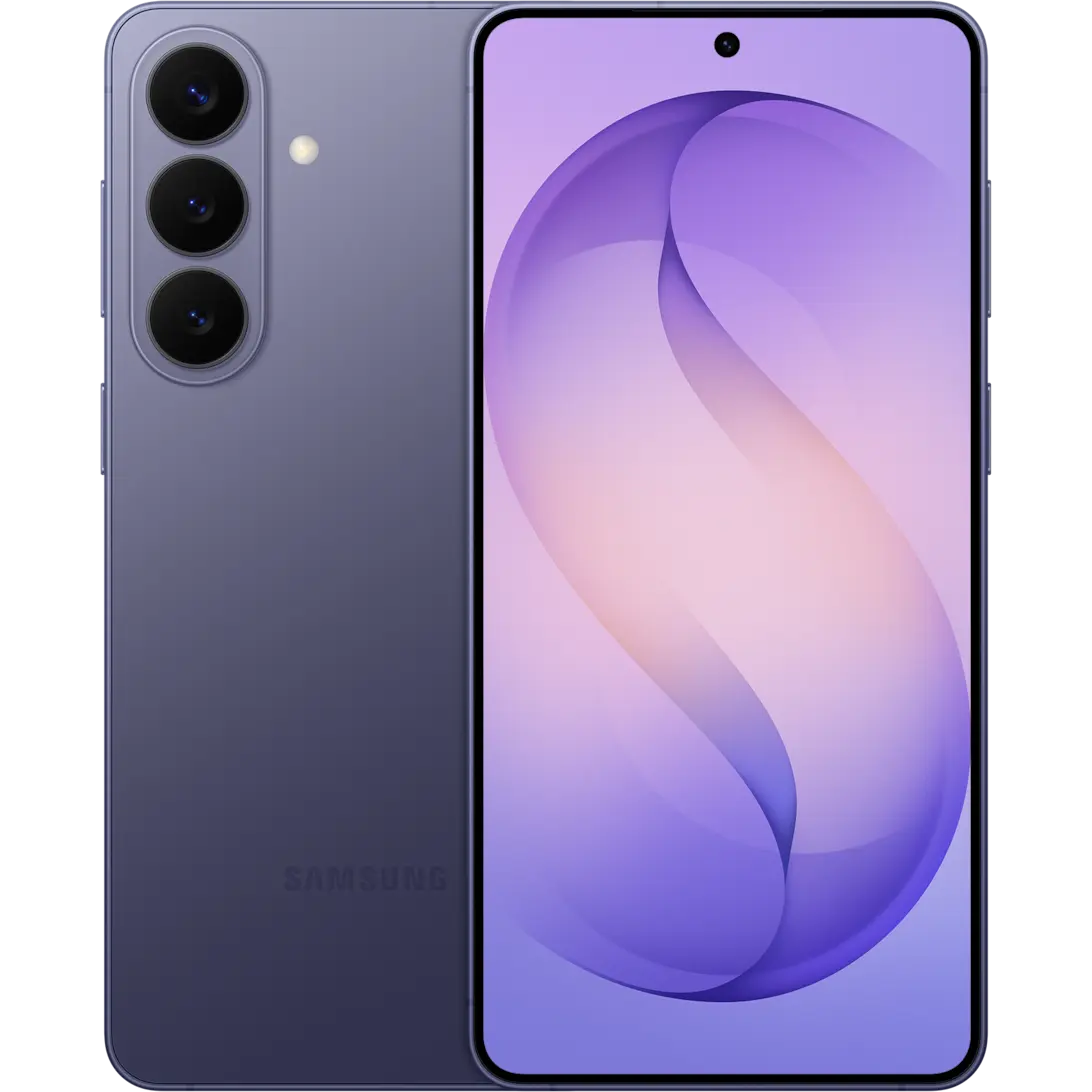
Galaxy S26
Samsung
Galaxy S26+
Honor
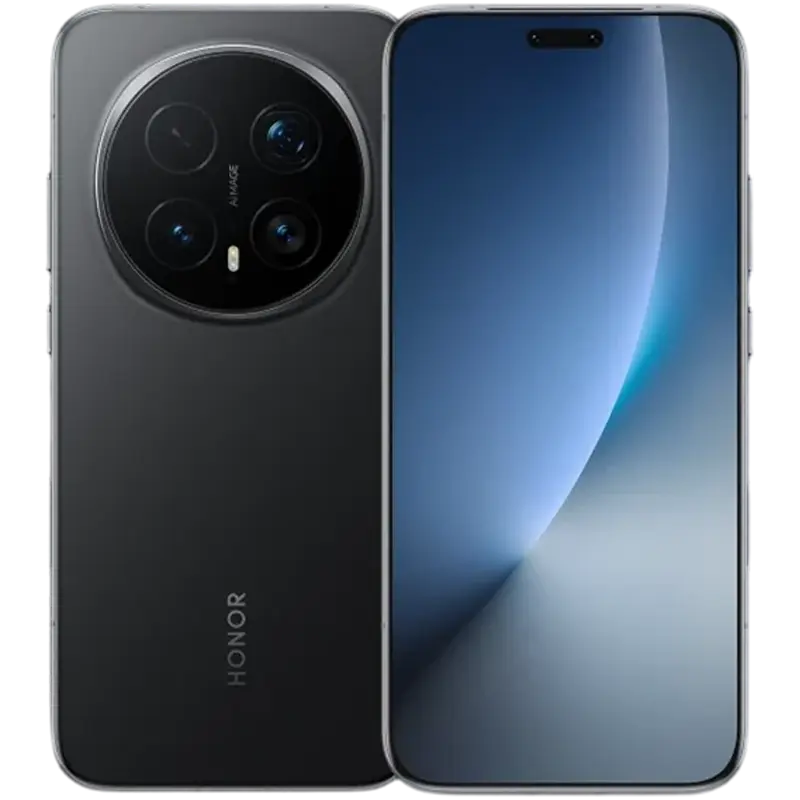
Magic8 Pro
Honor
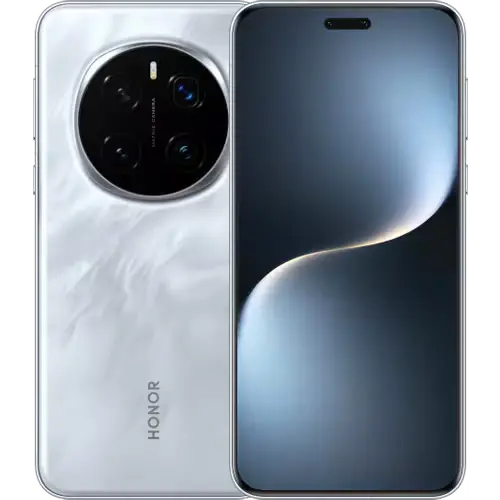
Magic7 Pro
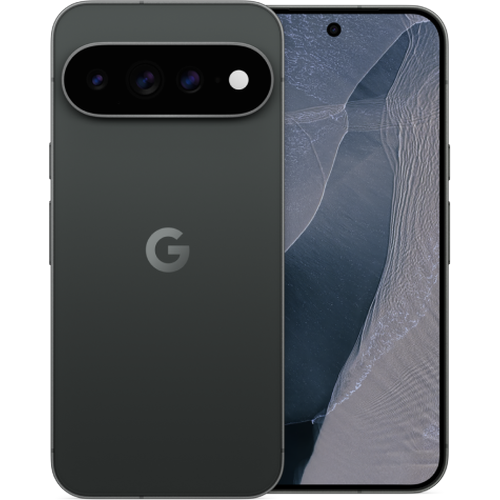
Pixel 11 Pro XL

Motorola