Apple iPhone 17 Pro Max vs Honor Magic8 Pro
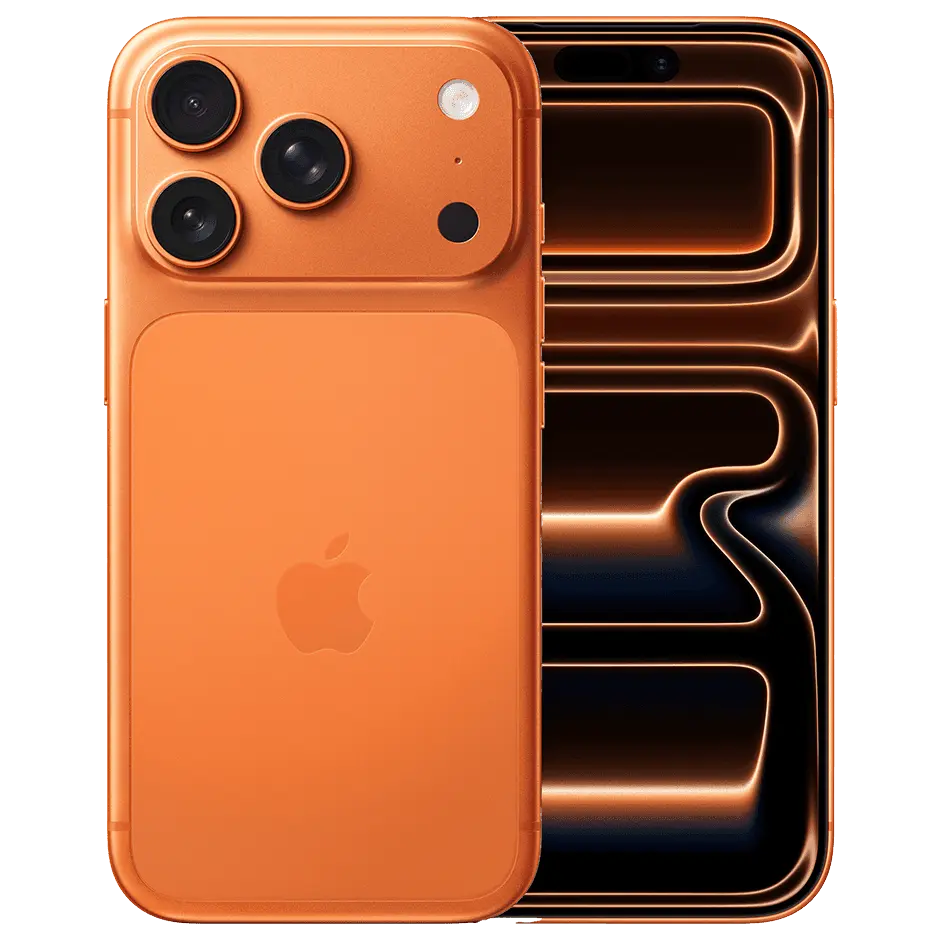
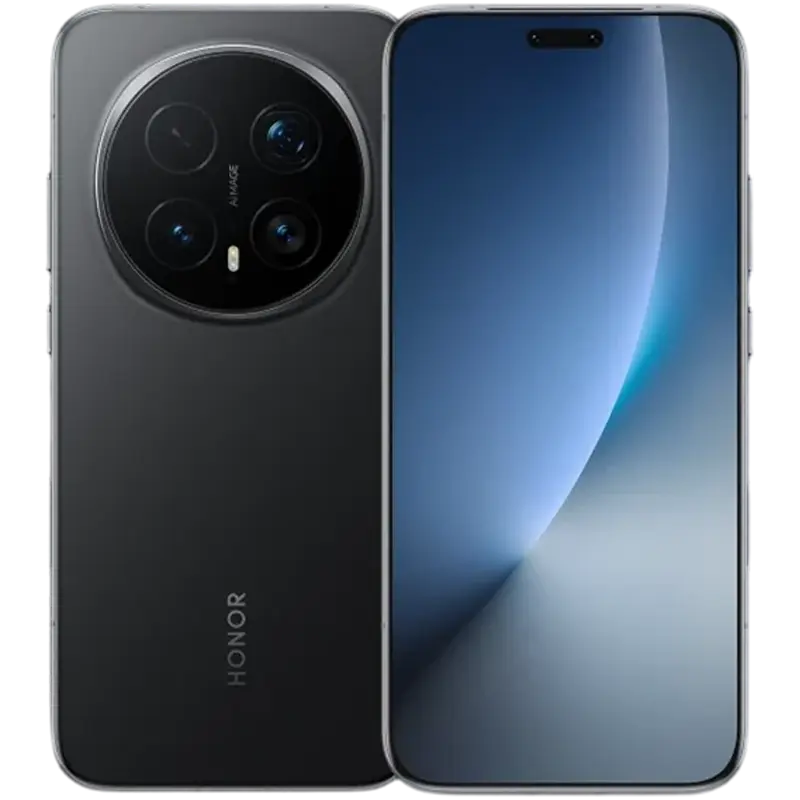
Apple
Honor
iPhone 17 Pro Max
Magic8 Pro
Ranked #21 of 59
Ranked #21 of 59
Overall
Overall
The iPhone 17 Pro Max and Honor Magic8 Pro re both very premium phones, but they’re also pretty different. Apple’s flagship is built for users who value its integrated hardware-software ecosystem and want a do-everything phone with strong video capabilities. The Honor Magic8 Pro targets buyers who want raw performance and endurance above all else, pairing a massive battery with top-tier silicon at a $100 premium over the iPhone. Both are flagship-priced, IP68-rated phones with 120Hz OLED displays, but they make different trade-offs to get there.
The Honor leads decisively in battery life, charging speed, display brightness, and raw processing power. The iPhone counters with a stronger overall camera system, better video stabilization, superior speakers, and a significantly better microphone.
Here’s how the iPhone 17 Pro Max and Honor Magic8 Pro compare in our thorough testing.
Design
| Apple iPhone 17 Pro Max | Honor Magic8 Pro | |
|---|---|---|
| Specifications | ||
| Dimensions | 163.4 x 78 x 8.8 mm | 161.2 x 75 x 8.3 mm |
| Weight | 233g | 219g |
| IP Rating | IP68 | IP68/IP69K |
| Frame | Aluminum | Aluminum |
| Front | Ceramic Shield 2 | NanoCrystal Shield |
| Back | Ceramic Shield | Fiber-reinforced plastic |
| Screen-to-body ratio | 91.7% | 89.6% |
The iPhone 17 Pro Max is the larger phone with a display that measures 6.9 inches with a resolution of 1320 x 2868 pixels. The Honor Magic8 Pro uses a 6.71-inch display at 1256 x 2808. The iPhone weighs 233g, while the Honor comes in at 219g. That 14g difference is modest but noticeable over long sessions.
Both phones carry IP68 water and dust resistance. The Honor adds an IP69K rating, meaning it's also certified against high-pressure, high-temperature water jets. IP68 covers submersion to a rated depth, while IP69K adds durability against pressurized streams, which matters more for industrial or extreme outdoor use than typical daily life.
Bandicoot Lab does not formally test design or durability.
Display
| Apple iPhone 17 Pro Max | Honor Magic8 Pro | |
|---|---|---|
| Specifications | ||
| Display size | 6.9" | 6.71" |
| Display type | LTPO OLED | LTPO OLED |
| Resolution | 1320 x 2868 | 1256 x 2808 |
| Pixel density | 460 PPI | 458 PPI |
| Aspect ratio | 19.5:9 | 20.1:9 |
| Refresh rate | 1 - 120 Hz | 1 - 120 Hz |
The Honor Magic8 Pro has the brighter display by a wide margin. Its HDR peak brightness reaches 4,969 nits versus 2,976 nits for the iPhone. Manual brightness is a little different — the iPhone peaks at 857 nits, the Honor at 759 nits. For everyday use without HDR content, the iPhone gets brighter under manual control.
Sustained brightness separates these two dramatically though. The Honor holds 99.5% of its peak brightness over 30 minutes of HDR content. The iPhone drops to 37.7% over the same period. If you're watching HDR video or gaming outdoors, the Honor maintains its brightness where the iPhone throttles significantly.
Color accuracy is better on the Honor Magic8 Pro — but it’s also very good on the iPhone. In the Honor’s Normal Mode, the Honor's panel produces colors that are essentially reference-perfect. Neutral tones stay neutral, and no visible drift is apparent across the gamut. The iPhone in its default mode is still accurate, though a hair behind. Both are excellent by any practical standard. You won't notice the difference unless you're doing color-critical work and comparing side by side.
Both panels run at 120Hz with nearly identical pixel density. Touch latency pretty different though. The Honor device averages 17.2ms, while the iPhone averages 52.4ms. That's a large enough difference to be perceptible during fast-paced gaming or rapid scrolling.
Performance
| Apple iPhone 17 Pro Max | Honor Magic8 Pro | |
|---|---|---|
| Specifications | ||
| Processor | Apple A19 Pro | Qualcomm Snapdragon 8 Elite Gen 5 |
| RAM | 12GB | 12GB, 16GB |
The iPhone 17 Pro Max runs Apple's A19 Pro with 12GB RAM. The Honor Magic8 Pro uses Qualcomm's Snapdragon 8 Elite Gen 5, also with 12GB RAM.
In CPU benchmarks, the iPhone scores 3,852 single-core and 9,872 multi-core in GeekBench 6. The Honor scores 3,721 single-core and 11,188 multi-core. Single-core performance is close enough that you won't feel the difference in daily tasks. The Honor's multi-core advantage of roughly 13% matters for sustained parallel workloads like video export or heavy multitasking, though again, realistically you probably won’t notice a big difference.
GPU performance tilts toward the Honor in peak output. In Wild Life Extreme, the Honor hits a best loop score of 6,963 versus 5,828 for the iPhone, about 19% higher. The iPhone maintains better thermal stability at 73.1% versus the Honor's 64.1%, and stays cooler at 39.6°C compared to 45.3°C. In Solar Bay, the Honor again peaks higher at 13,471 versus 11,777, but drops harder under sustained load with 59.8% stability versus 69.1%. The iPhone runs more consistently — the Honor bursts higher but throttles more aggressively.
Browser performance is close. The Magic8 Pro scores 44.7 in Speedometer versus 41.8 for the iPhone 17 Pro Max. Both are fast enough that web browsing feels instant.
Camera
| Apple iPhone 17 Pro Max (Overall) | Honor Magic8 Pro (Overall) | |
|---|---|---|
| Specifications | ||
| Main | 48MP, f/1.78, 24mm, 1/1.28" | 50MP, f/1.6, 23mm, 1/1.3" |
| Ultrawide | 48MP, f/2.8, 13mm, 1/2.55" | 50MP, f/2, 12mm, 1/2.88" |
| Telephoto | 48MP, f/2.8, 100mm, 1/2.55" | 200MP, f/2.6, 85mm, 1/1.4" |
| Front | 18MP, f/1.9, 20mm | 50MP, f/2, 21mm, 1/2.93" |
The iPhone 17 Pro Max has the stronger camera system overall, scoring meaningfully higher across most lenses. Its advantages are most pronounced in dynamic range on the telephoto and front cameras, and in video stabilization across all lenses. The Honor's main camera sharpness is a genuine strength, and its deep zoom capability extends much further. Both phones produce heavily processed images in auto mode with pushed saturation and aggressive computational photography.
At deep zoom levels, the Honor has a clear advantage in reach and usable detail. At 30x, the Honor resolves substantially more detail than the iPhone. At 20x, it's similarly ahead. The Honor extends to 100x where the iPhone tops out at 40x, and even at those extreme levels the Honor maintains some detail. If you need long zoom for travel, wildlife, or sports, the Honor offers more practical range.
Main
| Apple iPhone 17 Pro Max (Main) | Honor Magic8 Pro (Main) | |
|---|---|---|
| Specifications | ||
| Resolution | 48MP | 50MP |
| Aperture | f/1.78 | f/1.6 |
| Focal length | 24mm | 23mm |
| Sensor size | 1/1.28" | 1/1.3" |
The Honor's main camera resolves more detail in bright and mid-light raw captures. In auto mode, however, the iPhone pulls ahead in bright light sharpness but the two are close in dark conditions. Both apply moderate sharpening in auto mode without excessive artifacts.
Color character differs between the two. The iPhone's main camera in bright light produces vivid, saturated images with a slight warm lean. Skin tones are pushed noticeably, reading warmer and more saturated than reality. As light gets warmer in mid and dark conditions, yellow-warm bias increases substantially, indicating the iPhone's processing overcorrects white balance in mixed lighting. The Honor's main camera in bright light is also vivid but slightly less saturated. Its skin tones drift even further from accuracy. In mid-light, the Honor shows a similar warm shift that grows in low light, with skin tones drifting warm and rosy. Both phones struggle with skin tone accuracy across lighting conditions, with white balance correction that doesn't fully compensate for warmer ambient light.
Dynamic range on the main camera is better on the iPhone. The iPhone retains detail across a wider brightness range, pulling more shadow information while holding highlights. The Magic8 Pro’s main camera compresses tones more aggressively and clips highlights earlier, resulting in less depth in high-contrast scenes.
Ultrawide
| Apple iPhone 17 Pro Max (Ultrawide) | Honor Magic8 Pro (Ultrawide) | |
|---|---|---|
| Specifications | ||
| Resolution | 48MP | 50MP |
| Aperture | f/2.8 | f/2 |
| Focal length | 13mm | 12mm |
| Sensor size | 1/2.55" | 1/2.88" |
The iPhone's ultrawide is sharper in bright light auto mode. Both produce similar results in mid-light. The Honor's ultrawide raw files show more hue error even before processing, suggesting a sensor-level limitation rather than a processing choice.
Color on the iPhone's ultrawide is vivid with slightly pushed saturation but relatively controlled hue accuracy in bright light. In dimmer conditions, warm bias increases and hue errors grow. The Honor's ultrawide has larger hue errors across all lighting, with skin tones drifting significantly even in bright conditions. The warm bias grows in low light on both, but the Honor's baseline accuracy is lower.
Dynamic range is better on the iPhone, again. Both clip highlights and expand shadows to a comparable degree. Neither ultrawide matches its respective main camera for dynamic range.
Telephoto
| Apple iPhone 17 Pro Max (Telephoto) | Honor Magic8 Pro (Telephoto) | |
|---|---|---|
| Specifications | ||
| Resolution | 48MP | 200MP |
| Aperture | f/2.8 | f/2.6 |
| Focal length | 100mm | 85mm |
| Sensor size | 1/2.55" | 1/1.4" |
The iPhone's telephoto produces cleaner results at its native 4x magnification, with good sharpness across lighting conditions. The Honor's telephoto starts at a similar optical zoom level but excels at longer reach. At 8x and 10x, the Honor resolves more detail. At 20x and beyond, the Honor is substantially sharper as it benefits from its deeper zoom pipeline.
Both telephoto lenses push saturation in bright light. The iPhone's telephoto has noticeable hue errors that shift in character between bright and mid-light, suggesting a mix of processing and white balance issues. The Honor's telephoto shows large skin tone errors in bright light that improve somewhat in dimmer conditions, with a notable pink-magenta shift in dark scenes that points to a sensor-level hue confusion rather than white balance.
Dynamic range on the iPhone's telephoto is strong. It retains good highlight and shadow detail in processed shots. The Honor's telephoto compresses the tonal range much more aggressively, resulting in flatter-looking images in high-contrast scenes.
Video stabilization is dramatically better on the iPhone's telephoto. Handheld footage stays controlled and smooth. The Honor's telephoto video shows considerably more residual motion.
Front
| Apple iPhone 17 Pro Max (Front) | Honor Magic8 Pro (Front) | |
|---|---|---|
| Specifications | ||
| Resolution | 18MP | 50MP |
| Aperture | f/1.9 | f/2 |
| Focal length | 20mm | 21mm |
| Sensor size | — | 1/2.93" |
The iPhone's front camera is sharper across all lighting conditions and delivers better dynamic range. It retains highlight detail while keeping shadows open, producing a more dimensional look in high-contrast selfie situations.
Color on the iPhone's front camera is vivid with pushed saturation in bright light, and skin tones read warmer and more saturated than reality. In dimmer light, warm bias increases but remains more controlled than the rear cameras. The Honor's front camera in bright light is slightly desaturated, and skin tones drift warm. In dark conditions, the Honor's front camera shows large hue errors with a strong warm-magenta bias, pointing to white balance overcorrection under artificial light.
Video stabilization from the front camera is considerably better on the iPhone.
Battery
| Apple iPhone 17 Pro Max | Honor Magic8 Pro | |
|---|---|---|
| Specifications | ||
| Battery capacity | 5,088 mAh | 7,100 mAh |
The Honor Magic8 Pro has a 7,100mAh battery, while the iPhone 17 Pro Max has 5,088mAh. That 40% capacity advantage translates directly into real-world endurance.
In video playback at 200 nits, the Honor lasts 35 hours and 30 minutes. The iPhone lasts 23 hours and 58 minutes. That’s a pretty dramatic difference.
Web browsing drain over five hours tells a similar story. the Honor loses 11% versus the iPhone's 21%. Gaming drain is identical at 25% during the stress test, meaning both phones handle sustained GPU load comparably despite the battery size difference.
Standby drain over 8 hours is where the iPhone wins — losing only 2% versus the Honor's 7%. The iPhone's background power management is tighter, which matters if you tend to leave your phone idle for long stretches.
Charging
| Apple iPhone 17 Pro Max | Honor Magic8 Pro | |
|---|---|---|
| Specifications | ||
| Wired charging speed | 40W | 120W |
| Wireless charging speed | 25W | 80W |
The Honor Magic8 Pro charges at 120W wired and 80W wireless. The iPhone 17 Pro Max charges at 40W wired and 25W wireless with MagSafe magnetic alignment.
Wired charging at 10 minutes is nearly identical — 30% for the Honor, 29% for the iPhone. Given the Honor's much larger battery, matching the iPhone's percentage in the same time means it's pushing significantly more energy per minute. At 30 minutes, the gap widens. The Magic8 Pro reaches 81% versus 67% for the iPhone. With a 7,100mAh cell, 81% represents over 5,700mAh delivered in half an hour.
Wireless charging is faster on the Honor, with the right charger. At 30 minutes, the Honor device hit 67% and fully charged in under 70 minutes. After 30 minutes the iPhone had only hit 47%.
Speaker
The Honor is louder at 76.9 dBA versus 74.6 dBA for the iPhone. That difference is not dramatic.
The iPhone has the better-sounding speaker system. It delivers fuller bass and noticeably crisper highs, resulting in a more balanced audio profile. The Honor's speakers lean toward the midrange with less low-end presence. If you're listening to music or watching video without headphones, the iPhone sounds richer and more detailed.
Distortion levels are similar: 8.9% average THD for the iPhone, 8.6% for the Honor. Neither distorts badly at high volume, though both are in a range where you'll hear some harshness if you push them to maximum.
Microphone
The iPhone 17 Pro Max has a significantly better microphone with more even frequency response. Its output is more consistent across the audible range, which translates to clearer voice calls and better audio in recorded video. The Honor's microphone is about average, with more variation in how it captures different frequencies.
Other
| Apple iPhone 17 Pro Max | Honor Magic8 Pro | |
|---|---|---|
| Specifications | ||
| Biometric type | Face Recognition | Fingerprint |
| Ports | USB-C 3.2 Gen 2 | USB-C 3.2 |
| Storage | 256GB, 512GB, 1TB, 2TB | 256GB, 512GB, 1TB |
Face unlock speed differs meaningfully. The Honor unlocks in 281ms on average, the iPhone in 488ms. Both have hardware-based face unlock. The Honor also offers a fingerprint sensor averaging 171ms, giving it a faster biometric option. The iPhone doesn't have a fingerprint sensor, so face unlock is your only biometric pathway. The Honor gets you into your phone faster regardless of which biometric you choose.
Data transfer speeds are broadly similar for large files. The iPhone reads at 304 MB/s and writes at 239 MB/s. The Honor reads at 332 MB/s and writes at 230 MB/s. For small files, the Honor is substantially faster — 76 MB/s read versus 14 MB/s for the iPhone. If you frequently transfer many small files, the Honor handles that workload much more efficiently. The iPhone's USB-C 3.2 Gen 2 port supports faster theoretical throughput, but real-world large file speeds are comparable between the two.
Conclusion
The Honor Magic8 Pro is the better phone for battery life, display brightness, sustained display performance, raw processing power, touch responsiveness, and charging speed. It's the phone for someone who wants to charge less often, game more aggressively, or needs long zoom reach from their camera. Its display stays bright without thermal throttling, and its performance headroom is the highest available in this comparison.
The iPhone 17 Pro Max is the better phone for camera quality overall, video stabilization, speaker audio, microphone quality, and standby efficiency. Its camera system produces better results across more lenses. The speaker sounds fuller, and the mic captures cleaner audio. If you shoot a lot of video, take calls frequently, or value the Apple ecosystem, the iPhone justifies its lower price.
The iPhone is the less expensive option. The Honor's premium buys you meaningfully more battery, more performance, and a brighter display. The iPhone's strengths are harder to quantify on a spec sheet but show up in daily use, with better photos, better audio, smoother video.
Related
Apple
iPhone 17 Pro Max
Honor
Magic8 Pro
Honor
600
Apple
iPhone 17e
Honor
Magic V6
Best Phones
Best Phone Displays
Best Android Phones
iPhone 17 vs iPhone 17 Pro vs iPhone 17 Pro Max vs iPhone Air
iPhone 17 Series vs Xiaomi 17 Series
How we test speakers and microphones
How we test charging