Samsung Galaxy S26 Ultra vs Honor Magic8 Pro

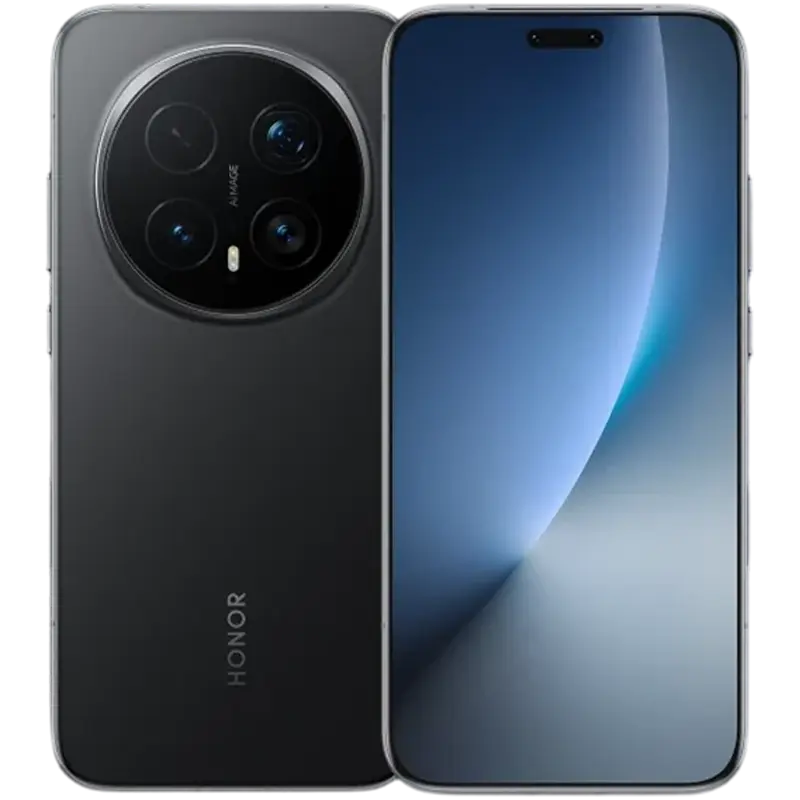
Samsung
Honor
Galaxy S26 Ultra
Magic8 Pro
Ranked #6 of 59
Ranked #1 of 59
Overall
Overall



The Samsung Galaxy S26 Ultra and Honor Magic8 Pro are both flagship phones. Samsung's phone is the continuation of a well-established Ultra line built around a large display, S Pen integration, and a versatile multi-lens camera system. Honor's entry aims to compete at the same tier with aggressive battery capacity, fast charging, and a display that pushes hard on brightness and color accuracy. Both run the same Snapdragon 8 Elite Gen 5 chipset, so the differences come down to everything around the silicon.
The Galaxy S26 Ultra is the stronger camera phone overall, with better color accuracy across lenses, more consistent skin tones, and a dual-telephoto system that gives it more optical reach. The Magic8 Pro pulls ahead on battery life by a wide margin, charges faster on both wired and wireless, and has a display that's brighter in HDR content and more color-accurate in its best mode.
Here’s how the two phones compare in our thorough testing.
Design
| Samsung Galaxy S26 Ultra | Honor Magic8 Pro | |
|---|---|---|
| Specifications | ||
| Dimensions | 163.6 x 78.1 x 7.9 mm | 161.2 x 75 x 8.3 mm |
| Weight | 214g | 219g |
| IP Rating | IP68 | IP68/IP69K |
| Frame | Aluminum | Aluminum |
| Front | Gorilla Armor 2 | NanoCrystal Shield |
| Back | Gorilla Glass Victus 2 | Fiber-reinforced plastic |
| Screen-to-body ratio | 91.5% | 89.6% |
The Samsung Galaxy S26 Ultra is the larger phone — 163.6 x 78.1 x 7.9mm versus 161.2 x 75 x 8.3mm for the Magic8 Pro. The S26 Ultra is slightly thinner but wider and taller. It weighs 214g; the Magic8 Pro is 219g, which is close enough that neither will feel meaningfully heavier in a pocket. Both use aluminum frames. The S26 Ultra pairs Gorilla Armor 2 on the front with Gorilla Glass Victus 2 on the back, while the Magic8 Pro uses Honor's NanoCrystal Shield up front and fiber-reinforced plastic on the back. The plastic back makes the Magic8 Pro less likely to shatter from a drop, though it won't feel the same as glass under your fingers.
Both phones carry IP68 ratings, meaning submersion in fresh water up to the rated depth. The Magic8 Pro adds IP69K certification, which covers resistance to high-pressure, high-temperature water jets. That's a niche benefit, but it means the Magic8 Pro is rated for more extreme water exposure.
The S26 Ultra has a 91.5% screen-to-body ratio with a 19.5:9 aspect on a 6.9-inch display, resulting in thinner bezels than the Magic8 Pro's 89.6% ratio on a 6.71-inch panel with a 20.1:9 aspect. The Magic8 Pro's taller, narrower aspect ratio makes it a bit easier to hold one-handed despite being only slightly smaller overall.
Bandicoot Lab doesn't formally test design or durability, so these observations are based on specifications, not hands-on evaluation.
Display
| Samsung Galaxy S26 Ultra | Honor Magic8 Pro | |
|---|---|---|
634/ 881 | 790/ 881 | |
The S26 Ultra has a 6.9-inch Dynamic LTPO AMOLED 2X panel at 1440 x 3120 resolution, which works out to 500 pixels per inch. The Magic8 Pro runs a 6.71-inch LTPO OLED at 1256 x 2808, or 458 PPI. Both refresh from 1 to 120Hz. The resolution difference might be visible if you look closely at fine text, but at normal viewing distances, both panels are sharp enough that most people won't notice the gap.
Brightness is where these two devices diverge. The Galaxy S26 Ultra reaches 976 nits at maximum manual brightness, while the Magic8 Pro tops out at 759 nits. For everyday outdoor use where you're adjusting the slider yourself, the Samsung is clearly brighter. In HDR content, things reverse — the Magic8 Pro peaks at 4,969 nits versus the S26 Ultra's 3,023 nits. That's a significant difference for small bright highlights in HDR video. Both phones hold their sustained brightness well over 30 minutes of HDR playback. The Magic8 Pro retains 99.5% of its luminance, while the S26 Ultra holds 98.6%. Both are excellent results. The Magic8 Pro's does throttle heavily at larger window sizes though, with a stability of 33.4% of its peak, compared to 48.8% for the S26 Ultra.
Color accuracy is better on the Magic8 Pro. In its Normal Mode, colors are essentially reference-accurate. Neutral grays look neutral, skin tones read true, and there's almost no visible drift across the spectrum. The S26 Ultra in its Natural Mode shows moderate color drift, most noticeable in mixed content where warm tones shift slightly. In wider gamut modes, the Magic8 Pro covers 75.2% of Display P3 versus the S26 Ultra's 72.4%, though both fall short of full P3 coverage.
Touch latency averages 21ms on the S26 Ultra and 17.2ms on the Magic8 Pro. A 4ms gap is unlikely to be perceptible in everyday scrolling or typing.
Performance
| Samsung Galaxy S26 Ultra | Honor Magic8 Pro | |
|---|---|---|
908/ 1012 | 938/ 1012 | |
Both phones run the Qualcomm Snapdragon 8 Elite Gen 5 with 12GB of RAM in the configurations tested. Both offer 12GB and 16GB RAM options, with storage tiers at 256GB, 512GB, and 1TB.
CPU performance is a near-tie. The Magic8 Pro scores 3,721 on GeekBench 6 single-core to the S26 Ultra's 3,685. Multi-core is similarly close: 11,188 versus 11,198. You won't feel any difference in app launches, multitasking, or general responsiveness. Browser performance is also close, with the S26 Ultra scoring 46 on Speedometer to the Magic8 Pro's 44.7.
GPU performance splits along peak versus sustained lines. The S26 Ultra hits a higher peak in Wild Life Extreme at 7,802 versus 6,963 for the Magic8 Pro, about a 12% advantage in raw burst graphics output. The Magic8 Pro is more thermally stable, holding 64.1% of its peak across the stress test compared to the S26 Ultra's 49.8%. Solar Bay is similar — the S26 Ultra peaks higher at 13,861 versus 13,471, but the Magic8 Pro maintains 59.8% stability to the S26 Ultra's 56.2%, with a lower peak temperature of 42.2°C versus 44.8°C. The S26 Ultra will deliver slightly better performance in short gaming bursts; the Magic8 Pro will throttle less during extended sessions. For most games, neither will feel slow.
Camera
| Samsung Galaxy S26 Ultra (Overall) | Honor Magic8 Pro (Overall) | |
|---|---|---|
| Specifications | ||
| Main | 200MP, f/1.4, 23mm, 1/1.3" | 50MP, f/1.6, 23mm, 1/1.3" |
| Ultrawide | 50MP, f/1.9, 14mm, 1/2.5" | 50MP, f/2, 12mm, 1/2.88" |
| Telephoto | 10MP, f/2.4, 67mm, 1/3.94" | 200MP, f/2.6, 85mm, 1/1.4" |
| Telephoto (Long) | 50MP, f/2.9, 111mm, 1/2.52" | — |
| Front | 12MP, f/2.2, 23mm, 1/3.2" | 50MP, f/2, 21mm, 1/2.93" |
The Galaxy S26 Ultra fields a five-camera system, made up of a 200-megapixel f/1.4 main sensor, a 50-megapixel f/1.9 ultrawide, a 10-megapixel f/2.4 3x telephoto, a 50-megapixel f/2.9 5x telephoto, and a 12-megapixel f/2.2 front camera. The Magic8 Pro has four cameras: a 50-megapixel f/1.6 main sensor, a 50-megapixel f/2 ultrawide, a 200-megapixel f/2.6 3.7x telephoto, and a 50-megapixel f/2 front camera. Both max out at 100x digital zoom.
The S26 Ultra has the stronger overall camera system. Its main and telephoto lenses produce more accurate colors, better skin tones, and more reliable white balance across lighting conditions. The Magic8 Pro's cameras lean warm and push skin tones noticeably off-target, particularly in bright light. The Magic8 Pro does well on sharpness from its front camera and dynamic range from its main lens, both of which compete with or beat the Samsung. At deep zoom levels (80x and beyond), the two are close, with the Magic8 Pro holding a slight edge in average sharpness. Below 80x, the S26 Ultra generally resolves more detail at most focal lengths in bright light, while the Magic8 Pro sometimes catches up or pulls ahead in dark conditions where its processing is more aggressive.
Main
| Samsung Galaxy S26 Ultra (Main) | Honor Magic8 Pro (Main) | |
|---|---|---|
711/ 722 | 526/ 722 | |
The S26 Ultra's 200-megapixel main sensor is sharp across all lighting conditions, with strong detail retention as light drops. The Magic8 Pro's 50-megapixel main is also sharp, with high output in dark scenes where its processing aggressively lifts detail. Both phones resolve fine detail well in bright and mid light; the Samsung holds a clearer lead in bright conditions while the Magic8 Pro is competitive in low light.
Color is where the two devices diverge most. The S26 Ultra's main camera has a mildly vivid tuning in bright light, pushing saturation up beyond neutral. Colors look punchy but recognizable. Hue accuracy is reasonable in bright light and degrades moderately in dimmer conditions, largely due to white balance correction pulling slightly warm under cooler lighting. Skin tones are noticeably off in bright light but improve considerably in mid and dark conditions, landing close to accurate.
The Magic8 Pro's main camera has a pronounced warm cast that intensifies as lighting gets dimmer. In bright light it leans yellow, and by low light it pushes heavily warm with a strong pink-warm shift in skin tones. The warm bias escalates steadily from bright to dark conditions, indicating the processing is over-compensating for cooler ambient light. Skin tones are significantly off-target across all lighting levels. Saturation is moderate in bright and mid light but ramps up in dark scenes.
Dynamic range favors the Magic8 Pro. Its processing pulls more detail from both shadows and highlights in high-contrast scenes, preserving depth in challenging backlit situations. The S26 Ultra handles dynamic range well but can't match the Magic8 Pro's aggressive tone mapping, which keeps shadow detail visible without crushing highlights as aggressively.
Ultrawide
| Samsung Galaxy S26 Ultra (Ultrawide) | Honor Magic8 Pro (Ultrawide) | |
|---|---|---|
542/ 722 | 431/ 722 | |
The S26 Ultra uses a 50-megapixel ultrawide at 0.6x, while the Magic8 Pro's 50-megapixel ultrawide sits at 0.5x. Sharpness is close between the two. The S26 Ultra is slightly sharper in bright light; the Magic8 Pro pulls ahead in mid and dark conditions, retaining more detail than you'd expect from its sensor size.
Color accuracy from the S26 Ultra's ultrawide is broadly similar to its main lens — moderately vivid with reasonable hue accuracy in bright light that degrades under warmer, dimmer lighting. Skin tones drift noticeably in bright and mid conditions. The Magic8 Pro's ultrawide carries the same warm bias as its main lens but more extreme, with skin tones pushed far from reference in bright and mid light. In low light, the warm shift becomes very strong, with hue errors roughly double what the S26 Ultra produces. The escalating warm bias across lighting conditions again points to white balance overcorrection.
Dynamic range from both ultrawides is a step below their respective main lenses, which is typical. The Magic8 Pro retains more shadow and highlight detail, matching the pattern from the main camera.
Telephoto
| Samsung Galaxy S26 Ultra (Telephoto Short) | Samsung Galaxy S26 Ultra (Telephoto Long) | Honor Magic8 Pro (Telephoto) | |
|---|---|---|---|
589/ 722 | 676/ 722 | 449/ 722 | |
The S26 Ultra has two telephoto lenses: a 10-megapixel 3x (67mm) and a 50-megapixel 5x (111mm). The Magic8 Pro has a single 200-megapixel 3.7x telephoto (85mm) on a large 1/1.4-inch sensor.
The S26 Ultra's 5x telephoto is its strongest zoom lens. It's sharp in bright and mid light, with good color accuracy and skin tones that stay close to reference. In low light, sharpness drops as expected, and skin tones shift significantly. The 3x telephoto is a weaker link, and sharpness falls off quickly in dim conditions. Colors from the 3x are decent, with moderate hue errors and skin tones that track reasonably well until dark scenes.
The Magic8 Pro's 3.7x telephoto benefits from its large sensor, but color processing undermines the results. Skin tones are severely pushed off-target in bright and mid light, more so than any other lens on either phone. The warm bias is extreme, and hue errors are large across all lighting. In low light, a strong pink-red shift appears in skin tones, distinct from the warm yellow cast seen at brighter levels. This suggests both white balance overcorrection and some sensor-level hue confusion contributing in darker conditions. At equivalent zoom ranges the two systems trade blows depending on lighting.
Video stabilization is solid from the S26 Ultra's 3x telephoto, which keeps handheld footage well-controlled. The Magic8 Pro's telephoto shows more visible movement in stabilized video, a weakness given the long focal length where shake is amplified.
Dynamic range from the S26 Ultra's 5x telephoto is good for a zoom lens. The Magic8 Pro's telephoto captures wider dynamic range in processed photos but applies heavy compression that can flatten the image somewhat.
Front
| Samsung Galaxy S26 Ultra (Front) | Honor Magic8 Pro (Front) | |
|---|---|---|
415/ 722 | 400/ 722 | |
The Magic8 Pro's 50-megapixel front camera is sharper than the S26 Ultra's 12-megapixel selfie camera across all lighting conditions. The Magic8 Pro resolves noticeably more detail in bright, mid, and dark scenes.
Color from the S26 Ultra's front camera is mixed. In bright light, hue accuracy is good and saturation is close to neutral. Under mid lighting, skin tones drift and a pink-cool shift appears. In dark conditions, hue errors increase and a noticeable cool-blue cast develops in the processing. The Magic8 Pro's front camera has accurate hues in mid light with skin tones close to reference, but bright light introduces a strong warm shift with heavily inaccurate skin tones, and dark light produces severe warm-pink shifts with large hue errors. The dark-light behavior on the Magic8 Pro's front camera is its worst result: a strong warm and pink overcorrection that distorts faces considerably.
Battery
| Samsung Galaxy S26 Ultra | Honor Magic8 Pro | |
|---|---|---|
539/ 799 | 799/ 799 | |
The Magic8 Pro has a 7,100mAh battery, while the S26 Ultra has a 5,000mAh cell. That 42% capacity advantage translates directly into real-world endurance differences.
In video playback, the Magic8 Pro lasted 35.5 hours to the S26 Ultra's 31.6 hours. Both are strong results. Web browsing is where the gap widens: the Magic8 Pro drained just 11% over five hours compared to 24% for the S26 Ultra, meaning the Magic8 Pro could browse for roughly twice as long before dying. Gaming drain is essentially identical at 25% and 24% respectively for the same stress test. Standby drain overnight was 7% for the Magic8 Pro and 10% for the S26 Ultra over eight hours.
The Magic8 Pro is the clear endurance winner. If you regularly run through your phone's battery before the end of the day, the difference is substantial. The S26 Ultra's battery life is fine by flagship standards, but the Magic8 Pro's combination of a massive cell and efficient web browsing puts it in a different category.
Charging
| Samsung Galaxy S26 Ultra | Honor Magic8 Pro | |
|---|---|---|
486/ 837 | 837/ 837 | |
The Magic8 Pro supports 120W wired and 80W wireless charging. The S26 Ultra maxes out at 60W wired and 25W wireless.
In wired charging, the S26 Ultra actually reaches a higher percentage in the first 10 minutes: 34% versus 30% for the Magic8 Pro. That's partly because the S26 Ultra's 5,000mAh battery means each percentage point represents less energy. By 30 minutes, the two are nearly tied: the Magic8 Pro hits 81% and the S26 Ultra reaches 79%. Given that the Magic8 Pro's battery is 42% larger, filling it to 81% in 30 minutes represents significantly more energy delivered. Wireless charging favors the Magic Pro too, which hits 67% in 30 minutes, compared to the the 44% of a smaller battery on the Galaxy S26 Ultra.
The Magic8 Pro's ability to reach 81% of a 7,100mAh battery in half an hour via wired charging is genuinely useful.
Speaker
| Samsung Galaxy S26 Ultra | Honor Magic8 Pro | |
|---|---|---|
857/ 897 | 680/ 897 | |
The Magic8 Pro is slightly louder, reaching 76.9 dBA versus the S26 Ultra's 75.3 dBA. That's a small difference.
Sound quality diverges more. The S26 Ultra has much lower distortion at 3.26% average THD compared to the Magic8 Pro's 8.63%. At higher volumes, the S26 Ultra stays clean while the Magic8 Pro introduces audible harshness, particularly in vocals and midrange content. The S26 Ultra also has fuller bass and better high-frequency clarity, producing a more balanced sound overall. The Magic8 Pro's frequency response is more even across the midrange, but its weaker bass and lower clarity give it a thinner character that's less satisfying for music or video.
The S26 Ultra is the better speaker by a comfortable margin. If you regularly listen to content without headphones, you'll notice the difference.
Microphone
| Samsung Galaxy S26 Ultra | Honor Magic8 Pro | |
|---|---|---|
566/ 1220 | 601/ 1220 |
Both phones deliver average microphone quality. The Magic8 Pro's frequency response is slightly more even, suggesting marginally more natural-sounding voice capture. Neither phone stands out as particularly strong or weak here. Both are fine for calls and voice memos.
Other
| Samsung Galaxy S26 Ultra | Honor Magic8 Pro | |
|---|---|---|
| Biometrics | 764/ 1181 | 614/ 1181 |
| Data Transfer | 737/ 877 | 680/ 877 |
| Specifications | ||
| Biometric type | Fingerprint | Fingerprint |
| Ports | USB-C 3.2 | USB-C 3.2 |
| Storage | 256GB, 512GB, 1TB | 256GB, 512GB, 1TB |
Fingerprint unlock speed favors the S26 Ultra at 138ms versus 171ms for the Magic8 Pro. Both are fast enough that the unlock feels instant in daily use, but the Samsung is perceptibly quicker if you're paying attention. Neither phone has hardware-based face unlock. The Magic8 Pro does register a face unlock time of 281ms, but this appears to be a camera-based implementation rather than dedicated hardware.
Data transfer speeds are close. Both phones read at about 332 MB/s. The S26 Ultra writes at 274 MB/s versus 230 MB/s for the Magic8 Pro. If you regularly transfer large files to and from external storage, the Samsung has a modest advantage. Both use USB-C 3.2 and offer 256GB, 512GB, and 1TB storage configurations.
Conclusion
The Galaxy S26 Ultra is the better choice if camera accuracy and speaker quality are your priorities. Its dual-telephoto system provides more optical flexibility, skin tones are more reliable across its lenses, and the speaker produces cleaner, fuller sound. It also has a sharper display, faster fingerprint unlock, and a brighter screen for manual outdoor use.
The Honor Magic8 Pro is the better choice if battery life and display quality matter most. Its endurance advantage is large enough to change how often you charge, and its display is more color-accurate while reaching higher HDR brightness peaks. It charges a substantially bigger battery to near-full in the same time the S26 Ultra takes, and its GPU thermal management is better for sustained gaming.
The S26 Ultra is a more polished all-rounder with particular strength in imaging. The Magic8 Pro makes big bets on battery and display that pay off clearly, but its camera color processing is a genuine weakness at this price. Your choice comes down to whether you'd trade camera accuracy for endurance and display fidelity.
Related
Honor
Magic8 Pro
Samsung
Galaxy S26 Ultra
Honor
Magic V6
Samsung
Galaxy S26+
Samsung
Galaxy Z Fold 8 Ultra
Samsung
Galaxy Z Fold 8
Samsung
Galaxy S26
Honor
600
Best Phones
Best Phone Displays
Best Android Phones
Best Samsung Phones