Sensor size vs dynamic range: Does a bigger sensor capture more?
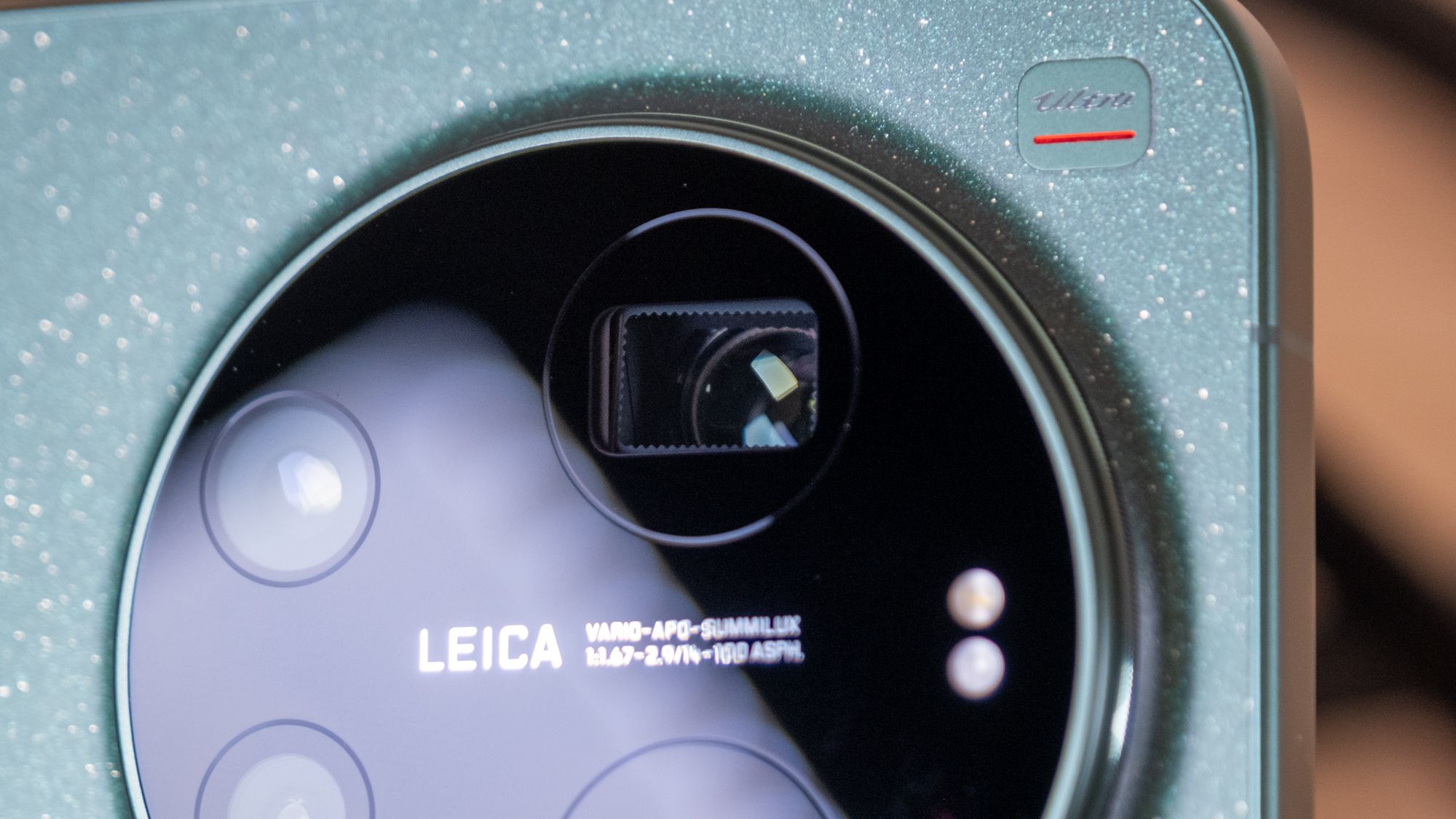
Camera sensors are getting bigger. The best phones now often carry one-inch-type sensors — the kind that used to live in dedicated compact cameras, and the marketing leans hard on the size of the glass and silicon. The promise is the one that's held in photography for decades: a bigger sensor gathers more light, and more light means more dynamic range, or more detail held in the brightest highlights and the deepest shadows at the same time.
We tested that promise across 51 phones, in raw and in processed output, and it doesn't hold, at least in the world of smartphones. Sensor size doesn't predict a phone's dynamic range. Neither does aperture, pixel size, resolution, or price. What separates one phone from another isn't the sensor at all.
How we measure dynamic range
To measure dynamic range, we photograph a Stouffer step wedge — a film strip of patches that steps evenly from clear to nearly opaque, each step about a third of a stop darker than the last, across roughly 41 steps. The wedge holds far more range than any phone can capture, so the real questions are how much of it a camera resolves, and how faithfully it renders what it resolves. Those are two different things, and we measure them separately.
The first is how many of the steps the camera can tell apart — where one patch differs from its neighbor by more than the image's own noise. We count those distinguishable steps and convert the count to stops of exposure value (EV), since each step spans a third of a stop. That tells us how much of the brightness range the camera resolves, from the brightest highlight it holds down to the deepest shadow it pulls out of the noise. It's a measure of how much the camera can see.
The second is whether the camera renders those steps with their true spacing, or quietly compresses them. A camera can keep two patches distinguishable — different enough to clear the noise floor — while squashing the gap between them far smaller than it was in the scene. That flattening is a genuine loss of dynamic range even when the step still counts, so we track it on its own: how closely the camera's tone curve follows an even, faithful rendering versus how much it crushes highlights and shadows toward the middle to fit. A faithful curve preserves the distance between tones; a compressed one flattens them. A camera can resolve plenty of steps and still render them flat, and the count alone wouldn't catch it.
We run both measurements two ways on every phone. The first is auto mode, which is the camera's normal processing pipeline. The second is a raw capture at fixed ISO, which strips away the computational layer and shows what the sensor records on its own. Comparing the two shows how much of the final image is the sensor and how much is the processing on top of it.
Turns out, there’s a pretty big distinction.
The sensor is a commodity
Strip the processing away and look at RAW images, and phones essentially converge, at least when it comes to dynamic range. Across every main camera we tested, RAW dynamic range lands in a narrow band of roughly six stops. The spread is tiny — a standard deviation of about half a stop separates the entire field, from budget phones to the most expensive flagships. The same holds on ultrawide, telephoto, and front cameras measured separately. Whatever the sensor, whatever the price, a single raw frame captures about the same range.
Sensor size doesn't predict dynamic range
Each dot is one phone's main camera — raw dynamic range, before any processing, against sensor area.
That puts the size hierarchy on its head. The two largest sensors in the dataset are full one-inch-type units in the Xiaomi 15 Ultra and 17 Ultra, and in raw they resolve about 4.7 stops of usable range — near the bottom of the field. The iPhone 16e, a $599 phone on a sensor a fraction of that size, resolves a full six. A 200-megapixel Samsung Galaxy S26 Ultra and a 50-megapixel Pixel 10 Pro land within a third of a stop of each other. The sensor that costs the most and gathers the most light does not capture the most range.
We checked every hardware spec that could plausibly explain dynamic range, and none of them do. Across the dataset, sensor area shows essentially no relationship to raw dynamic range, and the weak relationships that do appear point in different directions on different lenses — the signature of noise, not a real effect. Aperture is flat. Megapixel count is flat. Pixel size is the spec that should likely matter most for dynamic range, since bigger photosites hold more light before they clip — but it’s flat too, even after accounting for pixel binning, where high-resolution sensors merge groups of pixels into larger effective ones. Price shows no relationship. Even the processor doesn't help — group the phones by chip family and raw dynamic range is the same across all of them. The chip that runs the camera doesn't change what the sensor records.
This is a sharper version of a pattern we found testing sharpness, where megapixels, aperture, and sensor size at least pulled some, if moderate, weight — and even there, the phones that resolved the most detail weren't the ones with the most pixels, but the ones whose makers had invested most in processing. For dynamic range there's nothing on the spec sheet to point to at all. The sensor sets a floor, and that floor is about the same height for everyone.
A real ceiling, in the wrong place
There is a ceiling here — raw dynamic range tops out around six stops and barely moves — but it isn't set by sensor size. It sits far below what the test itself can measure, so it isn't the wedge running out of room. It's a genuine limit of the sensor-and-readout system, and it lands in roughly the same place whether the sensor is a one-inch type or a tiny secondary unit.
The reason a bigger sensor doesn't push past it is that dynamic range isn't really what the extra sensor area buys. More sensor area, and the larger or more numerous pixels that come with it, mostly buys cleaner shadows and lower noise — a better-looking image in other respects — rather than a wider span from highlight to shadow. The highlight ceiling and the noise floor that bound dynamic range don't scale with sensor size the way total light-gathering does, especially once these sensors run at very high pixel counts and bin back down. The big sensor earns its keep elsewhere. Dynamic range isn't on the list.
Processing is the whole game
Turn auto mode back on and the tight RAW band blows open. Processed dynamic range ranges from about four stops to eleven, a spread roughly three times wider than raw, and the average climbs about two stops above the raw baseline. Every bit of meaningful variation between phones lives here, in the processing, layered on top of a sensor floor that's nearly identical across the field.
All the variation comes from processing
Dynamic range for every main camera, measured two ways.
It's tempting to call that two-stop gain free dynamic range, courtesy of good software. It isn't — or at least it isn't only that. When we break down what the processing actually does to the image, the gain turns out to be three different things, and only part of it is what most people would call more dynamic range.
The first part is that phone processing recovers detail in the shadow — by boosting the exposure. We know it’s additional detail, because the signal-to-noise ratio in the shadows improves by up to 27 decibels in auto mode. In RAW shots, the darkest patches of the wedge vanish into noise.
But the way they get there is by making a trade. At the bright end, nearly every phone — 49 of the 51 main cameras — clips more of the highlights in auto than in RAW, pushing the brightest stretch of the wedge to flat white. Where a RAW frame holds detail across almost the full brightness range, the processed image throws away the top, often the brightest 40 percent of the tonal range. Of course, boosting the exposure during capture isn't strictly processing, but it is part of the phone's image pipeline that begins when you take a photo.
The third part is presentation. Add it up and the processed image holds a narrower span — fewer steps from brightest to darkest — yet its dynamic range number comes out higher, because what the measure counts is how many steps are cleanly distinguishable, and auto spreads its narrower span across cleaner, higher-contrast steps that are easy to tell apart. RAW spans wider but renders it noisy and flat, so much of that span blurs together and never counts.
Processing trades highlights for shadows
How much detail each mode gives up at either end of the brightness range, averaged across every main camera. Raw loses its deepest shadows to noise; processing instead clips the brightest highlights to white to clean those shadows up.
So the honest description of what a phone does to dynamic range is this — it captures less of the scene's full brightness range than the sensor is capable of, repositions what it keeps toward the shadows, cleans up the dark end with real recovered detail, and blows out the highlights to do it. Calling the result more dynamic range is true by the meter, and true to the eye, but it isn't more of the scene.
What makers do with it
If dynamic range is a processing decision, the obvious question is what decides the processing. It isn't price. Across the dataset, the aggressiveness of a phone's tone curve shows no relationship to what it costs. Some of the most expensive phones leave the tone curve nearly untouched. The notion that budget phones get less processing attention than flagships simply isn't true in this data — at least when it comes to dynamic range.
It's partly a matter of brand, with caveats. A few manufacturers apply a consistent house style regardless of what the phone costs. Samsung stays close to the captured tone curve across its whole range, from its cheapest model to its most expensive — a restrained, faithful look. Nothing and Xiaomi sit at the other end, remapping aggressively top to bottom of their lineups. For these, the tone-curve character holds steady enough that you can fairly call it the brand's signature. Others — Apple, Honor, OnePlus, Motorola — vary enough from one model to the next.
A spec sheet isn't enough
Dynamic range on a phone is about making trades, and that’s largely down to processing, not the hardware involved. The sensor sets a low, universal floor — about five stops, and nothing you can read off a spec sheet moves it. Everything above that floor is built in software, and the software isn't performing a miracle so much as making a series of choices: how much shadow detail to recover, how much highlight to spend recovering it, how to spread what's left so it reads cleanly.
That makes dynamic range another spec in a row that doesn't behave the way the marketing implies. With sharpness, more megapixels helped, just less than advertised, and some of the apparent sharpness was cosmetic — oversharpening that a careful test strips back out. With dynamic range, the hardware doesn't help at all, and the processing that does help giveth at the shadows and taketh at the highlights. In both cases, the variable that decides which phone comes out ahead is the one a spec sheet can't show you.
FAQ
Does a bigger camera sensor give a phone better dynamic range?
No. In raw, dynamic range sits around five stops regardless of sensor size — the two biggest one-inch sensors actually landed near the bottom, while a $599 iPhone 16e on a far smaller sensor came out on top.
So what actually determines a phone's dynamic range?
Processing. Turn auto mode back on and the range opens up from about four stops to eleven, and all of that variation comes from software layered on top of a sensor floor that's nearly identical across the field.
Why does auto mode look like it has more dynamic range than RAW?
The phone recovers shadow detail by boosting exposure, then renders what's left as cleaner, higher-contrast steps that are easy to tell apart. It also clips the brightest highlights to pull that off, so the higher number comes from a narrower slice of the actual scene.
Do more expensive phones have better dynamic range?
No — price showed no real relationship to dynamic range in our testing. Aggressive processing turned up on budget phones and pricey flagships alike, and some of the most expensive phones leave the tone curve almost untouched.
How do you measure a phone's dynamic range?
We photograph a Stouffer step wedge — a strip that steps evenly from clear to nearly opaque — and count how many steps the camera can tell apart above its own noise, then convert that to stops. We run it twice, auto and raw, so we can separate what the sensor captures from what the processing adds.
Related
The house look: How phone brands tune camera color
Megapixels vs sharpness: Does resolution buy sharper photos?
Apple
iPhone 17 Pro Max

Samsung
Galaxy S26 Ultra
Apple
iPhone 17 Pro
Samsung
Galaxy S26+
Samsung
Galaxy S26
Apple
iPhone 17
Apple
iPhone 17e
Apple
iPhone Air

Samsung Galaxy S26 Series vs Galaxy S25 Series
iPhone 17 vs iPhone 17 Pro vs iPhone 17 Pro Max vs iPhone Air