Xiaomi 15 Ultra
Score Overview
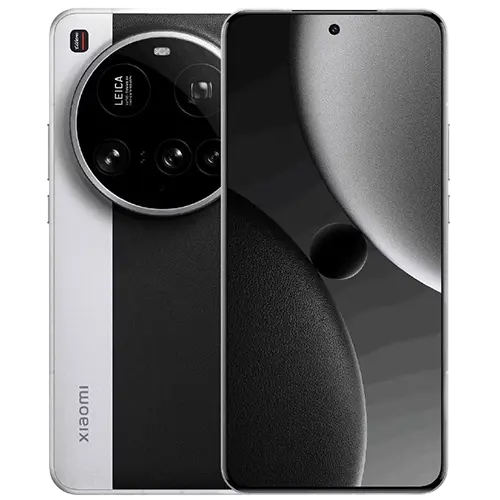
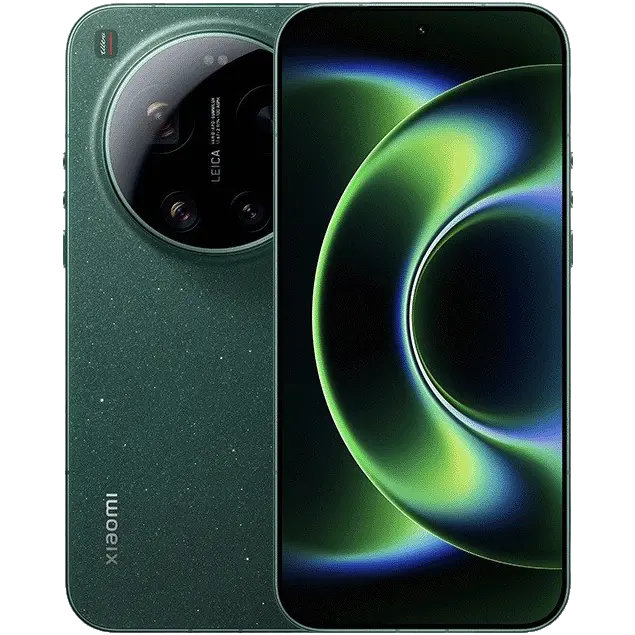
The Xiaomi 15 Ultra is a €1,499 flagship built around a 6.8-inch LTPO AMOLED display, Qualcomm's Snapdragon 8 Elite processor, and a five-camera system that includes a 1-inch main sensor. It carries 16GB of RAM, a 5,410mAh battery with 90W wired and 50W wireless charging, and IP68 dust/water resistance. At 226 grams and 9.4mm thick, it's heavier and thicker than most peers at this price — the Samsung Galaxy S26 Ultra is 1.5mm thinner. Its direct successor, the Xiaomi 17 Ultra, is available at the same €1,499 price with a newer chipset and revised camera system.
The 15 Ultra's strengths are concentrated in its display, charging speed, microphone quality, and data transfer rates. The camera system produces very high sharpness from the main and ultrawide lenses but is let down by mediocre dynamic range and inconsistent video stabilization. Battery life is average for its class despite the large cell, and its Snapdragon 8 Elite puts it a generation behind the Samsung Galaxy S26 Ultra, Honor Magic8 Pro, and its own successor in raw processing power.
Design
Specifications
The Xiaomi 15 Ultra measures 161.3 x 75.3 x 9.4mm and weighs 226 grams. It uses an aluminum frame with Xiaomi Shield Glass 2.0 on the front, and a back panel available in glass fiber or vegan leather finishes. The 6.8-inch display has a 20:9 aspect ratio and a 91.9% screen-to-body ratio. An IP68 rating covers full dust ingress and fresh-water submersion beyond 1 meter, with depth and duration set by Xiaomi. Bandicoot Lab does not formally test design or durability, so this section is descriptive rather than scored.
At 226 grams and 9.4mm thick the Xiaomi 15 Ultra is one of the heaviest and thickest phones in its tier, largely because of the camera module — the Ultra line prioritizes imaging hardware over thinness. Against same-price rivals the Samsung Galaxy S26 Ultra at $1,299.99 is a smaller package at 163.6 x 78.1 x 7.9mm and 214 grams, and the iPhone 17 Pro Max at $1,199 is 163.4 x 78 x 8.8mm and 233 grams. The 91.9% screen-to-body ratio is among the highest in this roundup. The glass-fiber and vegan leather back options are styling choices specific to the Ultra line, departing from the glass backs common at this tier.
Display
The Xiaomi 15 Ultra has a 6.8-inch LTPO AMOLED display running at 3200 x 1440 resolution (522 PPI), with a 1–120Hz adaptive refresh rate. Peak HDR brightness hits 3,528.5 nits, and max manual brightness reaches 825.2 nits — bright enough for comfortable outdoor use, though noticeably behind the Google Pixel 10 Pro XL's 1,435 nits manual brightness. Minimum brightness dips to 1.72 nits, which is fine for dark-room reading. Brightness stability is excellent at 99.56%, meaning the panel sustains its output under extended load without dimming.
Touch latency is quicker than the Samsung Galaxy S26 Ultra, the Xiaomi 17 Ultra, and considerably ahead of the iPhone 17 Pro Max. In practice, most users won't perceive the difference.
Color accuracy is decent, but not incredible. The best-performing mode (Vivid, targeting Display P3) produces an average Delta E of 2.8 — meaning colors drift moderately from their true reference values. The Saturated mode has a slightly higher color error, too. The Original Color Pro mode targets sRGB with 99.74% coverage, but its average Delta E of 2.96 isn't meaningfully better than the wider-gamut modes. By comparison, the Honor Magic8 Pro's Normal mode achieves an average Delta E of 0.82, and the Google Pixel 10 Pro XL's Natural mode hits 1.32. The 15 Ultra's display is bright, sharp, and responsive, but its calibration falls short of the best at this price.
Performance
The Snapdragon 8 Elite inside the 15 Ultra posts a Geekbench 6 single-core score of 3,025 and a multi-core score of 9,288. These are solid numbers, but the newer Snapdragon 8 Elite Gen 5 found in the Samsung Galaxy S26 Ultra, Honor Magic8 Pro, and the Xiaomi 17 Ultra pulls ahead — roughly 20% faster in single-core and 20% in multi-core. In everyday use this generational gap shows up mainly in heavy multitasking and sustained workloads rather than basic app launching.
GPU performance is mixed The 3DMark Wild Life Extreme stress test peaked at 6,489 with stability of 77.7%, dropping to a worst-loop score of 5,040. That stability figure is better than the Galaxy S26 Ultra and Honor Magic8 Pro, meaning the 15 Ultra throttles less aggressively even though its peak is lower. The device runs hot under load, though — 47°C is the highest among these competitors.
Browser performance via Speedometer comes in at 29.23, which is middling. The Galaxy S26 Ultra scores 46, and the Honor Magic8 Pro 44.7.
Camera
The 15 Ultra carries five cameras, including a 50-megapixel main (1-inch sensor, f/1.6), a 50-megapixel ultrawide (f/2.2), a 50-megapixel 3x telephoto (f/1.8), a 200-megapixel 5x telephoto (1/1.4-inch sensor, f/2.6), and a 32-megapixel front camera (f/2.0). The hardware is ambitious — two telephoto lenses with large sensors and fast apertures, plus one of the largest main camera sensors available.
Sharpness is the system's clear strength. The main and ultrawide lenses both score exceptionally well, and the two telephoto lenses maintain high sharpness through their native focal lengths. Dynamic range is a different story though — every lens except the ultrawide scores below average, with the main camera's auto-mode producing a compressed, narrow tonal range. Video stabilization is weak across most lenses, particularly on the telephoto cameras, though the ultrawide performs well. Color processing in auto mode runs vivid with noticeable saturation boost, particularly on skin tones in bright light — a stylistic choice that benefits from switching to raw capture for critical color work.
Main
The 50-megapixel main camera, built around a 1-inch sensor at f/1.6, delivers strong sharpness across lighting conditions. Detail remains high from bright to dark scenes with minimal sharpening overshoot, indicating clean processing that doesn't rely on heavy edge enhancement to fake detail. In raw mode, sharpness drops as expected since computational processing is removed, but the large sensor still resolves well.
Color accuracy in auto mode shows Xiaomi's preference for punchy, vivid output. In bright light the camera oversaturates colors noticeably. Hue accuracy stays reasonable in bright conditions, but in mid-light (100 lux, 4000K), the white balance pipeline doesn’t fully compensate for the warmer ambient light. This warm cast persists in dark conditions alongside rising hue error, suggesting a combination of incomplete white balance correction and sensor-level hue confusion at higher ISO.
Dynamic range in auto mode is below average for a flagship main camera. We observed aggressive highlight clipping — the HDR processing clips highlights early and compresses the remaining tonal range. The Samsung Galaxy S26 Ultra's main camera captures more dynamic range with more natural tone mapping. Raw capture partially addresses this, though the unprocessed range is also moderate for a 1-inch sensor. Video stabilization on the main lens is poor, with high residual shake that would be noticeable in handheld walking shots.
Ultrawide
The 50-megapixel ultrawide (f/2.2, 0.6x / 14mm equivalent) produces sharpness nearly matching the main lens — an uncommon result, as ultrawide cameras typically lag behind. Detail holds up well in mid and dark conditions, with moderate sharpening overshoot that stays within acceptable bounds.
Color accuracy follows a different pattern than the main lens. In bright light, auto mode produces a high Delta E driven primarily by hue inaccuracy rather than saturation boost — the saturation sits near 98%, essentially neutral, but skin tones deviate significantly from their reference values. In mid and dark light, the processing shifts to a punchier profile with higher saturation.
Dynamic range is the ultrawide's best camera metric, with a usable range that’s actually wider than the main lens. Video stabilization is the best of any lens on this phone.
Telephoto Short
The 3x telephoto uses a 50-megapixel, 1/2.51-inch sensor at f/1.8 — a fast aperture for a telephoto lens. Sharpness is high in bright conditions and holds up well through mid-light, though it drops more noticeably in dark scenes than the main or ultrawide lenses.
Color accuracy is strong. In bright light, auto mode produces a moderate saturation boost, and skin tones drift less than on the main lens. In dark conditions, white balance struggles to compensate for the warmer conditions a little — the same pattern seen in the main and ultrawide lenses. Hue accuracy also degrades in dark conditions, with both white balance and sensor noise contributing.
Dynamic range in auto mode is reasonable at 7 EV — substantially wider than the main camera's auto output. Video stabilization is a weakness, with high residual shake that limits its usefulness for telephoto video.
Telephoto Long
The 5x telephoto pairs a 200-megapixel, 1/1.4-inch sensor with an f/2.6 aperture — a large sensor for a long telephoto. Sharpness is high at native 5x magnification and remains useful through extended zoom ranges, with 10x still producing good detail. Beyond 30x, sharpness drops steadily. At the maximum 120x, the camera barely resolves detail in bright light and produces nothing usable in darkness.
Color accuracy follows the same general pattern as the 3x telephoto. Auto mode in bright light produces vivid saturation, and skin tones shift moderately.
Dynamic range is the weakest of any rear lens, with aggressive highlight clipping. This limits its usefulness in high-contrast scenes. Video stabilization is also the worst on the phone — the long focal length amplifies any shake, and the electronic correction doesn't adequately compensate.
Front
The 32-megapixel front camera (f/2.0, 1/3.14-inch sensor) produces decent sharpness in bright and mid-light, with a moderate drop in dark conditions. Detail in raw mode is consistent across the range.
Color accuracy in auto mode is problematic in bright light, driven by a combination of hue inaccuracy and slight desaturation.
Dynamic range in auto mode is reasonable. Video stabilization is average, producing usable but not smooth footage.
Battery
The 5,410mAh battery delivers 29 hours and 44 minutes of continuous video playback at 200 nits — enough for roughly two full days of moderate real-world use between charges. At maximum brightness, that drops to 25 hours and 22 minutes. These figures are respectable but not class-leading — the Honor Magic8 Pro's 7,100mAh cell runs for 35 hours and 30 minutes, and the Samsung Galaxy S26 Ultra reaches 31 hours and 34 minutes from a smaller 5,000mAh battery. The Xiaomi 17 Ultra, with its 6,000mAh cell, lands at 30 hours and 59 minutes.
Web browsing drain is 25% over five hours, matching the Google Pixel 10 Pro XL and close to the Galaxy S26 Ultra's 24%. Gaming drain is 48% during the stress test — substantially higher than the Honor Magic8 Pro's 25% or the Galaxy S26 Ultra's 24%, and one of the highest figures among flagships. The Snapdragon 8 Elite runs hot under sustained GPU load (47°C), and the battery pays for it. Standby drain is excellent at just 2% over eight hours, matching the Pixel 10 Pro XL and iPhone 17 Pro Max.
The overall battery picture is one of average endurance for screen-on tasks, good standby efficiency, and notably high power draw under gaming loads.
Charging
Wired charging at 90W reaches 33% in 10 minutes and 76% in 30 minutes — a fast refill that gets you through most of a day from a brief top-up. The Xiaomi 17 Ultra charges at a similar pace, while the OnePlus 15's 120W charger is faster. The Samsung Galaxy S26 Ultra, limited to 60W, is slightly slower — though it starts from a smaller battery. The iPhone 17 Pro Max's 40W charging is considerably slower.
Wireless charging at 50W is useful, reaching 22% in 10 minutes and 54% in 30 minutes. This is faster than most competitors.
Speaker
The Xiaomi 15 Ultra had the deepest bass extension at its price, with just a 13.6 dB drop from the mids to the bass band — meaningfully tighter than the Xiaomi 17 Ultra's 17.3 dB. The high end was clear with well-extended treble, though the response was less even than the Xiaomi 17 Ultra. Loudness of 72.3 dBA was lower than the Xiaomi 17 Ultra's 71 dBA. Distortion was moderate at 5.7%.
Microphone
The microphone produces above-average results, with a relatively even capture across the frequency range without major gaps or peaks. This puts it ahead of the Samsung Galaxy S26 Ultra, Honor Magic8 Pro, and Xiaomi 17 Ultra. Voice recordings and calls should sound natural and clear, without the muffled or thin quality that higher-deviation microphones tend to produce.
Other
Measurements
Specifications
The ultrasonic fingerprint sensor unlocks in an average of 150ms — which is quite fast. The Samsung Galaxy S26 Ultra is marginally quicker, while the Xiaomi 17 Ultra is slower at 190.3ms and the Google Pixel 10 Pro XL trails at 213.9ms.
USB-C 3.2 Gen 2 provides solid data transfer speeds, with max read of 284.76MB/s and max write of 304.46MB/s. These are competitive with the Samsung Galaxy S26 Ultra and ahead of the Google Pixel 10 Pro XL.
Conclusion
The Xiaomi 15 Ultra is a capable flagship that excels in image sharpness, wireless charging speed, microphone quality, and touch responsiveness. However, it shows clear weaknesses in camera dynamic range, video stabilization, display color accuracy, and gaming battery drain. Its Snapdragon 8 Elite processor delivers solid but not top-tier performance given that newer Gen 5-equipped competitors have moved ahead. The camera system's hardware is impressive on paper, and sharpness results back that up, but the processing pipeline undermines the optics with aggressive tonal compression and vivid color tuning that pushes skin tones away from reality in auto mode.
At €1,499, it faces competition. The Samsung Galaxy S26 Ultra offers better dynamic range and speaker quality, while the Honor Magic8 Pro delivers superior battery life, display calibration, and performance, and the Xiaomi 17 Ultra succeeds it at the same price with a newer chipset, improved camera scores, and faster data transfer. The 15 Ultra remains a strong option for users who prioritize sharp stills and fast wireless charging, but its overall package doesn't separate it from the field.
Related

Xiaomi 17 Ultra vs Xiaomi 15 Ultra
Xiaomi
15T Pro
Xiaomi
17T Pro
Xiaomi
17
Xiaomi
17 Ultra
Motorola