Xiaomi 17 Ultra vs Xiaomi 15 Ultra
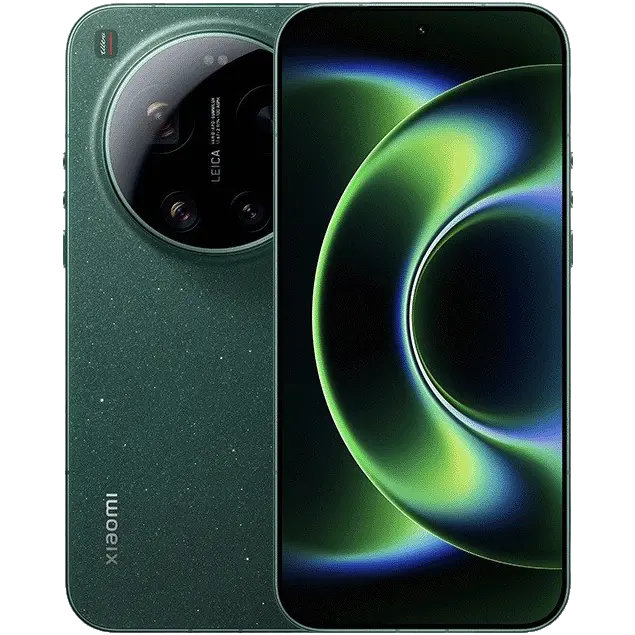
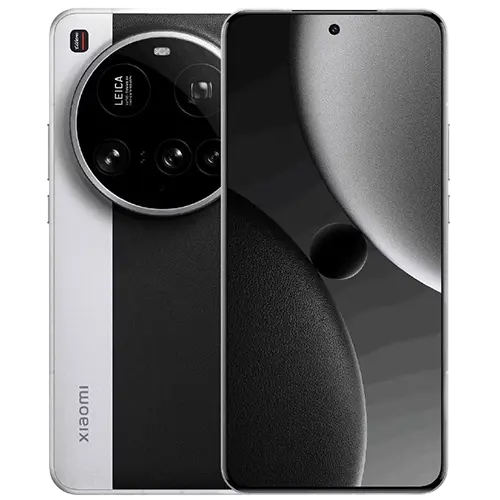
Xiaomi
Xiaomi
17 Ultra
15 Ultra
Ranked #8 of 51
Ranked #15 of 51
Overall
Overall

The Xiaomi 17 Ultra is a direct successor to the 15 Ultra. The identical price tag makes this less a cross-shop between competitors and more a question of whether the newer phone justifies itself against a predecessor that's still widely available. Both are Xiaomi's flagship Ultra line — big-sensor cameras, large batteries, premium builds — aimed at buyers who want the most capable Android phone Xiaomi makes.
The 17 Ultra pulls ahead most clearly in camera performance, particularly through its telephoto and ultrawide lenses, and in raw processing power thanks to the newer Snapdragon 8 Elite Gen 5. The 15 Ultra fights back with a sharper, higher-resolution display, better speakers, faster biometrics, and a more capable microphone. Battery life is close enough that neither phone has a decisive edge there.
Here’s how the Xiaomi 17 Ultra and Xiaomi 15 Ultra compared in our lab testing.
Design
| Xiaomi 17 Ultra | Xiaomi 15 Ultra | |
|---|---|---|
| Specifications | ||
| Dimensions | 162.9 x 77.6 x 8.3 mm | 161.3 x 75.3 x 9.4 mm |
| Weight | 218.4g | 226g |
| IP Rating | IP68/IP69 | IP68 |
| Frame | Aluminum | Aluminum |
| Front | Xiaomi Shield Glass 3.0 | Xiaomi Shield Glass 2.0 |
| Back | Fiber-reinforced plastic / Vegan leather | Glass fiber / Vegan leather |
| Screen-to-body ratio | 92.1% | 91.9% |
The two phones are similar in size and weight. The 17 Ultra is slightly taller and wider at 162.9 x 77.6 x 8.3mm but noticeably thinner than the 15 Ultra's 161.3 x 75.3 x 9.4mm. The 17 Ultra is also lighter at 218.4g versus 226g. Both use aluminum frames. The 17 Ultra pairs Xiaomi Shield Glass 3.0 up front with a fiber-reinforced plastic or vegan leather back; the 15 Ultra uses the older Shield Glass 2.0 with glass fiber or vegan leather. Neither phone uses ceramic or titanium.
The 17 Ultra carries an IP68/IP69 rating, meaning it's rated for both submersion and high-pressure water jets. The 15 Ultra is IP68 only — submersible but not rated for pressurized water. Screen-to-body ratios are nearly identical: 92.1% on the 17 Ultra, 91.9% on the 15 Ultra, so bezels are similarly thin. Aspect ratios differ slightly — 19.6:9 versus 20:9 — which makes the 15 Ultra a touch narrower and taller in proportion. Bandicoot Lab doesn't formally test design or durability, so these comparisons reflect spec-sheet differences only.
Display
| Xiaomi 17 Ultra | Xiaomi 15 Ultra | |
|---|---|---|
580/ 845 | 669/ 845 | |
The 15 Ultra has the higher-resolution display: 1440 x 3200 at 522 pixels per inch versus 1200 x 2608 at 416 PPI on the 17 Ultra. That's a meaningful gap. Text and fine UI detail look sharper on the 15 Ultra, and you'll notice the difference if you hold the two side by side. Both panels run at 1–120Hz LTPO AMOLED, so adaptive refresh behavior is equivalent.
Brightness tells a split story. The 15 Ultra is brighter in manual mode at 825 nits versus the 17 Ultra's 621 nits — a gap you'd feel outdoors when auto-brightness is off. In HDR content with auto-brightness engaged, peak output is close: 3,529 nits on the 15 Ultra, 3,409 nits on the 17 Ultra. The 17 Ultra holds its HDR brightness more evenly across different window sizes at 58.6% stability versus 48.2%, so bright highlights on the 17 Ultra are more consistent regardless of how much of the screen they cover. Both panels sustain brightness well over time, with the 15 Ultra at 99.6% and the 17 Ultra at 98.2% over a 30-minute test.
Color accuracy favors the 17 Ultra, though neither phone is exceptional here. The 17 Ultra's best display mode gets closer to reference colors — neutral tones look more accurate and peak color drift is lower. The 15 Ultra shows more visible deviation from reference, particularly in maximum color error; you might notice slightly shifted grays or off-target pastels. The 15 Ultra covers 99% of the DCI-P3 gamut versus 74.7% on the 17 Ultra, so it can display a wider range of colors, which matters for color-managed content. Full sRGB coverage is essentially identical.
For HDR tone mapping, the 15 Ultra departs more from the reference curve, boosting highlights modestly but starting to clip at about 90% input level. The 17 Ultra follows the reference curve more faithfully but clips earlier, around 85%. The 17 Ultra renders HDR content closer to how it was mastered; the 15 Ultra gives you slightly brighter highlights with a bit more headroom before clipping.
Touch latency is 10.6ms on the 15 Ultra versus 18.2ms on the 17 Ultra.
Performance
| Xiaomi 17 Ultra | Xiaomi 15 Ultra | |
|---|---|---|
884/ 1012 | 672/ 1012 | |
The 17 Ultra runs the Snapdragon 8 Elite Gen 5; the 15 Ultra runs the previous-generation Snapdragon 8 Elite. Both are configured with 16GB of RAM, with 12GB options available.
CPU performance is a clear generational step. The 17 Ultra scores 3,689 single-core and 11,173 multi-core in GeekBench 6, versus 3,025 and 9,288 on the 15 Ultra. That's roughly a 22% single-core and 20% multi-core improvement. In practice, the difference shows up in heavy multitasking, app compilation, and sustained workloads more than everyday scrolling and app launches.
GPU performance is where the gap widens further. The 17 Ultra's peak Wild Life Extreme score of 7,217 is about 11% higher than the 15 Ultra's 6,489. Stability under sustained load is lower on the 17 Ultra at 65% versus 77.7%, meaning it throttles more aggressively over extended gaming sessions. It starts hotter and cools down further. For short bursts of graphically intense work, the 17 Ultra is faster. Over a long gaming session, the 15 Ultra holds more of its peak performance.
Browser performance reverses the pattern: the 15 Ultra scores 29.2 in Speedometer versus 24.2 on the 17 Ultra. This likely reflects software optimization differences rather than raw capability, but it means web-heavy workflows feel snappier on the 15 Ultra right now.
Camera
| Xiaomi 17 Ultra | Xiaomi 15 Ultra | |
|---|---|---|
587/ 587 | 524/ 587 | |
The Xiaomi 17 Ultra earns a camera overall score of 605.5 and the 15 Ultra scores 546.2. The gap comes mainly from the telephoto, where the 17 Ultra's single 4x lens outperforms both of the 15 Ultra's telephoto lenses, and from stronger ultrawide and main camera results. Both phones share the same 200-megapixel 1/1.4" long telephoto sensor and 50-megapixel ultrawide, but the 17 Ultra extracts more from them.
Sharpness is strong across both phones' rear cameras in good light. The 17 Ultra's telephoto and ultrawide hold detail more consistently, especially as light drops. At the extreme digital zoom end — out toward 120x — both phones produce roughly similar results. Deep zoom at these magnifications is about processing muscle rather than optics, and neither phone resolves much usable detail at the far end.
Main
| Xiaomi 17 Ultra (Main) | Xiaomi 15 Ultra (Main) | |
|---|---|---|
612/ 722 | 591/ 722 | |
Both main cameras use 50-megapixel sensors at 23mm. The 17 Ultra's is f/1.7; the 15 Ultra's is f/1.6. Sharpness is high on both in good light. The 17 Ultra maintains detail more consistently as light drops, staying sharp across all three tested conditions. The 15 Ultra softens a bit more in dim light.
The 17 Ultra's main camera covers 1x to 4x before handing off to its telephoto. The 15 Ultra covers 1x to 3x. Both crop cleanly at 2x with minimal softening. As you push toward the top of each range — around 3.2x on the 17 Ultra, 3x on the 15 Ultra — you're working with digital crops, and the 17 Ultra holds up well through its wider range.
Dynamic range is noticeably better on the 17 Ultra's main camera. High-contrast scenes retain more shadow detail and scene depth. Both phones clip highlights, but the 15 Ultra loses usable range sooner, which can leave bright skies or light sources looking blown.
Stabilization is adequate on both, with neither phone standing out as exceptionally steady or problematic for handheld stills.
Ultrawide
| Xiaomi 17 Ultra (Ultrawide) | Xiaomi 15 Ultra (Ultrawide) | |
|---|---|---|
666/ 722 | 631/ 722 | |
Both ultrawides use the same 50-megapixel f/2.2 14mm spec. Sharpness is high on both, with the 17 Ultra improving as light dims while the 15 Ultra follows the more typical pattern of losing detail in lower light. Neither phone shows a dramatic dropoff.
Color accuracy is better on the 17 Ultra's ultrawide. The 15 Ultra's ultrawide has noticeable hue errors in bright light — a cool, blue-shifted cast that disappears under warmer lighting. This looks like white balance overcorrection rather than a sensor issue, since the shift correlates with the lighting change. The 17 Ultra's ultrawide keeps hues more consistent across conditions. Skin tones on the 15 Ultra's ultrawide drift substantially in bright light; the 17 Ultra handles them more reliably.
Dynamic range is close, with the 17 Ultra's ultrawide holding a slight edge in usable range. Both clip highlights. Stabilization is much better on the 15 Ultra's ultrawide — video and handheld shots stay notably steadier.
Telephoto
| Xiaomi 17 Ultra (Telephoto) | Xiaomi 15 Ultra (Telephoto Short) | Xiaomi 15 Ultra (Telephoto Long) | |
|---|---|---|---|
722/ 722 | 567/ 722 | 583/ 722 | |
The lens configurations differ significantly here. The 17 Ultra has a single variable zoom telephoto: 200 megapixels, f/2.4, 100mm, 1/1.4" sensor. The 15 Ultra has two telephotos: a 3x (50 megapixels, f/1.8, 70mm, 1/2.51" sensor) and a 5x (200 megapixels, f/2.6, 100mm, 1/1.4" sensor).
The 17 Ultra's telephoto is the sharpest of the three lenses across all lighting conditions. It holds detail well even in dim light, with barely any dropoff. The 15 Ultra's 5x telephoto is sharp in good and mid light but loses significant detail in dark conditions. The 15 Ultra's 3x telephoto shows more variation — sharp in dark and bright light but softer in mid-light, which suggests inconsistent processing.
As you zoom beyond each lens's native focal length, the 17 Ultra holds detail better through the digital crop range. Both phones reach 120x maximum zoom, where results are similar and largely unusable for anything beyond identifying general shapes.
Color accuracy is good across all three lenses in bright and mid light. The 17 Ultra's telephoto pushes saturation hardest in bright light — noticeably vivid — and eases back in dimmer conditions. Both of the 15 Ultra's telephoto lenses are more restrained in bright light, staying closer to neutral, but develop a warm cast in dim conditions consistent with white balance correction under warm lighting. The 17 Ultra's telephoto shows less of this warm shift.
Skin tones are more accurate across all conditions on the 15 Ultra's 3x telephoto — it's one of the better-performing lenses for portrait-type shots. The 17 Ultra and the 15 Ultra's 5x lens are similar, with moderate skin tone drift in bright light improving as light dims.
Dynamic range is strongest on the 17 Ultra's telephoto, with cleaner highlight-to-shadow transitions. The 15 Ultra's 3x telephoto does well, but the 5x loses range significantly and shows more tonal irregularities.
Stabilization is a real weakness for the 15 Ultra's telephoto lenses, especially the 5x, which shows very high shake amplification. The 17 Ultra's telephoto also amplifies motion but to a lesser degree. At these focal lengths, you'll want steady hands or a support on either phone, but the 15 Ultra demands it more.
Front
| Xiaomi 17 Ultra (Front) | Xiaomi 15 Ultra (Front) | |
|---|---|---|
470/ 722 | 414/ 722 | |
The 17 Ultra has a 50-megapixel f/2.2 front camera with a 1/2.7" sensor. The 15 Ultra uses a 32-megapixel f/2.0 with a smaller 1/3.14" sensor. Sharpness is moderate on both. The 15 Ultra is slightly sharper in bright and mid light; the 17 Ultra holds up a bit better in low light.
Color tuning on the front cameras differs. Both lean slightly desaturated compared to their rear cameras — faces look a touch more muted. The 17 Ultra's front camera develops a warm, slightly rosy cast in mid and low light, visible in skin tones. The 15 Ultra's front camera is more neutral across lighting conditions, with very little color shift as light changes. Skin tones on the 15 Ultra's front camera are more accurate in mid light; both phones struggle with skin accuracy in bright light.
Dynamic range is similar. Both clip highlights. Stabilization is slightly better on the 17 Ultra's front camera for video selfies.
Battery
| Xiaomi 17 Ultra | Xiaomi 15 Ultra | |
|---|---|---|
520/ 799 | 545/ 799 | |
The 17 Ultra has a 6,000mAh battery; the 15 Ultra has a 5,410mAh cell. The larger battery gives the 17 Ultra a modest edge in video playback: 31 hours versus 29.7 hours. Either phone will get through a long-haul flight and then some. Two full days of mixed use is realistic for both.
Web browsing drain over five hours is nearly identical: 26% on the 17 Ultra, 25% on the 15 Ultra. Neither phone is particularly efficient here, but you'll get through a full day of heavy browsing without concern on either.
Gaming is where the difference gets interesting. The 17 Ultra drains 31% during the one-hour stress test; the 15 Ultra drains 48%. Part of this gap reflects the 17 Ultra's larger battery, but the newer Snapdragon 8 Elite Gen 5 likely contributes to better power efficiency under sustained GPU load as well. If you game regularly, the 17 Ultra gives you meaningfully more playtime.
Standby efficiency strongly favors the 15 Ultra: it loses only 2% overnight in an 8-hour idle test, versus 9% on the 17 Ultra. The 17 Ultra's standby drain is high enough that you might notice your battery level dropping without use, especially over a weekend.
Charging
| Xiaomi 17 Ultra | Xiaomi 15 Ultra | |
|---|---|---|
568/ 837 | 561/ 837 | |
Both phones support 90W wired and 50W wireless charging. Wired charging speeds are nearly identical: 32% in 10 minutes and 77% in 30 minutes on the 17 Ultra, versus 33% and 76% on the 15 Ultra. The difference is within margin of error.
Wireless charging favors the 15 Ultra. It reaches 22% in 10 minutes and 54% in 30 minutes, compared to 19% and 45% on the 17 Ultra. The 17 Ultra's larger battery is part of the explanation — more capacity to fill at the same wattage.
Speaker
| Xiaomi 17 Ultra | Xiaomi 15 Ultra | |
|---|---|---|
701/ 857 | 828/ 857 | |
The 15 Ultra has the better speaker system. It's slightly louder at 72.3 dBA maximum versus 71 dBA, and it produces noticeably fuller bass. Low-end extension reaches down to 173Hz on the 15 Ultra compared to 184Hz on the 17 Ultra. The 15 Ultra also delivers better high-frequency clarity, making vocals and treble detail more distinct.
Distortion levels are similar — both phones show moderate distortion at high volumes, with neither being clean enough to forget you're listening to phone speakers. Frequency response is a bit more even on the 17 Ultra, but the 15 Ultra's character is richer overall. For media consumption without headphones, the 15 Ultra sounds meaningfully better.
Microphone
| Xiaomi 17 Ultra | Xiaomi 15 Ultra | |
|---|---|---|
605/ 949 | 759/ 949 |
The 15 Ultra's microphone delivers more consistent frequency response and scores well above average. The 17 Ultra's microphone is closer to average. For voice calls and voice memos, both are fine. If you regularly record audio — voice notes, video narration — the 15 Ultra captures a flatter, more natural sound.
Other
| Xiaomi 17 Ultra | Xiaomi 15 Ultra | |
|---|---|---|
| Biometrics | 552/ 1036 | 700/ 1036 |
| Data Transfer | 877/ 877 | 679/ 877 |
| Specifications | ||
| Biometric type | Fingerprint | Fingerprint |
| Ports | USB-C 3.2 Gen 2 | USB-C 3.2 Gen 2 |
| Storage | 512GB, 1TB | 256GB, 512GB, 1TB |
Both phones use ultrasonic fingerprint sensors. The 15 Ultra unlocks at an average of 150ms; the 17 Ultra takes 190ms. Both are quick, but the 15 Ultra feels a touch more immediate. Neither phone has hardware-based face unlock.
Data transfer speeds favor the 17 Ultra: 440 MB/s read and 342 MB/s write, versus 285 MB/s read and 304 MB/s write on the 15 Ultra. Both use USB-C 3.2 Gen 2 ports, so the difference is in the internal storage controller and NAND. If you regularly move large files to and from the phone, the 17 Ultra is faster. The 17 Ultra is available in 512GB and 1TB configurations; the 15 Ultra adds a 256GB option.
Conclusion
These two phones cost the same, so the decision comes down to what you prioritize. The 17 Ultra is the better camera phone. Its telephoto produces sharper, more dynamic images across lighting conditions, and it does it with a single lens where the 15 Ultra needs two. The newer Snapdragon 8 Elite Gen 5 also gives it stronger CPU and GPU performance, better gaming battery efficiency, and faster storage speeds. If the camera system is the reason you're buying an Ultra, the 17 Ultra is the clear pick.
The 15 Ultra is the better daily-use device in several ways that add up. Its display is sharper and brighter in manual mode with faster touch response. Its speakers sound richer and louder. Its fingerprint sensor is faster, its microphone is better, and its standby battery drain is a fraction of the 17 Ultra's. It also has that extra 3x telephoto, which gives you a natural portrait-length lens that the 17 Ultra lacks — you have to crop the main camera to get 3x on the 17 Ultra.
FAQ
Is the Xiaomi 17 Ultra worth upgrading to from the 15 Ultra?
At the same price, the upgrade pays off mainly if camera performance is your priority. The 17 Ultra's telephoto and ultrawide produce sharper, better-exposed results, and its newer chip delivers around 20% more CPU throughput and significantly better battery efficiency during gaming. If you care more about display sharpness, speakers, or idle battery drain, the 15 Ultra holds its own or outright wins, making the upgrade harder to justify.
Does the Xiaomi 17 Ultra or 15 Ultra have better zoom camera performance?
The 17 Ultra's single variable zoom telephoto outperforms both of the 15 Ultra's telephoto lenses in sharpness, dynamic range, and stabilization — particularly in low light and when shooting video handheld. The 15 Ultra's 5x lens loses significant detail in dark conditions and amplifies shake more at long focal lengths.
Which phone is better for long gaming sessions, the 17 Ultra or 15 Ultra?
For sustained gaming, the 15 Ultra maintains more of its peak GPU performance over time — it throttles less aggressively than the 17 Ultra under extended load. The 17 Ultra starts faster but drops further. Battery drain during heavy GPU use strongly favors the 17 Ultra, though, so you get longer playtime even if the frame rate advantage erodes.
Which has a better display, the Xiaomi 15 Ultra or 17 Ultra?
The 15 Ultra has a noticeably sharper panel — 522 PPI versus 416 PPI — and is brighter in manual mode, which matters outdoors when auto-brightness is off. The 17 Ultra delivers more consistent HDR brightness across different window sizes and more accurate colors in its best display mode, but it covers a narrower color gamut. The 15 Ultra also has faster touch response at 10.6ms versus 18.2ms. For everyday use, the 15 Ultra's combination of sharpness and brightness is the stronger package.
Does the Xiaomi 17 Ultra or 15 Ultra have better battery life overall?
Video playback is close — 31 hours on the 17 Ultra versus 29.7 on the 15 Ultra — and web browsing drain is nearly identical on both. Gaming battery efficiency strongly favors the 17 Ultra. Standby drain is where the 15 Ultra pulls clearly ahead, losing only 2% overnight compared to 9% on the 17 Ultra. If you leave your phone sitting unused for stretches, you'll notice the 17 Ultra's battery dropping in ways the 15 Ultra's doesn't.
Related
Xiaomi
17 Ultra
Xiaomi
15 Ultra
Xiaomi
17T Pro
Xiaomi
17
Xiaomi
15T Pro
iPhone 17 Series vs Xiaomi 17 Series

Samsung Galaxy S26 Series vs Xiaomi 17 Series
Best Android Phones
Best Phones
Xiaomi 17 Ultra vs Honor Magic8 Pro

Samsung Galaxy S26 Ultra vs Xiaomi 17 Ultra
Best Phone Displays