iPhone 17 vs iPhone 17 Pro vs iPhone 17 Pro Max vs iPhone Air
Apple
Apple
Apple
Apple
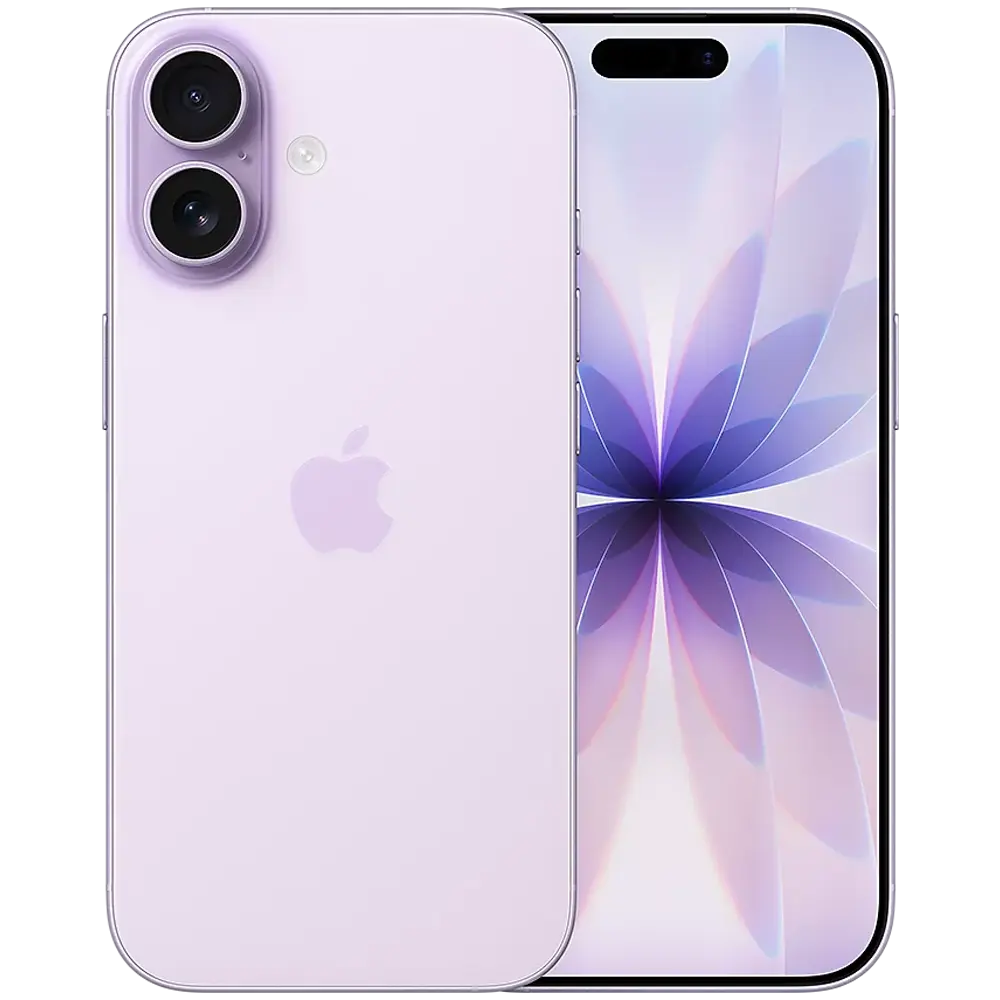
iPhone 17
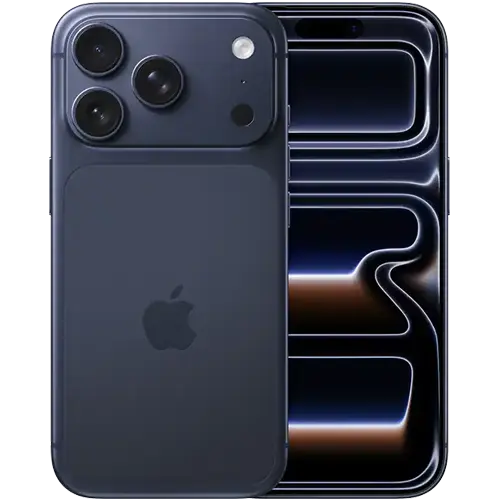
iPhone 17 Pro
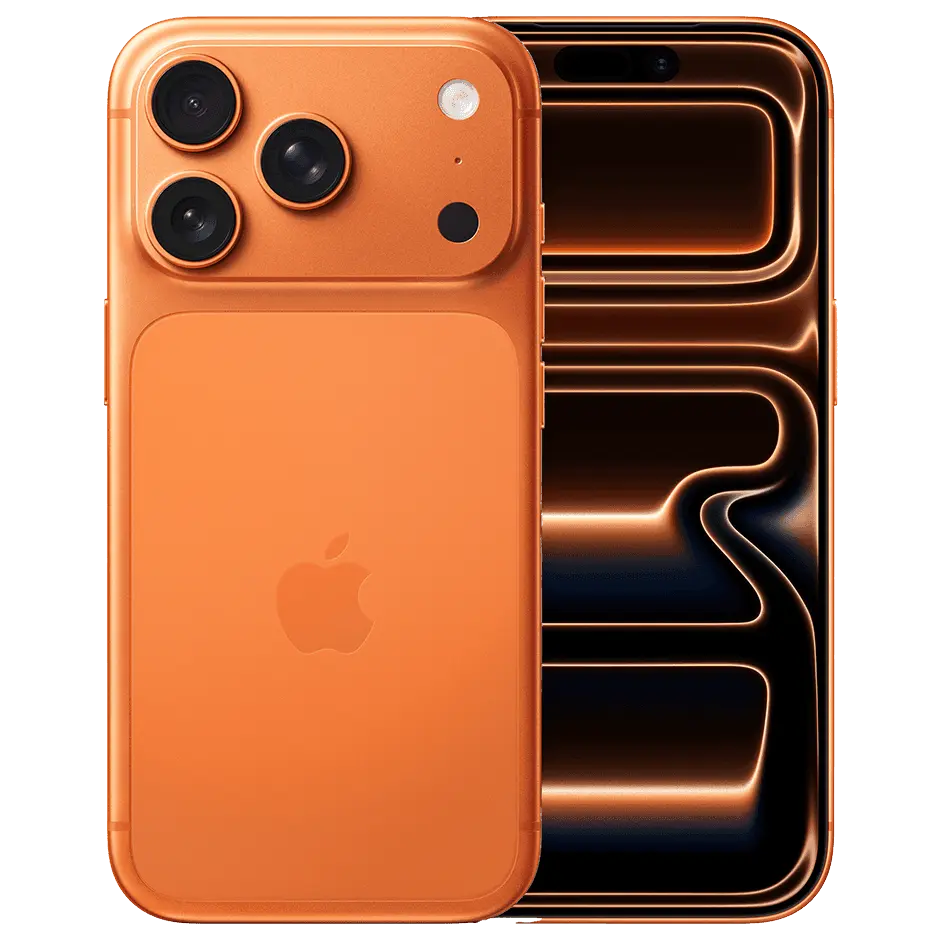
iPhone 17 Pro Max
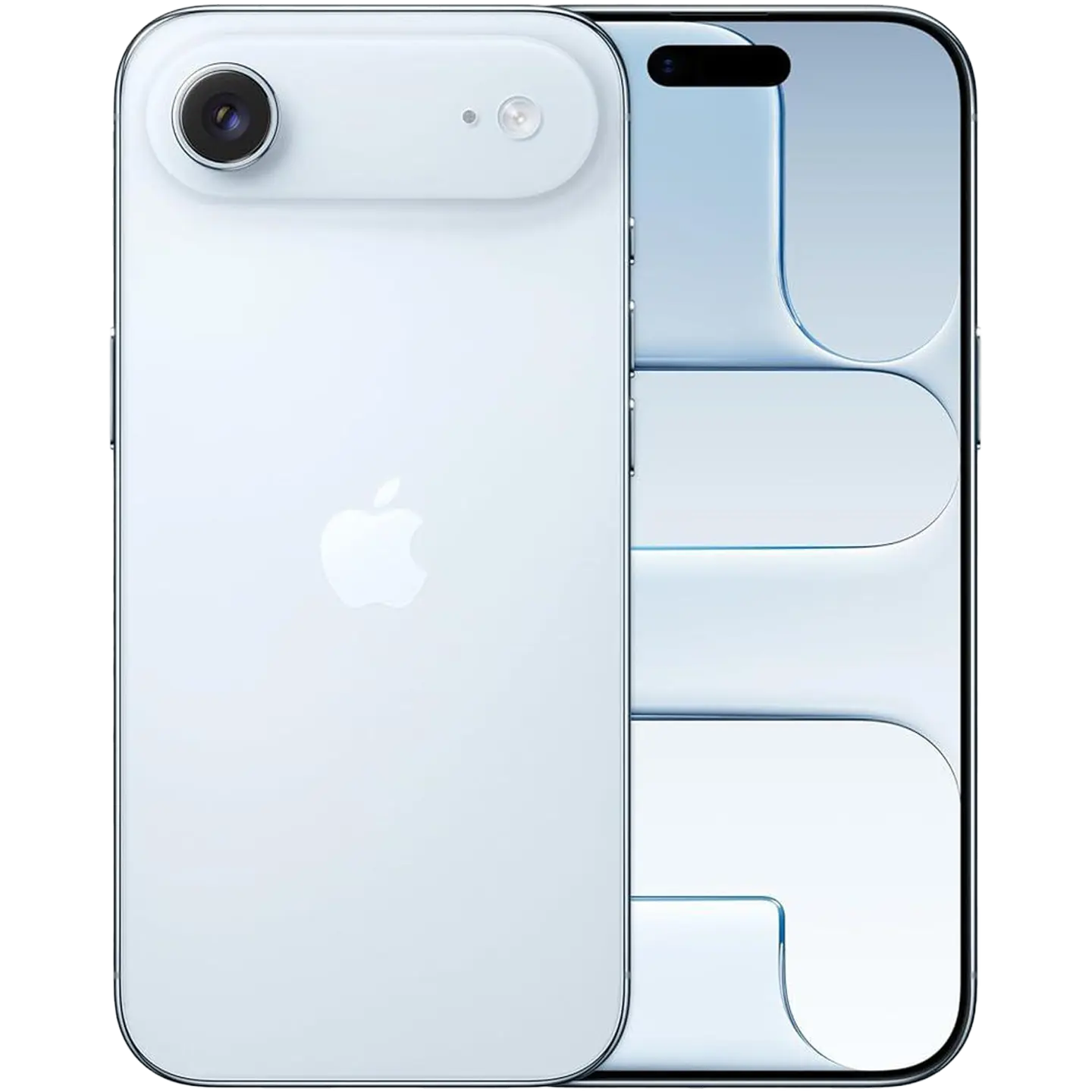
iPhone Air
Ranked #28 of 61
Ranked #5 of 61
Ranked #6 of 61
Ranked #39 of 61
Overall
Overall
Overall
Overall
Apple's 2025 iPhone lineup spans four phones across a $400 price range, and each one carves out a distinct role. The iPhone 17 at $799 is the mainstream pick, a capable all-rounder without the frills. The iPhone 17 Pro at $1,099 and Pro Max at $1,199 share the same camera hardware and processor but split on screen size and battery capacity. The iPhone Air at $999 sits between the standard and Pro models in price, but it isn't a middle ground in any traditional sense. It's the thin one — Apple's lightest and slimmest iPhone, built around portability above all else, with a single rear camera and a smaller battery as the cost of that profile.
The Pro and Pro Max pull ahead in cameras, performance, and battery life. Their triple-lens systems with a dedicated 4x telephoto and larger main sensor give them a substantial lead in versatility and image quality, and the A19 Pro chip with 12GB of RAM outpaces the standard iPhone 17's A19 with 8GB. The iPhone 17 Pro has the most accurate display in the group and the strongest front camera results. The Pro Max adds the largest screen, the biggest battery, and the best microphone. The iPhone 17 offers solid performance and a good speaker for its price, but its camera system falls well short of the Pro models. The iPhone Air, despite running the A19 Pro, is constrained by its thin chassis: battery life is the weakest, the single rear camera limits flexibility, and GPU performance trails the Pro phones. Its advantages are weight, thickness, and an excellent microphone.
Design
| Apple iPhone 17 | Apple iPhone 17 Pro | Apple iPhone 17 Pro Max | Apple iPhone Air | |
|---|---|---|---|---|
| Specifications | ||||
| Dimensions | 149.6 x 71.5 x 8 mm | 150 x 71.9 x 8.8 mm | 163.4 x 78 x 8.8 mm | 156.2 x 74.7 x 5.6 mm |
| Weight | 177g | 206g | 233g | 165g |
| IP Rating | IP68 | IP68 | IP68 | IP68 |
| Frame | Aluminum | Aluminum | Aluminum | Titanium |
| Front | Ceramic Shield 2 | Ceramic Shield 2 | Ceramic Shield 2 | Ceramic Shield 2 |
| Back | Glass | Ceramic Shield | Ceramic Shield | Ceramic Shield |
| Screen-to-body ratio | 91.1% | 90.3% | 91.7% | 88.9% |
The iPhone Air is the standout in physical terms. At 5.6mm thick and 165g, it's dramatically thinner and lighter than anything else in the lineup. The standard iPhone 17 comes in at 8mm thick and 177g, the Pro at 8.8mm and 206g, and the Pro Max at 8.8mm and 233g. The Air is roughly the weight of a small paperback; the Pro Max is over 40% heavier.
Materials split along price lines, with one exception. The iPhone 17 uses an aluminum frame with a glass back. The Pro and Pro Max pair aluminum frames with Ceramic Shield backs, matching their Ceramic Shield 2 fronts for glass protection on both sides. The iPhone Air uses a titanium frame with Ceramic Shield front and back — the only phone here with titanium, which is lighter and harder than aluminum at comparable thickness. All four carry an IP68 rating, meaning they're rated for submersion in fresh water.
Screen-to-body ratios range from 88.9% on the iPhone Air to 91.7% on the Pro Max, with the iPhone 17 at 91.1% and the Pro at 90.3%. The Air's lower ratio means slightly thicker bezels relative to its screen. The Pro Max's 6.9-inch screen with the highest screen-to-body ratio means the thinnest bezels of the four.
Bandicoot Lab doesn't formally test design or durability.
Display
| Apple iPhone 17 | Apple iPhone 17 Pro | Apple iPhone 17 Pro Max | Apple iPhone Air | |
|---|---|---|---|---|
582/ 881 | 679/ 881 | 627/ 881 | 581/ 881 | |
All four phones use LTPO OLED panels with 1–120Hz adaptive refresh rates and 460 PPI, so the basic sharpness and smoothness experience is identical. The difference is screen size: 6.3 inches for the iPhone 17 and Pro, 6.5 inches for the Air, and 6.9 inches for the Pro Max. Resolutions scale accordingly — 1206 x 2622 for the two 6.3-inch panels, 1260 x 2736 for the Air, and 1320 x 2868 for the Pro Max.
Manual brightness is nearly identical across all four. The Pro hits 885 nits, the Pro Max 857, the iPhone 17 854, and the Air 851. You won't see a difference in everyday use. HDR peak brightness (the maximum the display reaches when playing HDR video with a small bright area on screen) is also close among the iPhone 17, Pro, and Pro Max — 3,022, 3,043, and 2,976 nits respectively. The Air falls behind at 2,678 nits, a gap you might notice in bright sunlight with HDR video, but not a dramatic one. How well each display holds that peak as more of the screen lights up varies more: the Air holds 48.3% of its peak as content windows get larger, the Pro Max 42.8%, the iPhone 17 40.5%, and the Pro 35.3%. Sustained brightness over extended use is similar across all four, ranging from 37.7% on the Pro Max to 43% on the Air.
HDR tone mapping behavior is consistent across the lineup. All four phones clip at the same input level and boost highlights modestly above the reference curve. The Pro follows the HDR reference curve most faithfully, while the iPhone 17 and Pro Max lift highlights a bit more aggressively. The Air falls between them. None render HDR perfectly to spec, but the Pro comes closest.
Touch latency ranges from 52.4ms on the Pro Max to 57.7ms on the Air. The Pro sits at 52.7ms and the iPhone 17 at 57ms. The difference between the fastest and slowest is about 5ms, which is unlikely to be perceptible in normal use.
Performance
| Apple iPhone 17 | Apple iPhone 17 Pro | Apple iPhone 17 Pro Max | Apple iPhone Air | |
|---|---|---|---|---|
814/ 1012 | 902/ 1012 | 906/ 1012 | 771/ 1012 | |
The iPhone 17 runs the Apple A19 with 8GB of RAM. The other three — iPhone 17 Pro, Pro Max, and Air — all use the Apple A19 Pro with 12GB of RAM. That extra RAM matters for multitasking and keeping apps loaded in memory.
CPU performance splits cleanly. The iPhone 17 Pro leads with GeekBench 6 scores of 3,918 single-core and 10,158 multi-core. The Pro Max and Air are nearly tied in single-core (3,852 and 3,853) and close in multi-core (9,872 and 9,681). The standard iPhone 17 trails at 3,772 single-core and 9,645 multi-core. The gap between the A19 and A19 Pro is small for everyday tasks — app launches, scrolling, and general responsiveness will feel the same. The difference shows up in sustained workloads and heavier processing.
GPU performance is where the chassis matters. The Pro Max leads with a Wild Life Extreme peak of 5,828 and 73.1% stability, meaning it holds performance well under extended load. The Pro is close at 5,865 peak but drops to 69.8% stability. The iPhone 17 manages 5,164 peak with 70.8% stability. The Air, despite having the A19 Pro, posts the lowest GPU peak at 5,105 and the worst stability at 60.7%. Its thin body limits heat dissipation, so the chip throttles more aggressively. For gaming or sustained graphical workloads, the Air performs closer to the standard iPhone 17 than to the Pro models.
Browser performance follows a similar pattern. The iPhone 17 Pro leads at a Speedometer score of 43.1, the Pro Max at 41.8, and then a gap down to the iPhone 17 at 33.5 and the Air at 32.1. Web browsing won't feel slow on any of them, but complex web apps load faster on the Pro models. AI benchmark scores are tightly clustered across all four phones, with no meaningful separation.
Camera
| Apple iPhone 17 | Apple iPhone 17 Pro | Apple iPhone 17 Pro Max | Apple iPhone Air | |
|---|---|---|---|---|
393/ 587 | 567/ 587 | 567/ 587 | 371/ 587 | |
The Pro and Pro Max share identical camera hardware: a 48-megapixel f/1.78 main sensor (1/1.28-inch, 24mm), a 48-megapixel f/2.8 ultrawide (13mm), and a 48-megapixel f/2.8 telephoto (100mm, 4x optical). The iPhone 17 and Air both use a smaller 48-megapixel f/1.6 main sensor (1/1.56-inch, 26mm) with no telephoto. The iPhone 17 adds a 48-megapixel f/2.2 ultrawide; the Air has only the single rear camera. All four share the same 18-megapixel f/1.9 front camera.
Sharpness across the lineup follows sensor size. The Pro and Pro Max resolve clearly more detail from their main cameras across all lighting conditions, and they hold that advantage from 1x through their 4x optical telephoto and beyond. The iPhone 17 and Air produce softer results, especially as you crop in digitally. At deep zoom levels — 10x and beyond — the Pro and Pro Max retain usable detail well past where the iPhone 17 and Air turn mushy. The iPhone 17 and Air top out at 10x digital zoom and struggle at those extremes. The Pro models extend to 40x and still deliver recognizable detail at 10x, thanks to the telephoto's 4x optical head start.
All four phones lean vivid in color tuning. Saturation is pushed in bright light across the board, with greens and warm tones getting the most boost. This is a processing choice, not an error — it gives photos a punchy, saturated look that most people prefer. In mid and low light, the Pro models and Air desaturate slightly, while the iPhone 17's ultrawide desaturates more noticeably. Hue accuracy is good in bright light for all four phones. As lighting drops to mid and dark conditions, hue errors increase across the lineup. The pattern is consistent: a growing warm-yellow shift under warmer artificial light, which points to white balance correction struggling as the color temperature of the scene drops. This is primarily a software processing issue rather than a sensor limitation. Skin tones across all four phones drift noticeably from reference in bright light — they're pushed warm and saturated. In mid and dark light, skin tones actually improve somewhat, particularly on the iPhone 17 and Air.
Main camera dynamic range is adequate across the lineup but not exceptional; all four phones clip highlights in high-contrast scenes. The iPhone 17 and Air handle dynamic range slightly better from their main cameras than the Pro models, preserving more shadow-to-highlight separation with fewer tonal artifacts.
Main
| Apple iPhone 17 (Main) | Apple iPhone 17 Pro (Main) | Apple iPhone 17 Pro Max (Main) | Apple iPhone Air (Main) | |
|---|---|---|---|---|
463/ 722 | 579/ 722 | 579/ 722 | 507/ 722 | |
The Pro and Pro Max main cameras produce sharp, detailed images in bright light and hold that sharpness well as light drops to mid and dark conditions. There's barely any softening between well-lit and dim scenes, which speaks to the larger 1/1.28-inch sensor. The iPhone 17 and Air, with their smaller 1/1.56-inch sensors, start reasonably sharp in bright light but sit a clear step below the Pros. In mid light the gap widens. The Air resolves better detail in dark conditions than in bright, an unusual result that suggests its processing is tuned more aggressively for low light.
For zoom, the iPhone 17 covers 1x through 10x entirely through digital cropping from the main sensor. Detail drops steadily as you zoom in, and by 5x things are noticeably soft. The Air's zoom range is the same 1x–10x with the same sensor, producing similar results. The Pro and Pro Max only need the main camera from 1x to just under 4x, and the larger sensor means cropped shots at 2x retain more detail than either the iPhone 17 or Air at 2x.
Color from the main cameras is vivid across the lineup, with saturation boosted in bright light. The Pro and Pro Max lean slightly warm with a moderate yellow push; the Air has a stronger warm-yellow cast even in bright light, which gives outdoor shots a noticeably golden tone. All four phones show similar hue accuracy degradation in lower light, driven by white balance overcorrection under warm sources. Skin tones run warm and saturated in daylight across all models.
Dynamic range from the Pro and Pro Max main cameras shows some compression in high-contrast scenes, with tonal inversions that can flatten shadow transitions. The iPhone 17 and Air preserve a wider usable range with smoother tonal transitions, keeping more detail in both shadows and highlights.
Ultrawide
| Apple iPhone 17 (Ultrawide) | Apple iPhone 17 Pro (Ultrawide) | Apple iPhone 17 Pro Max (Ultrawide) | Apple iPhone Air (Ultrawide) | |
|---|---|---|---|---|
452/ 722 | 505/ 722 | 505/ 722 | — | |
The iPhone 17 Pro, Pro Max, and standard iPhone 17 all have 48-megapixel ultrawides. The Air lacks an ultrawide entirely, so if wide-angle photography matters, it's out of the conversation.
The Pro and Pro Max share the same f/2.8 ultrawide sensor. It's sharp in bright light and retains good detail in mid light, dropping more in dark conditions but staying usable. The iPhone 17's f/2.2 ultrawide is reasonably sharp in bright light but falls off faster as lighting drops — by dark conditions it loses significant detail. Compared to their own main lenses, all three phones show a step down in ultrawide sharpness, which is typical.
Color from the ultrawides is close to the main cameras in bright light — vivid, slightly saturated. Hue accuracy degrades in the same pattern, with warm-light white balance issues showing up in mid and dark conditions. The Pro and Pro Max ultrawide handles dark-light skin tones better than the iPhone 17's ultrawide, which drifts more. Dynamic range from the Pro and Pro Max ultrawide shows some tonal inconsistencies, while the iPhone 17's ultrawide delivers cleaner tonal transitions. All three clip highlights.
Video stabilization from the ultrawide differs across the lineup. The Pro and Pro Max ultrawide keeps footage controlled and steady. The iPhone 17's ultrawide shows significantly more movement in handheld video, producing less stable footage.
Telephoto
| Apple iPhone 17 (Telephoto) | Apple iPhone 17 Pro (Telephoto) | Apple iPhone 17 Pro Max (Telephoto) | Apple iPhone Air (Telephoto) | |
|---|---|---|---|---|
| — | 628/ 722 | 628/ 722 | — | |
Only the iPhone 17 Pro and Pro Max have telephoto lenses — the same 48-megapixel f/2.8 unit at 100mm (4x optical). The iPhone 17 and Air rely entirely on digital crop from their main sensors for anything past 1x.
At 4x, the telephoto is sharp in bright light and holds up well in mid light, softening in dark conditions but remaining usable. Beyond 4x, the telephoto digitally crops its own 48-megapixel sensor, which extends reach with less quality loss than cropping from a wide-angle main camera. At 10x you're still getting meaningful detail. Pushing past 10x toward the 40x maximum, images soften progressively but remain identifiable far longer than you'd get from the iPhone 17 or Air at their 10x ceiling.
Color from the telephoto is the weakest link in the Pro camera system. Hue accuracy in bright light is noticeably worse than the main or ultrawide lenses, with a strong warm-yellow push that gives distant subjects an unnatural tint. In mid light, there's a significant shift toward magenta-pink tones that then settles back in dark conditions. Skin tones are the most inaccurate of any lens on any phone in the lineup. These errors look like a mix of sensor-level hue confusion (the inconsistent shifts between lighting conditions) and white balance issues (the warm push that correlates with light temperature changes).
Dynamic range from the telephoto is the best of any lens on the Pro models, with a wide usable range and minimal tonal artifacts. Stabilization is excellent, keeping handheld telephoto shots and video steady even at extended zoom.
Front
| Apple iPhone 17 (Front) | Apple iPhone 17 Pro (Front) | Apple iPhone 17 Pro Max (Front) | Apple iPhone Air (Front) | |
|---|---|---|---|---|
362/ 722 | 703/ 722 | 703/ 722 | 456/ 722 | |
All four phones use the same 18-megapixel f/1.9 front camera hardware. Results differ because of processing.
The Pro and Pro Max produce the sharpest selfies across all lighting conditions, with high detail in bright and mid light and a moderate drop in dark conditions. The Air's front camera is close behind, slightly softer overall. The standard iPhone 17 is a step further back, delivering lower sharpness across the board.
Color from the front cameras is consistent across the lineup — vivid in bright light, with a warm shift in mid and low light driven by the same white balance overcorrection seen on the rear cameras. Skin tones drift warm in daylight across all four. The Air stands out in mid light, where its front camera renders skin tones much more accurately than the other three phones. Dynamic range from the Pro and Pro Max front cameras is substantially better than the iPhone 17 and Air, preserving more detail in backlit selfie scenarios.
Video stabilization from the front camera varies. The Pro and Pro Max keep handheld video steady and controlled. The Air is decent. The standard iPhone 17's front camera shows more shake.
Battery
| Apple iPhone 17 | Apple iPhone 17 Pro | Apple iPhone 17 Pro Max | Apple iPhone Air | |
|---|---|---|---|---|
555/ 836 | 670/ 836 | 617/ 836 | 462/ 836 | |
Battery capacity spans a wide range: 5,088mAh in the Pro Max, 4,252mAh in the Pro, 3,692mAh in the iPhone 17, and 3,149mAh in the Air. That ordering holds through every test.
Video playback tells the story clearly. The Pro Max and Pro are nearly tied at about 24 hours each. The iPhone 17 manages 22.2 hours. The Air lasts 17.2 hours. The Pro models can handle two solid days of mixed use between charges for most people. The iPhone 17 will get through a full day comfortably with margin to spare. The Air needs a top-up by evening if you're a moderate-to-heavy user.
Web browsing over five hours drained 17% on the Pro, 21% on the Pro Max, 22% on the iPhone 17, and 25% on the Air. The Pro's efficiency here is strong — at that rate you could browse for nearly 30 hours straight. Gaming drain during the stress test took 24% from the Pro, 25% from the Pro Max, and 27% from both the iPhone 17 and Air. The Air matching the iPhone 17 in gaming drain despite a much smaller battery means it's more power-efficient per milliamp-hour in this workload, but the smaller battery still means less total runtime. Standby drain was 2% over eight hours on every phone except the Air at 3%.
Charging
| Apple iPhone 17 | Apple iPhone 17 Pro | Apple iPhone 17 Pro Max | Apple iPhone Air | |
|---|---|---|---|---|
332/ 837 | 376/ 837 | 420/ 837 | 240/ 837 | |
The iPhone 17, Pro, and Pro Max all support 40W wired charging and 25W wireless via MagSafe (Qi2-compatible magnetic alignment). The Air drops to 20W wired and 20W wireless.
Wired charging in the first ten minutes pushes the Pro to 31%, the Pro Max to 29%, the iPhone 17 to 28%, and the Air to 25%. At thirty minutes, the iPhone 17 leads at 73%, the Pro hits 72%, the Pro Max reaches 67%, and the Air gets to 58%. The Air's slower charging combined with its smaller battery means it's the slowest to a full charge by a meaningful margin. The iPhone 17's small battery and 40W charging make it the fastest to a high percentage — 73% in half an hour from a 3,692mAh cell is a quick turnaround.
Wireless charging is close across the three MagSafe 25W phones at ten minutes (24–25%) and thirty minutes (47–49%). The Air keeps pace at 23% in ten minutes and 49% at thirty minutes despite its lower 20W wireless rating, which makes sense given its smaller battery.
Speaker
| Apple iPhone 17 | Apple iPhone 17 Pro | Apple iPhone 17 Pro Max | Apple iPhone Air | |
|---|---|---|---|---|
762/ 897 | 823/ 897 | 816/ 897 | 614/ 897 | |
The iPhone 17 Pro has the best speaker system in the lineup. It hits 75.2 dBA at max volume with low distortion, producing clean sound at high levels. Its output has good clarity in the upper frequencies with solid bass presence, and the low distortion means it stays composed even when pushed. The standard iPhone 17 is close in loudness at 75 dBA but with noticeably more distortion, which means it breaks up more at high volume. Its bass response is slightly fuller than the Pro's, but the tradeoff in cleanliness is apparent.
The Pro Max reaches 74.6 dBA and sits between the other two in distortion. It produces the most defined high-frequency detail of any phone here, with the strongest bass extension of the three larger phones. Its frequency range overall is narrower.
The Air is the quietest at 72.9 dBA and has the least bass of the group. Its thin chassis limits the low end substantially. It has decent cleanliness and a very even frequency response, but the overall character is thinner and less full. For media consumption, any of the three larger phones will sound noticeably better.
Microphone
| Apple iPhone 17 | Apple iPhone 17 Pro | Apple iPhone 17 Pro Max | Apple iPhone Air | |
|---|---|---|---|---|
664/ 1220 | 578/ 1220 | 885/ 1220 | 949/ 1220 |
The iPhone Air and Pro Max have the best microphones in the group. Both deliver very even, accurate frequency reproduction with minimal deviation. The Air edges ahead slightly, with the flattest response measured. The standard iPhone 17 is competent for calls and voice memos but with more unevenness. The Pro has the most frequency variation of the four. For voice calls all four are fine; for recording audio or video where microphone quality matters, the Air and Pro Max are clearly ahead.
Other
| Apple iPhone 17 | Apple iPhone 17 Pro | Apple iPhone 17 Pro Max | Apple iPhone Air | |
|---|---|---|---|---|
| Biometrics | 207/ 1181 | 172/ 1181 | 215/ 1181 | 199/ 1181 |
| Data Transfer | 103/ 943 | 572/ 943 | 582/ 943 | 103/ 943 |
| Specifications | ||||
| Biometric type | Face Recognition | Face Recognition | Face Recognition | Face Recognition |
| Ports | USB-C 2.0 | USB-C 3.2 Gen 2 | USB-C 3.2 Gen 2 | USB-C 2.0 |
| Storage | 256GB, 512GB | 256GB, 512GB, 1TB | 256GB, 512GB, 1TB, 2TB | 256GB, 512GB, 1TB |
All four phones use hardware-based face unlock with no fingerprint sensor. Unlock speeds vary: the Pro Max is fastest at 488ms, followed by the iPhone 17 at 508ms, the Air at 528ms, and the Pro at 610ms. The Pro is noticeably slower than the rest. None of these are instant — you'll perceive a brief pause on all four — but the Pro's delay is the most likely to feel sluggish in daily use.
Data transfer speeds diverge sharply based on the USB port. The iPhone 17 Pro and Pro Max use USB-C 3.2 Gen 2, delivering read speeds around 286–304 MB/s and write speeds around 239–244 MB/s. The iPhone 17 and Air use USB-C 2.0, capping out at roughly 39 MB/s for both reads and writes. Transferring large files — videos, backups, photo libraries — takes dramatically longer on the USB 2.0 phones. If you regularly move files to a computer, this is a real daily friction point.
Storage options: the iPhone 17 comes in 256GB and 512GB. The Pro offers 256GB, 512GB, and 1TB. The Pro Max adds a 2TB tier. The Air matches the Pro at 256GB, 512GB, and 1TB.
Conclusion
The iPhone 17 Pro is the most complete phone in Apple's lineup. It has the best display accuracy, the strongest camera system (shared with the Pro Max), the best battery efficiency in web browsing, excellent speaker quality, and top-tier CPU and GPU performance. At $1,099, it's the one to get if you want the best overall experience in a pocketable size.
The Pro Max gives you a bigger screen, a bigger battery, and the best microphone, but it doesn't outperform the Pro in most other areas. The extra $100 over the Pro buys screen size, storage ceiling, and slightly better sustained GPU performance. If you want the largest display and longest battery life and don't mind 233g in your pocket, it justifies the price. If you don't specifically need the size, the Pro is the better value.
The standard iPhone 17 at $799 is a reasonable pick if the camera and data transfer speeds don't matter much to you. Performance is close enough to the Pro phones for everyday use, the battery gets through a day, and the speaker is good. The camera gap is real — it's a meaningfully worse camera phone, and USB 2.0 limits what you can do with wired file transfers. The Air at $999 is the hardest to recommend broadly. It's strikingly thin and light, has an excellent microphone, and runs the A19 Pro, but battery life is the shortest by a wide margin, the single rear camera is limiting, GPU performance is throttled by the thin chassis, and it costs $200 more than the iPhone 17. It's a phone for people who prioritize portability above all else and are willing to charge more often and live with a simpler camera to get it.
FAQ
Is the iPhone Air worth $200 more than the iPhone 17?
The Air gets you a thinner chassis, lighter weight, a titanium frame, an A19 Pro chip with 12GB of RAM, and a better microphone. Against that, it has a single rear camera with no ultrawide, shorter battery life by about five hours of video playback, slower 20W charging, and GPU performance that throttles to roughly the iPhone 17's level under sustained load. The premium makes sense primarily if portability is your top priority; for camera versatility, battery endurance, or raw value, the iPhone 17 is the stronger choice.
Does the iPhone 17 Pro or Pro Max have better battery life?
They're effectively tied in video playback at roughly 24 hours each, and gaming drain is nearly identical. The Pro is meaningfully more efficient during web browsing, draining 17% over five hours versus 21% for the Pro Max. The Pro Max carries a 5,088mAh battery against the Pro's 4,252mAh, so in heavier mixed use the Pro Max has more headroom, but in typical daily patterns the gap is smaller than the capacity difference suggests.
How much better is the iPhone 17 Pro camera compared to the standard iPhone 17?
The Pro's triple-lens system adds a 48-megapixel 4x optical telephoto and a larger 1/1.28-inch main sensor, giving it a clear sharpness advantage across all lighting conditions and dramatically more zoom reach — usable detail at 10x where the iPhone 17 turns soft, and a 40x ceiling versus the iPhone 17's 10x digital maximum. The Pro's front camera also preserves more detail in backlit selfies. The iPhone 17 has a slight edge in main camera dynamic range, but the overall camera gap is substantial.
Should a mobile gamer pick the iPhone 17 Pro or the Air?
The Pro is the better pick for gaming. The Air's thin chassis restricts heat dissipation, causing the A19 Pro chip to throttle more aggressively — its GPU stability score of 60.7% trails the Pro's 69.8% and lands close to the standard iPhone 17. For sustained graphical workloads the Air behaves more like the cheaper iPhone 17 than the Pro, despite sharing the same chip. The Air also has the smallest battery, so gaming sessions drain it faster.
Related
Apple
iPhone 17 Pro
Apple
iPhone 17 Pro Max
Apple
iPhone Air
Apple
iPhone 17
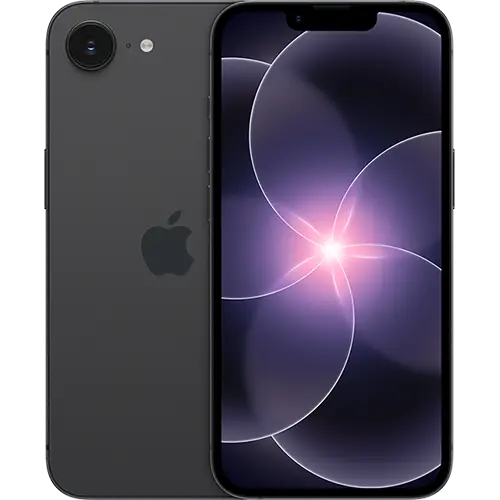
Apple
iPhone 17e
Poco F9 Ultra vs Apple iPhone 17 Pro Max
Google Pixel 11 Pro XL vs Apple iPhone 17 Pro Max
Google Pixel 11 Pro vs Apple iPhone 17 Pro
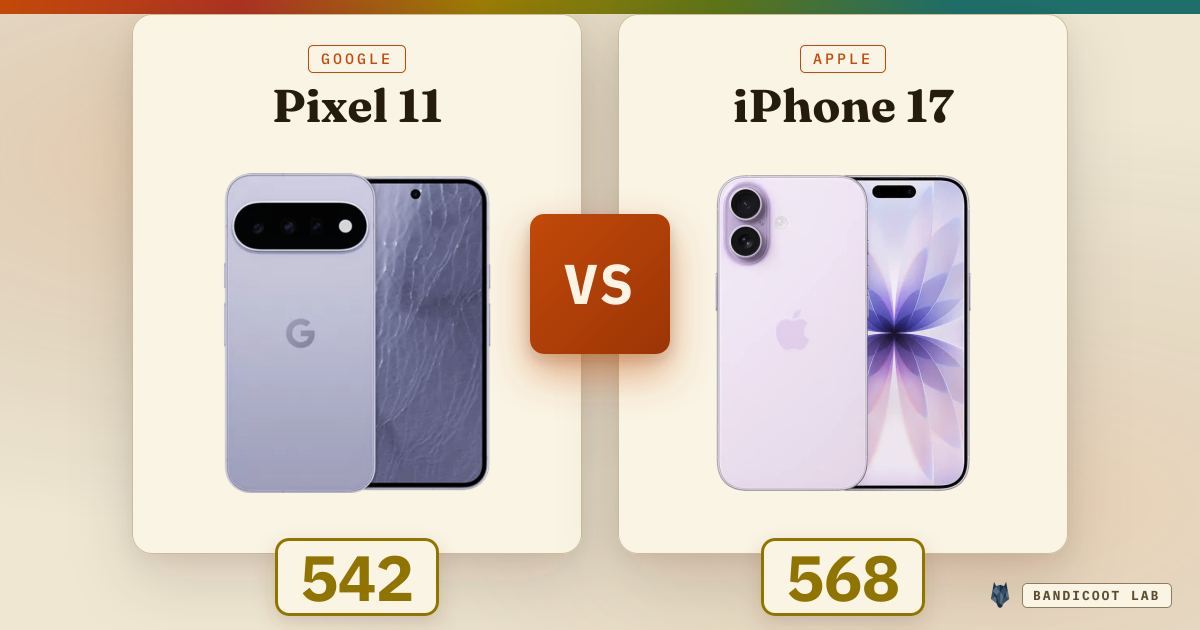
Google Pixel 11 vs Apple iPhone 17
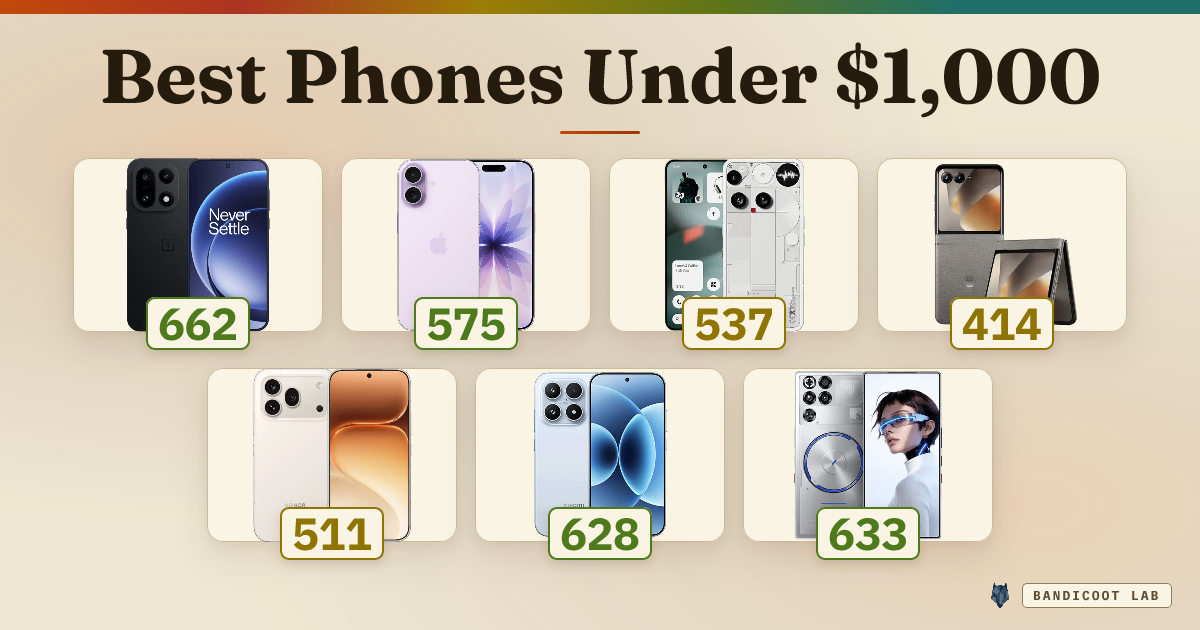
Best Phones Under $1,000
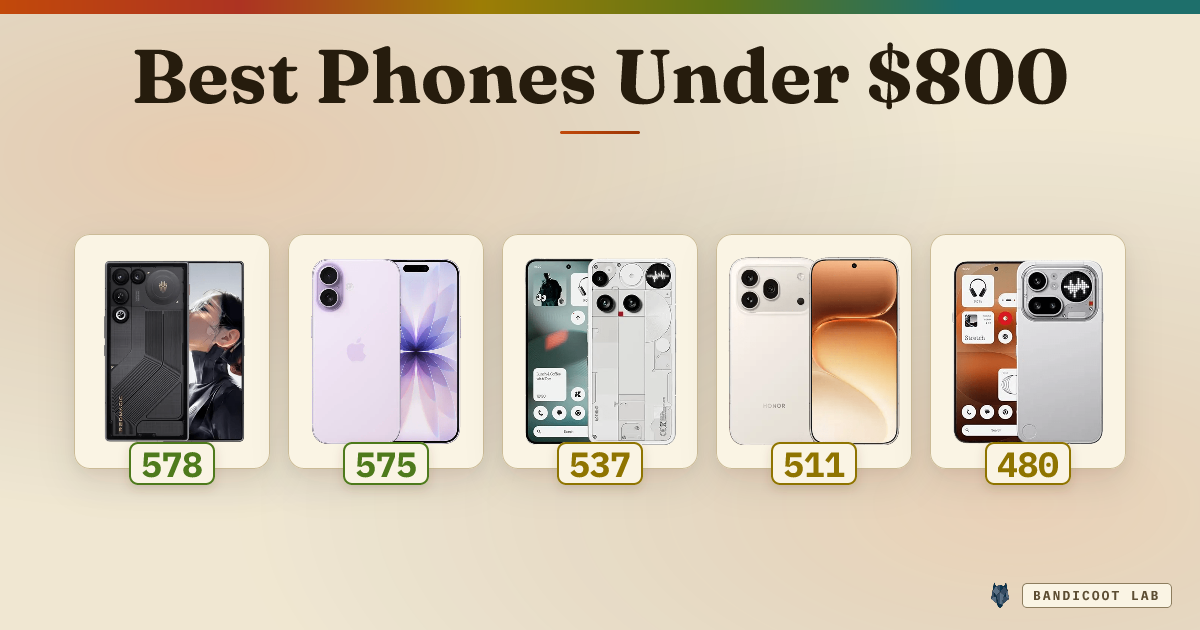
Best Phones Under $800
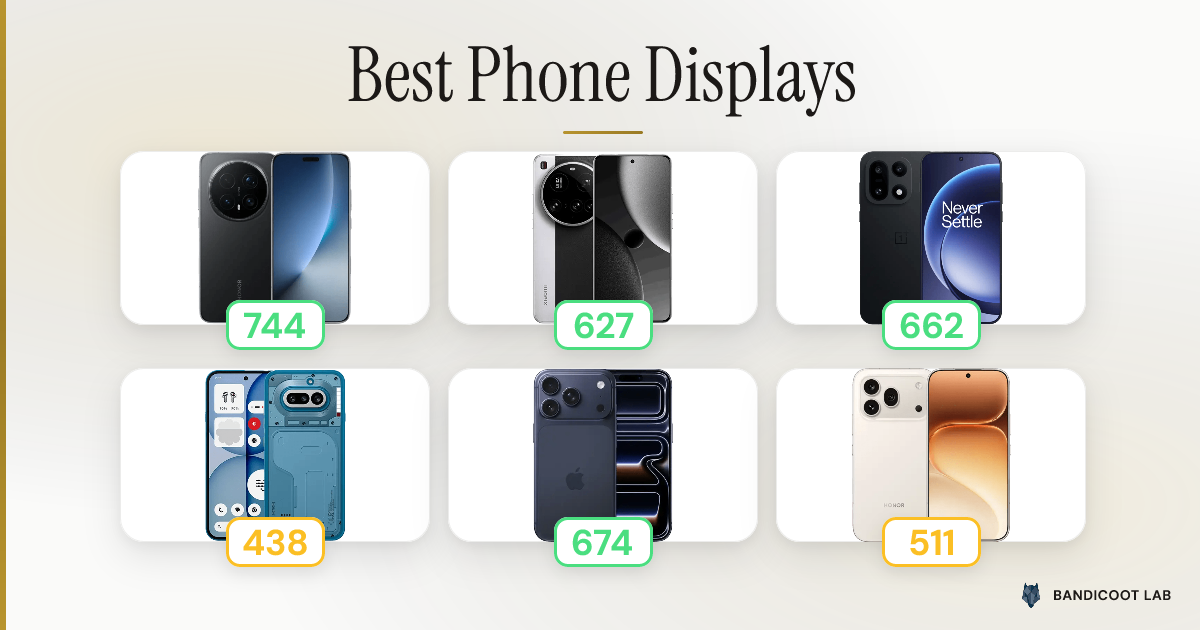
Best Phone Displays