Samsung Galaxy S26 vs Galaxy S26+ vs Galaxy S26 Ultra

Samsung
Samsung
Samsung
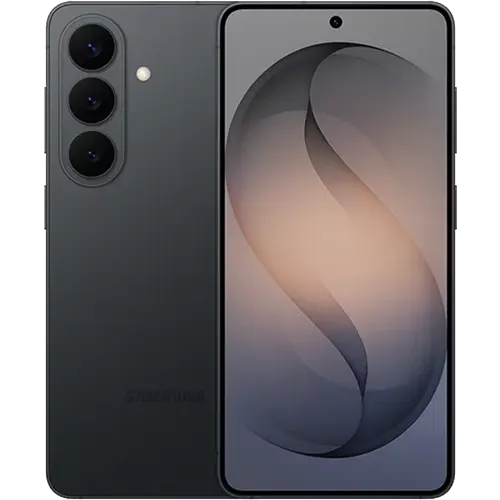
Galaxy S26
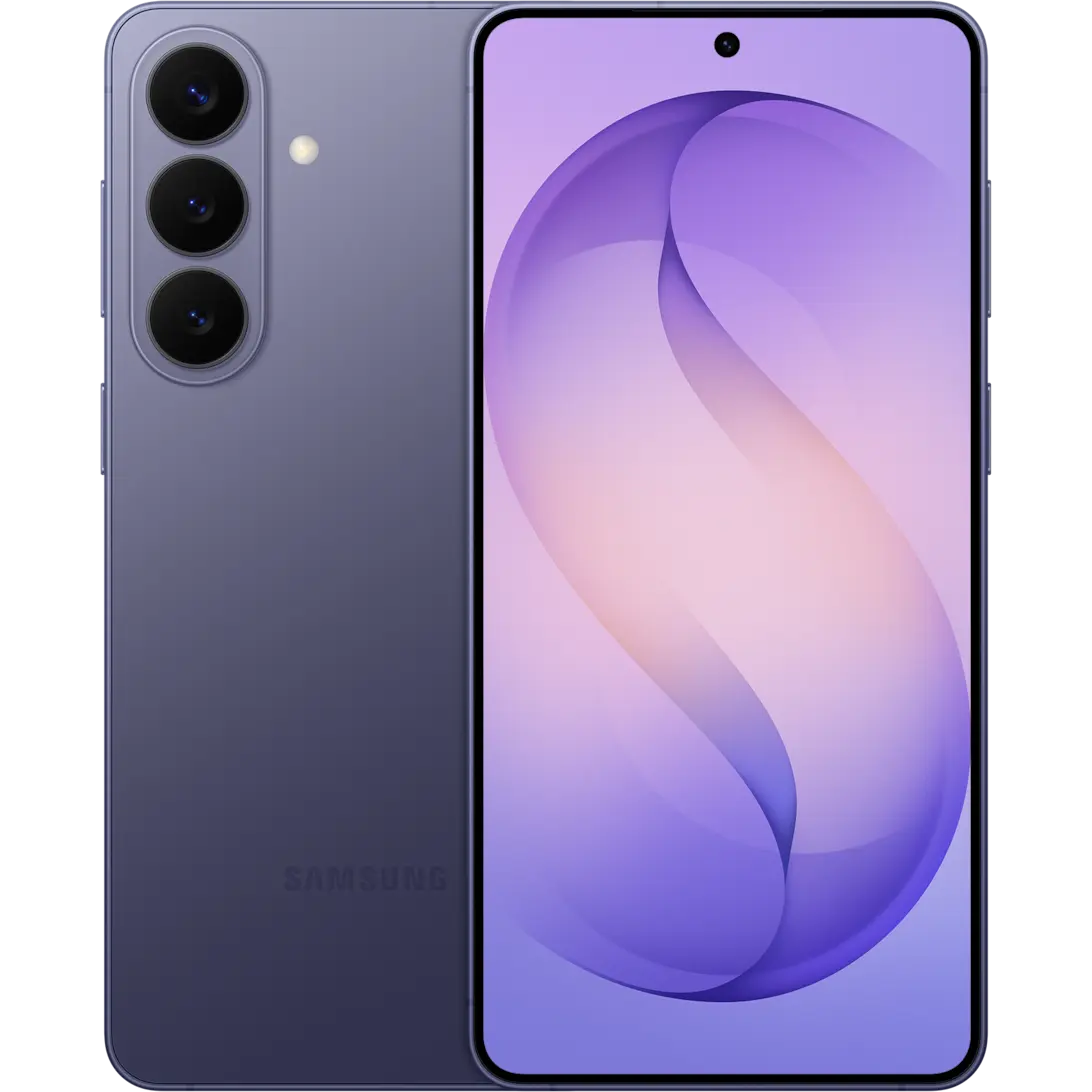
Galaxy S26+
Galaxy S26 Ultra
Ranked #20 of 59
Ranked #10 of 59
Ranked #6 of 59
Overall
Overall
Overall
Samsung's S26 lineup is made up of three devices — a compact flagship, a large-screen flagship, and a camera-forward ultra-premium phone. The S26 starts at $899.99, the S26+ at $1,099.99, and the S26 Ultra at $1,299.99. All three share the same processor and the same version of One UI. The S26 and S26+ are closer siblings than either is to the Ultra — they share the same camera hardware entirely. The Ultra gets a different main sensor, a higher-resolution ultrawide, a second telephoto lens, and a 100x digital zoom ceiling. Choosing between the S26 and S26+ comes down to screen size, battery capacity, and charging speed. The Ultra is a different conversation.
Unsurprisingly, the Ultra pulls ahead in camera capability, charging speed, speaker output, and biometrics. The S26+ edges the other two in raw performance and has the sharpest display resolution for its size. The base Galaxy S26 is the lightest and most compact by a wide margin, with a camera system that matches the S26+ shot for shot. Battery life is close across the trio, with the Ultra and S26+ trading leads depending on the workload.
Here’s how the Samsung Galaxy S26, Galaxy S26+, and Galaxy S26 Ultra compared in our lab testing.
Design
| Samsung Galaxy S26 | Samsung Galaxy S26+ | Samsung Galaxy S26 Ultra | |
|---|---|---|---|
| Specifications | |||
| Dimensions | 149.6 x 71.7 x 7.2 mm | 158.4 x 75.8 x 7.3 mm | 163.6 x 78.1 x 7.9 mm |
| Weight | 167g | 190g | 214g |
| IP Rating | IP68 | IP68 | IP68 |
| Frame | Aluminum | Aluminum | Aluminum |
| Front | Gorilla Glass Victus 2 | Gorilla Glass Victus 2 | Gorilla Armor 2 |
| Back | Gorilla Glass Victus 2 | Gorilla Glass Victus 2 | Gorilla Glass Victus 2 |
| Screen-to-body ratio | 90.8% | 91.8% | 91.5% |
The Galaxy S26 is the smallest of the devices at 149.6 x 71.7 x 7.2mm and 167g. The S26+ steps up to 158.4 x 75.8 x 7.3mm and 190g. The Ultra is the largest at 163.6 x 78.1 x 7.9mm and 214g, roughly 28% heavier than the base S26.
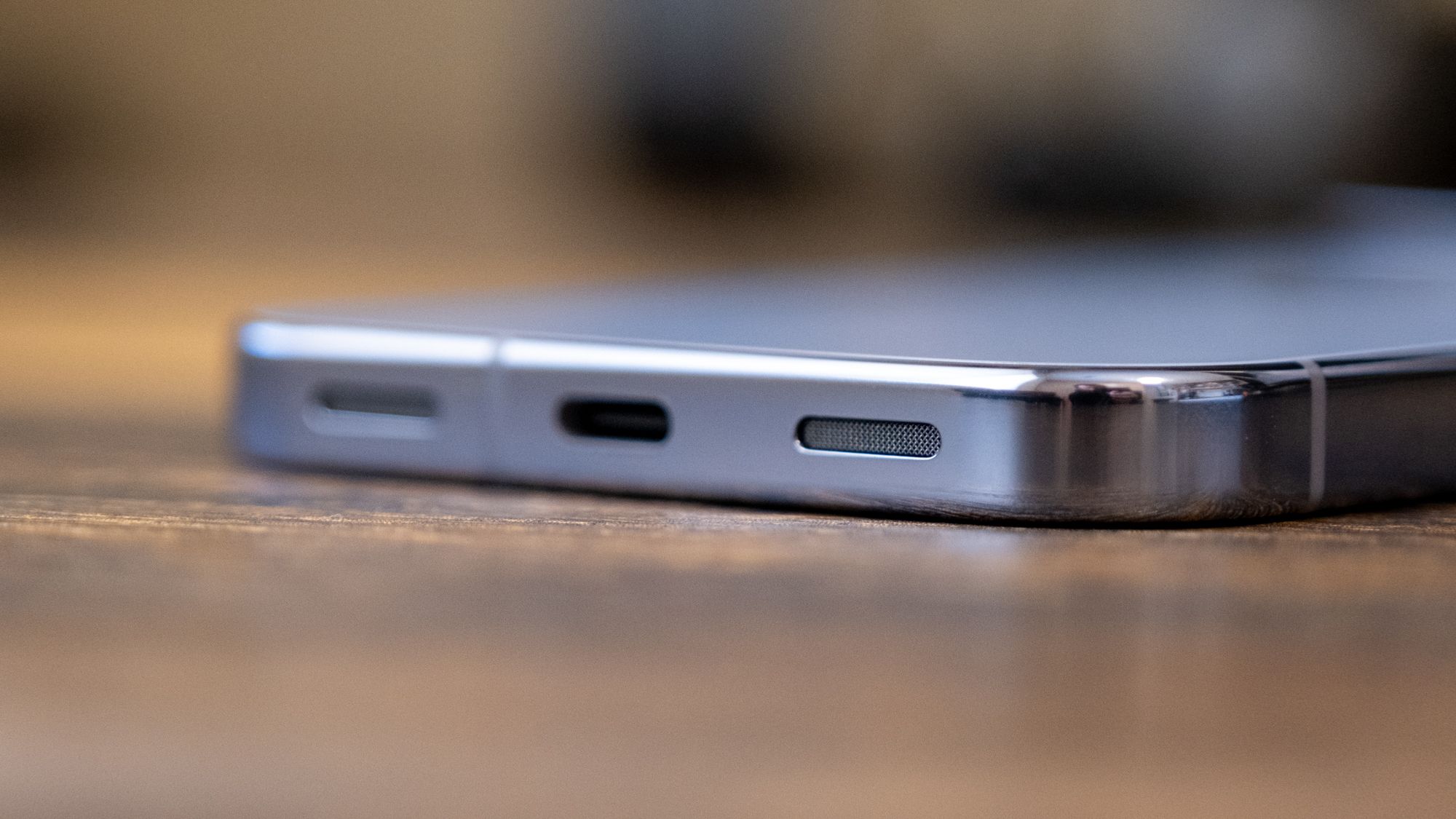
All three use aluminum frames and Gorilla Glass Victus 2 on the back. The S26 and S26+ also use Gorilla Glass Victus 2 on the front, while the Ultra gets Gorilla Armor 2, Samsung's anti-reflective, scratch-resistant front glass. All three carry an IP68 rating, meaning submersion in 1.5 meters of fresh water for up to 30 minutes.
The S26+ has the highest screen-to-body ratio at 91.8%, followed by the Ultra at 91.5% and the S26 at 90.8%. All three share a 19.5:9 aspect ratio. The S26+'s thinner bezels relative to its screen size are visible in person, though the differences are small.
Bandicoot Lab doesn't formally test design or durability.
Display
| Samsung Galaxy S26 | Samsung Galaxy S26+ | Samsung Galaxy S26 Ultra | |
|---|---|---|---|
512/ 881 | 617/ 881 | 634/ 881 | |
The S26 has a 6.3-inch 1080 x 2340 panel at 411 pixels per inch. The S26+ jumps to 6.7 inches at 1440 x 3120 and 516 PPI. The Ultra sits at 6.9 inches with the same 1440 x 3120 resolution, landing at 500 PPI. All three are Dynamic LTPO AMOLED 2X panels running 1–120Hz adaptive refresh. The S26+ is the sharpest relative to its viewing distance; the S26's lower resolution is noticeable if you look for fine text rendering, but it's adequate for most content.
The Ultra is the brightest panel in manual mode at 976 nits, substantially ahead of the S26 at 641 nits and the S26+ at 635 nits. For HDR content with auto brightness engaged, the Ultra peaks at 3,023 nits, the S26 at 2,791 nits, and the S26+ at 2,725 nits. All three hold peak HDR brightness well over time, with sustained stability above 98%. Brightness across different HDR window sizes is more moderate: the S26 holds 51.7%, the S26+ holds 52.1%, and the Ultra holds 48.8%. Smaller HDR highlights stay brighter; full-screen HDR content drops more significantly on all three.
Color accuracy is best on the Ultra. Neutral tones and saturated colors stay close to reference across the gamut. The S26 and S26+ both show more visible drift — colors are a bit less precise, and you'd notice it most in subtle gradients and skin tones. All three cover roughly 97–98% of sRGB and about 72–73% of DCI-P3. The Ultra's advantage is in how accurately it renders within that gamut, not in gamut width.
For tone mapping — how the display interprets HDR content relative to the mastered reference — all three clip at the same input level. The Ultra pushes highlights slightly brighter than the reference signal calls for, giving HDR content a lifted, punchier look. The S26 does this to a lesser degree, and the S26+ tracks the reference curve most closely of the three. None of them are wildly off, but if you prefer faithful HDR rendering, the S26+ is the most restrained.
Touch latency is 15.9ms on the S26+, 21ms on the Ultra, and 21.8ms on the S26. The S26+'s advantage is roughly 5–6ms over the other two.
Performance
| Samsung Galaxy S26 | Samsung Galaxy S26+ | Samsung Galaxy S26 Ultra | |
|---|---|---|---|
833/ 1012 | 942/ 1012 | 908/ 1012 | |
All three phones use the Qualcomm Snapdragon 8 Elite Gen 5 with 12GB of RAM. The Ultra also offers a 16GB option in higher storage tiers.
CPU performance is close. The S26+ leads slightly with a GeekBench 6 single-core score of 3,791 and multi-core of 11,523. The S26 posts 3,709 single / 11,232 multi. The Ultra comes in at 3,685 single / 11,198 multi. These differences are marginal — you won't feel them in app launches or multitasking.
GPU performance shows a wider gap. The S26+ hits a peak Wild Life Extreme score of 7,867 with 59.5% stability over the stress test. The Ultra scores 7,802 peak with 49.8% stability, and the S26 manages 7,740 peak with just 45.8% stability. The S26+ sustains higher GPU output for longer, which matters in extended gaming sessions. The S26 throttles the most aggressively, dropping to under half its peak output. Solar Bay results follow a similar pattern: the S26+ holds 52.3% stability versus 56.2% for the Ultra and 47.4% for the S26.
Browser performance tells a different story. The Ultra leads with a Speedometer score of 46, ahead of the S26+ at 44.3 and the S26 at 36.7. The S26 is meaningfully slower here — web-heavy workflows will feel it.
The S26+ is the strongest performer overall, with the best sustained GPU output and competitive CPU scores. The Ultra matches it in most areas but throttles more under sustained load. The S26 trades some GPU headroom and meaningful browser speed for its smaller size and lower price.
Camera
| Samsung Galaxy S26 | Samsung Galaxy S26+ | Samsung Galaxy S26 Ultra | |
|---|---|---|---|
497/ 587 | 497/ 587 | 558/ 587 | |
The S26 and S26+ share identical camera hardware: a 50-megapixel f/1.8 main sensor (1/1.56-inch), a 12-megapixel f/2.2 ultrawide, a 10-megapixel f/2.4 3x telephoto, and a 12-megapixel f/2.2 front camera. Maximum digital zoom is 30x. The Ultra steps up significantly: a 200-megapixel f/1.4 main sensor (1/1.3-inch), a 50-megapixel f/1.9 ultrawide, the same 10-megapixel 3x telephoto, a 50-megapixel f/2.9 5x telephoto, and the same 12-megapixel front camera. Maximum digital zoom reaches 100x.
The Ultra's main camera is sharper across all lighting conditions, and the gap is large. It holds detail well from bright light through low light, where the smaller sensors on the S26 and S26+ soften more visibly. The S26 and S26+ are identical in sharpness, as you'd expect from shared hardware. The ultrawide result is split: the S26 and S26+ resolve more detail than the Ultra's 50-megapixel ultrawide in bright and mid light, though the Ultra's ultrawide retains more sharpness in dim conditions. At extreme zoom levels, the Ultra's deep zoom output is substantially sharper than the S26/S26+, a direct benefit of the larger main sensor and the dedicated 5x telephoto providing an optical foundation before digital crop takes over. Past about 10x on the S26 and S26+, detail falls off quickly. The Ultra holds up better even out to 30x and remains usable at distances beyond that, though 100x is still a digital crop and shouldn't be mistaken for optical quality.
Main
| Samsung Galaxy S26 (Main) | Samsung Galaxy S26+ (Main) | Samsung Galaxy S26 Ultra (Main) | |
|---|---|---|---|
594/ 722 | 594/ 722 | 711/ 722 | |
The Ultra's 200-megapixel main camera resolves substantially more detail than the shared 50-megapixel sensor in the S26 and S26+. In bright light, the Ultra captures fine textures and edges with visibly more clarity. In mid light, it maintains that advantage with only a small drop-off. In dim light, the Ultra still holds strong detail; the S26/S26+ soften more meaningfully. The 1/1.3-inch sensor and f/1.4 aperture on the Ultra collect more light, which shows.
From 1x to 3x — the range covered by the main camera before the telephoto takes over — all three phones crop digitally. The Ultra's higher megapixel count means it has more resolution to spare when cropping toward 2x or 3x. Detail holds up well through that range on the Ultra. On the S26 and S26+, a 2x crop is still clean, but by 3x you're reaching the limits of what the sensor can resolve before handing off to the telephoto.
Shadows retain detail and high-contrast scenes have good depth across all three. The S26 and S26+ clip highlights; the Ultra does too, but with fewer tonal inconsistencies in the transition from midtones to highlights. Stabilization on the S26 and S26+ is roughly equivalent and adequate for handheld shooting. The Ultra's main camera stabilization is noticeably better — video and long-exposure shots stay more controlled.
Ultrawide
| Samsung Galaxy S26 (Ultrawide) | Samsung Galaxy S26+ (Ultrawide) | Samsung Galaxy S26 Ultra (Ultrawide) | |
|---|---|---|---|
604/ 722 | 604/ 722 | 542/ 722 | |
The S26 and S26+ share a 12-megapixel f/2.2 ultrawide, and the Ultra uses a 50-megapixel f/1.9 ultrawide. Despite the resolution advantage, the Ultra's ultrawide is softer in bright and mid light than the S26/S26+'s smaller sensor. The S26/S26+ ultrawide resolves detail very well for a 12-megapixel sensor — sharp and consistent. In dim light, the gap narrows, and the Ultra's larger aperture helps it retain more detail.
Color behavior on the ultrawide mirrors the main camera on each phone, with one difference: saturation in bright light is more aggressive on the S26/S26+ ultrawide, pushing colors further than the main camera does. The Ultra's ultrawide is also vivid but less exaggerated. Skin tones on the ultrawide are shifted significantly on all three in bright light; this improves in dimmer conditions.
The S26/S26+ ultrawide retains more usable shadow and highlight detail than the Ultra's. Highlights clip on all three, but the Ultra's ultrawide has more tonal inconsistencies in high-contrast scenes. Stabilization is solid on the S26/S26+ and better on the Ultra.
Telephoto
| Samsung Galaxy S26 (Telephoto) | Samsung Galaxy S26+ (Telephoto) | Samsung Galaxy S26 Ultra (Telephoto Short) | Samsung Galaxy S26 Ultra (Telephoto Long) | |
|---|---|---|---|---|
568/ 722 | 568/ 722 | 589/ 722 | 676/ 722 | |
The S26, S26+, and Ultra all share the same 10-megapixel f/2.4 3x telephoto. On the S26 and S26+, this is the only telephoto lens, covering 3x through the 30x digital zoom ceiling. The Ultra adds a 50-megapixel f/2.9 5x telephoto that takes over from 5x onward, with digital zoom extending to 100x.
At 3x, the shared telephoto produces similar results on all three phones. Sharpness is good in bright light, solid in mid light, and drops noticeably in dim conditions — the small sensor runs out of light-gathering ability. Hue accuracy on this lens shows a consistent cool lean in bright light across all three devices, with moderate errors that persist across conditions. Skin tones are more accurate on the telephoto than on any phone's main camera in bright light. Saturation stays controlled.
The S26 and S26+ rely on digital crop past 3x, and detail falls steadily. By 10x, output is soft. By 30x, it's marginal. The Ultra's 5x telephoto changes the equation. Its 50-megapixel sensor at f/2.9 resolves strong detail at 5x in bright and mid light, and holds up well through moderate crops beyond that. In dim light, the 5x lens softens significantly — the smaller aperture and sensor size limit it. Skin tones on the 5x telephoto are very accurate in bright and mid light but drift considerably in dim conditions. Dynamic range is more limited on the 5x lens than on the main or 3x telephoto.
Stabilization on the 3x telephoto is comparable across all three phones. The Ultra's 3x telephoto is the standout, with very good handheld stability. The 5x telephoto stabilizes well for its focal length.
Front
| Samsung Galaxy S26 (Front) | Samsung Galaxy S26+ (Front) | Samsung Galaxy S26 Ultra (Front) | |
|---|---|---|---|
398/ 722 | 398/ 722 | 415/ 722 | |
All three phones share the same 12-megapixel f/2.2 front camera. Sharpness is similar, with the Ultra holding a slight edge in dim light where it retains a bit more detail. In bright and mid light, they're close enough to be indistinguishable.
Color rendering on the front camera is mostly neutral in bright light. As lighting gets warmer, the processing shifts noticeably toward pink-magenta and slightly cool, which is a white balance correction issue rather than a sensor limitation. This is consistent across all three phones. Skin tones drift in mid light and improve somewhat in dim conditions. Dynamic range is limited on the front camera across the lineup — the sensor is small — and all three clip highlights in contrasty scenes. The Ultra's front camera has slightly more dynamic range. Stabilization is adequate for video calls on all three.
Battery
| Samsung Galaxy S26 | Samsung Galaxy S26+ | Samsung Galaxy S26 Ultra | |
|---|---|---|---|
579/ 799 | 592/ 799 | 539/ 799 | |
The S26 has a 4,300mAh battery, the S26+ has 4,900mAh, and the Ultra has 5,000mAh. The capacity differences don't always translate directly into endurance differences.
In video playback, the S26 lasts 30.25 hours, the S26+ lasts 31.13 hours, and the Ultra lasts 31.57 hours. All three comfortably exceed a full day of continuous video — roughly two days of typical mixed use for most people. The Ultra's advantage over the base S26 is about 1.3 hours, modest given the 700mAh capacity difference.
Web browsing over five hours drains 24% on both the S26 and Ultra, and 26% on the S26+. The S26+ drains slightly more despite its larger battery, likely because of the higher-resolution display. In gaming, the Ultra is the most efficient: 24% drain over the stress test, versus 27% on the S26 and 30% on the S26+. The S26+'s higher GPU throughput comes at the cost of higher power draw. Standby drain is 2% overnight on both the S26 and S26+. The Ultra drained 10% overnight — a significant outlier that suggests more aggressive background activity or less effective deep sleep.
For all-day reliability, all three are fine. The Ultra has the best gaming efficiency, the S26 and Ultra tie in web browsing, and the S26+ sits in the middle with strong video playback but slightly higher drain under load. The Ultra's standby drain is the weak point in its battery story.
Charging
| Samsung Galaxy S26 | Samsung Galaxy S26+ | Samsung Galaxy S26 Ultra | |
|---|---|---|---|
263/ 837 | 314/ 837 | 486/ 837 | |
The S26 charges at 25W wired and 15W wireless. The S26+ steps up to 45W wired and 20W wireless. The Ultra gets 60W wired and 25W wireless.
The differences are meaningful. After 10 minutes on a wire, the S26 reaches 21%, the S26+ reaches 26%, and the Ultra reaches 34%. At 30 minutes: the S26 is at 58%, the S26+ at 67%, and the Ultra at 79%. The Ultra's 60W charging fills most of its larger battery in half an hour. For a quick top-up before heading out, the Ultra provides the most usable charge in the least time.
Wireless charging follows a similar hierarchy. At 30 minutes, the S26 reaches 29%, the S26+ reaches 19%, and the Ultra reaches 44%. The S26+ charges more slowly wirelessly than the smaller S26 despite its higher wattage rating, which may reflect thermal management choices or charging curve tuning with the larger battery. The Ultra's wireless charging is the fastest by a wide margin.
Speaker
| Samsung Galaxy S26 | Samsung Galaxy S26+ | Samsung Galaxy S26 Ultra | |
|---|---|---|---|
817/ 897 | 819/ 897 | 857/ 897 | |
The Ultra is the loudest at 75.3 dBA, ahead of the S26 at 72.5 dBA and the S26+ at 71.7 dBA. All three have low distortion — the Ultra measures 3.26% THD, the S26 at 3.44%, and the S26+ at 3.85%. None will sound strained at full volume.
Character differs. The Ultra emphasizes clarity and high-end detail more than the other two, with strong vocal intelligibility and crisp treble. Bass is slightly less prominent relative to the S26+, which has the fullest low-end of the three. The S26 sits between them: balanced, clean, with good bass and decent clarity. The S26+'s fuller bass makes it the most pleasant for music listening; the Ultra's clarity makes it better for podcasts and calls at loudspeaker volume. All three are above average for phone speakers.
Microphone
| Samsung Galaxy S26 | Samsung Galaxy S26+ | Samsung Galaxy S26 Ultra | |
|---|---|---|---|
739/ 1220 | 746/ 1220 | 566/ 1220 |
The S26 and S26+ have similar microphone quality, both above average with consistent frequency response. Voices sound natural and balanced. The Ultra's microphone is more uneven, with slightly more variation across frequencies. It's adequate, but the S26 and S26+ produce cleaner voice recordings and call audio.
Other
| Samsung Galaxy S26 | Samsung Galaxy S26+ | Samsung Galaxy S26 Ultra | |
|---|---|---|---|
| Biometrics | 464/ 1181 | 266/ 1181 | 764/ 1181 |
| Data Transfer | 736/ 877 | 623/ 877 | 737/ 877 |
| Specifications | |||
| Biometric type | Fingerprint | Fingerprint | Fingerprint |
| Ports | USB-C 3.2 | USB-C 3.2 | USB-C 3.2 |
| Storage | 256GB, 512GB | 256GB, 512GB | 256GB, 512GB, 1TB |
Fingerprint speed varies significantly. The Ultra is fastest at 138ms average unlock. The S26 averages 226ms. The S26+ sat in at 394ms — nearly three times the Ultra's speed. You'll feel this difference when you unlock your phone. None of the three have hardware-based face unlock.
Data transfer speeds are similar. The S26 reads at 335 MB/s and writes at 271 MB/s. The Ultra reads at 332 MB/s and writes at 274 MB/s. The S26+ is slightly slower for reads at 249 MB/s but matches on writes at 273 MB/s. All three use USB-C 3.2. Storage options are 256GB and 512GB for the S26 and S26+; the Ultra adds a 1TB tier. The Ultra also offers a 16GB RAM option at higher storage configurations, while the S26 and S26+ are fixed at 12GB.
Conclusion
The S26 Ultra justifies its $1,299.99 price primarily through its camera system. The 200-megapixel main sensor, dual telephoto arrangement, and 100x zoom ceiling are genuine advantages that the S26 and S26+ can't match. It's also the fastest to charge, the loudest speaker, the quickest to unlock, and the brightest display in manual mode. For regular photography, especially at zoom, the Ultra is the clear pick. Its weaknesses are specific: heavier, worse standby battery drain, and a microphone that's less consistent than its cheaper siblings.
The S26+ is harder to justify at $200 more than the base S26. The camera system is identical. You get a larger, sharper display, better sustained GPU performance, and faster wired charging. The fingerprint sensor is noticeably slower, and battery life under load is slightly worse than the other two. It's the right phone if you specifically want a bigger screen without paying Ultra prices, but the value gap is narrow.
The S26 at $899.99 is the most efficient package. Same cameras as the S26+, competitive battery life, the lightest build, and a fingerprint sensor that's nearly twice as fast. The display is less sharp and dimmer in manual mode, and charging is the slowest of the three. For most people who don't need the Ultra's camera hardware, the base S26 does everything its larger sibling does in a smaller, cheaper, lighter phone.
FAQ
Is the Samsung Galaxy S26 Ultra worth the extra $400 over the base S26?
The Ultra earns its price mainly through its camera system — the 200-megapixel main sensor, dedicated 5x telephoto, and 100x zoom ceiling are all absent on the S26. It also charges faster, unlocks faster, and hits higher brightness. The S26 matches it shot-for-shot on the main camera up to about 3x zoom, weighs 47g less, and has a fingerprint sensor that's nearly twice as quick. If zoom photography or the fastest possible charging aren't priorities, the $400 difference is hard to justify.
Which Galaxy S26 model is best for gaming?
The S26+ sustains GPU performance better than the other two — it holds a higher percentage of its peak output through extended sessions and leads in both Wild Life Extreme and Solar Bay stability. The S26 throttles the most aggressively under load, dropping below half its peak GPU output. The Ultra sits between them on GPU stability but produces the highest browser performance score, which matters for web-based tasks. For extended gaming, the S26+ is the strongest option.
How does the S26 Ultra camera compare to the S26+ at zoom?
Up to 3x, the shared telephoto lens makes the two phones comparable. Beyond that, the Ultra's dedicated 50-megapixel 5x telephoto holds detail well through moderate crops, while the S26+ relies on digital zoom from a 10-megapixel sensor and goes soft past roughly 10x. At 30x, the Ultra produces meaningfully sharper output. The Ultra's 100x ceiling is still a digital crop and not optically sharp, but it retains far more usable detail at long distances than the S26+ can manage.
Will the S26 Ultra's battery last through the day better than the S26+?
During active use — video playback and web browsing — the Ultra and S26+ are close, with the Ultra slightly ahead in video endurance and tied with the S26 in web drain. The Ultra is more efficient in gaming. The meaningful caveat is standby: the Ultra drains 10% overnight versus 2% on the S26+. If you regularly go to bed with a partial charge and skip a charger overnight, the Ultra loses a significant portion of its battery edge.
Related
Samsung
Galaxy S26 Ultra
Samsung
Galaxy S26
Samsung
Galaxy S26+
Samsung
Galaxy Z Fold 8 Ultra
Samsung
Galaxy Z Fold 8
Best Phone Displays
Best Android Phones
Best Samsung Phones

Samsung Galaxy S26 Series vs Galaxy S25 Series
The house look: How phone brands tune camera color
How we test speakers and microphones

Samsung Galaxy S26 Series vs Xiaomi 17 Series