Google Pixel 10a vs Pixel 9a
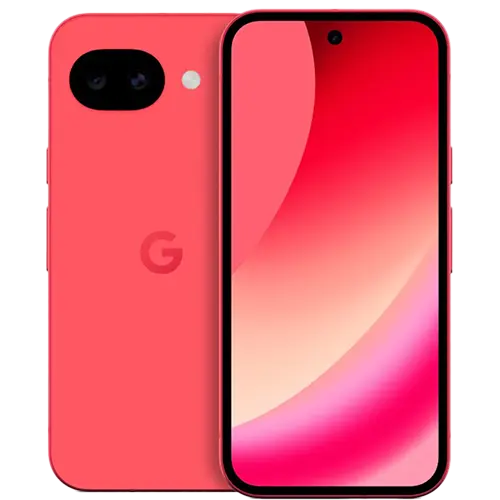
Pixel 10a
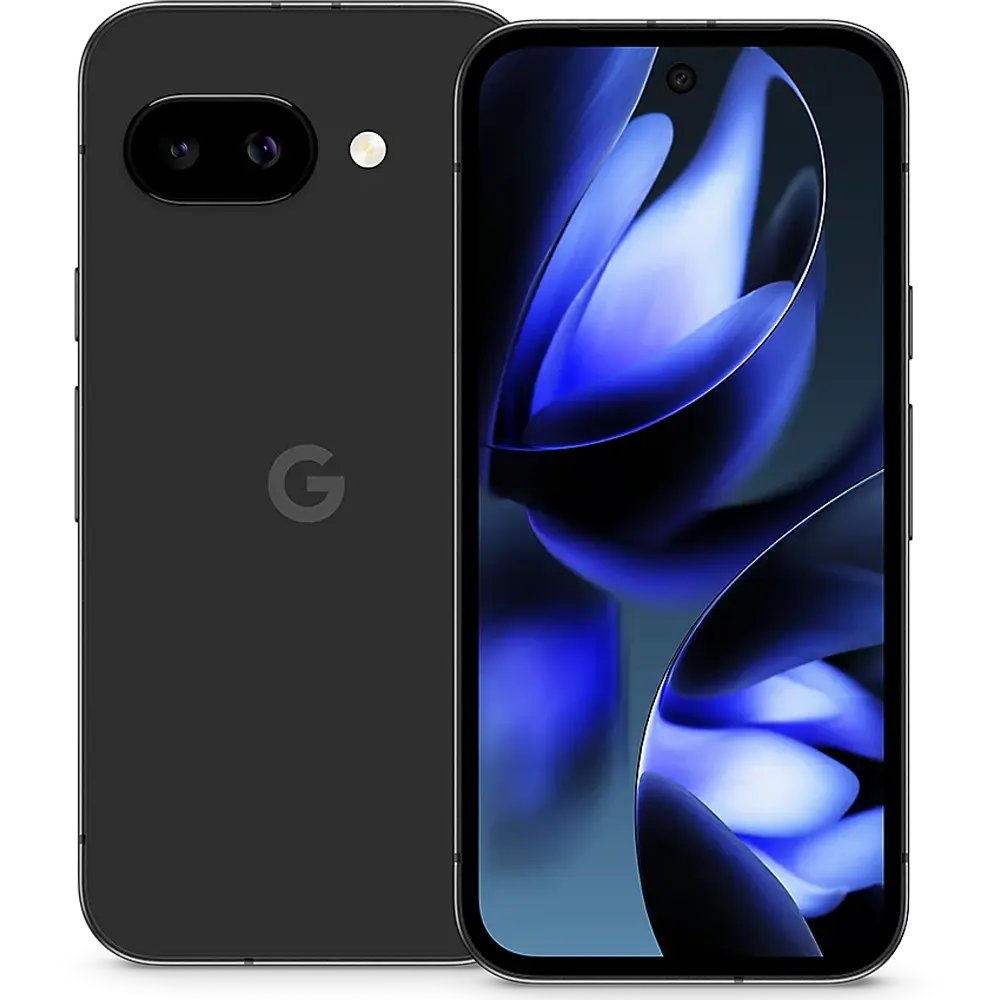
Pixel 9a
Ranked #50 of 60
Ranked #49 of 60
Overall
Overall
The Pixel 10a is a direct successor to the Pixel 9a, and Google isn't making you choose between generations at different prices. Both cost $499, share the same Tensor G4 chip, and carry nearly identical camera hardware on paper. The question is what a year of iteration actually changed.
The answer is uneven. The Pixel 10a has a brighter display and a stronger camera system across all three lenses, with better color accuracy and more consistent sharpness as light drops. The Pixel 9a, however, actually has a slightly better battery life, noticeably superior color accuracy on its display panel, a faster fingerprint sensor, and a much better microphone.
Here’s how the Google Pixel 10a and Pixel 9a actually perform in lab testing.
Design
| Google Pixel 10a | Google Pixel 9a | |
|---|---|---|
| Specifications | ||
| Dimensions | 153.9 x 73 x 9 mm | 154.7 x 73.3 x 8.9 mm |
| Weight | 183g | 186g |
| IP Rating | IP68 | IP68 |
| Frame | Aluminum | Aluminum |
| Front | Gorilla Glass 7i | Gorilla Glass 3 |
| Back | Plastic | Plastic |
| Screen-to-body ratio | 84.7% | 83.9% |
Both phones are built with an aluminum frame, plastic back, and Gorilla Glass front. The Pixel 10a uses Gorilla Glass 7i, an upgrade over the Pixel 9a's Gorilla Glass 3, which should translate to better scratch and drop resistance. Both carry IP68 ratings, meaning they're rated for submersion in fresh water to a depth of 1.5 meters for 30 minutes.
The dimensions are nearly identical. The Pixel 10a is fractionally smaller at 153.9 x 73 x 9mm versus 154.7 x 73.3 x 8.9mm, and 3 grams lighter at 183g versus 186g. You'd be hard-pressed to tell them apart by size or weight. The Pixel 10a does squeeze a slightly higher screen-to-body ratio at 84.7% versus 83.9%, meaning marginally thinner bezels, though neither is especially slim by flagship standards. Both share a 20.2:9 aspect ratio.
Bandicoot Lab doesn't formally test design or durability, so these are on-paper comparisons.
Display
| Google Pixel 10a | Google Pixel 9a | |
|---|---|---|
584/ 881 | 615/ 881 | |
The screens on the devices are the same size and resolution: 6.3-inch P-OLED panels at 1080 x 2424 (422 pixels per inch), both running 60–120Hz adaptive refresh.
The Pixel 10a is brighter though. It reaches 1,403 nits in manual mode versus the Pixel 9a's 1,201 nits, and its HDR peak hits 3,182 nits compared to 2,652 nits. That's a substantial gap for HDR video and outdoor readability. Both panels hold brightness well across window sizes, at 62% and 63.6% respectively. Sustained brightness over the 30-minute stress test is excellent on both: 97.9% for the 10a and 97.6% for the 9a. Neither drops off meaningfully over time.
Color accuracy is where the Pixel 9a pulls ahead. Its best-calibrated mode holds colors very close to reference, with minimal visible drift across the gamut. The Pixel 10a is decent but not as tight; you'll notice slight color shifts in gradients and neutral tones if you're paying attention. Both panels cover sRGB almost fully and reach into the mid-70s for DCI-P3 coverage, so the range of colors they can show is similar. The precision differs.
The Pixel 9a tracks the HDR reference curve more faithfully in tone mapping, though it begins clipping at around 90% of the input signal, meaning the brightest highlights in HDR content get compressed earlier. The Pixel 10a follows the reference less precisely but doesn't clip at all within the standard range, preserving more highlight separation in very bright scenes. Neither panel boosts highlights above mastered levels.
Touch latency is worth noting here. The Pixel 10a measures 15ms average versus the Pixel 9a's 21.9ms. You won’t notice that gap much, but it is there.
Performance
| Google Pixel 10a | Google Pixel 9a | |
|---|---|---|
342/ 1012 | 345/ 1012 | |
Both phones run the Google Tensor G4 with 8GB of RAM, so the comparison is really about thermal management and software optimization rather than fundamentally different hardware.
CPU performance is a dead heat. The Pixel 10a scores 1,716 single-core and 4,385 multi-core in GeekBench 6; the Pixel 9a scores 1,717 and 4,482. Those differences are within run-to-run variance. GPU performance is similarly close: peak Wild Life Extreme scores of 2,685 (10a) versus 2,716 (9a), with the 10a holding slightly better stability at 82.6% versus 80%. Neither phone is a GPU powerhouse, and the stability difference is too small to matter in practice. Browser performance gives a slight edge to the Pixel 9a with a Speedometer score of 18.6 versus 17.7, though you won't feel that in daily browsing.
Camera
| Google Pixel 10a (Overall) | Google Pixel 9a (Overall) | |
|---|---|---|
| Specifications | ||
| Main | 48MP, f/1.7, 25mm, 1/2.0" | 48MP, f/1.7, 25mm, 1/2.0" |
| Ultrawide | 13MP, f/2.2, 14mm, 1/3.1" | 13MP, f/2.2, 14mm, 1/3.1" |
| Front | 13MP, f/2.2, 20mm, 1/3.1" | 13MP, f/2.2, 20mm, 1/3.1" |
The Pixel 10a and 9a share identical camera hardware, with a 48-megapixel f/1.7 main sensor, a 13-megapixel f/2.2 ultrawide, and a 13-megapixel f/2.2 front camera. Neither has a telephoto; both max out at 8x digital zoom. The differences come entirely from image processing, and they're substantial. The Pixel 10a produces better results from every lens, with stronger sharpness retention as lighting drops, more accurate color, and better dynamic range from the main and front cameras. The Pixel 9a's ultrawide holds an edge in dynamic range, but its color accuracy falls apart in dim conditions.
At deep zoom levels, neither phone is exceptional. Without a telephoto lens, 8x digital zoom relies entirely on cropping the main sensor, and both resolve limited detail there. The Pixel 10a's slightly better mid-light and low-light sharpness from the main camera gives it a marginal advantage at extended zoom, but this isn't a strength of either phone.
Main
| Google Pixel 10a (Main) | Google Pixel 9a (Main) | |
|---|---|---|
497/ 722 | 397/ 722 | |
Sharpness is competitive in bright light. The Pixel 10a trails slightly in well-lit scenes but pulls ahead in mid and low light, maintaining more consistent detail as conditions worsen. The phone you'll be happier with at dinner or in a dimly lit room is the 10a.
Both phones lean vivid in their color rendering, pushing saturation noticeably above neutral. The Pixel 9a is more aggressive about it, especially in mid-light conditions where colors look punchy but start drifting from reality. The Pixel 10a is vivid too, but with meaningfully better hue accuracy across all three lighting conditions. Skin tones on the 10a are closer to natural, particularly in mid and low light. The Pixel 9a's skin tones carry noticeable error in every condition, and in low light specifically, the processing pulls strongly toward warm magenta tones. That's primarily a white balance issue: the 9a's correction shifts significantly as lighting gets warmer, introducing color casts the 10a largely avoids. The 10a shows a slight cool lean in bright and mid light, which is less distracting.
Dynamic range from the main camera favors the Pixel 10a, with better shadow detail and cleaner tonal transitions. The Pixel 9a clips highlights similarly but doesn't recover as much in the shadows, producing slightly more contrasty images. Both clip bright highlights.
Ultrawide
| Google Pixel 10a (Ultrawide) | Google Pixel 9a (Ultrawide) | |
|---|---|---|
493/ 722 | 493/ 722 | |
In bright light, both ultrawide cameras produce similar sharpness. The gap opens dramatically in low light: the Pixel 10a holds strong detail while the Pixel 9a's ultrawide loses significant sharpness, dropping to roughly half the 10a's resolved detail. If you use the ultrawide in anything other than full daylight, the 10a is clearly better.
Color accuracy follows a similar pattern. Both ultrawides lean vivid, but the Pixel 9a's color falls apart in dim conditions. Hue errors become severe in low light, driven by a strong warm shift in the processing that pushes skin tones and general color well away from reality. The Pixel 10a isn't immune to color drift in low light, but the errors are much more contained. Skin tones are off on both phones across all conditions, a shared weakness of this ultrawide sensor, though the 10a is slightly less inaccurate.
Dynamic range is the one area where the Pixel 9a's ultrawide holds a clear advantage, preserving more shadow and highlight detail in high-contrast scenes. The Pixel 10a's ultrawide is noticeably more limited, with visible highlight clipping and less depth in contrasty shots.
Front
| Google Pixel 10a (Front) | Google Pixel 9a (Front) | |
|---|---|---|
549/ 722 | 381/ 722 | |
The Pixel 10a resolves strong detail in bright and mid light and retains good sharpness even in dim conditions. The Pixel 9a starts lower and drops off steeply in low light, resolving substantially less detail when it matters most, such as in a dimly lit bar or on an evening video call.
Color from the Pixel 10a's front camera leans slightly vivid with a mild warm cast, but hue accuracy is solid through bright and mid light. It drifts more in low light, with skin tones taking on a warm, slightly magenta tone. The Pixel 9a's front camera runs warmer and more yellow-green in bright light, then shifts heavily toward warm magenta in low light with severe hue errors. Skin tones are inaccurate across the board on the 9a's front camera. The 10a is far from perfect here, but it's a clear step better.
Dynamic range strongly favors the Pixel 10a. The 9a's front camera captures noticeably less scene depth, losing shadow detail and clipping highlights more aggressively. Video stabilization is weak on both front cameras, though the Pixel 9a handles handheld movement somewhat better.
Battery
| Google Pixel 10a | Google Pixel 9a | |
|---|---|---|
531/ 836 | 572/ 836 | |
Both phones carry 5,100mAh batteries and share the same Tensor G4 chip, so efficiency differences come down to software optimization and display calibration.
Video playback endurance is close: 25.95 hours for the Pixel 10a and 26.64 hours for the Pixel 9a. Either phone will comfortably last through two full days of light to moderate use, or a solid day and a half of heavier use. Web browsing drain over five hours is identical at 19% on both phones. Gaming drain during the stress test is also nearly matched: 23% for the 10a, 22% for the 9a.
Standby drain is slightly different, but not by much. The Pixel 9a loses 2% over eight hours versus 3% for the 10a.
Battery life is a near-tie. The Pixel 9a holds a slight edge in video endurance and standby, but you'd need to measure it to notice.
Charging
| Google Pixel 10a | Google Pixel 9a | |
|---|---|---|
259/ 837 | 201/ 837 | |
The Pixel 10a charges faster, which follows from its higher wattage — 30W wired versus the 9a's 23W, and 10W wireless versus 7.5W.
Over wired charging, the 10a reaches 21% in ten minutes versus 17% for the 9a, and 59% at the half-hour mark versus 47%. That 12-percentage-point gap at 30 minutes is the kind of difference you feel during a quick top-up before heading out. Wireless charging is slow on both phones. The 10a hits 14% in 30 minutes, the 9a manages 12%. Neither is a practical quick-charge option wirelessly.
Neither phone charges fast by broader standards, but the 10a is meaningfully quicker when you're plugged in and short on time.
Speaker
| Google Pixel 10a | Google Pixel 9a | |
|---|---|---|
575/ 897 | 606/ 897 | |
The Pixel 10a is louder, reaching 75.4 dBA max volume compared to the Pixel 9a's 71.6 dBA. That's a noticeable difference you'll hear across a room or in a noisier environment.
Distortion levels are similar, with both sitting around 7.7–7.9% THD. Neither is clean at high volume; both will sound a bit strained when pushed. The Pixel 9a has fuller bass response and a wider frequency range, extending lower before rolling off. That gives it a richer, more balanced sound at moderate volumes. The Pixel 10a is brighter and thinner, with more emphasis on upper frequencies and less low-end presence. It's the louder speaker, but the 9a is the more pleasant one to listen to.
Microphone
| Google Pixel 10a | Google Pixel 9a | |
|---|---|---|
346/ 1220 | 691/ 1220 |
The Pixel 9a has a notably better microphone, with more even frequency response and less variation across the range. It sits above average. The Pixel 10a's microphone is below average, with less consistent capture that may be noticeable in voice recordings or video. If you record voice memos, take calls in noisy environments, or shoot video where audio quality matters, the 9a is clearly better here.
Other
| Google Pixel 10a | Google Pixel 9a | |
|---|---|---|
| Biometrics | 396/ 1181 | 501/ 1181 |
| Data Transfer | 419/ 943 | 389/ 943 |
| Specifications | ||
| Biometric type | Fingerprint | Fingerprint |
| Ports | USB-C 3.2 | USB-C 3.2 |
| Storage | 128GB, 256GB | 128GB, 256GB |
Both phones use optical fingerprint sensors. The Pixel 9a unlocks in 210ms on average; the Pixel 10a takes 265ms. That's a perceptible difference. The 9a's sensor feels snappier. Neither phone has hardware-based face unlock.
Storage configurations are identical: 128GB and 256GB options. Both use USB-C 3.2 ports. Data transfer speeds are similar, with read speeds around 177–178 MB/s and write speeds of 197 MB/s (10a) versus 165 MB/s (9a). The 10a's slightly faster write speed may matter if you regularly transfer large files, but for everyday use it's not meaningful.
Conclusion
At the same $499 price, with the same chip and the same battery capacity, the differences between these two phones are all about where the refinements land. The Pixel 10a is the better camera phone. Every lens produces more accurate color and better low-light sharpness, with the front camera showing the largest gap. The 10a also has a brighter display, faster charging, a tougher front glass, and lower touch latency. The Pixel 9a counters with a more color-accurate display, slightly better battery life, a faster fingerprint sensor, a better microphone, and a speaker that sounds fuller despite being quieter.
Related
Pixel 9a
Pixel 10a
Pixel 11 Pro XL
Pixel 11 Pro
Pixel 11
Pixel 11 Pro Fold
Best Phones for Gaming
Best-Performing Phones
Best Phones Under $500
Google Pixel 10a vs Nothing Phone (4a) Pro
Best Phones for Battery
Apple iPhone 17e vs Google Pixel 10a