Google Pixel 10a vs Nothing Phone (4a) Pro
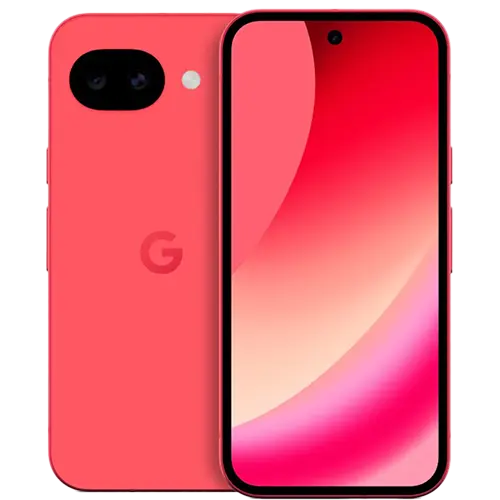
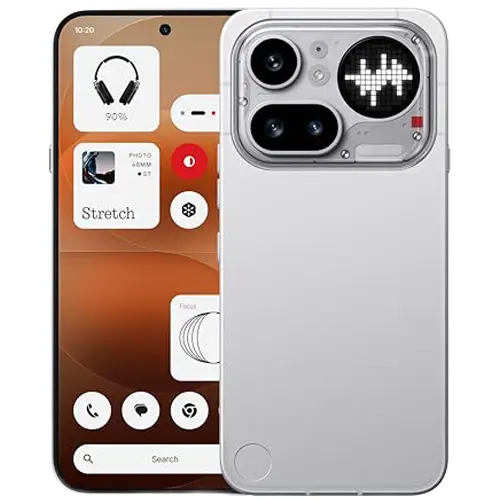
Nothing
Pixel 10a
Phone (4a) Pro
Ranked #50 of 60
Ranked #45 of 60
Overall
Overall
The Google Pixel 10a and Nothing Phone (4a) Pro sit at the same $499 price point but approach it differently. The Pixel 10a is Google's effort to bring its computational photography and software experience down to a more accessible tier, leaning on the same Tensor silicon found in its flagship line. The Nothing Phone (4a) Pro is a mid-range phone with flagship ambitions in hardware, offering a telephoto lens and a larger display in a package that costs the same as Google's option. Both are aimed at people who want a capable everyday phone without spending $900 or more.
The Pixel 10a is the lighter, more compact device with a brighter display, wireless charging, faster data transfer, and better standby battery performance. The Nothing Phone (4a) Pro counters with a larger, higher-refresh-rate screen, a dedicated telephoto camera, sharper main camera output, more accurate color processing, and faster wired charging. Performance is close enough that most people won't notice a difference in daily use, though each chip has specific strengths.
Here’s how the Google Pixel 10a and Nothing Phone (4a) Pro compare in our lab testing.
Design
| Google Pixel 10a | Nothing Phone (4a) Pro | |
|---|---|---|
| Specifications | ||
| Dimensions | 153.9 x 73 x 9 mm | 163.7 x 76.6 x 8 mm |
| Weight | 183g | 210g |
| IP Rating | IP68 | IP65 |
| Frame | Aluminum | Aluminum |
| Front | Gorilla Glass 7i | Gorilla Glass 7i |
| Back | Plastic | Aluminum |
| Screen-to-body ratio | 84.7% | 89.8% |
The Pixel 10a is the smaller phone at 153.9 x 73 x 9mm and 183g, compared to the Nothing Phone (4a) Pro at 163.7 x 76.6 x 8mm and 210g. That's a 27g difference, roughly the weight of five coins. The Nothing Phone is noticeably taller and wider but slightly thinner. Both use aluminum frames and Gorilla Glass 7i on the front. The back is where they diverge: the Pixel 10a uses plastic, while the Nothing Phone (4a) Pro has an aluminum back. Both materials are durable, but the aluminum back adds weight and contributes to the Nothing Phone's heftier feel.
The Pixel 10a carries an IP68 rating, meaning it's rated for submersion in fresh water up to a rated depth. The Nothing Phone (4a) Pro is IP65, which covers protection against water jets but not submersion. For anyone who regularly uses their phone near water, that's a meaningful gap. The Nothing Phone (4a) Pro's screen-to-body ratio is 89.8% compared to the Pixel's 84.7%, which means thinner bezels and more screen relative to the phone's face. The Pixel 10a has a 20.2:9 aspect ratio display, slightly taller and narrower than the Nothing Phone's 20:9.
Bandicoot Lab doesn't formally test design or durability, so these comparisons are based on specifications alone.
Display
| Google Pixel 10a | Nothing Phone (4a) Pro | |
|---|---|---|
584/ 881 | 579/ 881 | |
The Pixel 10a has a 6.3-inch P-OLED panel at 1080 x 2424 resolution (422 pixels per inch), with a 60–120Hz refresh rate. The Nothing Phone (4a) Pro uses a larger 6.83-inch AMOLED at 1260 x 2800 (440 PPI) with a 30–144Hz refresh rate. The Nothing Phone's higher refresh ceiling means smoother scrolling and animations, and its slightly higher pixel density produces marginally sharper text and UI elements, though both are sharp enough that you'd struggle to tell them apart at normal viewing distance.
Brightness is where the Pixel 10a pulls well ahead. Its manual brightness reaches 1,403 nits compared to 876 nits on the Nothing Phone (4a) Pro. That gap matters outdoors in direct sunlight, where the Pixel will be considerably easier to read. For HDR content, the Pixel peaks at 3,182 nits versus the Nothing Phone's 1,755 nits. HDR peak brightness is measured on a small bright window against a dark background; a scene that's mostly bright will not sustain that peak. The Pixel's HDR output drops to 62% of its peak brightness across larger bright areas. The Nothing Phone holds 100% stability across window sizes, delivering its lower peak consistently across the screen. Both phones sustain their brightness well over time: the Pixel holds 97.9% over a 30-minute HDR test, the Nothing Phone 98.8%.
The Nothing Phone (4a) Pro follows the HDR reference curve more faithfully, rendering highlights closer to how they were mastered. The Pixel 10a deviates more from the reference. The Nothing Phone begins clipping at around 90% of the HDR input range, so the brightest highlights lose some distinction.
Color accuracy is close. Both phones have a mode that tracks the sRGB color space well. The Pixel 10a's best average color error is slightly lower, while the Nothing Phone's peak error is lower. In practice, both deliver colors that look accurate in their calibrated modes, with only minor drift that most people won't notice. Touch latency is 15ms on the Pixel and 15.9ms on the Nothing Phone, effectively identical.
Performance
| Google Pixel 10a | Nothing Phone (4a) Pro | |
|---|---|---|
342/ 1012 | 301/ 1012 | |
The Pixel 10a runs Google's Tensor G4 with 8GB of RAM. The Nothing Phone (4a) Pro uses Qualcomm's Snapdragon 7 Gen 4 with up to 12GB of RAM. Both are mid-range processors, and their overall performance scores reflect that.
The Tensor G4 has a clear edge in single-core CPU work, scoring 1,716 in GeekBench 6 versus 1,377 for the Snapdragon 7 Gen 4. Multi-core scores are nearly identical: 4,385 versus 4,313. The Tensor's single-core advantage shows up in browser performance too, where the Pixel scores 17.7 in Speedometer compared to 14.2 for the Nothing Phone. You'll feel this most in web-heavy tasks and app launches.
GPU performance is closer. The Pixel 10a's best loop score in the Wild Life Extreme stress test is 2,685 versus 2,100 for the Nothing Phone. The Pixel starts stronger but throttles to 82.6% stability, losing nearly a fifth of its peak GPU performance under sustained load. The Nothing Phone (4a) Pro holds 99.2% stability, barely dropping at all. For extended gaming sessions, the Nothing Phone will deliver more consistent frame rates even though its peak is lower.
Camera
| Google Pixel 10a (Overall) | Nothing Phone (4a) Pro (Overall) | |
|---|---|---|
| Specifications | ||
| Main | 48MP, f/1.7, 25mm, 1/2.0" | 50MP, f/1.9, 24mm, 1/1.56" |
| Ultrawide | 13MP, f/2.2, 14mm, 1/3.1" | 8MP, f/2.2, 15mm, 1/4.0" |
| Telephoto | — | 50MP, f/2.9, 80mm, 1/2.75" |
| Front | 13MP, f/2.2, 20mm, 1/3.1" | 32MP, f/2.2, 22mm, 1/3.42" |
The Nothing Phone (4a) Pro has the more versatile camera system, including a 50-megapixel f/1.9 main sensor (1/1.56-inch), an 8-megapixel ultrawide, a 50-megapixel 4x telephoto, and a 32-megapixel front camera. The Pixel 10a carries a 48-megapixel f/1.7 main (1/2.0-inch), a 13-megapixel ultrawide, and a 13-megapixel front camera. No telephoto. The Nothing Phone's larger main sensor and dedicated telephoto give it structural advantages in sharpness and reach.
Main camera sharpness is higher on the Nothing Phone across all lighting conditions. The gap is most apparent in bright light, where the Nothing Phone's larger sensor captures considerably more resolved detail. Both hold up reasonably well in low light, though the Nothing Phone maintains its lead. At longer digital zoom levels where neither phone has optical support, the Pixel 10a's processing keeps detail fairly consistent through its 8x maximum zoom. The Nothing Phone (4a) Pro extends to 140x digital zoom, but detail drops sharply past 30x and becomes unusable past about 100x in anything but bright daylight.
Main
| Google Pixel 10a (Main) | Nothing Phone (4a) Pro (Main) | |
|---|---|---|
497/ 722 | 576/ 722 | |
The Nothing Phone (4a) Pro's main camera resolves more detail than the Pixel 10a's across bright, mid, and dark lighting. The difference is visible in fine textures like fabric and foliage. The Pixel 10a's main camera sharpening runs aggressive in dark conditions, which can introduce visible edge artifacts.
Color rendering is where the two phones diverge most. The Nothing Phone (4a) Pro's main camera produces a relatively neutral, true-to-life look, with colors sitting close to reality across lighting conditions. The Pixel 10a pushes saturation noticeably higher, giving photos a more vivid, punchy character. The Pixel's look departs further from what was actually in the scene.
The Nothing Phone's main camera holds hue accuracy better across lighting conditions. Skin tones are closer to reference in mid and low light. In bright light, both phones produce noticeable skin tone errors. As lighting gets warmer and dimmer, the Pixel 10a's processing pulls colors toward cool tones, a white balance overcorrection where the blue-yellow shift grows as the light gets warmer. The Nothing Phone shifts slightly warm in mid light but stays more controlled overall.
Dynamic range is similar on both main cameras. Both hold detail well in shadows and highlights for high-contrast scenes, though neither is exceptional. The Nothing Phone clips highlights a bit earlier, which can lose detail in very bright sky areas. The Pixel preserves highlights slightly longer but compresses tonal transitions more.
Ultrawide
| Google Pixel 10a (Ultrawide) | Nothing Phone (4a) Pro (Ultrawide) | |
|---|---|---|
493/ 722 | 555/ 722 | |
The Pixel 10a's 13-megapixel ultrawide is sharper than the Nothing Phone (4a) Pro's 8-megapixel ultrawide across all lighting conditions. The Pixel's ultrawide is one of its strongest lenses, resolving detail competitive with its own main camera. The Nothing Phone's ultrawide is its weakest lens for sharpness, with a noticeable drop from its main camera, especially in low light.
Color accuracy flips. The Nothing Phone's ultrawide produces lower hue errors in bright light and renders saturation more accurately. The Pixel 10a's ultrawide pushes saturation high in bright light and produces significant skin tone errors across all conditions, more so than on any other lens on either phone. The Nothing Phone's ultrawide also drifts with skin tones in bright light but improves considerably as light dims.
The Nothing Phone's ultrawide captures better dynamic range, holding more detail in both shadows and highlights. The Pixel's ultrawide clips highlights earlier and compresses tones more heavily.
Telephoto
| Google Pixel 10a (Telephoto) | Nothing Phone (4a) Pro (Telephoto) | |
|---|---|---|
| — | 495/ 722 | |
The Nothing Phone (4a) Pro has a dedicated 50-megapixel 4x optical telephoto at 80mm f/2.9. The Pixel 10a has no telephoto lens, so any zoom beyond its 25mm main camera is a digital crop.
At 4x zoom, the Nothing Phone's telephoto resolves strong detail in bright light and holds up reasonably in mid light, though it drops off noticeably in dark conditions. At the same 4x magnification, the Pixel 10a is digitally cropping its main sensor. The Pixel's 4x crops are competitive in bright conditions but fall behind the Nothing Phone's optical telephoto as light drops.
The telephoto's color rendering is close to the main camera's neutral tuning in bright light, with a slight saturation lift. In mid and low light, the processing warms up and a yellow shift becomes prominent, a white balance issue where the warm bias grows consistently as the color temperature of the light source drops. Skin tones hold well in mid light but drift more in dim conditions. Dynamic range is narrower than the main camera, with earlier highlight clipping.
Video stabilization from the telephoto is effective, keeping handheld footage controlled.
Front
| Google Pixel 10a (Front) | Nothing Phone (4a) Pro (Front) | |
|---|---|---|
549/ 722 | 621/ 722 | |
The Pixel 10a's 13-megapixel front camera is sharper than the Nothing Phone (4a) Pro's 32-megapixel front camera in bright and mid lighting. Both lose detail in low light, but the Pixel holds up better.
The Nothing Phone (4a) Pro's front camera produces more accurate colors. Saturation stays near 100%, and hue accuracy is consistently strong across all lighting conditions, making it one of the better-performing front cameras for color fidelity. The Pixel 10a's front camera pushes saturation higher and has skin tones that drift from reference more than the Nothing Phone's, particularly with a growing warm bias in lower light.
Dynamic range from the Nothing Phone's front camera is excellent, preserving a wide spread of tones in high-contrast selfie situations like backlit scenes. The Pixel's front camera has good dynamic range too, but the Nothing Phone's is wider. Video stabilization is better on the Nothing Phone's front camera.
Battery
| Google Pixel 10a | Nothing Phone (4a) Pro | |
|---|---|---|
531/ 836 | 572/ 836 | |
The Pixel 10a has a 5,100mAh battery and the Nothing Phone (4a) Pro has a 5,080mAh cell. Nearly identical capacity, but they drain at very different rates depending on the task.
Video playback is close: the Pixel 10a lasts 25.95 hours and the Nothing Phone (4a) Pro lasts 26.31 hours.
The divergence comes in web browsing and gaming. Over a five-hour web browsing test, the Pixel 10a drains 19% of its battery versus 28% on the Nothing Phone. During the one-hour gaming stress test, the Pixel drains 23% compared to 27% on the Nothing Phone. The Pixel is more efficient under load across the board.
Standby tells a different story. The Nothing Phone (4a) Pro drains just 1% over eight hours of overnight idle, while the Pixel 10a drains 3%. Three percent overnight isn't alarming, but the Nothing Phone's idle efficiency is clearly better. If you leave your phone off the charger overnight, the Nothing Phone will have more juice when you wake up.
Charging
| Google Pixel 10a | Nothing Phone (4a) Pro | |
|---|---|---|
259/ 837 | 246/ 837 | |
The Nothing Phone (4a) Pro supports 50W wired charging versus the Pixel 10a's 30W. The Pixel 10a also supports 10W wireless charging; the Nothing Phone has no wireless charging.
In practice, the Nothing Phone gets to 27% in 10 minutes compared to the Pixel's 21%. At 30 minutes, the gap narrows: 63% for the Nothing Phone versus 59% for the Pixel. Neither is especially fast by modern standards, but for a quick top-up before heading out, the Nothing Phone puts slightly more power back in less time.
The Pixel 10a's wireless charging is slow at 10W: 6% in 10 minutes and 14% in 30 minutes makes it a nightstand feature, not a quick-charge option. Having it at all is useful for people who prefer dropping their phone on a pad overnight.
Speaker
| Google Pixel 10a | Nothing Phone (4a) Pro | |
|---|---|---|
575/ 897 | 612/ 897 | |
The Pixel 10a is louder at 75.4 dBA maximum volume compared to the Nothing Phone (4a) Pro's 71.8 dBA. That's a noticeable difference. If you're playing audio without headphones, the Pixel fills a room more easily.
Distortion is similar: 7.7% THD on the Pixel versus 8.4% on the Nothing Phone. Neither is especially clean, though both are acceptable at moderate volumes. The Pixel 10a has fuller bass and a warmer overall sound. The Nothing Phone (4a) Pro leans toward clarity and high-end detail, with less low-frequency presence. For spoken content like podcasts, the Nothing Phone's emphasis on clarity is helpful. For music, the Pixel's more balanced low end sounds fuller.
Microphone
| Google Pixel 10a | Nothing Phone (4a) Pro | |
|---|---|---|
346/ 1220 | 455/ 1220 |
The Nothing Phone (4a) Pro's microphone produces a more even frequency response, meaning voice recordings and calls sound more natural with less coloration. The Pixel 10a's microphone is below average, with more uneven frequency reproduction that can make voices sound thinner or more colored. Neither phone is a standout for recording quality, but the Nothing Phone is closer to what you'd want for voice calls and quick recordings.
Other
| Google Pixel 10a | Nothing Phone (4a) Pro | |
|---|---|---|
| Biometrics | 396/ 1181 | 367/ 1181 |
| Data Transfer | 419/ 943 | 92/ 943 |
| Specifications | ||
| Biometric type | Fingerprint | Fingerprint |
| Ports | USB-C 3.2 | USB-C 2.0 |
| Storage | 128GB, 256GB | 128GB, 256GB |
Both phones use optical fingerprint sensors. The Pixel 10a unlocks in 265ms on average, the Nothing Phone (4a) Pro in 286ms. Both feel essentially instant in practice. Neither phone has hardware-based face unlock.
Data transfer speeds are dramatically different. The Pixel 10a's USB-C 3.2 port delivers read speeds of 178 MB/s and write speeds of 197 MB/s. The Nothing Phone (4a) Pro uses USB-C 2.0, managing just 37 MB/s in both directions. If you regularly transfer large files, photos, or video to a computer, the Pixel is nearly five times faster. Both phones offer 128GB and 256GB storage options. The Nothing Phone (4a) Pro also has an 8GB RAM option alongside its 12GB configuration, while the Pixel 10a comes in 8GB only.
Conclusion
The Pixel 10a and Nothing Phone (4a) Pro trade wins across nearly every category, and neither one clearly outclasses the other overall. The Pixel 10a has a much brighter display, better battery efficiency during active use, louder speakers, significantly faster data transfer, wireless charging, and stronger water resistance. The Nothing Phone (4a) Pro counters with a sharper and more color-accurate camera system, a dedicated telephoto lens, a higher refresh rate display, more consistent GPU stability, and faster wired charging.
Camera quality may be the deciding factor for many people. The Nothing Phone (4a) Pro produces more natural-looking photos with better color accuracy, and its telephoto gives you real optical zoom that the Pixel can't match. If you take a lot of photos, especially of people, the Nothing Phone's more restrained processing and extra lens are genuinely useful. The Pixel 10a's cameras are capable but lean on heavier processing and more saturated output.
Related
Pixel 10a
Nothing
Phone (4a) Pro
Pixel 11 Pro XL
Pixel 11 Pro
Pixel 11
Pixel 11 Pro Fold
Nothing
Phone (4a)
Nothing
Phone (4b)
Best Phones Under $800
Best Phones for Gaming
Best Phones For Any Budget
Best Android Phones