Nothing CMF Phone 2 Pro vs Motorola Moto G Power (2026)

Nothing
Motorola
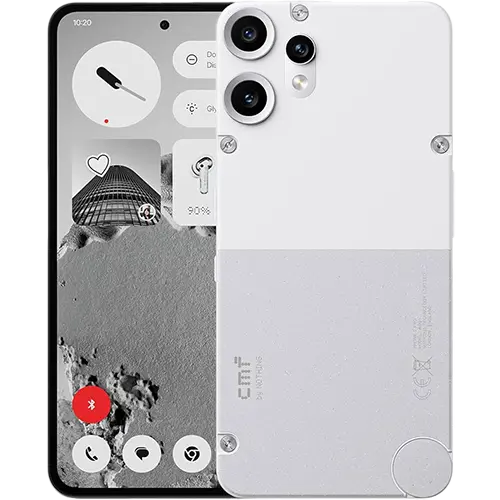
CMF Phone 2 Pro
Moto G Power (2026)
Ranked #59 of 60
Ranked #60 of 60
Overall
Overall
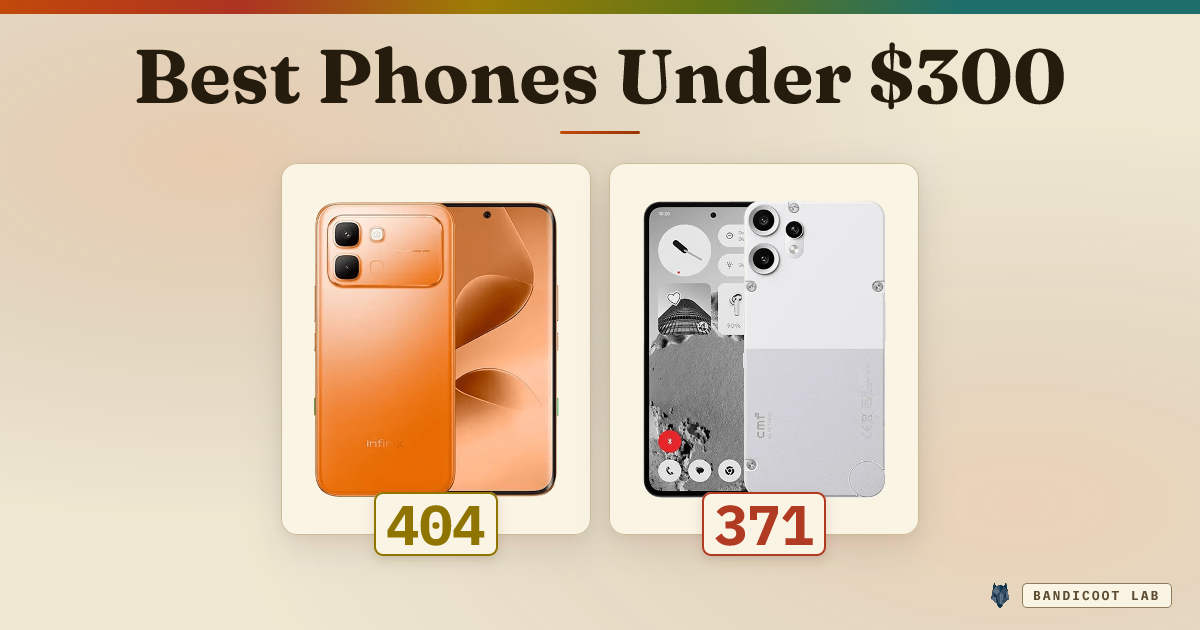
The Nothing CMF Phone 2 Pro and Motorola Moto G Power (2026) sit in a similar price bracket, with the CMF Phone 2 Pro at $279 and the Moto G Power at $299.99. Both target buyers who want a capable daily driver without spending flagship money. The CMF Phone 2 Pro leans into Nothing's design-forward identity and packs a telephoto lens that's uncommon at this price. The Moto G Power has long been Motorola's workhorse line, emphasizing durability and battery life, and this generation adds IP68/IP69 water resistance to reinforce that identity.
The CMF Phone 2 Pro is stronger in performance, display quality, battery life, and camera versatility. The Moto G Power has better water resistance, a louder speaker, a faster fingerprint sensor, faster charging, and a sharper front camera. It also has a noticeably better microphone.
Here’s how the two devices compared in our testing.
Design
| Nothing CMF Phone 2 Pro | Motorola Moto G Power (2026) | |
|---|---|---|
| Specifications | ||
| Dimensions | 164 x 78 x 7.8 mm | 166.6 x 77.1 x 8.7 mm |
| Weight | 185g | 208g |
| IP Rating | IP54 | IP68/IP69 |
| Frame | Plastic | Plastic |
| Front | Panda Glass | Gorilla Glass 7i |
| Back | Plastic | Vegan leather |
| Screen-to-body ratio | 86.8% | 87.2% |
The CMF Phone 2 Pro measures 164 x 78 x 7.8mm and weighs 185g. The Moto G Power is larger and heavier at 166.6 x 77.1 x 8.7mm and 208g — a 23g difference you'll feel in a pocket. Both use plastic frames. The CMF Phone 2 Pro pairs a Panda Glass front with a plastic back, while the Moto G Power uses Gorilla Glass 7i up front and vegan leather on the back.
The biggest spec difference here is water resistance. The CMF Phone 2 Pro carries an IP54 rating, meaning splash protection but nothing more. The Moto G Power is rated IP68/IP69, which means it can be submerged in fresh water to a rated depth and also withstand high-pressure, high-temperature water jets. If you work outdoors or around water, that's a meaningful gap.
Screen-to-body ratios are nearly identical: 86.8% for the CMF Phone 2 Pro and 87.2% for the Moto G Power. Both share a 19.9:9 aspect ratio, so the in-pocket and in-hand proportions are similar despite the Moto being slightly taller and thicker.
Bandicoot Lab doesn't formally test design or durability, so this section describes what's on paper. The Gorilla Glass 7i on the Moto G Power is a harder glass than Panda Glass, which should mean better scratch resistance, though we haven't validated that with drop or scratch testing.
Display
| Nothing CMF Phone 2 Pro | Motorola Moto G Power (2026) | |
|---|---|---|
426/ 881 | 387/ 881 | |
The CMF Phone 2 Pro uses a 6.77-inch AMOLED panel at 1080 x 2392 (388 PPI). The Moto G Power has a 6.8-inch LCD at 1080 x 2388 (387 PPI). Resolution and pixel density are essentially the same. Both panels run up to 120Hz, but the CMF Phone 2 Pro can drop as low as 30Hz for static content, while the Moto G Power bottoms out at 60Hz. In practice, both feel smooth during scrolling and animation.
Brightness is where the AMOLED advantage shows. The CMF Phone 2 Pro reaches 670 nits in manual brightness mode; the Moto G Power tops out at 547 nits. For HDR content, the gap widens: the CMF Phone 2 Pro peaks at 1,266 nits versus 1,021 nits for the Moto G Power. Both displays maintain their HDR brightness perfectly across different window sizes — 100% stability for both. Sustained brightness over a 30-minute HDR stress test is also strong on both, with the CMF Phone 2 Pro holding 98.6% and the Moto G Power at 94.5%. Neither phone will dim noticeably during a long HDR video session.
For HDR tone mapping, both displays boost highlights above the mastered reference level and clip input content before it reaches the theoretical peak. The CMF Phone 2 Pro clips somewhat earlier in the input signal range, while the Moto G Power holds on a bit longer. Both lift highlights beyond what the content was mastered for, which can make HDR look punchier but less faithful. Neither is doing precision-grade HDR rendering.
Color accuracy is moderate on both phones. The CMF Phone 2 Pro's best mode achieves P3 gamut coverage of 96.9% and sRGB at 99.9%. The Moto G Power covers 75.7% of P3 and 99.3% of sRGB — its LCD panel simply can't reproduce the wider gamut as fully. Colors on the CMF Phone 2 Pro are close to reference but drift on certain shades, with neutral tones staying mostly clean. The Moto G Power's Natural Mode is decent for an LCD, with slightly less precise color overall but no severe cast.
Touch latency is 17.1ms on the CMF Phone 2 Pro and 28ms on the Moto G Power. That's a meaningful gap — about 11ms — and while you probably won't notice it during casual use, it could matter in fast-paced gaming where input responsiveness counts.
Performance
| Nothing CMF Phone 2 Pro | Motorola Moto G Power (2026) | |
|---|---|---|
182/ 1012 | 121/ 1012 | |
The CMF Phone 2 Pro runs a MediaTek Dimensity 7300 Pro with 8GB of RAM. The Moto G Power uses a Dimensity 6300, also with 8GB. The 7300 Pro is a tier above the 6300, and the benchmarks reflect that clearly.
In GeekBench 6, the CMF Phone 2 Pro scores 1,012 single-core and 2,953 multi-core. The Moto G Power manages 792 single-core and 2,130 multi-core. That's roughly a 28% single-core advantage and 39% multi-core advantage for the CMF Phone 2 Pro. You'll feel this in app launch times, multitasking, and general system responsiveness. The Moto G Power isn't slow for basic tasks, but it'll lag behind in anything that demands sustained processing.
GPU performance is an even bigger gap. The CMF Phone 2 Pro's best Wild Life Extreme score is 854, compared to 382 for the Moto G Power — more than double. Neither of these are good scores.
Browser performance follows the same pattern: the CMF Phone 2 Pro scores 9.5 in Speedometer versus 6.1 for the Moto G Power. Web pages with heavy JavaScript will load and respond faster on the CMF.
Camera
| Nothing CMF Phone 2 Pro (Overall) | Motorola Moto G Power (2026) (Overall) | |
|---|---|---|
| Specifications | ||
| Main | 50MP, f/1.9, 24mm, 1/1.57" | 50MP, f/1.8, 31mm, 1/2.88" |
| Ultrawide | 8MP, f/2.2, 15mm, 1/4.0" | 8MP, f/2.2, 13mm |
| Telephoto | 50MP, f/1.9, 50mm, 1/2.88" | — |
| Front | 16MP, f/2, 22mm, 1/3.0" | 32MP, f/2.2, 24mm |
The CMF Phone 2 Pro has a more versatile camera system: a 50 megapixel f/1.9 main (24mm), an 8 megapixel f/2.2 ultrawide (15mm, 0.6x), a 50 megapixel f/1.9 telephoto (50mm, 2x), and a 16 megapixel front camera. The Moto G Power gets a 50 megapixel f/1.8 main (31mm), an 8 megapixel f/2.2 ultrawide (13mm, 0.5x), no telephoto, and a 32 megapixel front camera. The presence of a dedicated 2x telephoto on the CMF Phone 2 Pro is unusual at this price and gives it a clear framing advantage for portraits and mid-range subjects.
At deep zoom, the CMF Phone 2 Pro extends to 20x digital zoom. Sharpness at that reach is low — detail falls off sharply past 10x. The Moto G Power maxes out at 8x, and its sharpness at that level is also limited. Neither phone is a zoom camera.
Main
| Nothing CMF Phone 2 Pro (Main) | Motorola Moto G Power (2026) (Main) | |
|---|---|---|
492/ 722 | 309/ 722 | |
The Moto G Power's main camera is sharper in bright and mid lighting. In low light, the CMF Phone 2 Pro pulls ahead, maintaining strong detail where the Moto G Power drops off. The CMF's main lens is consistent across lighting conditions, while the Moto loses more sharpness as light decreases.
Color character differs significantly. The Moto G Power pushes saturation hard across all lighting — colors look vivid and warm, with a noticeable yellow-warm lean that's consistent from bright to mid conditions. Skin tones are pushed well away from reference in all conditions, drifting warm and saturated. In low light, the Moto's processing adds a strong magenta-pink shift on top of the warm cast, which distorts both hue accuracy and skin tones. This looks like a white balance correction issue that worsens as the color temperature of ambient light drops.
The CMF Phone 2 Pro takes a more restrained approach. Saturation is close to neutral in most conditions, occasionally slightly boosted in bright light. Skin tones are inaccurate in bright light — they drift noticeably from reference — but improve in mid and low light. Hue accuracy is moderate across conditions. In mid and dark light, there's a slight warm-magenta lean that looks like a mild white balance overcorrection, but it's less aggressive than the Moto's.
The CMF Phone 2 Pro retains more shadow detail and handles high-contrast scenes with more depth. The Moto G Power clips highlights earlier and compresses the tonal range more aggressively, so bright skies and shadows both lose information.
Ultrawide
| Nothing CMF Phone 2 Pro (Ultrawide) | Motorola Moto G Power (2026) (Ultrawide) | |
|---|---|---|
411/ 722 | 326/ 722 | |
Both phones use 8-megapixel ultrawide sensors. Sharpness is close in bright and mid light — the CMF Phone 2 Pro is slightly ahead in bright conditions, and the two are nearly tied in mid light. Both drop off in low light, with similar sharpness levels.
The Moto G Power's ultrawide pushes saturation even harder than its main camera, especially in bright light. Colors look vivid to the point of being oversaturated. In low light, hue accuracy collapses: there's a very large magenta shift that severely distorts colors. This is driven by a strong warm bias in the white balance correction that overwhelms the sensor's actual color data. Skin tones drift far from reference at every lighting level.
The CMF Phone 2 Pro's ultrawide is also oversaturated in bright and mid light — more so than its own main camera — but hue accuracy holds up better, and the low-light color shift is much milder. Skin tones are still inaccurate, particularly in bright and mid conditions, but it doesn't suffer the same dramatic breakdown.
The CMF Phone 2 Pro's ultrawide retains more shadow and highlight detail. The Moto G Power's ultrawide compresses the range more tightly.
Telephoto
| Nothing CMF Phone 2 Pro (Telephoto) | Motorola Moto G Power (2026) (Telephoto) | |
|---|---|---|
400/ 722 | — | |
The CMF Phone 2 Pro has a dedicated 50-megapixel 2x telephoto at 50mm. The Moto G Power has no telephoto lens — its 2x zoom is a digital crop from the main sensor.
The CMF Phone 2 Pro's telephoto is sharp across all three lighting conditions, holding detail well even in low light. Color accuracy on the telephoto is also the CMF's best lens — hue errors are low, saturation stays close to neutral, and skin tones are more accurate than on its main or ultrawide cameras. It's a strong portrait lens.
The Moto G Power's 2x crop from its main sensor is noticeably softer. It produces usable results in bright light but drops off quickly as conditions dim.
The CMF's telephoto clips highlights sooner than its main camera, narrowing the tonal range somewhat. For most portrait and mid-range shooting, this is acceptable. Video stabilization on the telephoto is weak — handheld footage shows noticeable shake.
Front
| Nothing CMF Phone 2 Pro (Front) | Motorola Moto G Power (2026) (Front) | |
|---|---|---|
302/ 722 | 334/ 722 | |
The Moto G Power's 32-megapixel front camera is sharper than the CMF Phone 2 Pro's 16 megapixel front camera across all lighting conditions, and the gap is substantial. In bright light, the Moto resolves nearly twice the detail.
Color accuracy is poor on both front cameras, but in different ways. The CMF Phone 2 Pro's front camera is reasonably accurate in bright and mid light — saturation is close to neutral, skin tones are decent — but falls apart in low light, where skin tones shift heavily warm and hue accuracy degrades. This looks like a white balance issue under warm, dim lighting.
The Moto G Power's front camera runs saturated and warm at every lighting level. In low light, it develops a massive magenta-pink shift that distorts skin tones and hues dramatically. The warm bias rises sharply as light drops, pointing to a white balance problem that overwhelms sensor-level hue data.
The CMF Phone 2 Pro's front camera retains more highlight detail despite the lower resolution. The Moto G Power's front camera clips highlights aggressively.
Video stabilization on the front camera is comparable, with neither phone standing out.
Battery
| Nothing CMF Phone 2 Pro | Motorola Moto G Power (2026) | |
|---|---|---|
484/ 836 | 392/ 836 | |
The CMF Phone 2 Pro has a 5,000mAh battery; the Moto G Power has a 5,200mAh cell. Despite the slightly larger capacity, the Moto G Power lasts significantly less time in video playback: 17.6 hours versus 23.6 hours for the CMF Phone 2 Pro. That's a six-hour gap. The CMF Phone 2 Pro's 23.6 hours of video playback means you could comfortably get through a day and a half to two days of mixed use between charges. The Moto G Power's 17.6 hours is still a full day for most people, but there's less headroom.
Web browsing drain tells a slightly different story. Over a five-hour test, the CMF Phone 2 Pro drains 25% and the Moto G Power drains 24% — essentially identical. Both phones will get through a full day of web-heavy use with plenty to spare.
Gaming drain is close: the CMF Phone 2 Pro loses 10% during the stress test, the Moto G Power loses 11%. Standby drain favors the CMF as well — 2% overnight versus 3% for the Moto G Power over eight hours. Neither is excessive, but over a weekend away from a charger, that difference adds up.
The CMF Phone 2 Pro is the better battery phone despite the smaller cell, likely due to its more efficient AMOLED display and processor. The Moto G Power's LCD and less efficient chipset appear to eat into its capacity advantage.
Charging
| Nothing CMF Phone 2 Pro | Motorola Moto G Power (2026) | |
|---|---|---|
181/ 837 | 224/ 837 | |
The CMF Phone 2 Pro supports 33W wired charging; the Moto G Power supports 30W. Neither offers wireless charging.
The Moto G Power charges faster despite the lower wattage: 20% in 10 minutes versus 17% for the CMF Phone 2 Pro, and 58% in 30 minutes versus 50%. If you're grabbing a quick top-up before heading out, the Moto G Power gives you a bit more juice in less time. Neither phone reaches a fast charge by flagship standards, but both reach a usable charge within half an hour.
Speaker
| Nothing CMF Phone 2 Pro | Motorola Moto G Power (2026) | |
|---|---|---|
635/ 897 | 558/ 897 | |
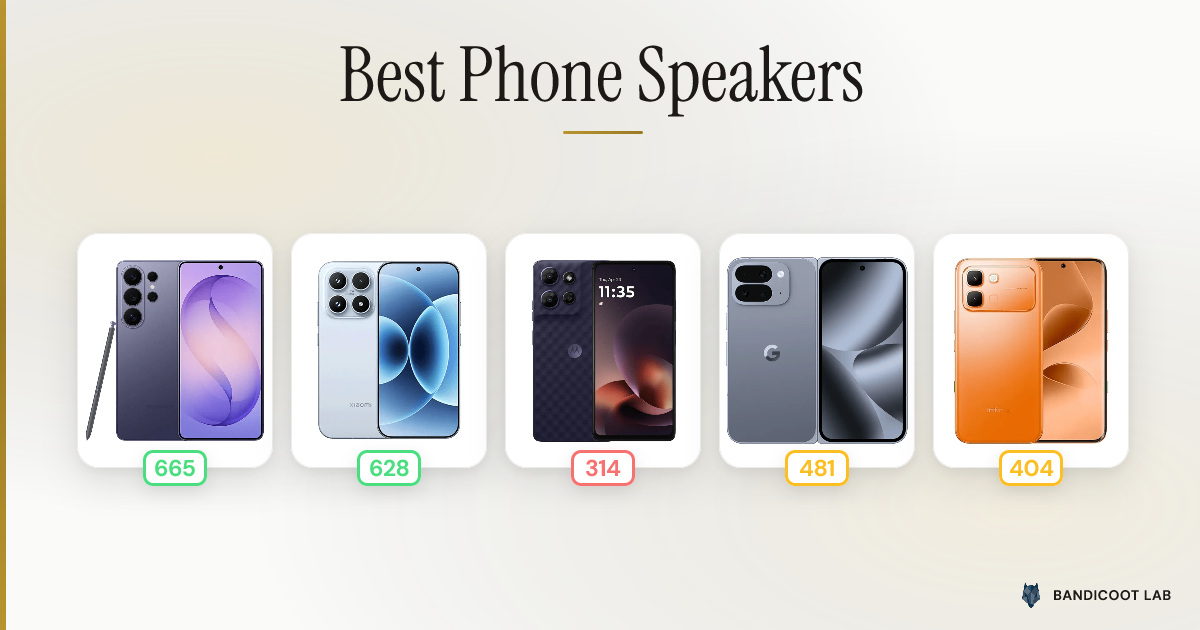
The Moto G Power is much louder, hitting 80.3 dBA maximum volume versus 68.2 dBA for the CMF Phone 2 Pro. That's a large difference — the Moto can fill a room where the CMF Phone 2 Pro will sound quiet at arm's length.
The CMF Phone 2 Pro measures 5.85% average THD (total harmonic distortion, a measure of audio cleanliness), while the Moto G Power hits 12.48%. At high volumes, the Moto's speaker sounds noticeably rougher, with more harshness in voices and music. The CMF Phone 2 Pro stays cleaner throughout its volume range.
The Moto G Power has slightly more bass presence and a wider frequency range, but the higher distortion undercuts that. The CMF Phone 2 Pro leans more toward clarity and midrange cleanliness, which makes spoken content like podcasts and calls sound better despite the lower volume ceiling. If you mostly listen at moderate levels, the Moto's loudness advantage matters less than the CMF's cleanliness.
Microphone
| Nothing CMF Phone 2 Pro | Motorola Moto G Power (2026) | |
|---|---|---|
343/ 1220 | 619/ 1220 |
The Moto G Power has a meaningfully better microphone. Its frequency response is more even and consistent, placing it in the above-average range. The CMF Phone 2 Pro's microphone is well below average, with a notably uneven frequency response that can make voice recordings and calls sound inconsistent. If you take a lot of voice notes or spend time on speakerphone calls, the Moto G Power is the better choice.
Other
| Nothing CMF Phone 2 Pro | Motorola Moto G Power (2026) | |
|---|---|---|
| Biometrics | 458/ 1181 | 548/ 1181 |
| Data Transfer | 87/ 943 | 93/ 943 |
| Specifications | ||
| Biometric type | Fingerprint | Fingerprint |
| Ports | USB-C 2.0 | USB-C 2.0 |
| Storage | 128GB, 256GB | 128GB |
Both phones have fingerprint sensors. The Moto G Power uses a capacitive sensor that unlocks in an average of 192ms. The CMF Phone 2 Pro uses an optical in-display sensor at 229ms. The Moto is about 37ms faster — a minor but perceptible difference. Neither phone has hardware-based face unlock.
Data transfer speeds are nearly identical. The CMF Phone 2 Pro reads at 36 MB/s and writes at 34 MB/s. The Moto G Power reads at 38 MB/s and writes at 34 MB/s. Both use USB-C 2.0, so you're looking at the same slow transfer experience either way. The CMF Phone 2 Pro offers 128GB or 256GB storage options; the Moto G Power comes in 128GB only.
Conclusion
The CMF Phone 2 Pro is the stronger phone overall. It has a brighter, more color-accurate AMOLED display, meaningfully better processing power, longer battery life, more camera versatility with its dedicated telephoto, and better dynamic range across most lenses. It costs $20 less. For general daily use, media consumption, and photography, it's the better pick.
The Moto G Power earns its keep in specific areas. Its IP68/IP69 rating makes it far more durable around water and dust. The speaker gets much louder. The front camera is sharper. The microphone is significantly better for calls and voice recording. Charging is a bit faster. The fingerprint sensor is quicker. And the Gorilla Glass 7i front should handle scratches better.
If you need a rugged daily phone that handles wet or dusty environments, or if call quality and speaker volume matter more to you than screen quality and processing speed, the Moto G Power justifies its $20 premium. For everyone else — and especially anyone who cares about cameras, display, performance, or battery endurance — the CMF Phone 2 Pro delivers more for less.
Related
Motorola
Moto G Power (2026)
Nothing
CMF Phone 2 Pro
Motorola
Razr Ultra (2026)
Motorola
Razr Fold
Nothing
Phone (4a) Pro
Motorola
Razr+ (2026)
Nothing
Phone (4a)
Motorola
Razr (2026)
Nothing
Phone (4b)
Best Phone Speakers

Nothing Phone (4a) Pro vs Motorola Moto G Power (2026)
Best Phones Under $300