Motorola Razr Ultra (2026)
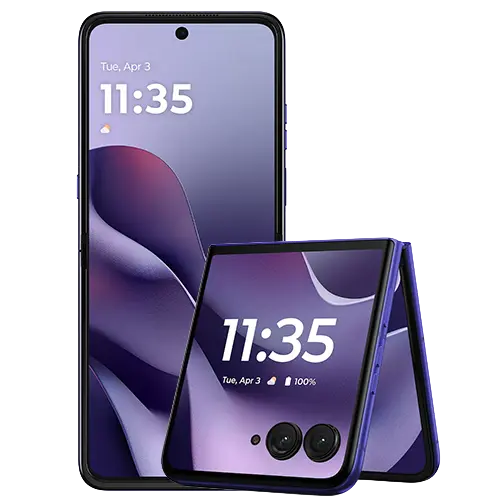
Motorola
Razr Ultra (2026)
Ranked #19 of 51 devices tested
Score Overview
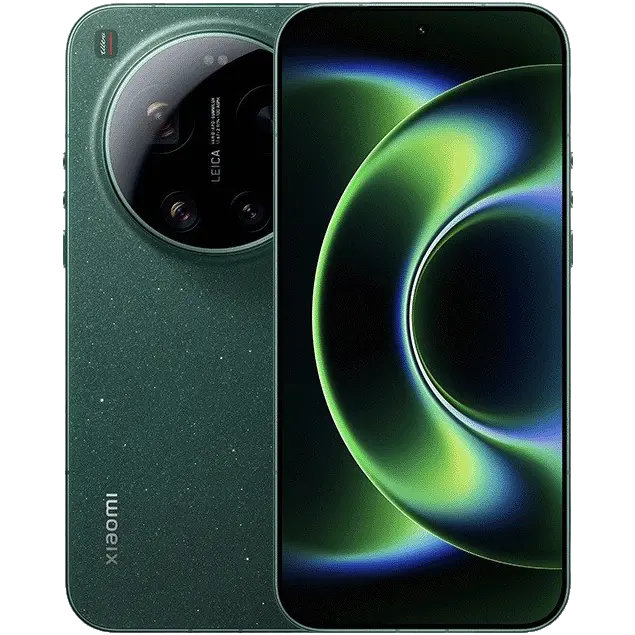
Motorola's flip-style foldable has been chasing Samsung's Galaxy Z Flip series for years, and the Razr Ultra (2026) represents the most aggressive attempt yet to close that gap. It's a $1,500 flip phone aimed at people who want the compact pocketability of a clamshell with the full-size inner screen experience of a slab phone. At this price, it competes with flagship slabs like the Samsung Galaxy S26 Ultra and Xiaomi 17 Ultra.
The Razr Ultra's strengths cluster around its camera system, battery life, and fast biometrics. Its 50-megapixel main and ultrawide cameras produce solid results, and the front camera is good for a foldable. Battery life is above average for this form factor. Weaknesses include poor speakers, mediocre display color accuracy on both screens, charging speeds that lag the competition, and slow USB-C 2.0 data transfer for a phone at this price.
Design
Specifications
Folded, the Razr Ultra measures 88.1 x 74 x 15.7mm. Unfolded, it stretches to 171.5 x 74.0 x 7.2mm. At 199g, it's lighter than many slab flagships and noticeably lighter than Motorola's own Razr Fold at 243g. The aluminum frame is paired with Gorilla Glass Ceramic on the front and a choice of vegan leather, Alcantara, or wood on the back.
The IP48 rating means the phone is protected against objects larger than 1mm and can handle splashes, but it isn't submersible. The Samsung Galaxy S26 Ultra and Xiaomi 17 Ultra carry IP68 ratings and can be submerged in fresh water. The 87.3% screen-to-body ratio on the inner display is decent for a foldable, though slab phones routinely exceed 90%. The 22:9 aspect ratio on the inner screen makes it tall and narrow when unfolded. A single USB-C 2.0 port handles charging and data.
Bandicoot Lab does not formally test design or durability.
Display
Inner
The 7-inch LTPO AMOLED inner display runs at 1224 x 2992 resolution with 462 pixels per inch and a 165Hz maximum refresh rate that drops as low as 1Hz for static content. Peak HDR brightness reaches 2,919 nits, and the panel holds 98.9% of that brightness over the sustained 30-minute test. Brightness drops significantly across different HDR window sizes, falling to about 56% stability, which means full-screen bright scenes won't hit that same peak. Manual brightness tops out at 474 nits. Outdoors in direct sunlight, you'll be relying on auto-brightness to push things higher.
Color accuracy is a weak point. Colors drift noticeably from reference values even in the best display mode. The display covers 99.6% of sRGB but only 76.6% of the wider DCI-P3 gamut, which means saturated reds, greens, and deep blues won't be fully reproduced. The Samsung Galaxy S26 Ultra and Xiaomi 17 Ultra both cover more of P3, and the Razr Fold's inner display is more color-accurate overall.
HDR tone mapping is relatively faithful. The display doesn't aggressively boost highlights above their mastered levels, and it tracks the reference curve reasonably well. Clipping begins at the 80% input level, so the very brightest highlights get compressed. Touch latency averages 19ms, which is responsive.
Outer
The 4-inch LTPO AMOLED outer display runs at 1080 x 1272 with 417 PPI and the same 1–165Hz refresh rate range. It's a nearly square panel at 10.6:9, which is useful for quick interactions, widgets, and running apps without unfolding the phone.
Color accuracy is slightly better on the outer display than the inner one, though neither is strong in absolute terms. Colors drift from reference, particularly in certain hues, but the outer panel shows less overall error. Brightness is lower than the inner display, which is typical for cover screens. Touch latency is similar.
Performance
The Razr Ultra runs a Qualcomm Snapdragon 8 Elite with 16GB of RAM. GeekBench 6 scores land at 3,062 single-core and 9,161 multi-core. These are solid numbers, though they trail the next-generation Snapdragon 8 Elite Gen 5 found in the Samsung Galaxy S26 Ultra (3,685 / 11,198) and Xiaomi 17 Ultra (3,689 / 11,173). In daily use, the gap between these chips is mostly invisible in app launches and general navigation. The difference appears in sustained workloads.
GPU performance is strong. The Wild Life Extreme stress test peaked at 6,420 with 68.6% stability across the run. That stability is better than the Galaxy S26 Ultra's 49.8%, meaning the Razr Ultra throttles less under sustained gaming loads despite having less room for heat dissipation in its compact folding body. Solar Bay peaked at 11,538 with 65.7% stability.
Browser performance scored 20.8 on Speedometer, which is below what the newer-generation chips achieve.
Camera
The Razr Ultra carries a two-camera rear system: a 50-megapixel main (f/1.8, 24mm, 1/1.56" sensor) and a 50-megapixel ultrawide (f/2.0, 13mm, 1/2.93" sensor). There's no telephoto lens, which is expected for a flip foldable but worth noting at $1,500. The 50-megapixel front camera (f/2.0, 22mm) rounds things out.
Sharpness is respectable. The main camera holds detail well from bright through mid-light, softening in dark conditions. The ultrawide is a strong performer for its class. The front camera is one of the better selfie cameras in a foldable, maintaining high sharpness in good and moderate light. Deep zoom is where things fall apart. Without a telephoto lens, all zoom beyond 1x is digital crop, and by 20x the results are very soft. Usable zoom stops around 3–4x.
Main
The main camera delivers good sharpness across lighting conditions, with bright and mid-light results that hold up well against slab flagships. Detail softens in dark conditions but remains usable. As you zoom in digitally, sharpness degrades gradually. By 10x it's noticeably softer, and by 20–30x maximum zoom is functional but not detailed.
Hue accuracy is genuinely good. Colors stay close to reference across all lighting conditions, which is an advantage over the Samsung Galaxy S26 Ultra's main camera, where hue errors grow in mid and low light. Skin tones shift noticeably in bright light but improve in dimmer conditions. The warm-light drift pattern, where processing pulls slightly warm and pink as scene color temperature drops, suggests white balance correction is the main culprit.
Dynamic range is average. Shadow detail is reasonable but highlights clip in high-contrast scenes. The Razr Fold's main camera shows a similar limitation, though the Galaxy S26 Ultra preserves highlight and shadow detail more effectively. Video stabilization is loose. Handheld footage shows visible movement that isn't well corrected.
Ultrawide
The 50-megapixel ultrawide at 13mm delivers strong sharpness in bright and mid-light conditions and holds together better than many ultrawide lenses at this price. It softens more noticeably in dark conditions, typical for a smaller sensor.
Color accuracy is weaker than the main camera's. Hue errors are moderate in good light and grow in low light. Skin tones drift further from reference on the ultrawide than on the main lens. In bright light, the ultrawide shows a noticeable cool cast that disappears in warmer lighting. Dynamic range is slightly better than the main camera's, with more shadow detail preserved in high-contrast scenes. Highlight clipping still occurs. Video stabilization is comparable to the main camera: not well controlled.
Front
The 50-megapixel front camera at 22mm and f/2.0 is a highlight. Sharpness is high in bright and mid-light, dropping in dark conditions but remaining usable. It's sharper than the Galaxy S26 Ultra's 12-megapixel front camera and the Razr Fold's inner selfie camera across the board.
The color character is muted. Saturation runs well below neutral across all lighting conditions, giving selfies a flat, desaturated look. A consistent cool-pink cast runs through all lighting, appearing to be baked into the processing. Skin tones carry moderate error but are more consistent across lighting than either the main or ultrawide cameras. Dynamic range is average, and highlights clip in bright backgrounds. Stabilization is well controlled — the front camera handles video noticeably better than the rear cameras.
Battery
The 5,000 mAh battery delivers 31.23 hours of video playback on the inner display and 32.89 hours on the outer display. That inner-display figure translates to roughly a day and a half of heavy mixed use, or comfortably two days for moderate users. The outer display's slightly better result makes sense given the smaller panel and lower power draw.
Web browsing drained 19% over the five-hour test, which is efficient. The Galaxy S26 Ultra drained 24%, and the Xiaomi 17 Ultra drained 26%. Gaming pulled 39% during the Wild Life Extreme stress test, which is heavier than the S26 Ultra's 24% and Xiaomi 17 Ultra's 31%. Overnight standby drained 3%, which is excellent.
Battery life overall is a genuine strength for a flip foldable. The Razr Fold, despite its larger 6,000 mAh battery, returned shorter video playback on its inner display (26.22 hours) and higher web drain (32%). The Razr Ultra manages its power well.
Charging
Wired charging runs at 68W. In 10 minutes you'll reach 27%, and 30 minutes gets you to 70%. The Samsung Galaxy S26 Ultra reaches 34% at 10 minutes and 79% at 30 minutes on its 60W charger, with a smaller battery. The Xiaomi 17 Ultra's 90W charging is faster still.
Wireless charging at 30W is slow. Ten minutes adds 10%, and 30 minutes reaches 22%. The Xiaomi 17 Ultra's 50W wireless charging hits 45% in the same time. If you rely on wireless charging regularly, this is a weak point.
Speaker
The speakers reach 77.6 dB maximum volume. Distortion is high at 8.74% THD, meaning the speakers sound strained well before maximum volume. The frequency response is heavily tilted toward the highs, with weak bass and thin low-end presence. The overall sound character is tinny and lacks fullness.
The Samsung Galaxy S26 Ultra delivers lower distortion, fuller bass, and better high-end clarity. The Razr Fold also sounds significantly cleaner and more balanced. The Razr Ultra's speakers are adequate for notification sounds and brief speakerphone calls, but they're among the weakest at this price for media playback or music.
Microphone
Microphone performance is average. The frequency response is reasonably even, and recording quality is fine for calls and voice memos.
Other
Measurements
Specifications
The capacitive fingerprint sensor unlocks in an average of 147ms, which is fast. There's no hardware-based face unlock. Storage comes in a single 512GB configuration with 16GB of RAM. Data transfer over USB-C 2.0 is very slow, with read speeds around 39 MB/s and write speeds around 38 MB/s. Transferring large files or backups to a computer will take much longer than on phones with USB 3.0 or faster. The Galaxy S26 Ultra and Xiaomi 17 Ultra both offer USB-C 3.2 with read speeds above 300 MB/s.
Conclusion
The Motorola Razr Ultra (2026) does a few things well for a flip foldable: battery life is strong, the camera system is competent with a particularly good front camera, and fingerprint unlock is quick. The 165Hz inner display is smooth and bright in HDR, and performance is solid for everything short of the most demanding sustained workloads.
Speakers are poor, charging is middling, and display color accuracy lags behind what you'd expect at $1,500. USB-C 2.0 data speeds feel like an oversight at this price. Without a telephoto lens, zoom beyond a few times magnification is essentially unusable. If you specifically want a compact flip phone with good battery life and solid everyday cameras, the Razr Ultra delivers. If you're cross-shopping against slab flagships at the same price, the Galaxy S26 Ultra and Xiaomi 17 Ultra offer meaningfully more in camera versatility, display quality, and connectivity.
FAQ
How long does the Razr Ultra (2026) battery last on a typical day?
The Razr Ultra ran for just over 31 hours in our looping video test on the inner display, which works out to roughly a day and a half of heavy mixed use or comfortably two days for moderate users. Web browsing is efficient — it drained only 19% over a five-hour session, which is better than the Galaxy S26 Ultra and Xiaomi 17 Ultra in the same test. Overnight standby drained just 3%, so you won't lose much charge sitting on a nightstand.
How fast does the Razr Ultra charge, and is the wireless charging any good?
Wired at 68W, the Razr Ultra reaches 27% in 10 minutes and 70% at 30 minutes — respectable, though the Galaxy S26 Ultra gets further faster on a slower 60W charger due to its smaller battery. Wireless charging at 30W is the bigger letdown: 10 minutes adds only 10%, and 30 minutes gets you to 22%. The Xiaomi 17 Ultra's 50W wireless charging hits 45% in the same half-hour window, so if you rely on a wireless pad day-to-day, this phone will feel slow.
Can the Razr Ultra zoom at all without a telephoto lens?
Without a dedicated telephoto lens, all zoom beyond 1x is a digital crop from the 50-megapixel main sensor. Results hold together reasonably at 3–4x, but by 10x sharpness has degraded noticeably, and at 20–30x the images are very soft and lack usable detail. If zoom photography matters to you, this is a real limitation at $1,500.
How good are the Razr Ultra's speakers for music or video?
The speakers reach 77.6 dB at maximum volume, but distortion is high at 8.74% THD, meaning the sound strains well before you hit that ceiling. The frequency response leans heavily toward the high end, with weak bass and a thin overall character. They're fine for speakerphone calls or quick notification sounds, but the Galaxy S26 Ultra and even the Razr Fold both sound noticeably cleaner and fuller for media playback.
Is the Razr Ultra's IP rating good enough for everyday water exposure?
The IP48 rating covers protection against objects larger than 1mm and water splashes, but the phone is not rated for submersion. That means rain, sweaty workouts, and accidental sink splashes are fine, but dropping it in a pool or sink full of water is not. The Galaxy S26 Ultra and Xiaomi 17 Ultra both carry IP68 ratings and can handle submersion in fresh water.
How does the Razr Ultra's front camera compare to other foldables for selfies?
The 50-megapixel front camera is a genuine strength. Sharpness is high in bright and moderate light, and it outresolves the Galaxy S26 Ultra's 12-megapixel selfie camera and the Razr Fold's inner camera across the board. The main caveat is color processing: saturation runs noticeably below neutral in all lighting, giving selfies a flat, desaturated look, and a cool-pink cast persists regardless of the scene. Front-facing video is also well stabilized, which is better than what the rear cameras deliver.
How slow is USB-C 2.0 on the Razr Ultra, and does it matter in practice?
Read speeds land around 39 MB/s and write speeds around 38 MB/s over the USB-C 2.0 port. Transferring a large photo library or a device backup to a computer will take significantly longer than on phones with USB 3.0 or faster — the Galaxy S26 Ultra and Xiaomi 17 Ultra both exceed 300 MB/s on their USB-C 3.2 ports. For everyday charging it makes no difference, but anyone who regularly moves large files between their phone and a computer will feel the gap.
Related
Best Foldable Phones

Motorola Razr (2026) vs Motorola Razr Ultra (2026)
Best Phones for Gaming
Best Flip Phones
Motorola
Razr+ (2026)

Motorola
Razr Fold
Motorola
Razr (2026)

Motorola
Moto G Power (2026)
Xiaomi
17 Ultra
Xiaomi