Nothing Phone (4a) Pro vs Motorola Moto G Power (2026)
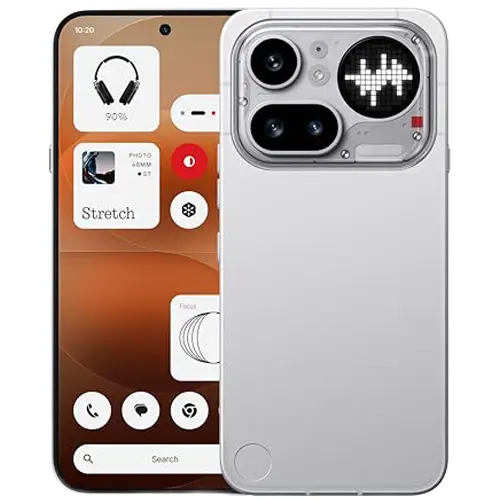

Nothing
Motorola
Phone (4a) Pro
Moto G Power (2026)
Ranked #45 of 60
Ranked #60 of 60
Overall
Overall
The Nothing Phone (4a) Pro is a $499 mid-range phone built around a versatile camera system and a high-refresh AMOLED display, aimed at buyers who want flagship-adjacent features without flagship pricing. The Motorola Moto G Power (2026), at $299.99, is a budget phone that prioritizes durability and simplicity, built for people who want a reliable everyday phone without pushing performance or camera quality. The $200 price gap between them is significant, and the question is whether the Nothing justifies that difference.
The Nothing Phone (4a) Pro is stronger in cameras, display quality, performance, and battery life. Its three-lens rear camera system, including a dedicated telephoto, outclasses the Moto G Power's two-camera setup by a wide margin, and its AMOLED panel is brighter and sharper. The Moto G Power has a higher IP rating, a louder speaker, faster fingerprint unlock, and a lower price. For the most part, the Nothing Phone (4a) Pro is a better phone. Here’s how they truly compare.
Design
| Nothing Phone (4a) Pro | Motorola Moto G Power (2026) | |
|---|---|---|
| Specifications | ||
| Dimensions | 163.7 x 76.6 x 8 mm | 166.6 x 77.1 x 8.7 mm |
| Weight | 210g | 208g |
| IP Rating | IP65 | IP68/IP69 |
| Frame | Aluminum | Plastic |
| Front | Gorilla Glass 7i | Gorilla Glass 7i |
| Back | Aluminum | Vegan leather |
| Screen-to-body ratio | 89.8% | 87.2% |
The two phones are close in physical size. The Nothing Phone (4a) Pro measures 163.7 x 76.6 x 8mm and weighs 210g. The Moto G Power comes in slightly larger at 166.6 x 77.1 x 8.7mm and 208g. You won't notice a meaningful difference in pocket or hand.
Materials diverge more clearly. The Nothing uses an aluminum frame and aluminum back with Gorilla Glass 7i on the front. The Moto G Power uses a plastic frame with a vegan leather back, also with Gorilla Glass 7i up front. Aluminum is stiffer and more resistant to flex than plastic, though neither phone uses glass on the back, so neither is particularly fragile from a drop perspective.
The Moto G Power carries an IP68/IP69 rating, meaning it's submersible in fresh water to rated depth and can withstand high-pressure, high-temperature water jets. The Nothing Phone (4a) Pro is rated IP65, making it protected against low-pressure water jets but not submersion. For anyone who works outdoors or around water, the Moto G Power's rating is a genuine practical advantage.
Screen-to-body ratio is 89.8% on the Nothing versus 87.2% on the Moto G Power, which translates to slightly thinner bezels on the Nothing. Aspect ratios are nearly identical at 20:9 and 19.9:9 respectively. Bandicoot Lab doesn't formally test design or durability, so these observations are based on published specifications.
Display
| Nothing Phone (4a) Pro | Motorola Moto G Power (2026) | |
|---|---|---|
579/ 881 | 387/ 881 | |
The Nothing Phone (4a) Pro uses a 6.83-inch AMOLED panel at 1260 x 2800 resolution (440 pixels per inch). The Moto G Power has a 6.8-inch LCD at 1080 x 2388 (387 PPI). The Nothing's higher pixel density gives it visibly sharper text and UI elements, especially at close reading distances.
Refresh rate is another clear gap. The Nothing supports up to 144Hz with adaptive refresh down to 30Hz. The Moto G Power tops out at 120Hz with a 60Hz floor. Both are smooth for scrolling and general UI, but the Nothing's higher ceiling might benefit certain games.
Brightness separates them significantly. The Nothing reaches 876 nits at maximum manual brightness, while the Moto G Power manages 547 nits. For HDR content, the Nothing peaks at 1,755 nits versus the Moto G Power's 1,021 nits. Both displays hold their HDR peak brightness at 100% stability over window sizes, but the Nothing's sustained brightness retention across a 30-minute HDR load is slightly higher at 98.8% compared to the Moto G Power's 94.5%. The Nothing will be more legible outdoors and deliver punchier HDR video.
Color accuracy favors the Nothing. In its Standard mode, colors stay close to reference with only minor drift on individual patches. The Moto G Power in Natural mode shows more visible deviation; some colors wander far enough from their targets that you'd notice shifts in neutral tones and certain saturated colors side by side. The Nothing covers 97.2% of sRGB in its most accurate mode; the Moto G Power covers 99.3% of sRGB but with less precise rendering within that gamut.
Touch latency is 15.9ms on the Nothing and 28ms on the Moto G Power. That 12ms gap is large enough to feel in fast gaming and rapid scrolling. For general phone use it's less critical, but if you play competitive games, the Nothing will feel more responsive under your finger.
Performance
| Nothing Phone (4a) Pro | Motorola Moto G Power (2026) | |
|---|---|---|
301/ 1012 | 121/ 1012 | |
The Nothing Phone (4a) Pro runs Qualcomm's Snapdragon 7 Gen 4 with 12GB of RAM (also available with 8GB). The Moto G Power uses MediaTek's Dimensity 6300 with 8GB of RAM and no higher option.
CPU performance isn't close. The Nothing scores 1,377 single-core and 4,313 multi-core in GeekBench 6. The Moto G Power scores 792 single-core and 2,130 multi-core. That's roughly 74% higher single-core and double the multi-core throughput. You'll feel this difference in app launch times, multitasking, and anything that taxes the processor. The Moto G Power handles basic tasks fine, but heavier apps and multitasking will slow it down noticeably.
GPU performance is even more lopsided. The Nothing hits a peak of 2,100 in Wild Life Extreme, while the Moto G Power scores 382. That's more than a 5x difference. Both maintain 99.2% stability across their stress test runs, so neither throttles under sustained load, but the Moto G Power simply can't run demanding 3D games at playable settings. The Nothing handles them comfortably.
Browser performance follows the same pattern. The Nothing scores 14.2 in Speedometer versus the Moto G Power's 6.1. Complex web apps and heavy pages will load and respond faster on the Nothing.
Camera
| Nothing Phone (4a) Pro (Overall) | Motorola Moto G Power (2026) (Overall) | |
|---|---|---|
| Specifications | ||
| Main | 50MP, f/1.9, 24mm, 1/1.56" | 50MP, f/1.8, 31mm, 1/2.88" |
| Ultrawide | 8MP, f/2.2, 15mm, 1/4.0" | 8MP, f/2.2, 13mm |
| Telephoto | 50MP, f/2.9, 80mm, 1/2.75" | — |
| Front | 32MP, f/2.2, 22mm, 1/3.42" | 32MP, f/2.2, 24mm |
The Nothing Phone (4a) Pro has a four-camera system, with a 50-megapixel f/1.9 main, an 8-megapixel f/2.2 ultrawide, a 50-megapixel f/2.9 4x telephoto, and a 32-megapixel front camera. The Moto G Power has three cameras: a 50-megapixel f/1.8 main, an 8-megapixel f/2.2 ultrawide, and a 32-megapixel front camera. No telephoto.
The Nothing's camera system is stronger across every lens. Its main camera is sharper in all lighting conditions, its color accuracy is meaningfully better, and its dynamic range captures more detail in both shadows and highlights. The Moto G Power's cameras produce usable photos in good light but fall behind quickly as conditions get harder.
At deep zoom levels, the Nothing's dedicated telephoto sensor gives it a significant advantage. It resolves useful detail out to about 30x and maintains recognizable subjects beyond that, though image quality drops off steeply past 50x. The 140x maximum digital zoom is available but produces very little real detail. The Moto G Power maxes out at 8x digital zoom and loses sharpness rapidly past 3x, since it's cropping into a smaller main sensor without optical magnification.
Main
| Nothing Phone (4a) Pro (Main) | Motorola Moto G Power (2026) (Main) | |
|---|---|---|
576/ 722 | 309/ 722 | |
Both main cameras are sharp in bright light, with the Nothing resolving slightly more detail. In medium and low light, the Nothing holds its advantage more clearly. The Moto G Power's main sensor is noticeably softer in dim conditions.
Color rendering is where the two phones diverge most. The Nothing produces relatively neutral, accurate colors across lighting conditions. Saturation stays close to lifelike in bright and medium light, dipping slightly in the dark. Skin tones are noticeably off in bright light but improve considerably in medium and low-light settings. In dimmer light, colors shift slightly warm due to a white balance adjustment, but overall hue accuracy stays reasonable.
The Moto G Power takes a very different approach. Its processing pushes saturation hard: colors run well above lifelike in bright and medium light. The look is vivid and punchy, which some people prefer for social media, but it's far from accurate. Skin tones are heavily oversaturated across all lighting, and a warm-yellow bias is consistent from bright to medium light. In low light, hue accuracy degrades further, with a strong pink-magenta push appearing. This looks like a processing issue compounding a sensor limitation: the warm-light bias persists across conditions, and a strong pink shift emerges specifically in dim light, suggesting the sensor struggles with color separation when light gets scarce.
Dynamic range is another area where the Nothing pulls ahead. Its main camera preserves detail across a wider brightness range in high-contrast scenes. Shadows retain texture and highlights, while clipped, are managed reasonably. The Moto G Power clips highlights more aggressively and recovers less shadow detail, leaving high-contrast scenes looking flatter.
Ultrawide
| Nothing Phone (4a) Pro (Ultrawide) | Motorola Moto G Power (2026) (Ultrawide) | |
|---|---|---|
555/ 722 | 326/ 722 | |
The Nothing's ultrawide uses an 8 megapixels f/2.2 sensor at 15mm (0.6x). The Moto G Power's ultrawide is also 8 megapixels f/2.2 at 13mm (0.5x), giving it a slightly wider field of view. Both are modest sensors.
Sharpness is close in medium light, with the Moto G Power actually slightly ahead. In bright light, the Nothing pulls ahead, and in low light it holds a clear lead. Both ultrawides are softer than their respective main cameras, which is expected given the smaller sensors.
Color accuracy on the Nothing's ultrawide is mixed. In bright light, skin tones drift significantly, but general hue accuracy stays good. As light dims, the processing adds a warm shift, and hue accuracy gradually worsens. The Moto G Power's ultrawide oversaturates colors heavily, similar to its main camera, and in low light it develops a dramatic pink-magenta cast with severe hue errors. The warm bias from the white balance system stays relatively stable, but a massive pink-red push appears in the darkest conditions, pointing to the sensor's color channels breaking down in low light.
Dynamic range is wider on the Nothing's ultrawide, preserving more shadow and highlight detail. The Moto G Power clips highlights hard and compresses the tonal range significantly.
Telephoto
| Nothing Phone (4a) Pro (Telephoto) | Motorola Moto G Power (2026) (Telephoto) | |
|---|---|---|
495/ 722 | — | |
The Nothing Phone (4a) Pro has a dedicated 50 megapixels f/2.9 telephoto at 80mm, providing 4x optical zoom. The Moto G Power has no telephoto lens.
In bright light, the Nothing's telephoto resolves good detail at its native 4x. Sharpness drops in medium and low light, as expected for a smaller-aperture lens. Colors run slightly vivid in bright light. Skin tones drift in bright conditions but are more accurate in dimmer light. In medium and low light, a warm-yellow bias emerges that grows stronger as light drops, indicating the processing isn't fully compensating as ambient color temperature shifts. Hue accuracy degrades alongside it.
Dynamic range on the telephoto is narrower than the main camera, with highlights clipping sooner. For portraits and mid-range subjects, it produces solid results in good light. For anything beyond 4x, the camera switches to digital zoom and quality drops off.
Having a telephoto at all is a meaningful advantage. The Moto G Power can't get close to distant subjects without heavy digital cropping, which destroys detail quickly.
Front
| Nothing Phone (4a) Pro (Front) | Motorola Moto G Power (2026) (Front) | |
|---|---|---|
621/ 722 | 334/ 722 | |
Both phones have 32 megapixels front cameras. Sharpness is similar in bright light, with the Nothing slightly ahead. The gap widens in medium and low light, where the Nothing holds more detail.
Color from the Nothing's front camera is relatively restrained. Saturation stays near neutral across all conditions, and skin tones are moderately off in bright light but improve as light dims. There's a slight cool lean in bright light that shifts toward neutral in dimmer conditions.
The Moto G Power's front camera oversaturates significantly across all lighting conditions. Skin tones are far from accurate. In low light, the front camera develops severe hue errors with a very strong pink-magenta and warm push. The magnitude of the color shift in low light is extreme, worse than any other lens on either phone.
Dynamic range on the Nothing's front camera is strong, managing a wide brightness range with good shadow and highlight retention. The Moto G Power's front camera has significantly narrower dynamic range, clipping highlights aggressively and losing shadow detail.
Battery
| Nothing Phone (4a) Pro | Motorola Moto G Power (2026) | |
|---|---|---|
572/ 836 | 392/ 836 | |
The Nothing Phone (4a) Pro has a 5,080mAh battery; the Moto G Power has a slightly larger 5,200mAh cell.
Despite the smaller battery, the Nothing lasts considerably longer. It plays video for 26.3 hours at a calibrated 200-nit brightness, compared to the Moto G Power's 17.6 hours. That's roughly 50% more video playback. For typical mixed use, the Nothing should comfortably last a full day and a half, while the Moto G Power is more of a single-day phone.
Web browsing drain tells a slightly different story. Over a 5-hour browsing test, the Moto G Power drops 24% versus the Nothing's 28%.
Gaming drain, in raw metrics, is better on the Moto G Power — but that’s because the Moto G Power isn’t capable of performing high enough to drain that much battery. In our one-hour test, the Moto G Power lost 11%, while the Nothing Phone (4a) Pro lost 27%.
Standby is better on the Nothing: 1% drain over 8 hours versus 3% on the Moto G Power. If you leave your phone idle overnight, the Nothing will barely move.
Charging
| Nothing Phone (4a) Pro | Motorola Moto G Power (2026) | |
|---|---|---|
246/ 837 | 224/ 837 | |
The Nothing Phone (4a) Pro supports 50W wired charging. The Moto G Power supports 30W. Neither offers wireless charging.
After 10 minutes, the Nothing reaches 27% compared to the Moto G Power's 20%. At 30 minutes, the Nothing hits 63% versus the Moto G Power's 58%. The Nothing charges faster at every checkpoint, and the gap is most noticeable in those first 10 minutes. If you're topping up quickly before heading out, the Nothing gives you meaningfully more charge in less time.
Speaker
| Nothing Phone (4a) Pro | Motorola Moto G Power (2026) | |
|---|---|---|
612/ 897 | 558/ 897 | |
The Moto G Power is substantially louder, hitting 80.3 dBA versus the Nothing's 71.8 dBA. That's a large gap; the Moto G Power will fill a room much more easily. If you watch videos or listen to podcasts without headphones, the volume difference is immediately obvious.
Sound character differs. The Nothing has better clarity and cleaner output, with lower distortion at 8.4% average THD compared to the Moto G Power's 12.5%. The Nothing's speaker leans toward the higher frequencies, emphasizing vocals and detail, but it's weak on bass. The Moto G Power has fuller bass and a broader frequency range, but its higher distortion means that at louder volumes, the sound gets rougher. Clean, detailed sound at moderate volume versus louder, fuller sound that's less refined.
Microphone
| Nothing Phone (4a) Pro | Motorola Moto G Power (2026) | |
|---|---|---|
455/ 1220 | 619/ 1220 |
The Moto G Power has a more even microphone frequency response, meaning it captures voice and ambient sound with fewer peaks and dips across the range. It's solidly average. The Nothing's microphone is below average, with more variation in how it captures different frequencies. For voice calls both are fine, but for voice memos or video recording, the Moto G Power will produce slightly more natural-sounding audio.
Other
| Nothing Phone (4a) Pro | Motorola Moto G Power (2026) | |
|---|---|---|
| Biometrics | 367/ 1181 | 548/ 1181 |
| Data Transfer | 92/ 943 | 93/ 943 |
| Specifications | ||
| Biometric type | Fingerprint | Fingerprint |
| Ports | USB-C 2.0 | USB-C 2.0 |
| Storage | 128GB, 256GB | 128GB |
Fingerprint unlock is faster on the Moto G Power at 192ms average versus the Nothing's 286ms. The Moto G Power uses a capacitive sensor, which tends to be quicker and more reliable than the Nothing's optical in-display reader. Neither phone has hardware-based face unlock.
Both phones use USB-C 2.0, so data transfer speeds are limited. The Nothing reads and writes at about 37 MB/s. The Moto G Power reads at 38 MB/s and writes at 34 MB/s. Effectively identical, and both are slow for large file transfers. The Nothing is available with 128GB or 256GB of storage; the Moto G Power comes only in 128GB.
Conclusion
The Nothing Phone (4a) Pro wins in most measurable categories. Its display is brighter, sharper, more color-accurate, and more responsive. Its processor is dramatically faster. Its camera system is in a different class entirely, with better sharpness, color accuracy, dynamic range, and a dedicated telephoto. Battery life is substantially longer, and charging is faster. For someone who cares about camera quality, screen quality, or performance, the Nothing justifies its higher price.
The Moto G Power (2026) has genuine strengths. Its IP68/IP69 rating makes it one of the more durable phones at its price. Its speaker is louder. Its fingerprint sensor is faster. Its microphone is more balanced. And it costs $200 less. For buyers who need a phone that can handle rain, dust, and rough environments, the Moto G Power delivers on its core promise.
For most, the Nothing Phone (4a) Pro is a much better buy — though it costs extra too.
Related
Motorola
Moto G Power (2026)
Nothing
Phone (4a) Pro
Motorola
Razr Ultra (2026)
Motorola
Razr Fold
Motorola
Razr+ (2026)
Nothing
Phone (4a)
Motorola
Razr (2026)
Nothing
Phone (4b)
Best Phone Speakers
Best Phones Under $800
Best Phones For Any Budget
Best Android Phones