Motorola Razr+ (2026)
Motorola
Razr+ (2026)
Ranked #40 of 51 devices tested
Score Overview
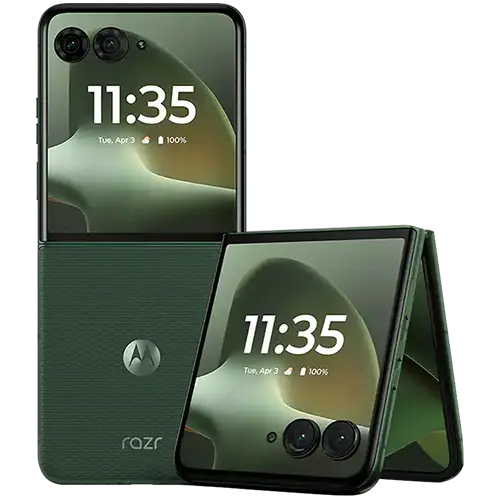
The Motorola Razr+ (2026) is a flip-style foldable aimed at people who want a compact phone that doesn't compromise on screen size. When unfolded, you get a tall 6.9-inch LTPO AMOLED display; folded, a 4-inch outer screen handles quick tasks without opening the phone. It's positioned at $1,099.99, directly competing with the Samsung Galaxy Z Flip 7 at the same price and sitting in the range of slab flagships like the iPhone 17 Pro. It’s also in-between the standard Motorola Razr (2026) and the more expensive Razr Ultra (2026).
The Razr+ delivers a bright and responsive inner display, strong camera color accuracy for a foldable, and an above-average microphone. Battery life is poor, the speaker system is the weakest part of the package, and performance trails well behind slab phones at this price. Charging is slow by modern standards, and connectivity speeds are limited by USB-C 2.0.
Here’s how the Motorola Razr+ (2026) performed in our lab testing.
Design
Specifications
Folded, the Razr+ (2026) measures 88.1 x 74 x 15.3mm. Unfolded, it stretches to 171.4 x 74.0 x 7.1mm. At 189 grams, it's essentially identical to the Samsung Galaxy Z Flip 7's 188 grams and noticeably lighter than slab phones like the iPhone 17 Pro at 206 grams or the Samsung Galaxy S26 Ultra at 214 grams.
The outer cover uses Gorilla Glass Victus, while the back panel is vegan leather. The IP48 rating means it's protected against solid objects larger than 1mm and submersion in fresh water up to a rated depth, but it's a step below the IP68 rating found on the Galaxy Z Flip 7 and most slab flagships. The inner display achieves an 85.1% screen-to-body ratio with a 22:9 aspect ratio, and the outer display sits at 78.1% screen-to-body ratio. The port is USB-C 2.0.
Bandicoot Lab does not formally test design or durability.
Display
Inner
The 6.9-inch LTPO AMOLED inner display runs at 1,084 x 2,640 resolution (414 pixels per inch) and supports a 1–165Hz adaptive refresh rate. In manual brightness mode, it reaches 483 nits, which is low. For context, the Galaxy Z Flip 7 hits 690 nits and the iPhone 17 Pro reaches 885 nits. Outdoors, auto brightness pushes the panel up to 3,236 nits in HDR peak brightness. This peak holds across different window sizes at 81.8% stability and sustains perfectly over a 30-minute test at 100% sustained brightness. Those HDR numbers are genuinely strong.
Color accuracy is moderate. The best display mode produces colors that drift visibly from reference values, and some individual colors show more noticeable error. The panel covers 98.9% of the sRGB gamut and 75.1% of DCI-P3. For HDR tone mapping, the display tracks the reference curve fairly closely, with a mild brightness boost to highlights and clipping beginning at 80% input level. HDR content looks natural without heavy manipulation of highlights.
Touch latency is 6.8ms, which is exceptionally fast. The Galaxy Z Flip 7's inner display measures 18.6ms, and the iPhone 17 Pro comes in at 52.7ms. You'll feel the difference in responsiveness during scrolling and gaming.
Outer
The 4-inch LTPS AMOLED outer display runs at 1,272 x 1,080 resolution (417 PPI) with a 30–165Hz refresh rate range. Color accuracy is slightly better than the inner panel, with colors sitting a bit closer to reference values. The 165Hz refresh rate matches the inner display, though the LTPS panel's floor of 30Hz means it can't drop as low for power savings.
Brightness is lower than the inner display, and responsiveness drops substantially on the outer screen. For the quick interactions this display is designed for—checking notifications, controlling music, or glancing at messages—neither limitation is likely to bother you. The resolution is plenty sharp at 417 PPI.
Performance
The Razr+ (2026) runs on the Qualcomm Snapdragon 8s Gen 3 with 12GB of RAM. This is a mid-tier chipset, not the flagship Snapdragon 8 Elite used in phones like the Samsung Galaxy S26 Ultra or OnePlus 15.
CPU performance reflects that gap directly. GeekBench 6 returns 1,940 single-core and 4,905 multi-core, roughly half the single-core score and less than half the multi-core of the Galaxy S26 Ultra (3,685 / 11,198). The Galaxy Z Flip 7, running Samsung's Exynos 2500, manages 2,322 single-core and 8,162 multi-core. In daily use, the Razr+ handles standard tasks fine, but intensive multitasking and heavy apps will feel slower than what you'd get from a slab flagship at this price.
GPU performance follows the same pattern. The Wild Life Extreme stress test peaked at 3,149 with 52.8% stability, and the Solar Bay test peaked at 5,250 with 57.7% stability. Those stability percentages mean the phone throttles significantly under sustained load. For casual gaming this is adequate; for demanding 3D titles, performance will degrade noticeably during longer sessions.
Browser performance is also limited, with a Speedometer score of 12.3 compared to 26.5 on the Galaxy Z Flip 7 and 43.1 on the iPhone 17 Pro.
Camera
The Razr+ (2026) carries a 50-megapixel main camera (f/1.8, 26mm, 1/1.95" sensor), a 50-megapixel ultrawide (f/2.0, 13mm, 1/2.76" sensor), and a 32-megapixel front camera (f/2.4, 23mm, 1/3.14" sensor). There's no telephoto lens, and the 10x maximum zoom is entirely digital.
The camera system is competent for a foldable. Main camera sharpness is solid across lighting conditions and holds up well from 1x through moderate crop levels. Detail softens noticeably as you push toward the 10x digital maximum. This is expected without optical telephoto hardware, but it's worth understanding if you're comparing against the iPhone 17 Pro or Galaxy S26 Ultra, which carry dedicated telephoto lenses and resolve far more detail at distance.
Main
The 50-megapixel main sensor delivers consistent sharpness in bright and mid-level lighting, with only modest softening in dark conditions. Detail holds up respectably as you crop in from 1x, though by around 5–7x the image quality drops visibly, and at 10x it's useful only for quick reference.
Color tuning on the main camera is close to neutral. Saturation is nearly reference-accurate across all lighting levels, without the heavy boosting common on many phones. Hue accuracy is good in bright light and drifts moderately in mid and low light. Skin tones show a mild warm shift under brighter conditions that becomes less pronounced in dimmer scenes.
Dynamic range is limited. Highlights clip in high-contrast scenes, and shadow recovery is modest. You'll lose detail in bright skies when exposing for foreground subjects. Phones like the Samsung Galaxy S26 Ultra and Honor Magic8 Pro retain more highlight and shadow information.
Video stabilization on the main camera is weak, with noticeable movement during handheld recording.
Ultrawide
The 50-megapixel ultrawide produces good sharpness for its class, holding up reasonably across lighting conditions with only a mild drop in dark scenes. Detail is naturally lower than the main sensor, which is typical for ultrawides.
The ultrawide's color character leans notably vivid, with saturation pushed higher than the main camera across all lighting levels. There's a consistent cool cast to the images. Hue accuracy is moderate in bright light but degrades somewhat in dimmer conditions. Skin tones are significantly off in bright light but improve to reasonable levels in darker scenes.
Dynamic range is narrower than the main camera, with highlights clipping and limited shadow detail. Stabilization is better than the main camera's, delivering more controlled handheld footage.
Front
The 32-megapixel front camera is the strongest lens in the system. Sharpness is adequate in bright and mid-level light but drops more sharply in dark conditions.
Color tuning on the front camera is the most restrained of the three lenses, with slightly desaturated output that becomes more muted in darker lighting. This produces a naturalistic look, though it can make low-light selfies appear a bit flat. Hue accuracy is good in bright and mid light but degrades in dark conditions. Skin tones are reasonably close to reference values, roughly half the error of the Pixel 10 Pro's front camera.
Dynamic range is the best of any lens on the phone, preserving more highlight and shadow information than either rear camera. Video stabilization from the front camera is good, producing steady handheld footage.
Battery
The Razr+ (2026) carries a 4,500mAh battery. In our video playback test, it lasted 25 hours on the inner display and 25.13 hours on the outer display. For context, the Samsung Galaxy Z Flip 7 lasted 28.43 hours on its inner display, and slab phones with larger batteries go much further. The OnePlus 15, with its 7,300mAh cell, managed 46.11 hours.
Web browsing drained 25% over 5 hours, which translates to roughly 20 hours of continuous browsing. The Galaxy Z Flip 7 lost 23% in the same test, and the iPhone 17 Pro lost only 17%. Gaming drain was 26% during the stress test, putting actual gaming endurance at around 5–6 hours on a full charge. Standby drain was 3% over 8 hours overnight, which is adequate.
In practice, the Razr+ will get most people through a day of moderate use, but heavy users will be reaching for a charger by late afternoon. Power users who game or stream video regularly should plan on charging before bed. Compared to slab flagships at the same price, battery life is a meaningful sacrifice for the foldable form factor.
Charging
Wired charging runs at 45W. After 10 minutes, the phone reaches 27%, and it hits 70% at the 30-minute mark. That's competitive with the iPhone 17 Pro (31% at 10 minutes, 72% at 30 minutes) and well ahead of the Galaxy Z Flip 7 (20% and 55% respectively). The faster wired charging partially compensates for shorter battery life by reducing the time you need to be tethered.
Wireless charging at 15W is slow. After 10 minutes you'll have 10%, and 30 minutes gets you to 23%. The Galaxy Z Flip 7 is even slower at 7% and 19%, but phones like the iPhone 17 Pro (24% and 49% at 15 minutes with MagSafe) or the Honor Magic8 Pro (26% and 67% with 80W wireless) make the Razr+'s wireless charging feel inadequate.
Speaker
The speakers reach 77.8 dBA maximum volume, which is loud and slightly above phones like the iPhone 17 Pro (75.2 dBA) and Galaxy Z Flip 7 (77.2 dBA). Volume isn't the problem.
Distortion is high at 9.06% THD, and the frequency response is uneven. Bass output is weak, and high-frequency clarity is also limited. The overall character is thin and somewhat harsh at volume. The Samsung Galaxy S26 Ultra and iPhone 17 Pro both deliver noticeably fuller, cleaner sound with better bass extension and clearer highs. The Razr+'s speaker is adequate for phone calls and casual notification sounds, but it's a poor choice for music, podcasts, or video without headphones.
Microphone
The microphone performs well, with even frequency response that sits above average. Voice calls and audio recordings sound clean and natural.
Other
Measurements
Specifications
The capacitive fingerprint sensor unlocks at an average of 189ms, which is quick. The Galaxy Z Flip 7 is faster at 121ms, but the Razr+'s speed is perfectly comfortable in daily use. The phone has no hardware-based face unlock.
Data transfer over USB-C 2.0 is limited, with maximum read speeds of 42 MB/s and write speeds of 36 MB/s. That's a fraction of what USB 3.2 phones deliver. The Galaxy Z Flip 7, iPhone 17 Pro, and essentially every slab flagship at this price offer USB 3.2, with read speeds in the 100–335 MB/s range. If you transfer large files between your phone and computer, this will be a genuine annoyance.
Storage is available in a single 256GB configuration with no expansion option.
Conclusion
The Motorola Razr+ (2026) makes a clearer case for itself than many foldables on the strength of its display and camera color accuracy. The inner screen is bright in HDR, perfectly stable under sustained load, and responsive enough to satisfy gamers. The camera system, while limited by the absence of a telephoto, produces natural colors and solid sharpness from the main lens, and the front camera delivers some of the most accurate skin tones in any phone we've tested in this form factor.
Battery life is short, performance is mid-tier despite the flagship price, the speaker is weak, and USB-C 2.0 limits data transfer to a crawl. Anyone comparing this to the Galaxy Z Flip 7 at the same price is essentially choosing between Motorola's better display responsiveness, faster charging, and more accurate camera color versus Samsung's stronger performance and better speaker. Against slab phones like the iPhone 17 Pro or Galaxy S26, the Razr+ loses on almost every technical metric except inner-display touch latency. It's a phone for people who specifically want the flip form factor and a titanium frame, and who'll accept the performance and battery compromises that come with it.
FAQ
Will the Motorola Razr+ (2026) last a full day on a single charge?
Most moderate users will get through a day, but not much more. The 4,500mAh battery lasted 25 hours in our looping video test, and web browsing drained 25% over 5 hours. Heavy users who game or stream regularly should expect to need a top-up before the day is done, and the Galaxy Z Flip 7 edges it out at 28.43 hours in the same video test.
How does the Razr+ (2026) hold up in direct sunlight?
Outdoor visibility is strong. Auto brightness pushes HDR peak brightness to 3,236 nits, and that peak holds consistently at 81.8% stability across window sizes. Sustained brightness over 30 minutes showed no drop-off at all. Manual brightness in a dark room is limited at 483 nits, but that only matters indoors.
Is the Motorola Razr+ good for photography if you like zooming in?
At moderate zoom levels it handles well, but without a telephoto lens, anything past about 5–7x degrades visibly, and 10x is useful only for quick reference shots. Where the Razr+ genuinely stands out is color accuracy — the main and front cameras produce natural, nearly reference-accurate hues, and front camera skin tones are among the most accurate in this form factor.
Can you use the outer screen of the Razr+ (2026) as a real selfie camera?
Yes. The outer screen lets you frame shots using the main rear cameras, which is the primary benefit. The outer display itself runs at 417 PPI with a 165Hz refresh rate, so the viewfinder experience is sharp and smooth. Responsiveness on the outer screen is lower than the inner panel, but for framing and triggering a shot it works without issue.
How does the Razr+ (2026) perform for gaming?
Casual games run fine, but demanding 3D titles will throttle. The Snapdragon 8s Gen 3 sustained only 52.8% of its peak GPU performance in stress testing, meaning frame rates drop noticeably during longer sessions. The Galaxy Z Flip 7 and slab flagships at this price handle sustained gaming load considerably better.
How fast does the Razr+ (2026) charge, and does wireless charging work well?
Wired charging at 45W is genuinely fast — 27% in 10 minutes and 70% at the 30-minute mark, which is ahead of the Galaxy Z Flip 7 and comparable to the iPhone 17 Pro. Wireless charging at 15W is slow by contrast, reaching only 23% after 30 minutes. For daily top-ups, wireless is convenient but not a quick fix.
Is the Razr+ (2026) worth it over the Samsung Galaxy Z Flip 7 at the same price?
It depends on what you prioritize. The Razr+ has a more responsive inner display (6.8ms touch latency versus 18.6ms), faster wired charging, and more accurate camera color. The Galaxy Z Flip 7 offers meaningfully stronger CPU and GPU performance, a better speaker, and a higher IP68 water resistance rating versus the Razr+'s IP48. Neither is a clear overall winner — the Razr+ suits people who care about display feel and camera fidelity, the Flip 7 suits those who want more processing headroom and durability.
Related

Motorola Razr+ (2026) vs Samsung Galaxy Z Flip 7

Motorola Razr (2026) vs Motorola Razr+ (2026)
Best Phones for Selfies
Motorola
Razr Ultra (2026)

Motorola
Razr Fold
Motorola
Razr (2026)

Motorola
Moto G Power (2026)
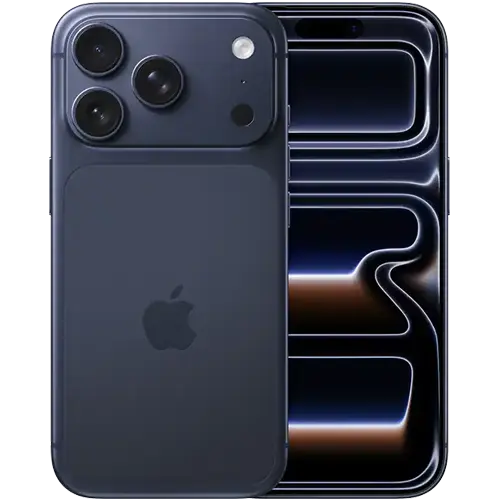
Apple
iPhone 17 Pro
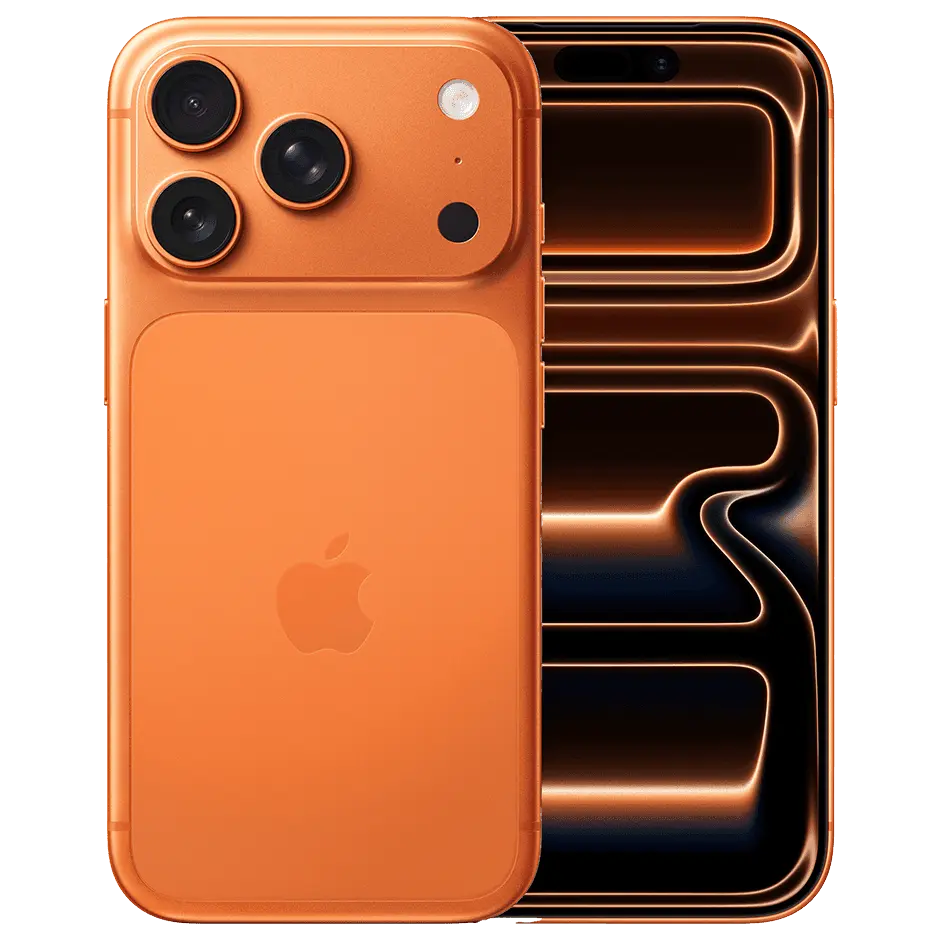
Apple
iPhone 17 Pro Max
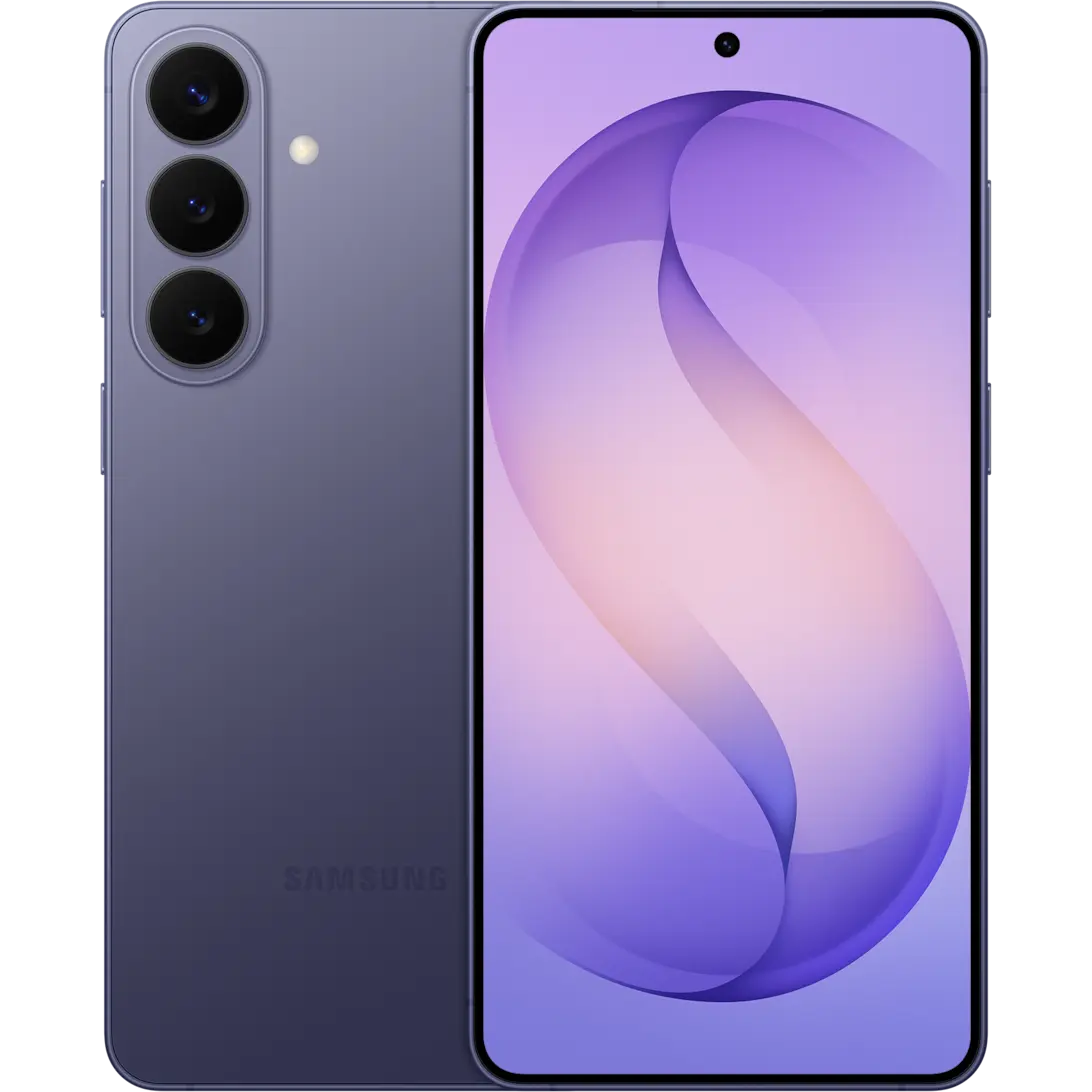
Samsung
Galaxy S26+
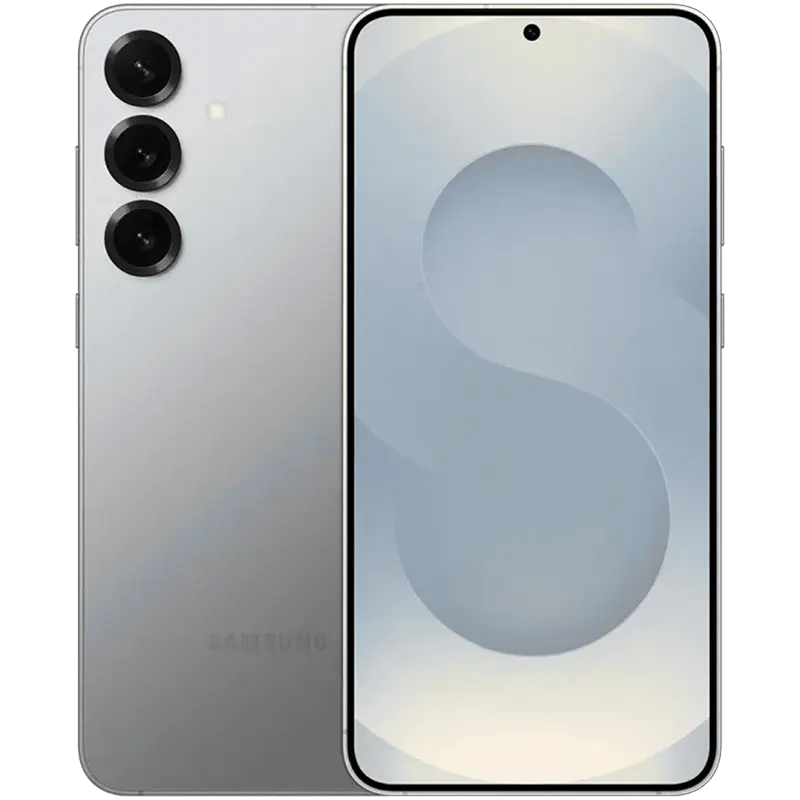
Samsung
Galaxy S25+
Samsung