Motorola Razr (2026)
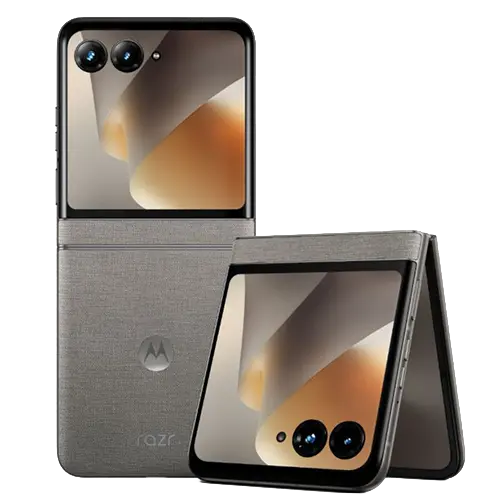
Motorola
Razr (2026)
Ranked #47 of 51 devices tested
Score Overview
The Motorola Razr (2026) is a flip-style foldable aimed at people who want a compact phone that disappears into a pocket when closed and opens into a full-sized 6.9-inch display when needed. At $799.99, it competes directly with conventional flagships like the iPhone 17 and Google Pixel 10, which means the foldable form factor has to justify real trade-offs in processing power, battery life, and camera capability.
The Razr's strongest showing is its speaker and its camera color accuracy, which is better than most phones at this price. Its outer display is genuinely usable for quick tasks. The weaknesses are its performance, which sits well below what you'd expect at $800, plus battery life is below average, charging is slow by modern standards, and the camera system, while decent in color, lacks the dynamic range and low-light sharpness of its non-folding competitors.
Here’s how the Motorola Razr (2026) performed in our lab testing.
Design
Specifications
Folded, the Razr (2026) measures 88.1 x 74 x 15.9mm. That's genuinely pocket-friendly — shorter and narrower than a credit card holder — though the 15.9mm thickness when closed is chunky. Unfolded, it stretches to 171.3 x 74.0 x 7.3mm, making it a tall, slim slab with a 22:9 aspect ratio. It weighs 188g, which is lighter than the Pixel 10 at 204g and close to the iPhone 17's 177g.
The frame is aluminum, the inner display is protected by Gorilla Glass Victus, and the back panel uses vegan leather. The screen-to-body ratio is 84.9%, lower than slab phones like the iPhone 17 (91.1%) or Samsung Galaxy S26 (90.8%) — the hinge mechanism and bezels around the foldable display eat into usable screen area. The phone carries an IP48 rating, which means protection against objects larger than 1mm and brief freshwater submersion. That's a step down from the IP68 rating on the Pixel 10 or Galaxy S26, both of which handle deeper, longer submersion.
Bandicoot Lab does not formally test design or durability.
Display
Inner
The inner 6.9-inch LTPO AMOLED runs at 1080 x 2640 resolution (413 pixels per inch) with a 120Hz refresh rate that drops to 1Hz for static content. Manual brightness tops out at 476 nits, which is low — the Pixel 10 reaches 1,496 nits and even the Galaxy S26 manages 641 nits. Outdoors in direct sunlight, you'll feel this. HDR content peaks at 3,884 nits, which is high, but brightness stability across HDR window sizes is only 51.5%. Small bright highlights in a dark scene can hit that peak, but larger bright areas drop substantially. Over time, the panel holds its HDR brightness well: sustained stability is 99.4%, meaning it doesn't throttle during extended viewing.
Color accuracy is reasonable. The best display mode achieves an average color error low enough that most people won't notice inaccuracy in everyday use. P3 gamut coverage sits at 75.1%, with sRGB at 98.9%. Colors won't look wrong, but the panel doesn't stretch into the full wide-gamut range that some competing displays offer.
HDR tone mapping clips at the 85% input level, meaning the brightest highlights in HDR content get compressed into a single white rather than showing gradation. The practical effect: HDR content looks punchy but loses some subtlety in bright highlights.
Touch latency averages 26.4ms, which is responsive and shouldn't cause issues even in fast-paced games.
Outer
The 3.6-inch AMOLED outer display runs at 1056 x 1066 resolution (413 PPI) with a 90Hz refresh rate. Its nearly square 9.1:9 aspect ratio makes it useful for checking notifications, controlling music, or quick replies without opening the phone. The 64.1% screen-to-body ratio reflects the thick bezels around a small panel.
Brightness and color accuracy both step down from the inner display. Colors drift more from reference values on the outer panel — you'll notice cooler whites and slightly shifted hues if you're comparing the two screens side by side. For glanceable tasks, it's fine. For anything where color matters, open the phone.
Responsiveness is actually better on the outer display than the inner. Scrolling and tapping feel snappy.
Performance
The Razr (2026) runs a MediaTek Dimensity 7450X with 8GB of RAM — a midrange chip in what's priced as a near-flagship phone. GeekBench 6 scores land at 1,113 single-core and 3,377 multi-core. For context, the Galaxy S26 with its Snapdragon 8 Elite Gen 5 scores 3,709 single-core and 11,232 multi-core. The iPhone 17 hits 3,772 and 9,645. This is a different performance tier entirely.
GPU performance reflects the same story. The Wild Life Extreme stress test peaked at 1,063, roughly a fifth of what the Galaxy S26 achieves. GPU stability is excellent at 99.5%, meaning the chip doesn't throttle under sustained load — it just starts from a lower baseline. Demanding 3D games will run, but at lower detail settings and frame rates than you'd get from similarly priced phones.
Browser performance is also well below the competition. Day-to-day tasks like messaging, email, and social media will feel smooth enough. Anything compute-heavy, like heavy multitasking or photo editing will be noticeably slower than what the iPhone 17 or Pixel 10 deliver at the same price.
Camera
The Razr carries a 50-megapixel main camera (1/1.95" sensor, f/1.7, 26mm), a 50-megapixel ultrawide (1/2.76" sensor, f/2.0, 13mm), and a 32-megapixel front camera (1/3.14" sensor, f/2.4, 23mm). There's no telephoto lens; digital zoom handles everything past 1x, up to 10x.
Overall sharpness is solid for the main and front cameras across lighting conditions, and the ultrawide holds up well in bright and mid light. Where the system falls apart is deep zoom. Without a telephoto lens, detail at 10x is extremely soft — among the weakest results we've measured at this zoom level. If you regularly crop or zoom, this is a real limitation. The Pixel 10, which has a dedicated 5x telephoto, retains far more detail at distance.
Main
The 50-megapixel main sensor delivers consistent sharpness across bright, mid, and dark conditions — detail doesn't fall off much as light drops, which is a good result for a sensor this size. At 1x, images are crisp with good edge definition. As you push into 2–3x digital crop territory, detail holds up reasonably well. Beyond 5x, softening becomes obvious, and by 10x, results are poor.
Color tuning is vivid but controlled. Hue accuracy is good in bright light and degrades gradually as conditions darken. In low light, there's a slight warm shift as the white balance compensates for warmer ambient temperatures. Skin tones are most accurate in dim conditions and least accurate in bright light, where oversaturation is the primary issue — faces look a bit too warm and colorful rather than natural.
Dynamic range is middling. Bright highlights tend to clip, and while shadow detail is present, there's not much headroom before tones compress. Stabilization during video is poor; handheld footage shows significant movement.
Ultrawide
The 50-megapixel ultrawide at 13mm and f/2.0 is sharper than most ultrawide cameras at this price, particularly in bright and mid-light conditions. In dark conditions, sharpness drops off, which is typical for a 1/2.76" sensor.
Color character shifts noticeably from the main lens. In bright light, the ultrawide leans cool — there's a visible blue-green cast that points to a white balance calibration issue rather than a sensor limitation, since the bias is absent in dimmer conditions. Saturation is moderately vivid in bright light and settles to near-neutral in the dark. Skin tones in bright light carry the same cool shift and are noticeably inaccurate; in mid and dark conditions, skin rendering is much better.
Dynamic range is similar to the main camera — highlights clip and shadow recovery is limited. Video stabilization is better than the main camera, though still not outstanding.
Front
The 32-megapixel front camera with its 23mm focal length and f/2.4 aperture produces strong sharpness in bright light, with a slight dip in mid-light that recovers in dark conditions. This suggests the processing pipeline is doing heavy lifting in low light.
Color is slightly vivid in bright conditions and nearly neutral in dim light. Hue accuracy is good in bright light but degrades in darker settings. In bright conditions, skin tones are pushed too warm and saturated; in mid and dark light, skin rendering improves substantially. There's a slight cool shift in bright light that disappears under warmer ambient lighting.
Dynamic range is the weakest of the three lenses, with highlights clipping and limited shadow detail. Video stabilization from the front camera is the best of the three lenses, which matters for video calls and vlogging.
Battery
The 4,800mAh battery delivered 27 hours of continuous video playback on the inner display and 33.3 hours on the smaller outer display. The inner-display figure is below what the larger-battery competition achieves — the OnePlus 15 lasts over 46 hours, and even the Honor 600 manages nearly 29.5 hours — though it's still enough for a full day and change of mixed use. Web browsing drained 23% over five hours, which is average. Gaming drain during the one-hour stress test was 17%, a relatively efficient figure that likely reflects the lower-power chipset. Standby drain was 3% overnight, which is typical.
In practical terms, expect to charge every night with moderate use, and potentially during the day if you're gaming or streaming video heavily. The outer display's lower resolution and smaller size make it notably more efficient — if you can do quick tasks on the cover screen instead of opening the phone, you'll stretch the battery further.
Charging
Wired charging runs at 30W. After 10 minutes you'll have 14%, and 30 minutes gets you to 63%. The 10-minute top-up is slow — the iPhone 17 hits 28% in the same time with its 40W charger, and the Honor 600 matches that at 80W. Wireless charging at 15W is even slower: 13% at 10 minutes and 26% at 30 minutes.
Compared to the aggressive charging speeds on phones like the OnePlus 15 (120W wired, 37% in 10 minutes), the Razr's charging feels a generation behind. If you're someone who relies on quick top-ups before heading out, the wired speed is passable but wireless won't save you.
Speaker
The speaker hits 77.9 dBA max volume, which is louder than most phones at this price — including the iPhone 17 at 75 dBA and the Galaxy S26 at 72.5 dBA. The character leans toward clear high-end response with weaker bass. You'll hear vocals and instruments with good definition, but music that relies on low-end punch will sound thin. Distortion is moderate at 8.91% THD, which is noticeable at full volume but acceptable at typical listening levels.
For a foldable phone with limited internal cavity space for speaker drivers, the loudness is genuinely good. Clarity is the standout trait; bass is the compromise.
Microphone
Microphone quality is weak. Frequency response is uneven, landing well below average. Voice calls and recordings will sound functional but lack the clarity and balanced tone that phones like the Galaxy S26 or Pixel 10 deliver. If you record voice notes, take calls in noisy environments, or create content, this is a noticeable step down.
Other
Measurements
Specifications
The capacitive fingerprint sensor unlocks in 235ms on average. That's slower than the ultrasonic sensors on the Pixel 10 (194ms) or Galaxy S26 (226ms), and you may notice the slight delay compared to those phones. There's no hardware-based face unlock — the phone relies on software-based face recognition only.
Data transfer over USB-C 2.0 is slow: 36 MB/s read and 34 MB/s write. Transferring large files to or from a computer will take noticeably longer than on phones with USB 3.2 like the Galaxy S26 or Pixel 10.
Storage options are 128GB and 256GB.
Conclusion
The Motorola Razr (2026) is a phone whose price reflects its form factor more than its capabilities. The flip design is genuinely compact when folded, and the outer display is large enough to be useful. Speaker output is strong, camera color is better than most at this price, and the inner display's HDR peak brightness is high.
Everything else trails the competition meaningfully. Performance is midrange despite the flagship price. Battery life is short. Charging is slow. The camera system lacks a telephoto and can't match the dynamic range or low-light detail of the iPhone 17, Pixel 10, or Galaxy S26 — all phones that cost about the same. The IP48 water resistance is a step down from what most $800 phones offer. If you value the flip form factor enough to accept those gaps, the Razr delivers on its core promise of pocketability. If you don't, $800 buys considerably more phone elsewhere.
FAQ
Is the Motorola Razr (2026) actually pocketable, or is it still bulky when folded?
Folded, the Razr measures 88.1 x 74 x 15.9mm — shorter than most wallets and narrow enough to fit easily in a front pocket. The 15.9mm thickness is chunky compared to a regular phone, but the reduced footprint is real. At 188g it's lighter than the Pixel 10 (204g) and close to the iPhone 17 (177g), so it doesn't feel unusually heavy for its size.
How does the Razr (2026) hold up in direct sunlight?
Manual brightness tops out at 476 nits, which is noticeably dim compared to most phones at this price — the Pixel 10 reaches 1,496 nits and even the Galaxy S26 manages 641 nits. In bright outdoor conditions, legibility will be a genuine problem. HDR content can peak much higher, but that only applies to specific bright highlights in supported content, not general screen use.
How long does the Razr (2026) battery realistically last?
In our looping video test, the inner display lasted 27 hours — enough for a full day of mixed use, but not the day-and-a-half comfort margin you get from the best phones at this price. Expect to charge every night with moderate use, and potentially mid-day if you're gaming or streaming heavily. Using the outer display for quick tasks instead of opening the phone stretches the battery further, as it lasted 33.3 hours in the same test.
Is the Motorola Razr (2026) good for zoom photos?
Without a telephoto lens, anything beyond a moderate digital crop degrades quickly. At 10x, results are extremely soft — detail is among the weakest we've measured at that zoom level. If you regularly shoot distant subjects or crop aggressively, this is a significant limitation. The Pixel 10's dedicated 5x telephoto retains far more detail at distance.
How does the Razr (2026) perform compared to other $800 phones?
Performance sits well below what you'd expect at this price. GeekBench 6 scores of 1,113 single-core and 3,377 multi-core compare to 3,709 and 11,232 on the Galaxy S26, and 3,772 and 9,645 on the iPhone 17. Day-to-day tasks run smoothly, but heavy multitasking, photo editing, and on-device AI features will feel noticeably slower. The price reflects the foldable form factor, not processing power.
How fast does the Razr (2026) charge, and is wireless charging worth using?
Wired charging at 30W gets you to 14% after 10 minutes and 63% after 30 minutes — passable for a top-up but slow compared to the iPhone 17 (28% at 10 minutes) or the OnePlus 15 (37% at 10 minutes with 120W). Wireless charging at 15W is slower still, reaching only 26% after 30 minutes. If quick top-ups before heading out are part of your routine, neither option will feel fast.
Is the Razr (2026) water resistant enough for everyday use?
The IP48 rating covers protection against objects larger than 1mm and brief freshwater submersion. It handles rain and accidental splashes, but it's a step down from the IP68 rating on the Pixel 10 and Galaxy S26, which can handle deeper and longer submersion. For most everyday situations it's adequate; for anything near water, the gap matters.
Related
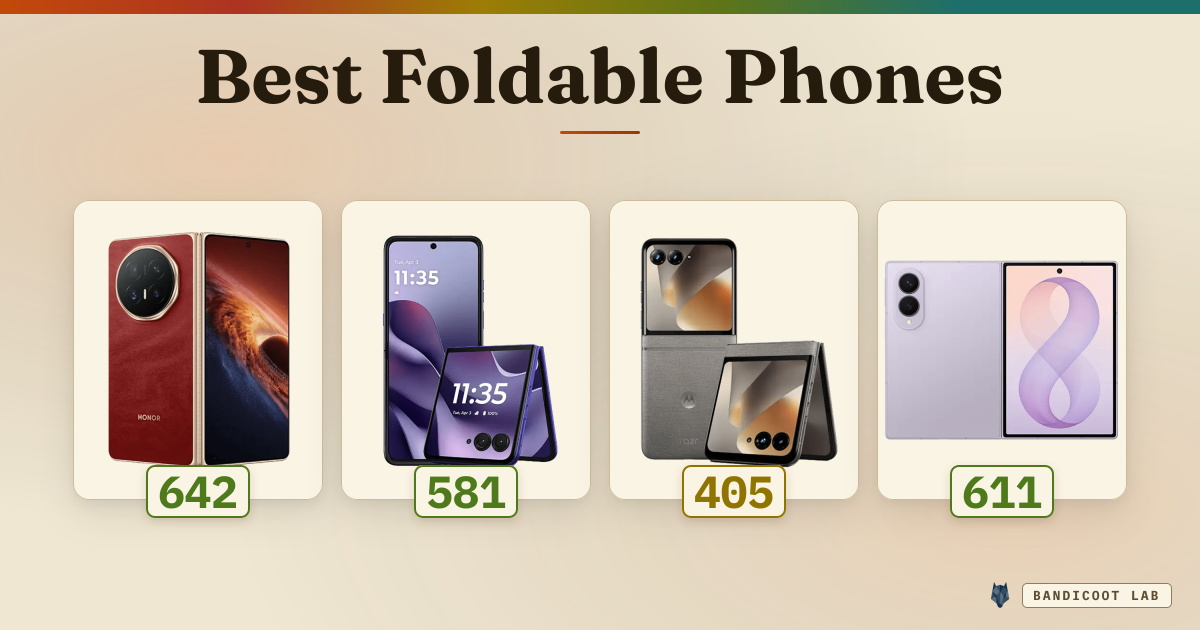
Best Foldable Phones

Motorola Razr (2026) vs Motorola Razr+ (2026)

Motorola Razr (2026) vs Motorola Razr Ultra (2026)

Motorola Razr (2026) vs Motorola Razr Fold

Motorola Razr (2026) vs Motorola Razr (2025)
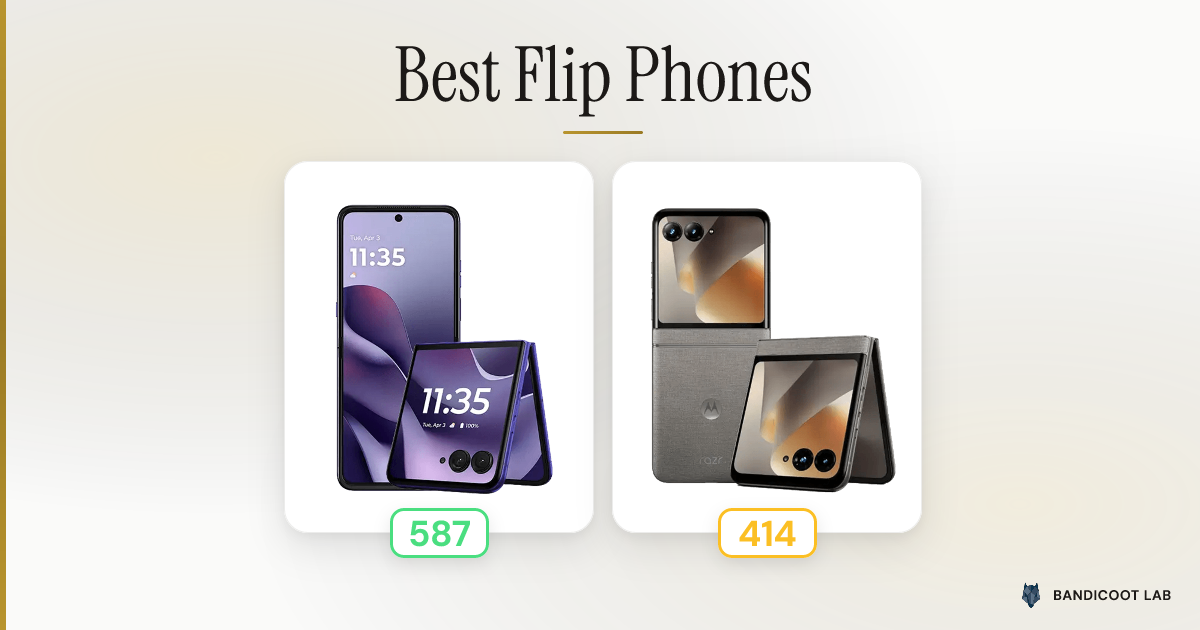
Best Flip Phones
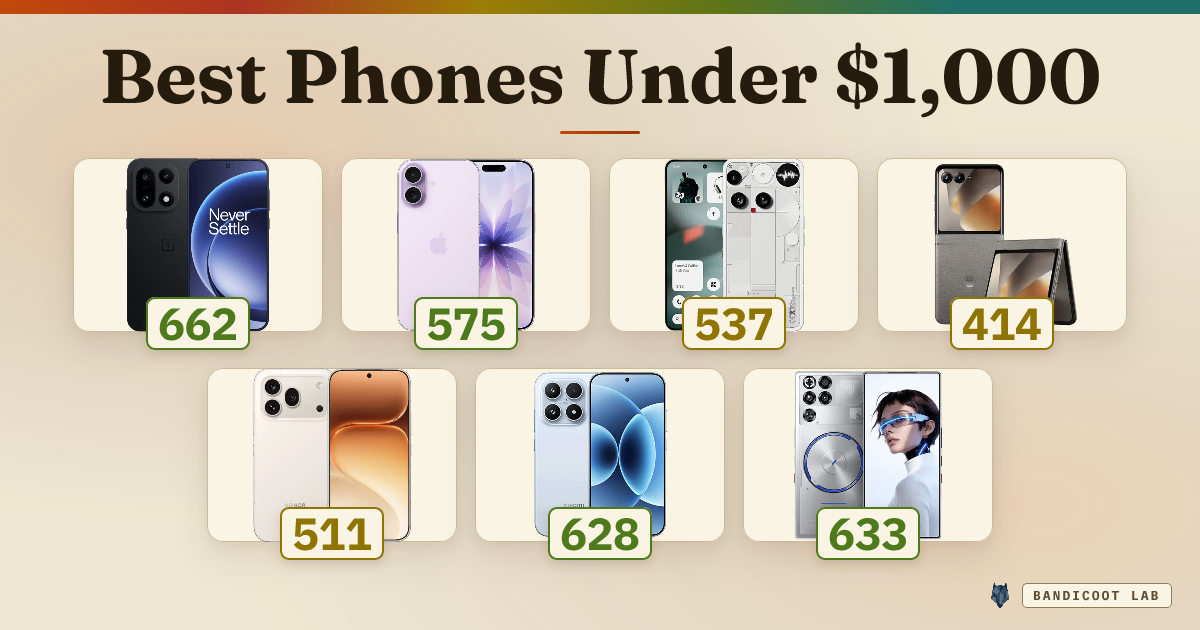
Best Phones Under $1,000
Motorola
Razr Ultra (2026)
Motorola
Razr+ (2026)

Motorola
Razr Fold

Motorola
Moto G Power (2026)
OnePlus