Samsung Galaxy Z Fold 7 vs Google Pixel 10 Pro Fold
Samsung
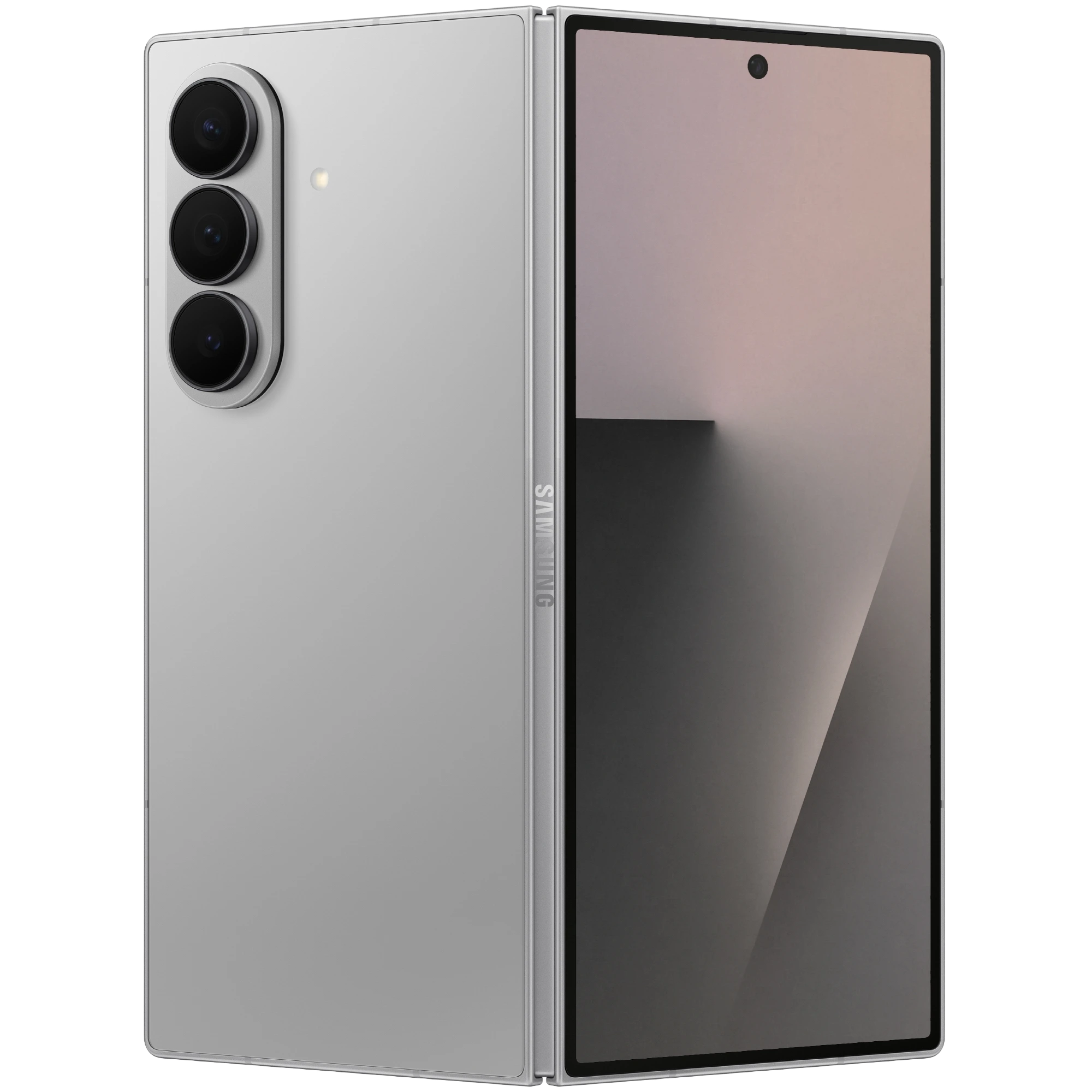
Galaxy Z Fold 7
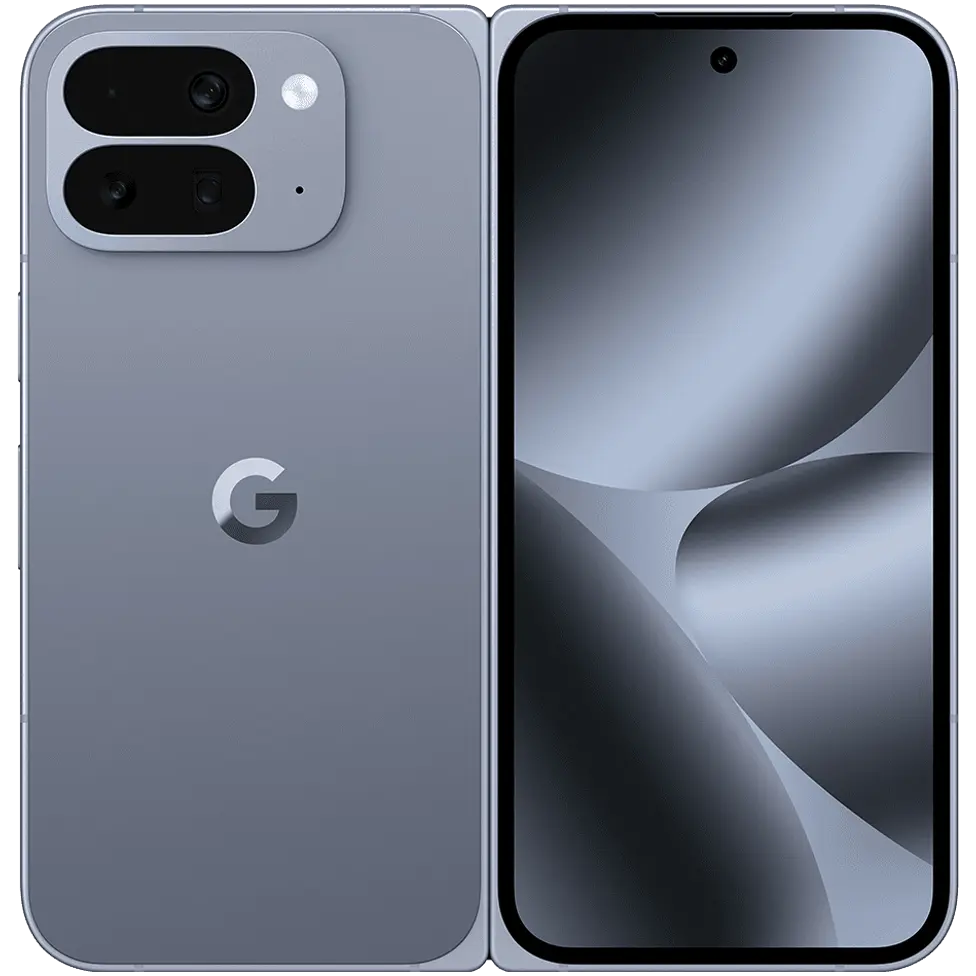
Pixel 10 Pro Fold
Ranked #34 of 60
Ranked #46 of 60
Overall
Overall
The Samsung Galaxy Z Fold 7 and Google Pixel 10 Pro Fold are both book-style folding phones with a lot to offer. Samsung's seventh iteration carries a $1,999.99 price tag and leans on raw processing power and a high-megapixel camera system. Google's Pixel 10 Pro Fold, at $1,799, prioritizes display quality and color accuracy while offering a larger battery and a wider inner screen. Both target buyers who want a tablet-sized display they can fold into a pocket, but they make different trade-offs to get there.
The Galaxy Z Fold 7 is the stronger performer in benchmarks and biometrics, with a faster fingerprint sensor and meaningfully higher CPU and GPU scores. Its main camera resolves more detail in good light, and its 200 megapixel sensor gives it an edge in sharpness. The Pixel 10 Pro Fold counters with a brighter, more color-accurate display on both screens, better battery life during web browsing, faster wireless charging, and more consistent camera color — particularly skin tones, which stay closer to life across lighting conditions. It's also the only one of the two with full IP68 water resistance.
Here’s how the two phones compare in our full testing.
Design
| Samsung Galaxy Z Fold 7 | Google Pixel 10 Pro Fold | |
|---|---|---|
| Specifications | ||
| Dimensions (folded) | 158.4 x 72.8 x 8.9 mm | 155.2 x 76.3 x 10.8 mm |
| Dimensions (unfolded) | 158.4 x 143.2 x 4.2 mm | 155.2 x 150.4 x 5.2 mm |
| Weight | 215g | 258g |
| IP Rating | IP48 | IP68 |
| Frame | Aluminum | Aluminum |
| Front | Plastic (inner) / Gorilla Glass Victus Ceramic 2 (outer) | Ultra Thin Glass (inner) / Gorilla Glass Victus 2 (outer) |
| Back | Gorilla Glass Victus 2 | Gorilla Glass Victus 2 |
| Screen-to-body ratio (inner) | 83.9% | 88.4% |
| Screen-to-body ratio (outer) | 85.6% | 84.3% |
Both phones use aluminum frames and Gorilla Glass Victus 2 on the back. The key material difference is the inner display cover: Samsung uses plastic, while Google uses ultra-thin glass. On the outer display, Samsung steps up to Gorilla Glass Victus Ceramic 2, versus standard Gorilla Glass Victus 2 on the Pixel.
The Galaxy Z Fold 7 is lighter at 215g compared to the Pixel 10 Pro Fold's 258g — a 43g gap you'd feel in a shirt pocket. Folded, the Z Fold 7 is thinner at 8.9mm versus 10.8mm, and narrower at 72.8mm versus 76.3mm. Unfolded, Samsung's device is also thinner (4.2mm vs. 5.2mm), though the Pixel opens wider at 150.4mm compared to 143.2mm. The Pixel 10 Pro Fold is slightly shorter at 155.2mm versus 158.4mm.
Water resistance is meaningfully different. The Pixel 10 Pro Fold carries an IP68 rating, meaning it can handle submersion in fresh water to a rated depth. The Galaxy Z Fold 7's IP48 rating protects against solid objects 1mm and larger and splashing water, but not submersion. If you're near pools or rain regularly, that distinction matters.
Bandicoot Lab doesn't formally test design or durability, so we can't speak to long-term hinge reliability, in-hand feel, or how these materials hold up over months of use.
Display
Inner
| Samsung Galaxy Z Fold 7 (Inner) | Google Pixel 10 Pro Fold (Inner) | |
|---|---|---|
516/ 881 | 609/ 881 | |
The Pixel 10 Pro Fold's 8-inch inner display is larger than the Galaxy Z Fold 7's 7.7-inch panel. Resolution is close: 2076 x 2152 at 373 pixels per inch for the Pixel versus 1968 x 2184 at 368 PPI for the Samsung. Both support 1–120Hz adaptive refresh. The Pixel has a higher screen-to-body ratio at 88.4% compared to 83.9%, meaning thinner bezels relative to the screen area.
Brightness is where the Pixel pulls ahead clearly. Manual brightness tops out at 1,288 nits on the Pixel versus 734 nits on the Samsung — nearly double. For HDR content, the Pixel peaks at 3,192 nits compared to 2,757 nits on the Z Fold 7. HDR brightness stability across window sizes — how consistently the panel maintains peak brightness from small highlights to full-screen bright content — is 60.3% on the Pixel and 56.2% on the Samsung. Both panels hold up well over sustained 30-minute HDR playback: the Z Fold 7 retains 98.8% of its brightness, the Pixel 96.5%.
Color accuracy on the inner display strongly favors the Pixel. In its Natural mode, the Pixel achieves colors close enough to reference that most people wouldn't spot the deviation. The Samsung's best mode still shows moderate color drift — enough that neutral tones may look slightly off, and some colors won't track reference precisely. Both panels cover sRGB nearly completely and reach about 75% of the Display P3 gamut.
HDR tone mapping differs between the two. The Samsung's inner panel clips HDR content at 75% of the PQ curve and pushes highlights slightly brighter than mastered, so bright areas appear lifted and the finest highlight detail is lost. The Pixel maps the full PQ curve without clipping, rendering highlights more faithfully to the source, though its overall tone mapping deviates more from the reference curve.
Touch latency is a large gap: 8.8ms on the Z Fold 7's inner display versus 25.3ms on the Pixel. You likely won't notice this browsing or watching video, but in fast-paced games, the Samsung's responsiveness has a real advantage.
Outer
| Samsung Galaxy Z Fold 7 (Outer) | Google Pixel 10 Pro Fold (Outer) | |
|---|---|---|
567/ 881 | 582/ 881 | |
The Samsung's outer display is 6.5 inches at 1080 x 2520 (422 PPI) with a 21:9 aspect ratio. The Pixel's is 6.4 inches at 1080 x 2365 (408 PPI) with a 19.7:9 aspect. Both are tall and narrow by conventional phone standards, which is typical for foldable cover screens. The Samsung's outer panel supports 1–120Hz adaptive refresh; the Pixel's outer display runs between 60–120Hz, so it won't drop as low for static content, which could affect battery efficiency slightly.
The Pixel's outer display is again brighter in manual mode: 1,411 nits versus 694 nits. HDR peak brightness is close — 2,836 nits on the Pixel and 2,850 nits on the Samsung — essentially a tie. HDR brightness stability across window sizes favors the Pixel at 69.3% compared to 52.1%. Sustained brightness over time is strong on both: 97.9% on the Pixel, 98.9% on the Samsung.
Color accuracy on the outer screen follows the same pattern as the inner: the Pixel's colors stay tighter to reference, while the Samsung's show moderate drift. The Samsung's outer display improves over its own inner panel in accuracy, but the Pixel still leads.
Touch latency on the outer displays is closer: 14.7ms for the Samsung, 13.3ms for the Pixel. Both are responsive enough that the difference isn't meaningful in practice.
Performance
| Samsung Galaxy Z Fold 7 | Google Pixel 10 Pro Fold | |
|---|---|---|
718/ 1012 | 423/ 1012 | |
The Galaxy Z Fold 7 runs Qualcomm's Snapdragon 8 Elite with 16GB of RAM (12GB also available). The Pixel 10 Pro Fold uses Google's Tensor G5 with 16GB of RAM as the sole configuration.
CPU performance is a comfortable win for the Snapdragon. GeekBench 6 single-core scores land at 3,006 for the Samsung versus 2,268 for the Pixel — about a 33% lead. Multi-core is an even wider gap: 9,818 versus 5,986. In browser performance, the Z Fold 7 scores 32.3 in Speedometer compared to 20.3 for the Pixel. These gaps are large enough to show up in real use: app launches, multitasking across split-screen windows, and heavy web pages will feel snappier on the Samsung.
GPU performance is similarly lopsided. The Z Fold 7's peak Wild Life Extreme score of 6,615 is roughly double the Pixel's 3,241. Stability tells a different story: the Pixel holds 77% of its peak GPU performance under sustained load, while the Samsung drops to 48.1%. If you're gaming for extended sessions, the Samsung starts much faster but throttles heavily. The Pixel delivers less raw power but maintains it more consistently.
Camera
| Samsung Galaxy Z Fold 7 (Overall) | Google Pixel 10 Pro Fold (Overall) | |
|---|---|---|
| Specifications | ||
| Main | 200MP, f/1.7, 24mm, 1/1.3" | 48MP, f/1.7, 25mm, 1/2.0" |
| Ultrawide | 12MP, f/2.2, 13mm, 1/2.55" | 10.5MP, f/2.2, 13mm, 1/3.4" |
| Telephoto | 10MP, f/2.4, 67mm, 1/3.94" | 10.8MP, f/3.1, 112mm, 1/3.2" |
| Front (Inner) | 10MP, f/2.2, 18mm, 1/3.0" | 10MP, f/2.2, 23mm, 1/3.94" |
| Front (Outer) | 10MP, f/2.2, 24mm, 1/3.0" | 10MP, f/2.2, 23mm, 1/3.94" |
Both phones carry a three-lens rear system plus two front cameras (inner and outer). The Galaxy Z Fold 7's main sensor is 200 megapixels (f/1.7, 1/1.3-inch), paired with a 12 megapixel ultrawide and a 10 megapixel 3.5x telephoto. The Pixel 10 Pro Fold uses a 48 megapixel main (f/1.7, 1/2.0-inch), a 10.5 megapixel ultrawide, and a 10.8 megapixel 5x telephoto. Samsung's sensor is physically much larger, which generally helps in low light and detail capture.
The Z Fold 7's main camera resolves more detail in bright and mid lighting, while the Pixel's main camera holds up better in the dark — its low-light sharpness stays high where the Samsung's drops. Both front cameras on the Pixel are sharper than the Samsung's across all conditions. At deep zoom levels, the Pixel holds up better: at 20x (its maximum digital zoom), it retains more usable detail than the Samsung does at the same magnification, despite Samsung's camera extending to 30x. Beyond 20x, the Samsung's detail drops substantially.
Main
| Samsung Galaxy Z Fold 7 (Main) | Google Pixel 10 Pro Fold (Main) | |
|---|---|---|
591/ 722 | 421/ 722 | |
The Z Fold 7's main camera is sharper in good light. Sharpness is high in bright conditions and holds nearly the same level in mid light, dropping more noticeably in the dark. The Pixel's main camera is slightly less sharp in bright and mid conditions but retains more detail in low light, where its processing keeps the image cleaner.
Color character differs between the two. In bright light, the Samsung pushes saturation noticeably — colors look vivid and punchy, with a slight warm-yellow lean. Skin tones drift considerably from reference under bright light, pulling warm. In mid light, saturation settles closer to neutral, and skin tone accuracy improves. In dark conditions, hue accuracy degrades significantly on the Samsung. The pattern of increasing magenta-red bias as lighting gets warmer points to a white balance correction issue rather than a sensor limitation.
The Pixel's main camera runs even more saturated across the board — visibly vivid in all conditions, particularly in mid light where colors are pushed well beyond natural. Skin tones are more accurate than the Samsung's in bright light by a meaningful margin, though they still drift. In low light, the Pixel's hue accuracy holds much better than the Samsung's. The Pixel shows a growing magenta shift in warmer light, suggesting the same white-balance-driven issue, but to a lesser degree.
Dynamic range is an advantage for the Pixel's main camera. It pulls more usable information from shadows and highlights in high-contrast scenes. The Samsung's main camera still captures good depth in scenes but clips highlights earlier.
Ultrawide
| Samsung Galaxy Z Fold 7 (Ultrawide) | Google Pixel 10 Pro Fold (Ultrawide) | |
|---|---|---|
565/ 722 | 417/ 722 | |
The Pixel's ultrawide is sharper than the Samsung's across all lighting conditions. Both cameras are weaker than their respective main lenses, as expected from smaller sensors and wider apertures.
Color on the Samsung ultrawide is relatively restrained in bright light but pushes saturation in mid light. Skin tones drift noticeably. In dark conditions, there's a strong magenta shift — again a white balance issue, consistent with the main lens behavior. The Pixel ultrawide follows a similar pattern: saturated in bright and mid, with a pronounced magenta push in the dark. Skin tone accuracy is similar between the two in dark conditions.
Dynamic range is better on the Pixel ultrawide, with more shadow detail and a wider usable range in high-contrast scenes. The Samsung's ultrawide compresses highlights earlier.
Telephoto
| Samsung Galaxy Z Fold 7 (Telephoto) | Google Pixel 10 Pro Fold (Telephoto) | |
|---|---|---|
485/ 722 | 372/ 722 | |
The Samsung uses a 3.5x optical telephoto (67mm equivalent), while the Pixel opts for a 5x (112mm equivalent). That gives the Pixel more reach before digital zoom kicks in, which is useful for distant subjects. The Samsung maxes out at 30x digital zoom; the Pixel stops at 20x.
At their native focal lengths, the Samsung telephoto's sharpness is competitive in bright and mid light, though the Pixel holds detail more consistently across lighting conditions — its telephoto sharpness barely changes from bright to dark, which is unusual. In terms of pure resolved detail, the Samsung's 3.5x lens captures more at its native magnification, but the Pixel's 5x gives better results at longer range because it's not relying on digital zoom as early.
Color tuning on both telephotos mirrors their main lenses — the Samsung is vivid in bright light with a warm lean, while the Pixel runs saturated across the board. Skin tones on the Samsung telephoto are closer to accurate than on its main lens; the Pixel's telephoto skin tones are slightly worse than its main lens, staying consistently warm. In dark conditions, both show strong hue shifts driven by white balance problems, though the Pixel's magenta push is more aggressive on the telephoto than the Samsung's.
Video stabilization is adequate on both, with neither offering exceptionally steady handheld footage from the telephoto.
Front Inner
| Samsung Galaxy Z Fold 7 (Front Inner) | Google Pixel 10 Pro Fold (Front Inner) | |
|---|---|---|
276/ 722 | 380/ 722 | |
The Pixel's inner front camera is sharper across all three lighting conditions. In bright light, it resolves noticeably more detail. In the dark, the gap narrows but the Pixel still leads.
Both cameras push skin tones warm in bright light, with the Samsung's inner front camera showing considerably more skin tone error than the Pixel's. In mid light, the Samsung's skin tones drift even further. Both cameras struggle with hue accuracy in dark conditions — the Samsung develops a strong magenta cast, while the Pixel shows a similar but slightly milder shift.
Dynamic range favors the Pixel's inner front camera, which preserves more highlight and shadow detail in high-contrast selfie scenarios. The Samsung's inner front camera clips earlier and retains less scene depth.
Front Outer
| Samsung Galaxy Z Fold 7 (Front Outer) | Google Pixel 10 Pro Fold (Front Outer) | |
|---|---|---|
330/ 722 | 405/ 722 | |
The outer front cameras tell a similar story. The Pixel is sharper in all conditions, with a clear lead in mid and dark lighting. In bright light, both are close.
Samsung's outer front camera pushes skin tones warm in bright conditions and develops a strong magenta-plus-cool shift in dark conditions — worse than its inner front camera. The Pixel's outer front camera shows a noticeable warm-yellow push in bright light and a milder shift in the dark. Skin tone accuracy is better on the Pixel across all conditions.
Dynamic range is better on the Pixel's outer front camera, which holds more detail in bright highlights and deep shadows. Stabilization for the outer front camera favors the Pixel slightly, with steadier handheld video.
Battery
| Samsung Galaxy Z Fold 7 | Google Pixel 10 Pro Fold | |
|---|---|---|
494/ 836 | 463/ 836 | |
The Pixel 10 Pro Fold packs a 5,015mAh battery compared to the Galaxy Z Fold 7's 4,400mAh — a 14% capacity advantage.
Video playback on the inner display is nearly identical: 22.7 hours for the Pixel and 22.6 hours for the Samsung. On the outer display, the Samsung pulls ahead significantly: 28.1 hours versus 23.5 hours. That's roughly a full workday of extra video from the Samsung's outer screen — likely helped by its lower manual brightness drawing less power.
Web browsing drain over five hours paints a different picture. The Pixel loses 29% of its battery versus 34% for the Samsung. That translates to meaningfully longer browsing sessions on the Pixel — the kind of difference you'd notice over a full day of mixed use. Gaming drain (measured during the GPU stress test) is heavier on the Pixel at 26% versus 23%, which makes sense given the Samsung throttles more aggressively to manage heat. Standby drain is identical at 2% over eight hours.
Neither phone is a battery champion. The Samsung's outer display video playback is strong enough for a couple days of podcast-and-video use, but its web browsing efficiency is poor. The Pixel spreads its larger battery more evenly across web and video but drains faster under gaming load.
Charging
| Samsung Galaxy Z Fold 7 | Google Pixel 10 Pro Fold | |
|---|---|---|
233/ 837 | 319/ 837 | |
The Galaxy Z Fold 7 supports 25W wired and 15W wireless charging. The Pixel 10 Pro Fold supports 30W wired, 15W wireless with magnetic alignment (compatible with Qi2/MagSafe-style chargers).
Wired charging is nearly identical in practice. Both hit 19% in 10 minutes. At 30 minutes, the Samsung reaches 53% and the Pixel 52% — functionally the same. The Samsung's slightly higher 30-minute number on a smaller battery means you're getting a comparable amount of usable charge from either phone after a half-hour top-up.
Wireless charging is where the Pixel has a clear edge. In 10 minutes, it reaches 11% versus the Samsung's 7%. At 30 minutes, the Pixel is at 31% compared to 20% on the Samsung. For overnight charging this doesn't matter, but if you're topping up wirelessly during a meeting or on a car mount, the Pixel gives you more juice in less time. The magnetic alignment also ensures consistent charging placement, which eliminates the trial-and-error of standard wireless pads.
Speaker
| Samsung Galaxy Z Fold 7 | Google Pixel 10 Pro Fold | |
|---|---|---|
745/ 897 | 758/ 897 | |
The Galaxy Z Fold 7 is louder at 76.6 dBA max volume compared to the Pixel's 72.8 dBA. That's a noticeable difference — enough that the Samsung fills a room more easily.
Distortion is lower on the Samsung at 5.8% average THD versus 7.8% on the Pixel. At higher volumes, the Samsung stays cleaner. The Samsung's frequency response is slightly more even across the full range, though both phones have typical smartphone speaker limitations.
The character of the sound differs. The Samsung produces fuller bass and balanced midrange, with decent clarity in the highs. The Pixel trades some bass depth for significantly better high-frequency clarity — vocals and higher-pitched instruments come through more crisply. For spoken content or podcasts, the Pixel's clarity advantage is worth noting. For music or video where you want fuller sound, the Samsung's speaker is the better choice.
Microphone
| Samsung Galaxy Z Fold 7 | Google Pixel 10 Pro Fold | |
|---|---|---|
622/ 1220 | 661/ 1220 |
Both phones perform at a similar level for microphone quality, with the Pixel 10 Pro Fold slightly more even in its frequency response. Both sit in the average range — fine for video calls and voice memos, but neither stands out as exceptional.
Other
| Samsung Galaxy Z Fold 7 | Google Pixel 10 Pro Fold | |
|---|---|---|
| Biometrics | 945/ 1181 | 353/ 1181 |
| Data Transfer | 705/ 943 | 207/ 943 |
| Specifications | ||
| Biometric type | Fingerprint | Fingerprint |
| Ports | USB-C 3.2 | USB-C 3.2 |
| Storage | 256GB, 512GB, 1TB | 256GB, 512GB, 1TB |
Fingerprint unlock speed is dramatically different. The Galaxy Z Fold 7 averages 111ms — fast enough that the phone feels unlocked the moment you touch the sensor. The Pixel 10 Pro Fold averages 297ms, which is nearly three times slower. You'll notice this every time you pick up the phone. Both use capacitive sensors. Neither phone has hardware-based face unlock.
Data transfer speeds strongly favor the Samsung. Read speeds hit 276 MB/s and write speeds reach 260 MB/s, compared to 91 MB/s read and 95 MB/s write on the Pixel. Both use USB-C 3.2 ports, so the difference likely comes down to storage controller performance. If you regularly transfer large files — video footage, backups — the Samsung will finish in roughly a third of the time. Both offer 256GB, 512GB, and 1TB storage configurations.
Conclusion
The Galaxy Z Fold 7 is the more capable device in raw performance, with a large CPU and GPU advantage, quicker fingerprint unlock, faster data transfers, and a louder, cleaner speaker. Its main camera resolves more detail in good light, and its outer display video playback is excellent. It's also significantly lighter and thinner, which matters daily in a device you fold and pocket constantly.
The Pixel 10 Pro Fold is stronger in display quality — brighter panels, tighter color accuracy, and a larger inner screen with thinner bezels. Its camera color is more accurate across all lenses, particularly for skin tones, and it holds up better in low light for both sharpness and color consistency. Battery efficiency during web browsing is better, wireless charging is faster with the convenience of magnetic alignment, and IP68 water resistance gives it an edge in durability confidence.
If you prioritize speed, processing headroom, and a lighter device, the Galaxy Z Fold 7 justifies its $200 premium. If display accuracy, camera color fidelity, water resistance, and a larger inner canvas matter more, the Pixel 10 Pro Fold is the better buy at a lower price. Both phones have specific strengths and weaknesses, and your priorities should drive the decision.
Related
Pixel 10 Pro Fold
Samsung
Galaxy Z Fold 7

Samsung
Galaxy S26 Ultra
Samsung
Galaxy S26+
Samsung
Galaxy Z Fold 8 Ultra
Samsung
Galaxy Z Fold 8
Samsung
Galaxy S26
Pixel 11 Pro XL
Pixel 11 Pro
Pixel 11
Pixel 11 Pro Fold