Motorola Razr Fold vs Google Pixel 10 Pro Fold

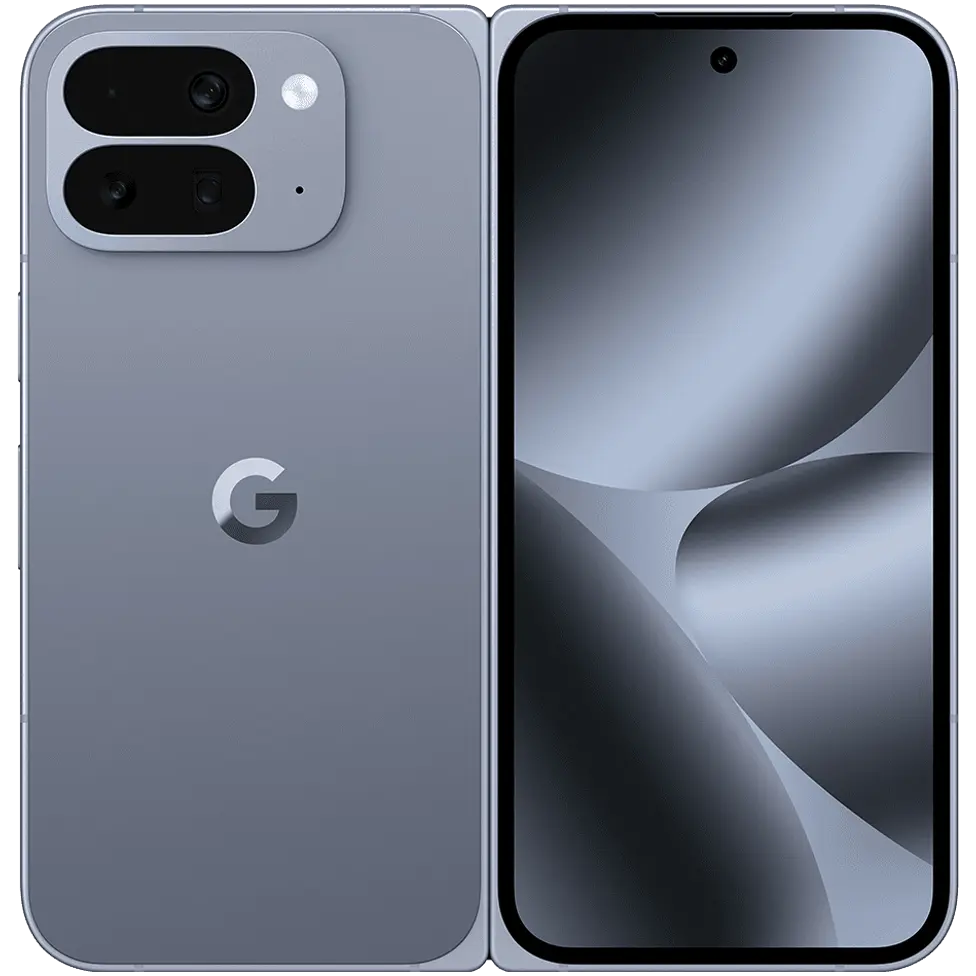
Motorola
Razr Fold
Pixel 10 Pro Fold
Ranked #21 of 51
Ranked #38 of 51
Overall
Overall
The Motorola Razr Fold is Motorola's first book-style foldable, arriving at $1,899.99 and offering premium hardware. The Pixel 10 Pro Fold, at $1,799, is Google's second generation of the form factor, leaning on software integration and a clean Android experience. Both are large-screen foldables aimed at people who want a tablet-sized display in a pocketable device, and they're close enough in price that most buyers will be choosing between them directly.
The Razr Fold pulls ahead in charging speed, raw performance, and camera quality. Its bigger battery also translates into longer video playback on the cover screen. The Pixel 10 Pro Fold has the stronger display in several respects, better standby efficiency, a more capable microphone, and broader storage options including a 1TB tier.
Here’s how the Motorola Razr Fold and Google Pixel 10 Pro Fold compared in our thorough lab testing.
Design
| Motorola Razr Fold | Google Pixel 10 Pro Fold | |
|---|---|---|
| Specifications | ||
| Dimensions (folded) | 160.05 × 73.6 × 9.89 mm | 155.2 x 76.3 x 10.8 mm |
| Dimensions (unfolded) | 160.05 × 144.46 x 4.55 mm | 155.2 x 150.4 x 5.2 mm |
| Weight | 243g | 258g |
| IP Rating | IP48/IP49 | IP68 |
| Frame | Aluminum | Aluminum |
| Front | Gorilla Glass Ceramic 3 | Ultra Thin Glass (inner) / Gorilla Glass Victus 2 (outer) |
| Back | — | Gorilla Glass Victus 2 |
| Screen-to-body ratio (inner) | — | 88.4% |
| Screen-to-body ratio (outer) | — | 84.3% |
The Razr Fold measures 160.05 × 73.6 × 9.89mm folded and 160.05 × 144.46 × 4.55mm unfolded, weighing 243g. The Pixel 10 Pro Fold comes in at 155.2 × 76.3 × 10.8mm folded and 155.2 × 150.4 × 5.2mm unfolded, weighing 258g. The Razr Fold is taller and narrower when closed but noticeably thinner when opened. The Pixel is 15g heavier, but it’s not going to change much in daily use.
Both use aluminum frames. The Razr Fold pairs its frame with Gorilla Glass Ceramic 3 on the front, while the Pixel uses ultra thin glass on its inner display and Gorilla Glass Victus 2 on the outer panel and back. The Pixel has an IP68 rating, meaning it's rated for submersion in fresh water up to 1.5 meters for 30 minutes. The Razr Fold carries an IP48/IP49 rating, which covers dust ingress and protection against high-pressure water jets but doesn't guarantee submersion survival. For anyone who wants peace of mind around water, the Pixel's rating is meaningfully better.
Bandicoot Lab doesn't formally test design or durability.
Display
Inner
| Motorola Razr Fold (Inner) | Google Pixel 10 Pro Fold (Inner) | |
|---|---|---|
658/ 845 | 609/ 845 | |
The Razr Fold's inner display is an 8.1-inch AMOLED at 2484 × 2232 (412 pixels per inch) with a 1–120Hz adaptive refresh rate and an 8:7.2 aspect ratio. The Pixel 10 Pro Fold has an 8-inch LTPO OLED at 2076 × 2152 (373 PPI) with a 1–120Hz refresh rate and a near-square 9.33:9 aspect ratio. The Razr Fold is sharper on paper, with about 40 more pixels per inch.
Brightness is where these two diverge meaningfully. In manual mode — where you control the slider yourself — the Pixel reaches 1,288 nits, while the Razr Fold maxes out at 543 nits. That's a large gap for indoor use or situations where auto brightness isn't ideal. In HDR content with auto brightness, the Razr Fold peaks at 4,142 nits versus the Pixel's 3,192 nits. The Razr Fold's HDR brightness drops more as the bright area of the image gets larger, holding 41.6% stability across window sizes compared to the Pixel's 60.3%. Both sustain brightness well over time, with the Razr Fold at 97.9% and the Pixel at 96.5% after 30 minutes of HDR playback.
Color accuracy slightly favors the Pixel's inner display. Colors stay closer to reference across the board, with neutral tones reading clean and consistent. The Razr Fold's inner panel is good but drifts a touch more from reference targets. Both cover sRGB nearly completely (99.8% and 99.7% respectively).
The Razr Fold follows the HDR reference curve fairly closely and applies a slight boost to highlights, but begins clipping at the 80% input level, meaning the brightest portions of HDR content lose detail earlier. The Pixel diverges more from the reference curve and compresses highlights somewhat, but doesn't clip until 100%, preserving gradation across the full brightness range.
Touch latency on the inner display averages 15.1ms on the Razr Fold and 25.3ms on the Pixel.
Outer
| Motorola Razr Fold (Outer) | Google Pixel 10 Pro Fold (Outer) | |
|---|---|---|
691/ 845 | 582/ 845 | |
The Razr Fold's cover screen is a 6.6-inch LTPO P-OLED at 2520 × 1080 (415 PPI) with a 30–165Hz refresh rate and 21:9 aspect ratio. The Pixel's cover screen is a 6.4-inch OLED at 1080 × 2365 (408 PPI) with a 60–120Hz refresh rate and a 19.7:9 aspect ratio. Resolution and pixel density are close. The Razr Fold's outer panel runs up to 165Hz, which is unusual for a foldable cover screen and should make scrolling look slightly smoother than the Pixel's 120Hz ceiling.
Manual brightness again splits these two — the Razr Fold's outer display follows a similar pattern to its inner panel with modest manual brightness, while the Pixel's outer display is brighter in manual mode. For HDR peaks, the pattern reverses — the Razr Fold pushes higher. HDR brightness stability across window sizes is better on the Pixel's outer screen, consistent with the inner display results.
Color accuracy on the outer displays tells a similar story to the inner panels. The Pixel's inner display is more accurate than its outer one, where colors drift a bit more and neutral tones can read slightly warm. The Razr Fold's outer panel tracks reasonably close to its inner, with a small accuracy gap between the two. Neither outer display matches the best inner-display accuracy, which is typical for foldables.
Touch latency on the outer panels is close, with both responding quickly enough that the difference isn't meaningful in daily use.
Performance
| Motorola Razr Fold | Google Pixel 10 Pro Fold | |
|---|---|---|
668/ 1012 | 423/ 1012 | |
The Razr Fold runs a Qualcomm Snapdragon 8 Gen 5 with 16GB of RAM. The Pixel 10 Pro Fold uses Google's Tensor G5, also with 16GB.
In CPU benchmarks, the Razr Fold scores 2,628 single-core and 9,178 multi-core in GeekBench 6. The Pixel manages 2,268 single-core and 5,986 multi-core. The single-core gap is moderate — about 16% — but the multi-core gap is substantial: the Snapdragon delivers over 53% more throughput. Tasks like exporting video, compiling heavy apps, or running split-screen workloads will benefit from that difference.
GPU performance is further apart. The Razr Fold hits 5,401 in Wild Life Extreme (peak) with 68.6% stability, while the Pixel reaches 3,241 with 77% stability. The Pixel throttles less aggressively, but it starts from a much lower peak, so sustained performance still favors the Razr Fold. In Solar Bay, which tests ray tracing, the Razr Fold scores 9,631 with 68.9% stability. The Pixel doesn’t support the Solar Bay test.
Browser performance flips, though. The Pixel scores 20.3 in Speedometer versus 16.9 for the Razr Fold. Web browsing is where Tensor's software optimizations tend to show, and you'll notice slightly snappier page rendering on the Pixel.
The Razr Fold will feel faster for demanding tasks. The Pixel is smooth for everyday use but will lag behind in sustained heavy workloads.
Camera
| Motorola Razr Fold | Google Pixel 10 Pro Fold | |
|---|---|---|
481/ 587 | 384/ 587 | |
The Razr Fold fields a triple rear camera system, made up of a 50-megapixel main camera, a 50-megapixel ultrawide camera, and a 50-megapixel telephoto. The Pixel 10 Pro Fold has a 48-megapixel main, a 10.5-megapixel ultrawide, and a 10.8-megapixel telephoto. The Razr Fold has physically larger sensors across the board, especially for the main and telephoto lenses.
Overall sharpness is a split. The Pixel's main camera resolves more detail across all lighting conditions, a credit to Google's processing pipeline given its smaller sensor. The Razr Fold's ultrawide and telephoto lenses are sharp and maintain detail well through the zoom range, but the Pixel's ultrawide edges it out in sharpness despite having far fewer megapixels. At extreme zoom, the Razr Fold reaches 100x digital zoom versus the Pixel's 20x maximum. At those outer digital zoom levels, the Razr Fold produces soft but recognizable images; the Pixel produces cleaner results at its own 20x ceiling because it's cropping less aggressively. For deep zoom work, neither phone replaces a dedicated telephoto — the Razr Fold just stretches further.
Main
| Motorola Razr Fold (Main) | Google Pixel 10 Pro Fold (Main) | |
|---|---|---|
537/ 722 | 421/ 722 | |
The Pixel's main camera is sharper than the Razr Fold's across bright, mid, and dark conditions. The difference is visible — the Pixel resolves finer textures in fabric and foliage consistently. As you zoom in digitally, the Pixel covers 1x through 5x with its main lens before handing off to the telephoto, and it holds detail well through about 3x before softening. The Razr Fold covers 1x through 3x on the main, and it maintains good detail through that range with less visible softening at 2x.
Color on the Razr Fold's main is close to neutral with accurate saturation. Skin tones in mid and dim light are solid, with only a slight warm lean as conditions get darker. In bright light, skin tones drift more. The Pixel's main pushes saturation well above neutral — colors look lively but aren't faithful. Skin tones carry noticeable error across all conditions, and the warm shift in yellow bias under warmer lighting suggests the white balance system overcorrects.
Dynamic range on the Razr Fold's main is moderate. Highlights clip, and shadows can lose detail in contrasty scenes. It’s still slightly better than the Pixel 10 Pro Fold, though.
Ultrawide
| Motorola Razr Fold (Ultrawide) | Google Pixel 10 Pro Fold (Ultrawide) | |
|---|---|---|
422/ 722 | 417/ 722 | |
The Pixel's ultrawide is sharper than the Razr Fold's in bright and mid light despite its much smaller 10.5-megapixel sensor. In dim light, both soften, but the Pixel holds a slight edge. The Razr Fold's ultrawide is consistent with its main camera's character — solid but not exceptional.
Color on the Razr Fold's ultrawide is slightly muted, with saturation running a bit below neutral. Skin tones in bright light show significant error, which is unusual given how well the main lens handles the same conditions. In mid and dim light, skin tones improve. The Pixel's ultrawide has the same vivid saturation push as its main lens. Hue accuracy is fine in bright conditions but collapses in dim light — colors shift strongly toward magenta/red as the warm bias in processing takes over. Skin tones are consistently off across all lighting.
Dynamic range is slightly better on the Razr Fold’s ultrawide, with a bit more recovered shadow detail.
Telephoto
| Motorola Razr Fold (Telephoto) | Google Pixel 10 Pro Fold (Telephoto) | |
|---|---|---|
476/ 722 | 372/ 722 | |
The Razr Fold's 3x telephoto (71mm, 50 megapixels, 1/1.95-inch sensor) outresolves the Pixel's 5x telephoto (112mm, 10.8 megapixels, 1/3.2-inch sensor) at their respective native zoom levels by a clear margin. The Pixel's telephoto holds detail reasonably well at 5x, but the small sensor and high magnification mean it can't match the Razr Fold's level of fine detail. As the Razr Fold zooms past 3x digitally toward its 100x maximum, detail drops steadily. The Pixel has less room to crop past 5x, reaching 20x — and results at the far end are soft.
Color on the Razr Fold's telephoto is accurate in bright light with a slight warm lean. In mid and dim conditions, hue accuracy drops and a yellow shift appears — this looks like a white balance issue rather than a sensor problem, since the bias tracks closely with color temperature changes. Saturation runs slightly hot in bright light but drops below neutral in dim light. The Pixel's telephoto has the same strong saturation push seen on its other lenses. Skin tones are poor across all lighting. Hue accuracy degrades badly in warm and dim light, following the same pattern as the other Pixel lenses.
Dynamic range is similar between the two telephoto lenses. Both clip highlights, and neither delivers particularly deep shadow recovery.
Front Inner
| Motorola Razr Fold (Front Inner) | Google Pixel 10 Pro Fold (Front Inner) | |
|---|---|---|
566/ 722 | 380/ 722 | |
The Razr Fold's inner front camera is a 32-megapixel f/2.4 sensor at 22mm. The Pixel's is a 10-megapixel f/2.2 at 23mm. The Pixel's inner front camera is sharper in bright and mid conditions — another case where Google's processing outperforms a higher megapixel count. In dim light, both soften, and the gap narrows.
Color on the Razr Fold's inner front camera is desaturated, running well below neutral in mid and dim conditions. Hues are accurate — this lens has the best hue consistency of any front camera between the two phones. Skin tones in mid and dim light are close to reference; in bright light, there's a cool shift that pushes skin tones off. The Pixel's inner front camera is heavily saturated and has significant hue errors across all conditions. In dim light, a strong magenta/red shift appears, consistent with the pattern across the Pixel's other lenses. Skin tones are consistently inaccurate.
Dynamic range is a clear win for the Razr Fold's inner front camera, which retains substantially more highlight-to-shadow separation. The Pixel's inner front camera is more limited, with noticeable highlight clipping and flatter results.
Front Outer
| Motorola Razr Fold (Front Outer) | Google Pixel 10 Pro Fold (Front Outer) | |
|---|---|---|
449/ 722 | 405/ 722 | |
The Razr Fold's outer front camera is a 20-megapixel f/2.4 at 22mm. The Pixel uses the same 10-megapixel f/2.2 sensor for both inner and outer positions. The Pixel's outer front camera is sharper in bright and mid light, with the gap widening meaningfully in dim conditions. The Razr Fold's outer front is the weakest camera on either phone for sharpness.
Color on the Razr Fold's outer front is boosted in bright light but more neutral in mid conditions. Hue accuracy is acceptable in bright light and worsens under warmer illumination. Skin tones drift across all conditions. The Pixel's outer front shares its inner front camera's saturated, warm-biased character. Hue accuracy starts poor in bright light and gets worse from there. Skin tones are off across the board, though slightly less so than the inner front. The Pixel's outer front camera has better video stabilization than the Razr Fold's outer front.
Dynamic range on the Razr Fold's outer front is more expansive, with better shadow-to-highlight separation. The Pixel's outer front is more constrained.
Battery
| Motorola Razr Fold | Google Pixel 10 Pro Fold | |
|---|---|---|
481/ 799 | 463/ 799 | |
The Razr Fold packs a 6,000mAh battery. The Pixel 10 Pro Fold has a 5,015mAh cell — about 20% smaller.
In video playback on the inner display, the Razr Fold lasts 26.22 hours versus the Pixel's 22.69 hours. On the outer display, the gap widens: 39.69 hours for the Razr Fold versus 23.5 hours for the Pixel. The Pixel's inner and outer results are close to each other, suggesting its display power management doesn't change much between screens.
Web browsing over a five-hour test drains 32% on the Razr Fold and 29% on the Pixel. Gaming drain during the 3DMark stress test is 29% on the Razr Fold and 26% on the Pixel. The Pixel's lower GPU power draw contributes to better efficiency. Standby drain over eight hours is 4% on the Razr Fold and 2% on the Pixel — the Pixel is more efficient at idle, which adds up if you leave the phone off the charger overnight regularly.
The Razr Fold wins on total playback endurance thanks to its larger battery, especially on the cover screen. The Pixel is more efficient per milliamp-hour for web, gaming, and standby, which balances out some of the capacity difference in mixed daily use.
Charging
| Motorola Razr Fold | Google Pixel 10 Pro Fold | |
|---|---|---|
394/ 837 | 319/ 837 | |
The Razr Fold supports 80W wired and 15W wireless charging. The Pixel 10 Pro Fold supports 30W wired and 15W wireless with Qi2-compatible magnetic alignment, which means it snaps to MagSafe and Qi2 chargers without a case attachment.
The wired speed difference is substantial. The Razr Fold reaches 25% in 10 minutes and 65% in 30 minutes. The Pixel reaches 19% in 10 minutes and 52% in 30 minutes. A quick morning top-up gives you meaningfully more charge on the Razr Fold. Wireless charging at 15W is nominally identical, and the 10-minute wireless results are tied at 11%. At 30 minutes, the Pixel pulls slightly ahead wirelessly at 31% versus 26% for the Razr Fold.
If fast wired charging matters to you, the Razr Fold's 80W adapter makes a real difference. The Pixel's magnetic wireless alignment is convenient for desk and bedside charging, something the Razr Fold doesn't offer.
Speaker
| Motorola Razr Fold | Google Pixel 10 Pro Fold | |
|---|---|---|
749/ 857 | 758/ 857 | |
The Razr Fold is louder, peaking at 74.5 dBA versus the Pixel's 72.8 dBA. That's a modest gap — audible in a direct comparison but not transformative.
Distortion is where the Razr Fold separates itself. It measures 3.19% total harmonic distortion compared to the Pixel's 7.8%. The Razr Fold sounds clean at high volume; the Pixel introduces more audible artifacts when pushed. The Razr Fold has fuller bass, while the Pixel has noticeably better clarity and high-end definition — the kind of crisp vocal detail that makes spoken content easier to follow. Both cover a similar frequency range, with the Pixel extending higher. If you listen to a lot of podcasts or dialogue-heavy video, the Pixel's speaker character is well-suited. For music or media where bass presence matters, the Razr Fold is the better fit.
Microphone
| Motorola Razr Fold | Google Pixel 10 Pro Fold | |
|---|---|---|
364/ 949 | 661/ 949 |
The Pixel 10 Pro Fold's microphone is meaningfully better than the Razr Fold's. The Pixel's recording quality is solidly above average, with a more even frequency response that handles voice and ambient sound well. The Razr Fold's microphone is below average, and you'll likely notice the difference in video recordings and voice calls, especially in environments with background noise.
Other
| Motorola Razr Fold | Google Pixel 10 Pro Fold | |
|---|---|---|
| Biometrics | 641/ 1036 | 353/ 1036 |
| Data Transfer | 612/ 877 | 207/ 877 |
| Specifications | ||
| Biometric type | Fingerprint | Fingerprint |
| Ports | USB-C 3.2 | USB-C 3.2 |
| Storage | 512GB | 256GB, 512GB, 1TB |
The Razr Fold's capacitive fingerprint sensor unlocks in an average of 164ms. The Pixel's capacitive sensor averages 297ms — nearly twice as long. Both are fast enough that you won't be standing there waiting, but the Razr Fold feels more immediate. Neither phone has hardware-based face unlock.
Data transfer speeds are significantly different. The Razr Fold reads at 273 MB/s and writes at 249 MB/s over its USB-C 3.2 port. The Pixel manages 91 MB/s read and 95 MB/s write over its own USB-C 3.2 port. If you regularly transfer large files to a computer, the Razr Fold is roughly three times faster. The Razr Fold is available in a single 512GB configuration. The Pixel offers 256GB, 512GB, and 1TB options, giving more flexibility for people who need extra local storage or prefer a lower entry price.
Conclusion
The Razr Fold is the more capable device on paper and in most of our tests. It charges faster, lasts longer on video playback, shoots with better color accuracy, unlocks quicker, transfers files three times faster, and outperforms the Pixel in CPU, GPU, and AI tasks by wide margins. Its camera system benefits from larger sensors and more neutral processing, and its inner display pushes higher HDR peak brightness. It's $100 more than the Pixel, and for many buyers, that premium is easy to justify.
The Pixel 10 Pro Fold makes its case in specific, meaningful areas. Its inner display has much higher manual brightness — more than double the Razr Fold's — which matters whenever you're adjusting the screen yourself rather than relying on auto brightness. It has better IP68 water resistance, a stronger microphone, superior browser performance, a clearer and more detailed speaker for spoken content, and more storage tiers including 1TB. Standby and active battery efficiency are slightly better despite the smaller cell, so mixed-use battery life is closer than raw capacity suggests. Magnetic wireless charging is a genuine convenience.
As a whole, the Motorola Razr Fold is a better device.
FAQ
Does the Razr Fold or Pixel 10 Pro Fold take better photos?
The Razr Fold has larger sensors across every lens and renders colors closer to neutral, making it the better choice for accurate, edit-ready images. The Pixel 10 Pro Fold's main and ultrawide cameras resolve finer detail despite smaller sensors, and its processing pushes saturation for punchier-looking photos straight from the camera.
Which is better for outdoor and manual screen brightness — the Razr Fold or the Pixel 10 Pro Fold?
The Pixel 10 Pro Fold's inner display reaches 1,288 nits in manual mode versus 543 nits on the Razr Fold — more than double. That gap is meaningful any time you're adjusting brightness yourself rather than relying on auto brightness, including outdoor use. The Razr Fold peaks higher in HDR content with auto brightness active, though.
Is the Razr Fold worth the extra $100 over the Pixel 10 Pro Fold?
For most buyers, yes. The Razr Fold charges significantly faster, lasts longer on video playback, unlocks nearly twice as quickly, transfers files roughly three times faster, and outpaces the Pixel in CPU and GPU workloads by large margins.
How does battery life compare between the Razr Fold and Pixel 10 Pro Fold for daily use?
The Razr Fold's larger 6,000mAh battery gives it a clear edge in video playback — over three hours more on the inner display and more than 16 hours more on the cover screen. In mixed daily use the gap narrows: the Pixel 10 Pro Fold drains slightly less during web browsing, gaming, and standby, so it recovers some ground on efficiency. If cover-screen endurance or long video sessions are priorities, the Razr Fold pulls ahead; for typical all-day mixed use, the difference is smaller than raw capacity implies.
Which foldable is better for gaming — the Motorola Razr Fold or the Pixel 10 Pro Fold?
The Razr Fold is the stronger gaming device. Its GPU benchmark results are substantially higher than the Pixel 10 Pro Fold's, and while the Razr Fold throttles more under sustained load, it starts from a high enough peak that performance still favors it even after throttling.
Related
Motorola
Razr Fold
Pixel 10 Pro Fold
Motorola
Razr Ultra (2026)
Motorola
Razr+ (2026)
Pixel 10a
Motorola
Razr (2026)

Motorola
Moto G Power (2026)
Motorola Razr Fold vs OnePlus Open

Motorola Razr (2026) vs Motorola Razr Fold
Honor Magic V6 vs Google Pixel 10 Pro Fold

Motorola Razr Fold vs Samsung Galaxy Z Fold 7
Motorola Razr Fold vs Honor Magic V5