Samsung Galaxy Z Fold 7 vs Galaxy Z Flip 7
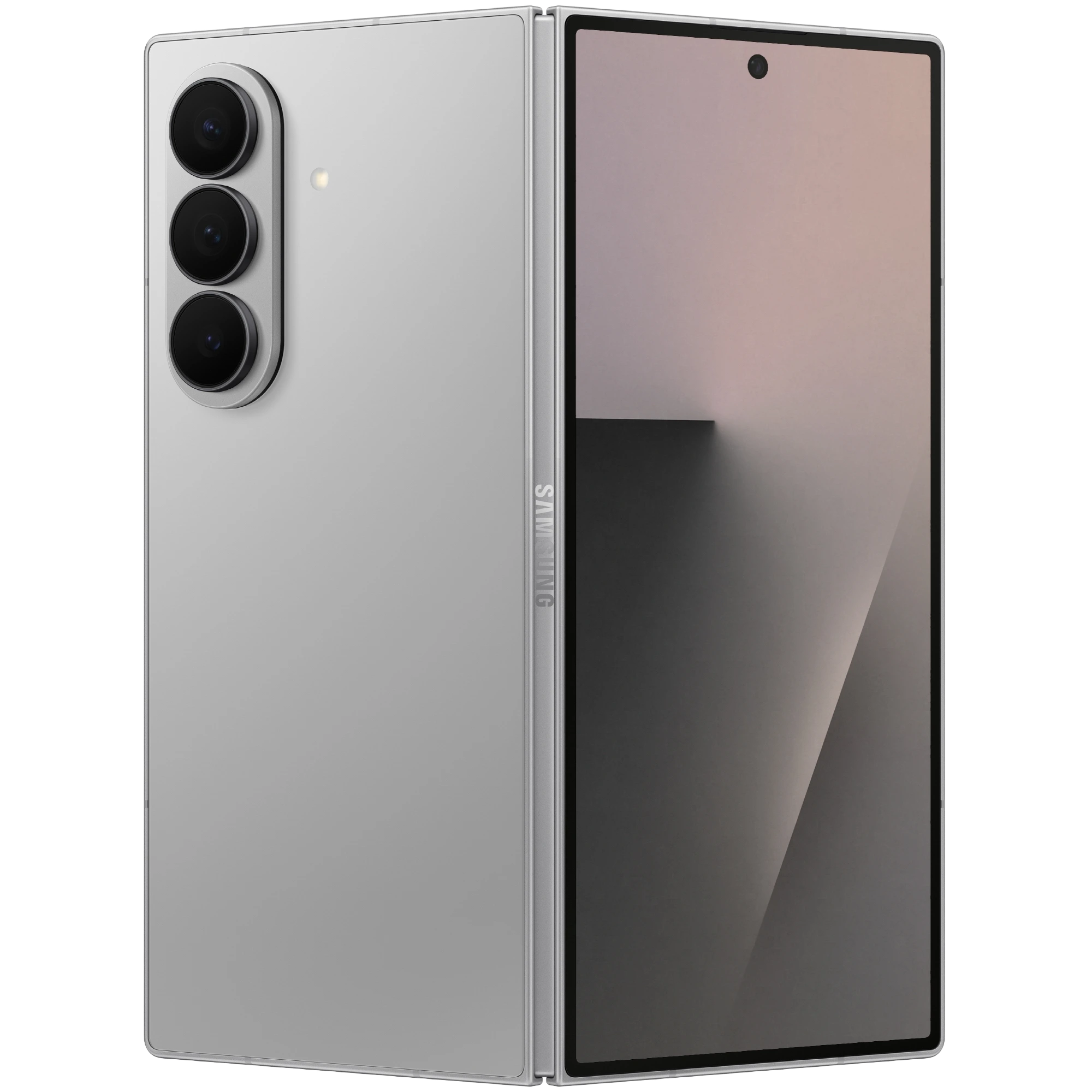

Samsung
Samsung
Galaxy Z Fold 7
Galaxy Z Flip 7
Ranked #33 of 59
Ranked #40 of 59
Overall
Overall
Samsung's two foldables share a name, a hinge, and an IP48 dust and water resistance rating. Beyond that, they're pretty different phones for different people. The Galaxy Z Fold 7 is a productivity device that unfolds into a near-tablet, priced at $1,999.99 and aimed at people who want the most screen real estate they can fit in a pocket. The Galaxy Z Flip 7 is a compact clamshell at $1,099.99, designed to fold down small and stay out of the way until you need it. The $900 price gap is the widest in Samsung's foldable lineup, and it buys you a fundamentally different form factor rather than a simple spec bump.
The Fold 7 pulls ahead in raw performance, camera versatility, and that massive inner display. Its Snapdragon 8 Elite chip outpaces the Flip 7's Exynos 2500 by a meaningful margin, and its three rear cameras, including a dedicated telephoto, give it more flexibility at distance. The Flip 7 counters with better battery efficiency, a more accurate inner display, stronger main camera color accuracy, and a noticeably better microphone. Its lighter weight and smaller folded footprint also make it the easier phone to live with day to day.
Here’s how the Samsung Galaxy Z Fold 7 and Galaxy Z Flip 7 compared in our thorough lab testing.
Design
| Samsung Galaxy Z Fold 7 | Samsung Galaxy Z Flip 7 | |
|---|---|---|
| Specifications | ||
| Dimensions (folded) | 158.4 x 72.8 x 8.9 mm | 85.5 x 75.2 x 13.7 mm |
| Dimensions (unfolded) | 158.4 x 143.2 x 4.2 mm | 166.7 x 75.2 x 6.5 mm |
| Weight | 215g | 188g |
| IP Rating | IP48 | IP48 |
| Frame | Aluminum | Aluminum |
| Front | Plastic (inner) / Gorilla Glass Victus Ceramic 2 (outer) | Plastic (inner) / Gorilla Glass Victus 2 (outer) |
| Back | Gorilla Glass Victus 2 | Gorilla Glass Victus 2 |
| Screen-to-body ratio (inner) | 83.9% | 86.2% |
| Screen-to-body ratio (outer) | 85.6% | 83.9% |
Both the Galaxy Z Fold 7 and Galaxy Z Flip 7 use aluminum frames with Gorilla Glass Victus 2 on the back. The Fold 7's outer cover gets Gorilla Glass Victus Ceramic 2, a step up from the Flip 7's standard Gorilla Glass Victus 2 cover. Both use plastic for the inner foldable display, as all current foldables do. Both carry an IP48 rating, meaning protection against particles larger than 1mm and submersion in fresh water up to 1.5 meters for 30 minutes. Neither is rated for fine dust resistance.
The Fold 7 folds like a book. Closed, it measures 158.4 x 72.8 x 8.9mm, roughly the size of a tall, narrow candy-bar phone. Unfolded, it opens to 158.4 x 143.2 x 4.2mm, giving you a near-square 7.7-inch workspace. It weighs 215g. The Flip 7 folds like a clamshell. Closed, it's a compact 85.5 x 75.2 x 13.7mm, small enough to disappear in a jacket pocket. Unfolded, it stretches to 166.7 x 75.2 x 6.5mm with a conventional tall-phone shape. It weighs 188g, about 27g lighter than the Fold 7.
Bandicoot Lab doesn't formally test design or durability.
Display
Inner
| Samsung Galaxy Z Fold 7 (Inner) | Samsung Galaxy Z Flip 7 (Inner) | |
|---|---|---|
516/ 881 | 540/ 881 | |
Both inner panels are Dynamic LTPO AMOLED 2X displays running 1–120Hz adaptive refresh. The Fold 7's 7.7-inch inner screen runs at 1968 x 2184 in a near-square 9.99:9 aspect ratio at 368 pixels per inch. The Flip 7's 6.8-inch inner display is 1080 x 2520 in a tall 21:9 format at 397 PPI. The Flip 7 is slightly sharper per pixel, but both are sharp enough that you won't notice the difference in normal use.
Manual brightness is close: 734 nits on the Fold 7 versus 690 nits on the Flip 7. HDR peak brightness is essentially tied, with the Fold 7 at 2,757 nits and the Flip 7 at 2,785 nits. Both panels hold brightness well over time during sustained HDR playback, at 98.8% and 98.7% respectively. Brightness stability across different HDR window sizes is moderate for both, at 56.2% for the Fold 7 and 54.8% for the Flip 7. This means full-screen HDR content won't hit the same peaks as smaller bright elements, which is typical behavior.
Color accuracy gives the Flip 7 a clear edge. Colors on the Flip 7's inner panel are well-calibrated, with neutral tones staying true and minimal visible drift across the spectrum. The Fold 7's inner display shows more noticeable color errors, with some tones drifting enough to spot if you're looking for it. Both panels cover 99% or more of sRGB and around 75–76% of the wider DCI-P3 gamut.
For HDR tone mapping, the Flip 7 tracks the reference PQ curve more faithfully, with a subtle brightness lift and clipping starting at 75% input level. The Fold 7 boosts highlights more aggressively and clips at the same 75% point, meaning very bright HDR details get pushed brighter than intended before being lost at the same ceiling.
Touch latency is where the Fold 7's inner panel stands out: 8.8ms average, which is fast. The Flip 7's inner display registers at 18.6ms.
Outer
| Samsung Galaxy Z Fold 7 (Outer) | Samsung Galaxy Z Flip 7 (Outer) | |
|---|---|---|
567/ 881 | 474/ 881 | |
The Fold 7's outer cover is a 6.5-inch LTPO AMOLED at 1080 x 2520 (422 PPI) in 21:9, running 1–120Hz. The Flip 7's cover screen is a much smaller 4.1-inch Super AMOLED at 948 x 1048 (342 PPI) in a near-square 8.1:9 format, with a 60–120Hz refresh range. These serve very different roles. The Fold 7's cover is a full-featured phone screen you can use all day without opening the device. The Flip 7's cover handles notifications, widgets, and quick tasks, but isn't meant for extended use.
The Flip 7's outer display is brighter, which matters for a screen that's often used in direct sunlight to check messages. The Fold 7's cover display is close in brightness but sits a step behind. Color accuracy is similar on both cover screens. Both show moderate drift from reference, with colors skewing slightly but neither being distractingly off.
The Fold 7's outer screen has significantly better touch responsiveness than the Flip 7's cover. Given the size difference, this matters most on the Fold 7, where you'll actually be typing and navigating on the cover screen regularly.
Performance
| Samsung Galaxy Z Fold 7 | Samsung Galaxy Z Flip 7 | |
|---|---|---|
718/ 1012 | 578/ 1012 | |
The Galaxy Z Fold 7 runs the Qualcomm Snapdragon 8 Elite with 16GB of RAM (a 12GB option also exists). The Galaxy Z Flip 7 uses Samsung's own Exynos 2500 with 12GB of RAM.
CPU performance is better on the Fold 7. It scores 3,006 single-core and 9,818 multi-core in GeekBench 6, compared to the Flip 7's 2,322 single-core and 8,162 multi-core. That's roughly a 30% advantage in single-threaded work and 20% in multi-threaded tasks. In practice, you'll notice this in app launch speeds, heavy multitasking, and anything that leans on sustained CPU power, especially on the Fold 7's larger inner display where split-screen multitasking is a core use case.
GPU performance shows a wider gap. The Fold 7 peaks at 6,615 in Wild Life Extreme versus the Flip 7's 5,387. Both phones throttle significantly under sustained load: the Fold 7 holds 48.1% stability and the Flip 7 holds 44%. Neither is well-suited to long gaming sessions, but the Fold 7 starts from a higher peak so its throttled performance floor is still above the Flip 7's. Solar Bay results are closer, with peak scores of 11,532 and 11,372, but stability tells the same story: 49.3% versus 44.2%.
Browser performance, measured by Speedometer, gives the Fold 7 a noticeable lead at 32.3 versus 26.5.
Camera
| Samsung Galaxy Z Fold 7 | Samsung Galaxy Z Flip 7 | |
|---|---|---|
455/ 587 | 456/ 587 | |
The Fold 7 has a more versatile camera system on paper: a 200-megapixel main sensor (f/1.7, 1/1.3-inch), a 12-megapixel ultrawide, a 10-megapixel 3.5x telephoto, and two 10-megapixel front cameras (one inner, one outer). The Flip 7 carries a 50-megapixel main (f/1.8, 1/1.57-inch), a 12-megapixel ultrawide, and a single 10-megapixel front camera. No telephoto.
The Fold 7's main camera resolves more detail in bright and mid light, which isn't surprising given the much larger sensor and higher megapixel count. The Flip 7 holds up better in low light, where its sharpness stays consistent. At distance, the Fold 7's dedicated telephoto gives it a clear advantage from 3.5x out. The Flip 7 is cropping digitally from its main sensor for anything past 1x, and by 10x the results are soft. The Fold 7 also softens at the long end of its 30x digital zoom, but its telephoto lens keeps things usable well past where the Flip 7 falls apart.
Main
| Samsung Galaxy Z Fold 7 (Main) | Samsung Galaxy Z Flip 7 (Main) | |
|---|---|---|
591/ 722 | 566/ 722 | |
The Fold 7's 200-megapixel main camera resolves high detail in bright and medium light, dropping somewhat in the dark. The Flip 7's 50-megapixel main holds good detail in bright and medium conditions and barely loses sharpness in low light. Most phone cameras show a meaningful drop when lighting falls to 10 lux. The Flip 7 doesn't, which is a genuine strength.
The Fold 7 covers 1x through 3.5x on its main camera before handing off to the telephoto. Cropping to 2x on that 200-megapixel sensor still delivers strong detail. The Flip 7 handles 1x through its full 10x digital zoom on the main sensor alone. It holds up reasonably through 2–3x but softens progressively past that, and by 10x you're looking at heavily processed digital crop.
Color character differs. The Flip 7's main camera produces a consistently vivid look with moderate saturation boost across all lighting. Hue accuracy is good in bright light and degrades only moderately as conditions darken. Skin tones are the closest to natural you'll get from either phone. The Fold 7 pushes saturation harder in bright light, and its hue accuracy degrades more as lighting warms. Skin tones shift noticeably under indoor and low lighting, pulling warm with a pinkish cast. That warm drift increases progressively from bright to dark, consistent with a white balance issue rather than a sensor-level problem.
The Fold 7 retains more dynamic range, preserving shadow and highlight detail in contrasty scenes. The Flip 7 clips highlights and produces a more compressed tonal range, though it avoids the tonal inversions that sometimes appear in the Fold 7's processing.
Video stabilization is much better on the Flip 7's main camera. Handheld footage stays controlled and smooth, while the Fold 7's main camera shows more residual motion. The Fold 7's larger, heavier body may contribute to this, but the result is that the Flip 7 produces steadier handheld video from its main lens.
Ultrawide
| Samsung Galaxy Z Fold 7 (Ultrawide) | Samsung Galaxy Z Flip 7 (Ultrawide) | |
|---|---|---|
565/ 722 | 596/ 722 | |
Both phones carry 12-megapixel f/2.2 ultrawides at 13mm. Sharpness is close, with both delivering similar levels of detail. Neither ultrawide matches its own main camera for sharpness, which is typical of the category.
Color behavior follows a similar pattern to the main cameras. Both push saturation slightly, with the Flip 7 boosting a touch more in mid light. Hue accuracy degrades in both phones under warmer lighting. Skin tones on the Fold 7's ultrawide are actually better than on the Flip 7's ultrawide in bright light, but the Flip 7 holds steadier as conditions darken. Both show the same white-balance-driven warm shift in low light.
Dynamic range is close. Both ultrawides clip highlights and show similar overall tonal range. The Flip 7's ultrawide avoids tonal inversions entirely, while the Fold 7's shows a few, meaning some shadow tones can invert and lose detail in tricky lighting. Stabilization is better on the Flip 7 here as well, with less residual shake in handheld video.
Telephoto
| Samsung Galaxy Z Fold 7 (Telephoto) | Samsung Galaxy Z Flip 7 (Telephoto) | |
|---|---|---|
485/ 722 | — | |
The Fold 7's 10-megapixel 3.5x telephoto (67mm, f/2.4) is a dedicated lens the Flip 7 simply doesn't have. It delivers moderate sharpness at its native 3.5x, and detail holds reasonably as you push toward 10x before degrading more quickly past that through the 30x digital maximum.
Color on the telephoto tracks closely with the Fold 7's main camera. It pushes saturation in bright light, and hue accuracy drops under warmer conditions with the same progressive warm shift. Skin tones in low light skew warm with a noticeable pinkish cast. Dynamic range is decent for a telephoto, with good highlight retention.
Stabilization is the telephoto's strongest suit. Video shot through the telephoto is the steadiest of the Fold 7's rear cameras, which makes sense given the narrower field of view where shake is most visible.
For the Flip 7, anything past 1x is digital crop territory, and it simply can't compete at 3.5x and beyond. If you regularly shoot at distance, the Fold 7's telephoto is a genuine capability the Flip 7 lacks entirely.
Front
| Samsung Galaxy Z Fold 7 (Front Inner) | Samsung Galaxy Z Fold 7 (Front Outer) | Samsung Galaxy Z Flip 7 (Front) | |
|---|---|---|---|
276/ 722 | 330/ 722 | 303/ 722 | |
The Fold 7 has two 10-megapixel front cameras. The inner one (18mm, f/2.2) sits under the foldable display and is used when the phone is open. The outer one (24mm, f/2.2) is on the cover screen for selfies and video calls when the phone is closed. The Flip 7 has a single 10-megapixel front camera (23mm, f/2.2).
Sharpness is similar across all three. The Flip 7's front camera resolves slightly more detail in bright and mid light. All three drop in low light, with the Fold 7's inner and outer front cameras and the Flip 7's front camera all falling to similar levels.
Skin tones are a weak spot for all three cameras, but the degree varies. The Flip 7's front camera shows consistent skin tone error across all lighting conditions, meaning skin colors are shifted but at least predictably so. The Fold 7's inner front camera shows the highest skin tone error in bright light, which is unusual. The outer front camera is slightly better but still drifts more than the Flip 7's. In low light, the Fold 7's outer front camera shifts strongly toward a cool pink, driven by significant white balance overcorrection.
Dynamic range is narrow on all front cameras. The Flip 7's front camera avoids clipping highlights entirely and has the widest tonal range of the three, though it shows more tonal inversions in the processing. The Fold 7's inner and outer front cameras both clip highlights.
The Fold 7's outer front camera offers video stabilization, which neither the inner front camera nor the Flip 7's front camera provides at a competitive level. The Flip 7's front camera shows more residual shake in handheld video.
Battery
| Samsung Galaxy Z Fold 7 | Samsung Galaxy Z Flip 7 | |
|---|---|---|
494/ 799 | 516/ 799 | |
The Fold 7 carries a 4,400mAh battery; the Flip 7 has 4,300mAh. Close on paper, but they perform differently.
Video playback tells the story of two form factors. On the inner display, the Flip 7 lasts 28.43 hours versus the Fold 7's 22.57 hours. That's nearly six hours more, largely because the Flip 7's inner display is smaller and lower resolution. On its outer display, the Fold 7 lasts 28.12 hours, essentially matching the Flip 7's inner display runtime. The Flip 7's outer display, being a small cover screen, runs 24.67 hours. For the Fold 7, this means you can stretch battery life significantly by using the cover screen instead of unfolding the device.
Web browsing over five hours drains 34% of the Fold 7's battery versus 23% on the Flip 7. That's a substantial difference. The Fold 7's larger inner display and Snapdragon chip draw more power during typical browsing. The Flip 7 could comfortably handle a full day of moderate web use with battery to spare, while the Fold 7 will need more careful management or a top-up by evening.
Gaming drain is closer: 23% on the Fold 7 and 21% on the Flip 7 during the stress test. Standby drain favors the Fold 7 at 2% over eight hours versus the Flip 7's 3%, a small difference that adds up overnight.
Charging
| Samsung Galaxy Z Fold 7 | Samsung Galaxy Z Flip 7 | |
|---|---|---|
233/ 837 | 211/ 837 | |
Both phones support 25W wired and 15W wireless charging. Performance is nearly identical. The Fold 7 reaches 19% in 10 minutes and 53% in 30 minutes via wire. The Flip 7 hits 20% in 10 minutes and 55% in 30 minutes. Wireless charging is also effectively tied, with both reaching 7% in 10 minutes and 19–20% in 30 minutes.
Neither phone charges quickly by modern standards. If you're coming from a phone with 45W or faster charging, the pace here will feel slow.
Speaker
| Samsung Galaxy Z Fold 7 | Samsung Galaxy Z Flip 7 | |
|---|---|---|
745/ 897 | 704/ 897 | |
Loudness is close: 77.2 dBA on the Flip 7 and 76.6 dBA on the Fold 7. Both get loud enough for a room.
The Fold 7's speakers have fuller bass and more defined clarity in the upper frequencies. It sounds a bit richer overall, with a wider tonal range that gives music and media more body. The Flip 7's speakers are slightly cleaner at high volume, with marginally less distortion (5.35% THD versus 5.82%), but the frequency balance is a bit thinner with less bass presence. The Flip 7 extends higher frequencies further, which helps with vocal clarity in calls and podcasts.
Both phones land in the same general tier for speaker quality. The Fold 7 sounds a touch more full-bodied; the Flip 7 sounds a touch cleaner. Neither is a standout.
Microphone
| Samsung Galaxy Z Fold 7 | Samsung Galaxy Z Flip 7 | |
|---|---|---|
622/ 1220 | 789/ 1220 |
The Flip 7's microphone is well above average. Audio capture is even across the frequency range, meaning voices and ambient sound come through balanced without thin or muddy spots. The Fold 7's microphone is average. It's perfectly fine for calls and basic voice recording, but the Flip 7 captures noticeably more consistent, natural-sounding audio. If you record voice memos, take video calls frequently, or create content, the Flip 7 has a real advantage here.
Other
| Samsung Galaxy Z Fold 7 | Samsung Galaxy Z Flip 7 | |
|---|---|---|
| Biometrics | 945/ 1181 | 869/ 1181 |
| Data Transfer | 705/ 877 | 389/ 877 |
| Specifications | ||
| Biometric type | Fingerprint | Fingerprint |
| Ports | USB-C 3.2 | USB-C 3.2 |
| Storage | 256GB, 512GB, 1TB | 256GB, 512GB |
Both phones use capacitive fingerprint sensors. The Fold 7 unlocks in 111ms average; the Flip 7 takes 121ms. Both are fast, and the 10ms gap isn't perceptible in daily use. Neither phone has hardware-based face unlock.
Data transfer speeds differ meaningfully. The Fold 7 reads at 276 MB/s and writes at 260 MB/s via its USB-C 3.2 port. The Flip 7 manages 173 MB/s read and 171 MB/s write through the same port type. If you transfer large files to and from a computer, the Fold 7 is roughly 60% faster. The Fold 7 is available in 256GB, 512GB, and 1TB storage configurations. The Flip 7 tops out at 512GB.
Conclusion
The Fold 7 is the more capable device in most measurable categories. It has a faster processor, a more versatile camera system with a dedicated telephoto, a massive inner display with excellent touch responsiveness, and faster data transfer. It's built for people who want a tablet-sized screen in their pocket and will use it for multitasking, media, and productivity. The extra $900 buys real capability that the Flip 7 can't replicate.
The Flip 7 makes its case on different terms. It lasts longer on a charge during typical use, its main camera produces more accurate colors and better low-light consistency, its microphone is meaningfully better, and its inner display is more color-accurate. It's also smaller, lighter, and nearly half the price. For someone who wants a compact phone that folds out of the way, takes reliable photos, and doesn't need a second screen's worth of real estate, the Flip 7 is the more practical choice.
Neither phone is strong at charging, and both share the same IP48 limitation on dust resistance. The performance gap matters most if you run demanding apps or game on the inner display. The camera gap matters most at distance, where the Fold 7's telephoto has no competition. If your typical shooting is at normal range and good lighting, the Flip 7's main camera is arguably the better-tuned of the two.
FAQ
Is the Galaxy Z Fold 7 worth the $900 premium over the Flip 7?
The Fold 7 earns its price if you actively use a larger screen for multitasking, want a dedicated telephoto lens, or need faster data transfer. If your priorities are everyday photos, battery life, and a lighter phone, the Flip 7 delivers those things better and costs significantly less. The gap is wide enough that the right answer depends almost entirely on whether you'll use the Fold 7's inner display as a working screen rather than an occasional novelty.
Which phone takes better photos — the Fold 7 or the Flip 7?
At standard distances, the Flip 7's main camera produces more accurate colors and more consistent skin tones across all lighting conditions, while the Fold 7's main camera drifts warmer as light gets dimmer. The Fold 7 pulls ahead in dynamic range and detail in bright light, and its dedicated 3.5x telephoto gives it a capability the Flip 7 simply lacks — the Flip 7 relies on digital cropping past 1x, and quality falls off quickly beyond 3x. For most everyday shooting, the Flip 7 is more reliably tuned; for versatility at distance, the Fold 7 wins.
Does the Flip 7 or Fold 7 have better battery life?
The Flip 7 lasts meaningfully longer during typical use. Web browsing over five hours drains 23% of the Flip 7's battery versus 34% on the Fold 7, and video playback on the Flip 7's inner display runs about six hours longer than on the Fold 7's. The Fold 7 can recover some of that gap by staying on its cover screen rather than unfolding, but day-to-day the Flip 7 is the easier phone to get through a full day without charging.
Is the Fold 7 or Flip 7 better for gaming?
The Fold 7 is the better gaming phone. Its Snapdragon 8 Elite chip outperforms the Flip 7's Exynos 2500 by roughly 20–30% in CPU tasks and more in GPU workloads, and its touch latency on the inner display is 8.8ms versus 18.6ms on the Flip 7 — a gap large enough to feel in fast-paced games. Both phones throttle under sustained load, but the Fold 7's higher performance ceiling means its throttled floor still sits above what the Flip 7 delivers at its best.
Which Samsung foldable is better for video calls and voice recording?
The Flip 7 has a clear microphone advantage — audio capture is balanced and natural-sounding across the frequency range, while the Fold 7's microphone is average and noticeably less consistent. For video calls, voice memos, or any content recording, the Flip 7 captures better audio. The Fold 7's outer front camera does offer video stabilization that the Flip 7's front camera can't match, but on raw audio quality the Flip 7 wins.
Related
Samsung
Galaxy Z Fold 7
Samsung
Galaxy Z Flip 7

Samsung
Galaxy S26 Ultra
Samsung
Galaxy S26+
Samsung
Galaxy Z Fold 8 Ultra
Samsung
Galaxy Z Fold 8
Samsung
Galaxy S26
Is a weak telephoto worse than having no telephoto at all?

Motorola Razr+ (2026) vs Samsung Galaxy Z Flip 7

Samsung Galaxy Z Flip 7 vs Motorola Razr (2025)
Samsung Galaxy Z Fold 7 vs Honor Magic V6

Motorola Razr Fold vs Samsung Galaxy Z Fold 7