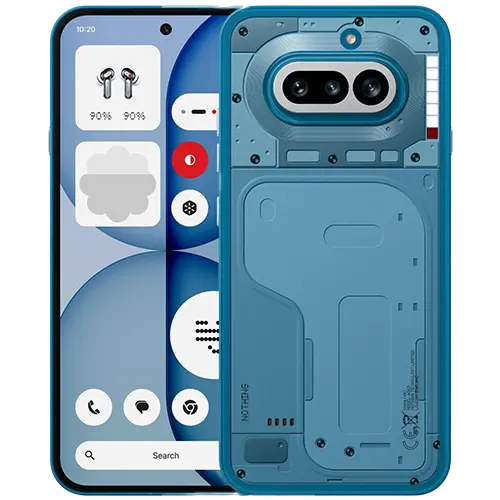
Nothing Phone (4b)
Score Overview
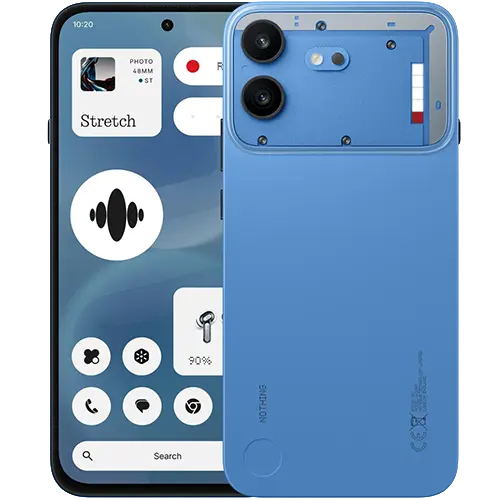
Nothing's design language has always done a lot of work for its phones, and the Phone (4b) leans on it harder than most. At $399, this is the cheapest way into the brand's aesthetic, built around a Snapdragon 6 Gen 4, a 6.77-inch 120Hz AMOLED, and a 5,200mAh battery. The hardware underneath the styling is firmly budget-class, and our testing bears that out in most categories.
What you get for the money is solid endurance, a loud speaker, and a display with accurate colors. What you give up is substantial though — charging is slow for the segment, the cameras struggle with dynamic range and skin tones, and the chipset falls behind on anything graphically demanding. This is a phone that handles the basics, and that’s about it.
Design
Specifications
The Phone (4b) measures 164.4 x 78.2 x 8.6mm and weighs 210g, with a plastic frame, plastic back, and Dragontrail glass up front. The screen-to-body ratio is 87.4%, which keeps the footprint reasonable for a 6.77-inch display, though this is still a large phone and the weight is noticeable.
Ingress protection is rated IP64, meaning it's sealed against dust and can handle water splashes but not submersion. That's a step below the IP67 and IP68 ratings common on midrange hardware, so treat rain as the limit. The plastic construction is the expected trade at this price.
Display
The 6.77-inch AMOLED panel runs at 1080 x 2344 resolution, 381 pixels per inch, and a 120Hz maximum refresh rate. The refresh rate is the panel's best quality. Scrolling and animations stay smooth, and touch latency of 21.4ms is respectable for the class.
Brightness is the weak point. Maximum manual brightness is 582 nits, which is adequate indoors and marginal in direct sunlight. HDR content pushes the panel to 1,147 nits, but the baseline brightness means you'll be fighting glare outdoors more than you would on most phones in this price range. Minimum brightness of 2.13 nits is comfortably dim for nighttime use.
Color accuracy is a genuine strength. The best calibrated mode measured an average ΔE of 1.42, a measure of color error where anything under 2 is effectively invisible to the eye. Coverage of the sRGB color space, the standard for most web and app content, sits at 99.3%. The wider DCI-P3 gamut used by HDR video is only 74.6% covered, so HDR content won't look as saturated as intended. For everyday use, colors look right, which isn't something every budget panel manages.
Performance
The Snapdragon 6 Gen 4 with 8GB of RAM delivers GeekBench 6 scores of 1,096 single-core and 3,158 multi-core. That's enough for the interface, messaging, and typical app use without visible stutter. Where it falls short is anywhere beyond that.
GPU performance is the real constraint. A Wild Life Extreme score of 966 puts demanding 3D games out of reach at anything above low settings, though the 99.5% stability figure means what performance exists doesn't degrade under sustained load. The phone won't throttle; it just doesn't have much to throttle from. Browser performance tells a similar story, with a Speedometer score of 11.1 that translates to noticeable waits on heavy web pages.
If your use is calls, messaging, social apps, and video, the chip is fine. If you game or push multitasking, you'll feel the ceiling regularly.
Battery
The 5,200mAh battery is the Phone (4b)'s most dependable component. It ran 27.99 hours in our video playback test at standard brightness, which works out to roughly two days of typical mixed use. At maximum brightness that drops to 11.05 hours, still enough to cover a full day of heavy outdoor viewing.
Drain rates are reasonable across the board. An hour of web browsing consumed 22%, an hour of gaming took 10%, and overnight standby drained 2%. The web figure is on the high side, likely a byproduct of the chipset working harder on page loads, but the gaming and standby numbers are efficient. For most people this battery comfortably outlasts the day with margin to spare.
Charging
Wired charging tops out at 33W with no wireless option. The phone reaches 19% in 10 minutes and 50% in 30 minutes, then slows considerably through the back half of the charge. A full charge is a long sit by any standard, and the early-charge speed doesn't compensate the way faster midrange systems do.
This is the phone's weakest test result. Plenty of similarly priced devices charge at 45W or higher and finish in well under an hour. Since the phone lasts around two days, you can charge overnight and mostly avoid caring. But if you're a top-up-during-the-day user, this will frustrate you.
Camera
The rear system pairs a 50-megapixel main camera (1/2.76-inch sensor, f/1.8) with an 8-megapixel ultrawide (f/2.2). There's no telephoto; zoom beyond 1x is digital, up to 10x. A 16-megapixel front camera handles selfies.
Main Camera
In good light the main camera resolves fine detail well, and that holds into moderate indoor lighting. Low light shows a sharp drop in sharpness, with visible softness and noise reduction smearing in dim scenes.
Color tuning is mixed. Hue accuracy is reasonable in bright light. Skin tones drift noticeably from reference in daylight, enough to be visible without a side-by-side, though the error shrinks in dimmer conditions. Saturation runs slightly punchy outdoors.
Dynamic range is the bigger practical issue. The main camera captures a narrow range of brightness between shadow and highlight, and it clips highlights readily. Shooting toward a bright sky, expect blown-out clouds and crushed shadow detail. This is the single most visible camera weakness in everyday shooting.
Ultrawide Camera
The 8-megapixel ultrawide captures far less detail than the main camera, and it shows in anything viewed larger than a phone screen. Where it quietly outperforms the main lens is dynamic range. It holds shadow and highlight detail better in contrasty scenes, which is unusual. Color behavior is similar to the main camera, with the same skin tone drift in bright light. It's usable for landscapes and group shots in good light, and not much else.
Front Camera
The 16-megapixel selfie camera is sharp enough in good and moderate light but falls apart in dim conditions, where detail drops sharply and the image takes on a visible cool blue cast. Saturation runs high in daylight, giving selfies an oversaturated look, and skin tone accuracy follows the same drifting pattern as the rear cameras. Dynamic range is decent, though bright backgrounds still clip.
Speaker
The speaker system reaches 73.4 dBA at maximum volume, reasonably loud for the class, and clarity in the vocal range is good. Podcasts, calls, and dialogue come through clean.
Bass is essentially absent. Output rolls off below roughly 500Hz, so music loses its low end entirely and sounds thin at any volume. Total harmonic distortion averages 7.61%, high enough that pushing maximum volume introduces audible harshness on busy tracks. The frequency response also varies by 18.55dB across the range, meaning some frequencies come through much louder than others. Fine for spoken content, mediocre for music.
Microphone
Microphone performance is below average. Frequency response is uneven enough that recorded voices sound noticeably colored compared to better-tuned phones, and overall capture quality trails most devices we've tested at any price. Voice calls are serviceable. Recording video with important audio, or using the phone for voice memos you care about, is where the weakness becomes audible.
Other
Measurements
Specifications
Unlocking relies on an optical under-display fingerprint reader averaging 292ms per unlock. That's on the slow side. You'll register a brief pause between touching the sensor and the home screen, where faster readers feel instant. There's no hardware-based face unlock, which removes the usual fallback for wet fingers or gloves. The fingerprint reader is reliable enough, just not quick, and it's your only option.
The USB-C port runs at USB 2.0 speeds, and it shows in file transfers: 37 MB/s read and 36 MB/s write. Moving a few photos is fine. Offloading an hour of video to a computer is a wait measured in many minutes rather than seconds. If you shoot a lot of video or regularly transfer large files by cable, this will be a recurring annoyance. Cloud sync sidesteps it, at the cost of your upload bandwidth.
Conclusion
The Phone (4b) is a phone whose strongest argument is how it looks and how long it runs. Two days of battery life, an accurate display, and a loud speaker cover the everyday basics well, and the design gives it more personality than most hardware at $399.
Everything beyond the basics is compromised. The cameras can't handle contrasty scenes or skin tones, the chipset limits gaming and heavy web use, charging is slow, and small frictions like the sluggish fingerprint reader and USB 2.0 transfers accumulate. If your usage is genuinely light, the endurance and the price make a coherent case. If you expect to lean on the camera or play demanding games, the money is better spent elsewhere in the same price range.
FAQ
How long does the Nothing Phone (4b) battery last?
The Phone (4b) ran 27.99 hours in our video playback test at standard brightness, which works out to roughly two days of typical mixed use. At maximum brightness, video playback drops to 11.05 hours. An hour of web browsing used 22% of the battery, an hour of gaming used 10%, and overnight standby used 2%.
How fast does the Nothing Phone (4b) charge?
Wired charging tops out at 33W, and there is no wireless charging. The phone reaches 19% in 10 minutes and 50% in 30 minutes, then slows considerably, so a full charge takes a long time. Many phones at a similar price charge at 45W or higher, so this is the Phone (4b)'s weakest area.
Can the Nothing Phone (4b) handle gaming?
Casual games run fine, but demanding 3D titles are limited to low settings because the Snapdragon 6 Gen 4's graphics performance is modest. Wild Life Extreme stability is 99.5%, so performance holds steady under sustained load rather than throttling. Everyday apps, messaging, and video run without visible stutter.
Is the Nothing Phone (4b) screen bright enough to use outdoors?
Maximum manual brightness is 582 nits, which is adequate indoors and marginal in direct sunlight. HDR content peaks at 1,147 nits. Color accuracy is a strength, with an average ΔE of 1.42 in the best mode and 99.3% sRGB coverage.
How good is the Nothing Phone (4b) camera?
The 50-megapixel main camera resolves fine detail well in good light and moderate indoor light. It softens noticeably in low light. Dynamic range is narrow, so bright skies tend to blow out and shadows get crushed. Skin tones also drift from reference in daylight.
Is the Nothing Phone (4b) waterproof?
The Phone (4b) is rated IP64, meaning it is sealed against dust and can handle water splashes. It is not rated for submersion. Rain is a safe limit, but a dunk in water is not.
Is the Nothing Phone (4b) speaker good for music?
The speaker reaches 73.4 dBA at maximum volume, and vocals, podcasts, and calls come through clearly. Bass is essentially absent below roughly 500Hz, so music sounds thin. Distortion averages 7.61% THD, which adds harshness on busy tracks at high volume.