Nothing Phone (4b) vs Nothing Phone (4a)
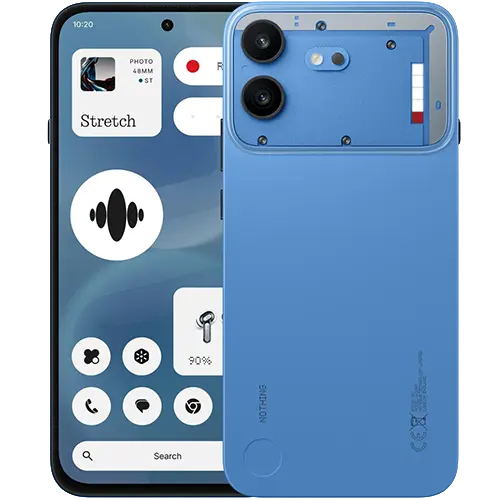
Nothing
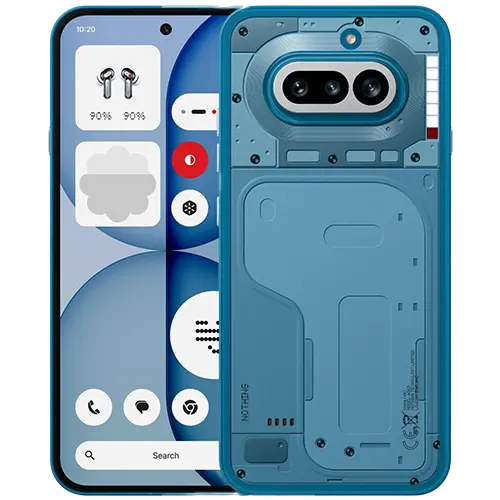
Nothing
Phone (4b)
Phone (4a)
Ranked #59 of 61
Ranked #53 of 61
Overall
Overall
The Nothing Phone (4b) and Nothing Phone (4a) sit in the same budget tier, and the pricing runs the wrong direction: the 4b costs more, but the 4a is the more capable phone, with a three-camera system, a sharper display, and a glass build. The 4b is simpler, built around a larger battery and a two-camera setup. Both target the same buyer, and the 4b has to make a case for its premium.
The 4a pulls ahead in most categories. Its camera system is substantially better, with stronger results across lighting conditions and a telephoto the 4b doesn't have. The display is brighter, higher-resolution, and much more responsive to touch. Charging is faster, the fingerprint sensor is quicker, and microphone quality is far better. The 4b's genuine strength is battery life: it lasts meaningfully longer per charge. Its speaker is slightly cleaner too. Processing power is close enough between them that you're unlikely to feel a difference.
Design
| Nothing Phone (4b) | Nothing Phone (4a) | |
|---|---|---|
| Specifications | ||
| Dimensions | 164.4 x 78.2 x 8.6 mm | 164 x 77.6 x 8.6 mm |
| Weight | 210g | 204.5g |
| IP Rating | IP64 | IP64 |
| Frame | Plastic | Plastic |
| Front | Dragontrail glass | Gorilla Glass 7i |
| Back | Plastic | Glass |
| Screen-to-body ratio | 87.4% | 87.2% |
Both phones share plastic frames and IP64 ratings, meaning they're dust-tight and protected against splashing water but not rated for submersion. They're nearly the same size: the 4b measures 164.4 x 78.2 x 8.6 millimeters at 210 grams, and the 4a is 164 x 77.6 x 8.6 millimeters at 204.5 grams. About 5.5 grams and a fraction of a millimeter in each dimension separate them. Screen-to-body ratios are functionally identical at 87.4% and 87.2%, so bezel thickness is the same. Aspect ratios differ slightly: 19.5:9 on the 4b versus 20:9 on the 4a, making the 4a fractionally taller and narrower in proportion.
The meaningful build difference is in the glass and back panel. The 4a uses Gorilla Glass 7i on the front, which is rated for better drop and scratch resistance than the 4b's Dragontrail glass. The 4a also has a glass back where the 4b uses plastic. Glass is more rigid and scratch-resistant than plastic but more prone to cracking on impact. Bandicoot Lab doesn't formally test design or durability; these are spec-sheet observations.
Display
| Nothing Phone (4b) | Nothing Phone (4a) | |
|---|---|---|
467/ 881 | 558/ 881 | |
Both phones use 6.77–6.78-inch AMOLED panels running at 30–120Hz. The differences start with brightness. In manual mode, where you control the slider, the 4a reaches 781 nits versus 582 for the 4b. For HDR content in auto-brightness mode, the 4a peaks at 1,522 nits compared to 1,147. That's roughly a third more brightness in both cases, a gap that's visible outdoors. Both panels hold brightness perfectly across HDR window sizes at 100% stability. Sustained brightness over a 30-minute HDR test is also identical: 99.1% for each.
Resolution favors the 4a: 1224 x 2720 at 440 pixels per inch versus 1080 x 2344 at 381 PPI. You'll notice crisper text and finer detail on the 4a, particularly in web pages and smaller type. Color accuracy is close: both panels reproduce colors faithfully enough that errors aren't visible in typical viewing. The 4b has a marginal edge in measured accuracy, but the gap is too small to see without lab instruments. sRGB coverage is solid on both at 99.3% and 96.2%, and DCI-P3 coverage is moderate at 74.6% and 71%.
Touch latency separates them sharply. Touch latency measures how quickly the screen responds to a finger press, in milliseconds. The 4a averages 9.6ms; the 4b averages 21.4ms. In fast scrolling and quick-reaction games, the 4a feels distinctly more responsive. The 4a tracks the reference brightness curve more faithfully in HDR tone mapping, rendering gradations in bright scenes with more precision. The 4b deviates further from the reference, which can flatten subtle transitions. Both start clipping highlights at the same input level, and neither aggressively boosts highlights beyond what the content specifies.
Performance
| Nothing Phone (4b) | Nothing Phone (4a) | |
|---|---|---|
202/ 1012 | 222/ 1012 | |
The Nothing Phone (4b) runs a Qualcomm Snapdragon 6 Gen 4 with 8GB of RAM. The Nothing Phone (4a) uses a Qualcomm Snapdragon 7s Gen 4 with 12GB of RAM, also available in 8GB.
The 4a leads across benchmarks, though by modest margins. In GeekBench 6, a CPU benchmark, the 4a scores 1,250 single-core and 3,374 multi-core versus 1,096 and 3,158 for the 4b. That's about a 14% lead in single-threaded tasks and 7% in multi-threaded work. For GPU performance, the 4a peaks at 1,118 in the Wild Life Extreme graphics stress test versus 966, roughly a 16% advantage. Both sustain GPU performance well through extended loads: 98.9% stability for the 4a, 99.5% for the 4b. Browser performance, tested with Speedometer, is functionally identical at 11.3 and 11.1.
These are modest chipsets. The benchmark gaps are real but unlikely to translate into a noticeably different experience for messaging, social media, and web browsing. Heavier tasks like multitasking across many apps, photo editing, or graphically demanding games will benefit from the 4a's extra headroom and additional RAM. Neither phone is built for flagship-tier workloads.
Camera
| Nothing Phone (4b) | Nothing Phone (4a) | |
|---|---|---|
330/ 587 | 485/ 587 | |
The 4a's camera system is meaningfully more capable. Its 50-megapixel main sensor is physically much larger (1/1.57-inch versus 1/2.76-inch), it adds a dedicated 50-megapixel telephoto at 4x, and its front camera doubles the resolution. The 4b has a two-camera setup: a 50-megapixel main and an 8-megapixel ultrawide. The 4a sits comfortably in the middle of Bandicoot Lab's database for overall camera quality. The 4b sits near the bottom.
Sharpness separates them most clearly. The 4b's main camera captures good detail in well-lit scenes, and it actually edges ahead of the 4a at 1x in bright conditions. As light drops, the 4a's larger sensor takes over: it retains sharpness much more effectively in low light, where the 4b softens considerably. At the deep zoom end, the gap is stark. The 4b's 10x zoom is a heavy digital crop from a small sensor, producing soft, muddy results. The 4a starts its zoom reach from a dedicated 4x telephoto and delivers usable detail well past 10x. At extreme zoom levels the 4a does degrade, but the starting point is far better.
Both phones render colors with a slightly vivid lean in good light. The 4a holds that character more consistently as conditions dim. The 4b returns closer to neutral saturation in low light. The phones diverge on accuracy. The 4b develops a noticeable warm, yellow cast in moderate lighting. This is a white balance issue: the camera isn't fully compensating for the warmer light source used in the mid-light test. The 4a drifts toward pink and magenta as light gets warmer, a pattern that points to a sensor-level color response rather than a white balance correction failure. Skin tones are imperfect on both. The 4b's skin tone errors are larger in bright light, where faces can look noticeably off. The 4a produces more accurate skin tones overall, particularly in moderate light.
Main
| Nothing Phone (4b) (Main) | Nothing Phone (4a) (Main) | |
|---|---|---|
358/ 722 | 521/ 722 | |
The 4b's main camera is a 50-megapixel sensor at f/1.8 with a 29mm focal length and a 1/2.76-inch sensor. The 4a uses 50 megapixels at f/1.9 and 24mm with a much larger 1/1.57-inch sensor. The 4b covers 1x through 10x digitally, since it has no telephoto to hand off to. The 4a covers 1x through 4x before the telephoto takes over.
In bright and moderate lighting at 1x, the 4b resolves more fine detail. As light drops, the 4a's larger sensor pulls ahead, retaining detail the 4b can't match. Cropping toward 2x and 3x shows a similar pattern: the 4a's sensor has more information to work with, and the advantage grows as the crop gets tighter. By the time the 4b pushes past 4–5x, where it's relying entirely on digital zoom from a small sensor, results soften quickly. The 4a's main camera only needs to reach 4x before handing off to dedicated telephoto optics.
Dynamic range is a clear gap. The 4a holds more detail in both shadows and highlights, giving high-contrast scenes visible depth. The 4b compresses more aggressively, clipping highlights and losing shadow detail sooner. Bright outdoor scenes look flatter on the 4b. Both phones clip highlights to some degree. Video stabilization also favors the 4a, which keeps handheld footage noticeably steadier.
Ultrawide
| Nothing Phone (4b) (Ultrawide) | Nothing Phone (4a) (Ultrawide) | |
|---|---|---|
375/ 722 | 534/ 722 | |
Both phones use 8-megapixel ultrawide cameras at f/2.2 with similar-sized sensors: the 4b at 16mm, the 4a at 15mm.
The 4a is noticeably sharper in bright and moderate light. In low light, both ultrawide cameras produce similar results and neither impresses. Relative to their own main cameras, both ultrawides are a significant step down in detail, which is typical for budget-tier ultrawide sensors.
Color handling differs. The 4a's ultrawide pushes saturation harder in mid and low light, making scenes look punchier but less true to life. The 4b's ultrawide is more restrained in saturation but has its own accuracy issues. Skin tones are inaccurate on both ultrawides across lighting conditions, with errors increasing as light dims. Dynamic range favors the 4a, which preserves shadow and highlight detail more effectively. Stabilization is also better on the 4a.
Telephoto
| Nothing Phone (4b) (Telephoto) | Nothing Phone (4a) (Telephoto) | |
|---|---|---|
| — | 512/ 722 | |
The Nothing Phone (4a) has a 50-megapixel telephoto at f/2.9 and 80mm, providing 4x optical magnification with digital zoom extending to 70x. The Nothing Phone (4b) has no telephoto.
This is the single biggest hardware gap between the two phones. At its native 4x, the 4a's telephoto delivers solid sharpness in bright and moderate light, with expected softening in low light. As digital zoom pushes past 4x, detail declines gradually but remains usable through moderate crop levels. At extreme distances the results degrade, but anything past 5–6x is territory the 4b simply can't compete in.
The telephoto's color output is warm-leaning and vivid, especially in bright light where saturation runs high. Skin tones are best in moderate lighting and drift in both bright and dark extremes. Hue accuracy stays more consistent across lighting conditions than either phone's main camera, which suggests the processing pipeline handles the telephoto's color response well. Dynamic range is solid, with good shadow retention.
Front
| Nothing Phone (4b) (Front) | Nothing Phone (4a) (Front) | |
|---|---|---|
363/ 722 | 493/ 722 | |
The 4b uses a 16-megapixel front camera at f/2.4 and 25mm. The 4a's is 32 megapixels at f/2.2 and 24mm.
Sharpness is comparable between them in good lighting. In low light, the 4a holds onto detail much more effectively, while the 4b softens considerably. Selfies taken indoors or in the evening are noticeably cleaner on the 4a.
Color is where the two front cameras diverge most. The 4b's front camera saturates heavily in bright light and shifts progressively toward a cool, bluish cast as lighting gets warmer. This is a white balance overcorrection: the processing pushes too far toward blue when compensating for warm ambient light. Skin tones are notably off in both bright and dark conditions. The 4a's front camera is much more neutral and consistent, with virtually no color cast shift across lighting. It slightly undersaturates in low light, which mutes colors, but skin tones stay more stable and hue accuracy is better overall. Dynamic range and stabilization both favor the 4a.
Battery
| Nothing Phone (4b) | Nothing Phone (4a) | |
|---|---|---|
547/ 836 | 478/ 836 | |
The 4b has a 5,200mAh battery; the 4a has 5,080mAh. The 4b's slightly larger capacity and more power-efficient chipset combine for a meaningful endurance advantage.
In our video playback test, which runs the display at default brightness until the battery dies, the 4b lasts 27.99 hours versus 23.66 for the 4a. That's more than four extra hours. For typical mixed use, 27.99 hours translates to a comfortable day and a half, potentially two full days for lighter users. The 4a's 23.66 hours is still solid: a full day with room to spare for most people.
Web browsing drain over a five-hour test is 22% for the 4b and 24% for the 4a. Close. Gaming drain reveals a wider gap: the 4b uses 10% during the 3DMark Wild Life Extreme stress test versus 16% for the 4a. The 4a's more capable GPU draws more power under sustained load, and you'll feel that difference in longer gaming sessions. Standby drain is identical at 2% over eight hours of overnight idle.
Charging
| Nothing Phone (4b) | Nothing Phone (4a) | |
|---|---|---|
178/ 837 | 250/ 837 | |
The 4b charges at 33W wired; the 4a at 50W. Neither supports wireless charging.
The 4a's faster charger pays off immediately. In ten minutes, it reaches 27% versus 19% for the 4b. At thirty minutes, the 4a sits at 66% compared to 50%. A quick top-up before heading out puts meaningfully more charge in the battery in the same time with the 4a. The 4b's larger battery paired with its slower charging rate means a full charge from empty will take notably longer.
Speaker
| Nothing Phone (4b) | Nothing Phone (4a) | |
|---|---|---|
590/ 897 | 559/ 897 | |
The 4a gets louder, reaching 77.5 dBA versus 73.4 for the 4b. The 4b is cleaner: its total harmonic distortion, a measure of unwanted artifacts in the audio signal, is 7.61% compared to 9.85%. The two speakers have different characters. The 4b leans toward clarity and high-end crispness. The 4a has fuller bass and more low-end presence. At moderate volumes, the 4b sounds slightly more refined. At higher volumes, the 4a fills a space better but with more harshness.
For podcasts and voice-heavy content, the 4b's lower distortion works in its favor. For music and video, the 4a's extra bass and volume give it more range. Neither phone produces especially full-bodied sound; these are both budget speakers with typical limitations.
Microphone
| Nothing Phone (4b) | Nothing Phone (4a) | |
|---|---|---|
310/ 1220 | 759/ 1220 |
The 4a's microphone is well above average, producing even and natural-sounding audio across its frequency range. The 4b's microphone sits well below average, with uneven frequency response that can make voices sound thin or colored.
For calls, video recording, or voice memos, this is one of the larger gaps between these two phones. The 4a captures clearer, more faithful audio. The 4b is functional but noticeably worse.
Other
| Nothing Phone (4b) | Nothing Phone (4a) | |
|---|---|---|
| Biometrics | 360/ 1181 | 560/ 1181 |
| Data Transfer | 99/ 943 | 97/ 943 |
| Specifications | ||
| Biometric type | Fingerprint | Fingerprint |
| Ports | USB-C 2.0 | USB-C 2.0 |
| Storage | 128GB, 256GB | 128GB, 256GB |
Both phones use optical fingerprint sensors. The 4a unlocks at an average of 188ms; the 4b takes 292ms. That roughly 100ms gap is perceptible each time you pick up the phone. Neither device has hardware-based face unlock.
Both use USB-C 2.0 ports with similar data transfer speeds: the 4a reads at 41 MB/s and the 4b at 37 MB/s, with identical write speeds at 36 MB/s. Neither is fast by modern standards, and large file transfers will feel slow on both. Storage options are the same: 128GB and 256GB. The 4a is available with 8GB or 12GB of RAM; the 4b comes in 8GB only.
Conclusion
The Nothing Phone (4a) is the stronger phone in nearly every category that typically drives a purchase decision. Its camera system leads by a wide margin, with a larger main sensor, a dedicated telephoto, and a more consistent front camera. The display is brighter, sharper, and more than twice as responsive to touch. Charging is faster, biometrics are quicker, and its microphone is genuinely good. The 4b's clear advantage is battery endurance: 27.99 hours of video playback is strong, and the efficient chipset sips power during gaming and browsing. Its speaker trades volume for clarity, which some listeners will prefer.
For most buyers, the 4a is the more complete phone and the easier recommendation. It costs less and does more. The 4b makes sense if extended battery life is your highest priority and you're willing to trade a better camera system, a brighter screen, and faster charging to get it. At its higher price, that's a narrow case.
FAQ
Is the Nothing Phone (4b) worth the premium over the 4a?
For most buyers, no. The Nothing Phone (4a) costs less and has a better camera system with a dedicated telephoto, a brighter and sharper display, faster charging, and a better microphone. The 4b only makes sense if battery life is your top priority, since its endurance is the one clear advantage.
Does the Nothing Phone (4a) or (4b) have better battery life?
The 4b lasts longer. It runs 27.99 hours in video playback versus 23.66 hours for the 4a, and it drains 10% in the Wild Life Extreme gaming stress test versus 16%. Web browsing drain is close at 22% versus 24%, and standby drain is identical at 2% overnight.
Which has the better camera, the Phone (4a) or Phone (4b)?
The 4a has the better camera overall. It has a larger main sensor, a 4x telephoto the 4b lacks, and it holds detail and dynamic range much better in low light. The 4b's main camera resolves slightly more detail at 1x in bright light, but its 10x zoom is a soft digital crop, and its front camera is weaker in dim conditions.
Does the Nothing Phone (4a) or (4b) charge faster?
The 4a charges faster. It supports 50W wired charging versus 33W on the 4b, reaching 27% in ten minutes against 19%, and 66% in thirty minutes against 50%. Neither phone has wireless charging.
Which is better for gaming, the Nothing Phone (4a) or (4b)?
The 4a is the better gaming phone. It scores about 16% higher in the Wild Life Extreme graphics test, has 12GB RAM as an option, and responds to touch in 9.6ms on average versus 21.4ms on the 4b. The trade-off is battery: the 4a drains more power in sustained gaming than the 4b. Both phones sustain GPU performance steadily over long loads.
Which phone is better for calls and recording audio, the 4a or the 4b?
The 4a. Its microphone produces even, natural-sounding audio, while the 4b's microphone has an uneven frequency response that can make voices sound thin or colored. The 4b's speaker has lower distortion at 7.61% versus 9.85% on the 4a, but the 4a's speaker gets louder and has more bass.
Related
Nothing
Phone (4b)
Nothing
Phone (4a)
Nothing
Phone (4a) Pro
Nothing Phone (4b) vs Google Pixel 10a
Nothing Phone (4b) vs Apple iPhone 17e

Nothing Phone (4b) vs Motorola Moto G Power (2026)
Best Phones For Any Budget