Nothing Phone (4a) Pro vs Nothing Phone (3a) Pro
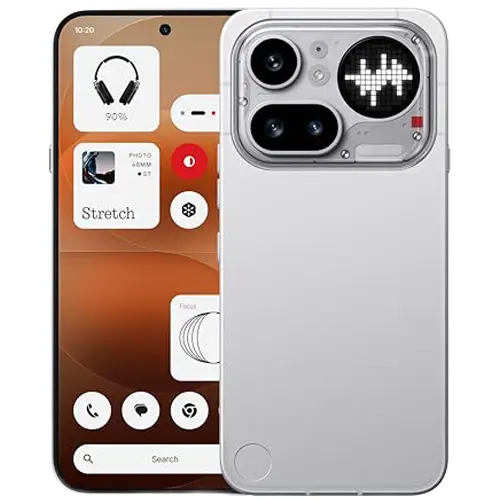
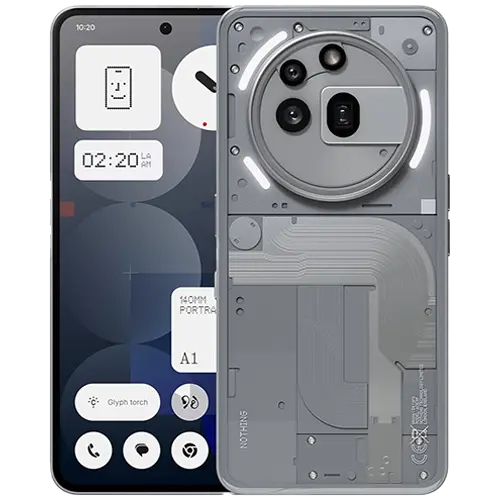
Nothing
Nothing
Phone (4a) Pro
Phone (3a) Pro
Ranked #37 of 51
Ranked #45 of 51
Overall
Overall
The Nothing Phone (4a) Pro is a $499 mid-ranger built around a triple-camera system with a dedicated 4x telephoto, a 144Hz display, and the Snapdragon 7 Gen 4. The Phone (3a) Pro, at $459, is its direct predecessor. Both target buyers who want a capable all-rounder without flagship pricing, and the $40 gap between them is small enough that the generational improvements matter more than the price difference.
The two phones are close in overall camera capability, with the (4a) Pro pulling ahead in main-camera sharpness and deep zoom while the Phone (3a) Pro has the stronger telephoto at its native focal length and better video stabilization. The (4a) Pro has a meaningfully better display — brighter, sharper, more color-accurate — and a clear performance advantage from its newer chipset. The (3a) Pro counters with faster biometrics and slightly faster charging, but the (4a) Pro leads in battery life, which matters more day to day.
Here’s how the Nothing Phone (4a) Pro and Nothing Phone (3a) Pro compared in our lab testing.
Design
| Nothing Phone (4a) Pro | Nothing Phone (3a) Pro | |
|---|---|---|
| Specifications | ||
| Dimensions | 163.7 x 76.6 x 8 mm | 163.5 x 77.5 x 8.4 mm |
| Weight | 210g | 211g |
| IP Rating | IP65 | IP64 |
| Frame | Aluminum | Aluminum |
| Front | Gorilla Glass 7i | Panda Glass |
| Back | Aluminum | Panda Glass |
| Screen-to-body ratio | 89.8% | 87.6% |
The two phones are nearly identical in size and weight. The Phone (4a) Pro measures 163.7 x 76.6 x 8mm at 210g; the (3a) Pro is 163.5 x 77.5 x 8.4mm at 211g. You won't feel a difference in the hand or pocket. Both use aluminum frames. The Phone (4a) Pro pairs that with Gorilla Glass 7i on the front and an aluminum back, while the Phone (3a) Pro uses Panda Glass on both front and back.
The Phone (4a) Pro carries an IP65 rating, meaning it's protected against low-pressure water jets but isn't rated for submersion. The Phone (3a) Pro's IP64 rating covers splashing water only — a step down, though neither phone is designed for poolside drops. The Phone (4a) Pro has a higher screen-to-body ratio at 89.8% versus 87.6%, which translates to slightly thinner bezels around a marginally larger 6.83-inch display compared to the Phone (3a) Pro's 6.77-inch panel.
Bandicoot Lab doesn't formally test design or durability.
Display
| Nothing Phone (4a) Pro | Nothing Phone (3a) Pro | |
|---|---|---|
579/ 845 | 444/ 845 | |
The (4a) Pro has the sharper panel. Its 6.83-inch AMOLED runs at 1260 x 2800 (440 PPI) with a 144Hz maximum refresh rate. The Phone (3a) Pro's 6.77-inch AMOLED is 1080 x 2392 (387 PPI) with a 120Hz ceiling. The resolution gap is visible in fine text and interface elements, and the 144Hz refresh gives the Phone (4a) Pro a slight edge in scrolling smoothness.
Brightness separates them more clearly. The Phone (4a) Pro reaches 876 nits in manual brightness mode and peaks at 1,755 nits displaying HDR content with auto brightness enabled. The (3a) Pro manages 777 nits manually and 1,371 nits in HDR. That's a meaningful gap in direct sunlight and HDR video. The Phone (4a) Pro holds its brightness perfectly across different HDR window sizes — 100% stability — while the (3a) Pro dips to 94.5%. Both hold up well over extended HDR playback, with the Phone (4a) Pro at 98.8% sustained brightness and the (3a) Pro at 98.5%.
Color accuracy tilts toward the Phone (4a) Pro. In its best display mode, colors track their targets closely, with only minor drift on individual patches. The (3a) Pro shows more visible deviation — neutral tones can look slightly off, and some colors wander further from where they should be. Both panels cover sRGB nearly fully (97.2% and 97.3%) and roughly 72–73% of the DCI-P3 gamut.
Both displays handle HDR tone mapping the same way: they boost highlights slightly above the mastered level and clip at 90% input signal. Neither faithfully follows the HDR reference curve — both lift mid-tones somewhat — but the (4a) Pro tracks the reference more closely. The practical difference is subtle.
Touch latency averages 15.9ms on the Phone (4a) Pro and 18.4ms on the (3a) Pro. That 2.5ms gap is unlikely to be perceptible in normal use, including gaming.
Performance
| Nothing Phone (4a) Pro | Nothing Phone (3a) Pro | |
|---|---|---|
301/ 1012 | 212/ 1012 | |
The Phone (4a) Pro runs the Snapdragon 7 Gen 4; the (3a) Pro uses the older Snapdragon 7s Gen 3. Both are configured with 12GB of RAM (8GB options exist for each), and both offer 128GB or 256GB storage.
The CPU gap is substantial. The Phone (4a) Pro scores 1,377 single-core and 4,313 multi-core in GeekBench 6, versus the (3a) Pro's 1,167 and 3,277. That's roughly an 18% single-core lead and a 32% multi-core lead. You'll feel this in app launches, multitasking, and anything that leans on sustained processing. Browser performance reflects the same gap: the Phone (4a) Pro scores 14.2 in Speedometer versus 10.9 for the (3a) Pro, a 30% advantage that shows up in web-heavy workflows.
GPU performance shows the largest generational jump. The Phone (4a) Pro hits a peak of 2,100 in Wild Life Extreme, nearly double the Phone (3a) Pro's 1,065. Both throttle very little under sustained load — 99.2% and 99.7% stability, respectively — so the Phone (4a) Pro maintains its advantage through extended gaming sessions. If you play graphically demanding games, this is a meaningful upgrade.
Camera
| Nothing Phone (4a) Pro | Nothing Phone (3a) Pro | |
|---|---|---|
541/ 587 | 528/ 587 | |
Both phones carry a 50-megapixel main camera, an 8-megapixel ultrawide, a 50-megapixel telephoto, and a front camera. The sensor specs overlap in several places: both share the same main sensor (1/1.56-inch, f/1.9, 24mm) and the same ultrawide (1/4.0-inch, f/2.2, 15mm). The telephotos diverge — the Phone (4a) Pro's is a 4x at 80mm with a smaller 1/2.75-inch sensor, while the (3a) Pro's is a 3x at 70mm with a larger 1/1.95-inch sensor.
Overall camera scores are nearly tied: the Phone (4a) Pro at 544.5, the Phone (3a) Pro at 541.9. The Phone (4a) Pro's main camera is sharper across all lighting, and its ultrawide resolves more detail too. The (3a) Pro's telephoto has better color and stabilization at its native focal length, and its front camera is slightly stronger overall. At deep zoom levels beyond the telephoto's native range, the Phone (4a) Pro retains usable detail up to 140x digital zoom while the Phone (3a) Pro's 60x maximum produces almost no resolvable detail at the far end.
Main
| Nothing Phone (4a) Pro (Main) | Nothing Phone (3a) Pro (Main) | |
|---|---|---|
576/ 722 | 539/ 722 | |
The Phone (4a) Pro's main camera is meaningfully sharper than the Phone (3a) Pro's. Detail is high in bright light and holds well into mid and dark conditions, dropping only modestly. The (3a) Pro resolves considerably less detail at every lighting level despite sharing the same sensor size and aperture. This is a processing difference, and it's visible in real photos — fine textures like fabric, foliage, and distant text are crisper on the Phone (4a) Pro.
Both cameras zoom digitally within their main lens range — up to 4x on the Phone (4a) Pro before the telephoto takes over, and up to 3x on the Phone (3a) Pro. The (4a) Pro holds detail well through 2x and 3x crops, while the (3a) Pro softens more quickly as you zoom in. By 3x, the (3a) Pro hands off to its telephoto, which helps, but a quick 2x crop is noticeably cleaner on the Phone (4a) Pro.
Color on the main camera leans neutral on the (4a) Pro in good light with accurate saturation. In mid and low light, a warm yellow shift appears, and skin tones actually improve — they're more accurate in dimmer conditions than in bright light, which is unusual. The (3a) Pro's main camera has a slight warm-pink cast even in bright light, and hue errors increase steadily as lighting dims. Skin tone accuracy is similar to the (4a) Pro's in mid light but drifts more in dark conditions.
Dynamic range is a mixed story. The (3a) Pro's main camera captures a wider tonal range — high-contrast scenes hold more shadow detail and smoother highlight rolloff. The (4a) Pro clips highlights and shows some tonal inversions in challenging scenes, which can make shadows look slightly unnatural. For landscape or high-contrast street photography, the (3a) Pro's processing makes better use of the same sensor.
Ultrawide
| Nothing Phone (4a) Pro (Ultrawide) | Nothing Phone (3a) Pro (Ultrawide) | |
|---|---|---|
555/ 722 | 542/ 722 | |
Both ultrawides use the same 8-megapixel, 1/4.0-inch sensor at 15mm. The (4a) Pro extracts more detail from it, particularly in low light where the (3a) Pro's output softens considerably. In bright and mid conditions, the (4a) Pro still leads but the gap narrows.
Color from the ultrawide shows a similar pattern to each phone's main camera. The (4a) Pro is neutral in bright light but develops a warm-yellow drift in mid and dark conditions, largely a white balance issue. Skin tones are noticeably inaccurate in bright light on both phones — the ultrawide processing oversaturates or shifts faces on both — but the (4a) Pro recovers in darker settings while the (3a) Pro stays somewhat off. Saturation is slightly muted on the (4a) Pro's ultrawide and slightly pushed on the (3a) Pro's.
Dynamic range is again better on the Phone (3a) Pro. Both ultrawides capture a similar tonal range, and both clip highlights, but the (4a) Pro shows more tonal inversions, meaning some tonal transitions aren't perfectly smooth, but the practical difference in photos is minor.
Telephoto
| Nothing Phone (4a) Pro (Telephoto) | Nothing Phone (3a) Pro (Telephoto) | |
|---|---|---|
495/ 722 | 571/ 722 | |
The (3a) Pro's telephoto fights back here. Its 50-megapixel, 1/1.95-inch sensor at 70mm (3x) is physically larger than the (4a) Pro's 1/2.75-inch sensor at 80mm (4x). That sensor-size advantage shows up as better sharpness in mid and low light on the (3a) Pro. In bright conditions the two are close, but as light drops, the (3a) Pro actually improves slightly while the (4a) Pro falls off.
Color from the telephoto is a genuine strength of the (3a) Pro. Hue accuracy is good across all lighting, and skin tones are the most accurate of any lens on either phone — consistent from bright through dark. The (4a) Pro's telephoto pushes saturation higher, giving images a slightly vivid look. Its hue accuracy is good in bright light but degrades meaningfully in mid and dark conditions, with a growing warm-yellow shift that points to white balance struggles at longer focal lengths with warmer light.
Dynamic range from both telephotos is more limited than their main cameras, which is typical for telephoto lenses. The (3a) Pro holds a slight edge. Stabilization is significantly better on the (3a) Pro's telephoto, which matters for handheld shots at 70–80mm and beyond.
Past their native focal lengths, both phones crop digitally. The (4a) Pro's 140x maximum zoom is ambitious, and it retains some usable detail at extreme distances. The (3a) Pro maxes out at 60x with almost no detail resolved at the far end. If you need long digital zoom, the (4a) Pro is the only real option.
Front
| Nothing Phone (4a) Pro (Front) | Nothing Phone (3a) Pro (Front) | |
|---|---|---|
621/ 722 | 634/ 722 | |
The (3a) Pro's front camera has a slight overall edge. It's a 50-megapixel sensor (1/2.76-inch, 24mm) versus the (4a) Pro's 32-megapixel sensor (1/3.42-inch, 22mm). Both produce good sharpness in bright light, but the (3a) Pro holds detail somewhat better in mid conditions.
Color accuracy is strong from both front cameras. The (4a) Pro leans very slightly cool-green in bright light, while the (3a) Pro leans slightly cool overall with a minor blue-yellow shift. Skin tones are reasonably accurate on both. The (3a) Pro pushes saturation noticeably in bright selfies — faces and backgrounds get a vivid boost — while the (4a) Pro stays more restrained across conditions.
Dynamic range is wider on the (4a) Pro's front camera, with clean tonal transitions and strong shadow-to-highlight performance. The (3a) Pro's front camera is still good but doesn't stretch quite as far. The (3a) Pro's front camera stabilization is substantially better, which matters for video calls and selfie videos.
Battery
| Nothing Phone (4a) Pro | Nothing Phone (3a) Pro | |
|---|---|---|
572/ 799 | 493/ 799 | |
The (4a) Pro's 5,080mAh battery and the (3a) Pro's 5,000mAh cell are close in capacity, but the results diverge in interesting ways.
Video playback is nearly identical: the (4a) Pro lasts 26.3 hours, the (3a) Pro 25.9 hours. Both will get you through two long flights or roughly two days of mixed use before dying.
Web browsing tells a different story. In our five-hour test, the (3a) Pro drains only 24% while the (4a) Pro loses 28%. That's a meaningful difference — the (3a) Pro would last about 21 hours of continuous web use versus about 18 hours for the (4a) Pro. If your phone use is mostly scrolling, messaging, and browser-based tasks, the (3a) Pro stretches further.
Gaming drain reverses the picture. The (4a) Pro drops 27% during the GPU stress test compared to the (3a) Pro's 16%. The (3a) Pro's GPU is running at less than half the intensity — it's doing less work and therefore using less power. The (3a) Pro isn't more efficient at the same workload; the workload is lighter because the GPU is weaker.
Standby drain favors the (4a) Pro: 1% overnight versus 2% on the (3a) Pro.
Charging
| Nothing Phone (4a) Pro | Nothing Phone (3a) Pro | |
|---|---|---|
246/ 837 | 264/ 837 | |
Both phones support 50W wired charging and neither offers wireless charging. The (3a) Pro charges slightly faster: 29% in 10 minutes and 70% in 30 minutes, versus 27% and 63% for the (4a) Pro. That 7-point gap at the 30-minute mark means the (3a) Pro gets a useful extra bump from a quick top-up before heading out.
The difference isn't large, but it's consistent. For both phones, a 30-minute charge gets you well past half — enough for a full day of moderate use.
Speaker
| Nothing Phone (4a) Pro | Nothing Phone (3a) Pro | |
|---|---|---|
612/ 857 | 568/ 857 | |
Both phones hit nearly the same maximum volume: 71.8 dBA on the (4a) Pro and 71.3 dBA on the (3a) Pro. Neither is quiet, but neither is particularly loud for this price range.
Sound character separates them. The (4a) Pro has noticeably better clarity and cleaner output — less distortion at 8.39% total harmonic distortion compared to 10.92% on the (3a) Pro. Highs are crisper and dialogue cuts through better on the (4a) Pro. The (3a) Pro has fuller bass response, giving music and video a warmer low-end presence. If you value clarity and cleanliness, the (4a) Pro sounds better. If you prefer a richer, bass-forward character, the (3a) Pro might appeal more, though it comes with more distortion.
Neither phone has a particularly wide frequency range. Both roll off bass well above where you'd want it, and highs taper off in the mid-15kHz range.
Microphone
| Nothing Phone (4a) Pro | Nothing Phone (3a) Pro | |
|---|---|---|
455/ 949 | 426/ 949 |
Both phones have below-average microphone quality. The (4a) Pro's frequency response is slightly more even than the (3a) Pro's, but neither produces particularly flat or natural recordings. Voice calls and voice memos will be functional on both, but don't expect clear, broadcast-quality audio from either.
Other
| Nothing Phone (4a) Pro | Nothing Phone (3a) Pro | |
|---|---|---|
| Biometrics | 367/ 1036 | 481/ 1036 |
| Data Transfer | 92/ 877 | 99/ 877 |
| Specifications | ||
| Biometric type | Fingerprint | Fingerprint |
| Ports | USB-C 2.0 | USB-C 2.0 |
| Storage | 128GB, 256GB | 128GB, 256GB |
Fingerprint unlock is faster on the (3a) Pro at 218ms average versus 286ms on the (4a) Pro. Both use optical under-display readers. The (3a) Pro's speed is noticeable — it feels snappier, closer to what you'd expect from a capacitive sensor. The (4a) Pro isn't slow, but the 68ms gap is perceptible. Neither phone has hardware-based face unlock.
Data transfer speeds are low on both: the (4a) Pro reads and writes at 37 MB/s, the (3a) Pro reads at 42 MB/s and writes at 36 MB/s. Both use USB-C 2.0, which explains the bottleneck. Moving large files to or from a computer will be slow on either phone. Both offer 128GB and 256GB storage options.
Conclusion
The Nothing Phone (4a) Pro and (3a) Pro are close enough in total capability that the $40 price difference barely factors in. The (4a) Pro has the better display — brighter, sharper, more color-accurate — and a significant performance advantage from the Snapdragon 7 Gen 4. Its main camera resolves substantially more detail, its deep zoom is usable where the (3a) Pro's isn't, and battery life in video and standby is slightly better. If you game, care about on-device AI, or want the best screen at this price, the (4a) Pro is the clear pick.
The (3a) Pro has real strengths of its own. Its telephoto, built around a larger sensor, produces better images in mid and low light with more accurate skin tones and better stabilization. The front camera is slightly stronger overall. It charges a bit faster, unlocks quicker, and sips less power during web browsing. If your typical day involves more scrolling than gaming, and you value a good telephoto and front camera over main-camera sharpness, the (3a) Pro delivers.
FAQ
Is it worth upgrading from the Nothing Phone (3a) Pro to the Phone (4a) Pro?
The clearest reasons to upgrade are the display and processor. The (4a) Pro is noticeably brighter, sharper, and more color-accurate, and its Snapdragon 7 Gen 4 delivers roughly 30% more CPU and browser performance than the (3a) Pro's chip — a gap you'll feel in app launches and sustained tasks. The camera systems are close enough to be a genuine trade-off rather than a clear win, and the $40 price difference is negligible. If your (3a) Pro still works fine and you shoot mostly telephoto or selfies, the upgrade is harder to justify; if the display or gaming performance bothers you, it's a meaningful step forward.
Which phone is better for gaming — the 4a Pro or 3a Pro?
The Nothing Phone (4a) Pro is the stronger gaming phone. Its GPU output peaks at nearly double the (3a) Pro's, and both phones sustain that performance with minimal throttling under extended load. The (4a) Pro's 144Hz display also gives it a slight edge in smoothness. The trade-off is battery: the (4a) Pro drains faster during GPU-intensive sessions because it's doing significantly more work, while the (3a) Pro lasts longer in gaming tests simply because its GPU is less powerful.
Does the Nothing Phone (4a) Pro or (3a) Pro take better telephoto photos?
The (3a) Pro's telephoto is stronger at its native focal length. Its larger sensor produces better detail in mid and low light, more accurate skin tones, and better stabilization for handheld shots. The (4a) Pro's telephoto pushes saturation higher and struggles with color accuracy as lighting gets warmer. Past native range, though, the picture flips: the (4a) Pro's 140x digital zoom retains usable detail at extreme distances, while the (3a) Pro's 60x maximum produces almost nothing at the far end. If most of your telephoto shots are at 3–4x, the (3a) Pro wins; if you need long digital zoom, the (4a) Pro is the only real option.
Which phone has better battery life for everyday use?
It depends on how you use your phone. For video playback the two are nearly identical. For web browsing and standby, the Nothing Phone (3a) Pro has the edge — it drains less during scrolling and messaging-heavy days and loses less battery overnight. The (4a) Pro pulls ahead during gaming, but only because its GPU is doing more work; it's not more efficient at the same task. For a typical day of browsing, social media, and light use, the (3a) Pro stretches further.
Which is better for selfies — the Phone (4a) Pro or Phone (3a) Pro?
The (3a) Pro has a slight edge for selfie photos, with a larger front sensor that holds detail better in mid-light conditions and better stabilization for selfie video. The (4a) Pro's front camera has wider dynamic range and more restrained color processing, so backgrounds and faces don't get the vivid boost the (3a) Pro applies. For video calls and selfie clips, the (3a) Pro's stabilization advantage is the more practical difference.
Related
Nothing
Phone (3a) Pro
Nothing
Phone (4a) Pro
Nothing
Phone (4a)
Best Phones for Selfies
Best Android Phones
Best Phones
Best Phones For Any Budget
Best Phones Under $500
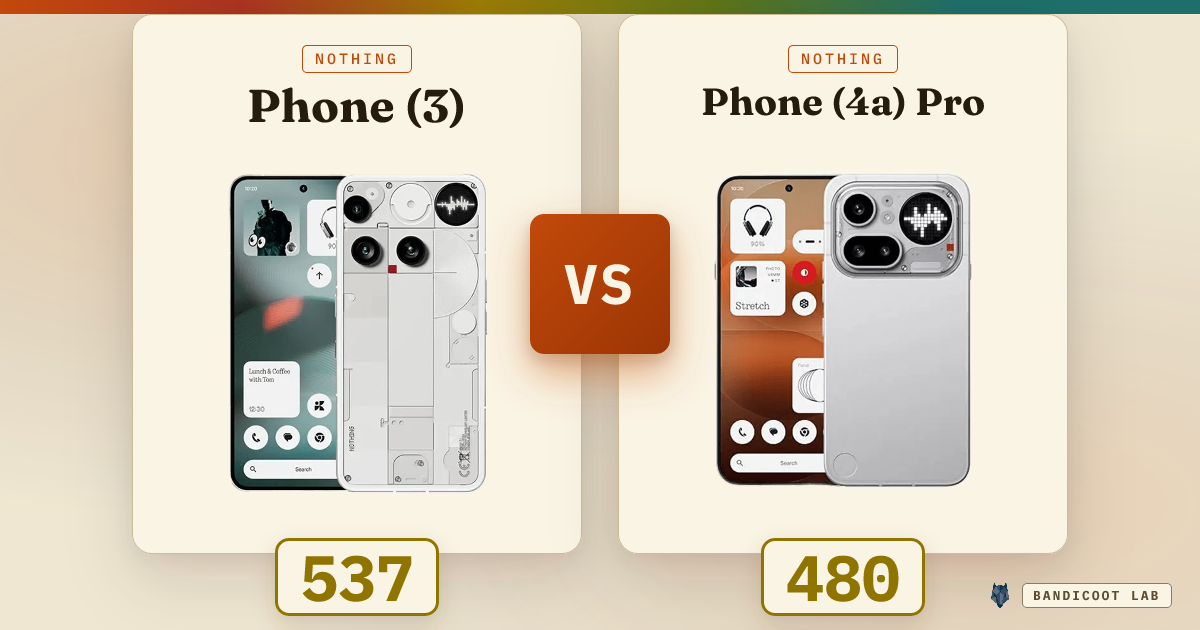
Nothing Phone (3) vs Nothing Phone (4a) Pro
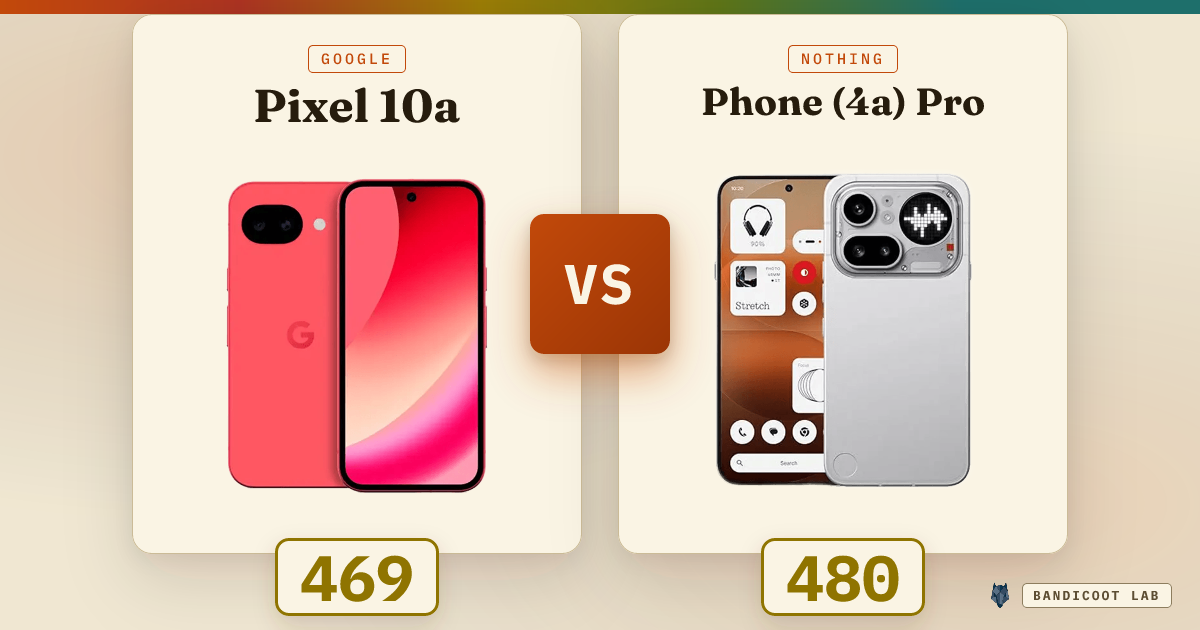
Google Pixel 10a vs Nothing Phone (4a) Pro
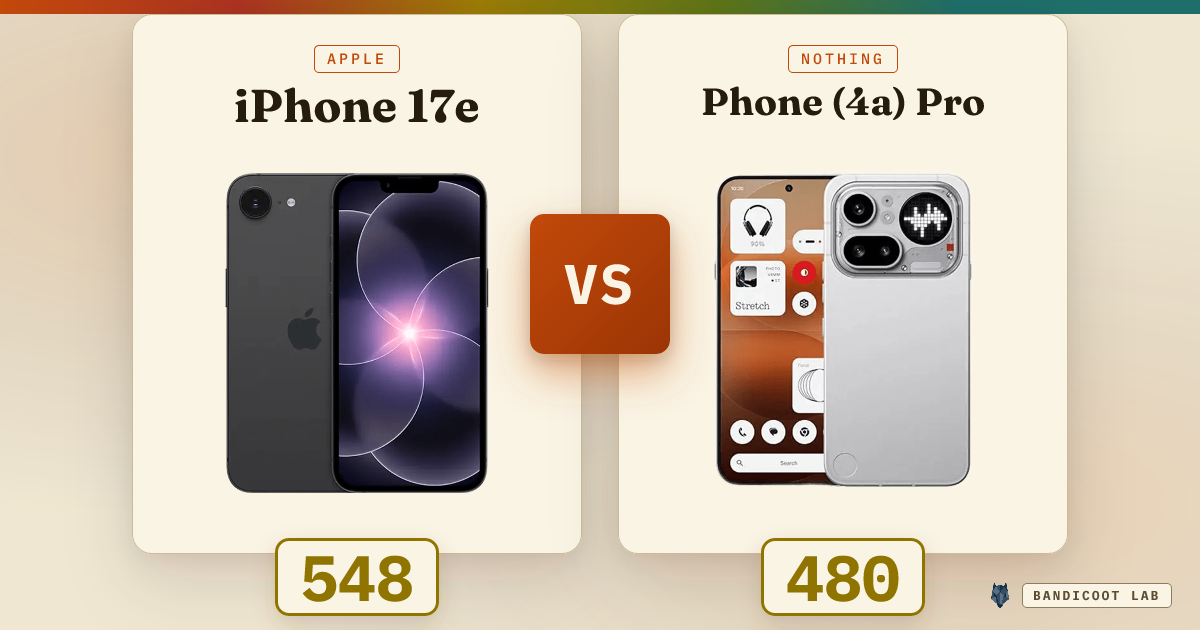
Apple iPhone 17e vs Nothing Phone (4a) Pro
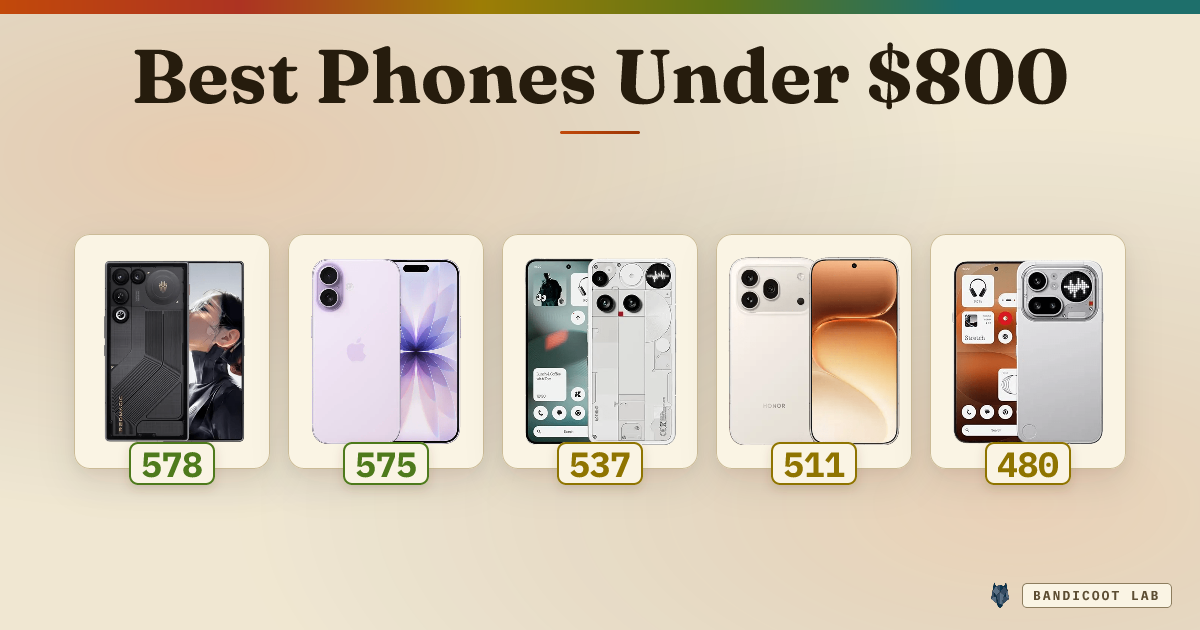
Best Phones Under $800