Samsung Galaxy S26+ vs Galaxy S25+
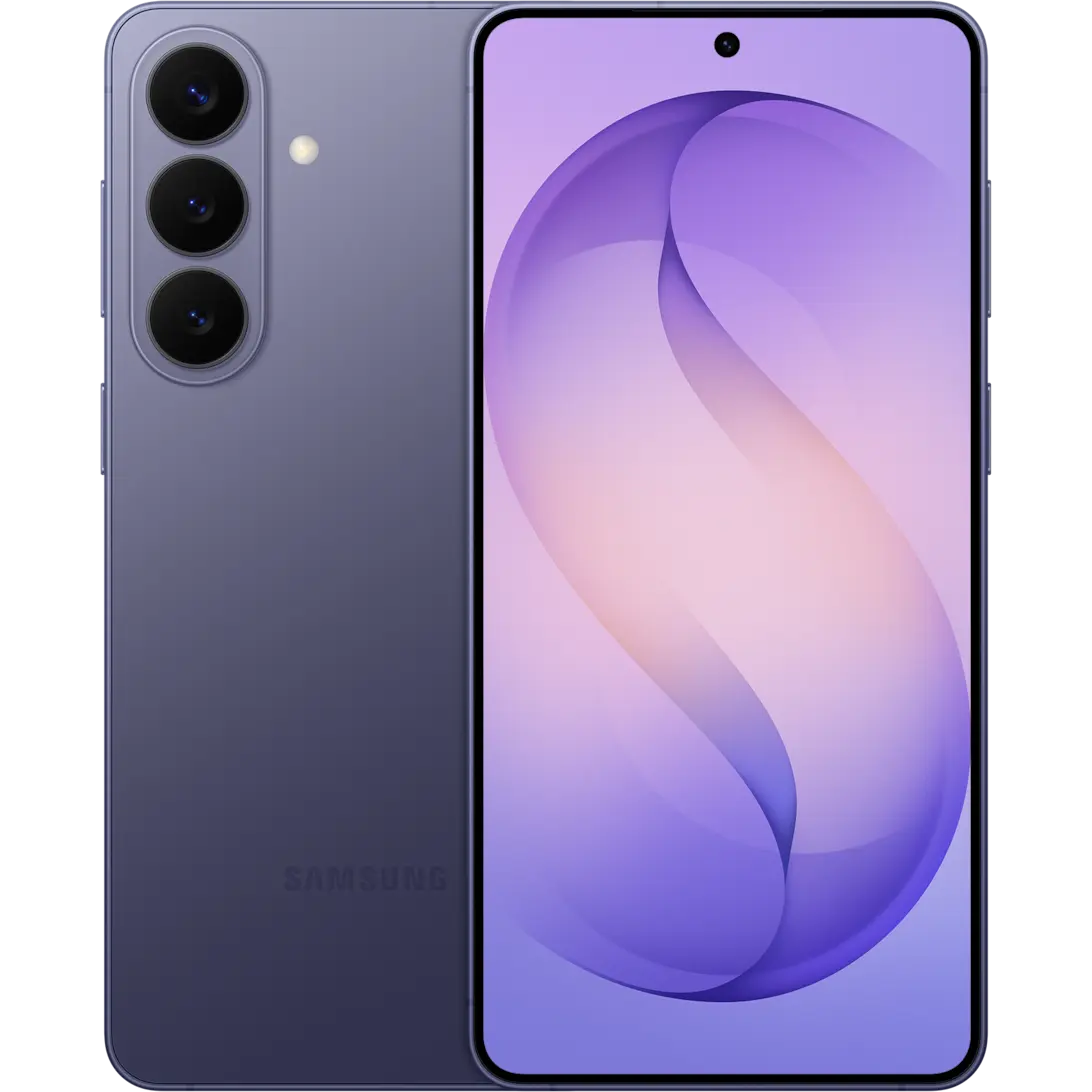
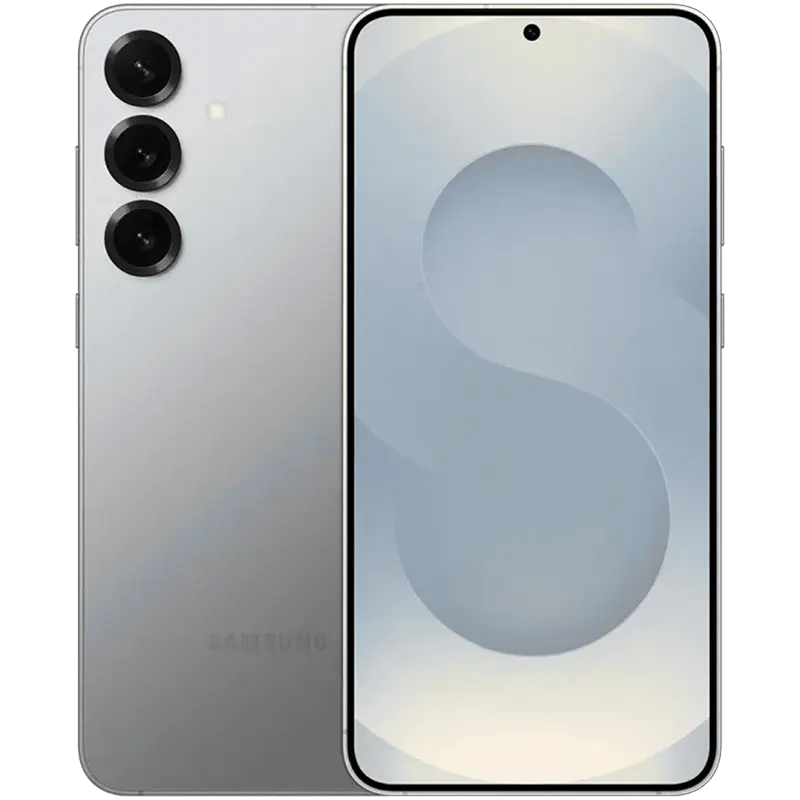
Samsung
Samsung
Galaxy S26+
Galaxy S25+
Ranked #11 of 60
Ranked #20 of 60
Overall
Overall
The Galaxy S26+ and Galaxy S25+ are about as close to a direct year-over-year comparison as you can get. Same price tier, same size class, same target buyer: someone who wants a large-screen Samsung flagship without stepping up to Ultra pricing. The S26+ gets a price bump at $1,099.99; the S25+ came at $999.99.
The S26+ unsurprisingly pulls ahead in raw performance and camera color accuracy, with a meaningfully faster processor and more consistent skin tones across its lenses. The S25+ counters with a brighter display, faster biometrics, better wired charging speed, and a louder speaker. Battery life is close. The camera story is mixed: the S25+ resolves more detail from its front camera and telephoto in bright light, while the S26+ handles color and dynamic range more reliably across the board.
Here’s how the Samsung Galaxy S26+ and Galaxy S25+ compared in our thorough lab testing.
Design
| Samsung Galaxy S26+ | Samsung Galaxy S25+ | |
|---|---|---|
| Specifications | ||
| Dimensions | 158.4 x 75.8 x 7.3 mm | 158.4 x 75.8 x 7.3 mm |
| Weight | 190g | 190g |
| IP Rating | IP68 | IP68 |
| Frame | Aluminum | Aluminum |
| Front | Gorilla Glass Victus 2 | Gorilla Glass Victus 2 |
| Back | Gorilla Glass Victus 2 | Gorilla Glass Victus 2 |
| Screen-to-body ratio | 91.8% | 91.8% |
These two phones are physically identical. Same dimensions (158.4 x 75.8 x 7.3mm), same weight (190g), same aluminum frame, same Gorilla Glass Victus 2 on front and back, same IP68 rating. The screen-to-body ratio is 91.8% on both, with a 19.5:9 aspect ratio and a 6.7-inch display. Both use USB-C 3.2.
Bandicoot Lab doesn't formally test design or durability, so this section is strictly on-paper.
Display
| Samsung Galaxy S26+ | Samsung Galaxy S25+ | |
|---|---|---|
617/ 881 | 629/ 881 | |
Both phones use a 6.7-inch LTPO AMOLED panel at 1440 x 3120 resolution with a 1–120Hz adaptive refresh rate. The S26+ comes in at 516 pixels per inch, the S25+ at 513 PPI. That difference is invisible.
Brightness is where the older S25+ has a slight edge. Its manual brightness reaches 735 nits versus 635 nits on the S26+. That's a noticeable gap outdoors when auto-brightness is off. In HDR content with auto-brightness enabled, the S25+ peaks at 2,932 nits versus the S26+'s 2,725 nits. Both are decently bright. Brightness stability across HDR window sizes is nearly identical — 53% on the S25+ and 52.1% on the S26+. Both panels sustain brightness well over time, with the S26+ at 98.4% and the S25+ at 98.6% sustained stability over a 30-minute test with a 10% HDR window. Minimum brightness is lower on the S26+ (0.59 nits versus 0.84 nits), which is better for dark-room viewing.
Color accuracy gives a modest advantage to the S25+. Its best display mode produces colors that sit closer to reference, with neutral tones appearing more faithful and less drift across the board. The S26+ shows slightly more visible color shift, particularly in warmer tones. Both panels cover about 73% of the DCI-P3 gamut and roughly 98% of sRGB in their best modes.
Both panels clip highlights at the same input level but handle the tone curve differently. The S25+ pushes highlights noticeably brighter than the mastered intent, giving HDR content a lifted, punchy look. The S26+ boosts less aggressively and tracks the reference curve more faithfully, though neither is perfectly accurate. The very brightest HDR details get lost on either phone.
Touch latency is 15.9ms on the S26+ and 22.5ms on the S25+. That’s not a difference you’re likely to notice.
Performance
| Samsung Galaxy S26+ | Samsung Galaxy S25+ | |
|---|---|---|
942/ 1012 | 761/ 1012 | |
The S26+ runs the Snapdragon 8 Elite Gen 5; the S25+ runs the previous-generation Snapdragon 8 Elite. Both have 12GB of RAM with 256GB or 512GB storage options.
The generational jump shows clearly in benchmarks. The S26+ scores 3,791 in GeekBench 6 single-core and 11,523 in multi-core, versus 3,115 and 10,039 for the S25+. That's roughly a 22% single-core and 15% multi-core improvement. In browser performance (Speedometer), the S26+ hits 44.3 against the S25+'s 30.6, a 45% gap that you'll feel in web-heavy tasks.
GPU performance scales similarly. The S26+ peaks higher in Wild Life Extreme (7,867 versus 6,858) and Solar Bay (14,132 versus 12,473). Sustained performance is a wash in practice: the S26+ holds 59.5% stability in Wild Life Extreme and 52.3% in Solar Bay, while the S25+ manages 51.4% and 55.2% respectively. Both throttle substantially under extended GPU load. You'll get smoother initial framerates from the S26+, but both phones will settle to similar thermal limits during long gaming sessions.
In daily use, the performance gap is most obvious in browser speed and multitasking. App launches, photo processing, and AI-driven features will feel snappier on the S26+. For basic tasks like messaging and social media, both phones are more than fast enough.
Camera
| Samsung Galaxy S26+ (Overall) | Samsung Galaxy S25+ (Overall) | |
|---|---|---|
| Specifications | ||
| Main | 50MP, f/1.8, 24mm, 1/1.56" | 50MP, f/1.8, 24mm, 1/1.56" |
| Ultrawide | 12MP, f/2.2, 13mm, 1/2.55" | 12MP, f/2.2, 13mm, 1/2.55" |
| Telephoto | 10MP, f/2.4, 67mm, 1/3.94" | 10MP, f/2.4, 67mm, 1/3.94" |
| Front | 12MP, f/2.2, 23mm, 1/3.2" | 12MP, f/2.2, 26mm, 1/3.2" |
Both phones share the same camera hardware on paper: a 50-megapixel f/1.8 main sensor, a 12-megapixel f/2.2 ultrawide, a 10-megapixel f/2.4 3x telephoto, and a 12-megapixel f/2.2 front camera. Both max out at 30x digital zoom. The differences come down to processing.
The S26+ has a clear advantage in color accuracy and consistency across lenses and lighting conditions. The S25+ resolves more detail from its front camera and produces slightly sharper results from the main camera in bright light. At deep zoom levels, both phones perform about equally. Dynamic range is better on the S26+ across most lenses.
Main
| Samsung Galaxy S26+ (Main) | Samsung Galaxy S25+ (Main) | |
|---|---|---|
594/ 722 | 547/ 722 | |
In bright light, the S25+ pulls slightly more detail from its main camera. As light drops, the S26+ holds sharpness better, with a clear advantage in low light.
Color character is where the two diverge most. The S26+ leans slightly saturated in bright light, pulling back to nearly neutral in mid-light and slightly muted in low light. Hue accuracy is good in bright conditions and degrades moderately as light dims. Skin tones are notably off in bright light — pushed warm and oversaturated — but improve considerably in mid and low light, where they rank among the more accurate results from a Samsung phone.
The S25+ pushes saturation more consistently across all lighting. Colors stay vivid regardless of conditions, which some users will prefer. Hue accuracy is similar to the S26+ in bright light but breaks down significantly in mid and low light. The pattern of rising warm and yellow bias as light gets warmer points to a white balance correction issue rather than a sensor limitation. Skin tones are off in bright light and stay off as conditions worsen.
Dynamic range favors the S26+. High-contrast scenes retain more shadow detail and the tonal curve is smoother. Both phones clip highlights on the main camera, but the S26+ preserves more usable information before that clipping point. The S25+'s main camera also shows a tonal inversion, meaning some shadow tones can render out of order, which flattens the look.
Ultrawide
| Samsung Galaxy S26+ (Ultrawide) | Samsung Galaxy S25+ (Ultrawide) | |
|---|---|---|
604/ 722 | 549/ 722 | |
The S26+'s ultrawide resolves good detail across all lighting conditions, holding up well even in low light. Relative to its own main camera, the S26+'s ultrawide actually resolves more detail — unusual, since the ultrawide is typically the weakest lens.
Color from the S26+'s ultrawide runs saturated in bright light, particularly in greens and reds, and settles to neutral in mid and low light. Hue accuracy is good in bright conditions but drops in mid-light, driven largely by white balance drift under warmer illumination. Skin tones are quite inaccurate in bright light, reasonable otherwise.
The S25+'s ultrawide has comparable hue accuracy in bright light but deteriorates sharply in low light, with severe color shifts that suggest both white balance correction struggles and some sensor-level hue confusion under warm, dim lighting. Skin tones are off in all conditions but especially problematic in low light. The S25+'s ultrawide also shows a broader dynamic range weakness, with multiple tonal inversions that produce a less natural rendering of high-contrast scenes.
Telephoto
| Samsung Galaxy S26+ (Telephoto) | Samsung Galaxy S25+ (Telephoto) | |
|---|---|---|
568/ 722 | 496/ 722 | |
Both phones share a 3x optical telephoto and top out at 30x digital zoom. Sharpness in bright light is close: the S25+ edges ahead slightly. As light drops, the S26+ holds detail better, with a meaningful advantage in low light.
The S26+'s telephoto is its most color-accurate lens. Skin tones are the most consistent across all lighting conditions of any lens on either phone. Saturation stays mildly elevated throughout. Color tends slightly cool across conditions. Hue accuracy is moderate across the board but doesn't deteriorate dramatically the way some other lenses do.
The S25+'s telephoto tells a different story. In bright light, hue accuracy is decent and colors run warm-saturated with a slightly cool-yellow lean. As light drops, accuracy falls apart. In low light, there's a dramatic warm-magenta shift, driven heavily by white balance overcorrection. Skin tones are significantly off in mid and low light. Dynamic range is slightly narrower than the S26+'s telephoto, and the S25+ clips highlights while the S26+ doesn't.
Front
| Samsung Galaxy S26+ (Front) | Samsung Galaxy S25+ (Front) | |
|---|---|---|
398/ 722 | 349/ 722 | |
The S25+ has the sharper front camera, resolving considerably more detail across all lighting conditions, including a significant edge in low light. The S26+'s front camera is adequate but clearly behind.
Color from the S26+'s front camera is close to neutral in bright light and shifts warm-magenta as light drops. This progressive warm shift under dimmer, warmer lighting suggests white balance correction is the primary cause. Skin tones are fairly accurate in bright and low light but drift in mid-light.
The S25+'s front camera pushes saturation hard in bright light and pulls back under dimmer conditions. Skin tones are the front camera's biggest weakness: significantly inaccurate across all conditions, with a warm-yellow cast in bright and mid light. Hue accuracy degrades in low light, again with signs of white balance struggles.
Dynamic range is limited on both front cameras, with the S26+ retaining slightly more usable information. Both clip highlights.
Battery
| Samsung Galaxy S26+ | Samsung Galaxy S25+ | |
|---|---|---|
592/ 836 | 603/ 836 | |
Both phones have 4,900mAh batteries. Results are close across most tests.
The S26+ lasts 31.13 hours of continuous video playback; the S25+ manages 29.67 hours. Both are decent figures.
Web browsing drain over a five-hour is a little different though. The S25+ drains 21% versus the S26+'s 26%. That's a meaningful difference if you spend a lot of time in a browser — the S25+ would last noticeably longer in a web-heavy day. Gaming drain follows a similar pattern — the S25+ loses 26% versus the S26+'s 30% during the one-hour stress test. The S26+'s faster GPU runs hotter and draws more power. Standby drain is identical at 2% over eight hours — both phones sip power overnight.
The S26+ lasts longer for passive media consumption. The S25+ is more efficient under active workloads like browsing and gaming.
Charging
| Samsung Galaxy S26+ | Samsung Galaxy S25+ | |
|---|---|---|
314/ 837 | 338/ 837 | |
Both phones support 45W wired charging. The S26+ adds 20W wireless versus the S25+'s 15W.
The S25+ charged faster by wire. It hits 30% in 10 minutes and 74% in 30 minutes. The S26+ reaches 26% in 10 minutes and 67% in 30 minutes. That gap narrows over a full charge cycle but gives the S25+ a practical edge when you're grabbing a quick top-up before heading out.
Wireless charging is identical in practice: both reach 7% in 10 minutes and 19% in 30 minutes, despite the S26+'s higher rated wireless wattage. The difference may show up closer to full charge, but for quick wireless top-ups, they're the same.
Speaker
| Samsung Galaxy S26+ | Samsung Galaxy S25+ | |
|---|---|---|
819/ 897 | 693/ 897 | |
The S25+ is louder at 77.2 dBA versus the S26+'s 71.7 dBA. That's a significant difference — easily noticeable in the same room.
The S26+ has the edge in sound quality. It produces fuller bass and noticeably better high-frequency clarity, with less distortion (3.85% THD versus 4.54%). The frequency response is also more even. If you're listening to music or watching video without headphones, the S26+ sounds richer and more balanced. The S25+ can fill a room better at max volume but sounds thinner and more strained doing it.
Microphone
| Samsung Galaxy S26+ | Samsung Galaxy S25+ | |
|---|---|---|
746/ 1220 | 771/ 1220 |
Both phones have good microphones. The S25+ is marginally more consistent in its frequency response, but both sit comfortably above average. Voice calls and video recording sound clean on either device.
Other
| Samsung Galaxy S26+ | Samsung Galaxy S25+ | |
|---|---|---|
| Biometrics | 266/ 1181 | 518/ 1181 |
| Data Transfer | 623/ 943 | 563/ 943 |
| Specifications | ||
| Biometric type | Fingerprint | Fingerprint |
| Ports | USB-C 3.2 | USB-C 3.2 |
| Storage | 256GB, 512GB | 256GB, 512GB |
Fingerprint unlock is where the S25+ has one of its most noticeable advantages. Its ultrasonic sensor averages 203ms — quick and reliable. The S26+ uses an ultrasonic sensor that averages 394ms, nearly twice as slow. You'll feel this every time you unlock the phone. It's a puzzling regression.
Neither phone has hardware-based face unlock.
Data transfer speeds give a small edge to the S26+: 249 MB/s read and 273 MB/s write versus 221 MB/s read and 227 MB/s write on the S25+. Both use USB-C 3.2. Storage options are 256GB or 512GB on both devices.
Conclusion
The S26+ is the faster phone. Its Snapdragon 8 Elite Gen 5 delivers a meaningful generational jump in performance. It also has better camera color accuracy across every lens, stronger dynamic range, a more responsive display, and a richer-sounding speaker. The camera improvements are most apparent in mid and low light, where the S26+ holds color and detail more consistently.
The S25+ has genuine strengths of its own. It's a little brighter, charged faster by wire, lasted longer during active use like browsing and gaming, unlocks nearly twice as fast, and its front camera resolves more detail. Its display tracks color slightly more faithfully.
Related
Samsung
Galaxy S26+
Samsung
Galaxy S25+

Samsung
Galaxy S26 Ultra
Samsung
Galaxy Z Fold 8 Ultra
Samsung
Galaxy Z Fold 8
Samsung
Galaxy S26
Best Phone Displays
Best Samsung Phones

Samsung Galaxy S26 Series vs Galaxy S25 Series

Samsung Galaxy S26 Series vs Xiaomi 17 Series

Samsung Galaxy S26 vs Galaxy S26+ vs Galaxy S26 Ultra
Samsung Galaxy S26 Series vs Google Pixel 10 Series