Samsung Galaxy Z Fold 7 vs Honor Magic V6
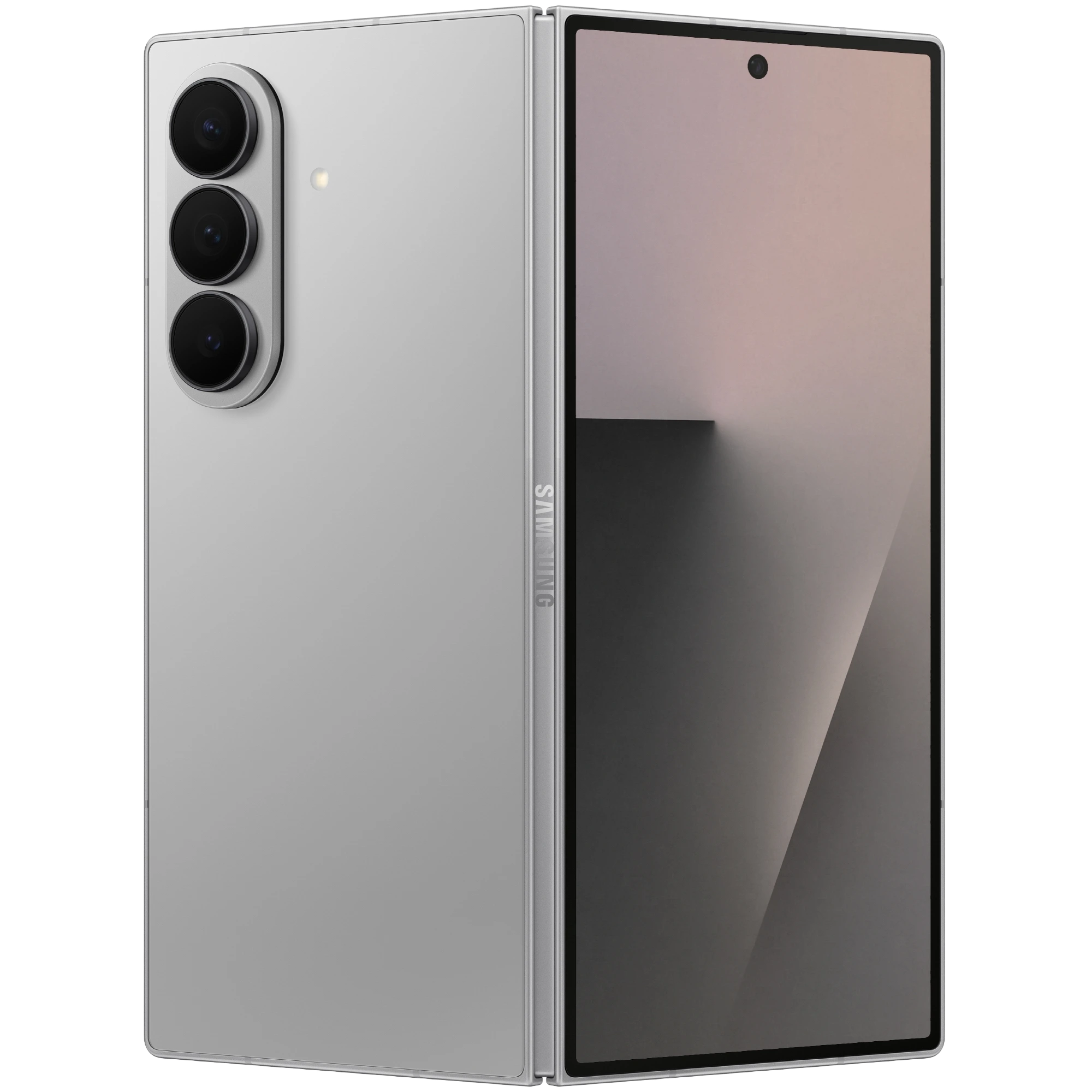
Samsung
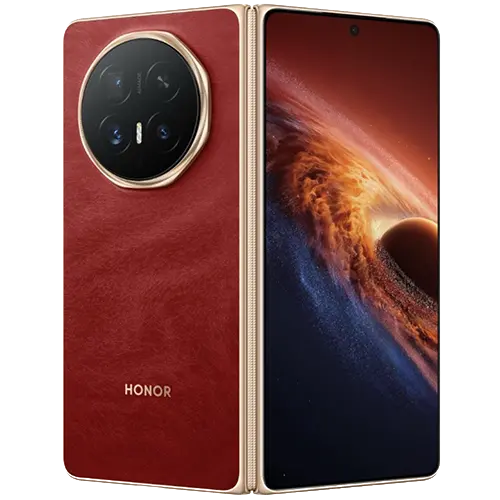
Honor
Galaxy Z Fold 7
Magic V6
Ranked #28 of 51
Ranked #7 of 51
Overall
Overall
The Honor Magic V6 and Samsung Galaxy Z Fold 7 are both book-style foldable phones designed for productivity. The Galaxy Z Fold 7 is Samsung's polished, software-rich foldable: long update support, mature multitasking, and the kind of refinement that comes from seven generations of iteration. The Honor Magic V6 has a larger battery, faster charging, a more serious camera array, and a more sealed build. They land at the same nominal price point, so the choice isn't about budget.
The Magic V6 is the stronger phone on the spec sheet and in most of our testing. It charges far faster, lasts longer, runs a more capable chip, and carries a camera system that pulls ahead in color and dynamic range. The Z Fold 7 holds its ground in specific places, like with a brighter manual display, sharper main-camera detail in good light, a slightly louder speaker, and faster, more responsive touch. For most buyers the Magic V6 does more of what a $2,000 foldable should do, while the Fold 7 is the pick if Samsung's software ecosystem and update commitment carry weight for you.
Here's how the Honor Magic V6 and Samsung Galaxy Z Fold 7 compared in our lab testing.
Design
| Samsung Galaxy Z Fold 7 | Honor Magic V6 | |
|---|---|---|
| Specifications | ||
| Dimensions (folded) | 158.4 x 72.8 x 8.9 mm | 156.7 x 74.5 x 8.8 mm |
| Dimensions (unfolded) | 158.4 x 143.2 x 4.2 mm | 156.7 x 145.6 x 4.1 mm |
| Weight | 215g | 219g |
| IP Rating | IP48 | IP68/IP69 |
| Frame | Aluminum | Aluminum |
| Front | Plastic (inner) / Gorilla Glass Victus Ceramic 2 (outer) | NanoCrystal Shield |
| Back | Gorilla Glass Victus 2 | Glass |
| Screen-to-body ratio (inner) | 83.9% | 89.1% |
| Screen-to-body ratio (outer) | 85.6% | 87.3% |
Folded, the two are nearly identical in footprint. The Z Fold 7 measures 158.4 x 72.8 x 8.9mm at 215g; the Magic V6 is 156.7 x 74.5 x 8.8mm at 219g. Unfolded, the Magic V6 is the thinner of the two at 4.1mm versus the Fold 7's 4.2mm, and slightly wider open. The four-gram weight difference isn't something you'll feel.
Both use aluminum frames. The backs differ though: Gorilla Glass Victus 2 on the Fold 7, plain glass on the Magic V6. The fronts diverge more. Samsung uses a plastic inner panel (standard for foldables, since the crease has to flex) with Gorilla Glass Victus Ceramic 2 on the outer cover. Honor pairs its inner panel with NanoCrystal Shield on the outside.
The real gap is water resistance. The Magic V6 carries an IP68/IP69 rating, meaning it's submersible to a rated depth and can take high-pressure water jets. The Fold 7 is rated IP48, which covers full water submersion but only protects against solid objects 1mm and larger rather than fine dust. For a phone with a hinge, that dust qualifier matters.
Screen-to-body ratios favor Honor on both panels. The Magic V6 reaches 89.1% on the inner display and 87.3% on the cover, against 83.9% and 85.6% for the Fold 7 — thinner bezels, particularly on the unfolded screen.
Bandicoot Lab doesn't formally test design or durability.
Display
Inner
| Samsung Galaxy Z Fold 7 (Inner) | Honor Magic V6 (Inner) | |
|---|---|---|
516/ 845 | 632/ 845 | |
Both inner panels run LTPO AMOLED at 1–120Hz, so refresh behavior is the same. The Magic V6's 7.95-inch panel is larger and higher resolution at 2172 x 2352 (403 pixels per inch) than the Fold 7's 7.7-inch 1968 x 2184 (368 PPI). You won't see individual pixels on either, but the Honor is the sharper of the two.
Manual brightness goes the other way. The Fold 7 reaches 734 nits in manual mode against the Magic V6's 662 nits, so the Samsung is easier to read in direct sun when you're driving brightness by hand. HDR peak flips again: the Magic V6 hits 4,734 nits at its brightest window versus 2,757 nits on the Fold 7. That figure is peak luminance on a small bright area, not a full-screen number — neither phone sustains it across the whole panel.
Color accuracy favors Honor. The Magic V6's inner panel tracks reference colors closely, while the Fold 7's drifts more noticeably from accurate. Touch latency is 8.8ms on the Fold 7 against 15.3ms on the Magic V6. That's a real gap, and on the inner display the Samsung registers swipes and taps with a snappier feel.
Outer
| Samsung Galaxy Z Fold 7 (Outer) | Honor Magic V6 (Outer) | |
|---|---|---|
567/ 845 | 675/ 845 | |
The cover displays are close in size, 6.5 inches on the Fold 7 and 6.52 on the Magic V6, both 1–120Hz. The Fold 7's cover is the taller, narrower of the two at 21:9, which makes it easier to use one-handed but leaves it a strip rather than a comfortable typing surface. The Magic V6's 20.2:9 cover is a touch wider.
HDR peak on the outer panels follows the inner pattern, with the Magic V6 going substantially brighter. Color accuracy on the cover is again better on the Honor; the Fold 7's outer panel runs slightly cool and drifts more from reference. Sustained brightness — how well each holds peak under a 30-minute HDR load — is excellent on both, at 98.8% for the Fold 7 and 99.5% for the Magic V6. They cool well and don't dim over time.
Where they split is HDR stability across window sizes. The Fold 7 holds brightness more evenly as the bright area grows; the Magic V6 dims its larger bright windows more aggressively. The Magic V6's headline peak applies mostly to small highlights, while large bright scenes pull back further than on the Fold 7.
Performance
| Samsung Galaxy Z Fold 7 | Honor Magic V6 | |
|---|---|---|
718/ 1012 | 848/ 1012 | |
The Magic V6 runs Qualcomm's Snapdragon 8 Elite Gen 5, while the Fold 7 uses the previous Snapdragon 8 Elite. Both ship with 16GB of RAM (12GB also available).
The generational gap shows on the CPU. The Magic V6 posts a GeekBench single-core of 3,563 against the Fold 7's 3,006 — a meaningful single-thread lead. Multi-core is closer, 9,922 to 9,818, effectively a tie. Browser performance is where the gap widens: the Magic V6 scores 46.8 on Speedometer versus 32.3 on the Fold 7. You'll feel that in heavy web pages and complex app loads, where the Honor stays smoother.
GPU peaks are similar, with the Magic V6 slightly ahead in both the Wild Life Extreme and Solar Bay stress tests. Stability under sustained load is also close: 54.6% versus 48.1% in Wild Life Extreme. Both throttle hard under extended gaming, which is typical for thin foldables with limited thermal headroom. Neither holds peak frame rates through a long session.
Camera
| Samsung Galaxy Z Fold 7 | Honor Magic V6 | |
|---|---|---|
455/ 587 | 521/ 587 | |
On paper the two take opposite approaches to hardware. The Fold 7 leads with a 200-megapixel main sensor; the Magic V6 uses a 50-megapixel main but pairs it with a higher-resolution 64-megapixel telephoto and a 50-megapixel ultrawide. In testing the Magic V6 comes out as the stronger overall system, mostly on color accuracy and dynamic range, while the Fold 7 has the edge in main-sensor detail in good light.
Deep zoom is where the difference is starkest. The Fold 7 tops out at 30x and detail falls apart well before that. The Magic V6 reaches 100x, and while extreme zoom is still soft, it holds usable detail considerably further out than the Samsung. If long-range zoom matters, the Magic V6 is the clear pick.
Main
| Samsung Galaxy Z Fold 7 (Main) | Honor Magic V6 (Main) | |
|---|---|---|
591/ 722 | 629/ 722 | |
In bright light the Fold 7's 200-megapixel sensor resolves the most detail of the two, and that lead holds into medium light. In low light the order reverses sharply: the Magic V6 gets sharper as light drops, while the Fold 7's main camera loses a lot of detail in the dark.
The Magic V6's main camera stays close to accurate across all three lighting conditions, with only a small warm push. The Fold 7 holds up in bright light but drifts as light warms, and its hue accuracy in low light falls off noticeably — colors shift away from reference under warm, dim lighting, a white-balance correction problem more than a sensor one. Both render skin tones with some error in bright light; the Magic V6 recovers better in mid and low light. Saturation on both is restrained, leaning neutral rather than punchy.
Dynamic range is slightly better on the Honor Magic V6. It retains a little more shadow detail in high-contrast scenes.
Ultrawide
| Samsung Galaxy Z Fold 7 (Ultrawide) | Honor Magic V6 (Ultrawide) | |
|---|---|---|
565/ 722 | 475/ 722 | |
The Fold 7's ultrawide is a 12-megapixel f/2.2 sensor, while the Magic V6 uses a 50-megapixel f/2.2. The Magic V6's ultrawide resolves more detail and holds up better as light drops. Both ultrawides are a clear step down in detail from their respective main cameras, which is normal.
Color on the Magic V6's ultrawide stays close to accurate across lighting, with restrained saturation. The Fold 7's ultrawide tracks reasonably in bright light but drifts warm and loses hue accuracy in the dark. The Galaxy Z Fold 7 does have better dynamic range on its ultrawide camera, though.
Telephoto
| Samsung Galaxy Z Fold 7 (Telephoto) | Honor Magic V6 (Telephoto) | |
|---|---|---|
485/ 722 | 638/ 722 | |
The Fold 7 has a 10-megapixel 3.5x telephoto and the Magic V6 a 64-megapixel 3x. The resolution gap shows. The Magic V6's telephoto is sharper across all lighting and sharpest in the dark. Its color is the most accurate of any lens on either phone, holding reference closely and rendering skin tones well in mid and low light. The Fold 7's telephoto is competent in good light but drifts warm and softens in the dark.
Dynamic range is better on the Magic V6's telephoto, which keeps more highlight and shadow detail and holds steadier handheld.
Front Inner
| Samsung Galaxy Z Fold 7 (Front Inner) | Honor Magic V6 (Front Inner) | |
|---|---|---|
276/ 722 | 480/ 722 | |
The Fold 7's inner selfie camera is 10 megapixels; the Magic V6's is 20 megapixels. The Fold 7 resolves slightly more detail in bright light, but the Magic V6 holds up better as light drops. Color is the bigger difference: the Magic V6's front camera renders skin tones close to accurate in mid and low light, while the Fold 7 pushes skin tones well off reference across all lighting, leaning orange. Dynamic range on the Magic V6's front camera is much stronger, retaining face and background detail in backlit scenes where the Fold 7 clips.
Front Outer
| Samsung Galaxy Z Fold 7 (Front Outer) | Honor Magic V6 (Front Outer) | |
|---|---|---|
330/ 722 | 435/ 722 | |
Both phones can use the rear cameras for selfies via the cover screen, but each also has a dedicated outer front camera: 10 megapixels on the Fold 7, 20 on the Magic V6. The Magic V6's outer front camera handles skin tones more accurately in mid and low light, while the Fold 7 again pulls warm and orange. Detail is close in bright light. The Magic V6's outer front camera does clip highlights in very high-contrast scenes, so backlit outdoor selfies can lose bright background detail. It’s still better than the Galaxy Z Fold 7’s dynamic range, though.
Battery
| Samsung Galaxy Z Fold 7 | Honor Magic V6 | |
|---|---|---|
494/ 799 | 523/ 799 | |
The Magic V6 carries a 6,660mAh battery against the Fold 7's 4,400mAh, and the gap shows in nearly every test. Video playback on the inner screen runs 30.25 hours on the Magic V6 versus 22.57 hours on the Fold 7. On the cover screen the spread is wider: 40.97 hours against 28.12. The Magic V6 is a comfortable two-day phone for moderate use; the Fold 7 is a solid one-day phone that'll need a charge most nights.
Gaming drain favors the Magic V6 too, losing 19% during the stress test against 23% for the Fold 7. Web browsing drain over five hours is close, 36% on the Magic V6 and 34% on the Fold 7, so under sustained screen-on use the gap narrows.
Standby is the one place the Fold 7 wins clearly. Over an eight-hour idle it dropped 2%, while the Magic V6 lost 11%. The Magic V6's far larger battery absorbs that overnight drain easily, but if you leave a phone off the charger for long stretches, the Fold 7 is the more efficient idler.
Charging
| Samsung Galaxy Z Fold 7 | Honor Magic V6 | |
|---|---|---|
233/ 837 | 640/ 837 | |
Charging speeds aren’t close. The Magic V6 charges at 80W wired and 66W wireless; the Fold 7 at 25W wired and 15W wireless.
In ten minutes the Magic V6 reaches 25% from empty against the Fold 7's 19% — and the Magic V6 is filling a far larger cell. By 30 minutes the Magic V6 is at 67% versus 53% on the Fold 7. Wireless is the bigger gap for Samsung: the Magic V6 hits 22% in ten minutes wirelessly, more than the Fold 7 manages wired, while the Fold 7 reaches only 7%. By 30 minutes wireless, the Magic V6 is at 57% to the Fold 7's 20%. The Magic V6 charges faster on a pad than the Fold 7 does on a cable.
Speaker
| Samsung Galaxy Z Fold 7 | Honor Magic V6 | |
|---|---|---|
745/ 857 | 706/ 857 | |
The Fold 7 is the louder of the two, reaching 76.6 dBA against the Magic V6's 71.3. It also runs slightly higher distortion at full volume. The Magic V6 plays cleaner, with lower distortion across its range.
Their character differs. The Fold 7 has the fuller low end and a brighter top, so it sounds more forward and punchy. The Magic V6 reaches lower in the bass than the Fold 7 but presents a flatter, more even balance overall, trading some of the Samsung's loudness and presence for cleanliness. For movies and games, the Fold 7's extra volume and energy help; for music at moderate levels, the Magic V6 is the cleaner listen.
Microphone
| Samsung Galaxy Z Fold 7 | Honor Magic V6 | |
|---|---|---|
622/ 949 | 531/ 949 |
The Fold 7's microphone records with a more even, accurate frequency response and sits above average for the category. The Magic V6 is a step behind, slightly below average, with a less even response. For calls and voice notes neither will disappoint, but the Fold 7 captures voices more faithfully.
Other
| Samsung Galaxy Z Fold 7 | Honor Magic V6 | |
|---|---|---|
| Biometrics | 945/ 1036 | 831/ 1036 |
| Data Transfer | 705/ 877 | 687/ 877 |
| Specifications | ||
| Biometric type | Fingerprint | Fingerprint |
| Ports | USB-C 3.2 | USB-C 3.1 |
| Storage | 256GB, 512GB, 1TB | 256GB, 512GB, 1TB |
Both use capacitive fingerprint sensors. The Fold 7 unlocks at 111ms against the Magic V6's 126ms — both fast, with the Samsung marginally quicker. Neither phone has hardware-based face unlock, so face login on either relies on the camera and isn't suitable as a secure unlock method.
Storage runs 256GB, 512GB, and 1TB on both. Transfer speeds are close, with the Magic V6 slightly ahead at 302 MB/s read and 275 MB/s write versus 276 and 260 on the Fold 7. The Fold 7 uses a USB-C 3.2 port and the Magic V6 USB-C 3.1, though measured throughput lands in the Honor's favor regardless.
Conclusion
The Magic V6 is the stronger phone in most of the categories that define a foldable at this price. It charges far faster on cable and wireless alike, lasts noticeably longer, runs a quicker chip in browsing and the longest gaming sessions, carries a more capable and more consistent camera system, and adds full IP68/IP69 water and dust resistance. Its inner display is larger, sharper, and more color-accurate.
The Fold 7 wins in a narrower set of places. Its manual brightness is higher, so it's easier to read in harsh sun by hand. Its touch response is snappier, its speaker louder, its microphone more accurate, and it idles more efficiently overnight. Its 200-megapixel main camera resolves more detail than any lens here in good light. None of those is decisive on its own, but together they describe a phone that's polished in the ways Samsung tends to be polished.
FAQ
Does the Galaxy Z Fold 7 or the Honor Magic V6 take better photos at night?
The Magic V6 pulls ahead clearly in low light. Its main camera sharpens as light drops while the Fold 7's main loses significant detail, and the Magic V6's color and white balance stay close to accurate where the Fold 7 drifts — particularly under warm, dim lighting. Skin tones are more reliable on the Magic V6 in mid and low light across every lens, including the front cameras.
How much faster does the Magic V6 charge compared to the Z Fold 7?
The gap is wide both on cable and wirelessly. At 30 minutes wired, the Magic V6 is at 67% versus 53% on the Fold 7 — and the Magic V6 is filling a cell more than 50% larger. Wirelessly, the Magic V6 reaches 57% in 30 minutes while the Fold 7 manages only 20%, meaning the Honor charges faster on a pad than the Samsung does on a cable.
Which foldable is better for long gaming sessions, the Fold 7 or the Magic V6?
Both phones throttle hard under extended load — thin foldables don't have the thermal headroom to sustain peak frame rates. The Magic V6 has a measurable edge in GPU performance and loses less battery during the gaming stress test, and its larger battery means it arrives at a long session with more capacity to spare. The Fold 7's snappier touch response is a minor advantage in fast games, but the Magic V6 is the stronger pick overall for sustained gaming.
Which phone handles water and dust better?
The Magic V6 is rated IP68/IP69, covering submersion and high-pressure water jets, and carries a full dust-tight seal. The Fold 7 is rated IP48, which covers submersion but only protects against solid objects 1mm and larger — not fine dust. For a phone with a hinge, that dust distinction is meaningful.
Related
Honor
Magic V6
Samsung
Galaxy Z Fold 7
Honor
Magic8 Pro

Samsung
Galaxy S26 Ultra
Samsung
Galaxy S26+
Samsung
Galaxy S26
Honor
600
Is a weak telephoto worse than having no telephoto at all?
Best Foldable Phones

Samsung Galaxy Z Fold 7 vs Galaxy Z Flip 7
Honor Magic V6 vs Honor Magic V5
Honor Magic V6 vs Google Pixel 10 Pro Fold