Honor Magic V6 vs Google Pixel 10 Pro Fold
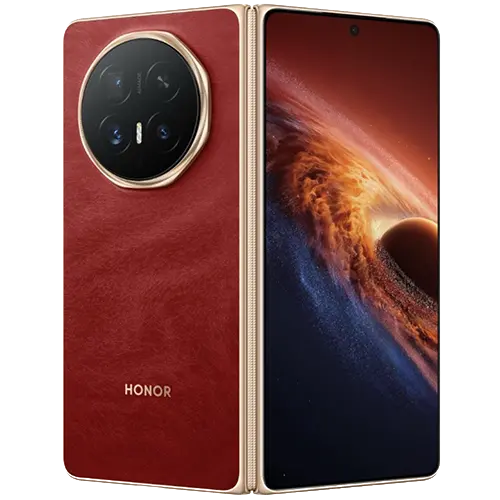
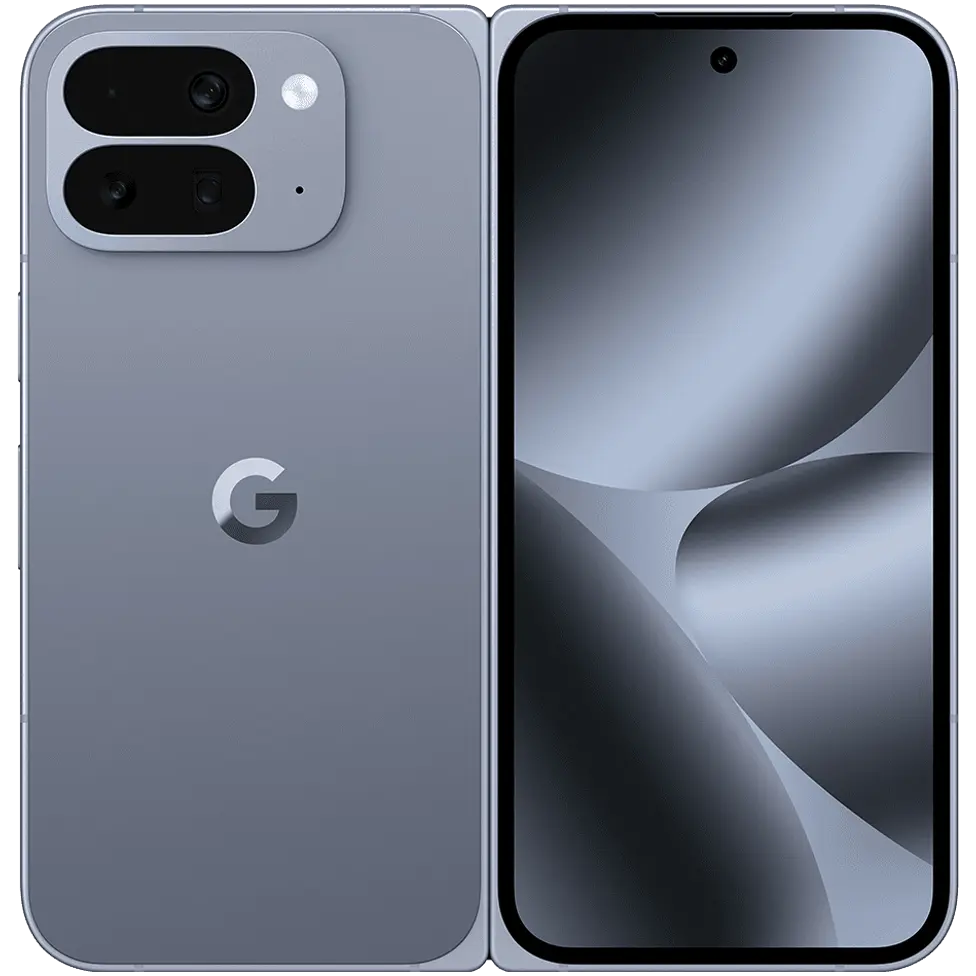
Honor
Magic V6
Pixel 10 Pro Fold
Ranked #7 of 51
Ranked #38 of 51
Overall
Overall
The Honor Magic V6 and the Pixel 10 Pro Fold are both book-style foldables with high prices. Honor's pitch is hardware. It has a flagship Snapdragon chip, a large battery in a thin chassis, and a camera array that includes a dedicated periscope. The Pixel 10 Pro Fold leans on Google's software and the broader Pixel ecosystem. It runs Tensor silicon and trades raw spec ambition for the camera processing and feature set Pixel buyers come back for. Both fold open to roughly an 8-inch inner display with a usable cover screen on the front.
The Magic V6 is the stronger device on paper and in most of our testing. It pulls ahead clearly on performance, battery life, charging speed, and camera hardware, and it does so while being thinner and lighter folded. The Pixel 10 Pro Fold's advantages are narrower: a brighter outer display in manual use, more accurate inner-screen color, and a cleaner top end from its speakers. For most buyers cross-shopping these two, the decision comes down to whether Google's software and camera tuning outweigh the Honor's broad hardware lead.
Here's how the Honor Magic V6 and Google Pixel 10 Pro Fold performed in our lab testing.
Design
| Honor Magic V6 | Google Pixel 10 Pro Fold | |
|---|---|---|
| Specifications | ||
| Dimensions (folded) | 156.7 x 74.5 x 8.8 mm | 155.2 x 76.3 x 10.8 mm |
| Dimensions (unfolded) | 156.7 x 145.6 x 4.1 mm | 155.2 x 150.4 x 5.2 mm |
| Weight | 219g | 258g |
| IP Rating | IP68/IP69 | IP68 |
| Frame | Aluminum | Aluminum |
| Front | NanoCrystal Shield | Ultra Thin Glass (inner) / Gorilla Glass Victus 2 (outer) |
| Back | Glass | Gorilla Glass Victus 2 |
| Screen-to-body ratio (inner) | 89.1% | 88.4% |
| Screen-to-body ratio (outer) | 87.3% | 84.3% |
Folded, the Magic V6 measures 156.7 x 74.5 x 8.8mm and weighs 219g. The Pixel 10 Pro Fold is 155.2 x 76.3 x 10.8mm and 258g. That's a 2mm thickness gap folded and nearly 40g of weight, both in Honor's favor. Unfolded, the Magic V6 is 4.1mm thick against the Pixel's 5.2mm. The Honor is the more pocketable of the two by a clear margin.
Both use aluminum frames. The Magic V6's front is NanoCrystal Shield with a glass back; the Pixel pairs Ultra Thin Glass on the inner fold with Gorilla Glass Victus 2 on the outer screen and back. The Magic V6 carries an IP68/IP69 rating, meaning it's dust-tight, submersible to its rated depth, and additionally rated against high-pressure water jets. The Pixel 10 Pro Fold is IP68 — dust-tight and submersible, without the jet rating. For a folding phone, any water resistance is notable given the hinge mechanism.
Inner displays are close in size: 7.95 inches on the Honor at an 89.1% screen-to-body ratio, 8 inches on the Pixel at 88.4%. The cover screens diverge more. The Magic V6's 6.52-inch outer panel is taller and narrower (20.2:9) with an 87.3% screen-to-body ratio. The Pixel's 6.4-inch cover screen sits at 84.3%, so its bezels are thicker. The taller cover aspect on the Honor makes the closed phone feel more like a conventional candybar.
Bandicoot Lab doesn't formally test design or durability, so this section covers what's on paper.
Display
Inner
| Honor Magic V6 (Inner) | Google Pixel 10 Pro Fold (Inner) | |
|---|---|---|
632/ 845 | 609/ 845 | |
Both inner panels are LTPO OLEDs running 1–120Hz, so each can drop refresh rate to save power and lift it for smooth scrolling. Resolution favors the Honor at 2172 x 2352 (403 pixels per inch) versus the Pixel's 2076 x 2152 (373 PPI). You won't see individual pixels on either, but the Magic V6's panel is the sharper of the two.
Peak HDR brightness is where the Honor opens a real gap: it hits 4,734 nits on small bright highlights against the Pixel's 3,192 nits. HDR content with small specular highlights looks punchier on the Magic V6. Hold a full-screen white element and both fall well short of those peaks, as expected. The Pixel takes manual brightness, reaching 1,288 nits in manual mode against the Honor's 662 nits. In bright outdoor sun with auto-brightness off, the Pixel's inner screen is the easier one to read.
Color accuracy on the inner panel goes to the Pixel. Its colors track close to reference with only minor drift; the Honor's inner panel is accurate but slightly less so. Touch latency is 25.3ms on the Pixel and 15.3ms on the Honor. Fast scrollers and gamers may notice the Magic V6 feeling a touch more immediate, though most users won't.
Outer
| Honor Magic V6 (Outer) | Google Pixel 10 Pro Fold (Outer) | |
|---|---|---|
675/ 845 | 582/ 845 | |
The cover displays are both OLED at 120Hz, with the Pixel's 6.4-inch panel running 60–120Hz and the Honor's 6.52-inch panel going down to 1Hz. Resolutions and pixel densities are close: 1080 x 2420 (406 PPI) on the Honor, 1080 x 2365 (408 PPI) on the Pixel.
The Magic V6's cover screen is its brightest panel and outpaces the Pixel's outer display in our brightness testing. Color on the Honor's outer panel drifts moderately, reading slightly cool against reference; the Pixel's cover screen is a bit more accurate but still not perfectly neutral. Touch response is closer here, with the Pixel's outer panel actually quicker than its own inner display.
Sustained brightness — how well each holds peak luminance over a 30-minute HDR load — is strong on both, with neither showing meaningful thermal dimming. HDR window behavior is separate: the Honor's brightness varies more across bright-area sizes than the Pixel's.
Performance
| Honor Magic V6 | Google Pixel 10 Pro Fold | |
|---|---|---|
848/ 1012 | 423/ 1012 | |
The Magic V6 runs Qualcomm's Snapdragon 8 Elite Gen 5 with 16GB of RAM (12GB also available). The Pixel 10 Pro Fold uses Google's Tensor G5, also with 16GB. These are not in the same class.
CPU results illustrate the gap. The Magic V6 posts 3,563 single-core and 9,922 multi-core in GeekBench 6; the Pixel manages 2,268 and 5,986. The Honor's multi-core result is roughly two-thirds higher. Browser performance follows: the Magic V6 scores 46.8 in Speedometer against the Pixel's 20.3, more than double. Web pages and heavy apps will load and respond noticeably faster on the Honor.
The GPU gap is wider still. The Magic V6 peaks at 6,737 in Wild Life Extreme; the Pixel reaches 3,241. The Pixel holds its lower peak more steadily (77% stability versus 54.6%), so the Honor runs hotter and throttles harder under sustained load, but it starts from such a higher ceiling that it remains the faster gaming phone throughout. For demanding 3D titles, the Magic V6 is the clear choice.
Camera
| Honor Magic V6 | Google Pixel 10 Pro Fold | |
|---|---|---|
521/ 587 | 384/ 587 | |
On hardware, the Magic V6 brings the more ambitious system: a 50-megapixel main, a 50-megapixel ultrawide, and a 64-megapixel 3x periscope telephoto. The Pixel 10 Pro Fold pairs a 48-megapixel main with a smaller 10.5-megapixel ultrawide and a 10.8-megapixel 5x telephoto. Larger sensors on the Honor's secondary cameras translate into a more consistent system across focal lengths. The Pixel's strength has always been processing rather than glass, and that holds here.
Neither phone matches the best dedicated camera flagships, but the Magic V6 scores higher overall on camera and pulls ahead on sharpness at most focal lengths. At extreme digital zoom, both fall apart. The Pixel uses up to 20x and the Honor up to 100x, but deep-zoom detail on both is poor — the Honor's 100x output is essentially unusable, and the Pixel's 20x ceiling at least keeps it from pretending otherwise.
Main
| Honor Magic V6 (Main) | Google Pixel 10 Pro Fold (Main) | |
|---|---|---|
629/ 722 | 421/ 722 | |
The Pixel's main camera is the sharper one in bright and mid light, resolving more fine detail at 1000 and 100 lux. The Honor closes the gap and edges ahead in the dark, where its larger sensor helps. Both are strong here.
Color tuning diverges. The Pixel leans vivid, pushing saturation hardest in mid light, with a warm cast that's deliberate. The Honor's main camera is closer to neutral in saturation. Both struggle with skin tones in bright light, drifting noticeably from reference; the Honor's bright-light skin error is the larger of the two, while the Pixel's holds steadier across lighting. In warmer mid and dark light the Honor's white balance shifts toward orange, and that shift is the dominant cause of its skin-tone drift rather than a sensor limitation.
Dynamic range favors the Honor. It retains more shadow detail and holds highlights better in high-contrast scenes; the Pixel clips highlights more readily and its scenes can look flatter. Both phones clip bright skies in the harshest scenes, but the Honor preserves more of the tonal range leading up to that point.
Ultrawide
| Honor Magic V6 (Ultrawide) | Google Pixel 10 Pro Fold (Ultrawide) | |
|---|---|---|
475/ 722 | 417/ 722 | |
The Honor's ultrawide uses a full 50-megapixel sensor against the Pixel's 10.5-megapixel unit. In bright and mid light, the Pixel's ultrawide is actually the sharper of the two — Google's processing extracts a lot from a small sensor. In the dark the Honor pulls ahead as its larger sensor gathers more light.
Color is the Pixel ultrawide's weak point. As light warms, its hues drift hard toward orange in dark conditions, a white-balance problem that grows worse the warmer the scene gets. The Honor's ultrawide holds color more consistently across lighting. Both ultrawides trail their respective main cameras on dynamic range, with the Pixel's clipping highlights more.
Telephoto
| Honor Magic V6 (Telephoto) | Google Pixel 10 Pro Fold (Telephoto) | |
|---|---|---|
638/ 722 | 372/ 722 | |
The Magic V6's 3x 64-megapixel periscope is the stronger optical zoom for sharpness, holding detail well across all three lighting conditions. The Pixel's 5x reaches further optically but resolves less, and its detail is noticeably softer. For framing tight portraits the Pixel's longer reach helps; for outright detail the Honor's telephoto is better.
The Honor's telephoto is also its most color-accurate lens, staying close to reference in bright and mid light. The Pixel's telephoto carries the same warm shift in dim light as its other lenses, drifting toward orange. Dynamic range again goes to the Honor, which holds highlights where the Pixel's telephoto clips them. Stabilization on both is adequate for stills.
Front Inner
| Honor Magic V6 (Front Inner) | Google Pixel 10 Pro Fold (Front Inner) | |
|---|---|---|
480/ 722 | 380/ 722 | |
When it comes to the inner selfie cameras, the Pixel resolves more detail in bright and mid light despite the lower count, thanks to processing, but falls off sharply in the dark. The Honor's front camera is softer in good light but holds together better as light drops.
Color tells a similar story to the rear cameras. The Honor's inner front camera struggles with skin tones in bright light, drifting well off reference, but corrects in mid and dim conditions. The Pixel's front camera carries a warm cast that worsens in the dark. Dynamic range on the Honor's inner front camera is the better of the two.
Front Outer
| Honor Magic V6 (Front Outer) | Google Pixel 10 Pro Fold (Front Outer) | |
|---|---|---|
435/ 722 | 405/ 722 | |
Both phones reuse the same selfie hardware on the cover. Practically, you'll get better selfies using the rear cameras with the cover screen as a preview, but the dedicated outer cameras are there for video calls.
The Pixel's outer front camera is sharper in good light and softens in the dark, matching its inner unit closely. The Honor's outer front camera shows decent mid-light sharpness. Color behavior tracks each phone's overall tuning. The Pixel's outer camera dynamic range clips highlights more readily than the Honor's, which itself shows some tonal inconsistency on this lens.
Battery
| Honor Magic V6 | Google Pixel 10 Pro Fold | |
|---|---|---|
523/ 799 | 463/ 799 | |
The Magic V6 carries a 6,660mAh battery; the Pixel 10 Pro Fold has 5,015mAh. That's a large difference in a category where foldables tend to be tight on capacity.
In our video playback test, run until the device dies, the Magic V6 lasted 30.25 hours on the inner screen and 40.97 hours on the cover screen. The Pixel managed 22.69 hours inner and 23.5 hours outer. The Honor's inner-screen figure alone is more than a full day of steady playback; the cover screen pushes toward two days. The Pixel's results translate to comfortable single-day use, but not the cushion the Honor offers.
Web browsing told the opposite story. Over the five-hour test, the Pixel dropped 29% against the Honor's 36%, so for steady light browsing the Pixel is the more efficient of the two. Gaming drain, measured during the one-hour stress run, was 19% on the Honor and 26% on the Pixel, reflecting the Honor's larger battery absorbing the heavier load. Standby drain over an eight-hour idle test was 11% on the Honor and just 2% on the Pixel — the Pixel sips far less power when left alone overnight.
Day to day, the Magic V6 lasts longer for video and gaming, while the Pixel is the more efficient one for browsing and idle standby. Heavy users will get more out of the Honor.
Charging
| Honor Magic V6 | Google Pixel 10 Pro Fold | |
|---|---|---|
640/ 837 | 319/ 837 | |
The Magic V6 supports 80W wired and 66W wireless charging. The Pixel 10 Pro Fold does 30W wired and 15W wireless via Qi2, meaning it snaps to magnetic Qi2 chargers and Pixelsnap accessories.
The gap shows in the numbers. The Magic V6 hit 25% in 10 minutes and 67% in 30 minutes on the wire. The Pixel reached 19% and 52% over the same intervals. Wireless is wider still: the Honor's 66W wireless managed 22% in 10 minutes and 57% in 30, where the Pixel's 15W magnetic charging reached only 11% and 31%. The Honor charges faster off a wireless charging pad than the Pixel does off a cable.
For a quick top-up before leaving, the Magic V6 gives you meaningfully more headroom, and its larger battery means each percent goes further too.
Speaker
| Honor Magic V6 | Google Pixel 10 Pro Fold | |
|---|---|---|
706/ 857 | 758/ 857 | |
Maximum loudness is close: 72.8 dBA on the Pixel, 71.3 dBA on the Honor. Neither is especially loud for a flagship.
The character differs. The Pixel's speakers favor the high end, with crisp, clear treble that extends well up the frequency range. The Honor leans toward a cleaner midrange with less distortion overall — its total harmonic distortion measured 4.11% against the Pixel's 7.8%, so the Honor's output stays cleaner as you push volume. Neither has strong bass, though the Pixel edges slightly fuller at the low end. If you value clarity and a clean top end, the Pixel sounds better; if you want less distortion at volume, the Honor is the steadier performer.
Microphone
| Honor Magic V6 | Google Pixel 10 Pro Fold | |
|---|---|---|
531/ 949 | 661/ 949 |
The Pixel 10 Pro Fold records the more even, natural-sounding audio of the two and sits above average for capture quality. The Magic V6 is below average here, with a less consistent frequency response. For voice memos, calls, and video, the Pixel is the better recorder.
Other
| Honor Magic V6 | Google Pixel 10 Pro Fold | |
|---|---|---|
| Biometrics | 831/ 1036 | 353/ 1036 |
| Data Transfer | 687/ 877 | 207/ 877 |
| Specifications | ||
| Biometric type | Fingerprint | Fingerprint |
| Ports | USB-C 3.1 | USB-C 3.2 |
| Storage | 256GB, 512GB, 1TB | 256GB, 512GB, 1TB |
Both phones use capacitive fingerprint sensors, and neither has hardware-based face unlock — both rely on camera-based face recognition rather than a dedicated secure module. The Magic V6's fingerprint reader is much faster, unlocking in 126ms against the Pixel's 297ms. The Pixel's reader feels sluggish by comparison.
Storage runs 256GB, 512GB, or 1TB on both. The Magic V6 uses a USB-C 3.1 port and posted transfer speeds around 302 MB/s read and 275 MB/s write. The Pixel 10 Pro Fold has a USB-C 3.2 port on paper, but measured far slower at roughly 91 MB/s read and 95 MB/s write. Moving large files off the device is much quicker on the Honor.
Conclusion
The Magic V6 is the stronger phone across most of what we test. It wins on performance by a wide margin, lasts longer for video and gaming, charges far faster wired and wireless, and carries the more capable camera system across focal lengths. It's also thinner and lighter folded with a sharper inner display, a brighter HDR panel, a faster fingerprint reader, and quicker file transfers. For hardware capability, it's the clearer pick.
The Pixel 10 Pro Fold's strengths are narrower. Its inner display is more color-accurate and far brighter in manual use, which matters outdoors. Its main camera resolves more bright-light detail, its color tuning is more consistent across lighting, and it captures better audio. It's more efficient for browsing and standby, and its speakers have a cleaner top end. Google's software and the Pixel feature set don't show up in measurements but are the reason many buyers choose a Pixel in the first place.
Choose the Magic V6 if you want the most capable foldable hardware: faster, longer-lasting, quicker to charge, with the better camera array. Choose the Pixel 10 Pro Fold if you value its display brightness and color accuracy, its more consistent point-and-shoot photography, and Google's software experience — and you're willing to give up performance, battery endurance, and charging speed to get them.
FAQ
Does the Honor Magic V6 or Pixel 10 Pro Fold have better battery life?
The Magic V6 lasts noticeably longer for video and gaming, reaching over 30 hours of continuous inner-screen video playback against the Pixel's 22.69 hours. The Pixel 10 Pro Fold is more efficient for web browsing and loses far less charge during idle standby — just 2% over eight hours versus the Honor's 11%. Heavy users get more out of the Magic V6; lighter users who leave the phone sitting between sessions may find the Pixel holds up well enough.
Is the Pixel 10 Pro Fold's camera better than the Magic V6's for everyday photos?
The Pixel 10 Pro Fold's main camera resolves more fine detail in bright and mid light, and its color tuning stays more consistent across different lighting conditions. The Magic V6 pulls ahead in dynamic range and in low-light shooting, where its larger sensors help. For someone who mostly shoots in daylight without adjusting settings, the Pixel's main camera produces more predictable results; the Honor's system is more versatile across focal lengths.
Which foldable charges faster, the Honor Magic V6 or the Google Pixel 10 Pro Fold?
The Magic V6 charges significantly faster by both cable and wireless pad. Wired, it reached 67% in 30 minutes against the Pixel's 52%. Wirelessly, the gap is larger — the Honor's 66W wireless charging hit 57% in 30 minutes, while the Pixel's 15W Qi2 magnetic charging reached only 31% in the same window. The Magic V6 charges faster off a wireless pad than the Pixel 10 Pro Fold does off a cable.
Which phone is better for gaming, the Magic V6 or the Pixel 10 Pro Fold?
The Magic V6 is the stronger gaming phone. Its GPU performance nearly doubles the Pixel 10 Pro Fold's peak score, and even under sustained load — where it throttles more than the Pixel — it stays well ahead. CPU and browser performance are also much higher on the Honor. The Pixel handles everyday tasks without issue but falls behind in demanding 3D titles and anything that stresses the chip for extended periods.
Related
Pixel 10 Pro Fold
Honor
Magic V6
Honor
Magic8 Pro
Honor
600
Pixel 10a
Best Foldable Phones
Honor Magic V6 vs Honor Magic V5
Samsung Galaxy Z Fold 7 vs Honor Magic V6
Best Android Phones
Best-Performing Phones
Best Phones

Motorola Razr Fold vs Google Pixel 10 Pro Fold