Honor Magic V6
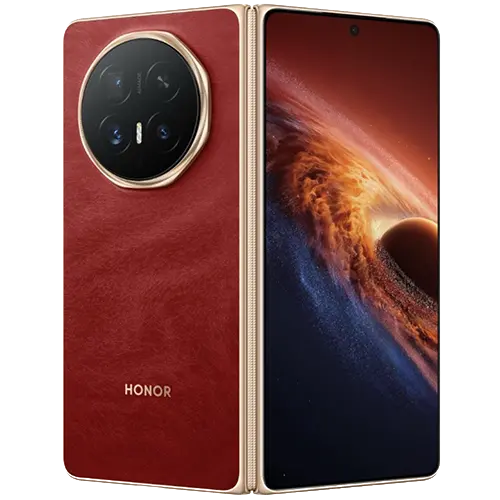
The Honor Magic V6 is a book-style foldable aimed at people who want a large-screen device without the bulk that usually comes with one. At 219 grams and 8.8mm folded, it's trying to be a tablet that disappears into a pocket, with a full triple-camera system and flagship silicon to justify the €1,999.99 price.
Where the V6 delivers is performance and display brightness, both strong enough to stand alongside non-folding flagships. Charging is fast for a foldable, and the 6,660mAh battery gives it more endurance than most devices in this category. The camera system is capable but uneven: the telephoto is the strongest lens, while the main camera's skin tone rendering and the ultrawide's color tuning hold back what could otherwise be a competitive setup. Battery life on the inner display is average, and the speaker, while clean, lacks low-end presence.
Here's how the Honor Magic V6 performed in our testing.
Design
Specifications
The Magic V6 measures 156.7 x 74.5 x 8.8mm folded and opens to 156.7 x 145.6 x 4.1mm. At 219 grams, it's essentially the same weight as its predecessor, the Magic V5 (217g), and noticeably lighter than the Pixel 10 Pro Fold at 258 grams. The aluminum frame, glass back, and NanoCrystal Shield front are carried over from the V5. The IP68/IP69 rating is an upgrade from the V5's IP58/IP59, meaning the V6 can handle full submersion, not just splashes.
The inner display's 89.1% screen-to-body ratio is a marginal improvement over the V5's 88.8%, and the outer display jumps from 85.1% to 87.3%, which translates to slightly thinner bezels when folded. The 9.75:9 inner aspect ratio gives you a nearly square canvas when unfolded.
Bandicoot Lab does not formally test design or durability.
Display
Inner
The 7.95-inch LTPO2 AMOLED inner display runs at 2172 x 2352 resolution (403 pixels per inch) with a 1–120Hz adaptive refresh rate. Peak HDR brightness hits 4,734 nits, a massive jump from the Magic V5's 2,017 nits, and even higher than the Pixel 10 Pro Fold's 3,192 nits. Manual brightness tops out at 662 nits, which is modest for outdoor use and nearly identical to the V5's 647 nits.
Brightness drops significantly across HDR window sizes. The panel sustains brightness well over time at 99.5% stability over 30 minutes, but as the bright area of the image gets larger, output falls sharply. Small HDR highlights will pop, but full-screen bright scenes won't maintain that peak intensity. HDR tone mapping slightly dims highlights below the reference curve, and the display clips input at around 85% of the HDR signal range, which means the very brightest HDR highlights lose some distinction.
Color accuracy is decent. In its best mode, colors sit close to reference values with sRGB coverage at 99.7% and P3 at 75.3%. You'll see minor color drift in some tones, but nothing that would bother most users. Touch latency averages 15.3ms, which is low enough that it won't be a factor in any typical use, including gaming.
Outer
The 6.52-inch LTPO2 OLED outer display runs at 1080 x 2420 (406 PPI) with the same 1–120Hz refresh range. It's the stronger display by our measurements. Brightness scores higher than the inner panel, and color accuracy is slightly better too. Colors stay close to reference across the gamut, with minimal visible drift from neutral tones.
The outer display's higher brightness makes it more readable in direct sunlight. For a cover screen, this is a meaningful advantage since it's the display you'll use most for quick tasks outdoors. Touch responsiveness is also slightly better on the outer panel. Both displays represent a clear step up from the Magic V5's panels, particularly in brightness and color fidelity.
Performance
The Magic V6 runs the Qualcomm Snapdragon 8 Elite Gen 5 with 12GB or 16GB of RAM. CPU scores are strong: GeekBench 6 returns 3,563 single-core and 9,922 multi-core, a substantial generational leap over the Magic V5's Snapdragon 8 Elite (2,991 single / 8,877 multi). The Samsung Galaxy Z Fold 7 on the older chip posts 3,006 / 9,818. The V6 handles multitasking and app launches with no perceptible lag.
GPU performance peaks high (6,737 in Wild Life Extreme), but sustained stability at 54.6% means heavy gaming will see noticeable throttling after extended sessions. This is typical of thin foldables with limited thermal headroom. The V5 held slightly better stability at 58.6%. Browser performance is excellent at 46.8 in Speedometer, nearly triple the V5's score, which makes web-heavy workflows genuinely snappier.
Camera
The Magic V6 carries a triple rear camera system: a 50-megapixel main (f/1.6, 23mm, 1/1.56" sensor), a 50-megapixel ultrawide (f/2.2, 13mm), and a 64-megapixel 3x telephoto (f/2.5, 70mm, 1/2.0" sensor). There are also two 20-megapixel front cameras (inner and outer) at f/2.2. The telephoto is the standout performer, while the main and ultrawide cameras each have specific weaknesses that pull the overall score down.
Sharpness across the rear system is solid. The main camera resolves good detail in bright and mid lighting, and the telephoto is notably sharp at its native 3x. As you push into the digital crop range beyond each lens's native focal length, detail drops progressively. Deep zoom performance at the far end of the 100x range is poor, which is expected for digital cropping at that magnification and consistent with other foldables.
Main
The 50-megapixel main sensor captures strong detail in good light and holds up reasonably well as ambient light drops. Sharpness is competitive with the Magic V5 and the Samsung Galaxy Z Fold 7. As you crop from 1x toward 3x (where the telephoto takes over), detail softens gradually but stays usable through around 2x.
Color character leans close to neutral. Saturation stays near reference levels across lighting conditions, which gives images a natural look. Hue accuracy is moderate. In bright light, hues are reasonably accurate, but skin tones drift noticeably from reference, particularly in bright conditions where faces can take on an unnatural tint. As lighting gets warmer and dimmer, there's a growing warm shift that suggests a white balance correction issue rather than a sensor limitation. This is a step back from the Motorola Razr Fold, which keeps skin tones much closer to reference.
Dynamic range preserves decent shadow detail, but highlights clip in high-contrast scenes. Shooting into a bright window or backlit subjects will result in some lost detail in the brightest areas. As a whole, though, the main camera preserves dynamic range well.
Ultrawide
The 50-megapixel ultrawide at 13mm captures less fine detail than the main camera, as expected from a wider lens. Sharpness is consistent across lighting conditions but sits below the V5's ultrawide, which used a different lens configuration.
Color tuning is noticeably vivid. Saturation runs about 10% above reference across all lighting, giving images a punchy, slightly oversaturated look. This is a deliberate processing choice rather than an accuracy issue. Hue accuracy is good in bright light and degrades moderately as light gets dimmer and warmer, with a growing warm bias that again points to white balance handling. Skin tones are problematic in bright and mid lighting, drifting substantially from reference, though they improve in dim conditions.
Dynamic range is decent, but not quite as good as the main camera. Shadow detail falls off somewhat compared to the main lens.
Telephoto
The 64-megapixel 3x telephoto is the strongest camera on this phone. Sharpness at its native focal length is high across all lighting conditions, outperforming both the main and ultrawide lenses. Detail holds up reasonably well as you push past 3x into the digital crop range, though it progressively softens and becomes less useful beyond about 10x.
Color character is vivid in bright and mid light, with saturation running roughly 12% above reference. In dim conditions it pulls back to nearly neutral. Hue accuracy is strong in bright and mid lighting and only degrades meaningfully in dark conditions, where a warm shift emerges. Skin tones are the best of any lens on this phone: faces render with much less error than the main camera, and mid-light skin tones are close to accurate.
Dynamic range doesn't match the main camera's reach, but the telephoto avoids highlight clipping, which is a practical advantage for outdoor portraits and backlit subjects.
Front Inner
The 20-megapixel inner front camera resolves moderate detail, sitting below the rear cameras as expected. Sharpness is consistent across lighting.
Color rendering is nearly neutral in saturation, trending slightly muted in dim light. Hue accuracy is moderate in bright light and actually improves as conditions get dimmer, an unusual pattern. Skin tones follow the same trend: they're significantly off in bright light but become quite accurate in dim conditions. There's no meaningful color bias shift across lighting conditions, so the bright-light skin tone issue appears to be a processing calibration choice rather than a white balance problem.
Dynamic range is good for a front camera, and it doesn't clip highlights.
Front Outer
The outer front camera shares the same 20-megapixel, f/2.2 specs as the inner one, but they perform differently. Sharpness is slightly better on the outer camera overall, and mid-light detail is noticeably higher.
Color is close to neutral in saturation, with minor variation across lighting. Hue accuracy is inconsistent: reasonably good in mid light but worse in both bright and dark conditions. Skin tones follow a similar pattern to the inner camera, with large errors in bright light that improve in moderate conditions. In dark light, there's a pronounced cool shift that pulls the white balance noticeably blue, a clear white balance correction issue that doesn't appear on the inner camera.
Dynamic range is narrower than the inner front camera's, with some highlight clipping and more tonal inconsistencies in the image.
Battery
The 6,660mAh battery is a meaningful upgrade over the Magic V5's 5,820mAh. On the inner display, video playback lasts 30.25 hours, and on the outer display it reaches 40.97 hours. The V5 managed 30.94 and 31.77 hours respectively, so the outer-display improvement is dramatic. That 41-hour outer-display figure means you could get through several days of moderate use without charging.
Web browsing drain tells a different story. Over our five-hour test, the V6 lost 36% of its battery, compared to the V5's 35%. For a phone with 14% more battery capacity, that's a disappointing result, and it suggests the inner display draws more power during active browsing than expected. Gaming efficiency is a bright spot: only 19% drain during the GPU stress test, compared to 23% on the V5 and 29% on the Motorola Razr Fold.
Standby drain is 11% over eight hours, which is higher than ideal and worse than the V5's 2%. This means you'll notice more overnight battery loss than you'd expect from a battery this large. This could be fixed with a firmware update, though.
Charging
Wired charging runs at 80W, up from the V5's 66W. In 10 minutes you'll get to 25%, and 30 minutes reaches 67%. The V5 was faster in absolute terms (31% and 79% at those same intervals), which makes sense: the V6's larger battery takes longer to fill even with the higher wattage. Compared to the Samsung Galaxy Z Fold 7's 25W charging (19% at 10 minutes, 53% at 30 minutes), the V6 is substantially faster.
Wireless charging at 66W is strong for any phone and exceptional for a foldable. It delivers 22% in 10 minutes and 57% in 30 minutes. The V5's 50W wireless charging managed 18% and 48% at the same intervals. This puts the V6's wireless charging speed ahead of many phones' wired speeds.
Speaker
The speakers reach 71.3dBA at maximum volume, which is adequate but not loud. Distortion is low at 4.11% THD, keeping output clean even at full volume. The frequency response leans toward the midrange: bass presence is limited, giving music and video a thinner sound than phones like the Samsung Galaxy Z Fold 7 or Motorola Razr Fold, both of which have fuller low-end response. High-frequency clarity is decent, so vocals and dialogue come through clearly enough. For a foldable, the speaker quality is acceptable, but it won't replace even a basic Bluetooth speaker for casual listening.
Microphone
Microphone quality is slightly below average. Frequency response is uneven enough that voice recordings and calls may lack some fullness, though it's not dramatically worse than most phones. The Magic V5 tested similarly.
Other
Measurements
Specifications
The capacitive fingerprint sensor unlocks in 126ms on average, which is fast. There's no hardware-based face unlock, so the fingerprint reader is the primary biometric option.
Data transfer over USB-C 3.1 reads at 302 MB/s and writes at 275 MB/s, a modest improvement over the V5's 259/256 MB/s. Storage options are 256GB, 512GB, and 1TB.
Conclusion
The Magic V6 makes meaningful gains over the Magic V5 in the areas that matter most for a foldable: display brightness, battery capacity, raw performance, and water resistance. The Snapdragon 8 Elite Gen 5 gives it a clear processing edge over its predecessor and older-chip foldables like the Galaxy Z Fold 7, and the 66W wireless charging is genuinely impressive at this form factor.
The camera system is capable but inconsistent. The telephoto is strong, the main camera resolves good detail but struggles with skin tones, and the ultrawide pushes color saturation harder than the other lenses. Web browsing battery drain and standby consumption are weak points that undercut the benefit of the larger battery. At €1,999.99, it's a lot of phone, but it's also a lot of money. The Magic V6 is a strong option in the book-fold category for productivity-first users with a real telephoto and fast charging.
FAQ
How long does the Honor Magic V6 actually last on a full day of use?
On the inner display, video playback ran for just over 30 hours in our test. The outer display is where the V6 separates itself, reaching nearly 41 hours, which could carry you through several days of light to moderate use. Web browsing is a weaker spot — the phone lost 36% of its battery over five hours on the inner screen, which is underwhelming given the 6,660mAh capacity. Standby drain is also higher than expected at 11% over eight hours, so overnight loss will be more noticeable than the large battery would suggest.
Is the Magic V6's camera good enough for portraits and everyday photos?
The telephoto is the strongest lens and handles portraits well, with skin tones that sit much closer to reference than either the main or ultrawide cameras. The main camera resolves good detail in decent light but produces unnatural-looking skin tones in bright conditions, with a warm color shift in lower light. The ultrawide applies noticeably heavy saturation, giving images a punchy, oversaturated look. The system is capable for everyday shooting, but anyone who cares about accurate color will find the processing choices frustrating on the main and ultrawide lenses.
How fast does the Magic V6 charge, and is wireless charging actually usable?
Wired charging at 80W gets you to 25% in 10 minutes and 67% at the 30-minute mark, reaching a full charge faster than older 66W foldables. Wireless charging at 66W is genuinely fast — 22% in 10 minutes and 57% in 30 minutes — which is ahead of many phones' wired charging speeds. The larger battery means it takes longer to fill than the Magic V5 at the same wattages, but the V6 is substantially faster wirelessly and wired than the Samsung Galaxy Z Fold 7's 25W system.
Can the Honor Magic V6 handle heavy gaming without overheating or slowing down?
The Snapdragon 8 Elite Gen 5 starts fast, posting strong peak GPU numbers, but sustained performance drops to around 54.6% stability during extended 3D workloads. In practice, demanding games will throttle noticeably after a few minutes of continuous play. This is a thermal constraint common to thin foldables, and the V6 actually holds slightly worse than the Magic V5 in long sessions. Casual and mid-intensity gaming runs without issue, and everyday multitasking shows no lag.
What's the Magic V6's water resistance rating, and is it a real upgrade from the V5?
The Magic V6 carries an IP68/IP69 rating, which means it's rated for full submersion and high-pressure water jets. The Magic V5 was rated IP58/IP59, which covered splashes and limited water exposure but not submersion. For a foldable phone, achieving IP68/IP69 is a meaningful step forward in real-world durability.
How does the Magic V6's outer screen compare to other foldables for everyday use?
The 6.52-inch outer display at 1080 x 2420 and up to 120Hz is actually the stronger of the two panels by our measurements, with higher brightness and slightly better color accuracy than the inner screen. It's more readable in direct sunlight than the inner display, which matters since the cover screen handles most quick-glance tasks. The outer screen's improvements over the V5's cover display are clear, particularly in brightness.
Does the Magic V6 have face unlock, and how fast is the fingerprint sensor?
There is no hardware-based face unlock on the Magic V6. The capacitive fingerprint sensor is the only biometric option and averages 126ms to unlock, which is fast enough that it won't feel like a delay in normal use.
Related
Best Foldable Phones
Honor Magic V6 vs Honor Magic V5
Honor Magic V6 vs Google Pixel 10 Pro Fold
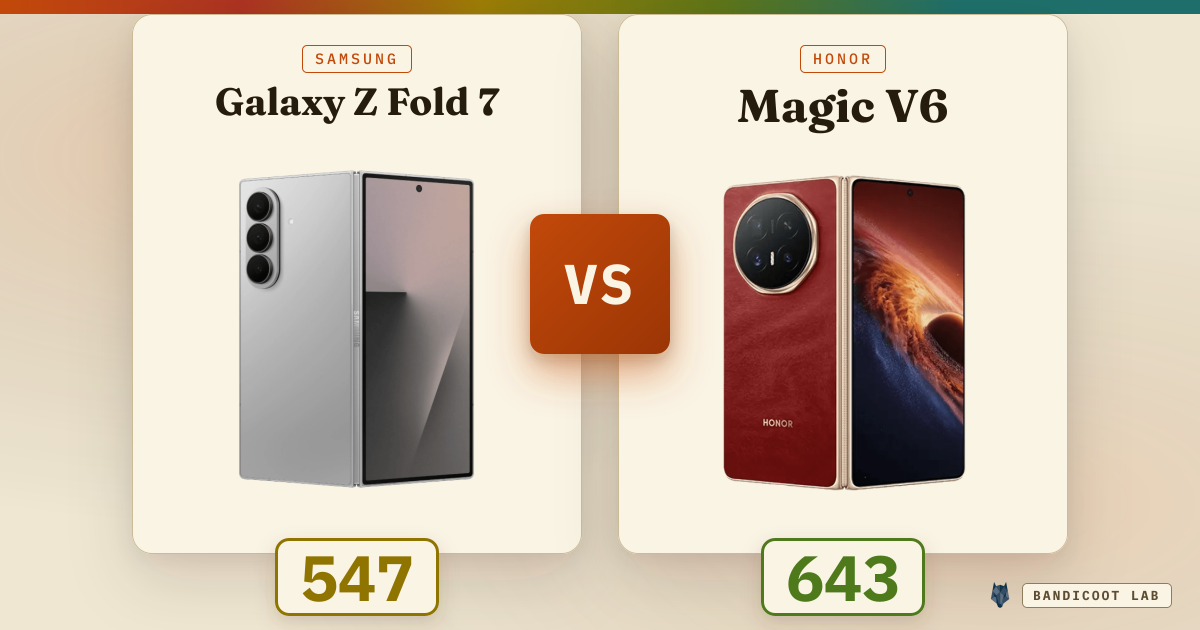
Samsung Galaxy Z Fold 7 vs Honor Magic V6
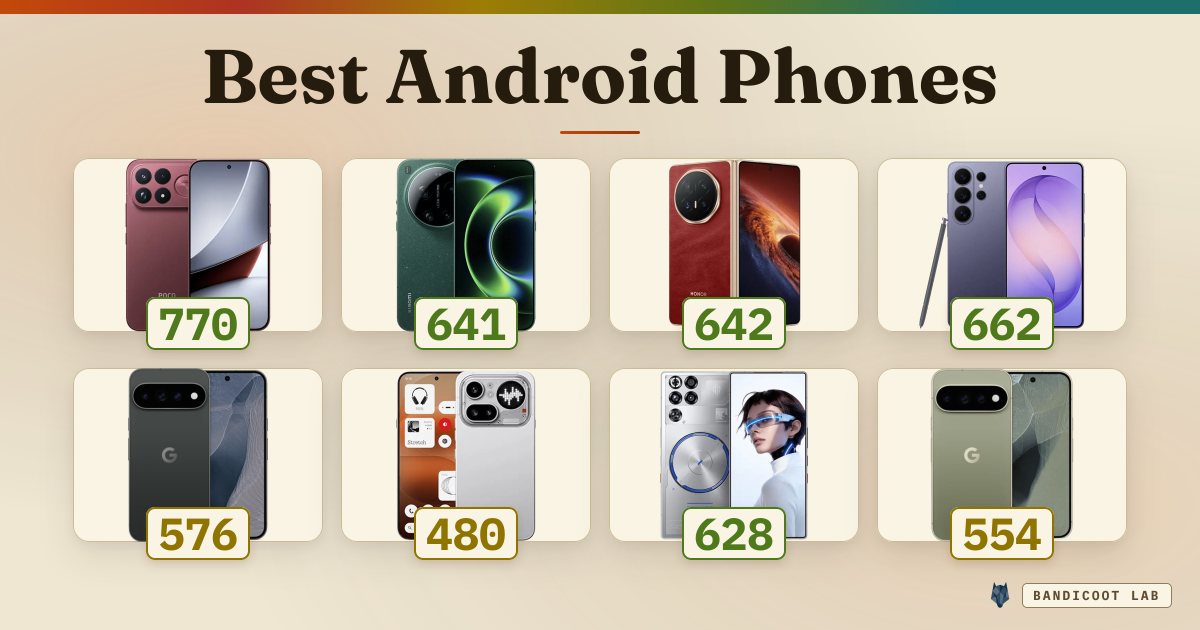
Best Android Phones
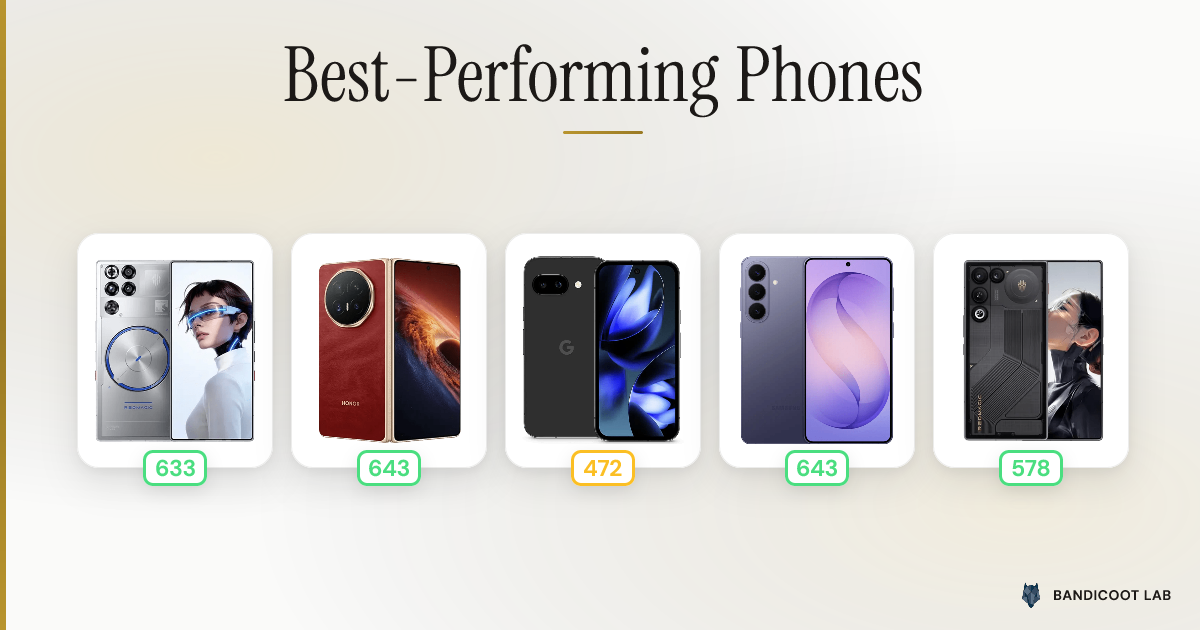
Best-Performing Phones
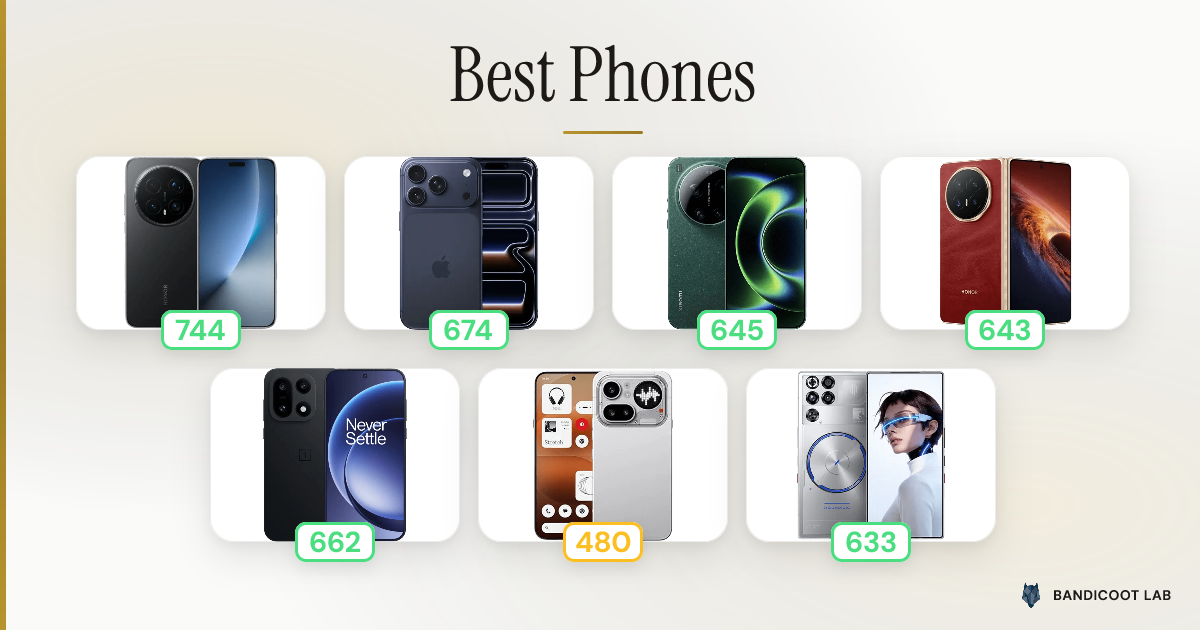
Best Phones
Honor
600
Honor
Magic8 Pro

Motorola
Razr Fold
Samsung