Apple iPhone 17 Pro vs OnePlus 15
Apple
OnePlus
iPhone 17 Pro
15
Ranked #3 of 59
Ranked #6 of 59
Overall
Overall


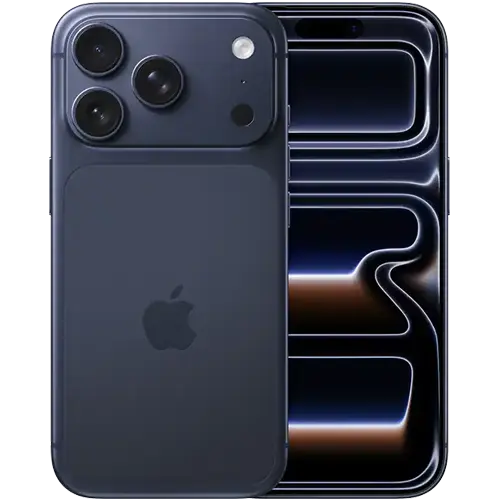
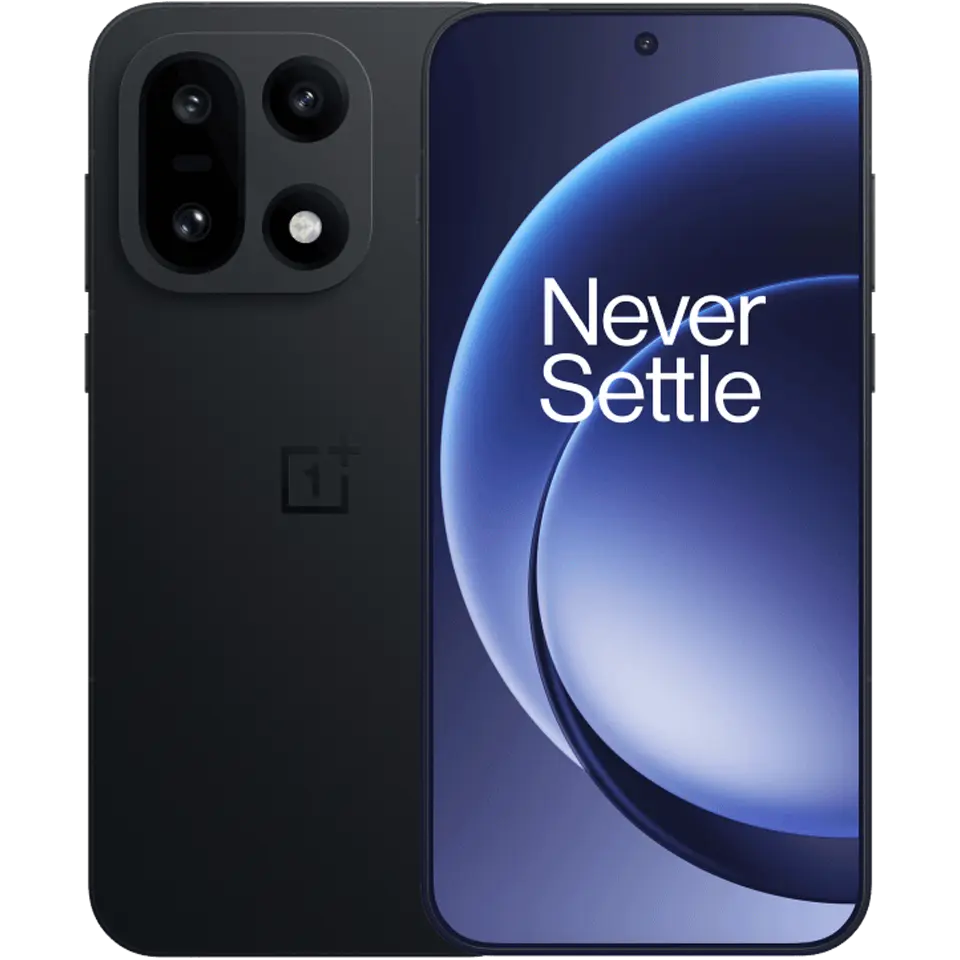
The OnePlus 15 is OnePlus’ latest attempt at a so-called “flagship-killer.” The iPhone 17 Pro, on the other hand, could be the embodiment of a flagship phone. Apple's phone is the more expensive option at $1,099, positioned as a premium all-rounder with a focus on camera capability and ecosystem integration. The OnePlus 15, at $899.99, targets buyers who want top-tier performance and battery life without paying a premium. There's a $200 gap between them, and each phone spends that budget differently.
The iPhone 17 Pro is stronger in camera quality, display color accuracy, and speaker performance. The OnePlus 15 pulls ahead in battery life, charging speed, and raw GPU throughput. Display brightness is close, performance is competitive from different angles, and build quality is comparable on paper.
Here’s how the OnePlus 15 and iPhone 17 Pro compared in our thorough testing.
Design
| Apple iPhone 17 Pro | OnePlus 15 | |
|---|---|---|
| Specifications | ||
| Dimensions | 150 x 71.9 x 8.8 mm | 161.4 x 76.7 x 8.1 mm |
| Weight | 206g | 211g |
| IP Rating | IP68 | IP68/IP69K |
| Frame | Aluminum | Aluminum |
| Front | Ceramic Shield 2 | Gorilla Glass Victus 2 |
| Back | Ceramic Shield | Gorilla Glass 7i / Crystal Shield Glass / Glass fiber |
| Screen-to-body ratio | 90.3% | 90.8% |
The iPhone 17 Pro measures in at 206g with a 6.3-inch display. The OnePlus 15 is slightly heavier at 211g with a larger 6.78-inch panel. Both carry IP68 ratings, meaning submersion to rated depth for 30 minutes. The OnePlus 15 adds IP69K certification, which covers high-pressure, high-temperature water jets.
Both phones use USB-C ports. The iPhone 17 Pro uses an aluminum frame with Apple’s Ceramic Shield 2 front glass. The OnePlus 15 uses an aluminum frame.
The iPhone 17 Pro's smaller display in a relatively compact body means tight bezels and easy one-handed use. The OnePlus 15's larger panel gives more screen real estate but makes it a two-handed phone for most people.
Bandicoot Lab does not formally test design or durability. These observations are based on published specifications only.
Display
| Apple iPhone 17 Pro | OnePlus 15 | |
|---|---|---|
| — | 574/ 845 | |
The OnePlus 15 runs at up to 165Hz refresh rate, while the iPhone 17 Pro tops out at 120Hz. Both are LTPO panels that can drop to lower rates to save power. In practice, most people are unlikely to notice the difference between 165Hz and 120Hz, though some with a keen eye might find the OnePlus 15 to be slightly smoother in some scenarios. The jump from 120Hz to 165Hz is much more subtle than the jump from, say, 60Hz to 120Hz.
Resolution is close, at 460 pixels per inch on the iPhone 17 Pro and 450 PPI on the OnePlus 15. You won't see a difference in sharpness between them.
Manual brightness is higher on the iPhone 17 Pro at 885 nits, compared to 798 nits on the OnePlus 15. For HDR content, the iPhone peaks at 3,043 nits versus 1,958 nits on the OnePlus. That's a substantial gap in small-window HDR brightness — specular highlights in HDR video will punch harder on the iPhone. Sustained brightness is a different story though — the OnePlus 15 holds 99.5% of its peak over 30 minutes of HDR playback, while the iPhone drops to just 35.3% stability. The iPhone gets brighter in bursts, but the OnePlus maintains its luminance far more consistently over time.
Color accuracy is much better on the iPhone. In its default mode, the iPhone's display produces colors extremely close to reference — neutral whites, accurate reds, no visible drift in grays. The OnePlus 15's best mode (Standard) shows moderate color deviation. You'll notice slightly pushed colors and less precise neutral tones. The iPhone's display is among the more accurate panels we've measured. The OnePlus is serviceable but visibly less precise in side-by-side comparison.
Touch latency is 52.7ms on the iPhone 17 Pro and 15.5ms on the OnePlus 15. That's a large gap. The OnePlus will feel noticeably more responsive to direct touch input, particularly in fast-paced gaming and drawing applications.
Performance
| Apple iPhone 17 Pro | OnePlus 15 | |
|---|---|---|
| — | 833/ 1012 | |
The iPhone 17 Pro runs the Apple A19 Pro with 12GB RAM. The OnePlus 15 uses the Qualcomm Snapdragon 8 Elite Gen 5 with 16GB RAM.
In CPU performance, the iPhone posts a GeekBench 6 single-core score of 3,918 versus 3,606 on the OnePlus. Multi-core goes the other direction: 10,158 on the iPhone versus 11,442 on the OnePlus. Single-core performance affects app launch times and single-threaded tasks, but the iPhone's advantage here is modest. Multi-core helps in sustained multi-tasking and heavily threaded workloads, where the OnePlus device will perform slightly better.
GPU performance favors the OnePlus 15. In Wild Life Extreme stress testing, the OnePlus peaks at 7,160 versus 5,865 for the iPhone — roughly 22% higher raw GPU output. Stability is similar: 63.7% on the OnePlus versus 69.8% on the iPhone over extended stress runs. Both phones throttle noticeably under sustained GPU load, settling into similar territory once heat builds up.
Browser performance differs substantially. The iPhone scores 43.1 in Speedometer versus 18.1 on the OnePlus. This reflects iOS Safari's optimization advantages more than raw hardware capability, but the practical result is the same — web pages with heavy JavaScript run meaningfully faster on the iPhone.
In daily use, both phones feel fast. The differences show up in sustained gaming sessions (OnePlus has more GPU headroom) and web browsing (iPhone is snappier).
Camera
| Apple iPhone 17 Pro (Overall) | OnePlus 15 (Overall) | |
|---|---|---|
| Specifications | ||
| Main | 48MP, f/1.78, 24mm, 1/1.28" | 50MP, f/1.8, 24mm, 1/1.56" |
| Ultrawide | 48MP, f/2.8, 13mm, 1/2.55" | 50MP, f/2, 16mm, 1/2.88" |
| Telephoto | 48MP, f/2.8, 100mm, 1/2.55" | 50MP, f/2.8, 80mm, 1/2.76" |
| Front | 18MP, f/1.9, 20mm | 32MP, f/2.4, 21mm, 1/2.74" |
The iPhone 17 Pro's camera system is substantially stronger overall. It scores higher across all four lenses and particularly excels in dynamic range processing and front camera quality. The OnePlus 15 is not a weak camera phone in absolute terms, but it trails the iPhone in processed image quality, color accuracy under mixed lighting, and video stabilization.
Sharpness at deep zoom levels diverges. The iPhone 17 Pro maxes out at 40x digital zoom, whereas the OnePlus 15 pushes to 120x. At comparable zoom levels, the OnePlus resolves more detail. At 20x it captures considerably more sharpness than the iPhone, and at 30x the gap widens further. The OnePlus maintains usable detail even at 60x and 70x, well beyond the iPhone's maximum range. For extreme zoom reach, the OnePlus has a clear structural advantage.
Main
| Apple iPhone 17 Pro (Main) | OnePlus 15 (Main) | |
|---|---|---|
579/ 711 | 441/ 711 | |
Both phones produce high sharpness from their main cameras in bright light, with the OnePlus edging ahead in peak sharpness at 1x. As light drops, the iPhone maintains sharpness more consistently — its dark-light performance barely dips from mid-light levels, while the OnePlus loses nearly half its bright-light detail in dark conditions.
Color character differs between the two. The iPhone's main camera pushes saturation higher in bright light, creating a vivid, punchy look with warm skin tones that lean slightly orange. As lighting gets warmer and dimmer, the iPhone develops a noticeable warm-yellow color cast that increases with falling light levels — this is a white balance correction issue rather than a sensor limitation, as the yellow bias grows proportionally with decreasing color temperature. The OnePlus 15 is more restrained in bright light, with saturation very close to neutral. In mid and dark lighting, it develops a similar warm shift but with a stronger pink-magenta push alongside the yellow. Skin tones on the OnePlus drift less dramatically than the iPhone's in bright light but show comparable shifts in dim conditions.
Dynamic range processing is substantially better on the iPhone 17 Pro on the main lens. The iPhone retains more shadow detail and manages highlight clipping slightly better, keeping high-contrast scenes looking more natural with less compression. The OnePlus’ main camera clips highlights more aggressively and compresses tonal range more heavily — shadows and highlights can feel squeezed together in difficult scenes.
Ultrawide
| Apple iPhone 17 Pro (Ultrawide) | OnePlus 15 (Ultrawide) | |
|---|---|---|
505/ 711 | 441/ 711 | |
Ultrawide sharpness is high on both phones, with the iPhone slightly ahead in bright conditions and the OnePlus performing better in dark scenes. The gap is modest either way. Both ultrawides hold up well relative to their respective main lenses.
Color rendition on the iPhone's ultrawide is slightly more vivid than the OnePlus in bright light, with the iPhone pushing saturation above neutral. In dark conditions, both develop warm color casts — the iPhone's ultrawide shifts strongly toward yellow-green, while the OnePlus shifts warm with a pink lean. Hue accuracy degrades similarly on both as light warms; on the iPhone the increasing yellow bias clearly points to a white balance correction issue under tungsten-like lighting.
Dynamic range on the ultrawide favors the iPhone, which retains more scene depth in high-contrast situations. The OnePlus’ ultrawide shows more tonal compression and less smooth transitions from shadow to highlight in its tone mapping.
Telephoto
| Apple iPhone 17 Pro (Telephoto) | OnePlus 15 (Telephoto) | |
|---|---|---|
628/ 711 | 446/ 711 | |
The iPhone 17 Pro's telephoto is the stronger lens by a meaningful margin. At its native focal length, the iPhone captures high detail in bright light and maintains good sharpness as light falls. The OnePlus 15's telephoto starts at a similar level in bright conditions but degrades more quickly in mid and dark shooting.
The iPhone's telephoto separates itself in dynamic range. It produces wide tonal range with controlled highlight handling and smooth shadow transitions. The OnePlus 15's telephoto processing pipeline struggles to deliver a wide tonal range — the sensor captures the scene information, but the processing doesn't translate it into usable highlight and shadow detail.
Color on the iPhone's telephoto is vivid and warm-leaning, with skin tones pushed noticeably toward orange in bright light. As lighting gets warmer, the warm bias builds further — consistent with the white balance pattern seen across all iPhone lenses. The OnePlus telephoto is slightly more neutral in bright conditions but develops a warm-pink shift in mid light. In dark conditions, the OnePlus telephoto shows less hue error than the iPhone's.
Video stabilization on the iPhone's telephoto is excellent, with very controlled handheld motion recording. The OnePlus telephoto stabilization is looser.
Front
| Apple iPhone 17 Pro (Front) | OnePlus 15 (Front) | |
|---|---|---|
703/ 711 | 421/ 711 | |
The iPhone 17 Pro's front camera outperforms the OnePlus 15's by a wide margin. Sharpness is high on both in bright light, but the iPhone maintains its sharpness far better as light drops. In dark conditions, the iPhone's front camera holds roughly twice the detail of the OnePlus.
Color from the iPhone's front camera is boosted and vivid in bright light, with skin tones running notably warm and saturated. In mid-light, the warm shift intensifies with rising pink and yellow bias. The OnePlus front camera is more accurate in its color rendition, particularly in mid light, where skin tones stay closer to natural. The OnePlus front camera produces more believable skin tones overall — less saturated, less orange-shifted. In dark conditions, both develop warm-pink shifts, but the OnePlus shows less error.
Dynamic range is much better on the iPhone's front camera. It holds wider tonal range and manages highlight-to-shadow transitions more smoothly. The OnePlus clips highlights earlier and compresses the tonal curve more aggressively.
Front video stabilization is dramatically better on the iPhone too. For video calls and vlogging, the iPhone's front camera is in a different class.
Battery
| Apple iPhone 17 Pro | OnePlus 15 | |
|---|---|---|
| — | 780/ 799 | |
The OnePlus 15 packs a 7,300mAh battery — nearly 72% larger than the iPhone 17 Pro's 4,252mAh cell. That capacity advantage shows up clearly in testing.
Video playback at 200 nits is very different. The OnePlus 15 lasts a massive 46 hours and 7 minutes versus 23 hours and 58 minutes on the iPhone. The OnePlus nearly doubles the iPhone's endurance. At maximum brightness, the OnePlus still runs 34 hours and 38 minutes versus 20 hours and 12 minutes on the iPhone.
Web browsing drain over five hours is 16% on the OnePlus versus 17% on the iPhone — essentially identical and both perfectly fine. Gaming drain during the Wild Life Extreme stress test is also close — 23% on the OnePlus versus 24% on the iPhone.
Standby is where the iPhone pulls back some ground. It drained 2% over the eight-hour test, versus 4% from the OnePlus device. The iPhone's idle power management is tighter, which adds up over days of light use.
Charging
| Apple iPhone 17 Pro | OnePlus 15 | |
|---|---|---|
| — | 700/ 837 | |
The OnePlus 15 supports 120W wired charging and 50W wireless. The iPhone 17 Pro supports 40W wired and 25W wireless with MagSafe magnetic alignment.
The speed difference is pretty substantial. At 10 minutes on wired charging, the OnePlus reaches 37% versus 31% on the iPhone. At 30 minutes, the gap is much larger — 88% on the OnePlus versus 72% on the iPhone. The OnePlus delivers nearly a full charge in the time the iPhone reaches three-quarters. For people who charge in short bursts before leaving the house, the OnePlus's wired speed is genuinely useful.
Wireless charging shows a different picture. The iPhone reaches 24% in 10 minutes and 49% in 30 minutes wirelessly. The OnePlus gets 10% in 10 minutes and 28% in 30 minutes wirelessly. The iPhone's MagSafe wireless charging is nearly twice as fast as the OnePlus's wireless charging. If you charge primarily on a nightstand pad, the iPhone fills faster. If you use wired charging, the OnePlus is faster.
Speaker
| Apple iPhone 17 Pro | OnePlus 15 | |
|---|---|---|
| — | 669/ 857 | |
Both phones reach similar maximum volume — 75.2 dBA on the iPhone versus 75 dBA on the OnePlus. Loudness is effectively identical.
The iPhone 17 Pro sounds better. Its distortion is lower at 4.7% average THD versus 7.9% on the OnePlus — the iPhone stays cleaner at high volume, with less harshness in vocals and cymbals. The iPhone also has fuller bass and better high-frequency clarity. Music and podcast playback sounds richer on the iPhone, while the OnePlus is adequate but thinner and more fatiguing at volume.
The iPhone's speaker is one of the better phone speakers we've tested. The OnePlus is middling — fine for notifications and casual video, but you'll notice the difference if you regularly listen without headphones.
Microphone
| Apple iPhone 17 Pro | OnePlus 15 | |
|---|---|---|
| — | 696/ 1220 |
The OnePlus 15's microphone is above average, with tighter frequency response and less variation across the spectrum. The iPhone 17 Pro's microphone is below average, with more uneven frequency reproduction. For voice calls and video recording, the OnePlus will capture a more natural, balanced voice. The iPhone's microphone works fine for calls but introduces more coloration.
Other
| Apple iPhone 17 Pro | OnePlus 15 | |
|---|---|---|
| Biometrics | — | 514/ 1181 |
| Data Transfer | — | 622/ 877 |
| Specifications | ||
| Biometric type | Face Recognition | Fingerprint |
| Ports | USB-C 3.2 Gen 2 | USB-C 3.2 |
| Storage | 256GB, 512GB, 1TB | 256GB, 512GB, 1TB |
The iPhone 17 Pro has hardware-based face unlock averaging 609.7ms — functional but slow. The OnePlus 15 uses an ultrasonic fingerprint sensor averaging 204.2ms. The OnePlus unlocks roughly three times faster. The iPhone has no fingerprint sensor while the OnePlus has no hardware-based face unlock.
Data transfer speeds are similar. The iPhone 17 Pro reads at 286 MB/s and writes at 244 MB/s. The OnePlus 15 reads at 298 MB/s and writes at 230 MB/s. Large file transfers are comparable. For small random files, the OnePlus is significantly faster on reads (69 MB/s versus 16 MB/s).
Conclusion
The iPhone 17 Pro is the better phone for photography, display color accuracy, speaker quality, and wireless charging. Its camera system scores higher across every lens, with particular advantages in dynamic range processing, front camera quality, and telephoto video stabilization. The display reproduces colors with near-perfect accuracy, and it sustains higher brightness in short HDR bursts. If camera quality is your primary concern, the iPhone justifies its higher price.
The OnePlus 15 is the better phone for battery life, wired charging speed, touch responsiveness, and GPU performance. Its 7,300mAh battery delivers nearly double the iPhone's video playback endurance, and 120W wired charging means you rarely need to plan around charging time. At $200 less than the iPhone, it delivers more in several measurable areas.
The decision comes down to priorities. Photographers and media professionals will prefer the iPhone. Gamers, heavy users who drain batteries fast, and buyers who want flagship performance for less money will prefer the OnePlus.
Related
Apple
iPhone 17 Pro
OnePlus
15
OnePlus
15R
Apple
iPhone 17e
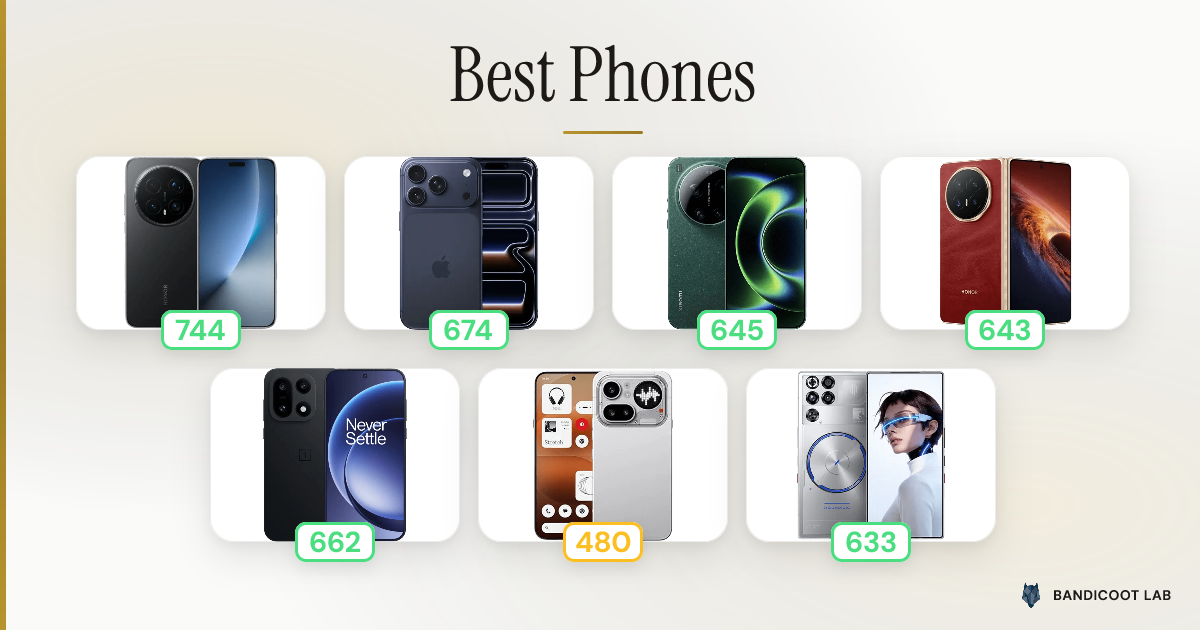
Best Phones
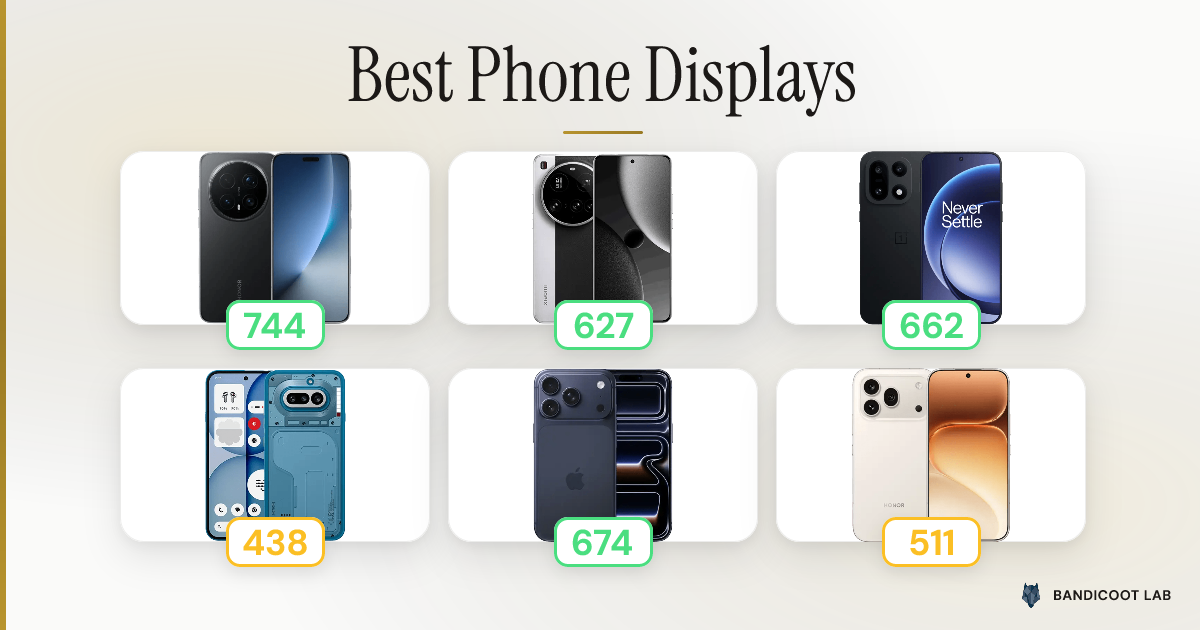
Best Phone Displays
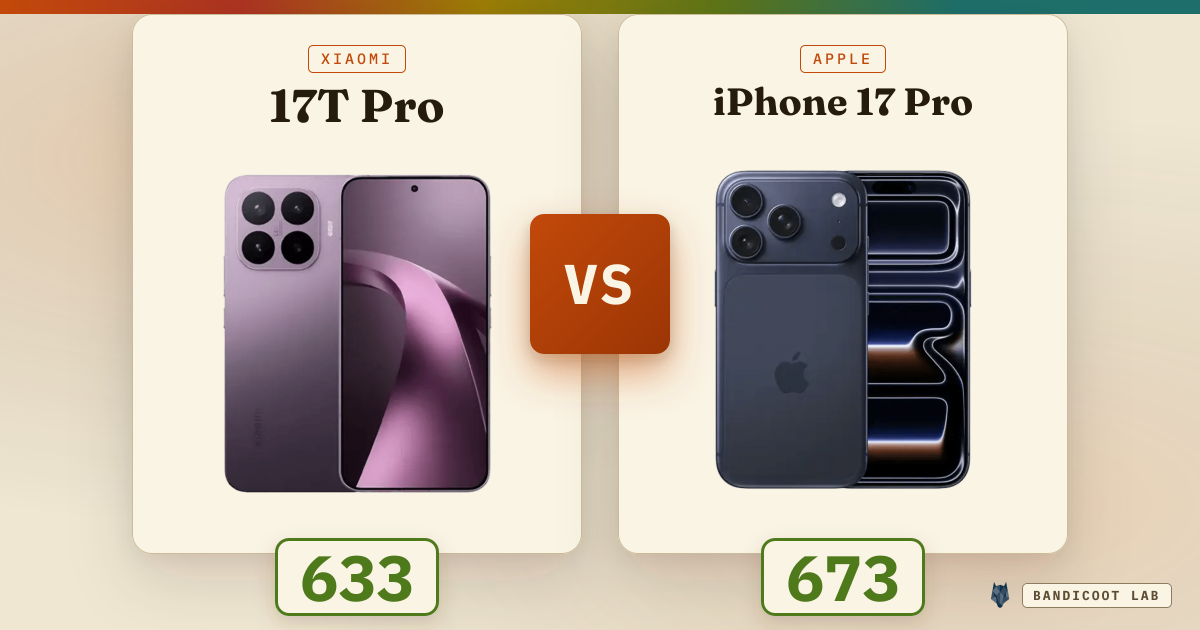
Xiaomi 17T Pro vs Apple iPhone 17 Pro
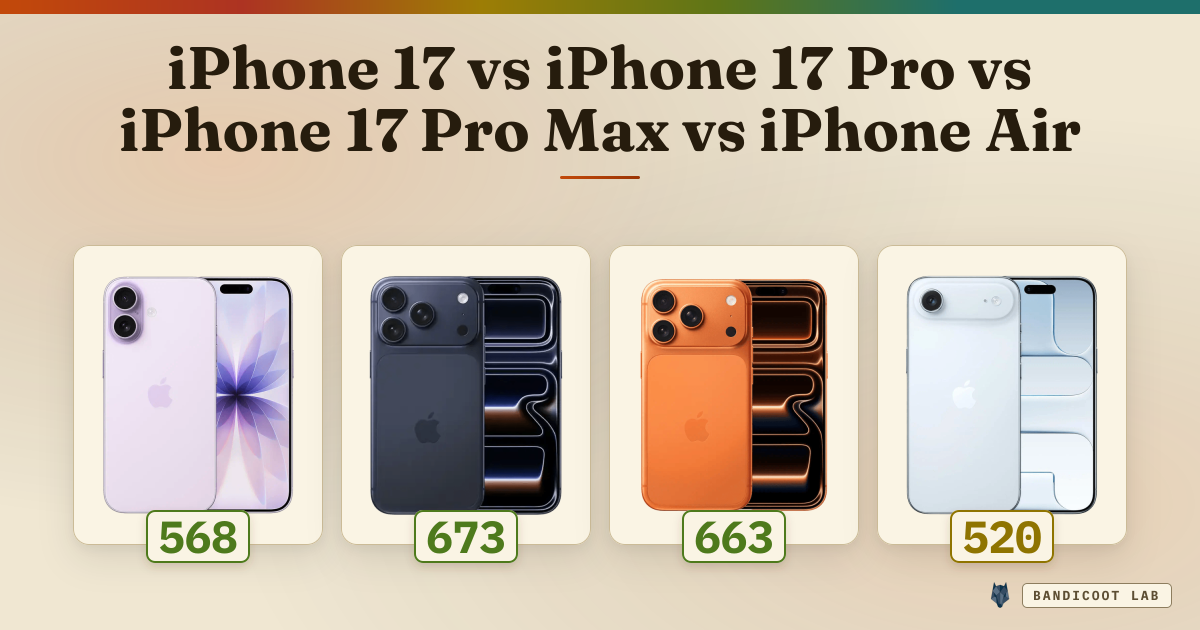
iPhone 17 vs iPhone 17 Pro vs iPhone 17 Pro Max vs iPhone Air
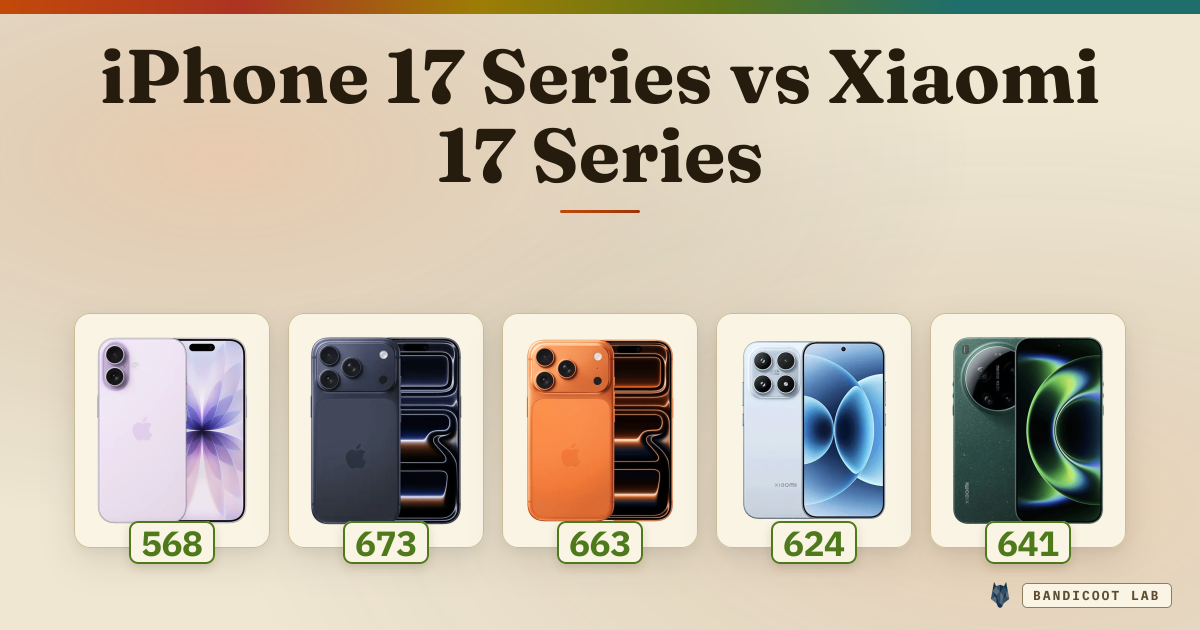
iPhone 17 Series vs Xiaomi 17 Series
The house look: How phone brands tune camera color
How we test charging
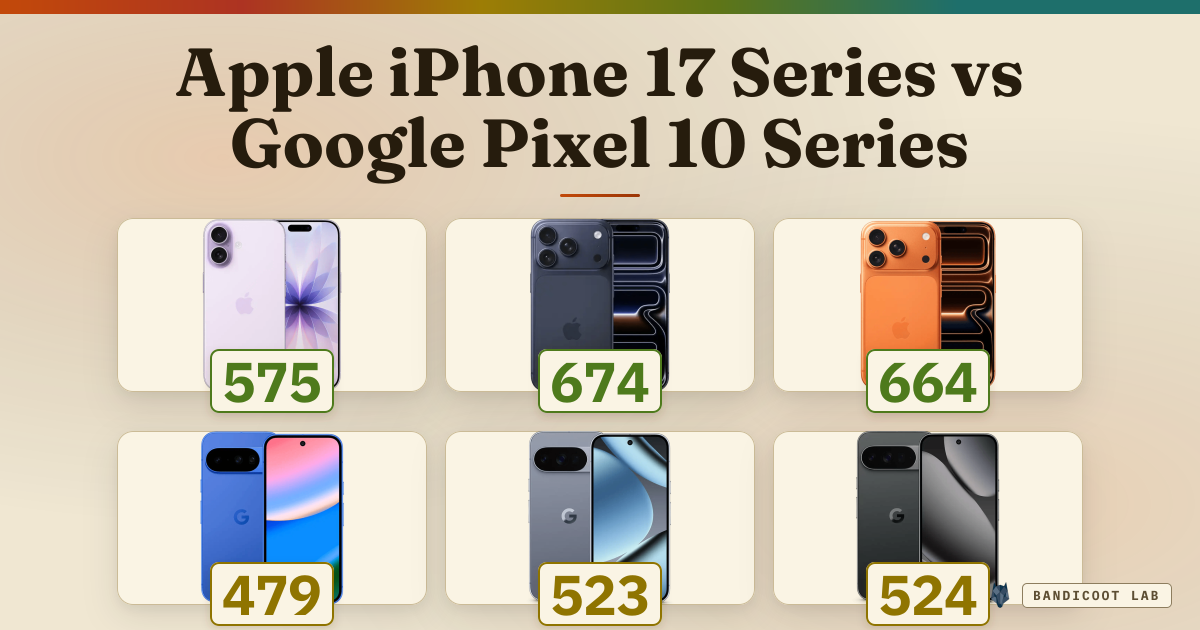
Apple iPhone 17 Series vs Google Pixel 10 Series