OnePlus 15 vs OnePlus 13
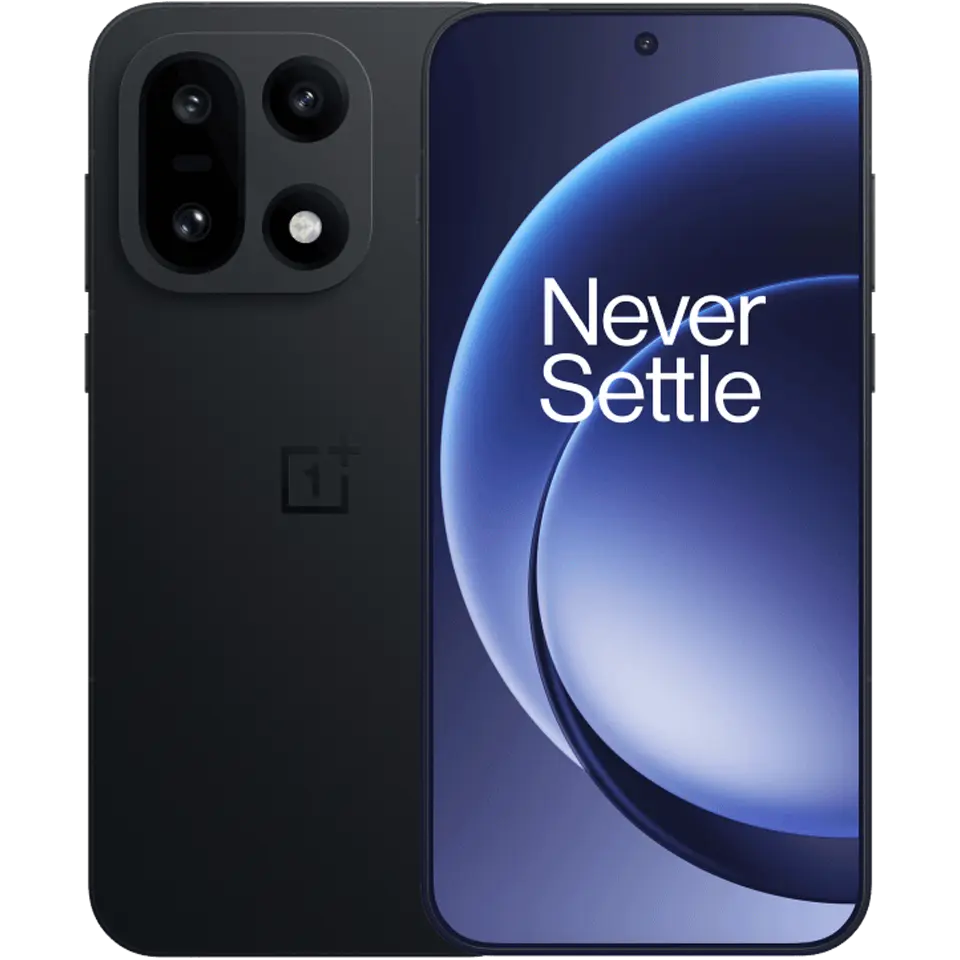
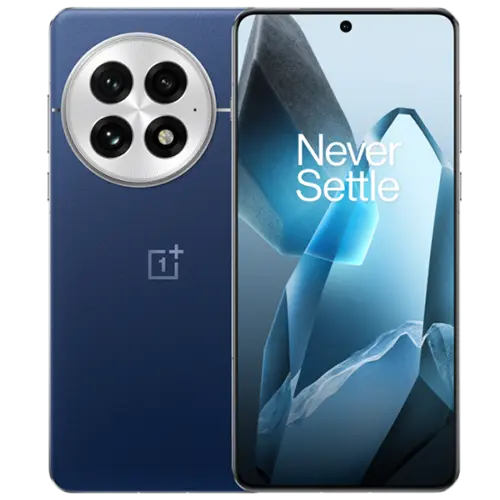
OnePlus
OnePlus
15
13
Ranked #8 of 60
Ranked #14 of 60
Overall
Overall
The OnePlus 15 is the direct successor to the OnePlus 13, and the two sit at the same price of around $900. Both have OnePlus’ well-liked software approach, along with at least some flagship-level features. But, if you're buying fresh, should you hunt for a deal on the outgoing model, or pay the extra dollar for the newer one? And if you already own the OnePlus 13, is there enough here to justify an upgrade?
The answer depends on what you care about. The OnePlus 15 pulls ahead decisively in battery life and charging speed, and its newer Snapdragon chipset delivers a meaningful bump in CPU performance. The OnePlus 13 fights back with the stronger camera system across most lenses, and a sharper and more color-accurate display.
Here’s how the OnePlus 15 and OnePlus 13 performed in our lab testing.
Design
| OnePlus 15 | OnePlus 13 | |
|---|---|---|
| Specifications | ||
| Dimensions | 161.4 x 76.7 x 8.1 mm | 162.9 x 76.5 x 8.5 mm |
| Weight | 211g | 210g |
| IP Rating | IP68/IP69K | IP68/IP69 |
| Frame | Aluminum | Aluminum |
| Front | Gorilla Glass Victus 2 | Ceramic Guard Glass |
| Back | Gorilla Glass 7i / Crystal Shield Glass / Glass fiber | Glass / Vegan leather |
| Screen-to-body ratio | 90.8% | 87.5% |
Both phones are built around aluminum frames with Gorilla Glass fronts, though the specific glass differs. The OnePlus 15 uses Gorilla Glass Victus 2, while the OnePlus 13 uses Ceramic Guard Glass. Back panel options also diverge: the OnePlus 15 offers Gorilla Glass 7i, Crystal Shield Glass, or glass fiber depending on colorway; the OnePlus 13 comes in glass or vegan leather.
They weigh nearly the same. The OnePlus 15 is 211 grams, the OnePlus 13 is 210 grams. Dimensionally, the OnePlus 15 is slightly shorter and thinner at 161.4 x 76.7 x 8.1 millimeters versus 162.9 x 76.5 x 8.5 millimeters. That 0.4-millimeter thickness difference is minor. The OnePlus 15 has a higher screen-to-body ratio at 90.8% compared to 87.5%, which means thinner bezels around its 6.78-inch panel versus the OnePlus 13's 6.7-inch screen. Aspect ratios are close: 19.6:9 on the OnePlus 15, 19.8:9 on the OnePlus 13.
Both carry IP68 ratings, meaning submersion in fresh water to rated depth. The OnePlus 15 adds IP69K certification, which covers high-pressure, high-temperature water jets. The OnePlus 13 carries IP69 without the K suffix. In practice, both are well-protected against everyday water and dust exposure.
Bandicoot Lab doesn't formally test design or durability, so this section reflects published specs only.
Display
| OnePlus 15 | OnePlus 13 | |
|---|---|---|
574/ 881 | 605/ 881 | |
The OnePlus 13 has the higher-resolution panel at 1440 x 3168 (510 pixels per inch) compared to the OnePlus 15's 1272 x 2772 (450 PPI). That's a noticeable difference in pixel density if you're looking closely at fine text or detailed images. The OnePlus 15 compensates with a higher refresh rate ceiling of 165Hz versus 120Hz, which matters primarily in games that can push past 120 frames per second.
Manual brightness is nearly identical: 798 nits on the OnePlus 15, 785 nits on the OnePlus 13. The gap opens up in HDR. The OnePlus 15 peaks at 1,958 nits, a clear step above the OnePlus 13's 1,638 nits. You'll notice this in bright sunlight with HDR content. The OnePlus 13 holds brightness more consistently across different HDR window sizes at 98.5% stability versus 91% for the OnePlus 15, meaning the OnePlus 15 dims more as HDR highlights get larger on screen. Both sustain brightness well over time, with the OnePlus 15 at 99.5% and the OnePlus 13 at 98.9% over a 30-minute test.
Color accuracy is better on the OnePlus 13. In its best display mode, colors stay closer to the reference standard, with neutral tones reading more true. The OnePlus 15 shows more visible drift from reference, particularly in midtones. Whites and grays may lean slightly off-neutral. Both panels cover the full sRGB gamut and about 75% of the wider DCI-P3 space.
For HDR tone mapping, both displays boost highlights by the same amount above the mastered reference, so bright areas in HDR video look similarly lifted on both. The OnePlus 13 follows the standard HDR curve less faithfully overall but holds on longer before clipping, giving up at around the 90% input level. The OnePlus 15 clips earlier at 85%, meaning it loses detail in the very brightest highlights sooner. Touch latency is 15.5ms on the OnePlus 15 and 18.6ms on the OnePlus 13. A 3ms gap is small enough that you won’t feel the difference.
Performance
| OnePlus 15 | OnePlus 13 | |
|---|---|---|
833/ 1012 | 774/ 1012 | |
The OnePlus 15 runs on the Qualcomm Snapdragon 8 Elite Gen 5, the OnePlus 13 on the previous-generation Snapdragon 8 Elite. Both are configured with 16GB of RAM, with 12GB options also available.
CPU performance shows a generational jump. The OnePlus 15 scores 3,606 single-core and 11,442 multi-core in GeekBench 6, versus 2,993 and 9,362 for the OnePlus 13. That's roughly a 20% gain in single-threaded work and 22% in multi-threaded tasks. You'll feel this in app launches, heavy multitasking, and anything that leans on sustained processing. GPU performance is similar — the OnePlus 15 peaks at 7,160 in Wild Life Extreme against 6,650 for the OnePlus 13, though GPU stability is nearly a wash at 63.7% versus 65.3%. Both throttle by about a third during sustained GPU loads, so heavy gaming sessions will see similar thermal behavior.
Browser performance is actually opposite what you might expect — the OnePlus 13 scores 25 in Speedometer versus 18.1 for the OnePlus 15, meaning web-heavy tasks like scrolling through complex pages feel snappier on the older phone. This likely reflects software optimization differences rather than raw silicon capability.
Camera
| OnePlus 15 (Overall) | OnePlus 13 (Overall) | |
|---|---|---|
| Specifications | ||
| Main | 50MP, f/1.8, 24mm, 1/1.56" | 50MP, f/1.6, 23mm, 1/1.43" |
| Ultrawide | 50MP, f/2, 16mm, 1/2.88" | 50MP, f/2, 15mm, 1/2.75" |
| Telephoto | 50MP, f/2.8, 80mm, 1/2.76" | 50MP, f/2.6, 73mm, 1/1.95" |
| Front | 32MP, f/2.4, 21mm, 1/2.74" | 32MP, f/2.4, 21mm, 1/2.74" |
The OnePlus 13 has the stronger camera system overall, scoring meaningfully higher across most lenses and earning particularly good marks in color accuracy and dynamic range. The OnePlus 15 counters with higher sharpness from the main and ultrawide cameras in good light, and its ultrawide holds detail well across lighting conditions. At the deep zoom end, both phones produce soft results past their telephoto lenses' native reach, with neither standing out at extreme magnification levels up to 120x.
Main
| OnePlus 15 (Main) | OnePlus 13 (Main) | |
|---|---|---|
441/ 722 | 579/ 722 | |
The OnePlus 15's main camera resolves more detail in bright light than the OnePlus 13's, and the gap is substantial. Sharpness drops in mid and low light on the OnePlus 15, while the OnePlus 13 stays more consistent. In dark conditions the two are essentially tied on detail. The OnePlus 15 uses a 50-megapixel f/1.8 sensor at 24mm with a 1/1.56-inch sensor; the OnePlus 13 has a larger 1/1.43-inch sensor with a brighter f/1.6 aperture at 23mm, which gives it a physical advantage for light gathering.
Across the zoom range below the telephoto cutover, the OnePlus 15 covers 1x to 3.5x and the OnePlus 13 covers 1x to 3x. Both are cropping into their main sensors for this range. The OnePlus 15's higher base sharpness in bright light gives it more headroom for digital zoom before softening becomes obvious, so 2x crops tend to hold more detail. The OnePlus 13 starts with less resolving power at 1x, so its crops soften sooner.
Color on the main camera favors the OnePlus 13. The OnePlus 13 keeps saturation slightly above neutral and maintains consistent white balance. The OnePlus 15 pushes warmer with a distinct yellow-gold lean, and skin tones drift further from reference, particularly in bright and mid-light conditions. Dynamic range also goes to the OnePlus 13, which handles high-contrast scenes with a cleaner tonal response and no tonal inversions.
Ultrawide
| OnePlus 15 (Ultrawide) | OnePlus 13 (Ultrawide) | |
|---|---|---|
441/ 722 | 455/ 722 | |
The OnePlus 15 has a 50-megapixel f/2 ultrawide at 16mm (1/2.88-inch sensor); the OnePlus 13's is also 50 megapixels at f/2, 15mm, with a slightly larger 1/2.75-inch sensor. Sharpness is a strength for the OnePlus 15 here. Its ultrawide holds detail well from bright through dark conditions, with almost no drop-off as lighting gets worse. The OnePlus 13's ultrawide softens more in mid-light, though it recovers somewhat in dark conditions.
Color accuracy is closer on the ultrawide than on the main cameras, but the OnePlus 13 still has smaller hue errors in good light. Both phones show increasing color issues in darker conditions. The OnePlus 15's ultrawide picks up a growing warm and pink cast as light dims, following the same white-balance pattern as its main camera. Skin tone accuracy is better on the OnePlus 15's ultrawide in dark conditions, but worse in bright light. Dynamic range edges toward the OnePlus 15 on this lens, with slightly more usable tonal range. Both clip highlights.
Telephoto
| OnePlus 15 (Telephoto) | OnePlus 13 (Telephoto) | |
|---|---|---|
446/ 722 | 623/ 722 | |
This is where the OnePlus 13 has its biggest camera advantage. Its 50-megapixel 3x telephoto uses a large 1/1.95-inch sensor at f/2.6, one of the bigger telephoto sensors available. The OnePlus 15's telephoto is 50 megapixels at 3.5x (80mm, f/2.8) with a smaller 1/2.76-inch sensor.
The OnePlus 13's telephoto resolves strong detail across all lighting conditions and stays consistent from bright through dark. Color accuracy is the best of any lens on either phone: hue errors are small and stay controlled even in dim light, and skin tones are rendered more faithfully than on any other lens here. The bias stays nearly neutral across lighting, meaning the white balance system handles the telephoto sensor's output cleanly. Dynamic range is also strong, retaining good separation in high-contrast scenes.
The OnePlus 15's telephoto is adequate but can't match the OnePlus 13's larger-sensor lens. Color is decent in bright light but degrades more in dim conditions, with hue errors roughly doubling from bright to dark. Skin tones are pushed notably from reference in bright and mid light, with the yellow-warm bias visible here too. Stabilization performance is weaker on the OnePlus 15's telephoto, which shows more motion in handheld shots. The OnePlus 13's telephoto is well-stabilized by comparison. As both phones crop past their native telephoto lengths, detail falls off. Neither produces usable results at the extreme digital zoom end.
Front
| OnePlus 15 (Front) | OnePlus 13 (Front) | |
|---|---|---|
421/ 722 | 509/ 722 | |
Both phones share the same 32-megapixel f/2.4 front camera spec at 21mm with a 1/2.74-inch sensor. The OnePlus 15 resolves more detail from the front camera, particularly in bright light where the gap is large. Both soften in dim conditions, with the OnePlus 15 dropping more steeply but still staying ahead of the OnePlus 13.
Color is an interesting split. The OnePlus 15's front camera has tighter hue accuracy in bright and mid light and produces noticeably better skin tones in those conditions. In dark light, hue errors rise substantially, and a warm pink-yellow cast appears, again following the white-balance pattern seen across the OnePlus 15's camera system. The OnePlus 13's front camera leans cool across all conditions, with a blue-tinted cast that's visible in skin tones, particularly in bright light where skin tone error is high. Both phones push saturation above neutral on the front camera.
Dynamic range strongly favors the OnePlus 13's front camera, which preserves more shadow and highlight detail in selfies with challenging backlighting. The OnePlus 15's front camera clips highlights with less usable range and shows multiple tonal inversions, which can make gradients look unnatural. Stabilization for video selfies is slightly better on the OnePlus 13.
Battery
| OnePlus 15 | OnePlus 13 | |
|---|---|---|
780/ 836 | 661/ 836 | |
The OnePlus 15 packs a 7,300mAh battery, 1,300mAh more than the OnePlus 13's 6,000mAh cell. That capacity advantage shows up clearly in testing.
Video playback runs to 46.1 hours on the OnePlus 15 versus 29.4 hours on the OnePlus 13. That's nearly two full days of continuous video for the OnePlus 15, easily enough for a long-haul international trip with hours to spare. The OnePlus 13's result is still solid at over a day of continuous playback, but the gap is stark. In the 5-hour web browsing test, the OnePlus 15 drains 16% compared to 24% on the OnePlus 13. Project that out, and the OnePlus 15 could handle over 31 hours of web browsing versus roughly 21 for the OnePlus 13. Gaming drain during the Wild Life Extreme stress test shows a similar spread: 23% for the OnePlus 15 versus 34% for the OnePlus 13. You'll get roughly 50% more gaming time from the OnePlus 15 before needing a charge.
Standby is the one area where the OnePlus 13 does better. It drains just 1% over an 8-hour overnight idle, compared to 4% for the OnePlus 15. If you leave your phone unplugged at night, the OnePlus 13 will have more charge waiting for you in the morning. For active use throughout the day, the OnePlus 15's battery advantage is substantial and consistent.
Charging
| OnePlus 15 | OnePlus 13 | |
|---|---|---|
700/ 837 | 639/ 837 | |
The OnePlus 15 supports 120W wired charging and 50W wireless. The OnePlus 13 offers 100W wired and the same 50W wireless.
Wired charging speed is close but the OnePlus 13 edges ahead in percentages. At 10 minutes, the OnePlus 13 reaches 39% versus 37% for the OnePlus 15. At 30 minutes, it's 91% versus 88%. These percentages represent different absolute amounts of energy. The OnePlus 15's 88% at 30 minutes is 88% of 7,300mAh, while the OnePlus 13's 91% is 91% of 6,000mAh. The OnePlus 15 is actually pushing more total energy into its larger battery in the same timeframe.
Wireless charging is effectively tied at 10 minutes (10% versus 9%), but the OnePlus 13 pulls ahead at 30 minutes with 34% versus 28% for the OnePlus 15, again partly reflecting the different battery capacities.
Speaker
| OnePlus 15 | OnePlus 13 | |
|---|---|---|
669/ 897 | 514/ 897 | |
Both phones hit nearly the same maximum volume: 75.6 dBA for the OnePlus 13 and 75 dBA for the OnePlus 15. Distortion is close too, with neither phone standing out as cleaner than the other.
The character of the sound is quite different. The OnePlus 15 produces fuller bass and clearer highs, with a more balanced overall frequency response. Its usable frequency range extends lower, reaching deeper bass tones that the OnePlus 13 simply can't reproduce, and stretches higher as well. The OnePlus 13 sounds thinner, with weak bass output and less high-frequency extension. If you regularly use your phone's speakers for music or video, the OnePlus 15 delivers a noticeably more listenable experience. The OnePlus 13 is adequate for calls and casual listening but sits at the bottom of our tested devices for overall speaker quality.
Microphone
| OnePlus 15 | OnePlus 13 | |
|---|---|---|
696/ 1220 | 310/ 1220 |
The OnePlus 15's microphone produces more even and natural-sounding recordings, with a flatter frequency response that keeps voices clear without emphasizing or dropping any particular range. It's solidly above average. The OnePlus 13's microphone is among the weakest we've tested, with a much less even response that can make recordings sound unbalanced. For voice calls you probably won't notice much, but for voice memos or video recording the difference is real.
Other
| OnePlus 15 | OnePlus 13 | |
|---|---|---|
| Biometrics | 514/ 1181 | 675/ 1181 |
| Data Transfer | 622/ 943 | 630/ 943 |
| Specifications | ||
| Biometric type | Fingerprint | Fingerprint |
| Ports | USB-C 3.2 | USB-C 3.2 |
| Storage | 256GB, 512GB, 1TB | 256GB, 512GB |
Both phones use ultrasonic fingerprint sensors. The OnePlus 13 unlocks faster at 156ms versus 204ms for the OnePlus 15. Both are quick enough that the unlock feels instant, but the OnePlus 13 has a slight edge in responsiveness. Neither phone offers hardware-based face unlock.
Data transfer speeds are similar. The OnePlus 13 reads at 315 MB/s and writes at 243 MB/s; the OnePlus 15 reads at 298 MB/s and writes at 230 MB/s. Both use USB-C 3.2 ports. The OnePlus 15 offers 256GB, 512GB, and 1TB storage options, while the OnePlus 13 tops out at 512GB.
Conclusion
At the same price, these two phones split their strengths in ways that make neither a clear overall winner. The OnePlus 15 is the better pick if battery life is your primary concern. Its 46-hour video playback result and lower drain across web and gaming tests translate to meaningfully longer days between charges. Faster CPU performance, a more capable speaker, and a better microphone round out its advantages. If you push your phone hard through long days and value not thinking about battery anxiety, the OnePlus 15 makes a strong case.
The OnePlus 13 earns its keep with a better camera system, particularly that excellent telephoto with its large sensor and consistent performance across lighting conditions. Its main camera color accuracy is notably cleaner, with more neutral white balance and less skin tone drift. The display is sharper at 510 PPI and more color-accurate, and it handles HDR content with less highlight clipping. Biometrics are faster too, and standby drain is minimal.
Related
OnePlus
13
OnePlus
15
OnePlus
15R
RedMagic 11S Pro vs OnePlus 15
Xiaomi 17T Pro vs OnePlus 15
How we test charging
Samsung Galaxy S26 Ultra vs OnePlus 15
RedMagic 11 Air vs OnePlus 15
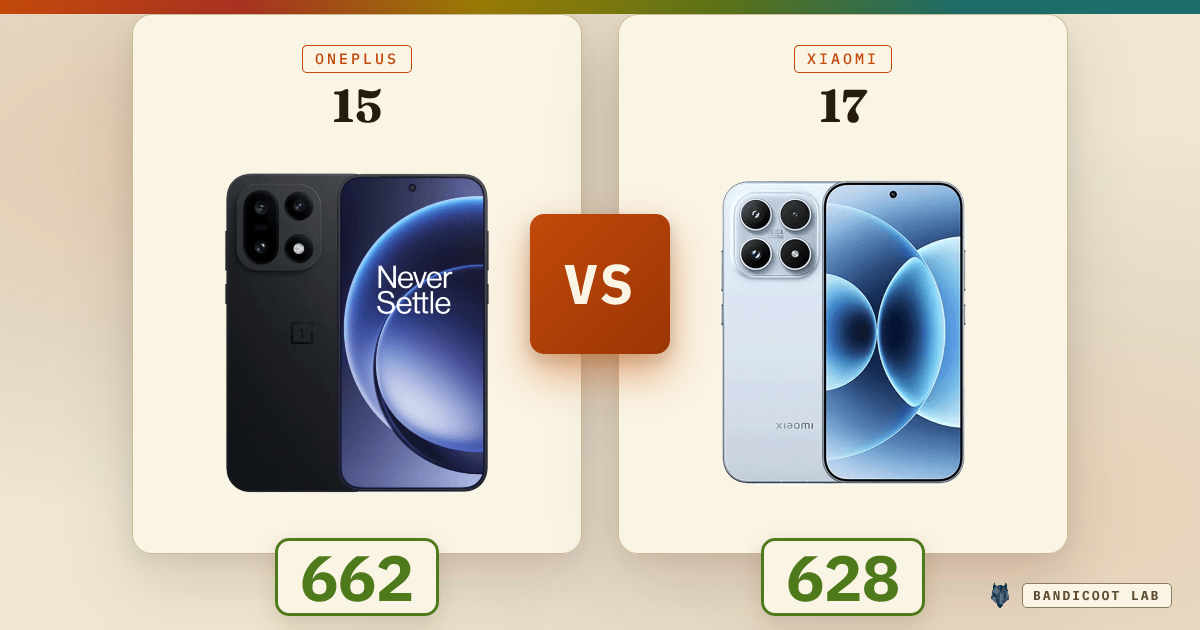
OnePlus 15 vs Xiaomi 17
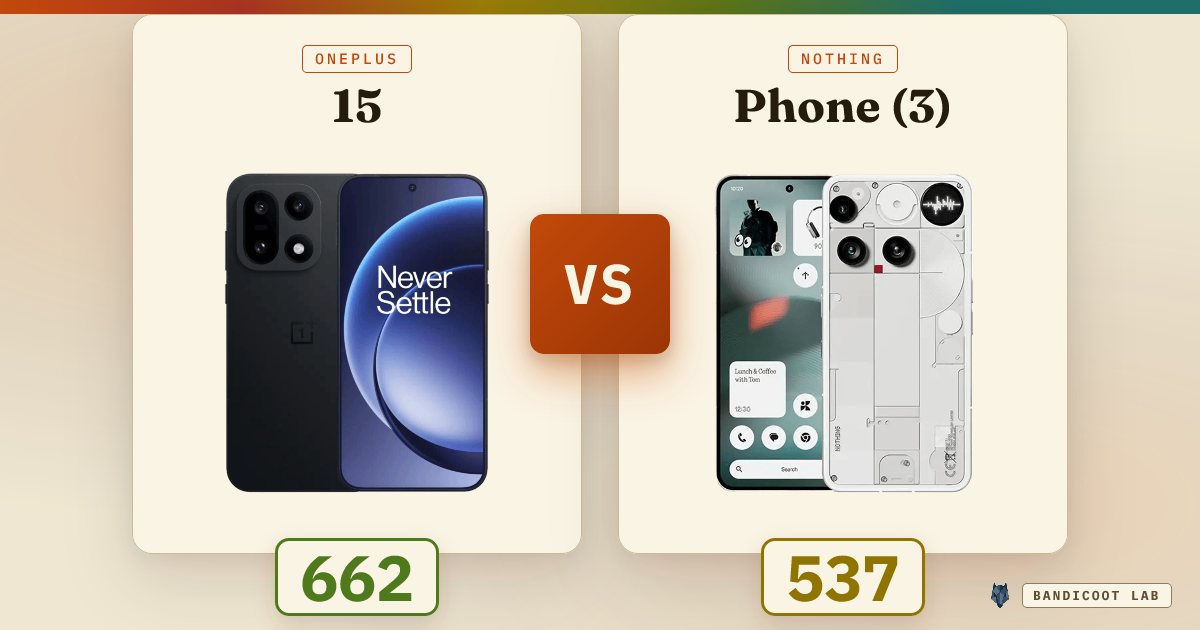
OnePlus 15 vs Nothing Phone (3)
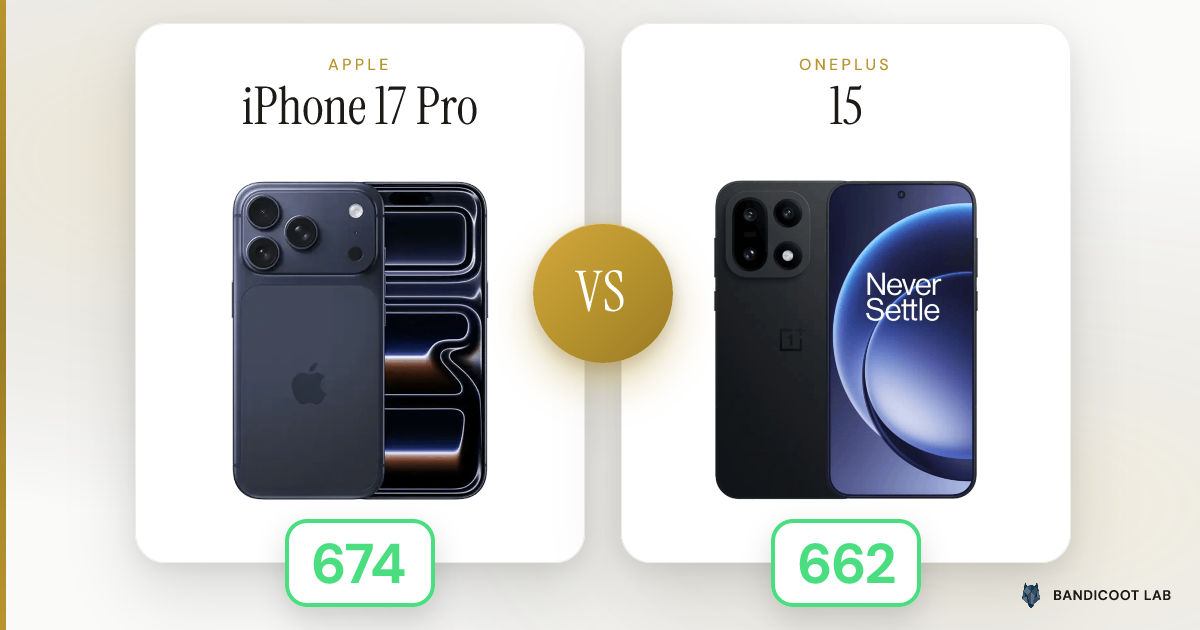
Apple iPhone 17 Pro vs OnePlus 15
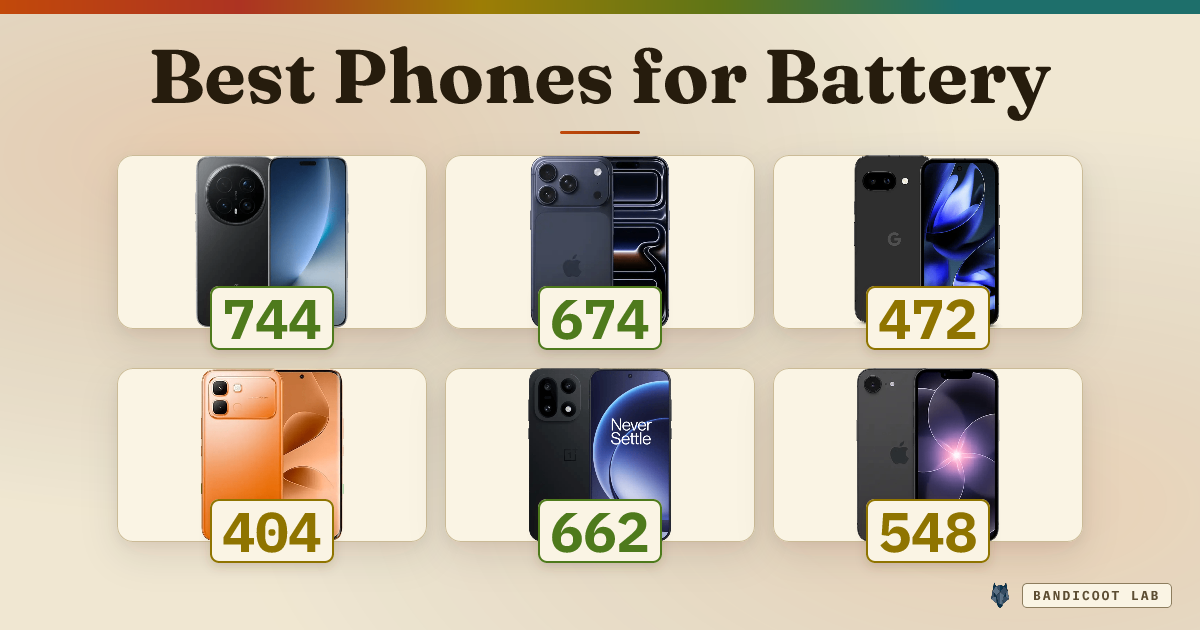
Best Phones for Battery