Motorola Razr Fold vs OnePlus Open

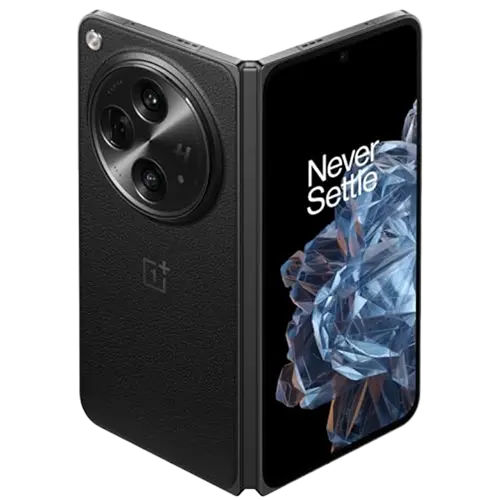
Motorola
OnePlus
Razr Fold
Open
Ranked #27 of 61
Ranked #52 of 61
Overall
Overall
The Motorola Razr Fold is Motorola's first book-style foldable, arriving at $1,899.99 with a flagship chipset and a triple rear camera system. The OnePlus Open, at $1,699.99, was one of the first serious attempts from a mainstream Android brand to challenge Samsung's grip on the foldable market. Both are large-format book foldables aimed at people who want a tablet-sized screen that fits in a pocket, but they're separated by a generational gap in silicon and a $200 price difference.
The Razr Fold pulls ahead in display brightness and quality, raw performance, speaker output, and charging flexibility thanks to wireless support. The OnePlus Open has a stronger camera system overall, particularly in dynamic range and telephoto performance, and its wired charging is faster to the halfway mark. Battery life is a weak point for both phones, though the Razr Fold's larger cell gives it a meaningful advantage in video playback. What matters most to you shapes which one earns the money.
Here’s how the Motorola Razr Fold and OnePlus Open compared in our lab testing.
Design
| Motorola Razr Fold | OnePlus Open | |
|---|---|---|
| Specifications | ||
| Dimensions (folded) | 160.05 × 73.6 × 9.89 mm | 153.4 x 73.3 x 11.7 mm |
| Dimensions (unfolded) | 160.05 × 144.46 x 4.55 mm | 153.4 x 143.1 x 5.8 mm |
| Weight | 243g | 245g |
| IP Rating | IP48/IP49 | IPX4 |
| Frame | Aluminum | Metal |
| Front | Gorilla Glass Ceramic 3 | Ceramic Guard Glass |
| Back | — | Glass / Vegan leather |
| Screen-to-body ratio (inner) | — | 89.2% |
| Screen-to-body ratio (outer) | — | 85.5% |
The two phones are nearly identical in weight: the Razr Fold at 243g, the OnePlus Open at 245g. Folded, the Razr Fold is thinner at 9.89mm versus 11.7mm, but it's taller at 160.05mm compared to 153.4mm. Unfolded, the Razr Fold is slimmer at 4.55mm versus 5.8mm, and slightly wider at 144.46mm versus 143.1mm. Both have similar folded widths, around 73mm.
The Razr Fold uses an aluminum frame with Gorilla Glass Ceramic 3 on the front. The OnePlus Open uses a metal frame with Ceramic Guard Glass on the front and a combination of glass and vegan leather on the back. The Razr Fold carries an IP48/IP49 rating, meaning it's protected against objects larger than 1mm and against both low-pressure and high-pressure water jets. The OnePlus Open's IPX4 rating only covers splashes from any direction, with no rated particle ingress protection. That's a meaningful durability gap if you're using the phone around water.
Bandicoot Lab doesn't formally test design or durability.
Display
Inner
| Motorola Razr Fold (Inner) | OnePlus Open (Inner) | |
|---|---|---|
658/ 881 | 524/ 881 | |
The Razr Fold's inner display is an 8.1-inch AMOLED panel at 2484 × 2232 (412 pixels per inch) with an 8:7.2 aspect ratio and a 1–120Hz adaptive refresh rate. The OnePlus Open's inner display is a 7.8-inch LTPO AMOLED at 2268 × 2440 (426 PPI) with a roughly square 9.68:9 aspect ratio and the same 1–120Hz refresh range. The OnePlus Open has slightly higher pixel density, though the difference is small enough that you won't see it in normal use.
Brightness is where these two diverge sharply. The Razr Fold's inner panel reaches 543 nits in manual brightness mode and peaks at 4,142 nits displaying HDR content in auto brightness. The OnePlus Open manages 599 nits manual and 1,544 nits HDR peak. The Razr Fold is nearly three times brighter in HDR, which matters for outdoor movie watching and HDR gaming. The OnePlus Open has better HDR brightness stability across window sizes at 93% versus the Razr Fold's 41.6%, meaning its brightness holds more consistently regardless of how much of the screen is bright. Both phones sustain their brightness well over time: the Razr Fold at 97.9% and the OnePlus Open at 98.4% over a 30-minute sustained test.
Color accuracy is better on the Razr Fold. Its inner display achieves a lowest average color error of 1.37 versus 1.88 on the OnePlus Open. In practice, both are good enough that most people won't notice color issues, but the Razr Fold's colors are closer to reference.
For tone mapping, the Razr Fold follows the HDR reference curve more closely and slightly boosts highlights above the mastered level, but it starts clipping at 80% input, meaning the brightest highlights lose detail earlier. The OnePlus Open deviates more from the reference curve and compresses highlights below mastered levels, but it holds on longer before clipping at 90%. The Razr Fold renders HDR content more faithfully overall, while the OnePlus Open preserves more detail in the very brightest parts of the image.
Touch latency is close: 15.1ms on the Razr Fold, 16.1ms on the OnePlus Open. You won't feel that 1ms difference.
Outer
| Motorola Razr Fold (Outer) | OnePlus Open (Outer) | |
|---|---|---|
691/ 881 | 480/ 881 | |
The Razr Fold's outer display is a 6.6-inch LTPO P-OLED at 2520 × 1080 (415 PPI) with a 21:9 aspect ratio and 30–165Hz refresh range. The OnePlus Open's is a 6.31-inch LTPO3 OLED at 1116 × 2484 (431 PPI) with a 20:9 aspect ratio and 1–120Hz. The Razr Fold's outer screen can push to 165Hz, which is unusual and gives it an edge in scrolling smoothness. The OnePlus Open has a slightly higher pixel density, but again, not enough to see with the naked eye.
The brightness gap on the outer displays mirrors the inner panels. The Razr Fold is substantially brighter for HDR content, while the OnePlus Open has better brightness stability across window sizes. Color accuracy on the outer display follows a similar pattern: the Razr Fold is more accurate, with colors that sit closer to reference. The OnePlus Open's outer display shows more noticeable color drift, with neutral tones and mixed colors sitting further from where they should be. Its outer panel is also noticeably less accurate than its own inner panel.
Both outer displays share the same touch latency characteristics as their inner counterparts. The Razr Fold's outer display scores higher overall, driven by its brightness advantage and better color accuracy.
Performance
| Motorola Razr Fold | OnePlus Open | |
|---|---|---|
668/ 1012 | 399/ 1012 | |
The Razr Fold runs the Qualcomm Snapdragon 8 Gen 5 with 16GB of RAM. The OnePlus Open uses the Qualcomm Snapdragon 8 Gen 2, also with 16GB of RAM. That's a two-generation gap in silicon, and it shows across the board.
In CPU benchmarks, the Razr Fold scores 2,628 single-core and 9,178 multi-core in GeekBench 6. The OnePlus Open scores 1,571 single-core and 4,938 multi-core. That's a 67% single-core advantage and an 86% multi-core advantage for the Razr Fold. You'll feel this in app launch times, multitasking, and any task that leans on sustained CPU throughput.
GPU performance tells a similar story. In the Wild Life Extreme stress test, the Razr Fold peaks at 5,401 versus 3,681 for the OnePlus Open. In Solar Bay, it's 9,631 versus 5,296. Thermal stability is close: the Razr Fold holds 68.6% of its peak Wild Life Extreme score under sustained load, and the OnePlus Open holds 66.5%. Both throttle by about a third, so neither sustains peak GPU output well over long gaming sessions.
Browser performance, measured by Speedometer, shows a 48% lead for the Razr Fold: 16.9 versus 11.4.
Camera
| Motorola Razr Fold | OnePlus Open | |
|---|---|---|
481/ 587 | 517/ 587 | |
Both phones carry triple rear camera systems with a main, ultrawide, and 3x telephoto, plus both inner and outer front cameras. The overall camera scores are close, but they arrive at those scores differently. The OnePlus Open has stronger dynamic range across nearly every lens and a better telephoto overall. The Razr Fold has better color accuracy on most lenses and better deep zoom performance.
At extreme zoom levels, the Razr Fold delivers meaningfully sharper results despite reaching only 100x versus the OnePlus Open's 120x. Deep zoom images from the OnePlus Open are soft enough that anything past about 30x is more of a novelty than a usable tool. The Razr Fold holds detail better into the long digital crop range, though neither phone competes with dedicated telephoto-focused flagships at these distances.
Main
| Motorola Razr Fold (Main) | OnePlus Open (Main) | |
|---|---|---|
537/ 722 | 576/ 722 | |
The Razr Fold's main camera is a 50-megapixel f/1.6 sensor (1/1.28-inch, 24mm). The OnePlus Open uses a 48-megapixel f/1.7 sensor (1/1.43-inch, 24mm). The Razr Fold has a physically larger sensor, which typically helps in low light.
Sharpness is close between the two. Both produce detailed images in bright and mid light, with the Razr Fold holding a slight edge. In low light, the Razr Fold retains more detail. Across the 1x to 3x zoom range, both phones crop reasonably well to 2x, but the Razr Fold's larger sensor means it holds onto more usable detail at the 2x crop before handing off to the telephoto.
Dynamic range is a clear win for the OnePlus Open. It retains much more shadow detail and handles high-contrast scenes with greater depth. The Razr Fold clips highlights and shows less separation between bright and dark areas. If you regularly shoot into bright skies or mixed-lighting interiors, the OnePlus Open captures more of the scene.
The Razr Fold's main camera produces more accurate colors. Its hues stay consistent from bright to dark conditions, with only a mild warm shift as lighting drops. The OnePlus Open shifts more noticeably warm in mid light, driven primarily by white balance correction struggling with warmer color temperatures rather than a sensor-level limitation. Skin tones on the OnePlus Open show significant error in both bright and mid light, with faces taking on an unnatural cast. The Razr Fold's skin tones are imperfect in bright light too, but improve substantially in mid and low light.
Ultrawide
| Motorola Razr Fold (Ultrawide) | OnePlus Open (Ultrawide) | |
|---|---|---|
422/ 722 | 566/ 722 | |
The Razr Fold's ultrawide is a 50-megapixel f/2 (12mm, 1/2.76-inch). The OnePlus Open has a 48-megapixel f/2.2 (14mm, 1/2.0-inch). The OnePlus Open's ultrawide is sharper in bright light by a comfortable margin, with fine detail visibly crisper. In mid light, the gap narrows, and in low light both produce similar results.
Dynamic range again favors the OnePlus Open. Its ultrawide preserves shadow detail well and handles contrasty landscapes with more tonal range. The Razr Fold's ultrawide clips highlights and shows less depth in high-contrast scenes.
Color accuracy is poor on both ultrawides, particularly for skin tones in bright light. Both show large skin tone errors in bright conditions that improve as light dims. Hue accuracy degrades in warmer lighting for both, suggesting white balance correction is the primary culprit. Overall color character is slightly muted on both ultrawides compared to their respective main cameras.
Telephoto
| Motorola Razr Fold (Telephoto) | OnePlus Open (Telephoto) | |
|---|---|---|
476/ 722 | 672/ 722 | |
The Razr Fold has a 50-megapixel f/2.4 telephoto (71mm, 1/1.95-inch) at roughly 3x. The OnePlus Open has a 64-megapixel f/2.6 telephoto (70mm, 1/2.0-inch), also at 3x. Similar focal lengths, similar sensor sizes.
At the native 3x zoom, the OnePlus Open's telephoto is sharper across all lighting conditions. It maintains high detail even in low light, which is unusual for a telephoto on a foldable. As you push past 3x into the digital crop range, the OnePlus Open also holds detail better thanks to its higher megapixel count giving more data to crop from.
Dynamic range is substantially better on the OnePlus Open's telephoto. It preserves highlight and shadow detail well, with clean tonal transitions. The Razr Fold's telephoto clips highlights and shows less scene depth.
Color is more nuanced. The Razr Fold's telephoto has better skin tone accuracy, especially in bright and mid light, with faces looking natural. Its hue accuracy is good in bright light but degrades notably in warmer conditions, with a clear warm shift that points to white balance correction issues rather than sensor limitations. The OnePlus Open's telephoto pushes saturation aggressively in bright light and is noticeably vivid at 3x. Its hues are slightly more accurate across lighting conditions, but skin tones show more error.
Front Inner
| Motorola Razr Fold (Front Inner) | OnePlus Open (Front Inner) | |
|---|---|---|
566/ 722 | 389/ 722 | |
The Razr Fold has a 32-megapixel f/2.4 inner front camera (22mm). The OnePlus Open has a 20-megapixel f/2.2 inner front camera (20mm, 1/4.0-inch sensor).
The Razr Fold's inner front camera is significantly better overall. It's sharper in mid and low light, and it maintains sharpness more consistently across conditions. The OnePlus Open's inner front camera is sharp in bright light but drops dramatically in mid and low light, losing a great deal of detail.
Dynamic range favors the Razr Fold by a wide margin. Its inner front camera preserves highlights and shadows well, producing selfies with good depth. The OnePlus Open's inner front camera shows less tonal range.
Color accuracy also favors the Razr Fold. Its hues are more consistent, and skin tones are reasonably accurate in mid light. The OnePlus Open's inner front camera shows noticeable hue drift as light drops, with a cool bias in bright light that shifts warm in low light. Skin tones are inaccurate across all conditions on the OnePlus Open's inner selfie camera.
Front Outer
| Motorola Razr Fold (Front Outer) | OnePlus Open (Front Outer) | |
|---|---|---|
449/ 722 | 494/ 722 | |
The Razr Fold has a 20-megapixel f/2.4 outer front camera (22mm). The OnePlus Open has a 32-megapixel f/2.4 outer front camera (22mm, 1/3.14-inch sensor).
The OnePlus Open's outer front camera is sharper in bright light. In mid and low light, both drop off, but the OnePlus Open retains slightly more detail. The Razr Fold's outer front camera is softer overall than its inner one, which is expected given the lower megapixel count.
Dynamic range is closer here, with the OnePlus Open holding a slight edge. Both cameras clip highlights. Color accuracy is better on the Razr Fold's outer front camera, with more consistent hues. The OnePlus Open's outer front camera shows a similar cool-to-warm shift across lighting as its inner front camera, with skin tones drifting noticeably. Both phones' front outer cameras show more prominent skin tone errors than their respective inner front cameras.
The OnePlus Open's outer front camera has noticeably better video stabilization, keeping footage smoother when handheld.
Battery
| Motorola Razr Fold | OnePlus Open | |
|---|---|---|
481/ 836 | 411/ 836 | |
The Razr Fold packs a 6,000mAh battery while the OnePlus Open has a 4,805mAh cell. That 25% capacity difference shows up clearly in testing.
In video playback on the inner display, the Razr Fold lasts 26.22 hours versus 21.59 hours for the OnePlus Open. On the outer display, the gap widens: 39.69 hours for the Razr Fold versus 26.43 hours for the OnePlus Open. The Razr Fold's inner display video time means you could get through two full days of moderate use before needing a charge. The OnePlus Open is more of a daily charger.
Web browsing drain over five hours tells a different story: the Razr Fold loses 32% versus 28% for the OnePlus Open. The OnePlus Open is more efficient here despite its smaller battery, likely due to lower display power draw at typical browsing brightness levels. Gaming drain measured during the one-hour stress test favors the Razr Fold, but only by a little: 29% versus 31% for the OnePlus Open. Standby drain is identical at 4% over eight hours for both phones.
The Razr Fold has better battery life for video-heavy and mixed use. The OnePlus Open is slightly more efficient for web browsing but can't overcome its smaller capacity for longer sessions. Neither phone is strong in battery life compared to non-foldable flagships. The form factor demands compromises.
Charging
| Motorola Razr Fold | OnePlus Open | |
|---|---|---|
394/ 837 | 327/ 837 | |
The Razr Fold supports 80W wired and 15W wireless charging. The OnePlus Open supports 67W wired with no wireless charging option.
Despite the lower wattage rating, the OnePlus Open charges faster in the first half. At 10 minutes, it reaches 36% versus 25% for the Razr Fold. At 30 minutes, it hits 83% versus 65%. The OnePlus Open's charging curve is more aggressive early, which makes it better for quick top-ups before heading out.
The Razr Fold's advantage is wireless charging, which the OnePlus Open doesn't offer at all. At 15W wireless, the Razr Fold reaches 11% in 10 minutes and 26% in 30 minutes. Slow, but convenient for overnight charging or desk-based top-ups.
Speaker
| Motorola Razr Fold | OnePlus Open | |
|---|---|---|
749/ 897 | 576/ 897 | |
The Razr Fold reaches a max volume of 74.5 dBA with 3.19% total harmonic distortion. The OnePlus Open hits 73.6 dBA with 4.88% distortion. Volume is close, but the Razr Fold is slightly louder and noticeably cleaner.
The bigger difference is in sound character. The Razr Fold has a fuller, more balanced profile with decent bass presence and clear high-end reproduction. The OnePlus Open has similar bass weight but almost no high-frequency clarity. Music and dialogue sound more detailed on the Razr Fold, with better separation between instruments and voices. The OnePlus Open sounds muffled in comparison, which is especially noticeable at higher volumes where its higher distortion becomes audible.
Microphone
| Motorola Razr Fold | OnePlus Open | |
|---|---|---|
364/ 1220 | 598/ 1220 |
The OnePlus Open has a more balanced microphone with more even frequency response. The Razr Fold's microphone shows more unevenness, which means voice recordings and calls may sound less natural, with some frequencies emphasized over others. The OnePlus Open is solidly average; the Razr Fold is below average for microphone quality.
Other
| Motorola Razr Fold | OnePlus Open | |
|---|---|---|
| Biometrics | 641/ 1181 | 560/ 1181 |
| Data Transfer | 612/ 943 | 319/ 943 |
| Specifications | ||
| Biometric type | Fingerprint | Fingerprint |
| Ports | USB-C 3.2 | USB-C 3.1 |
| Storage | 512GB | 512GB |
Both phones use capacitive fingerprint sensors and neither has hardware-based face unlock. The Razr Fold unlocks in 164ms on average; the OnePlus Open takes 188ms. Both are fast enough that you won't consciously notice the difference, though the Razr Fold has a slight edge.
For data transfer, the Razr Fold's USB-C 3.2 port delivers read speeds of 273 MB/s and write speeds of 249 MB/s. The OnePlus Open's USB-C 3.1 port manages 154 MB/s read and 124 MB/s write. The Razr Fold is roughly twice as fast for file transfers, which matters if you move large files regularly. Both phones come in a single configuration of 16GB RAM and 512GB storage.
Conclusion
The Razr Fold is the stronger overall package. It has a significantly brighter, more color-accurate display, two generations of performance improvement, better speakers, faster data transfer, and longer video battery life. Its camera system produces more accurate colors and better deep zoom results. At $1,899.99, it's the more expensive phone, and the performance and display advantages justify a good portion of that premium.
The OnePlus Open earns its place with a genuinely better camera in key areas. Its dynamic range is superior on every lens, its telephoto is sharper, and its ultrawide captures more detail in good light. Its wired charging is faster for quick top-ups. It's also $200 cheaper. If the camera system is your top priority, especially if you shoot in high-contrast conditions or rely on the telephoto, the OnePlus Open delivers more there.
The Snapdragon 8 Gen 2 is two generations behind, and it shows in every performance benchmark. The display gap is real, particularly for HDR content. If you're buying a foldable you plan to keep for several years, the Razr Fold's newer silicon and brighter panel are going to age better.
FAQ
Does the Motorola Razr Fold or OnePlus Open take better photos in high-contrast situations?
The OnePlus Open has stronger dynamic range across every lens — main, ultrawide, and telephoto — recovering more shadow detail and handling bright skies or mixed-light interiors with greater depth. The Razr Fold clips highlights sooner and shows less tonal separation in the same scenes. If shooting into bright windows or outdoors in harsh light is a regular part of how you use a camera, the OnePlus Open captures more of what's there.
Is the Razr Fold's display noticeably better than the OnePlus Open's for watching HDR video?
Yes, meaningfully so. The Razr Fold's inner panel peaks at 4,142 nits for HDR content versus 1,544 nits on the OnePlus Open, and it covers 97.7% of DCI-P3 compared to 74% on the Open. Wide-gamut video and saturated HDR content will look fuller and more vivid on the Razr Fold. The OnePlus Open does hold brightness more consistently across different window sizes, but its lower peak and narrower gamut make it the weaker screen for HDR viewing.
Is the OnePlus Open worth buying over the Razr Fold if I mostly care about the telephoto?
The OnePlus Open's telephoto is sharper at the native 3x zoom across all lighting conditions, maintains detail well even in low light, and has substantially better dynamic range at distance. The Razr Fold pulls ahead only at extreme digital zoom levels above roughly 30x, where it holds detail better despite having a lower maximum zoom ceiling. For typical telephoto use — portraits, sports, reaching across a room — the OnePlus Open delivers more.
Which phone is better for quick charges when you're in a hurry?
The OnePlus Open charges faster in the first half despite its lower wattage rating, reaching 36% at 10 minutes and 83% at 30 minutes versus 25% and 65% for the Razr Fold. For a fast top-up before heading out, the OnePlus Open is the better choice. The Razr Fold's advantage is wireless charging at 15W, which the OnePlus Open doesn't support at all — useful for overnight or desk charging, but slow for urgent situations.
Is it worth paying $200 more for the Razr Fold over the OnePlus Open?
The Razr Fold justifies the premium if display quality, performance longevity, or video battery life are your priorities. Its two-generation silicon advantage is substantial across every benchmark, its inner display is nearly three times brighter for HDR content with significantly wider color gamut coverage, and it lasts around four hours longer in video playback. The OnePlus Open closes the gap with better dynamic range and telephoto sharpness, plus faster wired charging. At $1,699.99, it makes the most sense if the camera system is what you'll use most.
Related
OnePlus
Open
Motorola
Razr Fold
OnePlus
15
Motorola
Razr Ultra (2026)
OnePlus
15R
Motorola
Razr+ (2026)
Motorola
Razr (2026)

Motorola
Moto G Power (2026)
Google Pixel 11 Pro Fold vs Motorola Razr Fold

Samsung Galaxy Z Fold 8 Ultra vs Motorola Razr Fold

Samsung Galaxy Z Fold 8 vs Motorola Razr Fold
Honor Magic V6 vs Motorola Razr Fold